
 Applause is really a weird thing when you think about it. It’s so ingrained in our social existence that it’s one of the first gestures a child learns, a universal human reflex to show appreciation or support, an unmistakable sound of numerous single sources melded into one. As a texture in abstract music—that is, when it’s element triggered, intended, or purposefully highlighted by the artist—it always struck me as sort of austere, overly weighty, like it just shouldn’t be there. But the communal sublimity of Green Ways completely changed that opinion, and since then I’ve encountered several examples of interesting and effective use of injected applause; one that immediately comes to mind is Astor’s wonderfully strange The Aubergine Dream cassette (Mark Harwood’s recent work in general is a treasure trove of fascinating structural distortions). A new “live” release from Tomutonttu, the sprightly solo project of Kemialliset Ystävät founder Jan Anderzén, is an unexpected but welcome addition. On Elävänä ullakolla EP, presumably as an acknowledgement or exploration of the May 8th performance’s lack of physical audience (Anderzén played the set for the Musa Ullakolla 5 Online Festival), various recordings of collective claps, cheers, and other crowd-conjured cacophonies are woven together with the usual Tomutonttu toolkit of agile electronic noodling. Once each piece really gets going it eventually settles into the stumbling melody-messes and futuristic new age flavors I’ve come to expect, but Anderzén’s family of cheerfully bizarre “folk” music is a pillar of my taste for a reason, so Elävänä Ullakolla EP is yet another new favorite, and the applause splicing is pretty unforgettable.
Review: Rosso Polare – Lettere Animali (Klammklang, Jul 7)
 Lettere Animali is the debut release of the Milan-based Rosso Polare, a duo composed of multimedia artists Cesare Lopopolo (Caesar’s Psycho Machine) and Anna Vezzosi. Their creative collaborations take the form of masterfully deconstructed and abstracted Mediterranean folk flavors, relying on accessible melodies while mercilessly distorting conventional forms and structures. The musical sessions out of which Lettere Animali grew were freely improvised, and the instantaneity that introduces is retained even after the many instrumental tracks are combined, layered, and subtly manipulated. On the first few songs, this heavy electronic aspect is largely imperceptible, but “No. 3” changes that with its dense, kaleidoscopic arrays of acoustic instruments, processing artifacts, horns, and distorted electric guitar. These pieces may not be “live” in the traditional sense, but they certainly feel like it; “No. 19,” with its incessant pounding drum and escalating dynamics feels like a tribal ritual deep in the woods, while “No. 9” heavily relies on binaural field recordings to set the scene for a nature-filled, lazy summer afternoon jam. Though Lettere Animali’s very minimal cover is a deep red, its simplicity and uniformity evoke serenity for me more than anything else, something of which there’s plenty to be found throughout this delightful record.
Review: Tinnitustimulus – Soft Rains (Foul Prey, Jul 3)
 The elusive Tinnitustimulus has been one of my favorite modern harsh noise projects ever since I first heard 2017’s Punct / Contrapunct on Monorail Trespassing. On that tape as well as subsequent releases, a dual appreciation for both enveloping, crushing textural mash as well as high-pitched feedback manipulation, electronic error-glitches and blips, and other more piercing, minuscule sound objects. In contrast to the prolificacy of many noise artists, Tinnitustimulus usually only puts out one tape a year, so when that happens you’d best believe it’s an event to be celebrated. 2020’s Soft Rains takes a spellbindingly deep dive into everything I love about the project, starting things off with a single track A side that twists itself in and out of a razor-sharp sonic birdcage prison of punishing, sterile whines and shuffling microsounds, trading time with a full-throttle noise assault. About halfway through the 15-minute piece the latter takes over and one is left to languish in the deafening din of distortion, which culminates in an amazing conclusion. The following three shorter tracks are maelstroms of howling analog winds, caustic drones, and meaty crunch that really put this talented artist’s skills on display. Will a Tinnitustimulus release ever not be excellent? Only time will (hopefully not) tell.
Mix: The Forgotten Country
Ever since the American cultural juggernaut that is country music first began to emerge, musicians have been flocking to the fringes of the typically simple, straightforward genre in attempts to discover innovative ways to subvert tradition while retaining its heart and soul. This mix documents my best attempt to chronicle these artists through the years, but even through extensive research this sort of thing is very difficult to find (thus, it’s a bit shorter than usual, but it’s also about the average length of a classic country LP so we’ll roll with it). Needless to say, this post is also a request for more examples!

00:00. Mohawk & The Rednecks – “Enchanted Forest” from God Less America compilation (Crypt, 1995)
02:16. The Holy Modal Rounders – “Soldier’s Joy” from Indian War Whoop (ESP, 1967)
04:43. Astroturf Noise – “Morning Zephyr Waltz” from Astroturf Noise (577, 2020)
08:45. Charlie Tweddle – second untitled track from Fantastic Greatest Hits (Companion reissue, 2004)
11:01. Eugene Chadbourne – “Devilish Mary” from The History of the Chadbournes: Honky-Tonk Im Nachtlokal (Leo, 2004)
14:28. Buck Young – “Hang Em Hiiiiiiii!!!” from Proud Trash Sound (No Rent, 2017)
18:36. Henry Flynt & Nova’Billy – “Sky Turned Red” from Henry Flynt & Nova’Billy (Locust, 2007)
21:57. Davenport – “Thou Shall Be Waking” from Free Country (Last Visible Dog, 2005)
28:00. Caroliner Rainbow Susans and Bruisins – “The Ballad of Hamdrags” from The Cooking Stove Beast (Nuf Sed, 1992)
Review: Chris Fratesi – Sound for Blank Disc (Regional Bears, Jul 3)
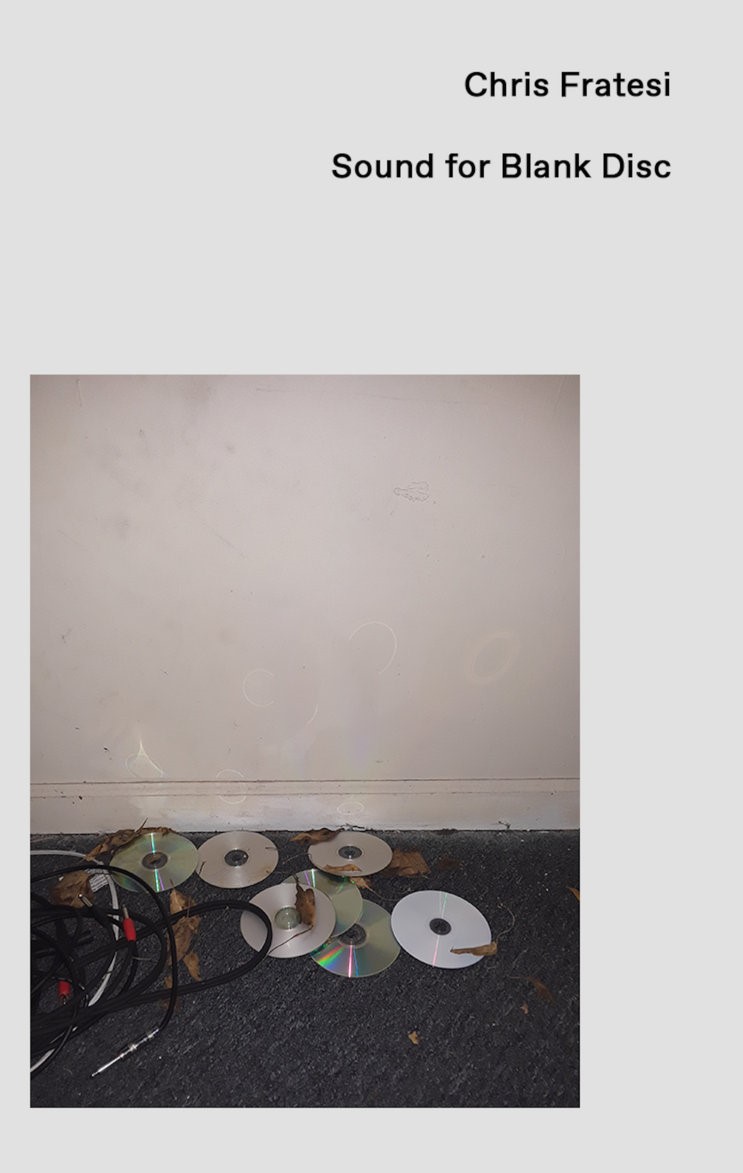 Sound for Blank Disc is yet another birth-name debut from a beloved experimental artist on Regional Bears; however, unlike New Sounds of Nature, which was Blue Chemise mastermind Mark Gomes’s first release under his own name and the London label’s most conventional release yet, there are no new age comforts or bubbly synth baths to be found on this cold, caustic album. Gathering the first material credited to Chris Fratesi, who usually records and performs under the alias Gene Pick, the minimally adorned Sound for Blank Disc is a fresh, modern entry in a long-running canon of blank media (and specifically blank CDs) as source material. I was immediately reminded of Yasunao Tone’s Solo for Wounded CD, whose alien rhythmic blips were created via actual modification and augmentation of the playback surface, but in the case of the first track especially Fratesi’s experiments are much more abrasive. Other than the title, there isn’t much information about the methodology used, but unlike Wounded CD the digital whirring, microscopic clicks, and unpredictable howls of noise are more than captivating enough without the conceptual transparency. Each five minute segment is a searing slide through a different compartment of a white-hot, mortally malfunctioning machine.
Review: Red Brut – Cloaked Travels (Ikuisuus & Lal Lal Lal, Jul 3)
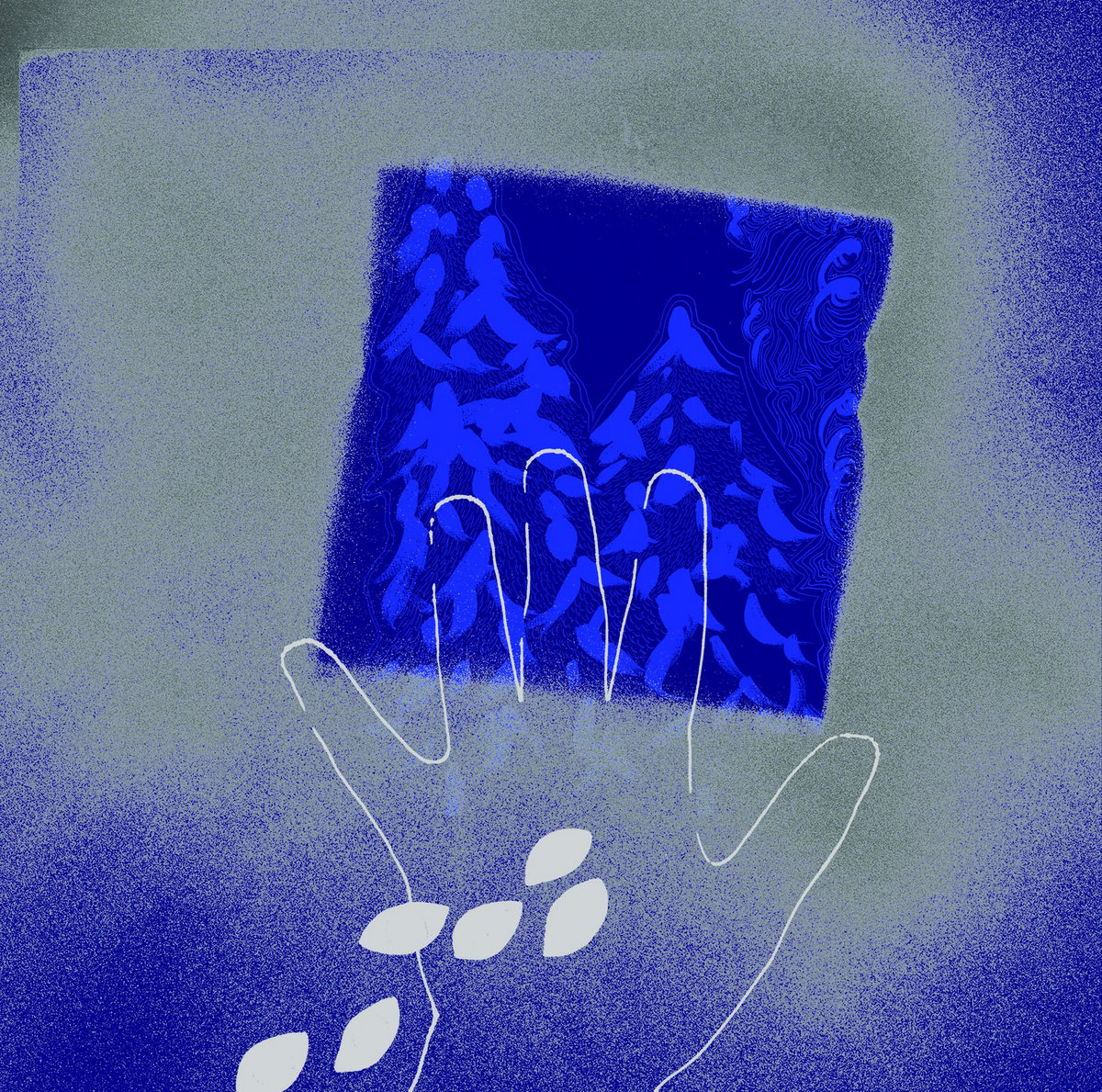 The music of Marijn Verbiesen under her Red Brut moniker is an important piece of evidence for a claim I often make: that amateurishness (or at least the appearance of it) is not an inherently negative attribute, and its presence can even elevate the quality of the work in question. I most frequently appeal to this in the context of more conventional genres, but Red Brut’s lo-fi tape experiments demonstrate its importance in the field of experimental and abstract music as well. Cloaked Travels is a multifaceted expansion upon her self-titled LP that was released by KRAAK in 2018, embarking on two extended four-part suites with the help of a delectable palette of sticky fuzz, queasy warble, and steamy warmth. Even more fascinating on this release is the increased prevalence of a phenomenon of “obscured simplicity” that often lurks at the heart of the tracks; there never seems to be too much going on in a Red Brut piece, but at the same time it’s usually pretty damn impossible to tell how exactly the sounds are being generated. Verbiesen is clearly utilizing the tried-and-true practice of magnetic tape manipulation, but her approach to it is a deceptively singular one that doesn’t turn too much focus toward any single aspect of the medium itself (fidelity, looping, delay, etc.) on its own. Instead, it’s more like it unspools with an unexpected fluidity, mobile and malleable despite its almost plasticky clunkiness, soft wobbling waves of spinning reels and forgotten instrumentals flowing into the humid morning air.
Review: Territorial Gobbing – Police Costume (Beartown, Jun 28)
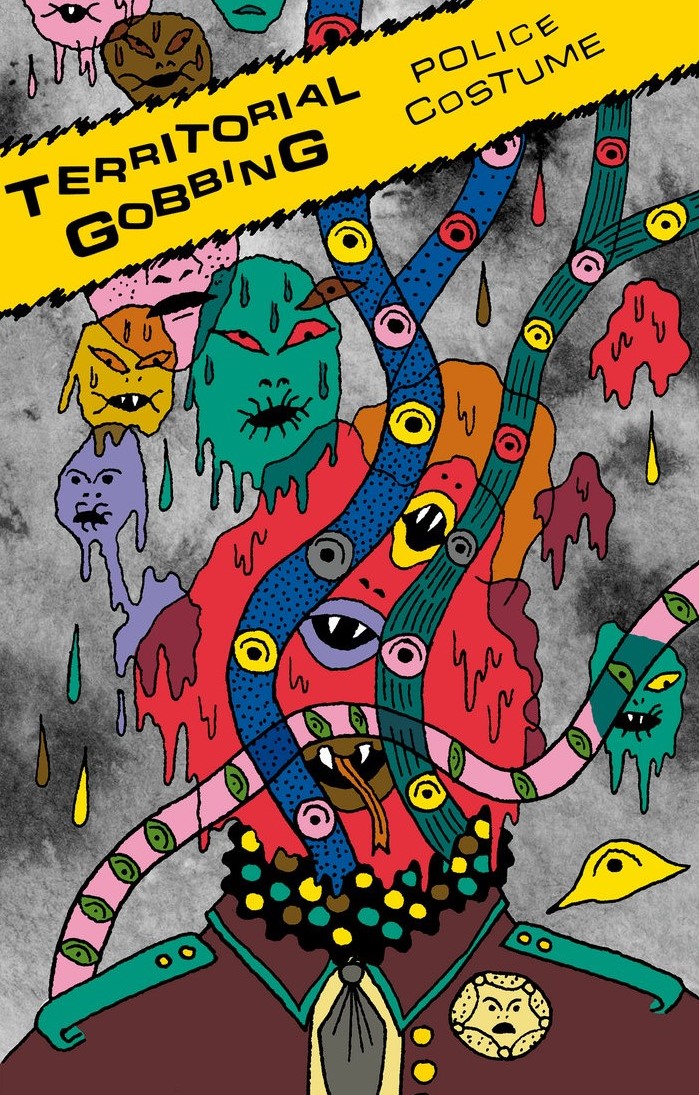 I almost didn’t check out Police Costume because I had the audacity to believe I knew exactly what to expect from Theo Gowans’s prolific Territorial Gobbing project. This was a poor instinct, and luckily one I didn’t end up following. Sure, there are the typical irreverent gargles and rough-edged collaging one (quickly) grows to love, but overall the Leeds art brut master’s response to the absurdity of authoritarian, militaristic police is a uniquely colorful affair, matching the bright, saturated cartoon cover penned by Zad Kokar. “…Or How I Learnt to Stop Sitting on Benches and Love the Cops” is a surprisingly focused bit of noise, and its vivid, vibrant palette of whipping electronics and malfunctioning circuits serves as one of the most exemplary contradictions of the established Territorial Gobbing formula I thought I had all figured out. On the next two tracks Gowans falls further back into his bag of tricks, yet keeps the energy level high with hyperactive re-arrangements and an unsettling amount of volatile, deranged anger behind every saliva-splattering utterance. Something else added is the increased presence of intelligible spoken word, which somehow only seems to add to the confusion and delirium of the proceedings (especially in the case of whatever one? two? three? -sided conversation is happening on “Mic Check One”). Don’t make the same I mistake I almost did; when Gowans is involved, in the words of VJ Emmie, “EXPECT DA UNEXPECTABLE.”
Physical copies of Police Costume are also available from Beartown’s website.
Review: Ilya Ziblat – Strings and Syllables (self-released, Jun 27)
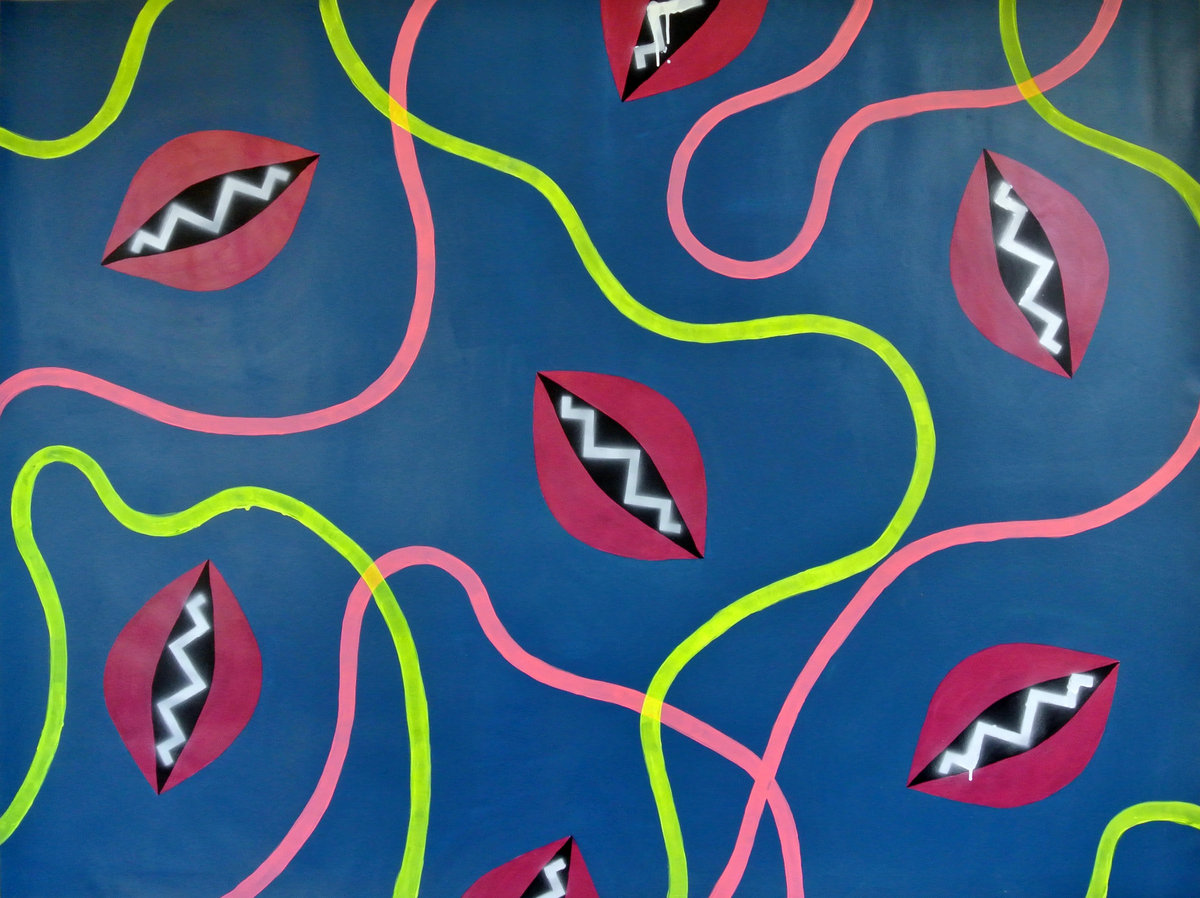 Strings and Syllables, composer and musician Ilya Ziblat’s newest release, collects excerpts from three duo improvisations recorded with string players Maya Felixbrodt (viola), Jellantsje de Vries (violin), and Hen Goldsobel (violone), himself contributing “live electronics” using a real-time sound processing touchpad. The three guest musicians each have distinct styles and approaches they executed during the sessions that are easy to pinpoint amidst the decoupled tracklist, but each most frequently rely on a combination of percussive extended techniques and swelling, resin-shredding drones to provide Ziblat plenty to work with on the fly. He splits time between manipulating pre-loaded speech recordings and what are ostensibly snatches of the string playing itself, grinding it all down into an arsenal of high-velocity granular sound objects. This allows for a sonic agility that provides some of the album’s most impacting moments: when the elements are all so scattered and hyperactive that you can’t even identify what is coming from whom, breathtaking mangled messes of the smallest semblances of musicality. Ziblat’s pad can also work the samples into a dense, impenetrable frenzy, which most often occurs when he is using voice as his source material; it becomes a meaningless swamp of unintelligible verbiage, frequently dwarfing the brighter cries of the strings in its soupy mass. The composer centers the deconstructive approach of Strings and Syllables in the context of the worldwide statue removals and general radicalization that’s been occurring, making it a volatile document of a volatile time.
Review: Komare – The Sense of Hearing (Penultimate Press, Jun 29)
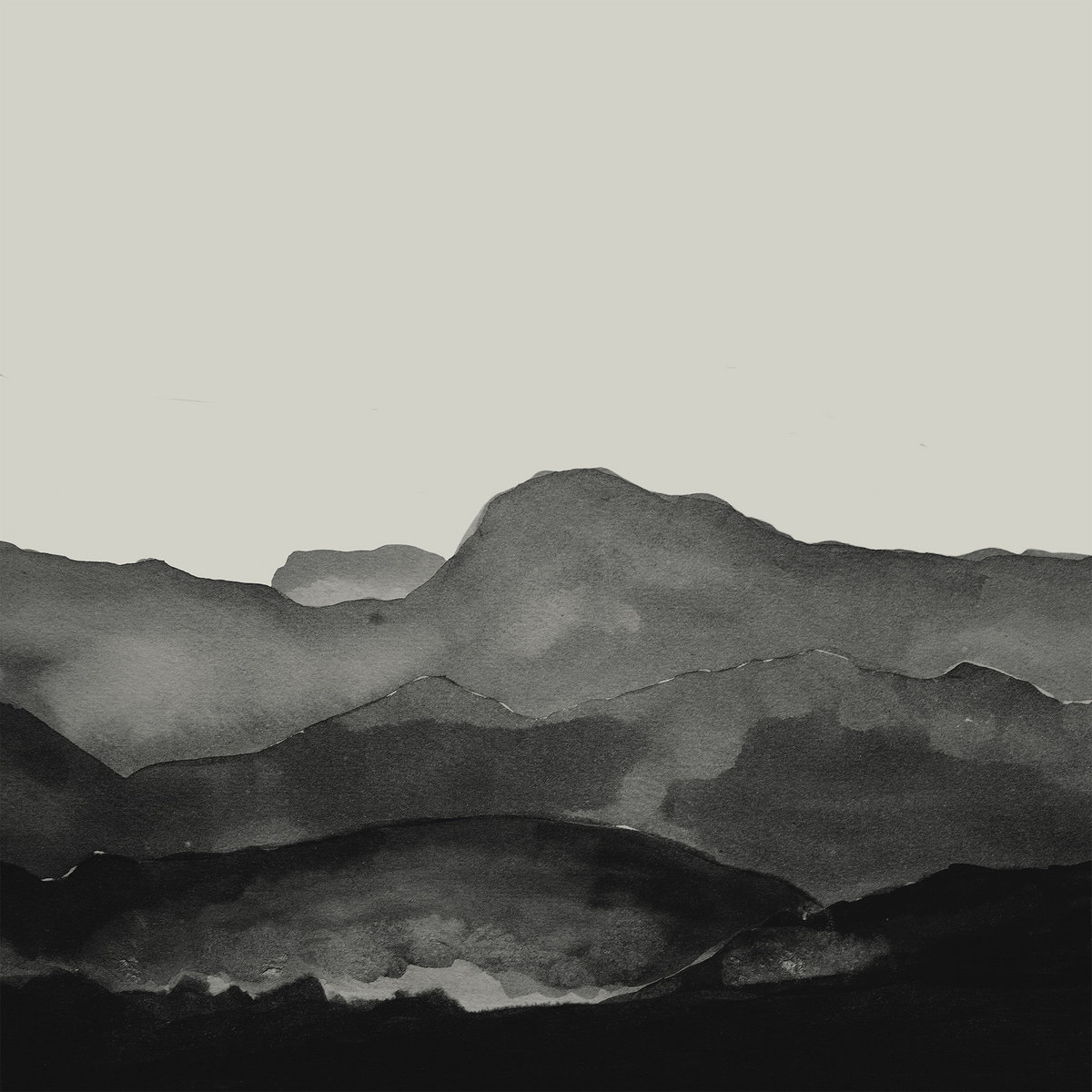 The members of the amorphous UK-based Mosquitoes/Komare crew seem to be no strangers of the sort of existential despair and hair-raising ontology that I can never stop reading or thinking about. The first Mosquitoes 12″ features titles drawn from the work of experimental author Christine Brooke-Rose, whose Out/Such/Between/Thru tetralogy delves deep into surreal, delirious comedy and the confusion and agony of being, but Komare’s new LP—whose pre-release inclusion on my First Half of 2020 list was unconventional but still an absolute no-brainer—reminds me more of the mud-crawling malaise of Samuel Beckett’s “muh-” characters (Murphy, Molloy, Malone, the Unnameable, and finally just ‘a man’), increasingly spare and fragile consciousnesses cast into sentience from void. The sonic palette at work on The Sense of Hearing is perhaps the most minimal of either of the two related groups’ releases thus far: ghostly shades of humming electronics, lethargic delay-slogged vocalizations, shifting and snaking layers, a whole lot of empty space. To listen is to be surrounded by a palpable void, the paradoxically deafening sound of nothingness ringing in the ears as one slides, stumbles, slithers through a pitch-black and entirely unfamiliar landscape. The “drugginess” of this album is certainly an important element, but after many listens I’ve come to the conclusion that The Sense of Hearing gets you a different sort of high than any substance I’ve ever tried; its intoxication is one of blurred perspective, eroded security, creeping doom. The whispered threat of an eternity alone.
Review: E.M. Digital Spazz Unit – To Sterilize Music (Black Ring Rituals, Jun 19)
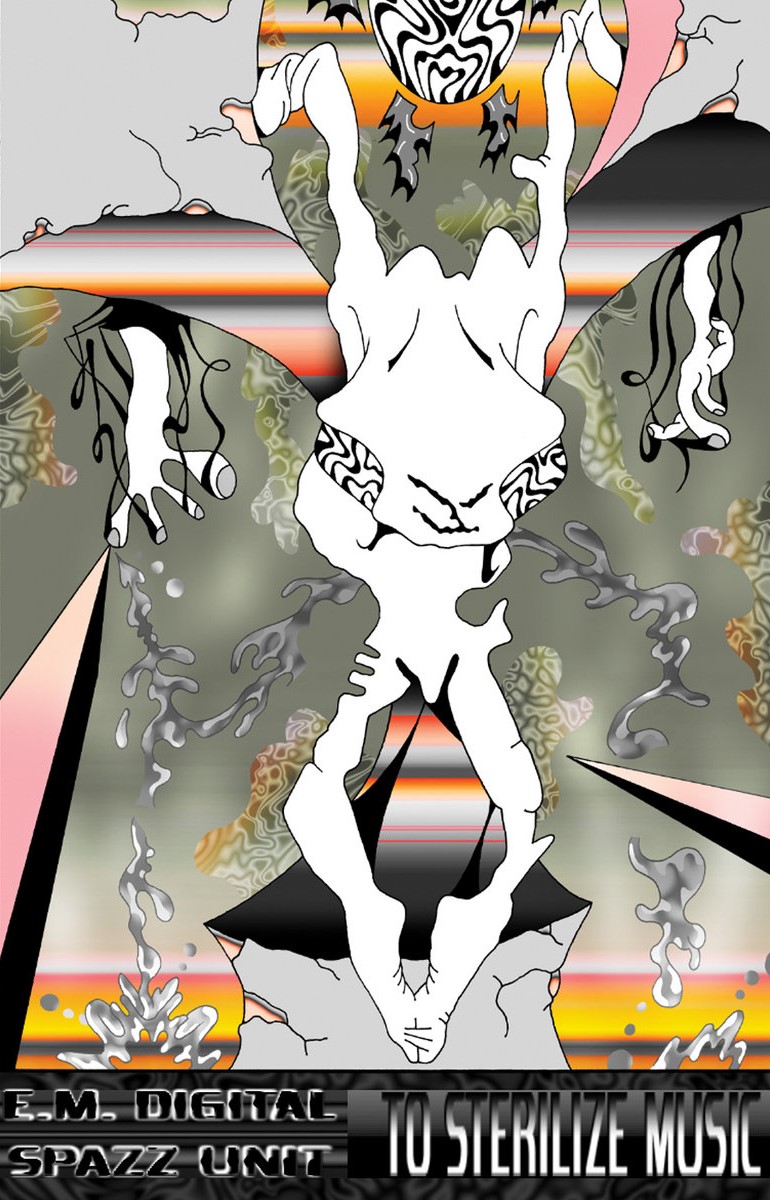 Brandon Wald’s Black Ring Rituals label has come a long way from its humble origins. Originally a DIY outlet for Fargo, North Dakota’s burgeoning pedal harsh and power electronics scene, BRR has grown into an imprint showcasing some of the most forward-thinking noise music available today. Just this year has seen excellent releases from irreverent cut-up connoisseur Appliancide, 8-bit Famicom emulation wall from Bitcrusher, and many others. What is ostensibly E.M. Digital Spazz Unit’s debut cassette is somewhere between those former two examples, making use of both frenzied hyperactivity and motherboard mayhem for its punishing presence. To Sterilize Music accomplishes its titular goal through intense sound curation; there’s not a single element on this album that is not an abrasive, deformed, caustic extract from some condemned digital underbelly, even the vocal samples that are used on “Sponsored Cell Line.” The Spazz Unit is not at all concerned with conventionality, or even with demonstrating the death of conventionality by proudly exhibiting its broken bloody remnants that have been mercilessly ripped apart. It’s simply nowhere to be found in this contorted mass of synthetic, detached, yet always viscerally affecting artificiality.
 Noise Not Music