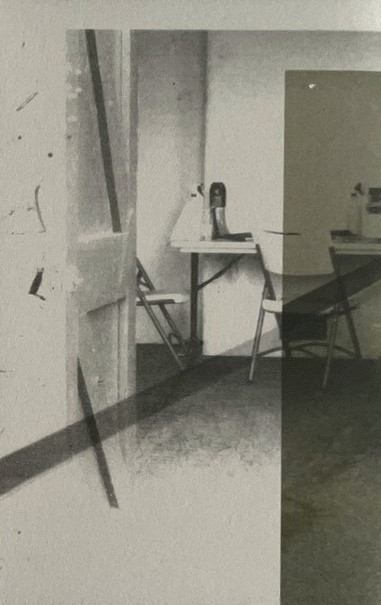
Review: nula.cc – Mayrau (self-released, Jan 1)

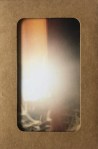
“This work’s namesake is a coal mining pit in Bohemia turned into a museum. The ghosts of Mayrau still hang in the changing room, where the workers’ street clothes were hung high above the floor to serve as a visible sign that their uniformed selves were still down in the pit. The chain and pulley system has grown rusty, and its squeaks have become one of the voices in this piece.”

Mayrau is a 3″-length electroacoustic piece that examines the sonic ecology of the Mayrau Mining Museum in Vinařice, Czechia. One of six new “filecast” entries in the ever-expanding catalog of Lloyd Dunn’s multimedia project nula.cc (both an alias and a URL), it might be my favorite release so far. The descriptive text reprinted above explicitly introduces a paranormal aspect, which is then explored further in the actual music; the scrapes and shrieks of the time-gnawed pulleys soar and then fade in a sweeping expanse of darkness, conjuring a haunting atmosphere that lingers long after the track is over. The composition is built upon field recordings that are both presented in original raw form and digitally processed into shifting shards that contort and complicate the soundscape, reaching toward and occasionally coaxing out the intangible currents of a location marked by hardship and pain. Mayrau is an excellent example of interpretive phonography in how it both depicts and deconstructs the physical environment, achieving a rare strain of hypnosis with its carefully sculpted industrial churn and paranoia-inducing signs of human presence like voices and applause. “Rich” is a word that keeps coming to mind… there is so much detail here, the kind that rewards any level of engagement, whether one just puts it on in the background or listens closely for a deeper investigation of how much of a place can really be preserved, and what that “preservation” does (or doesn’t do) to the things people leave behind.

List: Favorite Albums of 2023

Happy New Year. Thanks so much to anyone who reads, follows, likes, comments, submits, chats, et cetera et cetera. I love you all and wish you the best of the best. I am so much busier now than I once was, but I always make as much time for Noise Not Music as I can because it brings me, and hopefully you, some modicum of happiness, which is so crucial these days. Please keep listening, reading, and learning with me in 2024.

Note: No honorable mentions this time, sorry. Trying to get those formatted correctly has disastrous consequences for my mental health. If you want to see what else I dug this year, check out my Rate Your Music.
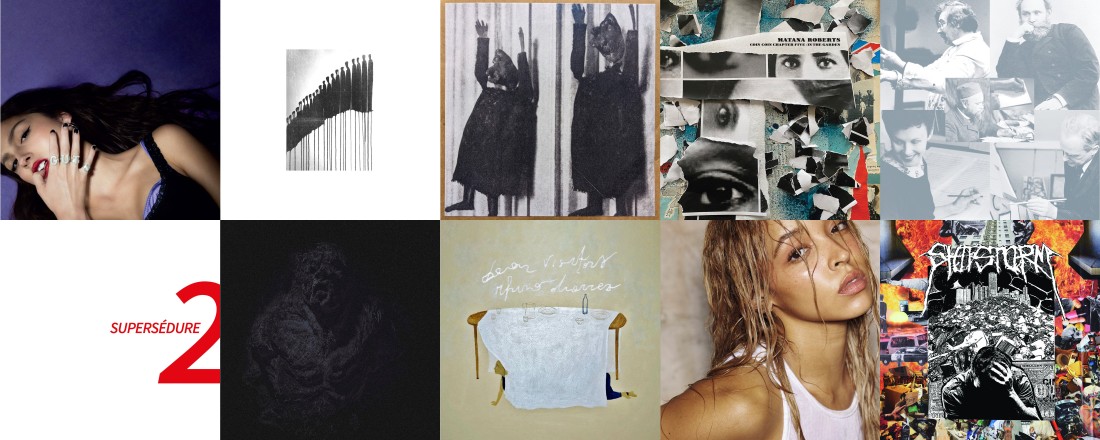

Olivia Rodrigo – GUTS (Geffen, Sep 8)

To many of you this will come as no surprise. But at first, much like SOUR before it, GUTS didn’t make the most significant impression on me the first few times through. The best part about Rodrigo’s music is that the more you listen to it, the better it gets. Now, deep in the winter months, every single song on this impeccably crafted LP hits like a truck as new layers are revealed, new emotions are piqued. There’s a much better flow to the tracklist than its predecessor had, the slow numbers timed just right amidst the generally high energy level, and in fact the best moments of all are when Rodrigo combines her predilections for aughts-indebted electric teen rock and delicate balladry: “Making the Bed”, “Pretty Isn’t Pretty.” Lyrically it’s messy and melodramatic but in a way that pop is sorely missing these days; Rodrigo continues to dig deep into her insecurities and, for better or worse, sings from what she feels rather than what she knows to be true (which makes “Ballad of a Homeschooled Girl” one of the most unforgettable songs).
Jeromes Dream – The Gray in Between (Iodine, May 5)

It topped my mid-year list and my opinion has not changed since then. The Gray in Between is hands down my favorite thing Jeromes Dream has done in all 25+ years of existence and one of the most compulsively replayable albums of the year. It has a distinct, committed sound that it’s impossible to get enough of: “Conversations: In Time, on Mute” and the razor-edge catharsis of its powerful bridge section begs to be looped; the crushing, faintly major-key 3/4 drive of “The Future of Memory” works its way into your bones; the creeping hints of resolution that tantalize throughout “The Last Water Pearl” taper off into an uncertain end. The tone and production choices are deliberate (and good) enough that the stylistic homogeneity never wears; I have little doubt I’ll still be playing this five years on.

Gemengung – Ruins of Convenience (Mechanical Presence, Aug 20)
I wrote in the previous list about the misconception that good noise, especially good harsh noise, is easy to make. I’ll admit that, at least for a while, it was an I-know-it-when-I-hear-it thing, and that’s why I’m grateful for examples like Ruins of Convenience: of such high quality that when blasted at max volume any ears can appreciate the creativity and talent at work (even if those ears are being covered as their owner begs for mercy). Gemengung has consistently captivated with excellent tapes such as The Indifference of Nature and Forced Collapse, but this cardboard-sleeved CD-R released by Jersey’s Mechanical Presence Records is arguably his first album, a perfectly paced set of nine tracks that are both more active and more focused than anything before, fusing scrap-metal agility with a burning undercurrent of heavy electronics. “Trill” is one of the best things I’ve ever heard; one particular moment is a borderline religious experience.
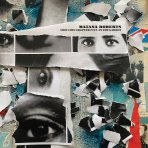
Matana Roberts – Coin Coin Chapter Five: In the Garden… (Constellation, Sep 29)

The Coin Coin series has already proven to be an incredible work of art, even though it hasn’t even reached the halfway point of its promised twelve installments. Each entry expands upon that which came before, bringing in new elements and delving into different histories, spreading new ink across Roberts’ sprawling sonic map. Their virtuosic storytelling anchors In the Garden…, the emotional heights and depths channeled into transcendent free sections unified by some of their most evocative sax playing yet (incendiary in “Predestined Confessions”, pensive in “A Caged Dance”) while insight into the central character is set against backdrops as diverse as propulsive jazz-rock, uneasy electronics, and choral hymns. As usual, Roberts executes effortlessly their dual role as bandleader and worldbuilder.

Guido Gamboa – Left-Handed Club (XYZ Editions, Dec 10)

Originating from a broadcast commissioned by the Viennese radio program KUNSTRADIO (which comprises the first of the CD’s two tracks), veteran sound artist Guido Gamboa’s Left-Handed Club is an ambitious and enthralling suite that blurs compendium and collage, interview and interpretation into “a new collective voice.” Featuring the words—transformed by varying levels of digital interference/deconstruction—of left-handed artists across all genres, media, and time periods, both “Left-Handed Club” and its “Addendum” capitalize on the processing methodology Gamboa has been honing over the years in both research-based explorations (Music for Tape and Spectral/Granular Processes) and more thematic assimilations (2018, A Droll). It doesn’t take long for the abstraction to start making sense, for connections to form, ideas to recur…

Éric La Casa & Seijiro Murayama – Supersédure 2 (Swarming, Nov 21)
I’ve been happy to see many others finding the same joy in Supersédure 2 that I do (and also because it definitely deserves the acclaim). It’s one of those rare albums that reminds you why you fell in love with this stuff in the first place, that difficult, inauspicious beauty is often the best kind. La Casa and Marayama each have extensive and impressive discographies, but this specific duo with its compelling symbiotic approach is easily my favorite project of either artist. Supersédure 2 is such a good sequel to the original release because it doesn’t actually concern itself much with being a sequel, instead simply charting new territory in this mostly familiar, occasionally uncanny dimension where observation, improvisation, and composition meet. Original review
HWWAUOCH – Under the Gaze of Dissolution (Amor Fati, Nov 27)

What a silly thought—that a lighter, more gentle production approach would make a HWWAUOCH record any less terrifying. In “Thou Shalt Not Exist,” the first track on the enigmatic entity’s fourth full-length Under the Gaze of Dissolution, warmer guitar work and clearer drums evoke a kind of sickly ecstasy as the vocals wail what could either be nonsense or the primordial truth of the dark, meaningless cosmos in typically disturbing fashion. This current of deranged joy runs through all 38 harrowing minutes, anchored by agile, Lake-esque bass runs (which are also more audible than ever) and a relentless plodding pace. Highlights include double-tracked tritone leads dueling with tortured shrieks on “Anthrophobia”, corrupted opera moans dissolving into ravaged yelps atop furious blasting on “Echoes from a Thousand Dying Worlds”, etc.

Rhino Diaries – Dear Visitors (Ghost City Collective, Jul 3)
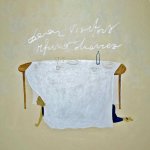
I haven’t been able to find much information about Rhino Diaries beyond the basics: Pordenone-based, duo project of Accotica and Zinaida James. But when the music is this good I can weather a little mystery, especially when the songs seem to belong to the shadows of ambiguity anyway. Dear Visitors draws its infectious atmosphere from both heavy, well-mastered instrumentals (full of crushing post-industrial downbeats and halting, dissonant earworms) and the effects-laden vocals, which range from soft croons to dying robot gasps, never breaking out of a deadened apathy that makes this short sophomore release sound utterly apocalyptic, even in its tenderest moments.

Tinashe – BB/ANG3L (Nice Life, Sep 8)

Even though “Treason” is probably the best opener I’ve heard this year, it took a while for BB/ANG3L to grow on me as much as it has, which I think is my fault; for how light and breezy these songs are, their full essences demand a lot more attention than a few cursory listens provide. The production drives the momentum while Tinashe’s voice lulls it, either tempering busy garage trills and trembles (“Talk to Me Nice”, “Tightrope”) or clinging to the very back of the beat to give a more straightforward instrumental double the snap (“Needs”, “Uh Huh”). Though thoroughly nocturnal, the twenty-minute album is good at any time of day, with tunes like “Gravity” opening up a portal to neon-bathed night.

Shitstorm – Only in Dade (ALT MIA / Malokul, Jun 1)
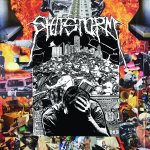
From what I understand they’ve been around since 2006, and yet Miami-based four-piece Shitstorm are just now releasing their debut studio album in 2023. Was it worth the wait? Absolutely—Only in Dade delivers a much-needed adrenaline shot to contemporary grind, ripping through 27 tracks in less than ten minutes in a bass-heavy register that makes each one feel like a jackhammer held flush against your skull. These are no improvised shitcore cuts either; each is tautly composed and carefully sequenced in the track order for maximum punishment. Not even clearing twenty seconds, “Slumlord” and “Bloodclot” are more rewarding and memorable than many songs I’ve heard that are three times that length. The album cover is great, but an alternate choice could’ve been a photo of the drummer’s snare after the recording session—would be just as violent and chaotic.

List: Favorite Cassette Releases of 2023


Renee Willoughby – 33 (Irrational Tentent, Feb 10)

This is the third time I’ve written about this tape, yet I’m discovering that I doubt I’ll ever run out of praise for it. You can read the text from my mid-year list or the original review for the usual pontificating. The bottom line is that 33 feels like an answer to a question you’ve always had. Not some painful epiphany but more of a reminder, a hazy window to the other side as a gentle hand guides you back to ours. Willoughby makes a strong case for this new, powerful form of music-making as invocation with a performance that must have been transcendent to witness in person, and that we all our lucky enough to be able to hear again and again.

Northwoods Baseball Sleep Radio – Northwoods Sleep Baseball (Worried Songs, Oct 27)

Ever want to hear the soothing sounds of a baseball game over the radio without the commitment or stakes of a real-life matchup? Enter Northwoods Baseball Sleep Radio, a free podcast that provides this exact service, complete with made-up teams, players, and ad spots for nonexistent products and services. UK label Worried Songs were such big fans of the idea that they released Northwoods Sleep Baseball, a double-cassette set housed in a handsome wooden box that comprises a single game played by the Tomah Tigers against the Big Rapid Timbers. As music this is a thoroughly enjoyable piece of “focused ennui,” the commentator chatter and muffled roar of the crowd blending into bliss.

Met Glas – Crooked Like a Dogs’ Hind Legs (Pube Provisional Society, May 7)

Something that I end up having to explain rather frequently is that while it’s not hard to make harsh noise, it is very hard to make good harsh noise. There’s so much more intent and skill involved than most would expect, and while you don’t necessarily need the latest top-of-the-line gear, a certain amount of technical knowledge and experience is also required. Canadian newcomer Met Glas is a project that takes the tradition seriously, but not too seriously, and of the several excellent tapes he’s put out this year (Moody BroodingOut and Out and in Favor of Anythiing with THRTDSPLYSpeed Museum), Crooked Like a Dogs’ Hind Legs has ended up the clear favorite. Get a hold of a physical copy if you can, or at least listen through speakers.

Áine O’Dwyer – Turning in Space (Blank Forms, Nov 10)

For anyone who’s been listening to O’Dwyer since Church Cleaners, it’s clear that Turning in Space, her most developed and ambitious release to date, has been a long time coming. The nearly two-hour triptych set (composed of sections titled MotorwavePlaying Place, and Slipstream) marks a new breakthrough in her ongoing research into soundscapes and their strata, each of the many individual pieces a sketch of swirling colors and boundaries, either restless with tension or warmed by light, always fluid and free. This is one that seems like it would be easier heard piecemeal, but I recommend taking the time to listen front to back.

T. Jervell – A Love Letter to Coco (Take It Easy Policy, Nov 18)

Jervell first caught my attention earlier this year with the short but sweet 2nd Two, one of many excellent entries in a busy year of output. But his most recent,  A Love Letter to Coco, is a real step up, something truly special. The tape’s loose, abstract concept/narrative serves as a stage for the Norwegian artist’s assimilative blend of ambient, glitch, and concrète approaches to ascend to new emotional heights. Though still knotted with digital cracks and shudders, there is breathtaking beauty to behold here; “The Warmth of Your Hand as it Brushes Against Mine” alone is one of the most gorgeous pieces of abstract music I have ever heard.

Luigi Bilodo (Vacancy, Aug 8)

“Low-stakes sound art” is a phrase I’ve found myself using more and more to describe a form of experimental music that consistently interests me. This debut tape from the elusive Luigi Bilodo is a perfect example; the approach is both artistic and scientific and the results are delightfully inconsequential. One side offers the hypnotizing percussive texture of rain hitting the top of a cardboard pizza box, the other the rich yawn of a lawnmower trundling across a green, sun-drenched scene—and, together, both are a hastily but lovingly scrawled love letter to backyard shenanigans, the joy of just listeningOriginal review

Puddle – The Gift That Keeps on Giving (Minimal Impact, Aug 9)

As was hopefully implied by its presence on my Favorite Labels list, Brisbane’s Minimal Impact had a particularly strong 2023. I would’ve had several answers to the question of which was my favorite tape of theirs throughout the year, but the one that seems to have stuck around most is The Gift That Keeps on Giving, the first release by Brisbane project puddle. Advertised as “[taking] influence from the glut of contemporary Americanoise, citing Worth’s Blinder LP as as well as classic Japanoise such as C.C.C.C.,” it follows through on its promise, delivering a lush bout of dynamic harsh with a fury that burns through the six feet of grave soil it’s buried beneath.

Aaron Dilloway – Bhoot Ghar: Sounds of the Kathmandu Horror House (Hanson, Jun 2)

Dilloway’s visits to Nepal have generated several great field recording series over the years, but Bhoot Ghar, which documents a family trip to the eponymous haunted house in Kathmandu Fun Park, has to be the best yet. Though not overbearingly so, the tape is structured so as to allow the listener to join in on the journey, from the entrance and surprisingly scary (and physically hazardous) halls of the attraction itself to other environments in the park like the bumper cars and Ferris wheel. The Hanson honcho has a knack for making his appreciation for the sounds he captures clear without it getting in the way, and thus Bhoot Ghar is an account of a memorable experience than is memorable in itself.

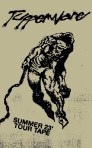
Tupperware – Summer Tour Tape ’23 (self-released, Jul 18)

Though physical copies were only available on the actual tour and somehow there was not a single date in any NYC borough—so I’m still in the market for one… hint hint—this list would be amiss without the latest recordings from the most tape-bound band in hardcore right now. As fast, minimal, and punishing as always, this new round of seven songs are some of the trio’s most rough-edged and unpredictable yet, from the breakneck blowout of “Intro” to the equally whiplash- and headbob-inducing tempo changes of “Memo.” Still holding out hope to see them play someday, which will no doubt leave my eardrums as maxed-out as the machine these tunes were tracked to.

John Collins McCormick – Healthy Alternative to Thinking (Eh?, May 9)

Tactility is the name of the game in McCormick’s work. No matter how concrete or abstract the sources he happens to be utilizing are, there’s always a distinct sensation of one’s head being massaged by physical actions. Healthy Alternative to Thinking is one of the more literal manifestations of this that the Detroit-based artist has released; after a diverse set of four tapes on his new self-publishing arm Garbage Strike, here he returns to the familiar basics of trivial object interactions, this time driven by agitated surfaces (by way of stand-mounted subwoofers) rather than direct manipulation.

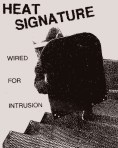
Heat Signature – Wired for Intrusion (Head Meat, April)

This eminent US-based duo is well known for their technical and thrillingly fast-paced live approach to direct-action harsh noise, but Wired for Intrusion sees Tandy and Griggs experimenting a bit more on the studio side, wrangling source material contributions from scrap metal maestro Ahlzagailzehguh on A-side cut “Packed with Plastique” and stitching together the loose collage of B’s “Blown to Hell.” None of the usual intensity is sacrificed, however; both tracks have an unrelenting momentum to them that holds up throughout the intricate layers of detail and distortion.

Ezio Piermattei – Rosume (Joy de Vivre, Mar 29)

Piermattei has developed a distinct and singular sonic language with his past few releases, and Rosume feels like a culmination of it in a lot of ways (though I’m sure I’ll be saying the same thing, with even more enthusiasm, about whatever he does next). Since Gran trotto the textures have grown more anxious and the environments more claustrophobic, and here we descend into dream territory with tape-based arrangements that give a semi-intelligible voice to lost trinkets and dark empty spaces. With Piermattei, any given sound—no matter how ephemeral or bizarre—is always leading into another, and the resultant narratives are filled with shadow, suspense, and a strange sort of sense.

Feature: Favorite Labels of 2023

There are no narratives so loud and encompassing as decline, negativity, doom… which is why Noise Not Music is resolutely concerned with currents flowing in the opposite direction. While I never aim to ignore or neglect that which is undesirable but no less real, I always hope to spotlight progress and promise rather than downturn or failure. I always hope that those who come here for support leave feeling supported. I always hope to be more amplifier than noise.

Here are the active initiatives that deserve our support, the noises whose amplification is well-earned.


[Majazz Project] مشروع مجاز (Palestine / UK)

It is difficult to focus on much at all, let alone art, when a genocide is being carried out. We should all be spending every possible moment doing what we can to spread awareness of and stop the zionist entity’s active extermination of the Palestinian people. But one need only look to the voices of Gaza and the West Bank to see that art, and specifically music, is one of many ways those so far removed from the suffering can enter into universal solidarity with those experiencing it. Mo’min Swaitat founded Majazz Project, also known as the Palestinian Sound Archive, not only to share the sounds of his nation with the world but also to preserve a history that is under direct threat of being intentionally erased. Reverently curated to preserve a culture determined to resist but not solely defined by such, the Archive makes available archival material that ranges from protest music of the First Intifada (Al-Fajer Group, Riad Awwad) to recordings of wedding band performances (Atef & Qassem, Ahmed Al-Kelani) and spoken word poetry.

Buried in slag and debris. (Nova Scotia)

In addition to regularly publishing handsome cassette and LP editions of work by sound artists based in Canada and beyond, Buried in slag and debris. is also behind the (relatively) widely read Untitled zine, a semiannual full-size periodical that collects essays, interviews, and reviews by a revolving cast of contributors both familiar and new. Even in a world where pundits have been declaring the death of print for decades now, the noise community unsurprisingly retains its fair share of physical publications, with new ones seeming to pop up left and right. But Untitled fills a gap that Rocker (which just saw its first issue out via the hard work of the No Rent team) and A Wall of Text (edited and produced by Sven Kay, wall noise aficionado and Absent Erratum operator) don’t in that it’s less personal and more anthological, providing a neutral, composite platform where bubbles are broken and ideas are shared. That’s not to say the zine overshadows BISAD’s musical arm, because both are formidable; 2023 alone saw a total of twelve new releases, no two of which sound alike.

Krim Kram (Cork)

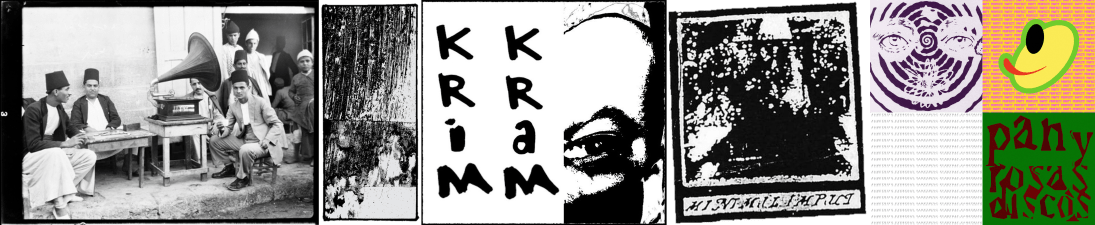
After staking out a sizable slice of the underground landscape with one of the stronger inaugural batches in recent memory, Krim Kram has kept things consistent with each drop since. This year saw three rounds, and each continues to be more eclectic yet inspired than the last: first Cyess Afxzs, Rick Potts, and LDNS & Yakkida in May; then Ted Byrnes and Maggiore & Speers in August; and finally (with a jump from KK-11 to KK-15, a sign that another tripartite drop is in the works) an impressive swan song from UK outsider mainstays Usurper in the form of a colorful six-panel digipak CD earlier this month. The forces behind the already venerable label clearly have a love for abstract music that is not just deep, but holistic, and there’s a tremendous amount of care put in to faithfully representing drastically different approaches and spheres of the global avant-garde zeitgeist, to honoring longtime legends while simultaneously giving new blood a leg up.

Minimal Impact (Brisbane)

Fiercely committed to immortalizing the diverse, often hazardous transmissions burbling up from the Brisbane scene, Minimal Impact is also of a final bastion of tape labels with a radically DIY ethos and aesthetic. When utilized effectively, low fidelity is not a gimmick but a governing principle; the psychoactive aura of tapes like Gypsobelum’s Chitinous and CC & Tiles’ Subaru Is Somehow Related to the Pleiades is only catalyzed by the layers of dust and grime that swathe them. There’s definitely a unifying focus on noise and its various mutations, luckily for me often tending toward shit-fi harsh (Puddle’s The Gift That Keeps on Giving is one of the best recent examples I have encountered, and the collaboratively produced Enjoy Our Last Century on Earth / Armenia split forges ties with like-minded imprints in Ecuador/US and elsewhere in Australia) or no-fi motheaten scuzz worship (S27E152’s A.D.T.F.), but MI also keeps things interesting with lighter, melodic digressions such as Cristian Usai’s Lily’s Memories.

Black Editions (Los Angeles)

One part of a threefold partnership along with Thin Wrist Recordings and VDSQ under the Black Editions umbrella, Black Editions oversees some of today’s most exciting and important archival music projects. Thin Wrist initially caught my attention with their devotional remaster treatment of Surface of the Earth’s debut last year, but BE really stepped it up in 2023, concretizing avant-garde history in both the US and Japanese scenes with posthumous documents from Milford Graves, Shizuka, and Masayuki Takayanagi.

Party Perfect!!! (Chicago / Queens)

Getting their start in the final month of 2022 with a superb four-way split, Party Perfect!!! really hit stride this year with releases that exemplify their focus on radical computer music. Technical Reserve’s Personal Watercraft presents the winning combination of TJ Borden and Other Plastics, Envelope Demon / For David Stockard digs deep into the conceptual side of things, Stoppages Vol. 1 [∞] makes process composition fun for the whole family.

Everyday Samething (UK)

An excellent rule for a label is to not release anything that follows the rules. Everyday Samething, along with its artists (Garden Path, Perrier and Rigg, Positive Paranoia, and some who are not even named) are dedicated to subversion; their flagship website is a noninteractive static page, their choices of physical format are often deliberately inaccessible, and the music they peddle is like nothing anyone has heard or will ever hear. Heroes.

pan y rosas discos (Chicago)

Even if they didn’t put out material as fascinating as they do, Chicago’s pan y rosas discos get plenty of points in my book for maintaining an independent distribution platform for digital music free of both price and formal copyright for over a decade now. Over three hundred releases later they’re still going strong, spicing up the scene with unruly works ranging from duo free improvisation (Crossings, Wasserläufer) and outsider electroacoustic (Fifty-One Aural Selfies // Real Time) to sensory-overload samplefuck (Psionic Youth).

List: Favorite Archival Releases of 2023


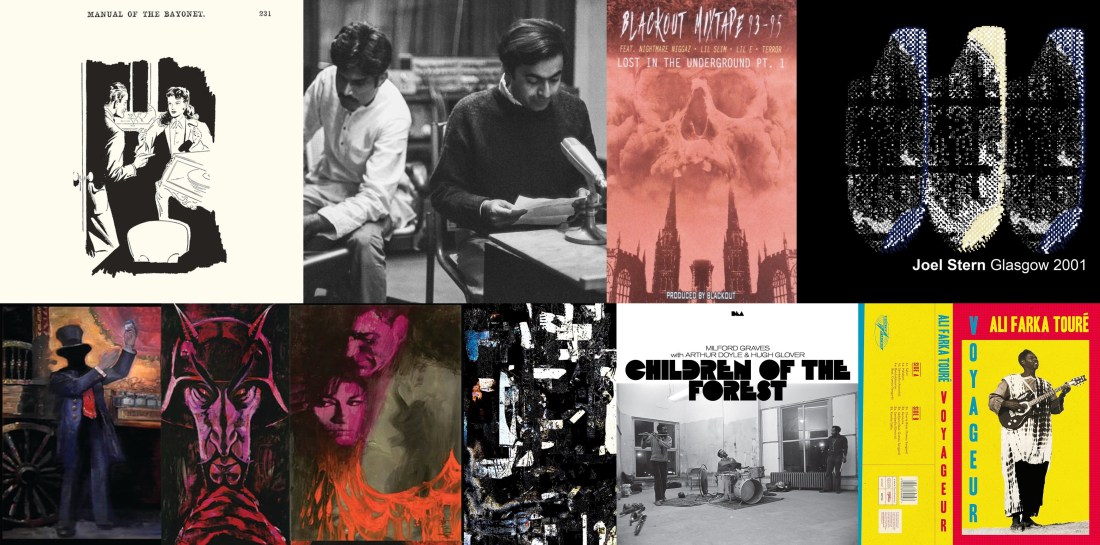
Jackie-O Motherfucker – Manual of the Bayonet (Feeding Tube, Feb 24)

Of all the artists and acts either directly or tangentially related to the “New Weird America” movement, Jackie-O Motherfucker has always seemed the most “American” to me (less in the sense of some nationalistic allegiance to the empty signifier of the country itself and more relating to the wealth of culture and tradition that happens to have occurred here). Listening to JOMF’s music is like taking a delirious stumble through history while at the same time hearing something distinctly new. Manual of the Bayonet, an unreleased album from the band’s golden age of 1999–2001, is no different; here are the same currents of forgotten folk and mystic spirituals filtered through a ramshackle improvised framework, generating such magic as the hallucinatory plod of “Breakdown” and the electric revel of “Red Slipper Ritual.” Original review

Various Artists – The NID Tapes: Electronic Music from India 1969​–1972 (The state51 Conspiracy, Oct 6)

In some cases, documents like these are mere historical curiosities rather than engaging collections of music in their own right. This is not one of those cases. Featuring newly unearthed work by S. C. Sharma, Atul Desai, Gita Sarabhai, Jinraj Joshipura, and I. S. Mathur along with a piece by renowned composer David Tudor (who also facilitated the formation of the electronic music studio itself), The NID Tapes immortalizes a brief but fertile period of creativity and experimentation, the enthusiasm behind it bubbling out in every short track. Most of the individuals involved produced both full-fledged compositions and exploratory sketches (e.g., Sharma’s “After the War” and “Electronic Sounds Created on Moog,” respectively).

Blackout – Lost in the Underground Pt. 1 (Trill Hill / Snubnoze, Aug 19)

Memphis hip-hop, in the classic sense, is timeless. Not only do countless heads across the world still listen to tapes that are more than thirty years old now, but the scene and coextensive genre continues to assert its influence in modern trap, lending practices and aesthetics even beyond the now-ubiquitous triplet flows it pioneered.  Blackout is a figure standing with one foot in the past and one in the present, exemplified by his frequent archival projects (don’t forget about the fantastic Dreamworld sequel released last year) and his still-frequent production credits. Lost in the Underground Pt. 1 collects some of his most compelling beats paired with bars by usual suspects Lil Slim, Lil E, and Terror, documenting how high of a level Blackout was operating at as early as ’93. Though there has been no explicit promise of more material in this vein,  the inclusion of “Pt. 1” gives me hope. Original review

Joel Stern – Glasgow 2001 (scatterArchive, Mar 20)

It’s only through retrospection that certain individuals stand out amidst the bustling improvised music renaissance that was the early 2000s, and by now there’s no doubt that Joel Stern is one of these. From his sublime duo collaborations with Anthony Guerra to the eternal impact of Sunshine Has Blown, few artists juggled technical innovation and emotional resonance with the same ease or intensity. Glasgow 2001 captures a rare solo performance with an approach drawn from Stern’s interest in both field recordings as a compositional ingredient and gestural tabletop improvisation, humbly facilitated using minidiscs and binaural microphones.

David Gilden – Texas Pillbox (Fusty, Jul 18)

First released in a limited edition as a set of sixteen cassettes housed in a steel ammunition box, more copies of this sprawling discography treatment of one of US noise’s most significant voices will reach eager ears next year in 18xCD form. Spanning the years between Gilden’s first solo recordings and those with Richard Ramirez as The Siamese Model to his final opus Depress / RegressTexas Pillbox comprises the most complete and definitive collection of the Texas Chainsaw Dopefiend’s influential body of work thus far—and likely ever.

Yellow Swans – Left Behind (self-released, Nov 17)

What’s more surprising news in 2023, the release of previously-unheard Yellow Swans material or a semi-coherent promise of upcoming brand-new Yellow Swans material? I’d have to say the latter, but the former is still something special. The aptly titled Left Behind presents roughly half an hour’s worth of the classic late-period palette of euphoric harmonies and resolutions buried beneath suffocating layers of hulking, distorted psychedelia, with some pensive guitar noodling woven in for good measure. “For JR” is a new favorite track of mine and proof that even the castoffs of the band’s discography are still a head and shoulders above other projects’ best work.

Milford Graves – Children of the Forest (Black Editions, May 19)

Seeing Fundamental Frequency, a posthumous exhibition of the work of Milford Graves at Artists Space in downtown New York, is one of my most treasured experiences of the past few years of my life. An artist in every sense of the word, Graves was and is a fixture of the very soul of contemporary jazz and improvised music, a fact exemplified by these incendiary 1976 sessions with Arthur Doyle and Hugh Glover. Comprising recordings from three dates (the first with both Doyle and Glover, the second with only Glover, and the third solo), Children of the Forest and its revelatory percussive lifeblood could never be mistaken as having been produced by any other hands than Graves’.

Ali Farka Touré – Voyageur (World Circuit, Mar 10)

Even close to two decades after his death, the music of Ali Farka Touré remains distinct and eternal. Infused with both Songhai tradition and the soulful grit of Western blues, the Malian legend’s virtuosic yet understated guitarwork is rendered in enthralling clarity on Voyageur, a compilation of both full-fledged songs and impromptu jams recorded between 1991 and 2004. The tracks featuring Wassoulou phenom Oumou Sangaré are especially mesmerizing, from the hypnotic pentatonic vamp of “Bandolobourou” to the horn-led “Sadjona.”

Mix: Christmas in Mourning

Please donate to Medical Aid for Palestinians.

Today (December 24, 2023) at 8:00 p.m. Bethlehem time, Radio Alhara broadcast “Christmas in Mourning,” a program featuring the voice of Church of the Nativity choir head Laurence Sammour and composed by Beirut sound artists Abed Kobeissy and Sary Moussa. The following is their own description of the work:

It is with profound humility that we approached this work particularly in light of the inhumane brutality that present-day Palestine is witnessing. The immense cultural and spiritual significance of this land weighs heavily on us. Throughout the writing process Laurence’s voice and his presence served as a testament to an enduring vitality that this musical tradition holds. We hope this sonic piece reflects our awe of the heritage on which it is based, as well as our deep appreciation of the opportunity to contribute in producing art that, in many ways, sheds a brief light on the story of Palestine and its people. This commissioned work asserts Bethlehem’s decision to cancel all festive aspects of this year’s Christmas while Gaza is fiercely facing what can only be described as the purest forms of evil. For us, as musicians from Beirut, to be given the opportunity to be part of this stand, is a treasured privilege, to say the least.
This mix is bookended by excerpts from “Christmas in Mourning” and aims to represent global love and support for Palestine amidst not only an unambiguously genocidal campaign by the illegitimate settler state of Israel but also the complicity in and outright encouragement of it by white supremacist zionists everywhere. Though Palestinians grieve the unfathomable loss of life, livelihood, and liberty, they also have hope, and hope will always defeat fear, hatred, and any other monster that thrives in the dark. Solidarity now.

00:00. Abed Kobeissy, Sary Moussa & Laurence Sammour – “Christmas in Mourning” [excerpt]

04:00. Sary Moussa – “Distance” from Imbalance (Other People, 2020)

04:25. Msylma & Ismael – “Enter Stage Right” from مذاهب النسيان [The Tenets of Forgetting] (Éditions Appærent, 2022)

11:28. Asifeh – “Ride Into Haze” from 2003 (self-released, 2020)

14:21. Bint Mbareh with Kareem Simara – “Jineen”

20:55. Fadi Tabbal – “Ceremony by the Sea” from Subject to Potential Errors and Distortions (Ruptured, 2020)

24:34. Yousef Anastas – “Through the Storm, in Your Arms” [excerpt]

28:19. داكنْ [Dakn] – “ج​و​ا ب​ع​ي​د [Too Low, Too Far]” from Too Low, Too Far (Bilna’es, 2020)

30:50. Petrels – “Concrete” from Haeligewielle (Tartaruga, 2011)

37:51. “Christmas in Mourning” [ending]

Review: Éric La Casa & Seijiro Murayama – Supersédure 2 (Swarming, Nov 21)

The long-awaited but nonetheless unexpected sequel to one of the most widely beloved documents of improvised music is finally here in the form of Supersédure 2, the first material from field recordist Éric La Casa and percussionist Seijiro Murayama since the original Supersedure in 2009 (I’m not sure of the significance of the presence/lack of the accented E, if any). The two seasoned sound artists’ collaborative formula remains largely the same for this formidable follow-up, though the sonic milieus captured, transformed, and occupied seem to lean more toward interiors than exteriors. Fourteen years is a long time, but La Casa looks even further back in time to assemble the arsenal of recordings he wields, with some of them being unearthed from as early as 2003. Recurring elements include echoing footsteps, digital appliance tones (barcode-scanner chirps, forklift backup beeps, mouse clicks), and more. Murayama is as sparing and precise as ever in his contributions, often deliberately mimicking the metronomic intervals of the aforementioned motifs. The first section of Part I is an immediate and representative introduction or (re-introduction for those already familiar) to the duo’s dynamic, with precise snare cracks cutting through and building tension between intermittent unfoldings of industrial environments like auditory pop-up pages, while the third reverses spatial trajectory to transform wide-open warehouse spaces into intimate tabletop operations, helped along by muted stick rolls. Yes, the overall focus is definitely on indoor dramas, but Supersédure 2‘s most affecting moment occurs at the end of Part II when the action abruptly moves outside, concluding the suite with a birdsong/snare duet that I can’t stop thinking about. Even after several listens I’m still extremely excited about—and grateful for—this wonderful release.

Review: B33N – Whole Kernel Niblets (Phons, Nov 6)

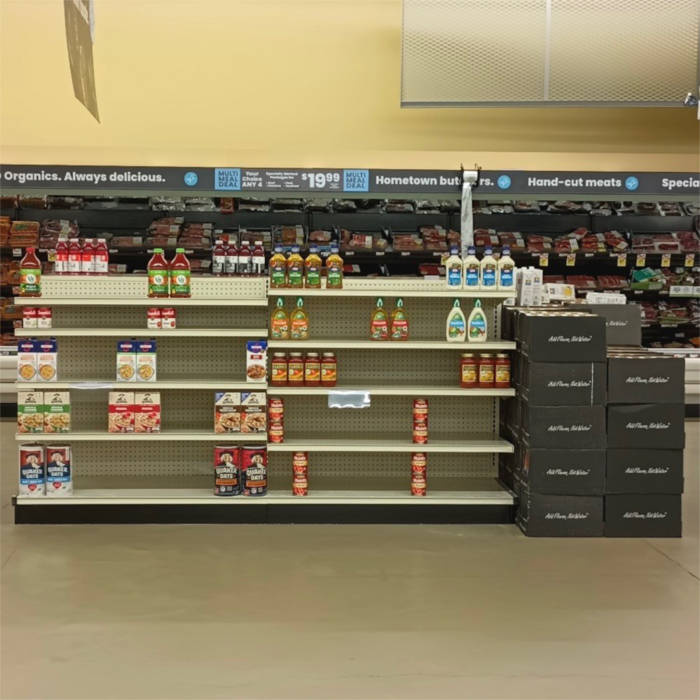
Even if you haven’t yet heard the first release by B33N, it should come as no surprise that Seamus Williams once collaborated with New England neighbors Staubitz and Waterhouse. I bring this up because the same flavor of masticated mundanity that so enthralled me when I first heard “Pickup for Mark” on the Pawtucket duo’s first double-A 7” emerges right off the bat in this debut collaborative release from Williams (of TVE and Ayurvedic fame) and fellow anti-music apostle Liam Kramer-White (check out excellent solo documents Every Moment Worldwide and this year’s For Every Moment Upon Which It Was, as well as LOL with Arkm Foam as LMFAO), though the overall effect is markedly different. The pragmatically named project—Kramer-White: “It’s called Been [sic] because it’s something we’ve been working on”—sees the two artists sharing recording and editing duties, the former and quite possibly the latter accomplished using mobile phones. Electroacoustic manipulations are applied sparingly, usually adding only minimal wrinkles or tinctures to a mostly intact soundscape rather than complete restructurings. The single 3”-length piece that comprises Whole Kernel Niblets is wrapped in a queasy plastic sheen, evoked by both diegetic sounds from food packaging and shopping carts and the distinctive digital slur of gutted spectra and bitrate reduction. Though largely absent of explicit human presence, it at once captures and replicates the rhythmic, numbing tedium that occupies a much more significant portion of everyday life than many would care to admit, as well as the fleeting bursts of happiness and horror that hide in the most inconsequential-seeming of moments.

Review: Murmur / Fowl – Balcony (Buried in slag and debris., Oct 27)

Only one of several multi-artist entries in the latest Buried in slag and debris. batch (which also includes a collaboration between label alum dang. and Howard Stelzer and a sprawling 2xCS faceoff between household names Knurl and ARTBREAKHOTEL), this inspired pairing of two newer voices in minimal analog noise takes a less contrastive curatorial approach than the Slow Blink / Stomachache matchup reviewed last week, instead featuring artists with similar but nonetheless distinct sounds. Toronto-based project Murmur (Ross Henteleff) has been around since at least 2021, self-releasing scuzzy low-profile music on digital platforms and DIY physical media, but even 2022’s excellent Anecdotes and this year’s untitled CD-R also seem like stops along the road to the four short pieces that comprise the A side of Balcony. Henteleff dexterously mines both the caustic and the clement textures of a tape-centric setup: the rough-hewn second cut wields the former; the pensive third the latter; and the fourth both at once, stitching together sandpaper loop tendrils as an almost tender undercurrent swells. Not much information about Fowl (Ben Symonds) is available yet, but the side speaks for itself. These tracks seem scraped from an even grimier undercarriage than the previous four, hissing and sputtering like an off-brand infernal machine. They lean toward stagnancy in a way I really enjoy, especially the third, in which paranoid clunks and creeping feedback inflect the filmy stream draining from a rusted sonic spigot. The aesthetic comradery between both projects makes for a cohesion rare among splits; Fossils’ and Darksmith’s Million Year Spree comes to mind as another example (that also serves as a pretty good RIYL).

Review: Slow Blink / Stomachache split tape (Hectare, Oct 17)

Visionary hermits hailing from Chattanooga and Minneapolis, respectively, pair up for this dusty split C42 on the latter’s new imprint Hectare. (Side note: shout out to Stomachache for always keeping me stocked with copies of his new releases; 2021’s Good Machine cassette and this year’s Capacity Limit / Compressor lathe 7″ are also great and well worth checking out.) I had never heard of Amanda Haswell’s Slow Blink project before now, but consider my ears opened because her contribution, the side-spanning “Axis Tilt,” is a tremendous feat. Longing loops spool up haunting laments that breathe and grow instead of decaying away, letting more and more light in as the piece progresses—dissonance becomes harmony, tension dissolves into catharsis. The piano-led second half that melts into bliss like frost on a sun-drenched window is so affecting that listening to it aloud alters the very essence of the space you’re in. On the moodier flip, Stomachache delivers a pensive suite of his distinct spin on stripped-down, subdued analog noise: “Zone” turns the equipment-strewn tabletop into a miniature dramatic stage production with narrative arcs of shifty stumble and rickety rumble; cryptic whispers haunt the shadowed crawlspaces of “Finally Secret.” Both artists, each having been active for the better part of a decade, are at the top of their game here; even with somewhat disparate (though complementary) approaches and atmospheres, this tape offers up some of the best tape music I have heard in recent years.