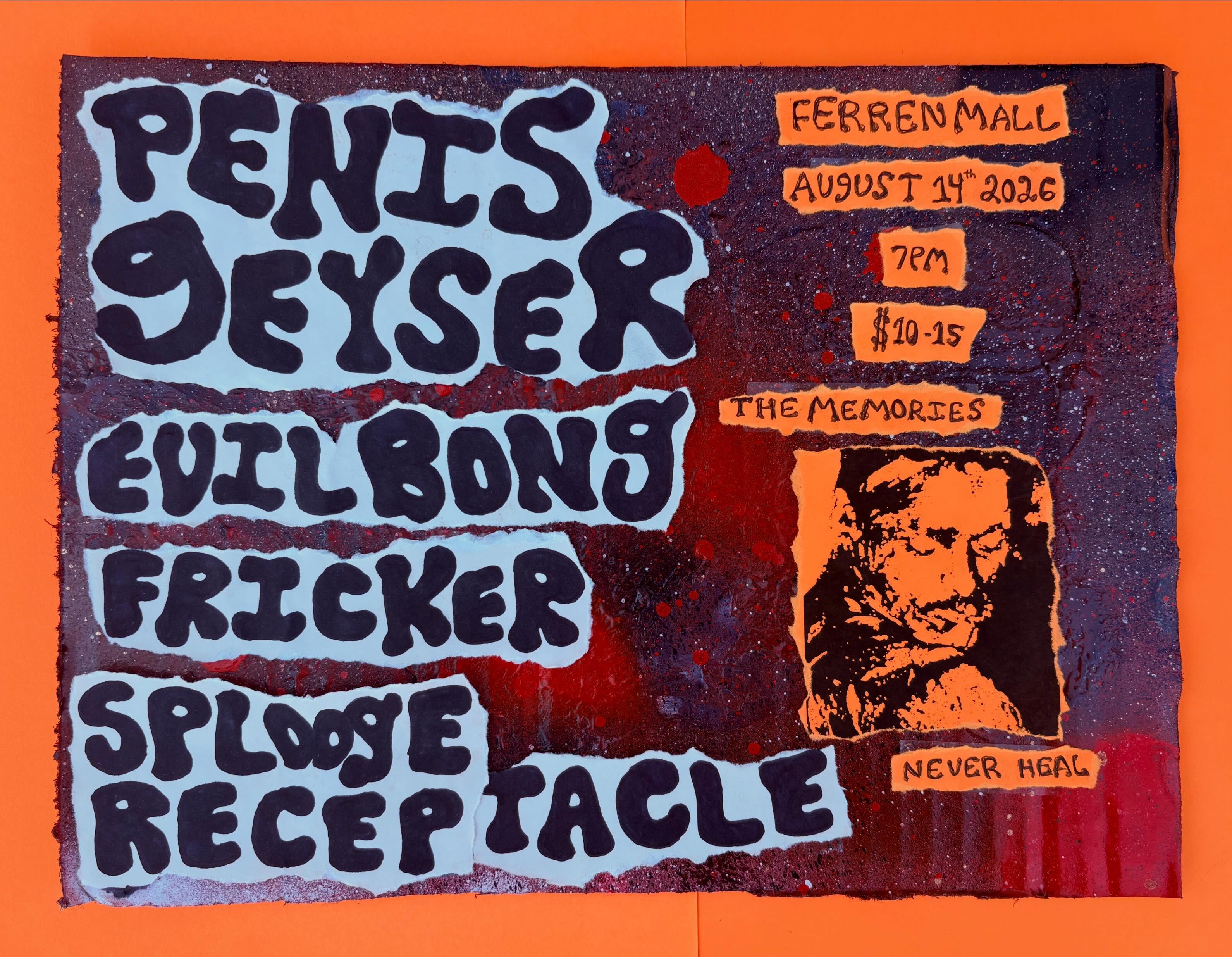
August 14th was another joyous evening in New Brunswick, New Jersey, which is quickly establishing itself as a hot spot for any touring noise acts to stop through on the east coast. Considering the enthusiastic attendees and diverse local talent pool available for these shows though, this comes off as no surprise. As a result, acts of both the new and old guard are able to use this intimate basement setting as a proving ground to show their stuff to a rather open-minded but critically thinking crowd. So when Midwest noisecore legends Penis Geyser announced they would be touring in celebration of their twentieth anniversary, booking them a show in Hub City was a no-brainer.
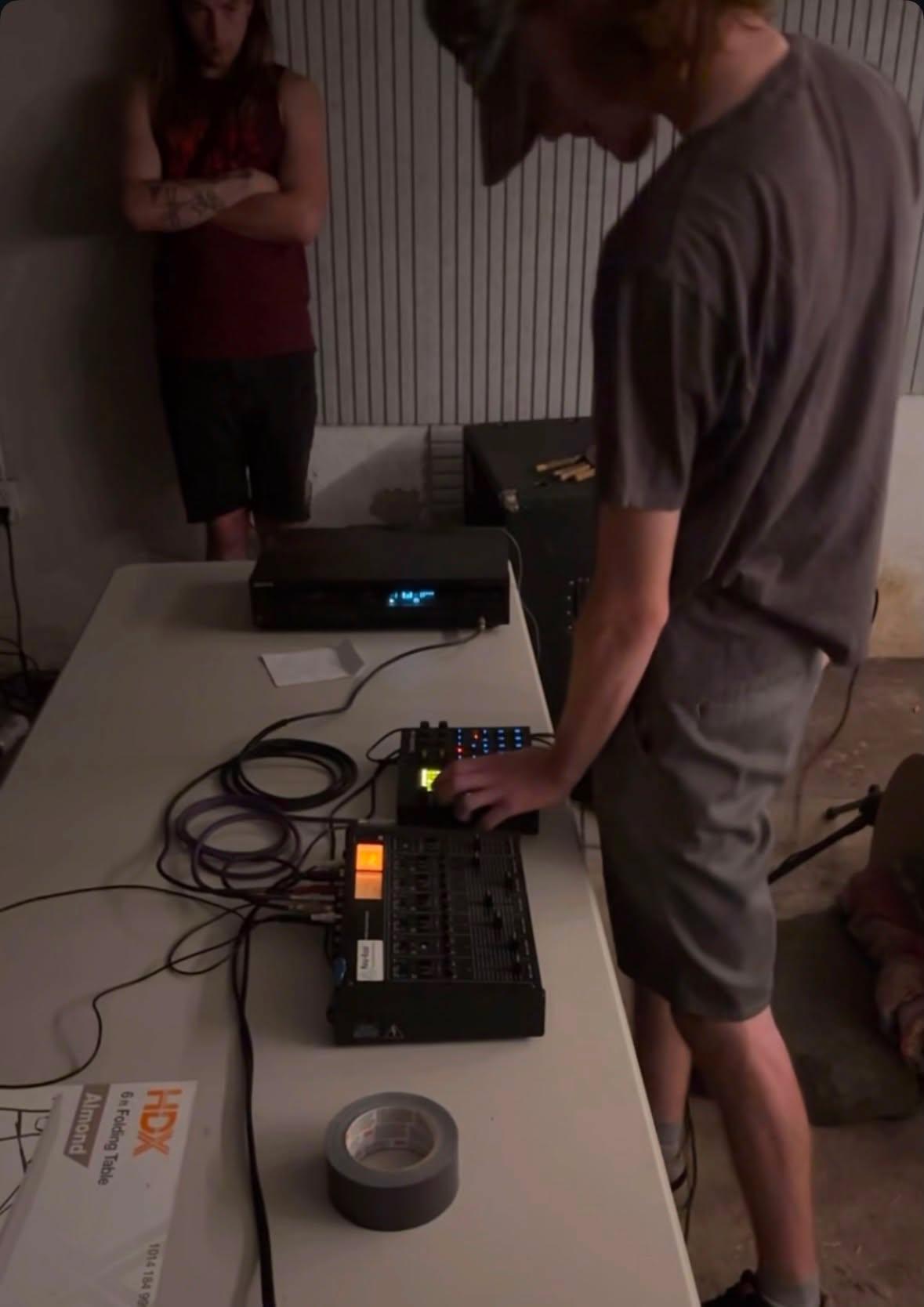
First act of the night was FRICKER, who I would put into contention as modern noise’s best kept secret anywhere. The unique blend of digital soundscape smashing and crude feedback that he brings to the table can be tailored to just about any sound system that he comes across, which leads to each live experience being different from the last. Given the grimy nature of Ferren Mall’s sound system, I figured the crowd would be in for something on the crustier side of his material. Indeed, I was right on that front. Fricker spared no room for intricacies, and immediately summoned churning rumble grumble to suck the audience into a vacuum of unforgiving sound. The feedback drone that started the set eventually gave way to more variety in the chopping of digital samples, but never once lost its harsh backing. It seems like there is not a single sound system that this red-headed prince can’t conquer, and the audience seemed to think so, as much feedback I heard after was that this set made the travel and admission price alone feel worth it. With a bar set that high, things could only go up from there.
 When it comes to performances I take part in, I try to often gauge how the audience is feeling about things both during and after the set. With EVIL BONG, this task is never really that hard. Being showered in a sea of audience laughter and “fuck you” cries gives you a good idea of where your performance stands. With 6 members to this unit, every full band blast came closer to sounding like harsh noise wall than perhaps a noisecore band would sound.
 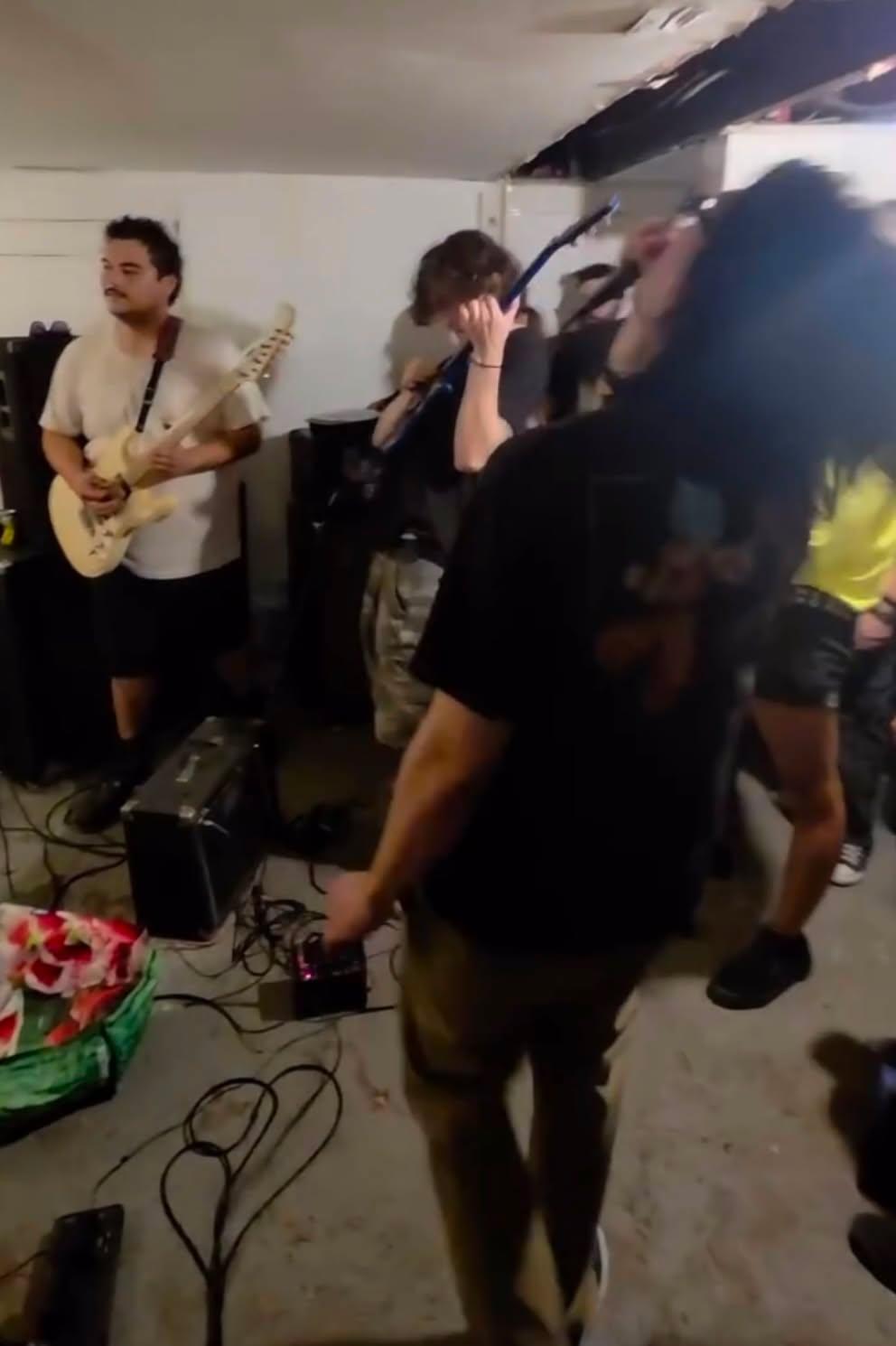 Between takes, microphone feedback would shriek like a drunken sailor beginning to hurl as song titles that took shots at New Brunswick, the audience, the bands playing and more came out of the mouth of their jackass drummer (side note: that guy really is a jerk). By the end of the set, with the audience in a frenzy, several members of the band just began to throw themselves directly at the audience. Hey, if hurting them emotionally won’t break their spirits, why not try physically?? By the time the band finished their crowd-pleasing closer, “Fuck Scronch,” there was simply nothing more they could do than to cheer and submit to the power of Evil Bong. Much like the film series this band was named after, audiences can’t help but find entertainment in the horror of this performance.
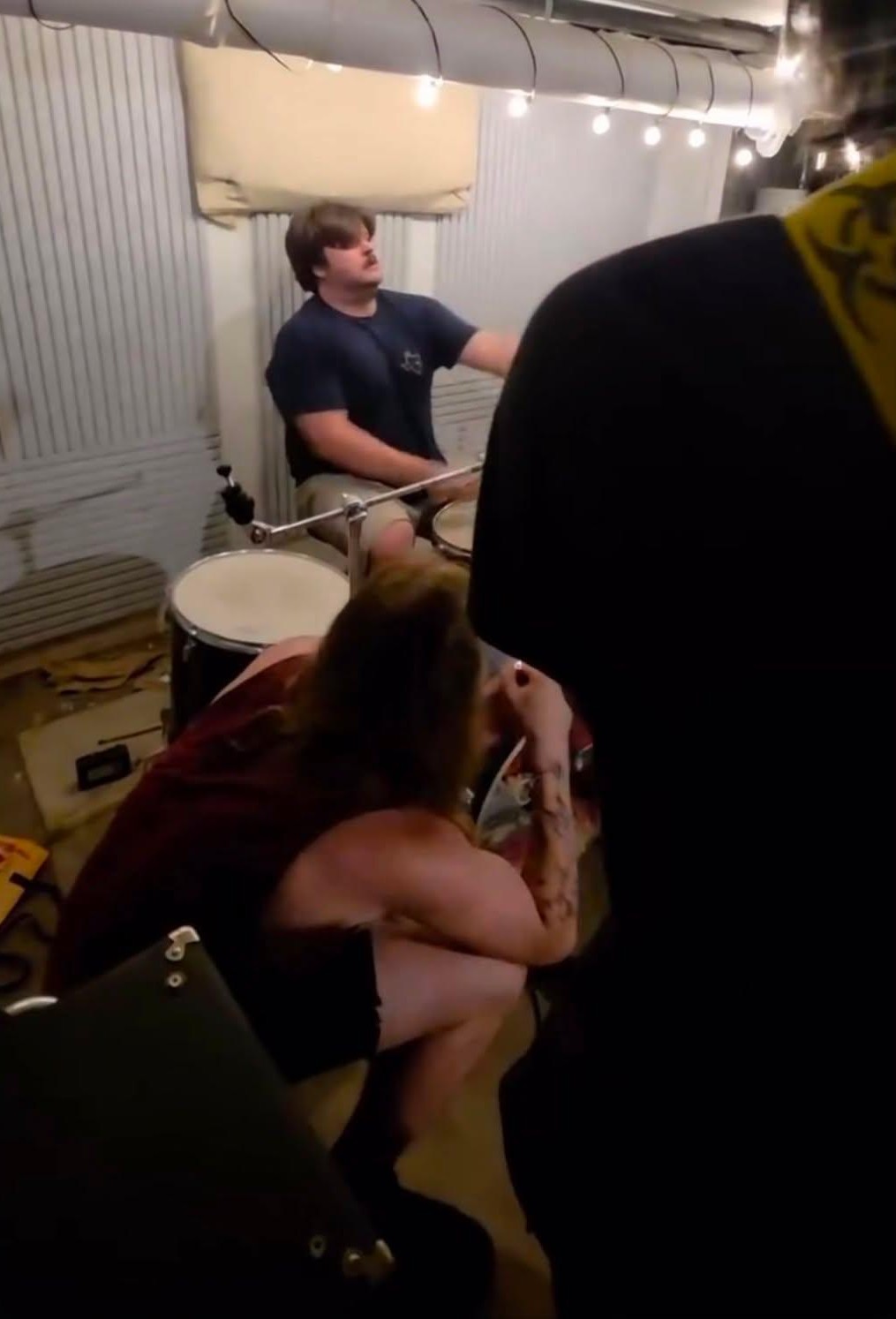
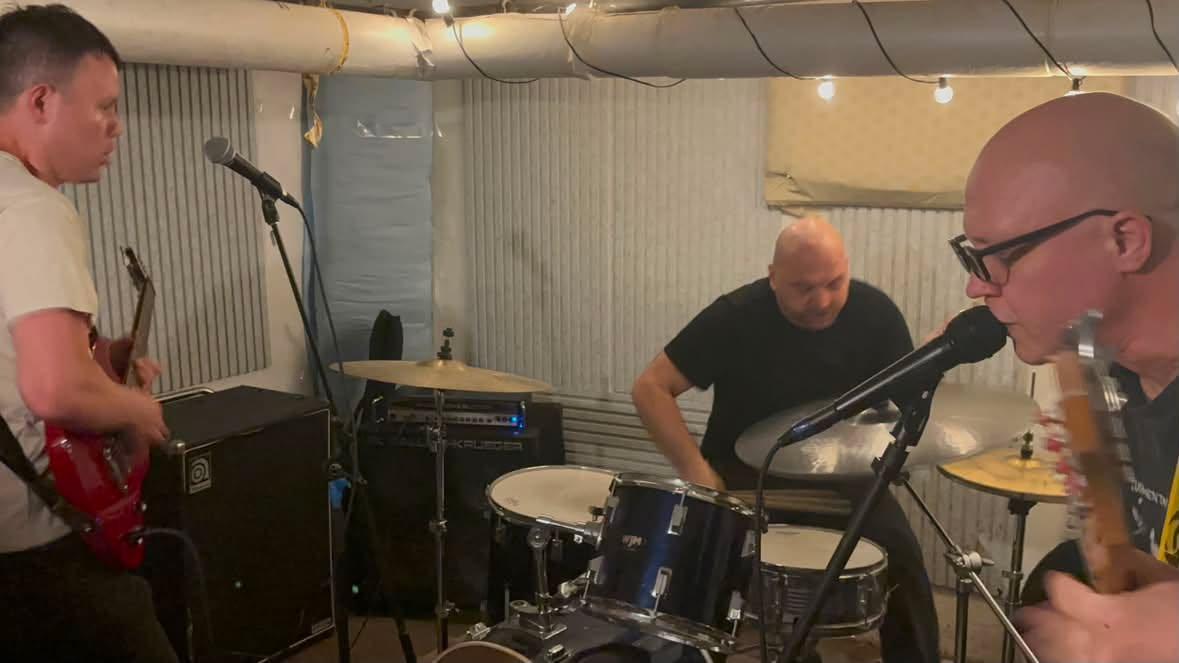 To simply shower praise towards PENIS GEYSER would not be enough to describe the masterclass their performance was. While most seasoned attendees of noise shows expect short sets, nobody was expecting just 90 seconds from this touring unit. It’s 20 years of the band, you would be more than understanding if they wanted to play a long set. Nope; 90 seconds and it’s off the stage. But in that time, the band managed to whip the audience between blasting frenzy, tense restraint and dadaist rock n roll deconstruction that would have left the most seasoned of touring acts in absolute disbelief by how disciplined the trio were in their attack. While the blasting noisecore is what most of us came for, I found myself more intrigued by the moments in between, when drummer Mikeal VanCleave would gently tap on his kit while the string slinging duo of Brad Griggs and Charlie Mumma would treat their guitars as anything other than traditional songwriting. Strings were detuned, slapped around, beaten and mangled. The frenetic energy of these actions sounded closer to someone rattling their cabinet around than actually attempting to play anything musical. And when it all finally came to an end, it wasn’t bombastic. The band simply stopped playing whatever interlude they were in the midst of and started breaking their gear down. The audience cheered for an encore. I heard “One more! One more!” cried out repeatedly (what would even be “one more” for this band? Certainly not a song). Finally, one attendee walking out said “nah, it was perfect” and left. I couldn’t have said it better myself; a phenomenal band that could go on for another 20 years and probably still be as good.
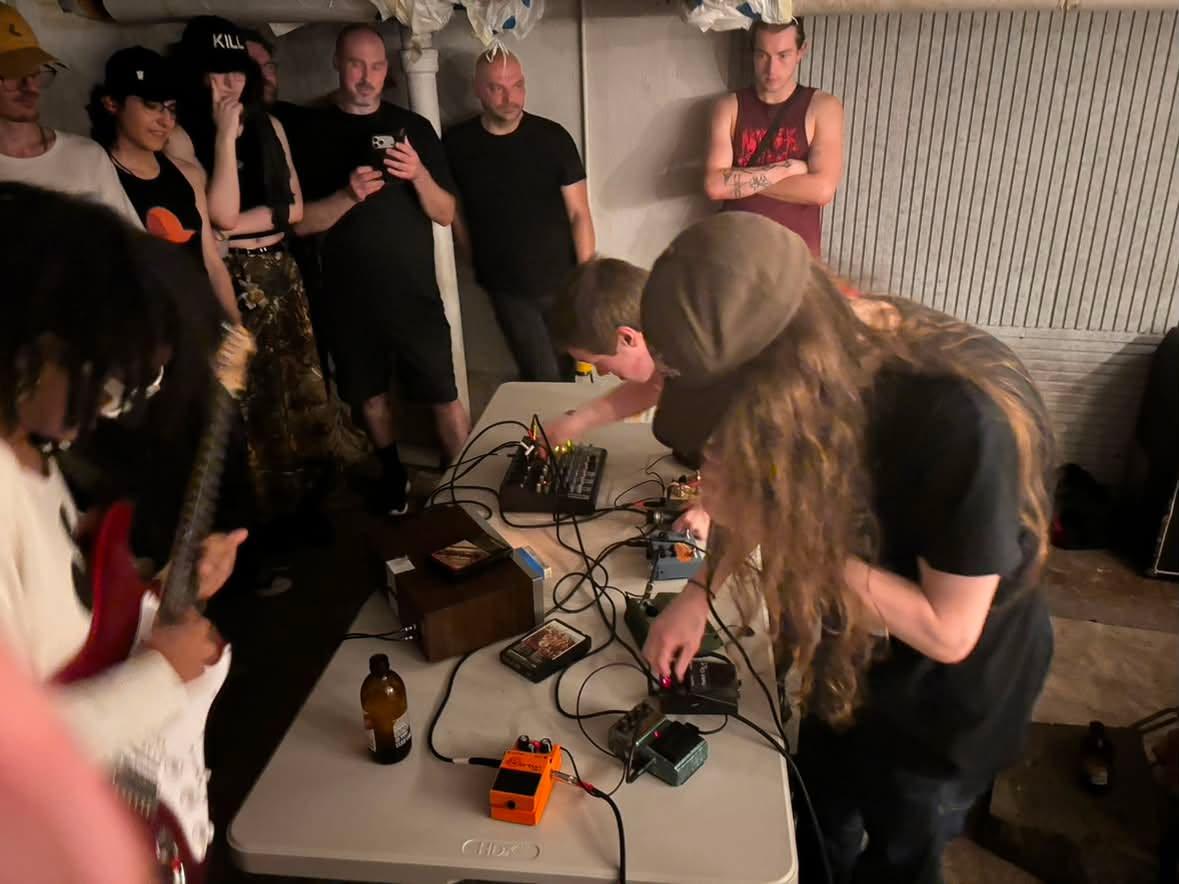 The new blood of New Jersey closed the evening’s happenings, as SPLOOGE RECEPTACLE came out with a table full of gear and the enthusiasm to inject their own brand of reckless abandon onto the audience. For those maybe not in the know, this group serves as the house band for New Jersey–based record label, NJMA, which has taken on the mantle of all things absurd and limited-edition in the Garden State. There are too many projects and releases to even begin listing the “essentials,” but Splooge Receptacle is where all these insane minds come together to celebrate the power of all things noise and core. Members were switching between duties on the mic, guitar, drums, electronics, etc. Really, if someone felt like they wanted to play something more than another member at the moment, they made the switch off occur. Similar to the Evil Bong performance from earlier, Splooge also engaged in their own form of audience antagonizing, as members crashed into the crowd while raging out through the wall of sound. Even when sound was not always perfect (sorry for providing a bad cable, team), their reckless abandon carried the set a great deal. With each passing set this group does, I become more and more excited at the prospect of where their sound can go. This group will be a name to look out for in the coming years if your listening diet tends to lean towards the more lo-fi ends of noisecore and shitnoise.
So with the final blastbeat sounding off, the crowd took the streets, wandering off to who-the-hell-knows until the next show. Maybe some went to the nearest eatery available. Personally speaking, I went off to the Edison Diner for some late-night nachos with the Penis Geyser crew in tow. But maybe some walked away from this one thinking of how inspiring it could be to see the most chaotic and shittiest sounds performed so excellently. I know plenty that are still buzzing days later from the whole affair.
 It’s not often that I make it down to the DMV, but this was unmissable. I’ve been wanting to check out
  AS SURVIVING TOTAL
 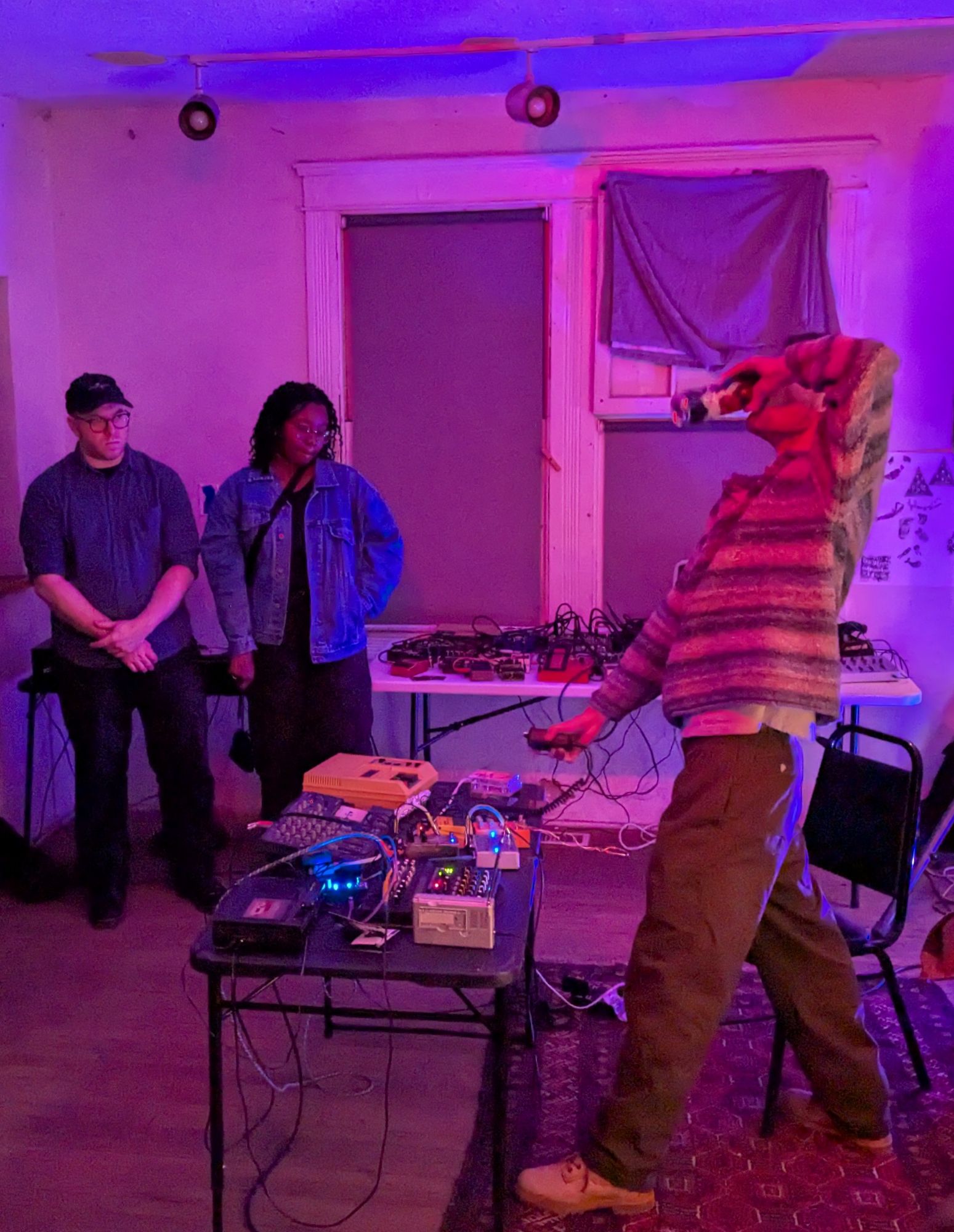 VASTERIAN, named after the Ligotti story “Vastarien” (unsure of the significance of the misspelling), was another local I was unfamiliar with. My pre-gig research turned up a recent tape described as “hypnotic, lo-fi radio noise,” leading to expectations that were immediately subverted when the set launched straight into maxed-out meathead power electronics, complete with copious beer-chugging. After the initial shock wore off I was prepared to be bored, but the execution was so solid and energy level high enough that I was thoroughly entertained. As someone who loves the textures of shortwave, so I’m always happy to see one on a table, even if it ended up getting drowned out. I think I overheard that this was their first live appearance; impressive if that’s the case.
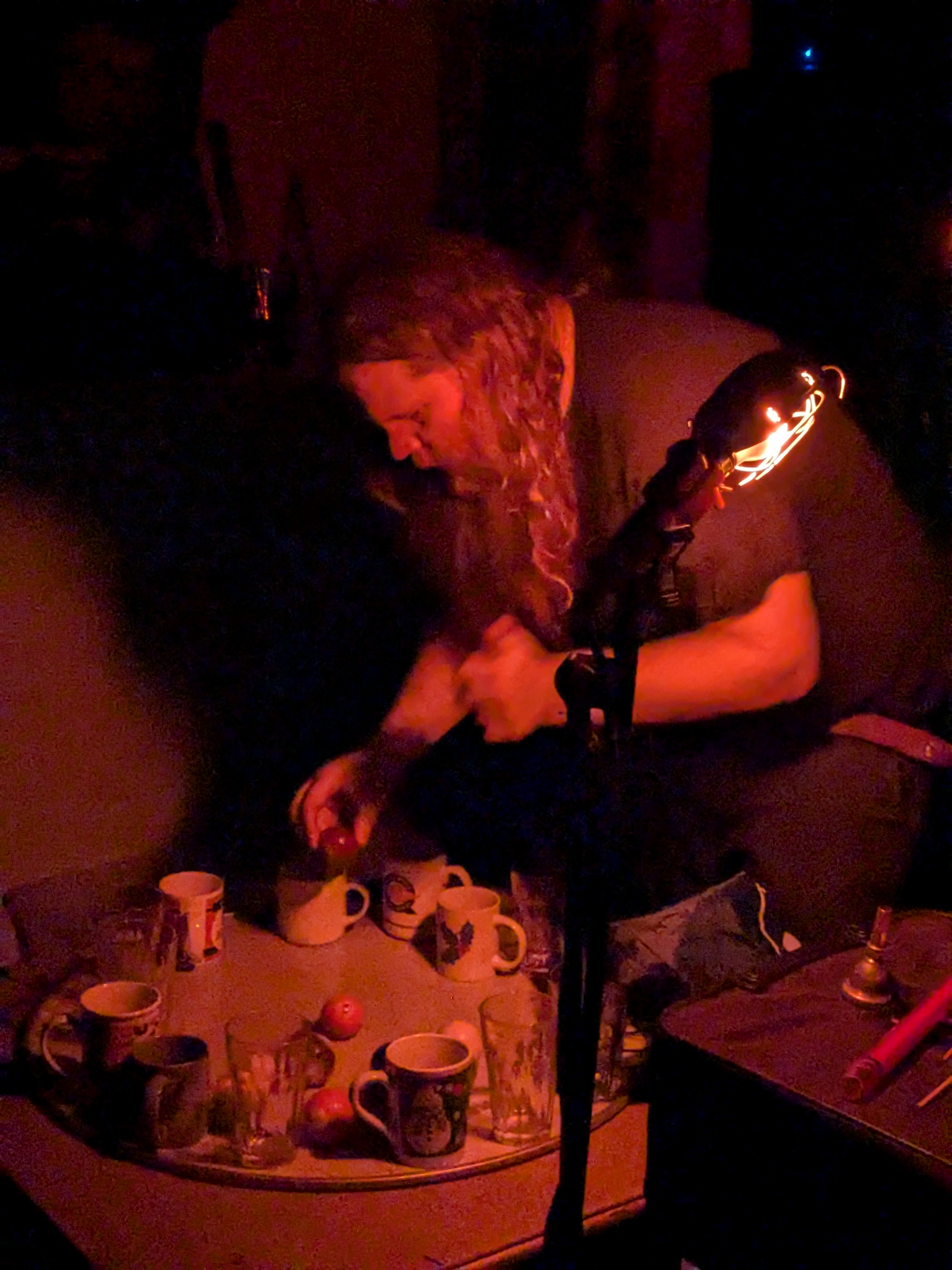
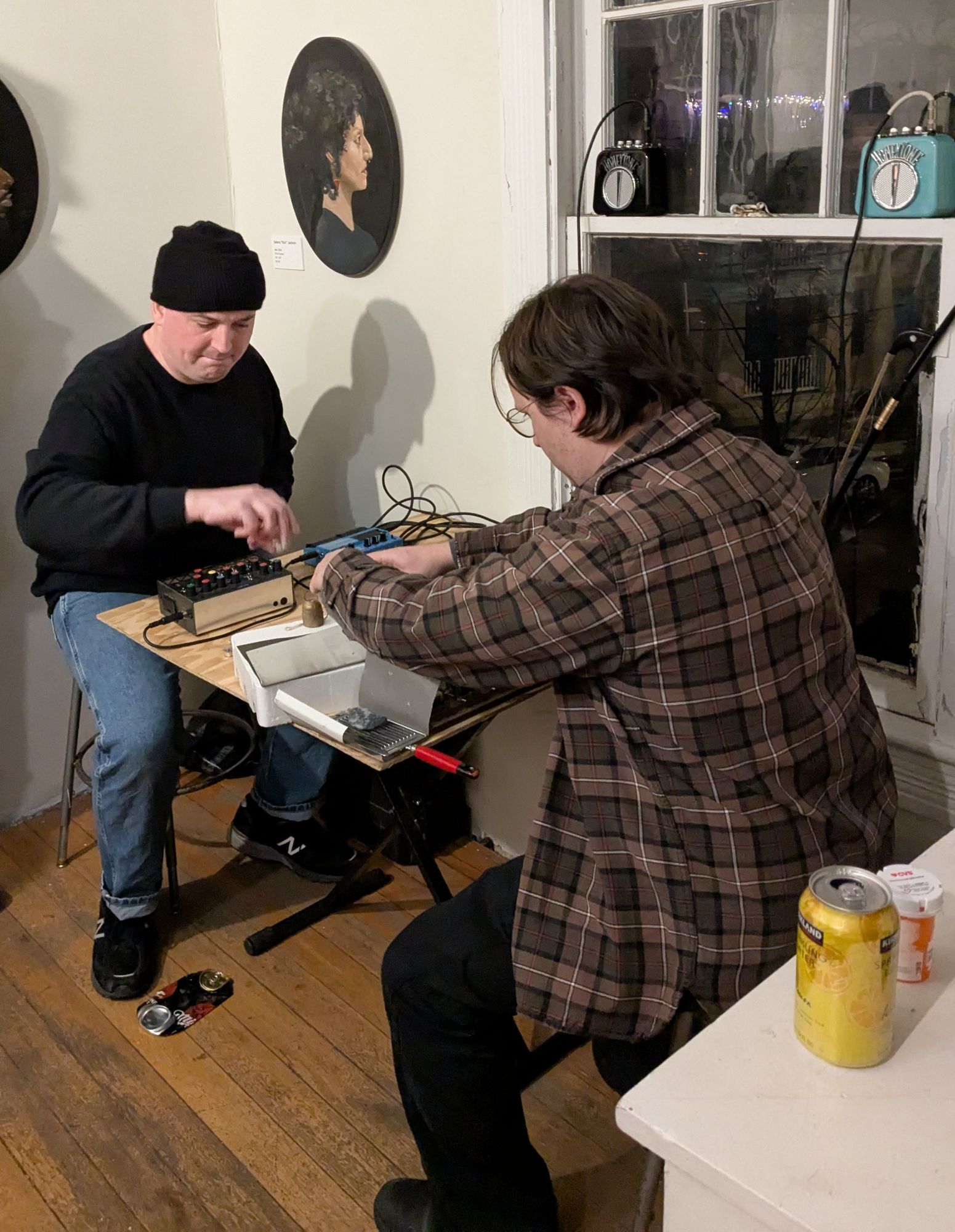 LUSTRE CHANTANT was another surprise. A duo comprising sound artist and instrument-builder Max Hamel, whose solo tapes I like a lot, and Chris Griffiths, who booked this show as well as many others at Rhizome, they’re named after a mythologized “singing chandelier” designed by French scientist and inventor Frederik Kastner. The material itself is an attempt to approximate what this lost instrument may have sounded like. Tonight that manifested as a quiet electroacoustic set on the upper floor of the space, structured around small motorized gadgets and minimal electronics. There were somatic aspects too: Hamel bowed a piece of scrap metal while Griffiths rubbed shrapnel on the floor with his foot. Lovely stuff that reminded me just as much of
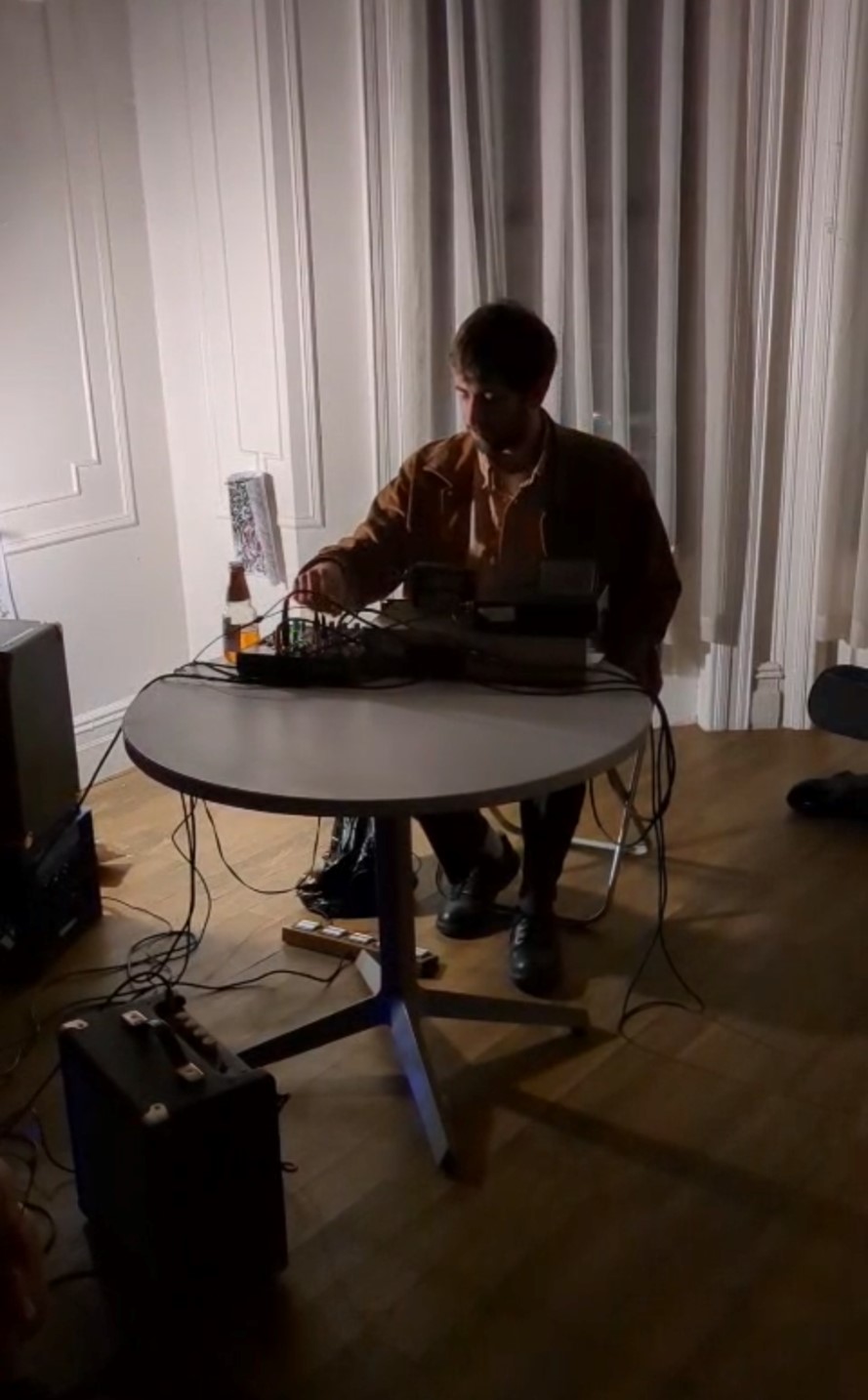
 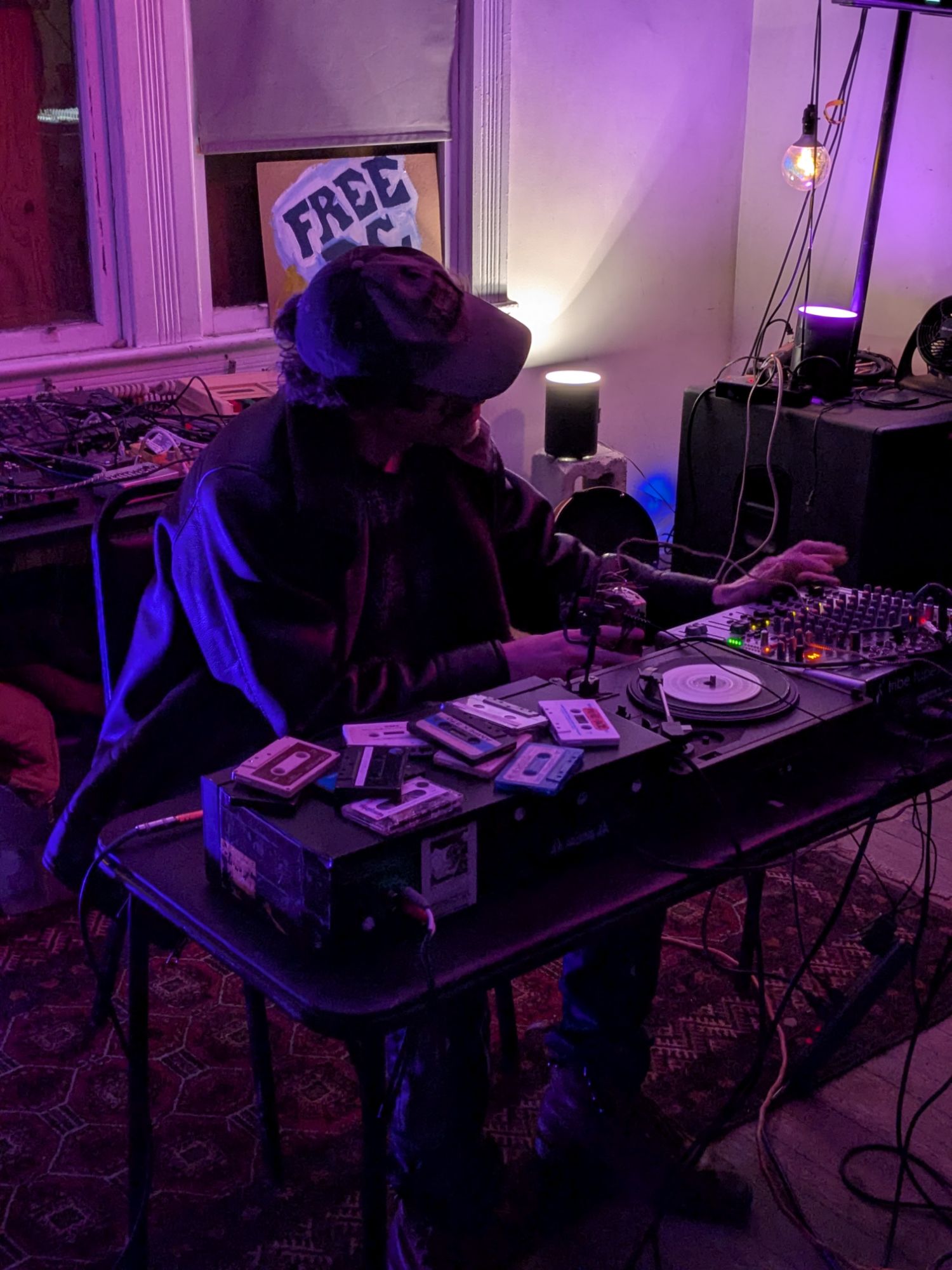 This was my third(?) time seeing MAX JULIAN EASTMAN play and he continued the trend of constant improvement. His haphazard arsenal looks like a electronics store bargain bin but boils down to a simple combo of source tape playback via deck and walkman plus mixer, and the racket it makes is larger than life. The oddball free-associative stumble pays homage to his mail art heroes, but it’s delivered with a unmistakable harsh ethos. It was during this set that the PA started getting pushed to the max (intended) and you could feel the crunch shaking your bones. I especially liked the repetitive barking with the walkman pressed against his mouth, which gave the proceedings a shambolic, Dilloway-esque lurch.
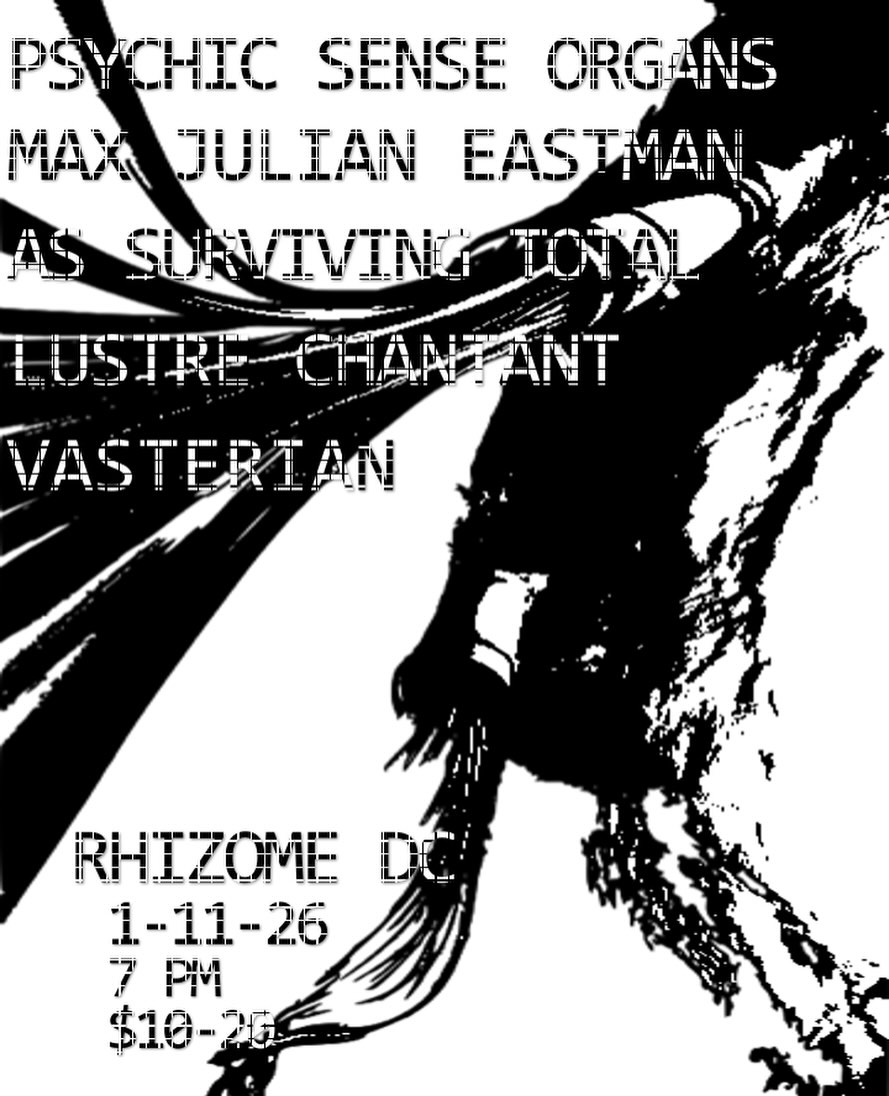
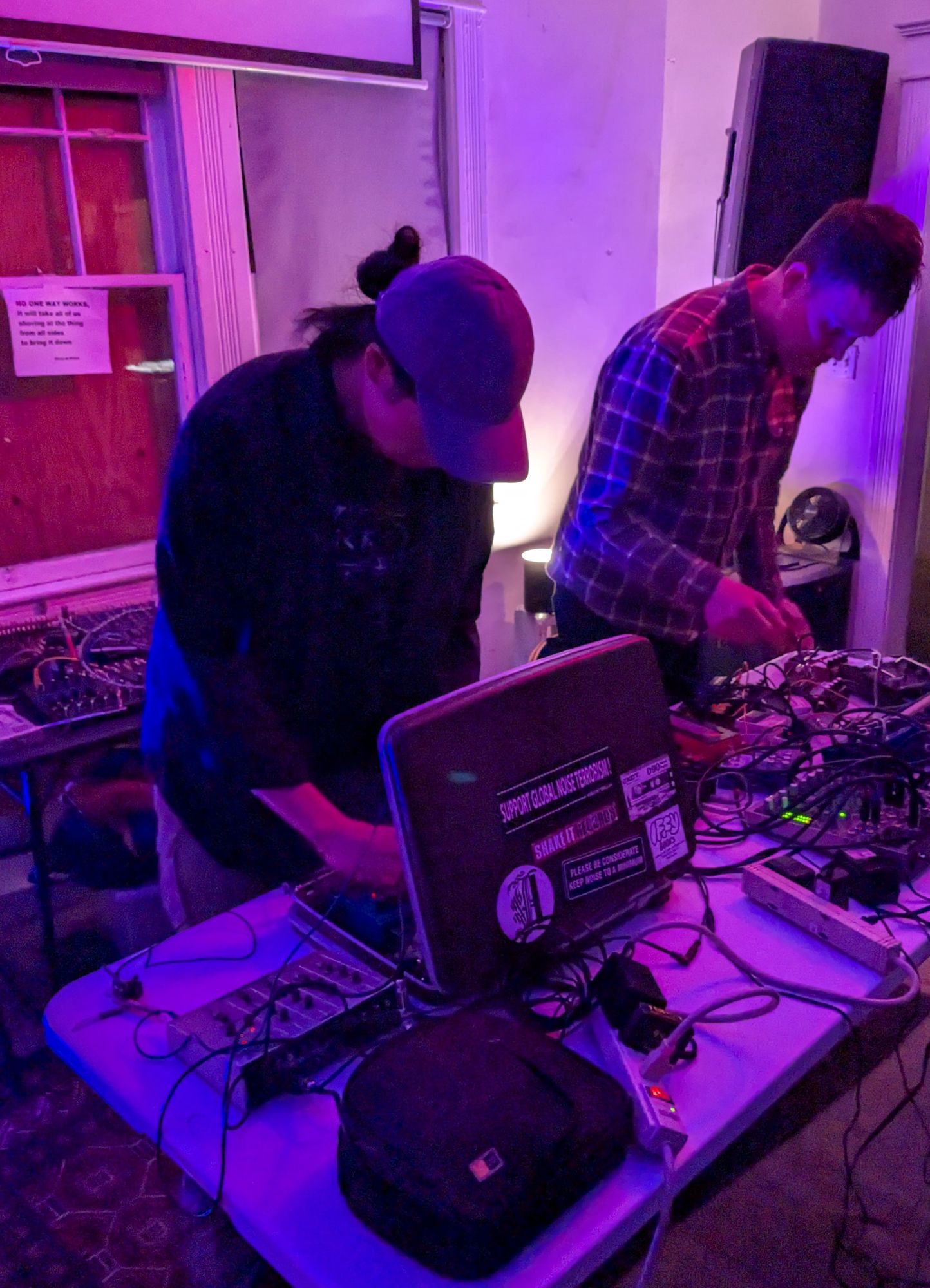 PSYCHIC SENSE ORGANS were the main draw and they did not disappoint. A brand new initiative formed by two of the best and brightest in harsh noise—Brad Griggs of Heat Signature and Action/Discipline fame, Joe Wang a.k.a. Outdoor Horse Shrine—capped off their inaugural mini-tour with a brutal split-stereo that brought the house down. Having seen both of these guys perform multiple times, it was a treat to see their distinct approaches meld. Griggs deployed his tried-and-true mic feedback assault with plenty of screaming to support as Wang forced piercing shrieks and squeals from his trusty mixer. At first the two halves ebbed and flowed independently, but as the artists settled in they began to respond to each other. By that time, however, someone got a bit overzealous with the table-rocking and the legs kept collapsing, so I got lost in the mosh until one of the power strips got switched off. Still grateful to have had six minutes of brain-liquefying bliss, and I’m eager to dig into their tour tape.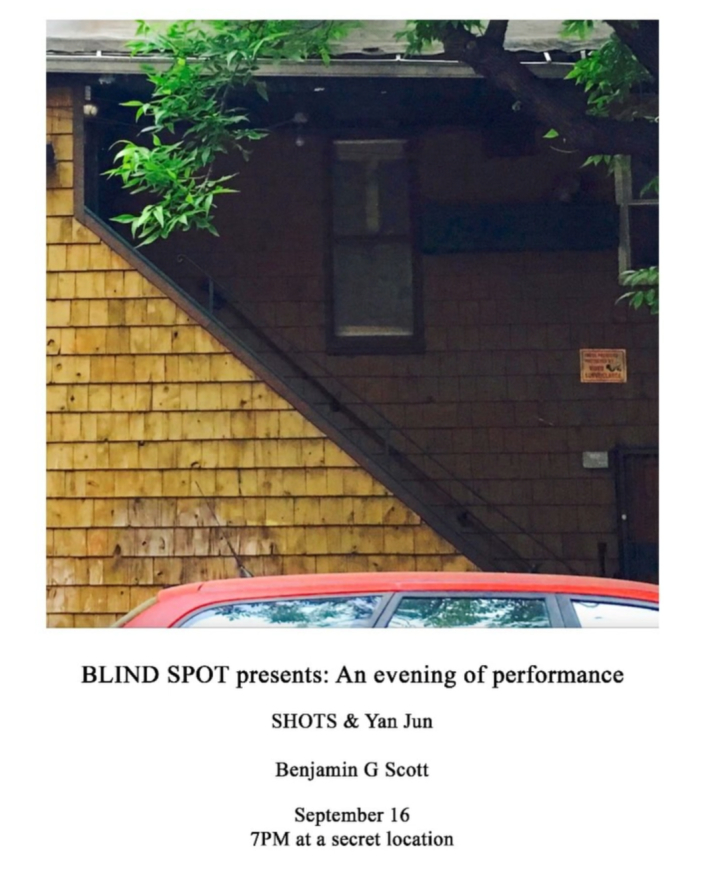
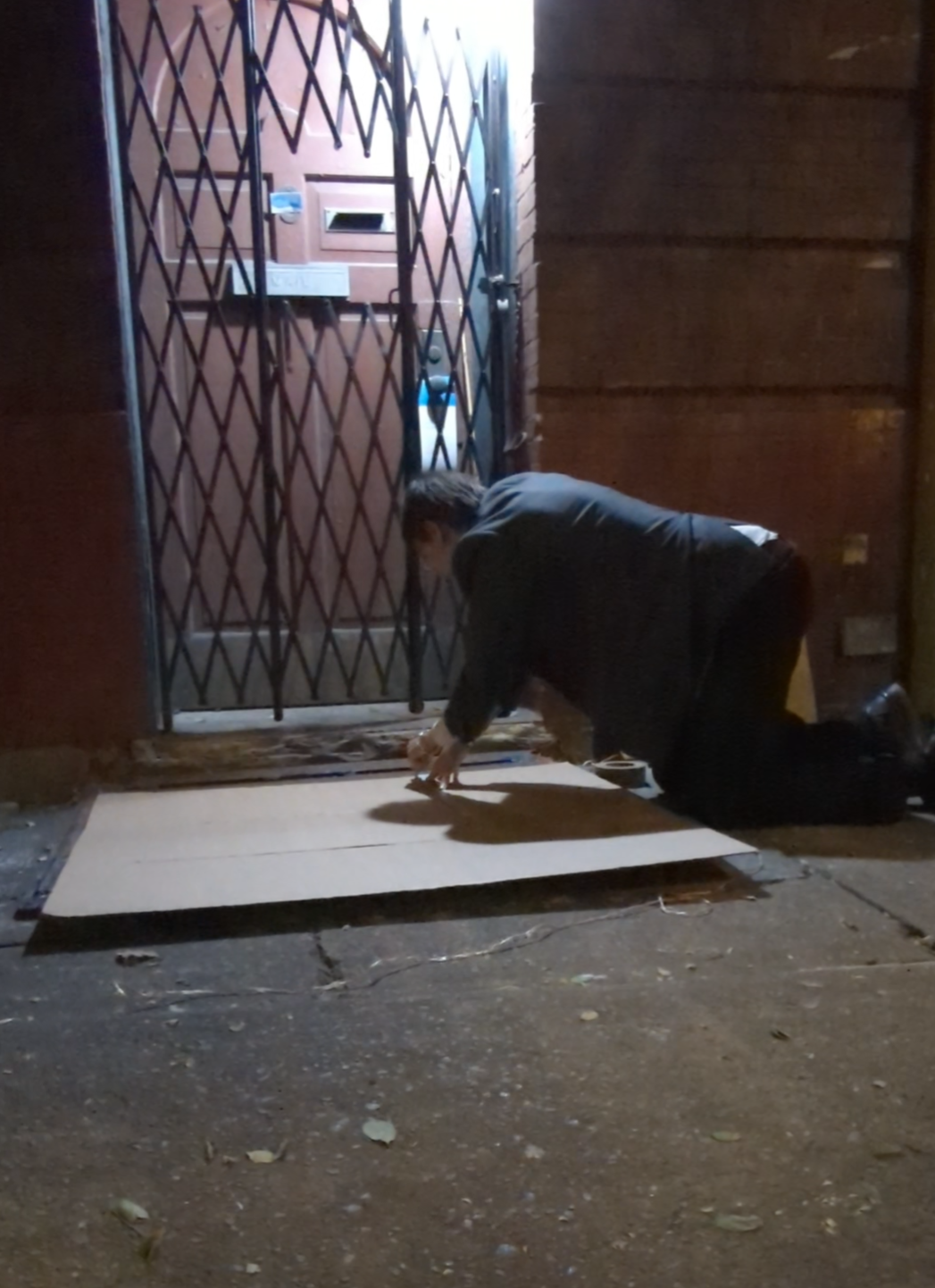 BENJAMIN G. SCOTT knelt over a large cardboard sheet in the middle of the sidewalk with a boxcutter and tape measure, marking and cutting the material into squares at a scrambling yet deliberate pace. Adding an extra layer was the playback via small bluetooth speaker of what was ostensibly the audio of a previous instance of the same action. The two timelines, past and present, unfolded in tandem, sometimes clashing and other times syncing up in a satisfying way. It eventually became clear that the objective was to build a cubic box out of individual panels and packing tape, inside of which Scott placed the speaker before sealing it in. It seems that practice indeed makes perfect, because this time the assembly was completed more quickly; the last few minutes were spent listening to the rest of the recording, slightly muffled from within its new container. Though I do love the raw simplicity of cardboard sounds (Partly Zombish’s August Cake and the Cardboard Sessions tape comes to mind) and the immediacy of manual process, this awkward coda was my favorite part.
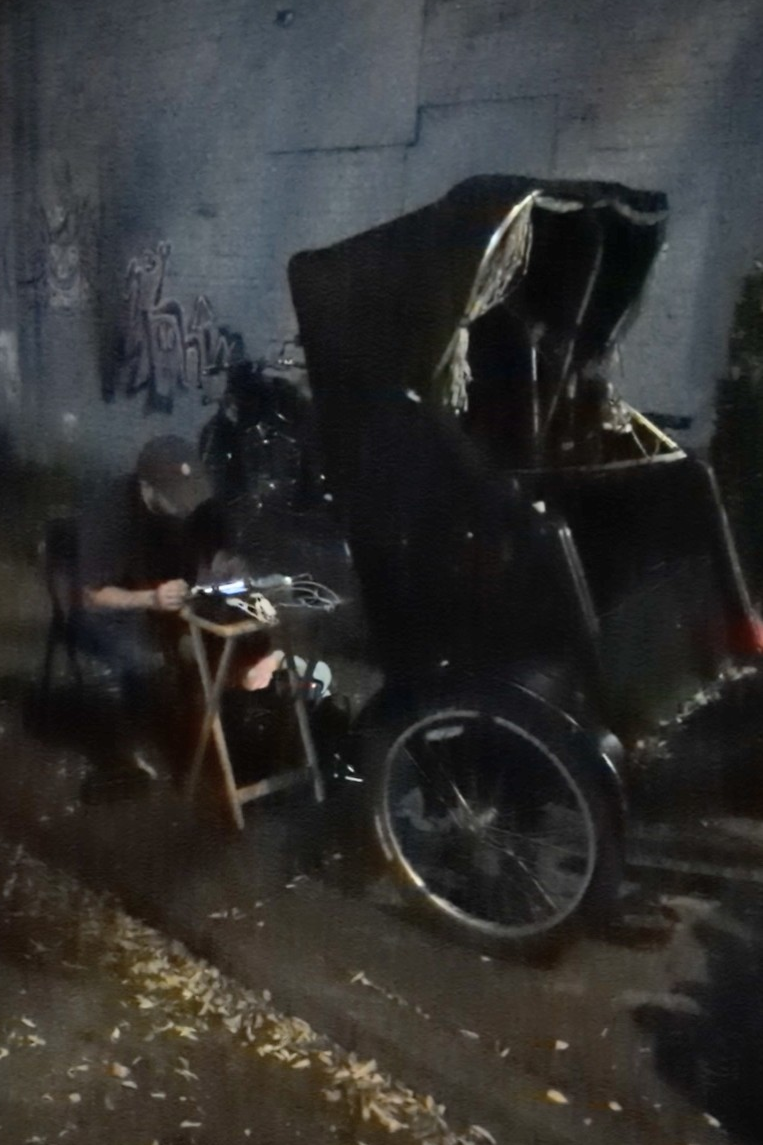 SHOTS were joined by the legendary YAN JUN for the second time, following a set at Providence’s Apartment 13 gallery back in 2023. The pairing is a no-brainer based on their respective bodies of work, and if their first collaboration was proof of concept, the remarkable synergy on display on this cool, cloudy night was a realization of full potential. Daniel DiMaggio and John Friberg, two-thirds of the trio, extended their usual location-spanning setup to every nook and cranny of the block: a small speaker affixed to the awning of the historic Market House remnant at 6 Weehawken squawked out birdsong and emergency sirens, Nakajima-esque gadgets whirred under trees and between parked cars, mystery feedback sliced through the air this way and that. Friberg posted up with a pile of electronics behind a beached carriage bicycle, while DiMaggio was more mobile, at one point rounding the corner onto Christopher to tug at the gate chain of an abandoned storefront.
 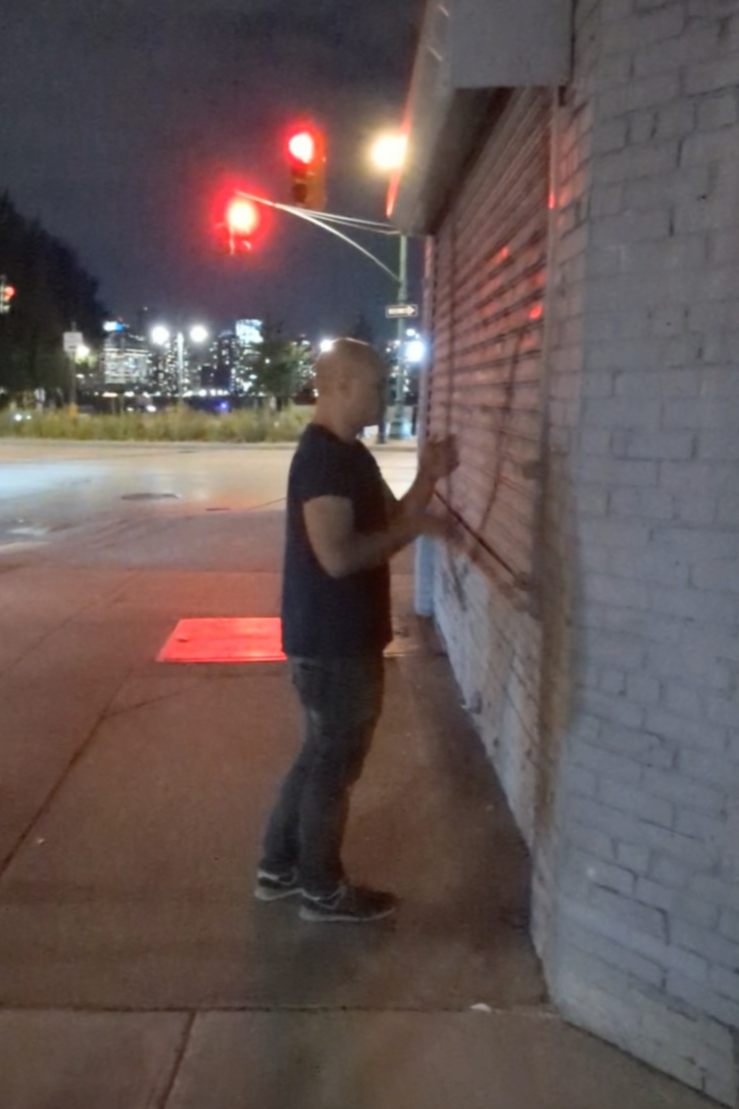 Yan was also always on the move, setting up his chair at various places on the opposite end of the street to vocalize and make hand gestures. It was a joy to amble around the haphazard network of miniature events. A highlight was seeing a small crowd crouched around something on the ground and wandering over to reveal an upside-down coffee cup vibrating on a motor—and then it was over, and we were on to the next wonder. The decentralization ensured that no two attendees had the same experience, even though everyone witnessed the same performance. Beyond the superficial similarities of Shots’ and Yan’s approaches, the unifying essence that also served as bedrock for this open-ended meeting is their shared intentionality. No matter how random and/or inscrutable an incident might appear, it was meant to be so. Such purposefulness produces a fascinating energy, an energy that joined disparate parts into a single web of sound, etc. I’ll be thinking about this one for a long time.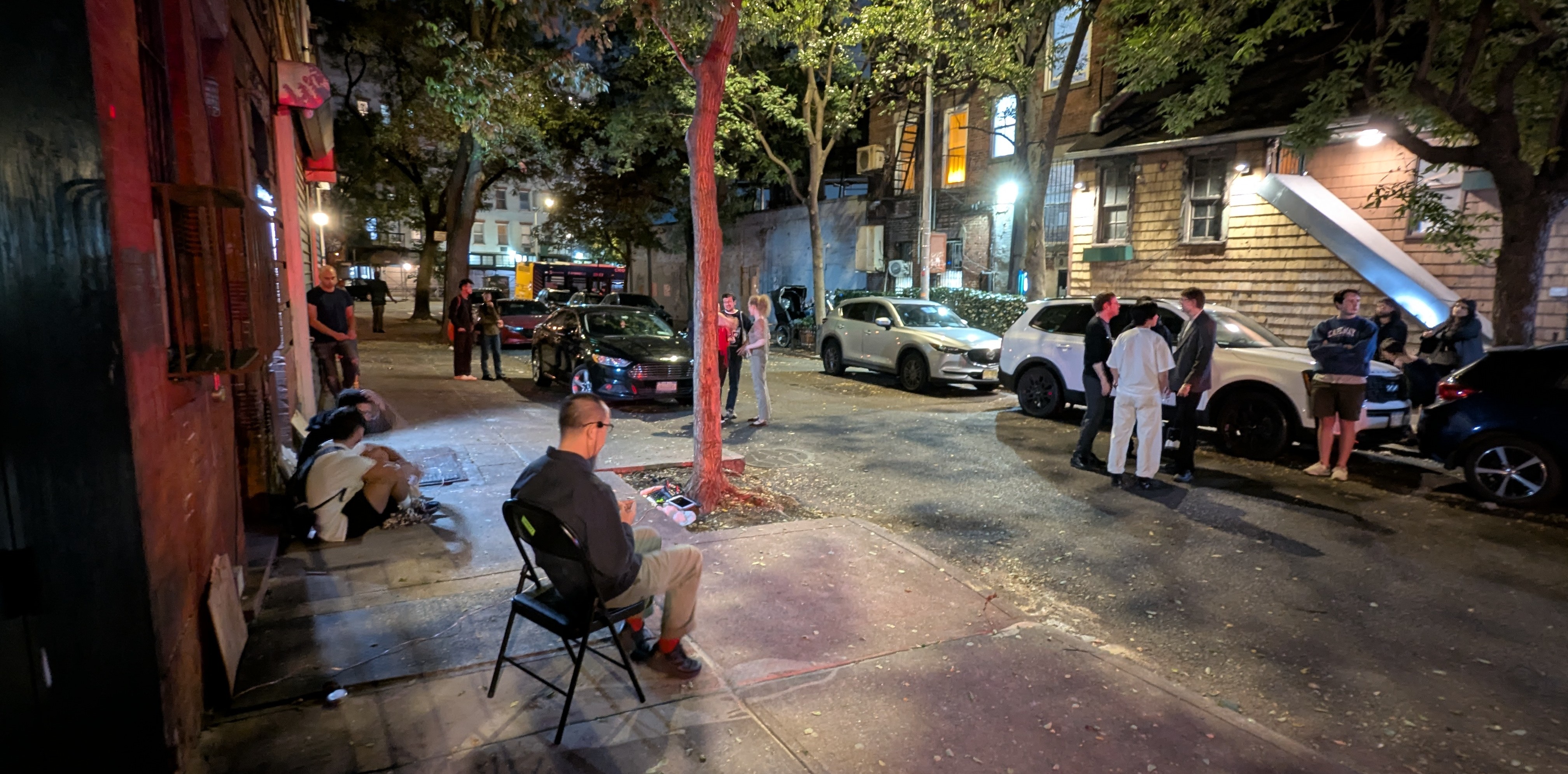
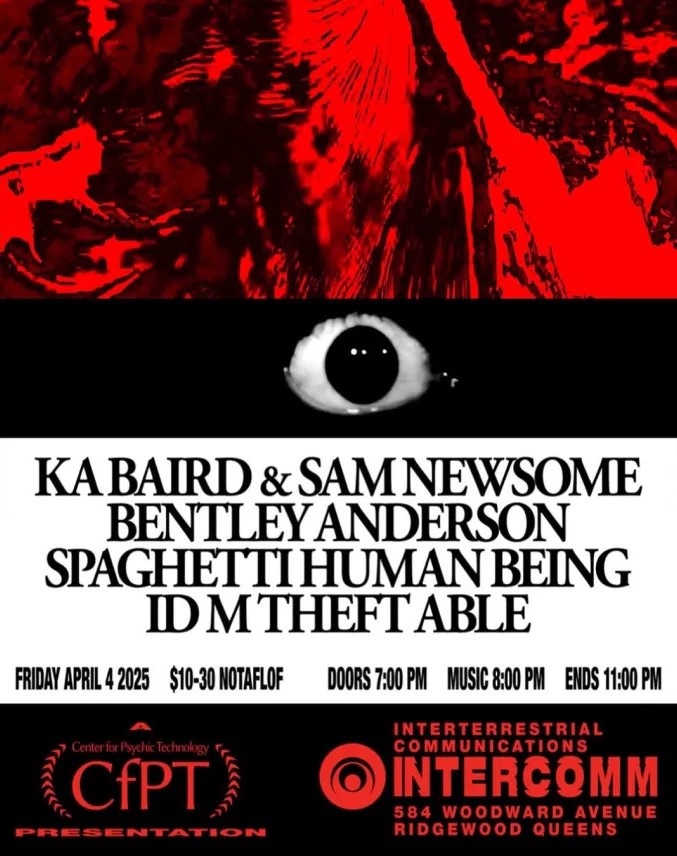 If you’re as picky as I am, the state of weirdo venues in New York leaves a lot to be desired. Most gigs I’ve attended have either been at overloud, underlit, beer-soaked bars or underloud, overlit, too-clean galleries, both of which have financial advantages for those who take up the often thankless task of booking. Then there are the rent-outs, unrelated sites that make their digs available for use on evenings and weekends, inevitably with hefty overhead. And there’s always the option of someone’s cramped studio or a risky outdoor post-up. But scattered few and far between are the truly dedicated spaces, which tend to not last very long (an exception being the Living Gallery, alive and kicking since 2012). All of this is why it’s so exciting to have something like INTERCOMM. Their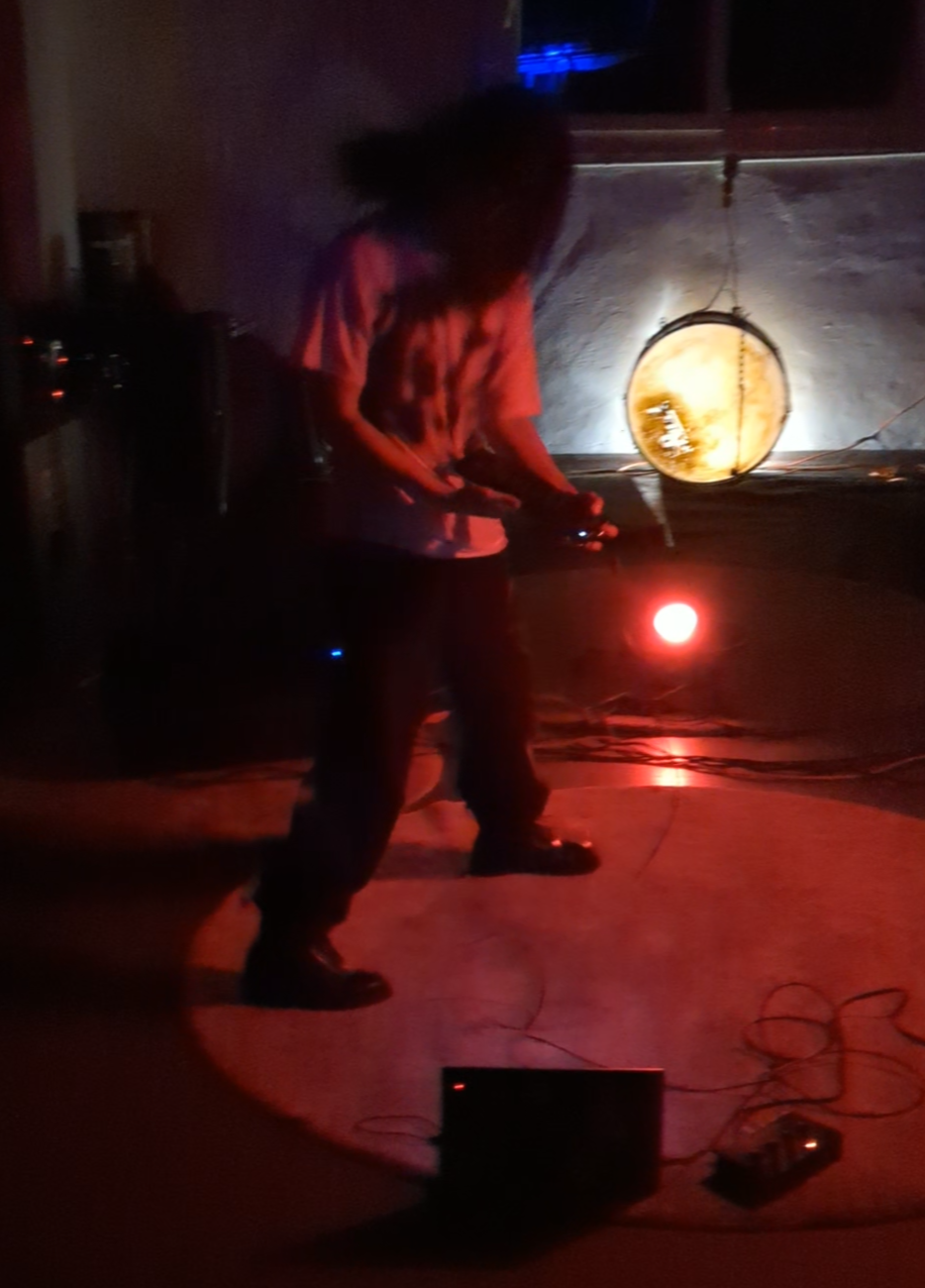
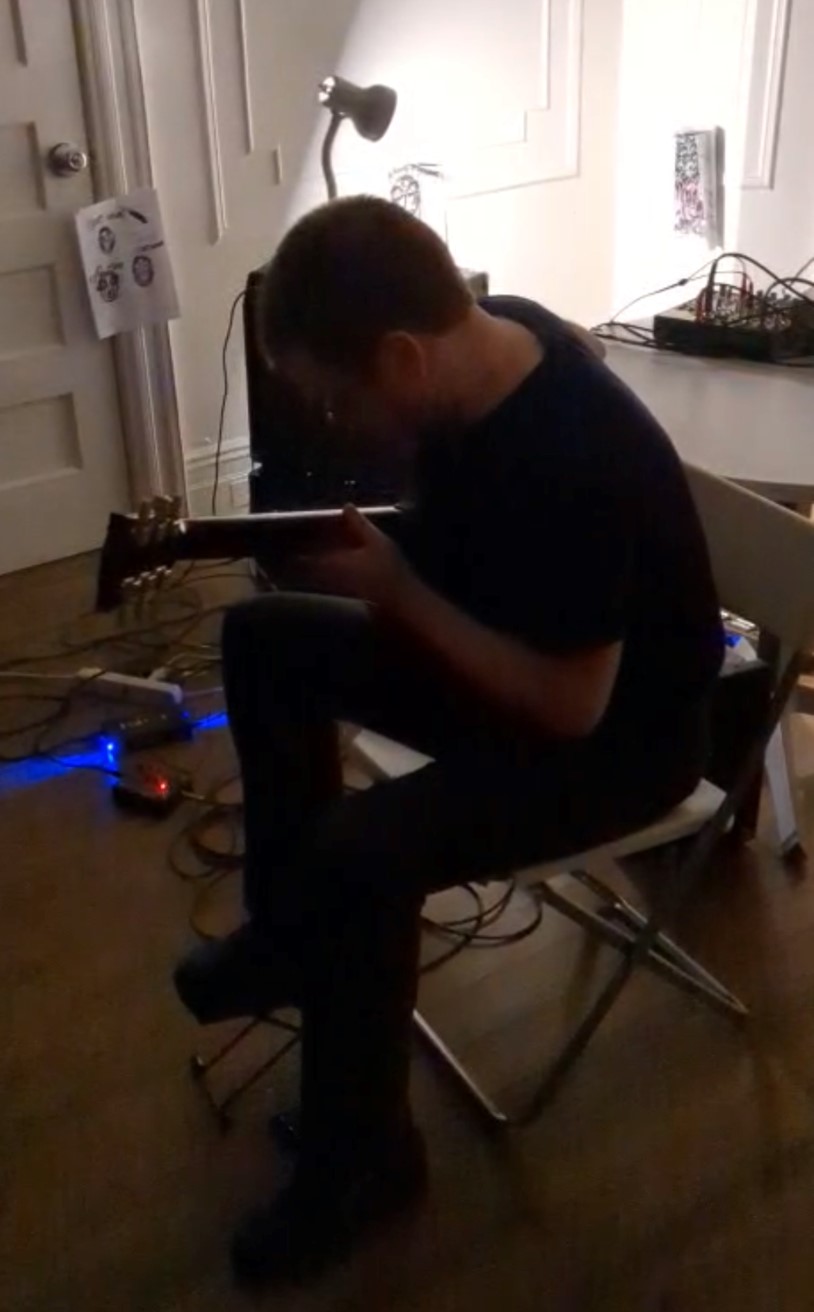
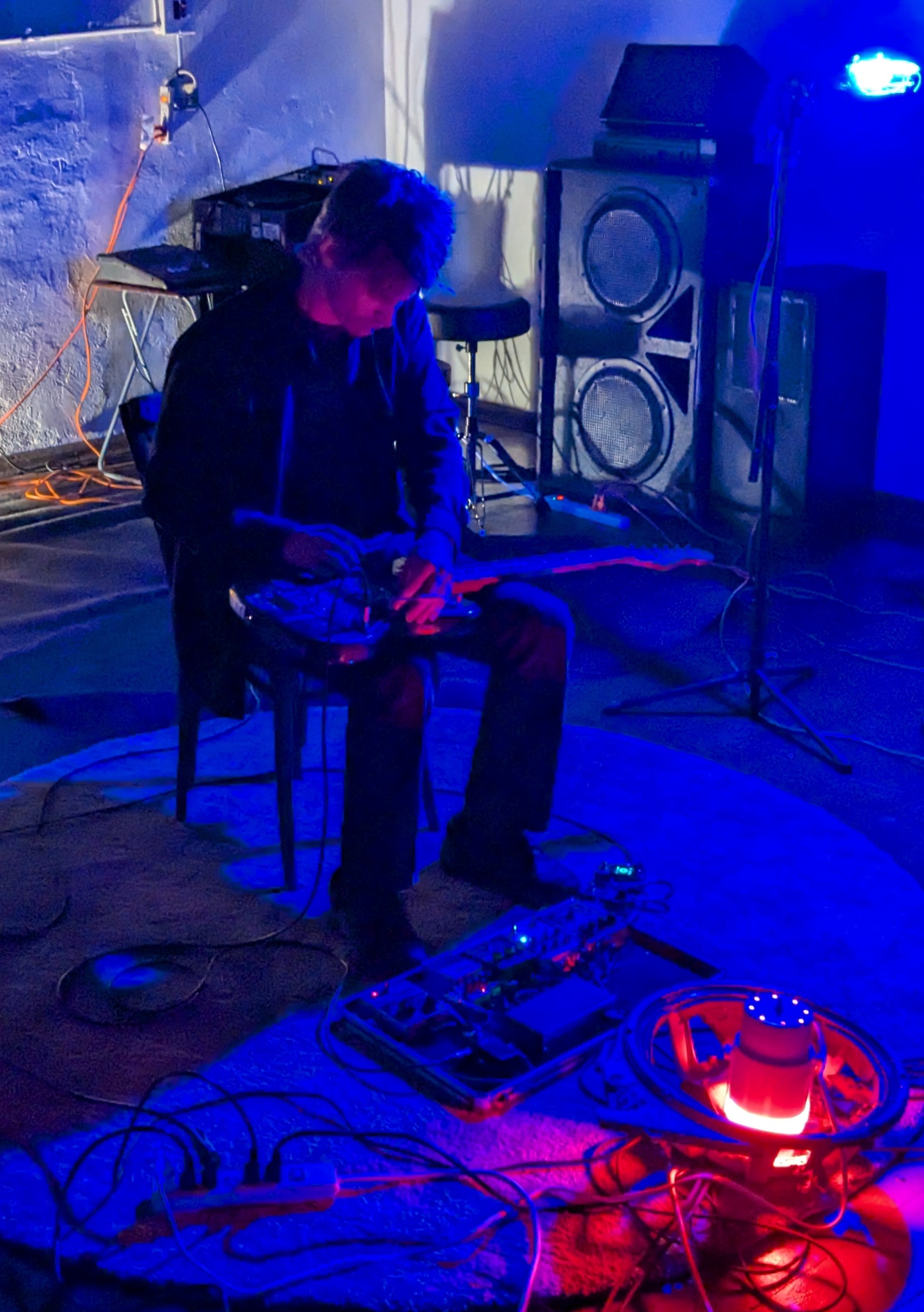 BENTLEY ANDERSON brought a more patient, focused presence with some loop-heavy, effects-laden extended guitar drone. I’ve seen the established performer and Decontrol operator around at events before, but we’ve never had the chance to meet. I enjoyed the hypnotic layering of feedback and overtones, most of which was driven by various percussive interaction on the body and pickups. Comparisons to 90s Kiwi legends danced in my head, but Anderson’s approach is more active and immediate. The progression was careful and controlled, never fully boiling over yet always satisfying. Low-key but loud.
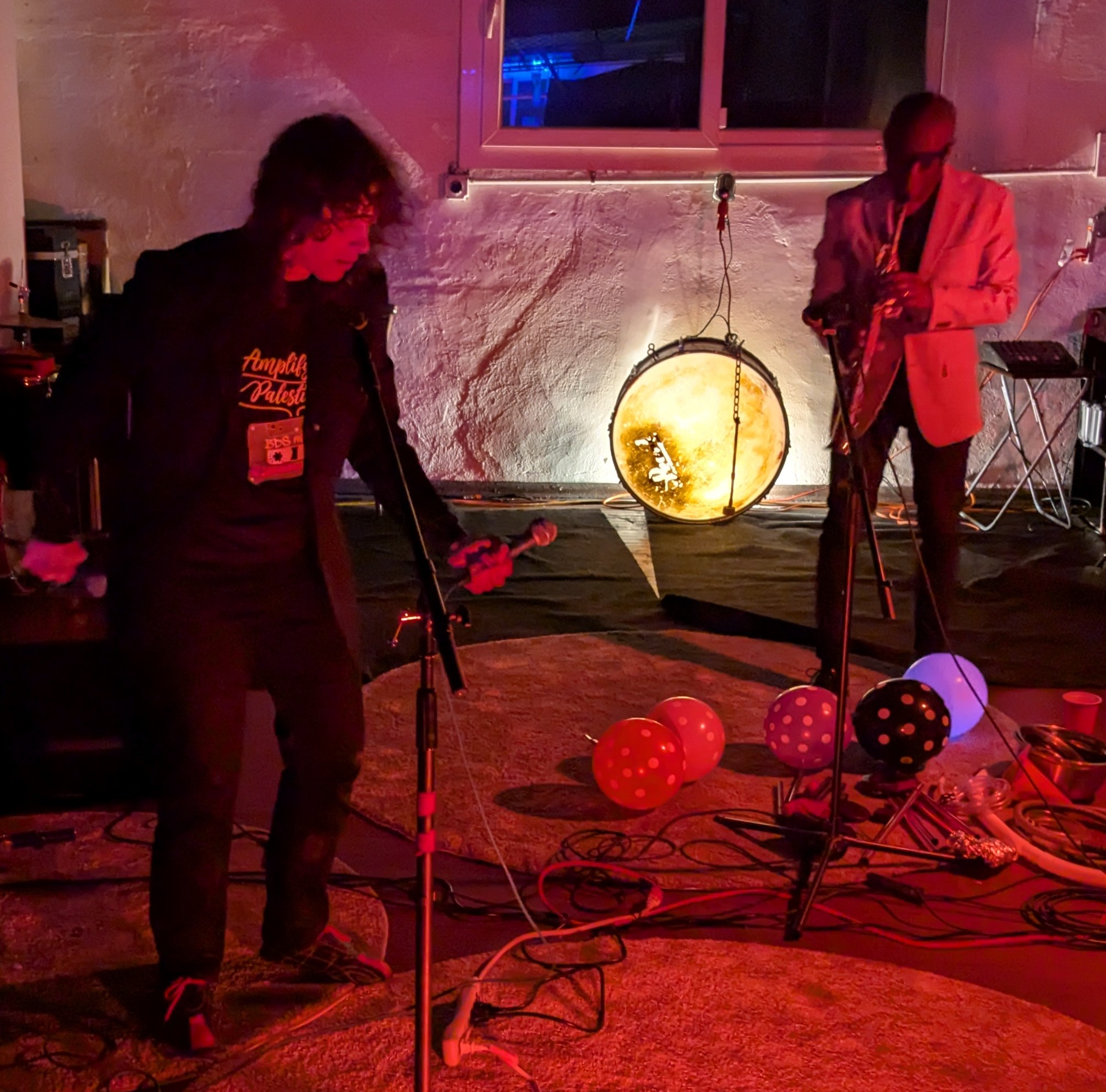 Things heated up with an explosive first meeting of
  Maine’s