
 Art R&B crooner Anna Wise and soul experimenter Jon Bap quietly released geovariance, a completely unexpected collaboration album, back in June. If it hadn’t been for Wise’s guest appearance on Kendrick Lamar’s To Pimp a Butterfly – an album I’m not super into but many of my friends are – it might have completely passed me by, which would have been a real shame. Thankfully, it didn’t, and I was able to experience this incredibly unique record, which, even coming from the combined creativity of two ambitious young artists, is pretty damn weird. The album’s style is cohesive but hard to pin down, with many of the songs ending up as eclectic collages of dusty ambiance, spastic glitches, and distorted voices. Despite its variety, the whole thing has a distinct lo-fi, bedroom atmosphere, which is a surprisingly complementary frame for these sounds. “it was 6am. we were in your car… and you looked cute with my shirt on,” with its shifting delay-soaked harmonies, creaks and clacks, beautifully broken guitar strums, and overall looping wooziness, is a perfect representation of how gorgeous geovariance can be. It’s not as consistently fantastic as this song would make me hope, but it’s promising and high-reaching, and bodes well for the future careers of both Wise and Bap.
Author: Jack Davidson
I like to listen to, read and write about, and play music.
Review: Nima Aghiani – REMS (PTP, Jun 29)
 I’ve listened to REMS so many times already and still don’t really know what to say in this review. The album, which as far as I can tell, is Paris-based violinist and producer Nima Aghiani’s first full-length release, is somehow just as elusive and mysterious as the sleep phase for which it is named – despite how loud and grating it often is. Aghiani’s unique fusions of violin melodies, blasting electroacoustic glitches, and pounding bouts of distorted rhythmic crunches are just as, if not more, diverse as that description would imply, making the 33 minute REMS a fulfilling and multifaceted release. It’s split into seven tracks but is best experienced as a whole, with each part naturally evolving into the next. The first few steadily work to craft a metallic, artificial atmosphere, but one that’s disarmingly lush despite how inorganic it all sounds; and then “Khaovyn” arrives to smash any remaining solace into oblivion. This short track’s power noise contortions are among the most brutal things I’ve heard all year, and ahead of the slower-paced rhyming pair of “Qamyn” and “Bamyn” it’s a perfect mid-album purge. This latter, long form piece is nothing short of incredible, and on my first listen through it was what really brought me around on the sleep connection; the rumbling breaths of bass and distorted spoken samples are like waking from a nightmare, the fear still present but the details and memories just out of reach. REMS occupies the perfect middle ground between deafening viscerality and reserved exploration, and despite its short length it’s an enrapturing journey through Aghiani’s creativity and talent.
Review: Ostraca – Enemy (Skeletal Lightning, Jul 6)
 After last year’s fantastic Last I was not expecting another release from Ostraca so soon. The band plays a pleasing mixture of golden age-inspired emoviolence and patient post-rock that has only gotten more refined on Enemy; while on Last the ambientish interludes felt a bit forced and out-of-place, here they flow naturally in between the sections of brutal, affecting screamo. One such moment that really cemented Ostraca’s growth for me is the ending of “Crisis,” when a cathartic, shredding climax to minutes of crescendos and tension-building is followed by a wistful piano outro that provides a much-needed repose and moment of reflection. I do wish the band had stuck to more of the aggressive stuff in the vein of opener “Big Star;” when these sections appear, especially amidst the waves of post-metal and atmosphere construction, they are so powerful. However, I couldn’t help but notice how derivative some of the riffs and songwriting felt. It’s impossible not to draw comparisons between parts of “Pulses” and a certain, uh, flowery golden age band, and while that isn’t the worst thing in the world to imitate it would be much more refreshing to hear something completely original. Luckily, Enemy ends strong with “Nemesis,” probably Ostraca’s best song yet, and makes me incredibly optimistic for what they have in store next. They’ve certainly come a long way from their Kilgore Trout days, and despite Enemy’s flaws it doesn’t detract from their status as one of the best screamo bands right now.
Review: Toshimaru Nakamura – NIMB #9 (Room40, Jul 6)
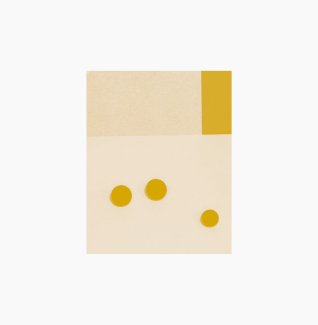 The unifying element throughout Japanese experimental musician Toshimaru Nakamura’s twenty year career of collaborations and performances is his no-input mixing board series. Though the unique instrument, which is played by plugging a mixing board’s output back into its input and manipulating the resulting feedback, is Nakamura’s primary tool on almost all of the releases on which he appears, his NIMB albums are where he explores its possibilities unfettered by other forces. On NIMB #9, the newest installment out on Room40, Nakamura works with looping mixtures of high and low frequencies, fusing the wispy, fragile tones of his earlier releases with noisy rumbles reminiscent of 2013’s #8. Unlike that latter album’s long form pieces, #9 sticks with shorter track lengths, with the longest just under seven minutes; the focus here seems to be more on the textures themselves rather than how they change or progress, and at times there even seem to be muffled melodies that emerge amidst the woozy loops. It frequently reminds me of the sublime brokenness of dusty 78’s played on an old gramophone, an unusual similarity given the distinctly non-analogue origin of the sounds. While not as immediately impacting as the last, more visceral installment, NIMB #9 is a slow burn that I think will reveal even more value upon more listens.
Review: Fading Tapes – Radio Okinawa (Katuktu Collective, Jun 29)
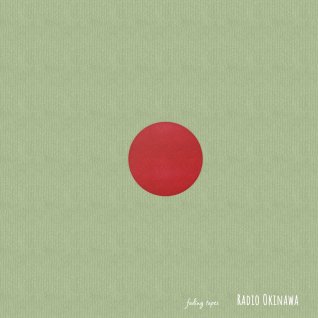 With Radio Okinawa, Polish duo Fading Tapes explores a freely improvised approach to spacey rock music. Described as a story about the titular island’s “places and culture, present and past,” the album balances whimsical, rambling guitar and percussion interplay with a clear sense of direction and dynamics – that, to be fair, is more present in some places than others. Since Radio Okinawa is entirely instrumental, the tributing directed toward Okinawa seem to be abstract, emotional, or even personal, implying that members Krzysztof Siwkowski and Marcin Lasek might have sentimental connections toward it; or it could be that they’re paying homage to their view of the island from a distance or a less experiential perspective. But even without context, the two musicians’ improvisations drip with reverence, varying from airy, spacious tumblings without much concrete rhythm to meditative grooves that repeat until they collapse inward upon themselves. I’d say I enjoyed the former sections more; while I hesitate to compare artists to each other, I can’t help but see many (favorable) similarities between opening track “O-bon” and the early 2000’s work of Jackie-O Motherfucker, one of my favorite bands. It’s a direction I hope to see Fading Tapes focus on in the future, but I enjoyed pretty much all of Radio Okinawa, a pleasingly sprawling record that has a lot to offer.
Review: Lonely Grave – Craterface (Discouraged, Jun 29)
 Umeå trio Lonely Grave’s debut full-length, Craterface, is an infernal powerhouse of pestilent, grinding crust. Despite the almost nonstop high energy level, the record’s atmosphere is oppressive and suffocating. Opener “The Extremist” makes an unforgettable entrance with a deafening cacophony of diseased, rotting noise, soon interrupted by a breakneck d-beat assault and churning blasts. Running just under seventeen minutes, Craterface is by no means a long album, but honestly I don’t think it could feel more complete. Lonely Grave lays out a perfect amount of variation between the bursts of hardcore, with (thank God) sparingly used headbang-inducing breakdowns and even an interlude of harsh noise meandering on “Craterface.” It ends incredibly strongly too, the ominous sample that concludes “Buy Punk Gloves” providing a final repose before the pumping thrashcore riffs of “Don’t Let Me In” and the slow, sludgy closer “The Three Beggars” – which, at only two and a half minutes, thankfully avoids the grind cliche of a drawn out, repetitive last song, which is seemingly hardly ever done well. Craterface handily accomplishes a difficult task: it feels short in a good way without leaving the listener feeling gypped, and all I want to do is listen again and again.
Review: Container – LP (Spectrum Spools, Jun 29)
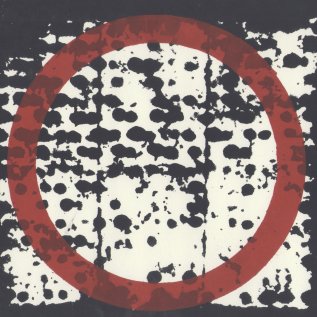 From the overarching direction Container (aka Ren Schofield) seemed to be taking on his last three records – which, including this fourth one as well, are all identically titled LP – it was my prediction that his next release would be his noisiest and heaviest yet. It was a really exciting possibility, because I absolutely loved LP (3) and its power noise-bordering techno beatdowns; but when I finally got to hear the new one, it wasn’t at all what I expected. LP (4) is certainly noisy and heavy, but better words to describe it might be “janky,” “metallic,” “twisted.” Schofield’s approach to these songs seems to be more directed toward texture and nuance rather than all-out assault, and while much of the album is loud and abrasive, it’s never the main focus. Mangled tape fragments, damaged synth loops, and grating industrial samples are stretched and glued over the beats, the soundtrack to a deranged dance party at an abandoned junkyard. Every song here is fantastic; the run from “Vacancy” to “Juicer” alone is some of Schofield’s best material, from a sustained freakout to infectious distorted motorik to stuttering, interlocking rhythms. Sure, I would have loved an album full of noise-techno bangers, but I’m much happier that Schofield defied my expectations yet delivered an LP that’s still a confident and brash step forward.
Review: Vermilia – Kätkyt (self-released, Jun 29)
 Kätkyt, the debut album of Finnish black metal artist Vermilia, is an enthralling mix of infectious melodies, epic and dramatic Pagan songwriting, and amazing atmosphere. Vermilia’s vocal performance is nothing short of spellbinding; her delivery of folk lyricism in her native Finnish varies from clean, impassioned chants to dark, aggressive growls. As someone who doesn’t speak a lick of Finnish, it’s unclear to me what she’s actually singing about, but her voice itself is an absolutely essential element in the well-polished maelstrom, injecting both textural color and invigorating triumph. It’s not stated on the Bandcamp page whether or not Vermilia also plays all the instruments on the album, but I wouldn’t be even a bit surprised if she was talented enough to do so. These compositions are impeccable showcases of impactful black metal, and form succinct, contained songs that still invoke immersive ambiance. Songs like closing track “Mustan Taivaan Morsian” display Vermilia’s staggering versatility yet still handily retain remarkable cohesion; the track progresses from an almost poppy hook to a reserved section of strings to a thrashy atmospheric section and back again, all under one roof. It’s this diversity amidst stunning consistency that brings me back to Kätkyt again and again.
Review: Matthew Atkins – Porous Inner Montage (Minimal Resource Manipulation, Jun 25)
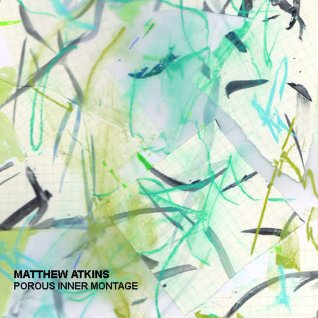 Matthew Atkins’ newest effort is much larger in scope and ambition than the last tape of his that I heard, The Subtle Silence. On Porous Inner Montage, he makes use of a wider palette of sounds, sculpting everything from electrical crackles and pops and electronic drones to recordings of shuffles and the creaking of wood into bewildering sonic constructions. The tracks’ developments are pleasingly unpredictable, and each is completely unique in the way it progresses and unfurls. Atkins avoids a restrictive linear format, instead allowing the elements to combine and harmonize in a way that feels uninhibited, even organic. But once again, his greatest strengths arise when he contrasts abstract, timbral elements with melodic ones; track 5, the first on side B, opens with Tilbury-esque, spacious piano plinks that slowly organize themselves over a bed of fascinating textures, and ends up being one of the tape’s strongest and most emotionally resonant moments. As a whole, Porous Inner Montage is a magnificent step forward for Atkins’ work. It feels cohesive and well-crafted but doesn’t play anything too safe. I’m excited to see him explore these more difficult, nonrepresentational compositions, and I also hope he retains those brief moments of conventionality that create such an amazing contrast.
Review: The OO-Ray – Tiny Fugues (Audiobulb, Jul 3)
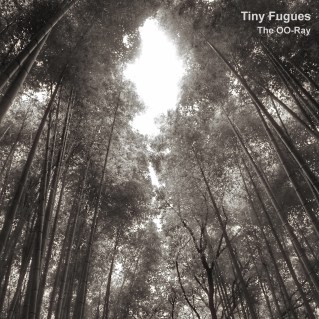 According to Ted Laderas, who records and performs under the alias The OO-Ray, Tiny Fugues is about “searching and finding the unexpected in the everyday.” While I’m not sure if I’d call this scintillating and celestial music “everyday,” Laderas certainly succeeds in finding, and reveling in, the unexpected. With the help of new software called the fuguelooper that transforms his cello and electronic improvisations into newly rhythmic material in real time, Laderas approaches new realms and possibilities within his sound both actively and passively. These chromatic, ambient pieces loop, cascade, and coalesce, forming beautiful clouds of dreamy sound. Much of the majesty of Tiny Fugues originates in its transparent construction; the listener hears every step of the sonic journey, from the reverent bowing of the cello strings to the effects laden electronics and their gaudy, fuzzy counterparts swirling above and around them. It’s truly expressive and emotional music, conveying so much in a wordless, abstract way; and while I’m not sure it lends itself to being as conceptually complex as Laderas states, Tiny Fugues is certainly an inciter of “curiosity and compassion.”
 Noise Not Music