
 Even before “hyperreality” is explicitly invoked in “Heart-Shaped Reality,” Baudrillard was already brought to mind by the overloaded maxi-collages of The End. Here is a grotesque, ouroboric cultural semiotics, a festering mass of neon signs abstracted to such a degree that they both consume and signify only themselves; Burroughs’ cut-up polemic also lurks behind the scenes, but there are no accidental premonitions or moments of serendipitous sublimity to be found, only the death spiral of the modern era to which we are already subjected each and every day. Though venerable multimedia project I Cut People doesn’t exactly deal in obscurities when it comes to source material—within the first ten or so minutes you’ll hear, among other things, such deep cuts as “Yeah,” “Everybody Hurts,” “Sexy and I Know It,” “Everybody Wants to Rule the World,” and “Gangnam Style”—and yet the double whammy of pseudo-narrative splicing and abstract textural play is anything but passé. “Thirty Percent” is an especially harrowing cut that directly engages with the recent escalation of the Palestinian genocide; “HypeRealove” maps the horrors of consumer AI. This is dense, mile-a-minute, often truly disturbing stuff, but it’s usually funny, in a ruthless and absurd and desperate kind of way (see “The End”). There are also times when it is genuinely pretty: the coda of “Out of Existence” with Buttress O’Kneel pairs the Scientist’s monologue in Bad Boy Bubby with the strums of The Velvet Underground’s “Heroin,” and “calc( hurt x 2 )” delivers a haunting and somehow tender threnody for the extinction event just witnessed (experienced). “People: they tend to collapse in on themselves.”
Author: Jack Davidson
I like to listen to, read and write about, and play music.
Review: Ellie Kokoro – Curious Cryptids (Wouldn’t Know, Oct 8)
 “I’m on a budget right now, but using the skills I have to continue to make music.” So goes Ellie Kokoro’s humble introduction to their newest release on nebulous in-house netlabel Wouldn’t Know (this quote is followed by a much lengthier discussion of audio quality standards and mastering techniques—long story short, the artist’s production paradigm leans minimal and laissez-faire, and stands in opposition to the still-snowballing loudness wars). The music comprising Curious Cryptids itself possesses plenty of humility as well, taking the form of six ragtime-influenced piano improvisations recorded outside at a gazebo in Sewickley, PA. Kokoro is clearly a talented and adventurous pianist, but neither virtuosity nor subversion are the focus here; each piece is a straightforward and often danceable bit of musical impressionism, no more and no less. Simply recorded with a smartphone, the rolling melodies and off-beat accents are frequently joined by the surrounding ambient soundscape of the park—birds chirp, leaves and twigs tumble in the wind, cars on nearby roads breeze by at audibly relaxed velocities—but it feels more incidental than intentional, i.e., I don’t hear the same co-emphasis on contribution and observance that characterizes the ostensibly comparable work of Áine O’Dwyer, Nick Keeling, or Natalia Beylis. Rather, the “point” of Curious Cryptids is purely that it is music that just happens to have been performed in a particular place, which ironically makes the unexpected moments of textural harmony all the more serendipitous. I am a big fan of Kokoro’s aesthetic credo, or perhaps the lack thereof… where else could you hear a track titled “Spitroasted by Mothman and Bigfoot” that sounds this cute?
Review: Mickey O’Hara – Bituminous Concrete Curb Detail (Ayurvedic Tapes, Oct 8)
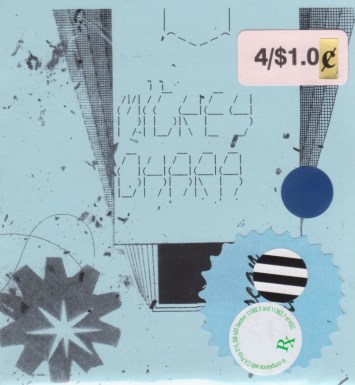 Going into Bituminous Concrete Curb Detail I did not expect the level of fidelity and sound design that immediately and loudly makes itself known in distortion-wracked opener “Not to Scale” and remains, in various forms, throughout the remaining six tracks. I’ll admit I had expectations based on what I have previously heard on Ayurvedic, a small batch label initially launched by Seamus Williams to release his first recordings as TVE, which all seemed to worship the bottommost dregs of analog tape noise. And that was before I knew that the material for fellow Worcester, MA resident Mickey O’Hara’s latest on the imprint was produced via a custom framework in SuperCollider. But it’s not that Curb Detail doesn’t belong on the venerable imprint, something that “14” Gravel Base,” one of two lengthier pieces, wastes no time in asserting with its expansive soundscape that could easily pass as scuttling basement concrète punctuated by fraught yawns of audible emptiness. Both the digital toolbelt and the CD-R format make room for a little less dust and a little more detail, and O’Hara takes full advantage of this with each enthralling composition; this is a well-structured and consistently engaging album. Even as it proceeds at a rather reticent pace there are always moments of surprise: the throttled, writhing textures of “Hey (Slab)” evoke those of a certain power electronics project, “330 Crickets” powers up into full-on glitch mode, and I swear those are humans making some of those sounds in “Musty Sheet no. c7.0.” There’s something for everyone, clearly, but in the interest of recommendation, fans of Christian Mirande, Mysterious House, or some of the more electronics-heavy Vitrine releases will definitely feel right at home. The more I play this one the more it’s shaping up to be a favorite of the whole year.
Ayurvedic orders are placed/fulfilled via email: seamusrwilliams@gmail.com.
Mix: Campfire Tales
The circle of souls gathered around a fire becomes its own insular universe for the night, a space of shadows and secrets where even the tallest of tales ring truer than death knells. Step shivering into the worlds of these storytellers, where their true identities as oracles or deceivers are not just obscured, but obsolete. Playful scares, arcane séances, surreal premonitions, dreadful dreams. Ghosts and ghouls and grief. Fiction and memory are strange but inseparable tentfellows.

Tom Shropshire
00:00. Unknown Artist – A side [beginning] of Campfire Tales (Tribe Tapes, 2020)
00:38. Ahulabrum – “Also the Smell of Cinnamon” from Daimonic Reality (Atrocity Altar, 2021)
06:16. The False Face Society – first part [excerpt] of Running Me Down (Index Clean, 2020)
08:35. Ghost Food – “Accidental Invocation” from ROT GM (Sweet Wreath, 2022)
12:48. Miranda July – “WSNO” [excerpt] from The Binet-Simon Test (Kill Rock Stars, 1998)
15:15. Ruth White – “Spleen” from Flowers of Evil (Limelight, 1969)
18:04. Fantom Auditory Operations – “Child Witch and the Watcher” [excerpt] from The Child Witch of Pilot’s Knob (The Tapeworm, 2011)
20:43. Vincent Price – “To Raise the Dead” from Tales of Witches, Ghosts and Goblins (Caedmon, 1972)
21:18. No Artist – outro of Map of the Interior (Vitrine, 2014)
25:29. “Jack Sutton contacts Dead Airmen” from Okkulte Stimmen: Mediale Musik (Supposé, 2007)
27:30. Filter Body – “Cactus Hotel” [excerpt] from Filter Body 2 (218, 2021)
28:36. Come Look with Me – “Terra Morgana.” from To Air Is Human (self-released, 2020)
31:53. The Marshmallow Ghosts – B side [excerpt] of The Witch Hat House (Graveface, 2017)
36:01. Unknown Artist – B side [excerpt] of Campfire Tales
37:45. Ivor Cutler – “The Darkness” from Dandruff (Virgin, 1974)
Review: Selving – Miniscula (Fusty, Oct 5)
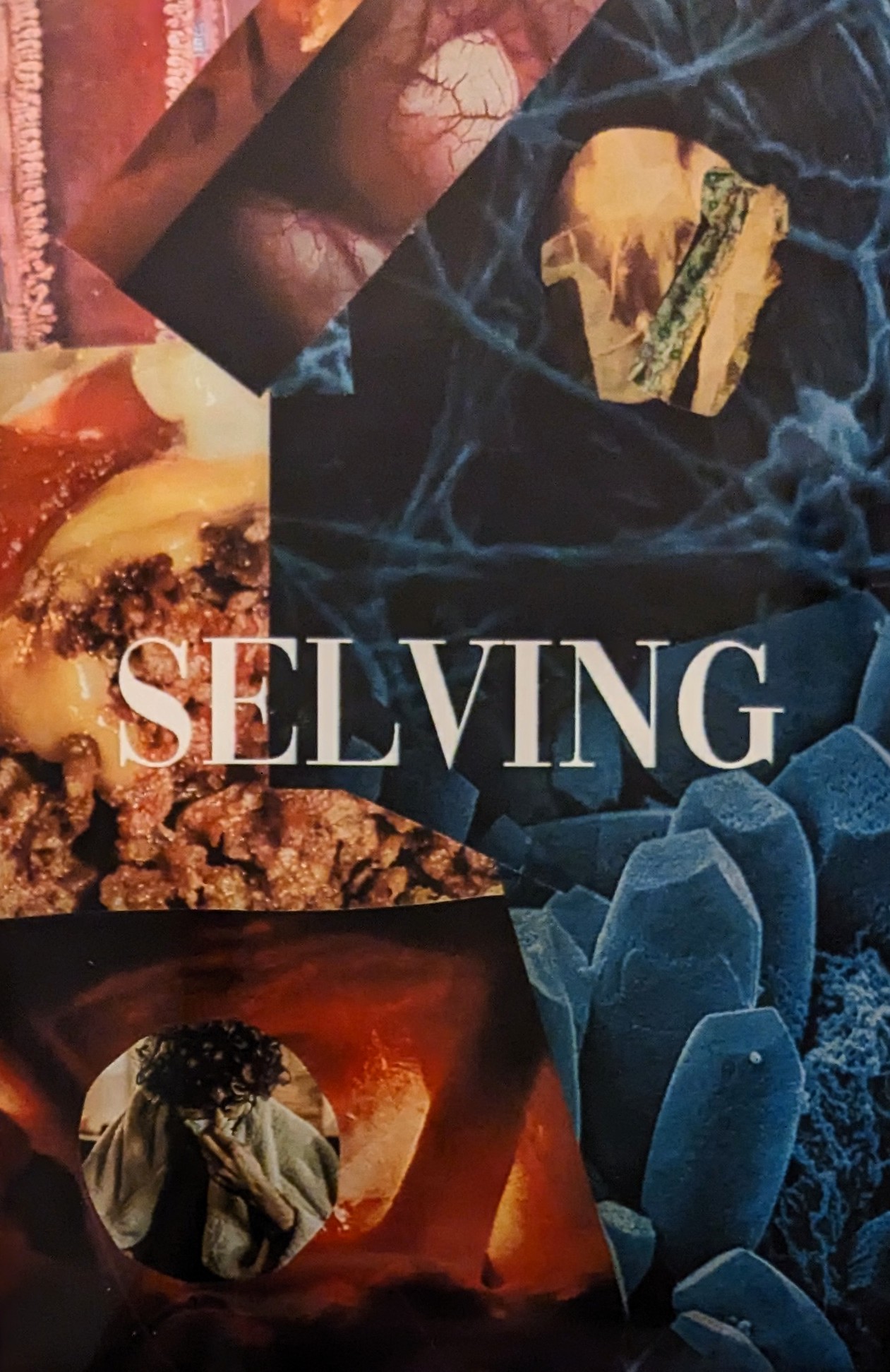 Selving, the latest and perhaps greatest solo project from Dan Williams (a.k.a. Swarm Survival; member of Pyramid Dust, Culled, Ghoul’s Teeth, Rust Belt), first torched tape with 2021’s appropriately titled Willed Into Existence on the artist’s own imprint Structures Without Purpose. Though there was already plenty of cut-up DNA woven into the two mono-heavy blasts of that C20, those strands have grown like hungry vines through the thick analog churn of Guerrilla Bamboozlement Campaign and now thrive in the loamy ruins of Miniscula, cinch-amputating slabs of surging pedal-noise into jagged chunks with stretches of humid dead air in between. I hope I get to see a live set someday, because this is the kind of stuff that’s better witnessed than simply heard; every rumble and roar in “Bizarre Animalcule” sounds forced from a maxed-out effects chain by ruthless killswitch compressions—Caustic Pulse Rupture?—and one can almost see the knobs twisting through the soupy direct-action smog of “Muling.” There’s a (frequent) time and (large) place for the high-fidelity, stereo-lush shrapnel storms of audiophilic surgeons like T.E.F, Negation, Marion, and others, but I’m just as often in the mood for this blunt-nosed approach that is thriving in underground hotspots around the States and across the globe, a trend with aspects both fresh and classic that Fusty has been faithfully chronicling with many of these inspired recent tape releases. Miniscula has all the colorful density and textural eclecticism of Bamboozlement (one of my most played tapes in the box of noise-bags that lives right next to the deck), but here Williams also introduces a well-humored volatility into the mix, cross-contaminating currents and injecting left-field sample breaks with inflammatory irreverence. My sole complaint is that it’s too damn short.
Review: Unknown Artist – Birdbath I (Everyday Samething, Oct. 5)
 Last time I reviewed an Everyday Samething release (Hydra’s Your Name), I discussed how the enigmatic imprint’s unique approach to tangible editions responds to “a point in time when physical music is much more ritual than utility to most.” That dialogue is only more relevant in the case of the newest entry in their catalog: Birdbath I, a brief bit of thoroughly DIY sound art by an unknown artist pressed as an “extremely limited” run of four business cards with the album artwork on the front and a QR code linking to a youtube upload of the music on the back, priced at a cool hundred quid each. By design, there is quite literally no incentive to own one of these objects other than the fact that only a handful were or will be made; they do not include a code for lossless download, nor is the youtube video solely accessible via the QR.
It’s a rarity parody that’s both amusing and incisive. Though scarcity in the underground music community is at its root simply a financial and logistical necessity, it has become some sort of benchmark for “legitimate” ownership and is now often intentional (read: artificial), an evolution with its bleakest results manifesting as limited digital NFT releases such as those distributed by Nina Protocol. Made-to-order imprints like Matching Head and experimental prank editions like those of Everyday Samething are deliberately dug potholes in that all-too-smooth road into the cancerous depths of capitalism—and the satirical aspect of Birdbath I lets us muse on what might be playing over the speakers in that cursed clown-car. The answer? Subliminal propaganda mutterings, dictaphone smear, sabotaged mass-media broadcasts, the best and brightest of this generation’s elevator music. A funereal radio play to score the most boring apocalypse imaginable. Hard to describe how desolate the sixth untitled section is: static-cracked sounds of idly tapped fingers and shuffled decks of cards, the dried-out signifieds of human presence passively decapitated from their referents. The material, which was anonymously submitted with next to no context other than the request for the unusual delivery method, could not be better aligned with it. Twenty-five minutes of that elusive superposition of forbidden revelation and utter uselessness that seems to be the only relevant art for our times… I will not rest until I own all four copies.
Review: Connor Camburn – 00U0U_akhnQkunEcw_0CI0pI_600x450 (Pentiments, Sep 15)
 Pentiments’ first CD release is appropriately one with a radical focus on digital media both physical and disembodied, an aesthetic purview that should come as no surprise to followers of LA-based sound researcher Connor Camburn, whose sparse discography under his own name and as Litüus on Careful Catalog, Chained Library, and other imprints comprises some of the most forward-thinking computer music of the past few decades. It would be difficult to say anything about 00U0U_akhnQkunEcw_0CI0pI_600x450 that hasn’t already been covered in the evocative (if a bit verbose) liner notes, so I’ll aim to build on them instead, especially the excellent phrase “the incidental grandeur of malfunction.” Here Camburn codes, composes, and cointegrates an entirely new musical language based in data output both intentional and erroneous, uncovering obscure alien logics in the interactions between unpredictable systems of tones and textures. The ensuing musical works manifest in a variety of forms; some are kinetic (the seething, hyperactive noise arrays of “01082016”), others lethargic (“08112020” / “08292021” and their slow-paced flow of decaying pulses that ring both inquisitive and sorrowful in turn), but all display a disconcerting amount of emotional sentience. Whether that’s simply the result of nothingness mirroring the preoccupations of the observer or the subtle agency of some sort of ghost in the machine is up for debate, but the latter possibility is difficult to ignore when confronted with something as profoundly arresting as the penultimate “08242021,” a piece that just seems too sensible, too organic to have been produced by a passive algorithm. To return to the introductory words, 00U0U_akhnQkunEcw_0CI0pI_600x450 is billed as “a stark and laconic argument against the oncoming ‘technological singularity’,” and it succeeds—these are the sounds of humanity being boxed up in modular caskets by silicon caretakers of our own making.
Review: Darksmith of California – End of Life (Second Sleep, Sep 13)

Darksmith’s body of work is in large part defined by juxtaposition, stark contrasts between often oxymoronic concepts—light and dark, comfort and unease, the familiar and the uncanny. End of Life, perhaps a sequel of sorts to the artist’s last Second Sleep LP Hatred of Sound, memorably begins with one such paradox: the reverberating peal of a ringing knell is spread across tapes frayed so thin they seem to disintegrate in real time, draping a gauze shroud fit for funeral rites… death, for all its weight and ubiquity in virtually every aspect of our existence, is a weak, sickly thing, arriving with only quiet gasps or soiled undergarments as its fanfare. Mortality is not a novel element in the San Francisco stalwart’s music, but it hasn’t been this salient until now, and the implications are less than reassuring. Appropriately, this new full-length features some of Darksmith’s most frail and insubstantial collages yet, each full of spidery details that only reveal themselves when heard in a silent, shadowed room. The hollow concrète specters that haunted Collapse are resurrected throughout—amplifications of the empty space between voice/vitality and vacuum/void. There’s also a curious throughline of musical sampling, which features most prominently in the closing track that comprises side B. Distorted rasps, distant metallic screeches, and other ephemera orbit the suspiciously cozy 4/4 loop (the source of which I’ve yet to identify) in a telescoping tunnel of nocturnal texture, a leisurely hearse cruise toward a conclusion that sounds like the poorly maintained subterranean infrastructure of existence itself. Stark, bleak, and, of course, masterful; one expects no less from a Darksmith record.
Review: Luciano Maggiore – self-talk (Edizioni Luma, Sep 10)
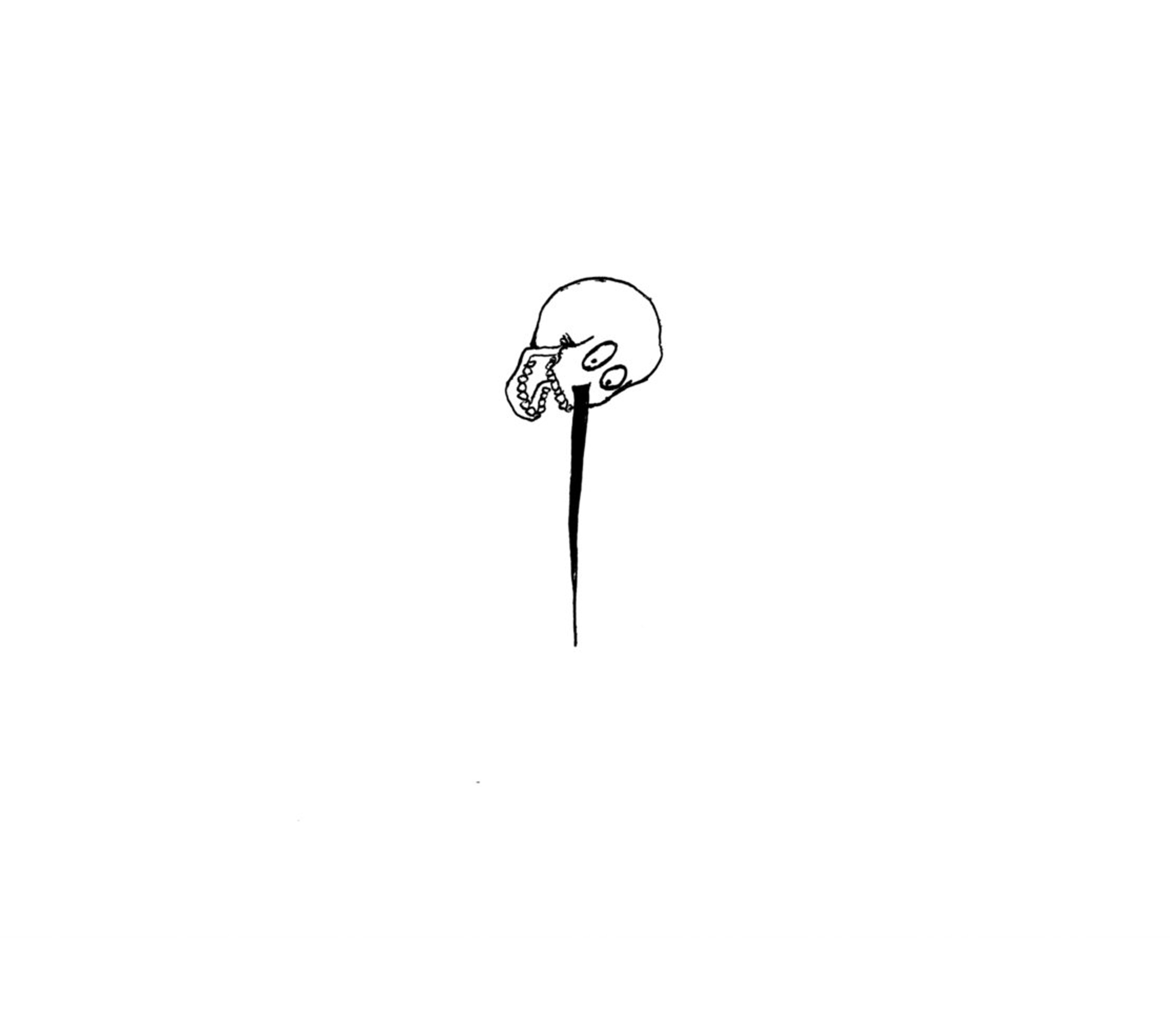 London’s Luciano Maggiore has been recording, and performing radical sound art for more than a decade now, both in inspired duo collaborations (with Francesco Brasini, Enrico Malatesta, and most recently Louie Rice) and as a solo artist. Focusing on radical repetition and generative playback of electronic sonorities stripped to their most basic essences, his ever-evolving explorations manifest in forms ranging from the microscopic yet lush glitch-storms of Intersezioni di Vortici, Studi Ritmici e False Chimere to the bewildering dream-logic groans of Locu to the soothing loop-based meditations of pietra e oggetto—no two releases sound the same, and self-talk, unsurprisingly, upholds that trend. The sparse aesthetic of this gorgeous trifold digipak from Maggiore’s own imprint Edizioni Luma is both playful and uncanny, evocations similar to that of fellow sonic minimalists Sukora and Arek Gulbenkoglu (see the covers of Ice Cream Day! Nice Day! and fissure, fissure, fissure, respectively), and its contents, the result of a year of research and composition, comprise some of his most basal material yet. Here, the slightest of dramas are soldered from as few as two or three textural currents, each orbiting and bouncing off one another in lethargic pseudo-rhythm like tiny particle systems hovering above absolute zero. (The passive voice there was not unintentional. These compositions seem just as algorithmic as they do written.) The first cut employs electrical sputters and pulses that interact with almost percussive resonance, while the second is all warbles and smears beset by a hiccupping bass frequency, and then the third sort of brings it all together… it’s hard to describe how self-talk feels both static and dynamic, but it does; not unlike wall, what you hear if you skip ahead to the fifteen-minute mark is not the same thing you hear if you actually listen to the fifteen-minute mark, if that makes any sense. Fascinating music that’s as exciting as it is elusive.
Review: Gianfranco Piombo – Route des Sources (La République des Granges, Sep 4)
 Works with unique soundmaking repertoires are far from uncommon on this site, but that doesn’t mean each one is exciting and fascinating in its own right. A notable few artists have researched the accordion as a tool for longform drone music or extended improvisation—Pauline Oliveros and Tizia Zimmermann are two great examples past and present, respectively—and even fewer, if any, have paired the demanding instrument with a windshield-wiper motor and fan activated truck shock absorbers (only the latest iteration of Gianfranco Piombo’s both visually and sonically enthralling setup), which makes Route des Sources something to behold, at the very least. The two untitled sides are built upon the soft mechanical trill of the motor, a meditative sound that (unsurprisingly) belongs to the same family as spun bicycle wheels and analog film projectors, soon joined by the evocative yawns, sighs, and trembles of Piombo’s unusual approach to the accordion, the multiple layers of drones and vamps feeding off each other in dense, ever-growing harmonic waves. On one side these currents collapse into a sporadic barrage of percussive punctures, while on the other they more promptly coalesce into something much more rhythmic, even propulsive. How Piombo manages to so precisely drift to that from minimal, purely textural tactility to is a mystery, but one you get to hear play out in its entirety, so the answer has to be in there somewhere.
 Noise Not Music