
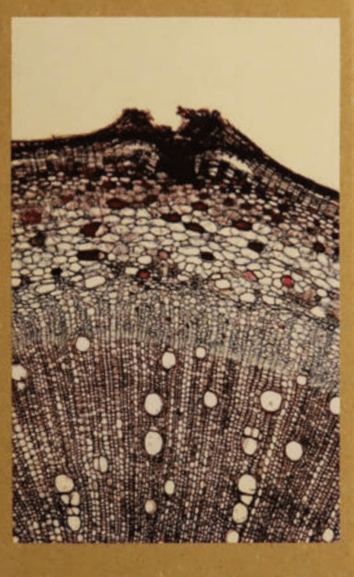
 Works with unique soundmaking repertoires are far from uncommon on this site, but that doesn’t mean each one is exciting and fascinating in its own right. A notable few artists have researched the accordion as a tool for longform drone music or extended improvisation—Pauline Oliveros and Tizia Zimmermann are two great examples past and present, respectively—and even fewer, if any, have paired the demanding instrument with a windshield-wiper motor and fan activated truck shock absorbers (only the latest iteration of Gianfranco Piombo’s both visually and sonically enthralling setup), which makes Route des Sources something to behold, at the very least. The two untitled sides are built upon the soft mechanical trill of the motor, a meditative sound that (unsurprisingly) belongs to the same family as spun bicycle wheels and analog film projectors, soon joined by the evocative yawns, sighs, and trembles of Piombo’s unusual approach to the accordion, the multiple layers of drones and vamps feeding off each other in dense, ever-growing harmonic waves. On one side these currents collapse into a sporadic barrage of percussive punctures, while on the other they more promptly coalesce into something much more rhythmic, even propulsive. How Piombo manages to so precisely drift to that from minimal, purely textural tactility to is a mystery, but one you get to hear play out in its entirety, so the answer has to be in there somewhere.
Author: Jack Davidson
I like to listen to, read and write about, and play music.
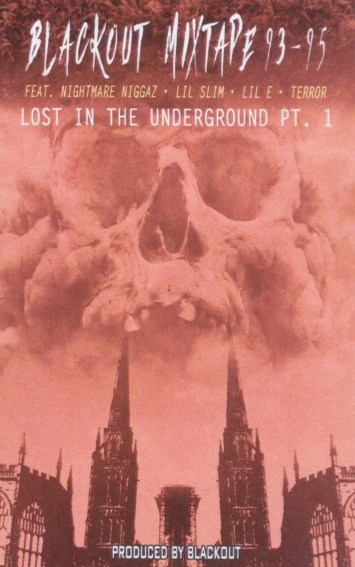
Review: Blackout – Lost in the Underground Pt. 1 (Trill Hill Tapes / Snubnoze Muzik, Aug 19)
“These rare finds are songs recorded in our earliest stages of developing our sound. Straight from the 4-track tapes. Enjoy!”
Much like last year’s Dreamworld: Othaside—albeit without the fidelity upgrade—Lost in the Underground Pt. 1 is a humble reminder that Blackout is not just the best producer of the classic Memphis era, but one of the greatest of all time. Beyond the reverent efforts of the artist’s own Snubnoze imprint in recent years to unearth previously unheard recordings and reissue past material to a new audience, history weighs heavy on 2023 with regard to one of hip-hop’s most distinctive and enduring milieus: this year marks three decades since the first releases by pioneers like DJ Paul & Lord Infamous, Lady Bee, and Criminal Manne, and earlier this month Tommy Wright III paid tribute to Princess Loko on what would have been her 44th birthday, a year after her verse on Wright’s “Still Pimpin” was sampled on Beyoncé’s Renaissance. All this to say that getting six fresh heaters from Blackout right as we head into the autumn months just feels right. Not to mention the fact that this short mixtape features some of his best and most complex beats, every sputtering hi-hat and offbeat synth interjection exemplifying the essence of the scene even at such an early stage. The featured MCs include Lil Slim, who complements the cemetery trudge of “Fuck Dat Talkin” with a plodding double-tracked flow, the ghostly adlibs and triplets skulking right behind the beat; frequent collaborator Lil E, his immediately recognizable anxious tone conflicting with a tempo so sluggish it sounds like the tape recorder itself is dying; and Terror, bringing it home to the freshly dug grave in the dreamlike “Evil Fasho.” Everything heads old and new could possibly want is here on Lost in the Underground Pt. 1: twisted toybox arpeggios, sparse but solid bass, Blackout’s iconic shoutouts. The “Pt. 1” in the subtitle has exciting implications to say the least.
Review: T. Jervell – 2nd Two (Moonside Tapes, Aug 20)
 In 2017 I had the privilege of seeing Toshiji Mikawa play a rare solo set in the back room of a tiny record store (you can watch a high-quality recording filmed by John Wiese here). Though at the time I was still very new to noise, and therefore even more clueless about gear and technique than I am now, with the help of a later google search I was able to figure out that the unique device featured heavily in Mikawa’s performance was the Cocoquantus. Due to said gear cluelessness I am unqualified to say definitively whether or not it is technically a “wooden synth,” but regardless, the visual of the object itself and the way it’s manipulated do evoke the nature of the materials T. Jervell is working with on the less caustic but no less captivating 2nd Two: sinewy and rough-edged but also playful and colorful. This new tape leans into the more abstract elements of Jervell’s debut—the often-sublime and always-unpredictable (K) En sommerdag i Kroken (Ruter)—whittling down the artist’s interest in complex textures with essences both digital and organic to a brief, focused study in the vein of Daniel Iván Bruno similarly superb Brazo. Intricately woven hybrids of direct improvisation and composition via edit, the seven tracks (with titles that are somehow at once straightforward and surreal) each glimmer with a unique varnish, from the freshly squeezed splinter-bubbles of “Blue Boy Sprott…” and extraterrestrial-sounding contortions of “A Boy in Love with Lyra…” to the plucky ambience of “Planks of Wood…” and “Presets…” Beneath the thorny, deeply experimental bark layer of 2nd Two is a bright and joyous sapwood shining with life, and beneath that a stocky, steadfast heart.
Mix: Robo-Pop
Algorithmically generated earworms for the silicone-studded late-capitalist nightmare.
00:00. Pimmon – “Perry Como” from top40fodder (fals.ch, 1999)
01:10. In Posterface – “Born On” from Its Terminal (Winning Sperm Party, 2016)
06:39. Orchestral Manoeuvres in the Dark – “ABC Auto Industry” from Dazzle Ships (Virgin, 1983)
08:37. sneeze awfull – “quantum” from sneeze awfull (self-released, 2019)
14:42. Jenn Kirby – “We Never Have Time” from Ravel (pan y rosas, 2022)
18:22. CustomRealEstateSolutions – “Bankrupt” from Options (AntiOedipus, 2022)
20:49. The John Doe Experience – “Fußnote Part I” from Electric Cheap: Essentials 2014–19 (self-released, 2019)
23:59. Dolphins of Venice – “Dark Ivor” from Mutuals (Mahorka, 2022)
28:05. Fet.Nat – “Tapis d’Orient” from Le Mal (Boiled, 2018)
31:31. Dan Deacon – “Bronst” [excerpt] from Spiderman of the Rings deluxe edition (Carpark, 2017)
35:22. Atom™ – “Weißes Rauschen (Erster Teil)” from Liedgut (Raster-Noton, 2009)
Review: Luigi Bilodo – Luigi Bilodo (Vacancy, Aug 8)
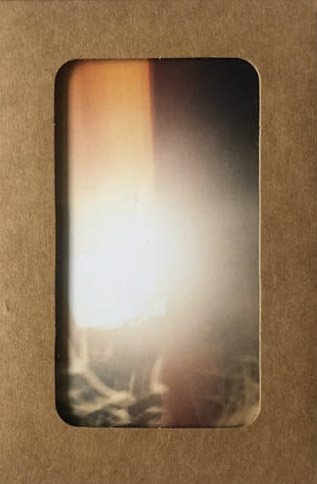 In writing about Kino’s Playing series a few weeks ago, I mused about the convolution-qua-trivialization of the field recording tradition, a trend that always interests me no matter what the genre, medium, or context. But it’s also true that charting the aesthetic and/or conceptual evolution of an art form in this way can also end up obscuring the beautiful simplicity of the object itself. Take the newest release on NNM favorite Vacancy, Luigi Bilodo’s self-titled debut cassette, for example. An unassuming C60 with each half comprising a single unedited piece, it could conceivably fit at the end of some stylistic arc-trajectory of field recording and sound art in general, but that doesn’t change the fact that at the end of the day, one side features the sound of rain on a pizza box and the other a gas-powered tractor-mower. Radically repetitive, minimalistic, and above all humble, Bilodo’s work is resolutely neither more nor less than what it is. “Pizza Box of Rain” might be described as a stripped-down, budget-conscious peer of Henry Collins’ Prepared Rain, but where that release drew intrigue and variety from the lush complexity of the passive percussion arrays, here the unceasing pitter-patter upon the cardboard lid is heard from within the box, a placement that reads as claustrophobic but in fact plays as calming, even cathartic (helped along by how expansive the stereo range is). There’s a lot more room to breathe in “La Pelouse (New Country),” a pastoral tractor-mower ride over verdant fields, the lulling purr of the engine blurring into a warm, full drone that fills ears with sunshine and fresh grass clippings. The diptych as a whole has such a wonderful homespun essence; it radiates an emotional energy both despite and because of its mundanity.
Review: Them Teeth – Illfänas (Works ov Cauldron, Aug 4)
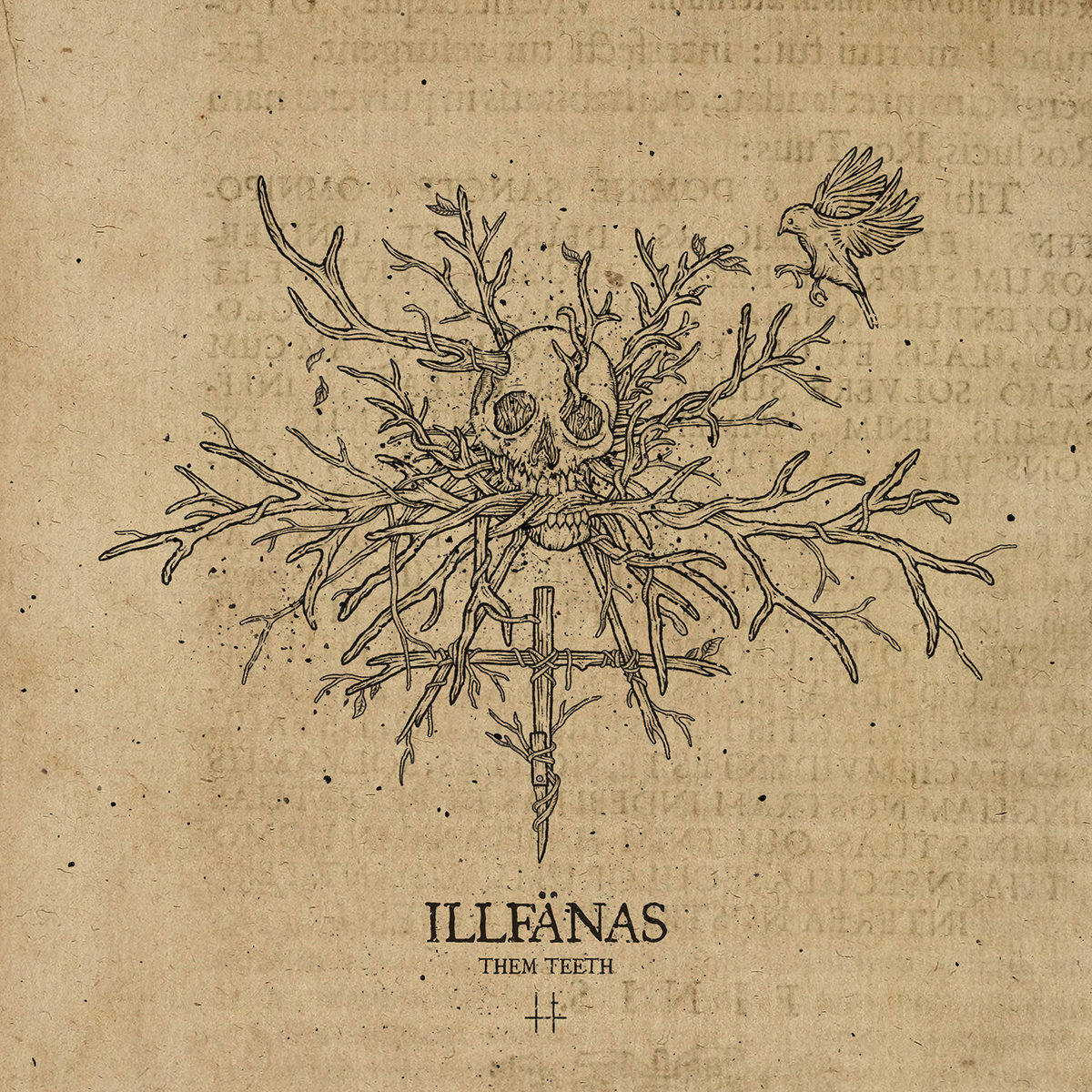 Them Teeth have been active for more than a decade at this point and still haven’t been given their flowers, let alone the freshly picked deadly nightshade they rightly deserve. The mysterious duo had already ventured into the deepest innards of the shadowy Swedish woodlands by the time they recorded the material presented on Erstwhile and Auditory Witchcraft, they always seem to find new, even more darkness-soaked annals for their obscure sound-summonings: in the case of Sun of Serpent, Moone of Cipher the skins and strings were strung across a misty lagoon veined with slivers of lunar light; Illfänas, on the other claw, is described as “an untamed offshoot from the previously set path” of the past two records, seething and crackling with the heat of a bonfire that threatens to reduce the surrounding foliage to cinders at any moment. Raw, hypnotic rhythms have always featured prominently in the project’s sonic grimoire, but this LP elevates their presence to new heights, building each carefully structured and uniquely memorable track around pounding percussion rituals that channel both the metronomic throb of drone-rock triumphs like Outside the Dream Syndicate: Alive and Deux Lives and the supercharged Auvergnat folk music stylings of Toad. The more abstract elements of Them Teeth’s singular sound also reach new heights here—many of the meditative jams collapse or simply rot into stretches of harrowing electroacoustic dirge, leaves curling and branches blackening as the flames spread over all. It’s almost too easy to get completely lost in the outstretched arms of the forest, even as tracks like the superb closer “Du skola aldrig få hvila” prove that this is a concise and considered full-length (that also happens to be the band’s best yet).
Review: Met Glas & THRTDSPLY – Out and Out and in Favour of Anythiing (Bent Window, Jul 28)
 Calgary’s Met Glas is easily one of the most exciting new voices in noise right now, and even though van Reekum later informed me the material for this new tape on Bent Window was recorded a few years ago and differs from the sound he’s been exploring on stellar recent tapes such as Crooked Like a Dogs’ Hind Legs and Moody Brooding), it should come as no surprise to anyone familiar with the project that Out and Out and in Favour of Anythiing is still excellent. Hailing from the other side of the Columbia, Vancouver’s THRTDSPLY brings a slightly more atmospheric presence to the table, even as the almost comically overblown harsh crunches well into the far red; I’m not sure of the exact collaborative process here, whether one artist provided source recordings for the other to manipulate or it was tracked live or a mixture of both, but whatever the case there is a palpable new structural dimension to the rich, crushing analog chaos to which I have quickly become addicted. Throughout “Uselessness on Earth” the immense slabs shift and swell with surprising ease, like ten-ton chunks of bedrock gracefully transported with an elaborate system of pendulums and pulleys, so fluid one barely notices the extent to which the track evolves over its almost-twenty minutes. “Burning Existence” begins with the sound of a quarter-inch cable being plugged directly into your eardrum, your pained request for the proper adapter completely drowned out by yet another surge of righteous distortion, so thick you could cut it with a knife. This one sounds a lot more direct-action/all-hands-on-deck, but again, who knows… can’t think, skull still ringing.
Review: Hazel Cline – Spell Song (Sweet Wreath, Jul 28)
 Whether literal or abstract, the imagery of a farm, or specifically that of a barn/stable/shed, is often a grand and pastoral one in atmospheric music (and film; see also Larry Gottheim’s Barn Rushes), a connotation bolstered by the recent surge of “ambient Americana.” But as anyone who’s been inside a ramshackle wooden structure after the sun has begun to go down knows, its interior is often not as romantic as its exterior, instead becoming a space of soggy straw and shadow that seems to whisper your own thoughts back at you. It is here that Hazel Cline sews the seeds of her humble soundscapes on Spell Song: hands rattle forgotten trinkets and ephemera, breeze and breath blow across the chipped rims of glass bottles, soft voice curls in the musty air as both tongues and textures. Apparently “inspired… [by] industrial music and the sound poetry of Kurt Schwitters,” the Atlanta-based multimedia artist’s sublime debut leaves both of those influences in the dust in terms of intrigue and nuance, a distinct sonic dialect all its own growing organically from the humble minimalism of the musical approach. There is an intoxicatingly cryptic essence to these invocations, but not the sort of cryptic that begs to be deciphered—rather, the sort that, instead of simply concealing concrete meaning, abandons it altogether. A nocturnal ritual to some ears, no doubt… perhaps a dusk-swaddled lullaby to others… but to all, a must-listen foray into rural mystique.
Reviews: Kino – Recent installments in Playing series (self-released, July)
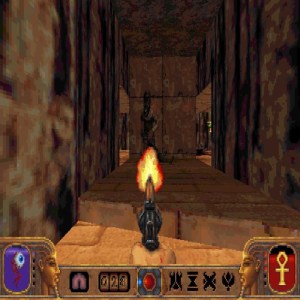 Field recording is a practice that is both limited and unlimited in its simplicity: observe, record, present. Entirely singular to the genre is the fact that the object(s) and/or event(s) being captured comprise the majority of a recording’s artistic essence, rather than the artist’s own perspective or contributions. But now, especially with the telescoping downward spiral of irony constantly being accelerated by a post-internet culture, many purely documental works released these days do not purport to be either intriguing or informative—they simply exist, near-moot artifacts of something that doesn’t really matter, but occurred nonetheless. Kino is an artist who never seems to stop releasing music (a query of the “Kino” creator field in Internet Archive yields over eight hundred results, and it’s only one of many aliases and side projects), much of which seems to not give two shits whether anyone actually listens to it or not. Strewn between various nature recordings and contact mic examinations are the many entries in the Playing series, in which the artist simply records themselves playing a classic DOSBox shooter (e.g., Catacomb 3-D: The Descent, Strife, Duke Nukem 3D, etc.) for anywhere from two to over fifteen minutes.
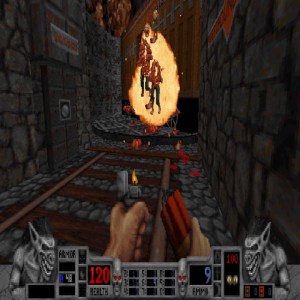 Many of these releases don’t offer much beyond that, but even with such profound conceptual humility there’s an implicit argument being made for the value of virtual sonic ecologies along with “real” ones, something that’s been explored more deeply by Network Glass (Twitch, Exercise of Whatever), Graham Dunning (Panopticon), Kelly Ruth (Simulacra), and others. The most recent installments, Playing Powerslave: Build Engine Version (Level 2: Dendur) and Playing Blood: One Unit Whole Blood (E1M2: Wrong Side of the Tracks) with the Fan on, are some of the best so far and introduce new delights with the help of the longer-form approach, especially the latter, which pulls the sonic lens back to include the sounds of the fan and the controller. There are enough ingredients for a healthy helping of unusual ambience, but the triviality is ever-present; it’s hard to settle into a soundscape when NPCs are screaming in cartoonish agony the whole time. Which of course, if you’ve been paying attention, is the point—if there even is one at all.
Review: Casa di Caccia – Grand Totàl (Absurd Exposition, Jul 21)
Matteo Castro is a name that may not be known to many, but to the few for whom it is familiar, you likely don’t need to read any more of this review to be confident that the latest Casa di Caccia material is absolutely superb. With both the inimitable Second Sleep label and his own diverse projects—Kam Hassah, Endless Sea, Drug Age with Francesco Tignola, Mercury Hall, Primorje with Giovanni Donadini, and of course Lettera 22 with Riccardo Mazza—Castro has always stood tall at the intersection of many different realms of experimental sound, bringing the same level of detail and commitment to quality in any context. That’s definitely true for Grand Totàl, the latest release from the duo with Gianluca Herbertson; it’s one of those tapes that obliterates from the very first seconds, the lush full-stereo intensity blazing throughout both ten-minute sides even as classic pedal-chain kinks like distortion panning and tension-filled brief bouts of silence keep things interesting. Any fellow fans of Negative Tongue or Lack of Attention will feel right at home for the duration of this jam-packed C21 (in almost direct contrast length-wise to the previous CdC release, one of two massive eight-cassette box sets released by Second Sleep earlier this year). At least in terms of my own retrospective thinking, harsh noise more so than most other genres/traditions in the avant-garde sphere grows and evolves regionally, and while the 90s may have belonged to the Japanese and the aughts to the North Americans, projects like this make a convincing case for the Europeans being the ones leading the charge post-2010.
What’s also great is that Grand Totàl is just one of a hefty handful of killer new tapes from Absurd Exposition; don’t miss Wasauksing Sniper, Discordia, or especially Moody Brooding.
 Noise Not Music