Mix: The Yule Goat

Following last December’s The Tryal of Old Christmas, the venerable Brachliegen Tapes has once again brought festive tidings to eager wind-reddened ears with The Yule Goat, a dark, icy trudge into the melodies and mysteries of the all-powerful solstice. In recognition of George Rayner-Law and friends’ consistently sublime work, and in the interest of remembering the roots of certain now-unrecognizable traditions, let’s gather around the hearth for a spell and listen to the snow fall. May Winter be merciful.

Straw Yule goat in Sweden covered with snow


00:00. Graham Lambkin & Jason Lescalleet – “Listen, the Snow Is Falling” from The Breadwinner (Erstwhile, 2008)

07:25. Degradation – “Ebb, Static…” from The Yule Goat (Brachliegen, 2022)

12:30. Brian Whitman – “City Sidewalk Steadfast Clime” from A Singular Christmas (self-released, 2004)

15:02. Carlo Giustini – “Quando qui vivevano altre ” from Non Uscire (No Rent, 2018)

21:17. Nuno Canavarro – eighth untitled track from Plux Quba (Ama Romanta, 1988)

23:58. Lower Bar Collective – “Holy” from Christmas (self-released, 2021)

33:35. George Rayner-Law – “Prudence in Your Entertainment” [excerpt] from The Tryal of Old Christmas (Brachliegen, 2021)

36:07. Plinth – “St. Lucia’s Day” Pt. 3 from Wintersongs (Dorset Paeans, 2001)

39:22. Chartreuse – “Bring a Torch, Jeanette, Isabella” from Last Winter We Didn’t Sing V/A comp (Thor’s Rubber Hammer, 2008)

45:12. Aarktica – “Like Embers” from We Will Find the Light (Darla, 2022)

Review: Yama Yuki – Tufan (Impulsive Habitat, Dec 5)

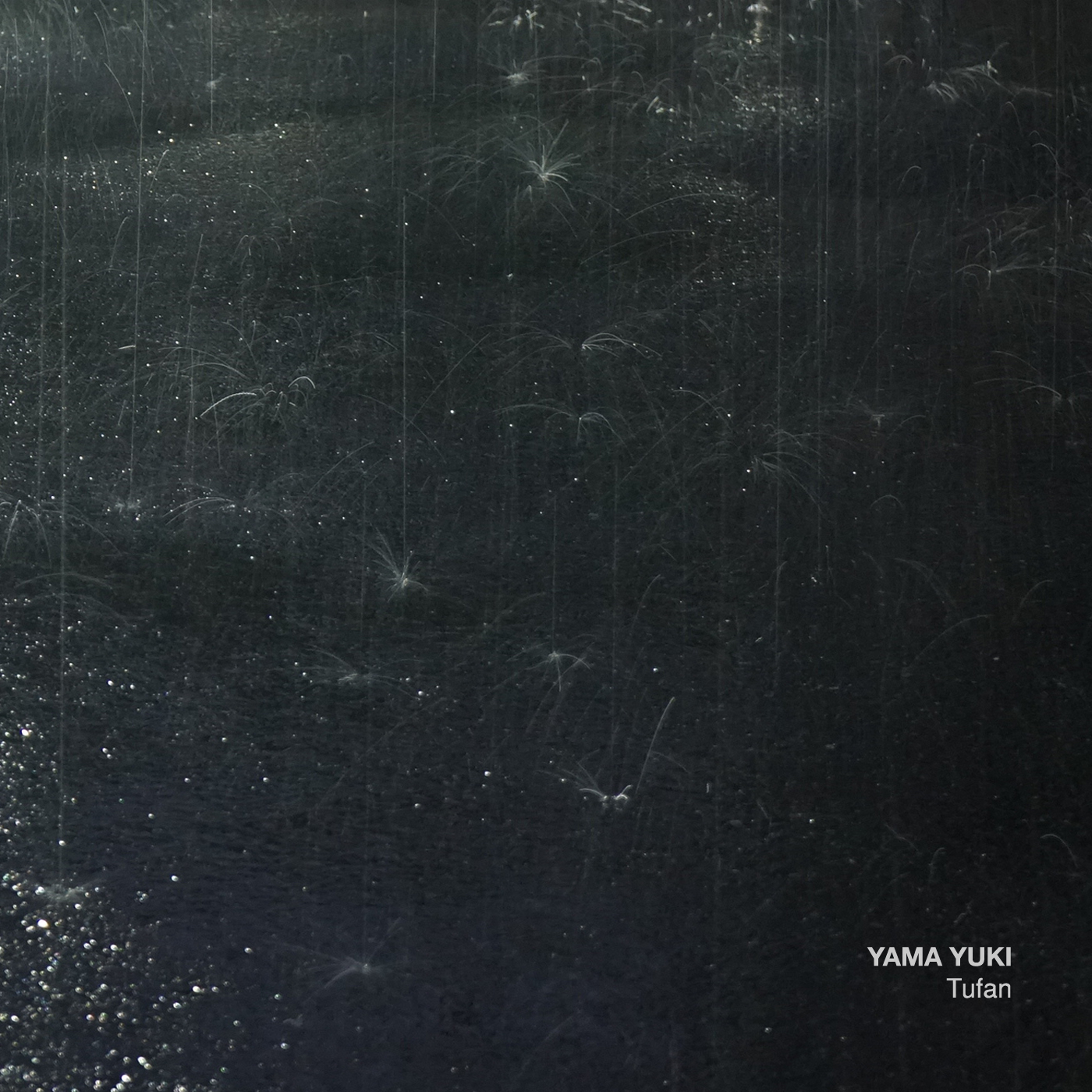
Mie-born, Tokyo-based sound artist Yama Yuki deserves my thanks not just for the generally excellent phonography on display here but also for reintroducing me to Impulsive Habitat, a netlabel I’d previously encountered through Alma Laprida’s Teleférico and then promptly let slip from my memory. Each work is fully Creative Commons–licensed and available for free lossless digital download—something that, if you’ve been following this site for any length of time (let alone the past year), you know I appreciate. I was also drawn to Tufan because of its duration. Approximately 3″-length single track releases are an ideal medium for field recordists, the perfect amount of time to develop the character of the captured or created environment with just the right amount of progression. Yama’s latest, recorded over the course of 24 hours after a typhoon made landfall, is all about rain, from the soaking, blurred rhythms of torrential downpours to the soothing drone of a receding storm. At first it’s hard to tell if the latter is what’s occurring at the outset of the piece, the sounds of a wet night bifurcated into closeby droplets and a distant low din, but the two elements soon seem to phase in and out with each other, sometimes layering into a full immersive experience of both humans and nature getting drenched, other times refurling into their disparate state, as if the observer has just stepped under an awning or onto a porch. The stereo breadth is fantastic, allowing for the most fleeting of brake squeals and digital interference to seep in on each side, but Yama also knows when to yank it away, which is an experience I’d rather not spoil (you’ll just have to listen). It speaks volumes of the artist’s skill and sensibility that such an ambitious concept statement is successfully conveyed in just 23 minutes:

This track was created as part of my study to understand how intensely humans and surrounding objects/beings are subjected to external natural forces. If you happen to be outside during a natural hazard, there is no way you can avoid being involved in it. Throughout human history, we have continuously tried to protect ourselves from the force of nature, but that is still an impossible task, and we always find ourselves vulnerable to it. In this work, I wanted to explore the theme of vulnerability of human existence within this world. Tufan means “rainstorm” or “flood” in Turkish and it has its origin in Arabic, but similar words are found in many languages, including the Japanese “Taifu.”

Review: Various Artists – PP-01 (Party Perfect!!!, Dec 2)

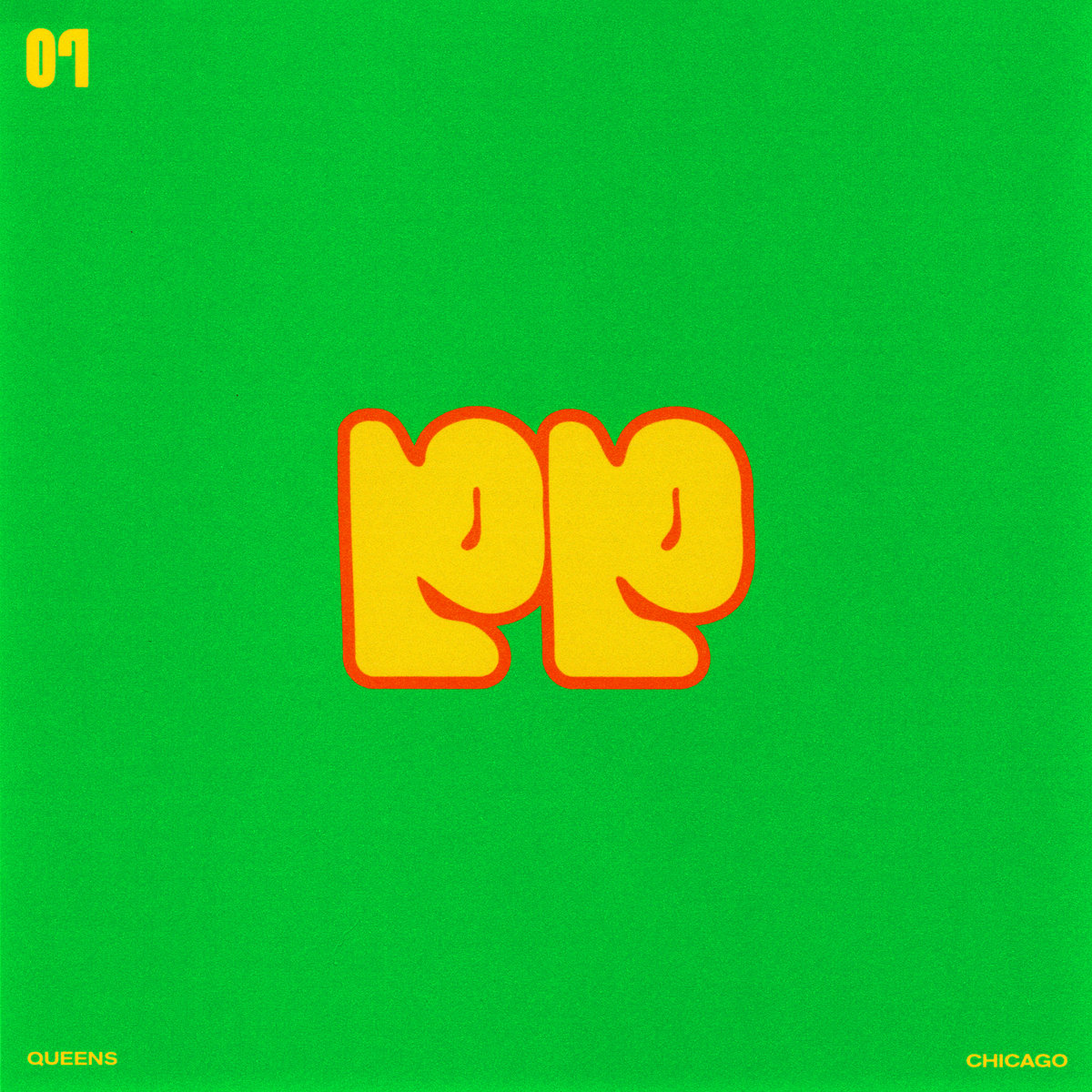
For the debut release from new Chicago- and Queens-based arrival Party Perfect!!!, three contemporary sound artists and one duo—Hunter Brown and Dominic Coles as Other Plastics, whose Overtime Liquor I reviewed here in 2020—each contribute an album-length section to a massive tetraptych compilation, simply titled after its own catalog number. It’s an interesting way to take the first step, and intuitively seems to center the label as just as much collective as imprint. What’s more, each self-contained work fits both thematically and sonically with those that come after and/or before, making a full listen a lengthy but worthwhile endeavor. Despite the duration, boredom isn’t really a concern here; composer and improviser Michelle Lou’s untitled suite of four tracks kicks off with a bang, ripping ragged digital knives through plasticine barriers, filling the field with thick glitch storms that break into sawtooth drones and quieter, sparser realms. The MEGO-esque maelstroms continue with The Arranger, a machine-listening algorithm written and performed by Stefan Maier at Haus der Kulturen der Welt in 2018, which has all the volatile, stochastic kinesis of Florian Hecker’s noisiest records with the heady conceptualism of his more recent work. Both “diffusions” of Maier’s piece, one via speakers and the other via headphones, are absolute joys to experience, the movements so manifold I’m convinced the code is somehow processing more than just itself.

By far the briefest segment, multidisciplinary artist Michael Flora’s Emergent Spectra covers immense ground despite the short lengths of the title tracks and the constricted minimalism of a pure data palette. Some of the sketches, namely 004 and 006, blow through a half-hour’s worth of complexity in less than a minute, the wrenching cut-ups and hard pans leading up to the starkly linear progression of “Folded Spectra.” The stretch of sterile synthesis is followed up by what is perhaps the most “human” of the quadrants, a field recording–based effort by Other Plastics to reveal “the rhythmic profile of various forms of contemporary leisure.” almost leisure has a much more defined thesis than the duo’s traditionally improvised debut, its sprawling sound-map of decontextualized conversation and spatial wormholes evoking the uncanny humor and illuminations of Network Glass’s Twitch user anthropology. As is probably clear by now, any of these could easily hold its own as a distinct release, but I think PP-01 is greater than just the sum of its parts.

Review: Partial – Partial Previews (Suppedaneum, Nov 29)

It’s been more than a month since my last review. What better way to return to the fold than writing about a release that doesn’t technically feature any music at all?

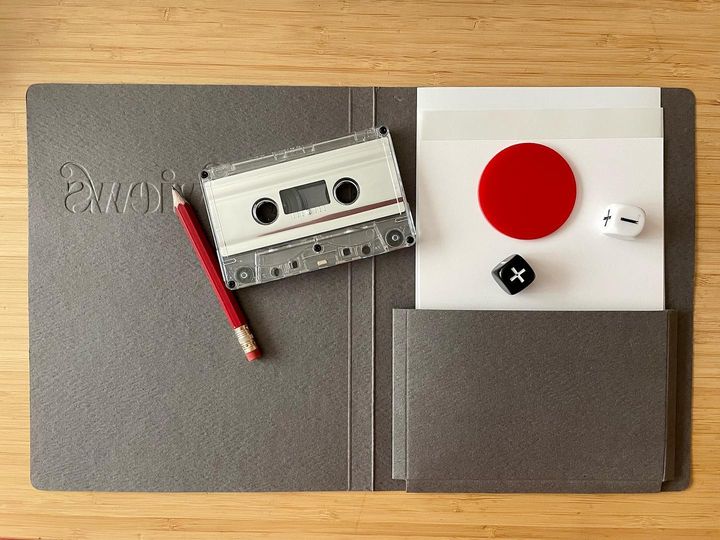
Partial Previews, the first new work from Chicago duo Partial (Haptic member and Suppedaneum honcho Joseph Clayton Mills with Coppice half and Future Vessel mastermind Noé Cuéllar) since 2014’s sublime LL comprises the following pieces, available as a unit for free plus the cost of shipping:

1. One matte gray paper folder, slightly textured, with a single interior pocket. The folder measures 6 ½ inches by 8 ¼ inches and weighs 1 oz (27 g). The word “Previews” is embossed on the cover in a serif font.

2. One audio cassette with blue leader tape, encased in clear acrylic with silver metallic foil labels affixed to both sides, held together with five small black screws. The cassette is blank and approximately 30 minutes in duration. The cassette measures 4 inches by 2½ inches by ½ inch and weighs 1.1 oz (31 g).

3. Two acrylic dice, one of which is black with white markings and one of which is white with black markings. On each of the dice, two faces are marked with a single line, horizontal or vertical depending on the orientation. Two faces are marked with a cross consisting of two lines of equal length. Two faces are blank. The corners of the dice are rounded. Each of the dice is ⅝ of an inch in height. Each of the dice weighs 0.2 oz (4 g).

4. Three rectangular sheets of blank white paper. One sheet is matte cardstock; one sheet has a glossy, reflective sheen on one side; and one sheet is translucent vellum. Each sheet measures 5 inches by 7 inches. The cardstock sheet weighs 0.1 oz (3 g). The glossy sheet weighs 0.2 oz (4 g). The translucent vellum weighs less than 0.1 oz (less than 1 g).

5. One hexagonal pencil with #2 graphite lead, sharpened, with a soft nonsmear latex-free eraser affixed to one end. The other end is sharpened. The pencil is painted red, is approximately 3 ¾ inches in length, and weighs 0.1 oz (3 g). This pencil is certified to conform to ASTM standard D4236 by the Pencil Makers Association of America.

6. One smooth red acrylic disc, the surface of which is blank and slightly reflective, 2 inches in diameter and ⅛ inch in thickness, weighing 0.3 oz (7 g).

The written instructions are equally straightforward: “Place the red disc within your field of vision while recording or being recorded. Conceal the red disc when not recording or being recorded. / Read faces for suggestions on how to use Partial Previews. / Partial Previews are proportionate to one’s ratio of uncertainty to action as faces become less blank.” The digital supplement to the release, free to download on the Suppedaneum Bandcamp page, provides further suggestions for effective use. Bookend tracks “⊞” and “⊟” ostensibly feature the audio from both sides of the blank cassette, fifteen minutes each of empty analog hiss, though the former seems to be an external microphone recording and the latter direct-input. Together with the completely silent “▢” they form three levels of involvement with or observation of the “material” contained on the tape. I would say that it’s unclear whether the sonic aspect is even essential to the work as a whole or it’s just one of many equally inconsequential angles to approach whatever the actual essence is, but in this case such statements are just as redundant as what they attempt to describe. Maybe it’s ironic that it takes a meeting of such conceptually minded artists to create something so thoroughly literal, or maybe the irony is that literality itself is rendered obsolete. We’ve all heard the “At the end of the day, it’s just an apple” routine; could the tangible components have been described any more accurately? Does holding them in one’s hands—actually using them for whatever purpose is allowed by the unspoken constraints of such specificity—make them any more real? I don’t fucking know. What use are questions that have answers?

Review: Gaped – Fever (Veil Tapes, Oct 27)

Especially within the last few years, I’ve heard so many mind-blowing subversions and evolutions within the wall noise genre that my taste has come full circle: I now appreciate releases more in line with the roots of the tradition just as much as those that so flagrantly flaunt what are already extremely esoteric conventions. That’s not to say one is less interesting than the other—in most cases, including this one, far from it. Via both his solo project Twin Aperture and imprint Veil Tapes, Eric Anders Benson has been providing a friendly neighborhood source for no-frills, incisive wall material and other goodies, making a certain unmistakable strain of unyielding analog grit his trademark. It’s present to varying degrees in all five tapes in the new Veil batch-only drop, a selection that spans both the label’s core purview and its more eclectic interests (the latter fulfilled with the retrospective synth-drone discography of now-inactive Massachusetts artist Aspekte Konstant). But the one that has captured my attention the most is the bagged C81 that may or may not be the physical-plane debut of the anonymous Gaped. It’s described, in the shortest of the five blurbs, as “hyper-focused,” and Fever follows through on that and then some. During my first listen, every check of a clock was a moment of brief alarm as I wondered where all the minutes went; these two lengthy untitled tracks gobble time like it’s a last meal. I often write about the duration-distorting effect of static or even just slow-moving noise, but here a new height is reached with a setup that sounds like it could be just a few carefully chosen pedals. Persistent yet lethargic kinesis, tape-dulled rough edges, an almost psychedelic constitution… this is the kind of wall I can get so lost in I forget I’m even listening to it but still rewards any extent of deep attention. Might be worth buying the whole bundle just for this one, if you ask me. And uh, oh yeah, stay safe out there.

Review: Lisa Cameron, Damon Smith & Alex Cunningham – Time Without Hours (Storm Cellar, Oct 14)

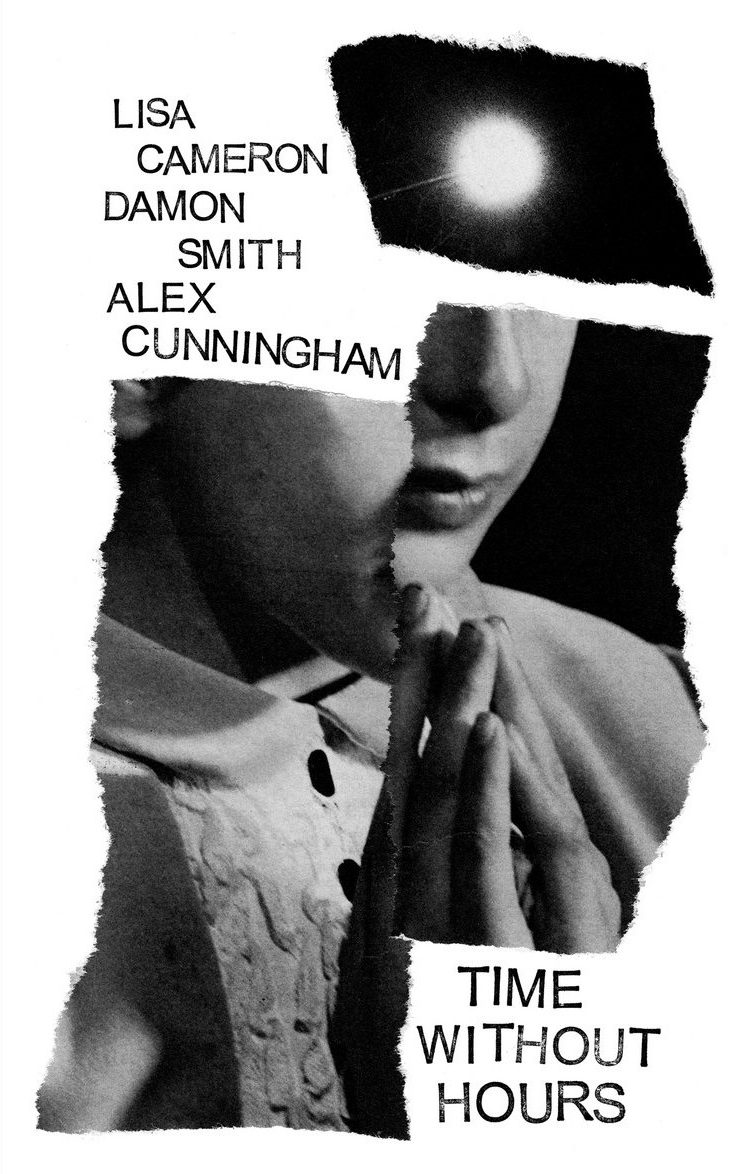
November 2020’s Dawn Throws Its First Knife, the first collaboration by this trio of Lisa Cameron (percussion), Damon Smith (double bass), and Alex Cunningham (violin), was not a release for which I expected a sequel. So Alex sending me a copy of Time Without Hours, as he generously does with much of his output, was a wonderful surprise—and even with any high expectations set by the excellent debut, the music on this tape itself is unsurprisingly wonderful. The session that produced the set of five tracks took place nearly a year and a half after the improvisers initially gathered, and in their playing a ramp-up of both individual technique and collective consciousness is palpable. As loose and rickety as it often is, the dialect the three weave is clearly defined and consistently infectious from the very first tangle of “Ember on My Eyelids.” Though the “drums” role is credited to Cameron, everyone plays with an ear for atonal tactility; just listen to Cunningham’s taps and scrapes flap like tattered moth wings over the lumbering half-groove in “A Wave Reborn” or the rattling, dynamic skitter-symphony of “Handfuls of Shadow.” Side B culminates with “Plentitude in the Void,” a moody masterpiece of a track complete with crunchy bow drones and a somber, dirgelike atmosphere dark as pitch.

Review: Micro_Penis – Süra Wald (Chocolate Monk, Sep 24)

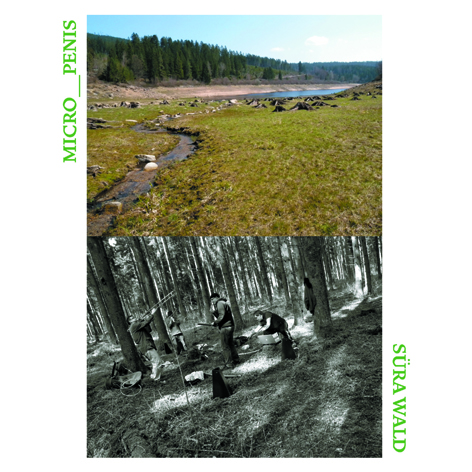
In addition to having one of the most difficult-to-explain—albeit quite representative—band names, French quartet Micro_Penis are notable for being one of the finest outlets for contemporary imaginings of the art brut tradition, spewing various bodily fluids across four superb LPs and a previous Choccy Monk release over the course of the past decade or so. Süra Wald isn’t “new” in that it was recorded back in 2010, but it is the first excretion since 2019’s La Maison de la Justice, and any sign that these four lunatics might still be active as a unit is just fine with me. It turns out that the CD-R, besides being an archival unearthing, does some looking-back of its own; the material was recorded over two days at the exact same locations used for Peter Brötzmann and Han Bennink’s 1977 collaboration Schwarzwaldfahrt.

Brief opener “Air Crash Bodies” not only waddles the gamut of the various tools used for the session, EYE-esque belching gullets and DIed field recordings and choked, gasping horns; it also introduces the presence of a rare subtlety in the group’s approach. It’s more reserved and gestural than usual, sparing improvisation rather than coagulant collage or pell-mell hell. An appropriate choice given the inspiration, and in fact the foursome continues to tag their inimitable forebear-pair in various ways throughout the eight tracks: Spenlehauer (I think?) rips some fierce, invigorating sax flatulence in “Soufflé”; half-assed hand percussion trades space with huffs and hocked saliva on “UNGG”; the wet gargles of “HWGCR” pay homage to Schwarzwaldfahrt’s infamous stretch of instrument-aided bubble-blowing. And then there’s “F Mortes,” which is just a fucking masterpiece—I hope any residents with the misfortune of living within earshot were compensated accordingly. Though it’s not anywhere near as terrifying or intense as the self-titled or Tolvek, just like any of their releases Süra Wald reminds me how much I love this band, how they can constantly have me spellbound and dying laughing at the same time. Ignorants and stupidos unite.

Mix: Freeze Like a Fucking Progress Bar

Glitched-out noisescapes that intentionally or unintentionally, one way or another, tend toward power/heavy electronics tropes. Not for carbon-based eardrums.


00:00. No Disc – “Paper Jam” [excerpt] from Instant Error (Liquid Library, 2019)

08:33. No Artist – “I am ill” from Dear Master, […] (Chained Library, 2022)

11:23. Cicada 3301 – “Deburan dan Dengung Bumi” [excerpt] from split with Broken Cursór (Boil Your Angel, 2021)

16:28. Eir Luna Calypso Mazur – “vb1_2.wav-samplebrain.flac” from DivX Output Parcels ​/​ Dollar Dollar C​.​E​.​N​.​T​.​S. (Fire! Fire​!​! Fire​!​!​!​) (The Vapor Vault, 2022)

20:47. Seth Cooke – A side [excerpt] of Weigh the Word (self-released, 2019)

27:52. Hydra – “Real Power” from Your Name (Everyday Samething, 2022)

28:56. The Cathode Terror Secretion – “Ascension / Purification” from Singularity (Accretion Disk, 2007)

33:27. Interracial Sex – “The Buck and the Bull” [excerpt] from The Buck and the Bull (Meaning Corrupted, 2015)

Review: Candi Nook – How I Invented Sound and Redesigned the Human Ear (sPLeeNCoFFiN, Sep 30)

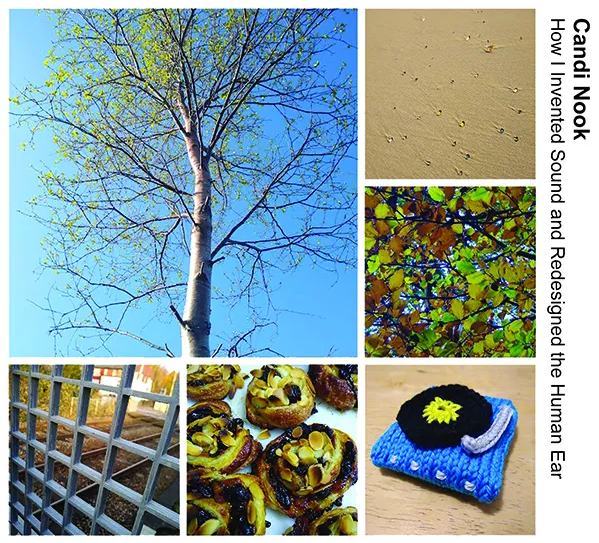
The dry, frank braggadocio of the title reaches beyond simply a fleeting joke or ironic heading for this archival double CD set. In fact, it’s the very essence of Candi Nook’s musical approach; though How I Invented Sound and Redesigned the Human Ear spans a staggering range of styles and setups from throughout the UK sound artist’s active years (1998–2003), every single track oozes the same strain of unabashed experimentation, runs pell-mell toward the bizarre with the same unhinged, slipshod confidence. Beautifully presented in a sturdy six-panel digipak featuring mesmerizing photo arrays by the artist herself, the selected discography traces Nook’s winding creative path through analog noise collages, surreal synth sketches, ambitious texture-scapes and mood pieces, plucky MIDI mash, exploratory sound art, the works.

Tracks from the project’s debut cassette release (and my personal favorite) Queen of the Swirley-Eyed Ant Monkeys (1998) kick off the carnival tour, “Clean Penis Eating” at the forefront with its deft yet appropriately crude cocktail of 90s four-track harsh and irreverent sample plundering. The rawness may be most apparent in these loud, distorted early cuts, but it’s present in all of them, the rough edges and unpolished grit only highlighting how foundational this material is in retrospect: I hear eerily accurate presagings of Women of the Pore’s otherwise singular “bunker jazz” in “Dusk” and “Hollowgram”; echoes of Arca amidst the dadarkness of “Dreamfeed”; plans to pass the playful avant-electronica torch to Dan Deacon in “Teaspoon.” Nook does some looking-back of her own as well, notably with “Highly Intelligent Witty and Elegant” from eccentric opus In the Pink (2001), which in two short minutes manages to channel Ruth White, The Residents, and Miranda July. But of course this is all just my personal mapping, because at its heart this music is fundamentally its own, the one-of-a-kind oeuvre of a woman inventing sound and having a blast doing it.

Reviews: Sick Days, Pool Pervert (Vacancy, Aug–Sep)

The most interesting, well-curated homemade/small-batch labels come in all shapes and sizes, all ages and aesthetics, but especially all locations. I’d wager one could stop a spinning globe on any random point there’d be a good chance something to this effect is going on somewhere nearby, whether it’s tapes and CD-Rs tucked in scribbled-on paper sleeves or zine exchange networks or alleyway film screenings, and most will probably go completely unnoticed by the other 99.999% of people in the world; which, of course, is usually part of the point. Some places, however (for reasons as various as art itself), become unlikely, often ramshackle hubs for one or several convergences of fringe interests, and one of those places is southern Ontario, a fecund patch of lakeside tilth for DIY sprouts and shoots. From Fossils/Cardinal Records (as well as David Payne’s Offensive Orange project and Middle James Co.) to Thoughts on Air/Low Orbit and Beach Vicodin/Hamilton Tapes, the Hammer is definitely a hotspot, but a bit farther south in Niagara resides Vacancy Recs. and its associated artists, a new favorite of mine that’s having a modest but superb year so far.


Sick Days – The Calm Before (Aug 19)

The work of woodshed sound art project Sick Days comprises much of Vacancy’s output, of which The Calm Before is the latest. Like the 2020 self-titled double CD, the release that introduced me to the project, a simple formula of taped field recordings and choice effects comprising a sort of stripped-down performance installation. There’s little variation for much of the two 45-minute sides, the minimal yet enthralling soundscapes lulling with homespun hypnosis; I’m reminded of Jørgen Brønlund Quartet in that the passivity and agency of the nature being observed is retained, but there are just enough details that it’s apparent human intentionality is at play. Not only do both untitled cuts seem to dissolve time with their careful, artful simplicity, they also have spare moments of dynamic shift that will leave any close listener breathless (I won’t spoil… hear it for yourself). I can already see this being one of my most-played tapes this year.

Pool Pervert – Young Sleep Whispers (Sep 20)

Disregarding any less than ideal connotations with which the artist’s name might imbue it, Young Sleep Whispers is a fitting, if still cryptic title for this new tape from the prolific Dutch newcomer—this reticent near-hour feels not just dreamlike and hushed but also embryonic, forming movement and emotion before it even forms (or is formed) itself. In part one, meditative cross-currents of simmering moonlit water, blurred piano musings, and rhythmic respirations from somewhere beyond settle into place with the organic, unhurried ease of the tides themselves. The surface of this distilled primordial soup is later brushed by what could either be windswept branches or cosmic clouds of ice, widening the music’s spatial presence even further; the results are at once massive and miniature. The following part is even looser, more earthy and psychedelic (though don’t take that too literally—the binaural voice snatches at the beginning will have you looking over your shoulder the whole night).