Scathing – Venomous Blossoms / Carnivorous Blooms (self-released, Feb 28)
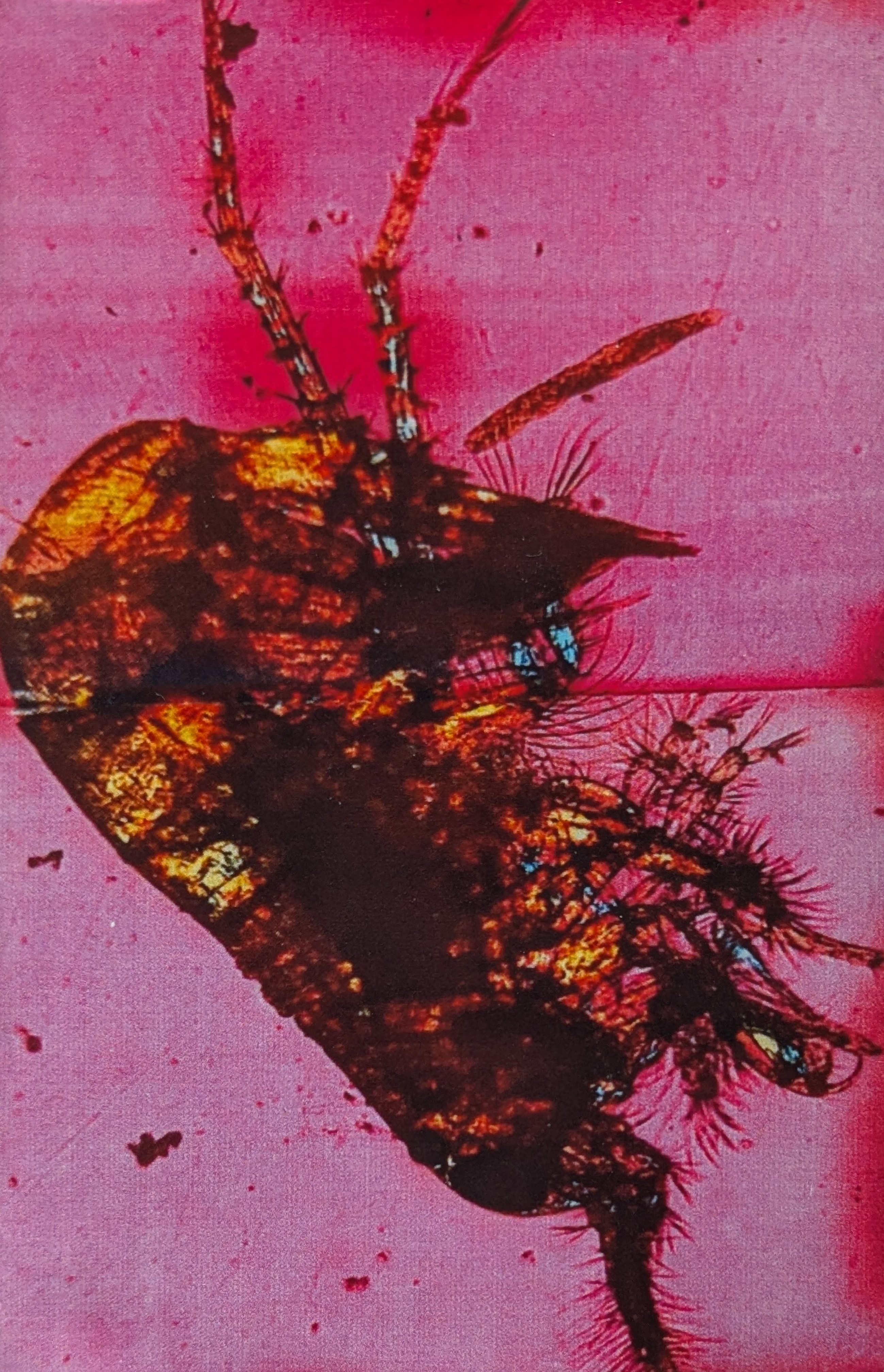 By far my most-played tape this year. It’s already too easy to listen to a great C10 over and over—another recent example that I picked up after last year’s lists is Terror Mirage’s Piquer—but especially when the material is structured with precise momentum and dynamics. After so many times through, the anticipation of the blasts and breaks to come is just as energizing as the surprise of first hearing them. It’s also a compact overview of the Scathing arsenal: unyielding sheets of high-pitched squalling feedback, raw vocal attack, swirling texture-mash that lulls and then lashes. The sweet spot between meatier stuff like Fever Land Phantasmagoria and the fast-paced assault of his live sets. Original review
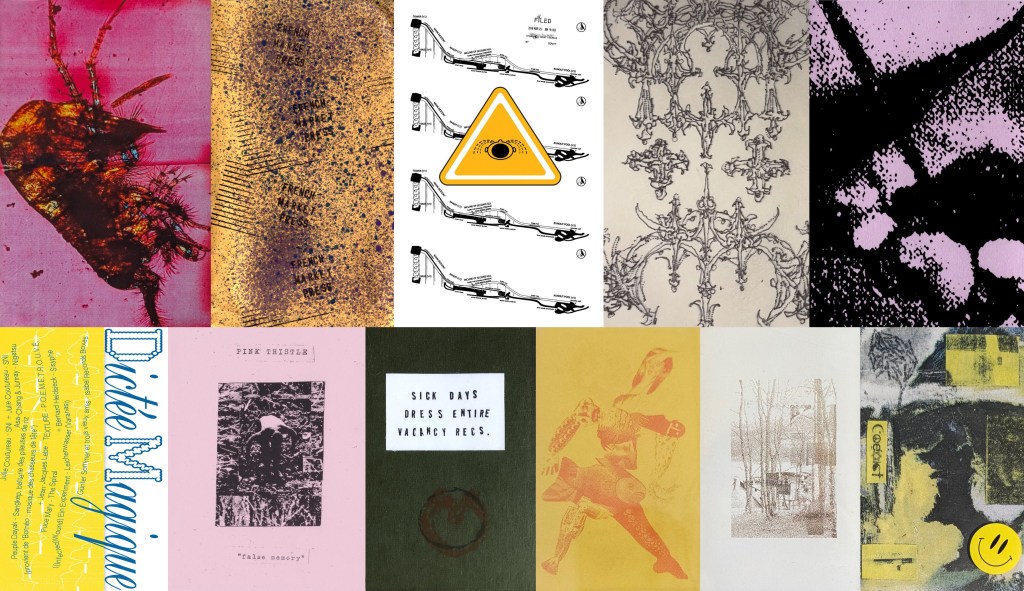
Sawn Half – Sea of the End (French Market Press, Apr 27)
 Sawn Half is a project that has been recommended several times since the Sink CD came out on Flag Day last year. While I dug the textures at work on that one and Faults, something wasn’t clicking all the way. Then I gripped Sea of the End and suddenly I understood. Maybe it’s a brand new direction, maybe the mud of magnetic tape was the missing piece, but in any case I love this shit. “Pressure” and “Collapse” are two heavy, hulking slabs of slow-paced harsh that sounds like the earth itself crumbling away. It revels in the thick crunch but knows when to rise out and build tension before plunging back in. Crank the volume as loud as you can, then even louder—this one needs to be felt.
Mouths Agape – Verrückt (Bent Window, May 2)
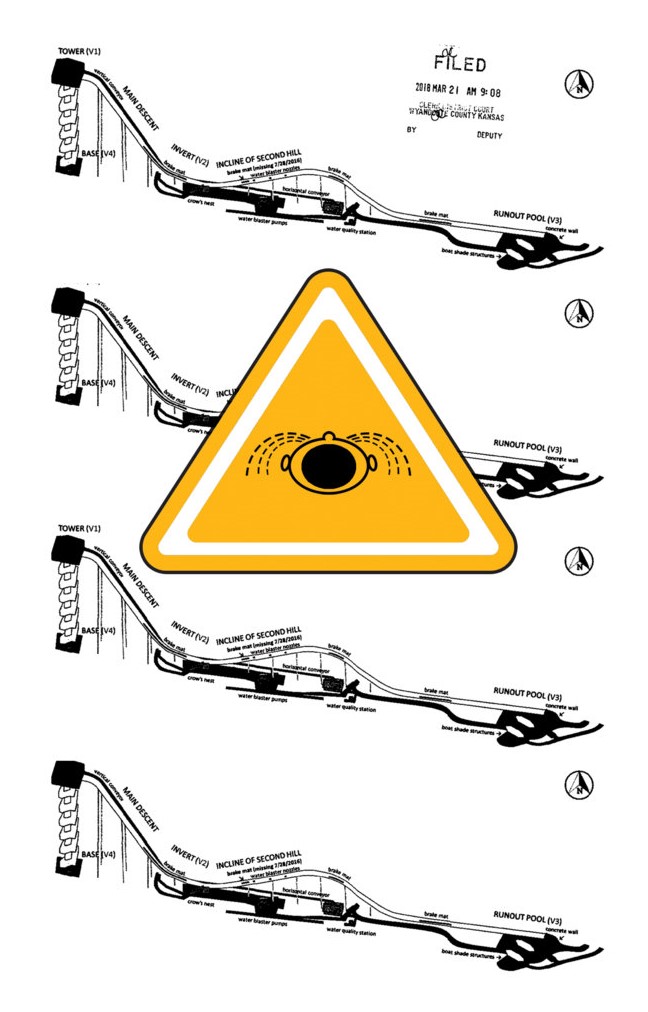 Verrückt is a tape I’ve thought a lot about this year, but words tend to fail when I sit down to write about it. This time I find myself looking at the artwork, which shows the planning sketches for the titular waterslide and a yellow triangular caution sign with a graphic of a crying child. The minimal design is still about as close as we can get to such an unspeakable event. We can read testimony, pore over documents, even visit the place where it happened, but only ever at a profound remove from what took place. Mouths Agape engages not just with the horror of the incident but also the horror of our futile fascination with it. The music is a queasy but intentional weave of analog and digital: the body and the metal, death and its recreation.
Helena – Bilbao MMXXIII (Blu-Rei, Dec 19)
 Last-minute gems like this are the reason I wait until the actual end of the year to compile my lists. Helena is the trio of Spanish improvisers Clara Lai (keys), Àlex Reviriego (bass), and Vasco Trilla (drums), who have played together previously and subsequently in various combinations. In December 2023 they convened to perform loose compositions by Reviriego in a quiet, careful chamber-style configuration. The mood is placid and pensive, each of the three musicians hanging on each other’s considered tones, anticipating the right moments to meet in fragile harmony. The performance is wonderful, but the humble audience recording is what really makes this tape special. Every creak, every cough is audible, erasing the partition between music and space Skylark Quartet–style.
Agitant Group – Manipulated Feedback for Tape 2025 (Head Meat, Nov 12)
 I can’t name explicit links in the stylistic lineage that led to this tape without revealing my hypothesis of who “A.H.” and “C.M.” are, but anyone who’s been keeping up will pick up on the radical, almost diagnostic distillation of harsh feedback techniques explored here. It’s a lovely surprise from the Head Meat catalog, which has previously featured some of the most active direct-action noise of the past few years. That’s not to say that these two movements are stagnant. The only point of reference I can think of is Sissy Spacek’s CD Slow Move and its hypnotic illusions of contrastive but coexistent speeds. Each side hits with a boom, almost like a wall but with so much, so little movement.
Dictée Magique (Un je-ne-sais-quoi, Oct 24)
 This self-titled cassette by the aptly named Dictée Magique, the duo of DJ **** and Nils, could be considered a sonorist survey of the French language. Both lengthy sides are surreal mishmashes of an expansive collection of talking records, mixed together with an array of four turntables. Stripped of their origins, the words and utterances—and, later on, even some notes—stand alone in themselves and together in the collage, forming new contexts and conversations as they collide, clash, and overlap. RIYL the humor and roundabout musicality of Martin Tétreault’s Snipettes!
Pink Thistle – False Memory (Hibernian Leather, Sep 5)
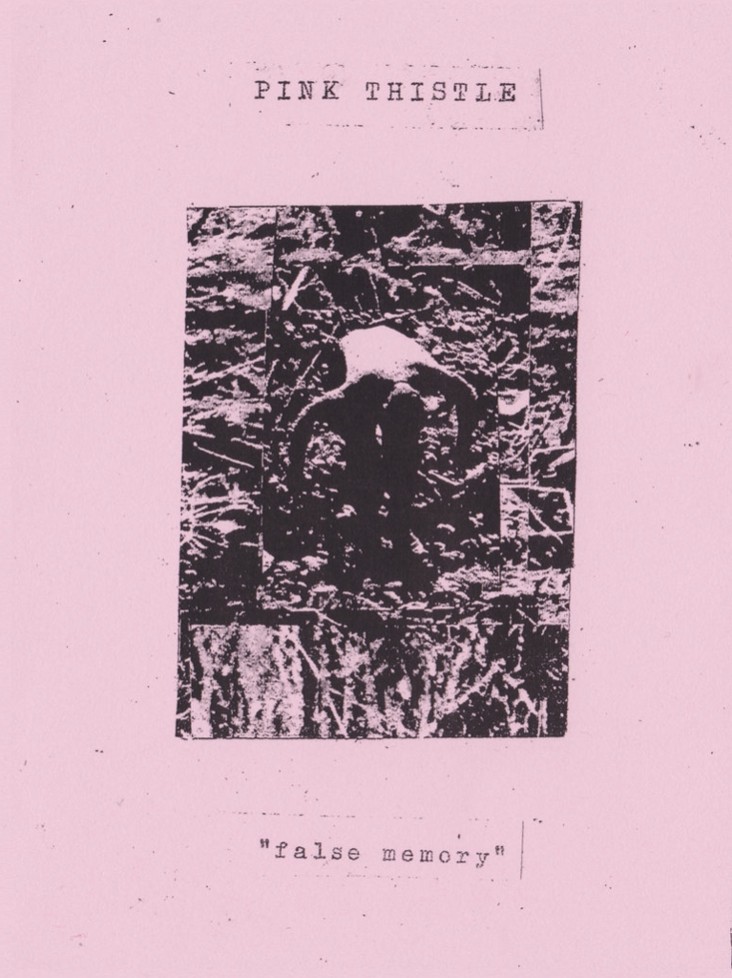 It was such a relief to find Pink Thistle this year, just when I was realizing how little new wall I was coming across. Alan Doyle’s new project doesn’t exactly push any boundaries, but his execution and vision are so distinct that “wanting more” is the last thing that comes to mind. The False Memory 2xCS is my favorite of the many tapes and CD-Rs he put out this year, a four-part odyssey from thick crunch to spectral hiss. The tracks are static structurally but not somatically; there’s always a real human presence, especially in part II when you can hear the noise roar into existence after a second or two of dead air.
Sick Days – Dress Entire (Vacancy, Jun 16)
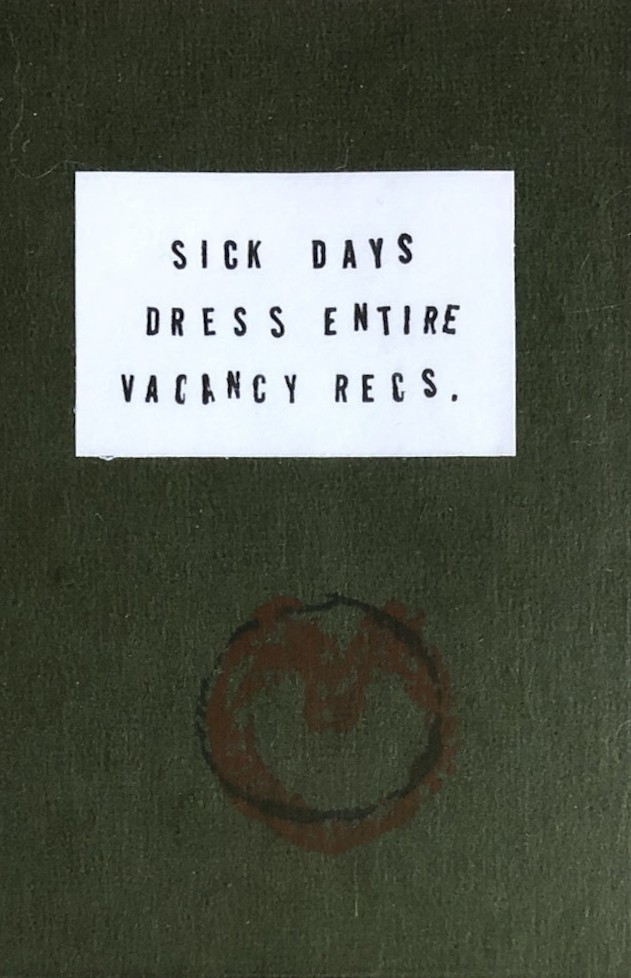 Any Sick Days release is a world inside a world. Jeffrey Sinibaldi zooms into the nebulous zones between everyday interactions in nature—the rain and the surfaces it hits, the air and the sound it carries—and takes his time capturing the elusive complexity within. Dress Entire is an excellent place to start if you haven’t heard his work before. Its slow pace and intoxicating humidity welcome new ears like a hothouse on a cold day, and once you stay long enough you’ll see the cracks in everything and how the water heals them. Original review
FUXIT – Shine in the House mix (GLARC, Jul 25)
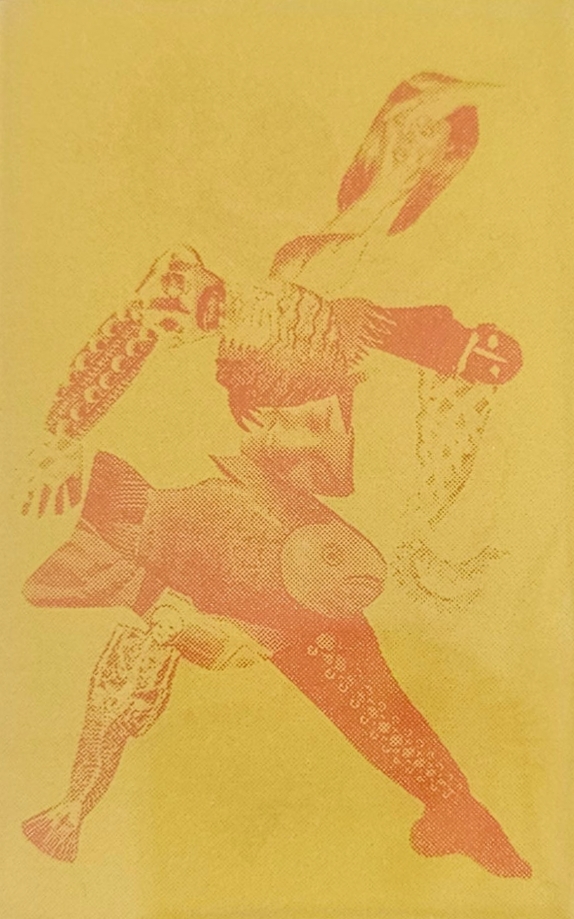 There are some moments on Shine in the House that want you to dance. There are also some that just want you to cackle in disbelief. It’s at its best when it does both at once, such as right at the beginning, when Cali Cartier’s Elmocore masterpiece “Fastlane” transitions into a bumping synth-bagpipe track by self-described “Celtronica” act Stinky Ocean Kelpie. This is the kind of mix I love, one that no one other than this specific DJ would ever think to make, where the choices are so absurd that they come back around to making perfect sense. The Overstimulation Age’s answer to DJ Pica Pica Pica.
Deep Grey – Lifestyle Determines Deathstyle (Focus Media, Aug 10)
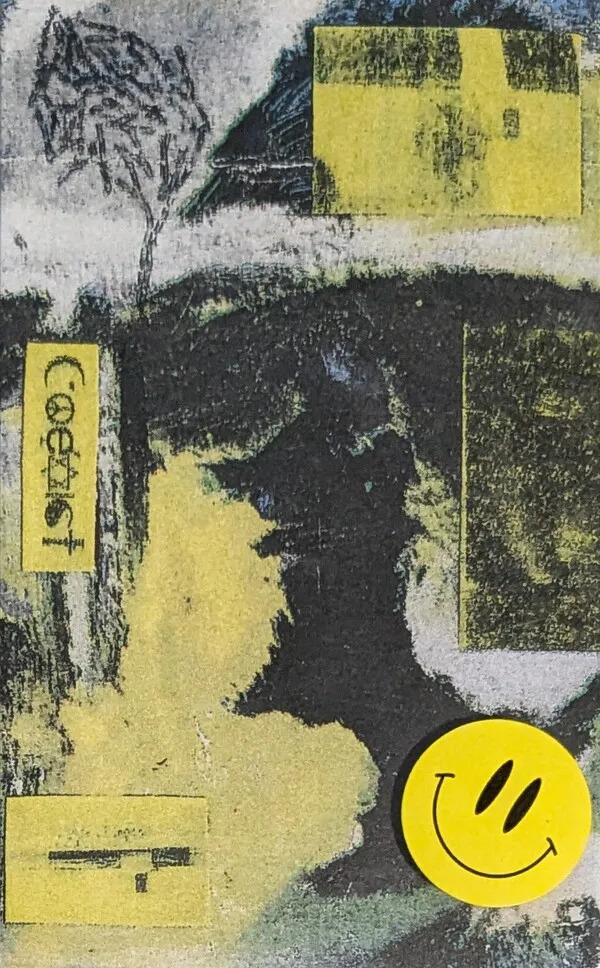 A serious contender for Most Unserious Offender, Deep Grey has been making waves in the godforsaken tundra of Canada and beyond with his tools for transcendence, netting such prestigious back-cover blurbs as “Sounds sorta like Expressway Yo-Yo Dieting rocking a Knox Mitchell rig.” Though devoid of the excessive samples that made Self-Healing Transformation Seminar so memorable, Lifestyle Determines Deathstyle is just as scatterbrained, a knob-twiddler’s dream. It’s paced like a sketchbook, throwing shit at the wall and not even looking to see what sticks, yet comes across surprisingly put-together.
Hewn – Tendency (self-released, Jun 22)
 Tendency is the perfect soundtrack to a slow, bitter winter. I didn’t realize that during the summer when I first heard it, even though I already liked it. I even made the mistake of thinking it was warm, cozy even. But as December set in and the frigid winds and ice arrived, Hewn’s true essence revealed itself. There are two sets of initials credited, implying the project is a duo, which comes through in the many delicate layers of sluggish tape shuffle, wistful drones, and shadowy field recordings. The coldness isn’t total, mind you, and there are some beautiful albeit fleeting bits of sunlight streaked throughout. Frail but nonetheless flesh-and-blood ambient.

 On the surface, Head Meat might seem like a rehash of tired trends in classic US noise: anonymous operations (though if you follow the clues, it’s not hard to identify the culprit), high-contrast xerox layouts, blown-out deck-minced masters, etc. There’s some truth to that observation, and it might be more of a downside if every single one of these tapes weren’t absolute fire—the Ants in the Afterbirth self-titled, Outdoor Horse Shrine’s Water Course, and the Executionists’
 Run by sound artist Anne-F Jacques, presses précaires has been a reliable source for forward-thinking abstract music on cassette for half a decade now, with a varied output that straddles the border between the DIY and academic spheres. 2025’s showing was particularly strong, with impressive tapes by Bárbara González, Sun Yizhou and Tom Soloveitzik, Gudinni Cortina, and W K Werkowicz and Zheng Hao, as well as a.hop, a remote correspondence ensemble project led by Jacques herself. All releases from this year are available from
  For those who may not know, I grew up in Cincinnati. It was where I first got into noise, so even though I’m elsewhere now it’s great to see new things happening in the scene I still have so much love for. Clangor is run by Black Corolla members Zach Collins and Lauryn Jones, originally an outlet for their own projects (Apple Cottage, Gangstalker, Otra Vez) but now expanded beyond that with a tape by the superb NYC project Mouths Agape. The Black Corolla / Slacking Lonely God C30 was my favorite split of the year (see
 In ABQ it seems that the noise, metal, and dungeon synth scenes form a loose triple Venn diagram, and right at the center of it is Malevolent Relics, a label/distro that produces and stocks the best of each. Though ops are currently on pause, 2025 saw the release of the Skafrenningur 3xCS box (see
  Pube Provisional (don’t ask) is dedicated to the symbiotic faiths of green hue (I said don’t ask) and good old fashioned harsh noise. Home to Kale Van Reekum’s flagship moniker Met Glas and his duo with cofounder Jack Sinclaire, Pube, the Society plucks the best and brightest from around the globe: Peking Crash Team, Gemengung, Vincent Dallas. Though they only dropped one three tape batch this year, it was a heater, with top-shelf stuff from Snake Oil Merchants (international triple threat of Dallas+Geseling+Sisto Rossi), Outdoor Horse Shrine, and fellow Great White Norther Wasauksing Sniper. Also of note are the one-of-a-kind editions they hand-craft for the artists.
 Would never have known about this if not for new-generation PNW weirdo Ķæ P. Rujhaan, who also operates the highly active