Review: Hingst – Absolut Hingst (Ominous, Sep 7)

There are few things in this world better than a slab of overblown, in-the-red analog harsh. Both Johan Strömvall Hammarstedt (J S H, Gamiani, etc.) and Edvin Norling (Peking Crash Team, Pollutant) already deal heavily in sonic extremity via their various projects, but there’s something cathartically simple about their work together as Hingst. First shredding eardrums with a string of excellent self-released tapes—all three of which are collected by the Ska vi älska så ska vi älska till Wall Riders compilation CD on Abhorrent A.D.—they now present their official full-length debut on Hammarstedt’s own Ominous Recordings. Absolut Hingst, its blue washout cover sporting yet another mustachioed leather daddy, offers up some of the duo’s crunchiest material yet, mastered so loud it’ll tear your speakers a new one. The main thrill of these two tracks erupts from the interplay between the densely packed mid-range smorgasbord and the high-pitched squalls of feedback that slice through it; the noise already feels like it’s always on the edge of collapse, and those desperate screeches make the chaos even more volatile. “Hingst på Böda” is by no means lacking in low end, but “Hingst blåser 2,0” spreads an even thicker bass layer beneath the pedal-driven mincemeat. The second half of the ten-minute scorcher is absolutely crushing, a brutal blender-blast of writhing distortion that smashes together every frequency plumbed thus far. This is what they call “the good shit.”

Review: Carl Lindh – listening with the tips of my fingers (zappak, Sep 1)

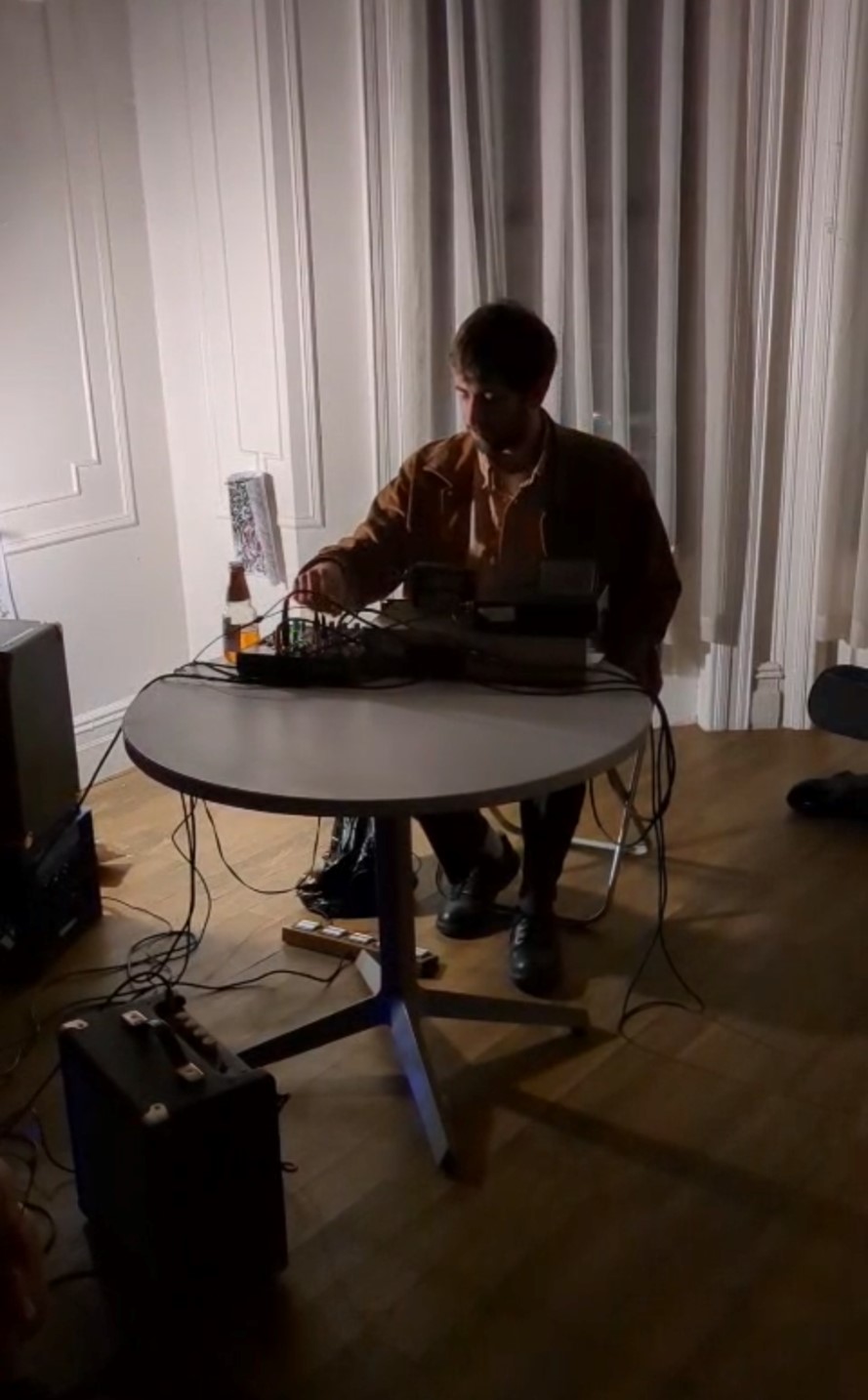
Unless I’m missing out on even more than I thought, listening with the tips of my fingers is Carl Lindh’s first solo full-length. The Malmö-based sound artist has released a small handful of material, mostly as splits with various Swedish noise acts (including a C30 that pairs a Pär Thörn collaboration on the A side with a Heinz Hopf ripper on the B), but this handsome CD on Tokyo small-batch label zappak feels definitive. Two lengthy live tracks feature Lindh’s tabletop potpourri of devices and circuits, which he nimbly controls with simple touches and taps. The infamous “cracked everyday electronics” of legendary Swiss duo Voice Crack are a clear influence, not just on the approach but also on the music itself, which hums and buzzes with both mechanical dispassion and natural fluidity. Neither “sound becomes word becomes sound” nor “a certain lack of consistency” mine soundscapes as obtuse or oblique as Möslang and Guhl’s uneasy improvisations, though; there’s something strangely accessible about the sound Lindh is experimenting with here, something that’s especially apparent when the vocal elements crop up. I have no idea if they’re his contributions in the moment or preloaded samples being triggered just like the rest of the electromagnetic haze—I lean toward the former because of how unstructured yet deliberate they feel. His description of another recording applies here as well: “There are no big gestures in this performance. Instead I let the sounds perform. I let them fill the room and resonate with it. I listen and I follow. Loud continuous sounds create a sensation of comfort within me. It makes my mind empty and my body calm.”

Reviews: John Collins McCormick – Your Money Your Life and For Other 1, 2, 3, 4 (Garbage Strike, Aug 20)

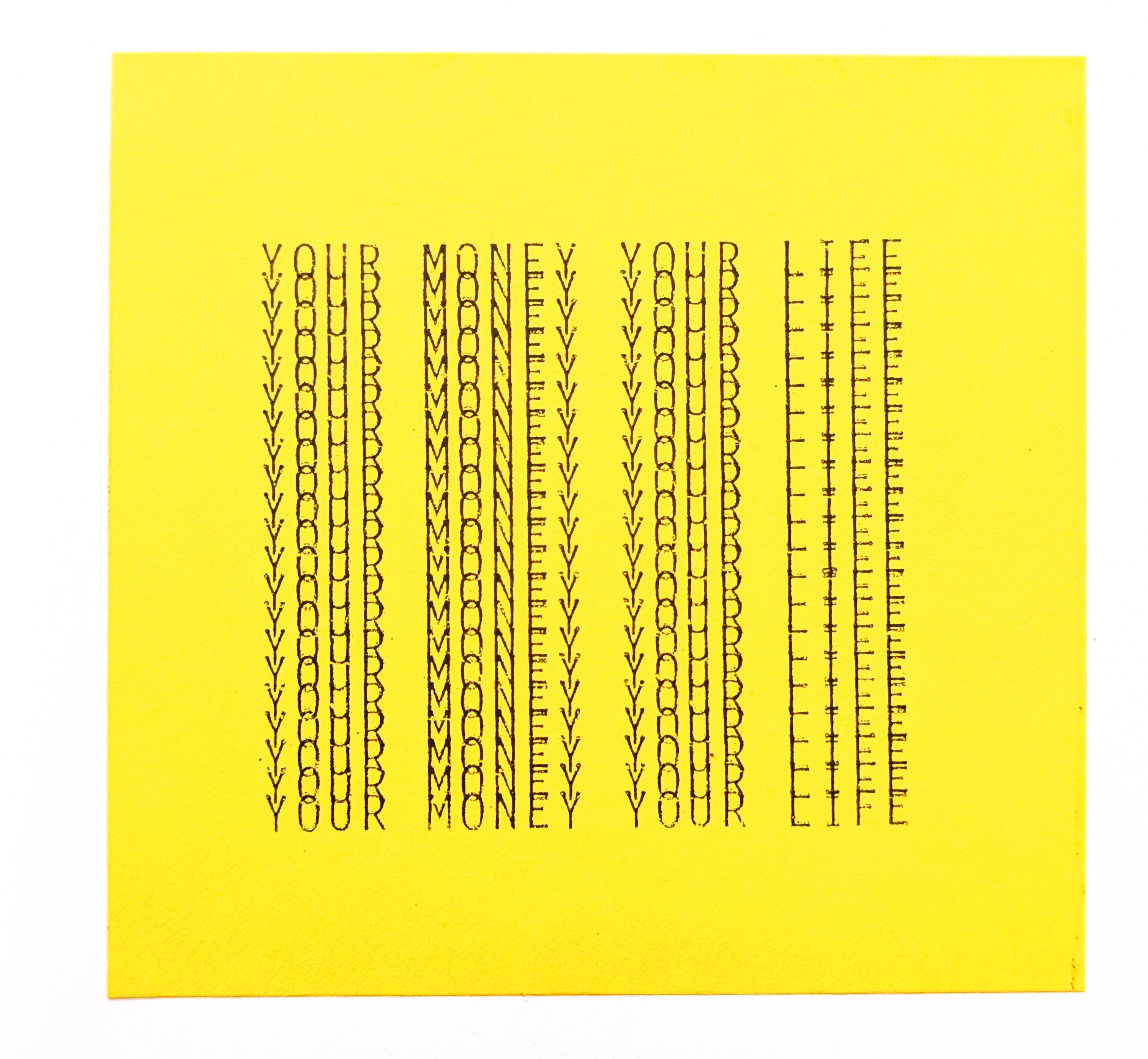
For the most part, “range” is overrated. An artist’s body of work is just as impressive when it’s laser-focused as when it’s eclectic. In the singular case of John Collins McCormick, however, focus and eclecticism aren’t different things at all. Each radically unique release he puts out simply documents a new approach to the same open-minded exploration of sound itself. Even then, you’d be hard pressed to find two entries in his discography more contrastive than Your Money Your Life and For Other 1, 2, 3, 4 (both of which, fittingly, dropped on the same day). The former, comprising a single half-hour piece, is McCormick’s most direct invocation of harsh noise tropes; Finally Tall Enough for My Age, I Grew Deeper from last year’s tape batch certainly made use of caustic textures, but it resided more in the area of the passive detachment of data sonification. This, on the other hand, is carefully composed, emotional and human and even warm despite its obvious digital origins. Not unlike Veidrik’s HAZARDAJ, software output is just the paint in the palette, so the actual proceedings are loose and gestural—I could see even the analog purists enjoying this. McCormick anchors his crackling distortion swarms with a sighing tension-and-release structure and tactile snippets, the maelstrom culminating in a stripped-down coda.

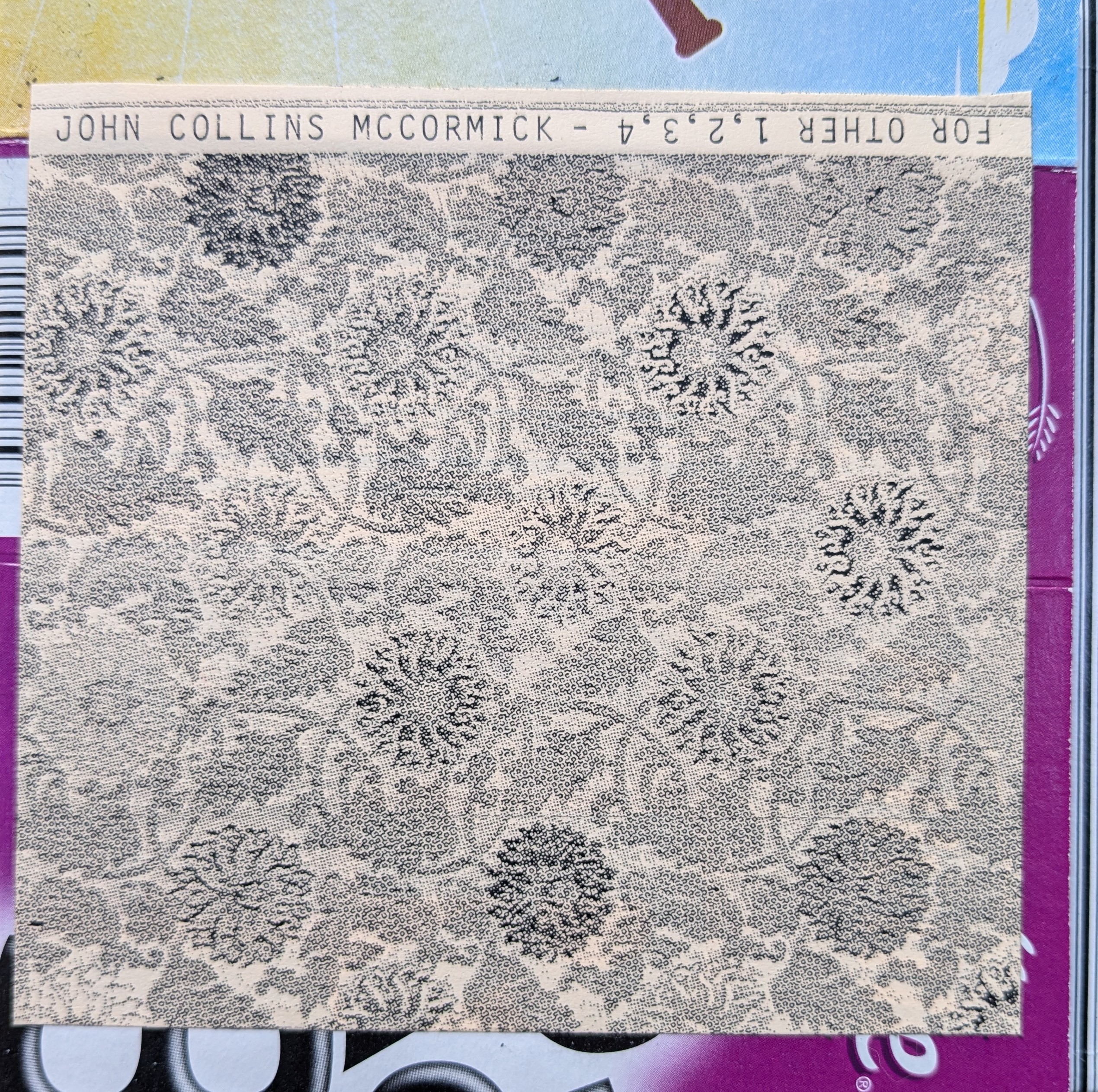
For Other is the calm it leaves behind, a suite of four tracks “for adding to a quiet room—they pair well with refrigerators or AC units or buzzing lamps or open windows.” The material is so subtle that it is often superseded by the listener’s environment, which of course is kind of the point. Wandelweiser comparisons are obvious, but For Other only evokes the least stuffy, most organic material: Young Person’s Guide; Weites Land, Tiefe Zeit; etc. Sukora comes to mind as well. Imperfect parallels, though, because here the spotlight is arguably more on the external soundscapes the recordings frame than it is on the recordings themselves. The temptation to crank the volume is still strong; if you do so, you’ll find the same level of immersive detail as its much louder counterpart. Is that cheating? Who cares—your money, your life.

Speaking of money, both beautifully handmade gatefold CD-Rs are available as a batch deal for $15. A steal.

Review: Spring of Life – Training Camp (self-released, Aug 3)

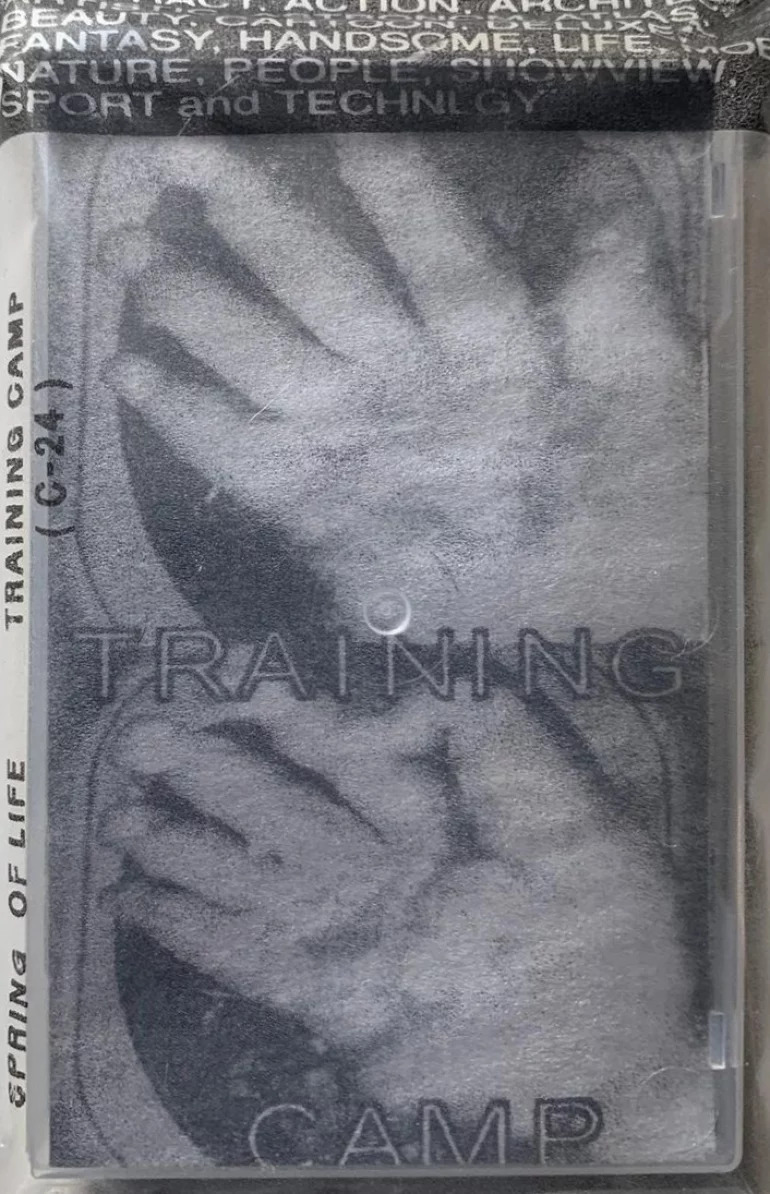
Spring of Life is one of the more exciting underground projects of the past few years. There’s nothing ostentatious or even particularly “new” about the (I think) Canada-based artist’s work—much of which was recorded at the mysterious Friendship Lodge and self-produced in the form of ultra-limited cassette editions—but the humility of approach and aesthetic. coupled with the elusive magnetism of the music itself, has captured the mind of many a weirdo. 2022’s external label debut Brown Bed was a step up in terms of both focus and structure, and Training Camp keeps climbing that staircase. Housed in a soft poly box and wrapped in an ink-printed plastic shroud, the tape’s contents are as fragile and obscure as its packaging. This is trve tabletop-tinker noise, built on analog burble, electromagnetic interference, the hum and haw of failing cables. It’s an esoteric connection to make, but any fans of UVC or any of the other aliases in the Born Physical Form family (RIP?) will find so much to love here. The A-side suite begins innocuously enough, oh-so-slowly raising complexity from the simplest of seeds. There are no sudden blasts of high-fidelity harsh, no flashy cut-ups or signal-switching, just the steady stumble of cracked electronics wrangled into something halfway useful. You don’t notice the crescendo until it climaxes in a cloud of shards, jagged dust at once crystalline and plasticine. “Educational Practice” kicks in at a louder register, dense and dynamic, but no matter how close they come to resembling direct-action mayhem, the contortions are always feeble, frail, one wrong move away from collapse.
Review: Komare – untitled C30 series (self-released, Jun–Aug)

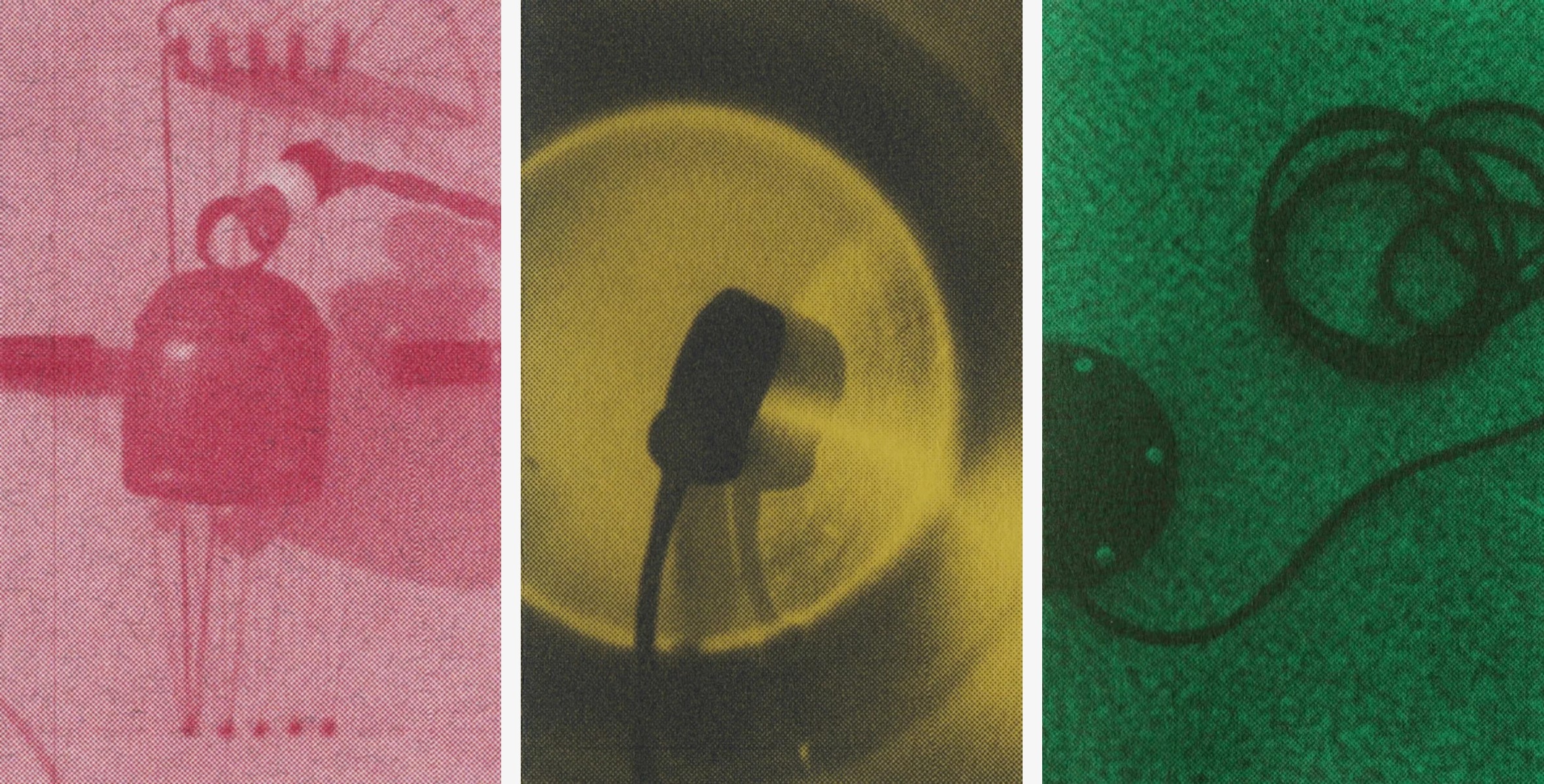
Except for their Got to Stop Me / Hot Tarmac 7″, I’ve written about everything Komare has put out since they first coalesced in late 2018, so while I always try to keep things varied, at this point it feels like a tradition. Comprising two of the three (former) members of Mosquitoes, it and its sister project evolved in parallel, beginning at corresponding origin points loosely planted in conventional genre idioms and burrowing ever deeper, often symbiotically, into total abstraction. So when the beloved trio announced they were calling it quits, the future of Komare seemed up in the air, even though the masterful Grace to Breathe That Void would have been a fitting dénouement. Fastforward two years, though, and we clearly had nothing to fear… besides the usual, of course. This microedition tape trilogy quietly dropped this summer, each one offering two fifteen-minute sides of brand new material. Peter Blundell and Dominic Goodman went back to the laboratory for these recordings, embracing the unpolished experimentation of their self-titled cassette while retaining the gloom-smeared radical minimalism of the more recent releases. One imagines the pair of musicians crammed into a tiny closet studio, assorted electronics strewn across a shared table, Blundell twiddling effects knobs and babbling into a mic while Goodman stitches tattered sound-fabrics both harmonic and textural. These meditations are not exactly cold, more just sparse and shadowy; however, I still hesitate to call them “jams” (even though it’s not a totally inaccurate descriptor) because each track is always steadily headed toward something, never satisfied with even the most deconstructed “groove,” sliding down an unforgiving slope or spiraling toward a pitch-dark nexus. KOM/01 is the duo’s most stripped-down work yet, distilling the typical toolkit into a handful of obsidian awls and pliers. The shattered glass climax of side B carries over into the second tape, which writhes with throbbing analog delay and wracking high frequencies—the boundary between utterance and electronic synthesis breaks down entirely. And KOM/03 is perhaps the most active of the three: Blundell’s mutters almost approach intelligible language, ambiguous globules hang on shivering threads. I’m not sure exactly where Komare is headed after this, but you can’t go wrong with a flashlight and a teddy bear in the emergency pack.

Copies are available via email: komareuk@gmail.com.

Review: Hubbub – abb abb abb (Relative Pitch, Aug 2)

Hubbub, the quintet of French improvisers Frédéric Blondy (piano), Bertrand Denzler (tenor sax), Jean-Luc Guionnet (alto sax), Jean-Sébastien Mariage (guitar), and Edward Peraud (percussion), is an ongoing collaboration that convenes sparingly but purposefully. Since their first recordings on renowned labels For4Ears (Ub/Abu) and Matchless (Hoop Whoop)—the latter one of the finest examples of ensemble free music—they’ve released just five full-length documents with the same lineup, each one capturing the absolute best they have to offer in that phase of their evolution. abb abb abb follows 2019’s Poitiers and continues its forays into moody, slow-paced soundscaping. Throughout these two extended sessions, the five musicians paint in precise strokes with brushes wide and narrow. Mariage especially makes use of the full textural range of the electric guitar, his tremolo rattle and droning decay skirting along the fringes of the action before taking over with pensive full tones. The nearly forty-minute “abb” is largely drone-based, a structure given body by Peraud’s extended techniques, each of his scrapes and swipes carefully attuned to the resonance of the kit’s various pieces. This track shares a lot of DNA with the contemporary Norwegian ensembles I love most, particularly No Spaghetti Edition and its offshoots; 2020s Hubbub would sound right at home on Sofa’s roster. “abb abb” is a more active, not nearly as skittery as the group’s early explorations but still a feast of delicious dissonance. The sax interplay is a highlight here, as are Blondy’s ivories toward the end, a captivating final stretch that concludes with a perfectly timed percussion knell.

Review: Total Sweetheart – The Great Southern Kindness (Handmade Birds, Aug 1)

I’ve had a lot of conversations recently about how both the aesthetic and the social aspects of noise can be alternately welcoming and alienating. There’s so much to be said on the subject, but this isn’t the time nor the place. I’m not trying to be vague. I just want to give due respect to the simplicity of Total Sweetheart’s credo, their beautifully succinct solution to this complicated problem: noise is about kindness, respect, friendship. Community. Since 2022’s debut Early to Bed the duo of Texas veterans Nathan Golub (Ascites, BLJ) and Ryan Jones (Struggle Session) has made their stance clear with a string of wholesome declarations, from the straightforward statements of Being Nice to People Is Cool and Loud Sounds, Friendly Faces to the nostalgia and familial warmth of Better Half and A Country Drive. But it all seems to have led up to this new tape, fittingly released by beloved boutique imprint Handmade Birds as part of the ambitious Black Alchemy batch.

The Great Southern Kindness is a radical manifesto for handshakes and hugs in a scene overrun with anger and exploitation. Don’t be fooled—it has sonic extremity in spades, the muscle to back up the message. The pair’s sprawling array of modular electronics has never been this high-powered, or this detailed. As always, there’s a gestural ease to the proceedings that echoes the most abrasive of tabletop improvised music duos (think Rehberg/Schmickler or Nakamura/Yan), an assured, open-eared amble that carries supercharged synth cacophony like it’s a cloud of dandelion wisps. After an apt introduction by Longmont Potion Castle’s own Buford Clifford (an unsurprising sample choice if you know these yahoos), “Cowboys from Heck” minces a briar patch’s worth of sound sources every second, knitting a quilt so dense it tackles you with its loving weight. The B side diptych sounds like construction site psychedelia, so tactile it’s hazardous. “Post-harsh” is a term that gets thrown around every now and then, but usually to refer to projects quite different than Total Sweetheart, who deconstruct the tradition from the roots up while still honoring its tenets and tropes. A “Vulgar Display of Positivity” indeed.

Copies are mostly (deservingly) sold out in the States; looks like Scream and Writhe (Canada) and Silken Heart (Germany) still have some.

Review: Frequent Flyer – Red Eye to Hell (Mostly Mayonnaise Musicalities, Jul 26)

Thanks to our good friend climate change, turbulence-free flights are becoming a rarity—ironic, considering how much carbon the aviation industry spews into the atmosphere. Those nerve-racking bumps and batters only add to the nightmare that is air travel, a nightmare in which Red Eye to Hell revels. From the stressful release description to the auxiliary packaging (a “Travel Service” paper barf bag), this debut single-sider by Frequent Flyer nosedives toward an aesthetic that is all the more repulsive for its familiarity. Beginning with a transportation security announcement as a cursed overture, the tape soon climbs to a cruising altitude of thick analog distortion, much of which sounds like it could have been sourced from recordings of commercial jet engines. Fans of blown-out four-track harsh will feel right at home in this catastrophically depressurized cabin; the noise is heavy, dense, sluggish, but with just enough bite to keep it from fading into the background. Around the eight-minute mark the fuselage starts to shake itself apart, and a brief interlude of loose bolts and groaning metal plates builds anticipation for the roar’s unceremonious return. The pacing feels like flying against the current, deliberate but impeded, and especially in the latter half the trajectory tends toward rumbling stasis… less wall, more wind tunnel perhaps. Another great release from a criminally underappreciated label.

Copies are available via email: brucepilaf@gmail.com.

Review: PORTAL – II (Vacancy, Jun 26)

It’s no secret that Niagara/Toronto-based Vacancy Recs. is one of my favorite labels right now. This new batch as much as any other underscores what they’re all about: a C100/double-CD of material from stalwart in-house project Sick Days, Luigi Bilodo’s follow-up to last year’s beloved debut, a “home-spun” sampler cassette of dubbed whale sound recordings… and then this. Much like Bilodo’s sophomore offering, it is simply titled II, but whether I was their half of the Sound_00 + Lefterna split earlier in the Vacancy catalog or something else, I’d never heard Fort Erie project PORTAL before. Which might be some—but definitely not all—of the reason this tape blew me away. Reflecting many of the other roster artists’ interest in near-static meditations, each track is essentially a wall in terms of progression. The A side mesmerizes with the drone of an industrial HVAC unit, burrowing ever deeper into that deceptively complex sound that’s both cold and warm, even as signs of life start to soak the edges. A subtle electroacoustic element gradually reveals itself, enhancing the natural ebbs and flows of flora and fauna. That same element is not so subtle on the B, but that’s not a bad thing. Far from it, in fact; this is truly breathtaking music, in a way that’s both immediate and patient. Meticulous processing and layering makes for an intricate soundscape with the immersive skitter-scatter of IYS and the organic force of Prepared Rain. Just wonderful work. I already know II is never going to be far from the deck this year (and beyond).

Review: Rie Nakajima – Unshaping (ato.archives, Jun 23)

I’ve been a fan of Rie Nakajima for longer than almost any other sound artist, but I’ve surprisingly never written at length about her solo material for the site (though I have reviewed two releases by O Yama O, her pop-inflected duo project with Keiko Yamamoto, and Free Percussion, a V/A comp curated by fellow fan Francesco Covarino to kick off tsss). This latest tape on Tokyo imprint ato.archives is as great a first as any, a full-length live session that showcases everything I love most about her work. Those who have been to or even just seen footage of a Nakajima performance are familiar with the intimacy she creates with her arrays of miniature electroacoustic devices, which tap and twirl and trundle in the space encircled by an attentive crowd. The 40ish-minute set that comprises Unshaping, recorded in a castle courtyard in France all the way back in 2016, starts out quiet and reserved even by her standards. Natural outdoor ambience and noises from the audience—exclamations and murmurs, footsteps crunching on grass—are as much in focus as the soft clatter and whir of the various gizmos, even when more are activated and the soundscape gets denser. The way it gently phases in and out with the breeze is breathtaking. That dynamic continues on the B side, which might be even better than the A… the first third or so is lush and magnetic, the crystal-clear fidelity showcasing the tiniest of textures.