
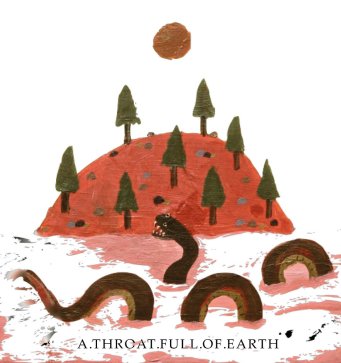
 Fans of the music of Torino, Italy artist Lorenzo Abattoir have access to no shortage of quality material. Across releases by his solo project Nascitari, the LACH duo with fellow art-waller Clive Henry, and other collaborative ventures such as Psicopompo or his releases with Dave Kirby, Abattoir has proven himself to be a formidable source of both versatility and consistency. What we have been missing, however, is a proper solo release from the musician, a gap that’s finally filled with the recent release of A.throat.full.of.earth on newcomer sub-label Tides of Cluster. Abattoir’s trademark toolkit of staticky glitch ornamentation, stagnant rumble, and jittery cut-ups is on full display throughout the seven tracks that comprise this new CD, each composed using “objects, noise, [and] broken electronics” and acting as “methods for disclose [sic] a different psychological state” to overcome the artist’s “inability to communicate with words.” These are some of his most well-realized pieces yet, full of elusive ambiguities and paradoxes: there are always things moving but somehow each piece feels like an unyielding, claustrophobic cell of sound; the textures nip and cut but never tip over into full-on abrasive assaults; all elements are eternally fragmented, disparate, sometimes even repelling each other, yet what makes A.throat.full.of.earth so amazing is how they sound together in grudging coexistence, the lushness and detail that creates. The seam between “2 in.tangible” and “3 somber.path” also illustrates how superbly the transitions between tracks are executed; the divide between the two is unmistakable, as each segment seems to be treated as its own self-contained sound environment, but the hand-off is so smooth you might miss it if you’re not paying enough attention. To listen to this one is to stumble through a series of surreal dungeons with your eyes closed, bare feet shuffling over broken glass and electronic wreckage, the stabs and shocks piercing fantastic dreams of islands and sea monsters.
Author: Jack Davidson
I like to listen to, read and write about, and play music.
Mix: In the Kitchen
Pieces of “music” that were recorded in a kitchen, sound like they were recorded in a kitchen, make use of the sounds or emissions of kitchen-like implements, have “kitchen” in their titles, etc.

00:00. Hair Clinic – “In the Kitchen” from Mirror in a Bag (self-released, 2020)
01:17. Graham Lambkin & Jason Lescalleet – “There and Back” from The Breadwinner (Erstwhile, 2008)
04:48. Havadine Stone – “Kitchen” from Fever Demorian Aphasia International (Anathema Archive, 2020)
11:05. Cahn Ingold Prelog – “Dishwasher” from Non-Music 2 (self-released, 2018)
12:04. Maciej Wirmański – excerpt from Sounds of a Boiler Room and a Laundry Room (Szara Reneta, 2019)
20:48. Encoder – “Dinosaurs on the Go” from Noise from the Deep (nausea., 2020)
25:57. John Collins McCormick – “My, my” from No Most Fatigue (Impulsive Habitat, 2018)
28:44. Queue – “Water Bucket Pt 2” from Water Bucket (7FORM, 2019)
36:02. Joe McPhee, Graham Lambkin, Charlie McPhee & Oliver Lambkin – “I Don’t Want to Be Right” from Live in the Batcave (Black Truffle, 2019)
Review: Greathumour – Choose the Speculum (Cybergrunge, May 3)
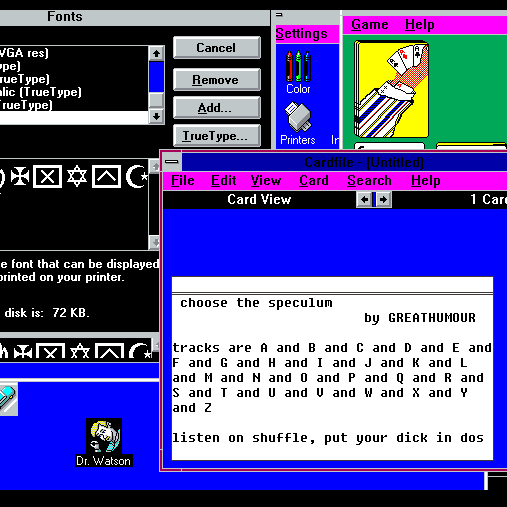 Choose the Speculum follows the titular and structural theme of a previous release by Max Eastman’s solo project Greathumour that I also greatly enjoyed: Choose the Forceps, which he released on his own imprint Tribe Tapes. Both releases are comprised of a large quantity of very short tracks and are meant to be listened to on shuffle, which due to the segmented nature of the pieces results in an indeterminate collage of sounds upon every instance of playback. Unsurprisingly, Eastman’s palette on Speculum is once again one of punishing intensity and grating sensory overload; samples are mercilessly processed via speed change, frequency dissection, and God knows what else so they can be mashed into bite-sized bits of digital destruction, which seem to be even more abrasive and adhesive-dissolving this time around. Eastman also provides footholds of sorts in the form of longer tracks like “X,” which runs nearly 20 times the length of most of the others and acts as a recognizable landmark amidst the uncertainty that a shuffle-ready release introduces. Choose the Speculum is a must-listen for any fans of the most extreme computer glitch music.
Request: Video Game Music
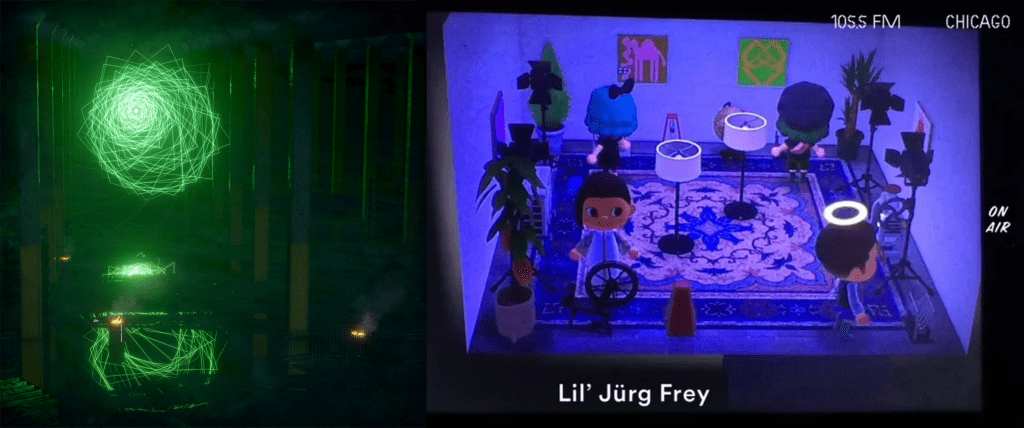
Full disclosure: I don’t play video games much at all anymore. Aside from the occasional Mario Kart/Party night with friends they just don’t really hold my interest anymore. What does (amply) pique that interest, however, is a new phenomenon in experimental music-making, possibly brought on by the global quarantine. I first saw it with Graham Dunning’s upcoming cassette release on Every Contact Leaves a Trace, Panopticon, a “site-specific” research recording created by replacing all the in-game sounds of Half-Life with extracts from “90s rave tracks and sample CDs.” Then, I was wowed by a livestreamed performance by fledgling quartet Lil’ Jürg Frey (Dicky Bahto, Erika Bell, Morgan Gerstmar, Stephanie Smith) in Animal Crossing: New Horizons, where the participant’s avatars played in-game sound objects in various prepared rooms.
Based on how successful and fascinating these turned out to be, I expected to be able to find more examples of experimental music made using the engines or environments of video games. But search any permutation of that on Google and you’ll find nothing. Thus, this leads me to my request: anyone who knows of any more examples of this sort of thing—whether it’s actual gameplay-generated sounds, the manipulated result of improperly loaded cartridges, anything—please send it to me. If like me this is all new to you, try making something in this unique way and send that too. Who knows, maybe we can make a cool compilation out of it or something.
Review: Anla Courtis – ATSPRRRCHEXS (Fort Evil Fruit, May 1)
 While some artists are uniquely interested in certain sounds that inevitably result in their work being classified as “subversive” or “experimental,” others seem to oppose convention more broadly, avoiding what is commonly considered to be “normal” music at all costs. Alan Courtis is one such artist; as a member of legendary avant-garde trio Reynols he participated in releases as diversely strange as 10.000 Chickens’ Symphony and Blank Tapes, and in his solo career has put out countless curiosities and collaborations under a deliberate misspelling of his own name. ATSPRRRCHEXS is his newest material, emerging on the Irish label Fort Evil Fruit unexpectedly soon after their superb March batch, and presents four pieces composed with field recordings and processing. Musique concrète is a relatively unusual tradition, but in terms of its own identity and history it has a well-established canon of practice and execution. Unsurprisingly, Courtis’s brand is distinctly his own; in the words of the label, these recordings have been expertly psychedelicised, certain angles and edges shaved off and amplified to create focused distortions of reality. Discomfort is rampant in opener “ATS,” which counters a sweaty electronic shimmy with grating tape manipulation like angry swarms of bees, but things get more pleasant throughout the remainder of the tape, and the closing gong-only track doesn’t even seem out of place. The Argentinian Anomaly is alive and kicking.
Review: Renato Grieco & Francesco Tignola – Hibernacula (Glistening Examples, May 1)
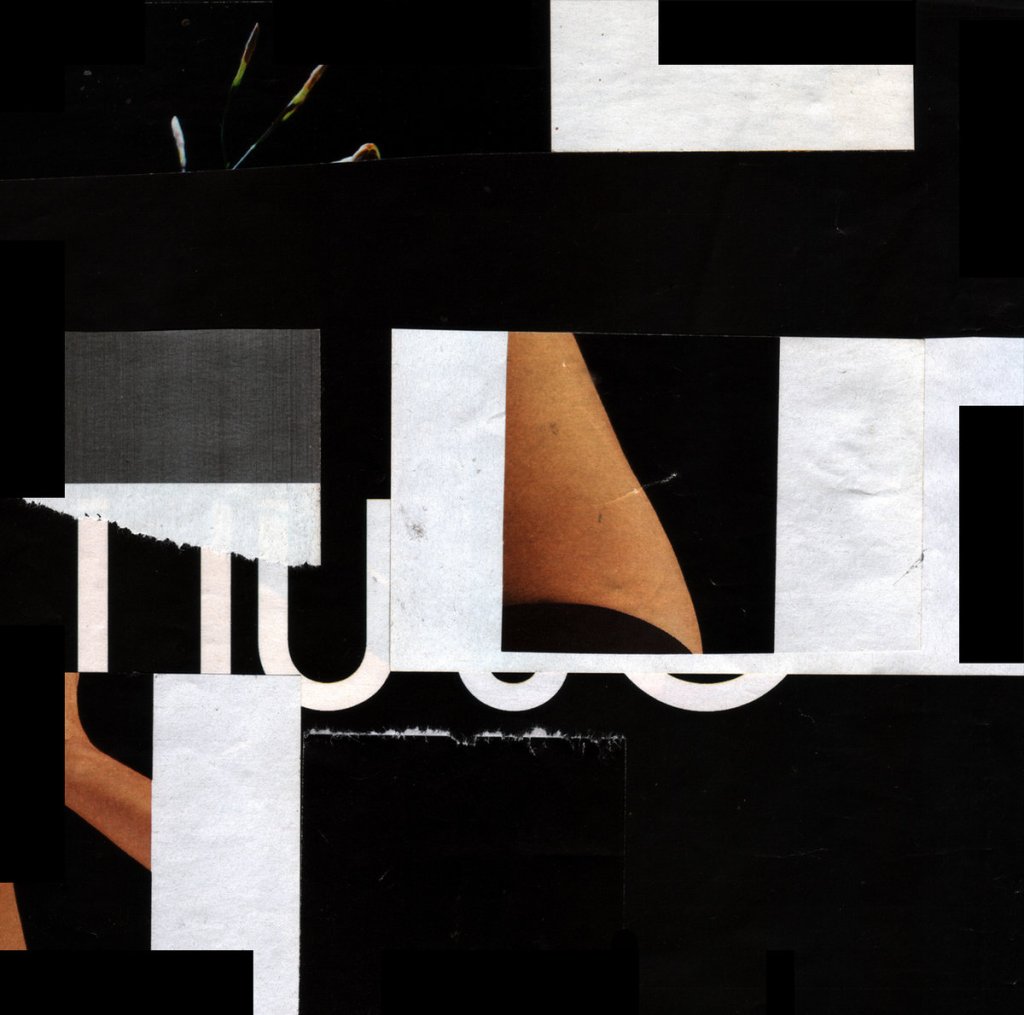 The young Italian sound artist Renato Grieco displays a tremendous amount of range across his relatively small discography, his virtuosic dissections sometimes evoking warm, comfortable domesticity (Queste cose non avvennero mai ma sono sempre / Rlecchinesque) and other times fashioning jagged juxtapositions, surreal sludge, and atmospheres with compelling ambiguity (Double Goocher Shop, Granchio Pinocchio). This new release, for which Grieco is joined by countryman Francesco Tignola (who frequently releases music as Elisha Morningstar, a project with which I definitely need to better familiarize myself), mostly belongs to the latter camp. The four tracks that comprise Hibernacula are full of layered, detailed, intricate music, but also probably isn’t the best thing to get stoned to; opening track “Two” is a a dense, restless mass of paranoia, a lushly arranged array of rustles, thumps, knocks-on-doors from all directions, ringing bells—but it never boils over into full-blown insanity, instead sticking to the corners and shadows, fleeing from the light. Though Glistening Examples head Jason Lescalleet’s only contribution to Hibernacula was his reliably superb mastering work, I hear a lot of his influence here, especially near the end of “One,” a moment where pitched-down vocals and electronic drones make for some rare, fleeting beauty. This short album slithers back into its hole after less than half an hour, but many repeat listens are necessary to decipher it all.
Review: Seth Cooke – Selected Works for No-Input Field Recorder (Every Contact Leaves a Trace, Apr 29)
 The UK-based Seth Cooke is easily one of my favorite sound artists working in the new millennium. Such high praise is not based purely on my opinion of his work itself (which is often the case), but rather what it means, what questions it implores me to ask, what it says about this “music” thing to which I devote so much of my time. These factors are more important than ever in the case of Selected Works for No-Input Field Recorder, Cooke’s newest release that acts as a sequel of sorts to previous 3″ documents such as Four No-Input Field Recordings and Sightseer. Selected Works actually collects four distinct 3″-length projects, some of which were intended for individual release while others were made specifically for the set. If you’ve never heard what exactly Cooke means when he talks about “no-input field recordings,” this is an excellent place to start; unlike Sightseer, the magnifying glass is focused entirely on the inner workings of the popular Zoom H4n recorder. It’s never revealed how exactly the sounds are captured—whether it’s some electromagnetic detection apparatus, post-recording digital manipulation, some combination of the two, or something else entirely—but somehow this is the least of our concerns. Cooke states that An Agoraphobe was created as a direct follow-up to Sightseer; “rather than contrasting the inside/outside of the recorder it just contrasts different approaches to inside.” The emphasis is placed not on the unusual approach Cooke takes, nor even the strange sonic results it generates, but instead on the phenomenon of listening to something we’re not supposed to hear, accessing some dimension of transparency that perhaps doesn’t need to be accessed. We hear stagnant static hums, blasts of electronic dead-air, digital pings and pulses, but what exactly is it? The sound of an inactive device? A recorder recording nothing? The totality of Cooke’s masterful ambiguity is realized with the packaging of Selected Works: a “2GB micro SD card encased in a 4cm x 4cm x 4cm silicone moulded black concrete cube, painted with Stuart Semple’s Black 2.0. The micro SD is highly unlikely to work and cannot be recovered without destroying the cube.” Because how on Earth else would this be delivered in a physical format?
Everything and/or nothing. At once a singular and engaging electronic odyssey, a considered conceptual piece, and a satirization of the music industry’s over-reliance on physical objects. At once a useless, broken storage card of boring sonic interference, half a paperweight, and concrete dust all over your desk. Why not both?
Review: Sial – Tari Pemusnah Kuasa (La Vida Es Un Mus, May 1)
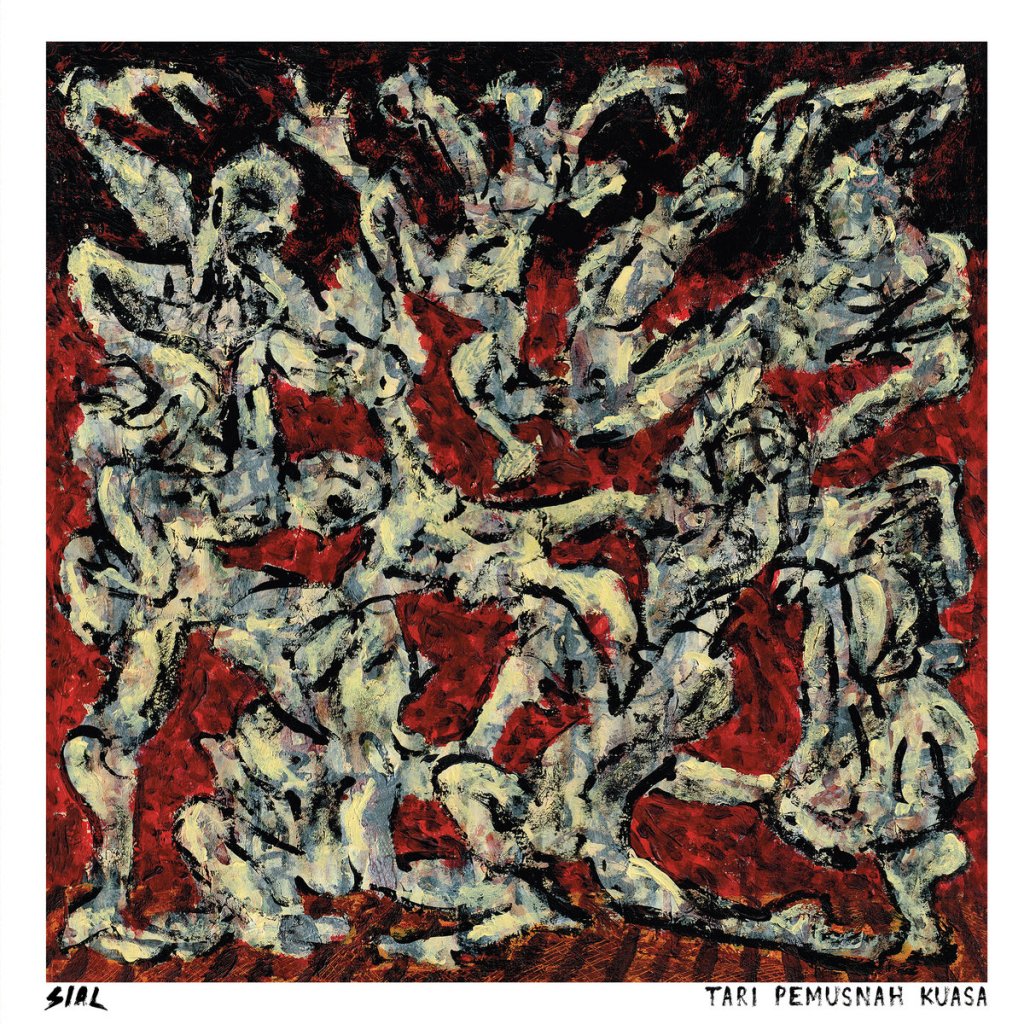 Singapore quartet Sial returns to La Vida Es Un Mus for the third time following their 2017 self-titled LP and 2018’s Binasa 7″ to deliver Tari Pemusnah Kuasa, whose title translates to something in the vein of “the revolt dance” or “dance of the power crusher.” Though all of the lyrics are in Malay, it’s one of those albums that is unmistakably political even if the lyrics aren’t intelligible; every deceptively simple power chord riff, drum gallop, and razor-sharp scream drips with anger and indignation. True to Sial’s distinctive style, these eight songs aren’t dizzyingly fast or technical. They instead aim for more of a hypnotic effect a la Raspberry Bulbs, mid-tempo plods drenched in jagged-edged noise with plenty of memorable headbang climaxes and tension release that don’t sacrifice either vitriol or volume. This is best seen in songs like the title track, on which the passionate, delay-fragmented vocal eruptions and excellent production by the one and only Will Killingsworth transform a rudimentary two-note riff into one of the LP’s most infectious moments. Sial are four rusting hinges on a Pandora’s box filled with noise, anger, violence, and pure punk armageddon; the lid constantly strains against them, the annihilatory contents spilling through the cracks and threatening to escape completely while the band stands fast with masterful restraint.
Review: Free Magic Show – Polymorphous (Czaszka, Apr 30)
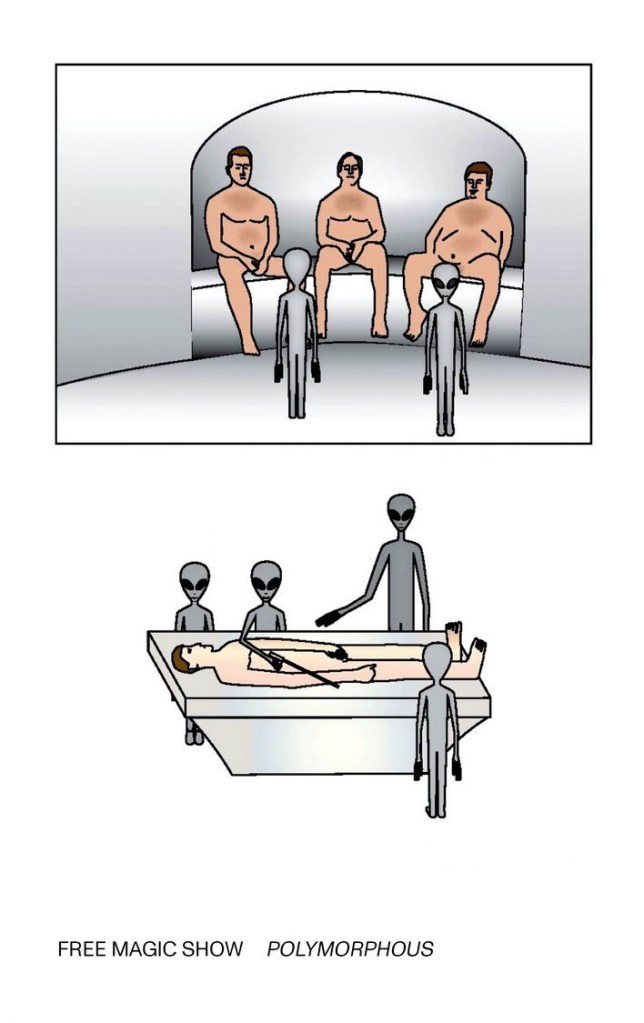 Polymorphous is not an easy tape to describe. To my knowledge, this is the first release by Free Magic Show, the duo of Edinburgh sound artists Joe Coghill and Michał Fundowicz, and introduces a singular, indefinable style conjured with computer, tape, and radio. Pairing well with the unsettling cover art, many of the pieces are a bit (or more than a bit) uncomfortable, humid, sweaty, claustrophobic. Incessant loops jitter into unsteady rhythmic pulses that throb with urgency at some times, lethargy at others; heavily processed sound effects and radio grabs materialize like extradimensional transmissions; tactile thumps and shifts evoke dark industrial underbellies and alien technology. According to the artists, the work they have produced is an “improvised magic show with sounds effects,” a quite, erm, loose description that makes the sounds on Polymorphous even more compellingly cryptic. “house music” is one of two significantly longer tracks on the tape and a masterpiece of enrapturing ambiguity; percussive digital reverb-bombs are launched from the magicians’ table into the massive, empty room to which they perform, their impacts sending shockwaves throughout the space as the lonely sound of slowed-down singing and other melancholy manipulations play out on center stage. I suppose Polymorphous is a “magic show” in the truest form, in that it delights in pure surprise and spectacle—regardless of how utterly bizarre those may end up being.
Review: Áine O’Dwyer – Daedalus Airs (self-released, Apr 27)
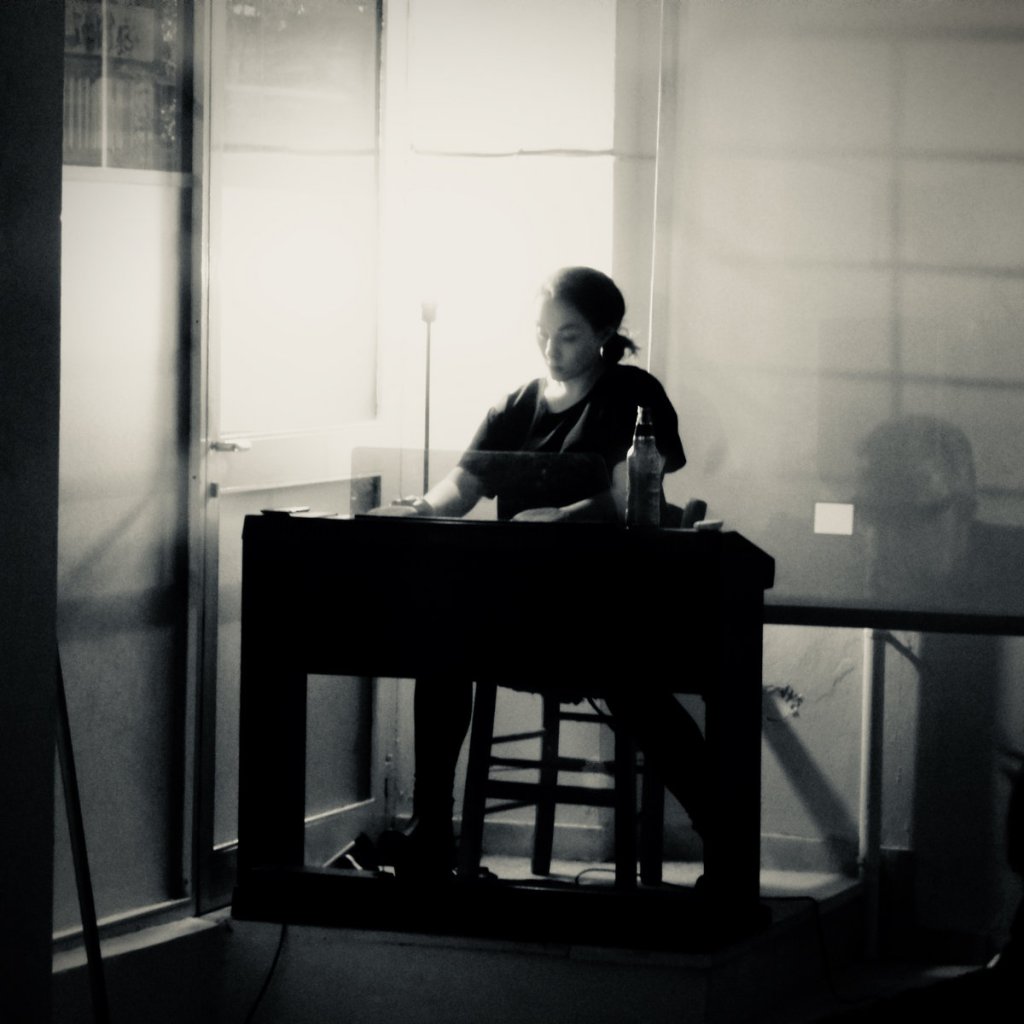 2018’s superb and affecting Green Ways with partner Graham Lambkin marked a significant creative shift in the work of Irish sound artist Áine O’Dwyer. Though prior releases saw her testing the limits of organ drones and other instruments within lush environments, successive projects reveal an unmistakable interest in public spaces, audience participation, and humanism. Early this year, O’Dwyer revealed she was gathering material for something new; she “engaged in street talk all day yesterday in Bristol suburbia” in preparation for live performances in April, which presumably had to be canceled. But we were still graced with something new: Daedalus Airs documents nine excerpts from an “audio visual performance installation” located at an art studio in Athens, Greece. Listeners who witnessed any of the performances by Lambkin and O’Dwyer (whether in person or via Green Ways) will find familiarity in the way the proceedings are captured; the generous recording field places the artist and her audience on equal footing. “Live Air,” the segment that concludes part one of the release, is especially exemplary of this; the space feels strictly defined and yet still distorted as the distant organ lament is marred by the creak and squeak of moving hinges. Things get even more intense in “Ella Capella,” in which a closely recorded and rather startling gush of water immediately invades, and during the rest we’re left to imagine what’s going on as O’Dwyer honks horns, rolls giant metal machinery, and whimsically vocalizes, all atop a persistent keyboard tone. One certainly misses out on a great deal of the true experience of an installation by not being physically present, but there’s more than enough “physical presence” in this wonderful recording for it to be pretty close. Plus, a dog’s barking once again plays a simultaneously grating and meaningful role. What’s not to love?
 Noise Not Music