
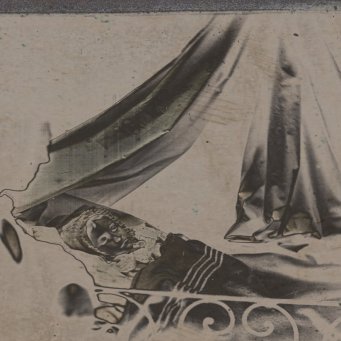
 Deep in the forgotten underbelly of some hulking abandoned factory, dust-covered machines and rusting contraptions inexplicably whir back to life. The windows of the factory are still dark, but they’re now imbued with the soft amber glow of aged light fixtures as the fragile foundation of the building shakes and trembles from its renewed activity. This is the scene immediately evoked by “Dallsaichean Uinneig,” the first track on Software Bondage’s newest album Plàigh, as its shadowy soundscape of layered industrial ambience and nocturnal drone begins to seep from under the cellar door. The track sets the stage well for the rest of the album, which develops an atmosphere that’s at once cozy and unsettling, sort of like Spiral Insana or Jun Konagaya’s Travel. “Snìomh” follows the auspicious opener with harrowing ritualistic headspace—the human element introduced with the down-pitched vocalizing is initially off-putting, but it resurfaces near the end of the track to produce a surprisingly sublime conclusion. There’s no such respite on “Laoidh,” which despite being the album’s shortest track also manages to be its most frightening. Here, the reverb-laden sounds of heavy machinery dragged across a concrete floor echo the cavernous, Sisyphean movements of Remnants’ unforgettable Empty Ruin before a decay-marred choir recording is left to play for the emptiness. Everything culminates with “Lùb Dùinte,” a monstrous, nearly half-hour-long closing piece that embodies the slow, majestic collapse of the massive factory where our journey started.
Author: Jack Davidson
I like to listen to, read and write about, and play music.
Review: SEC_ & Tricatiempo – La Tana (Subincision, Apr 7)
 Domenico Napolitano, frequently known as SEC_, is no stranger to dual improvisational settings. He’s worked with a variety of sound artists from his home country of Italy and beyond, but it is his two collaborations with French powerhouse Jérôme Noetinger (Testacoda and La Cave des Étendards) that I believe to be his finest work. The virtuosic use of the Revox tape recorder is always an awe-inspiring spectacle, but the ruthlessly inventive interplay between Napolitano and Noetinger is some of the most amazing I’ve heard, their simultaneous dissolution and reinvigoration of physicality in abstract music a wonder to behold. The physicality of La Tana, a new release from Napolitano that sees him paired with Stefano Costanzo (Tricatiempo), is more conventionally grounded than that of either of the Noetinger duos; Costanzo brings a diverse array of percussive textures to the table, his spastic injections sometimes echoing the arrhythmic object play of Ted Byrnes and other times adopting half-formed grooves that introduce an element of free jazz-esque bounce to the proceedings. “Riflessioni per cadaveri” is the album’s longest piece, and allows Napolitano’s stereo-spanning tape whipcracks and electromagnetic buzzing to establish a strong presence while Costanzo works in the shadows with choice clatter and hulking industrial rumble. The rest of the album delightfully trounces across a wide range of conventionality; “Tempo” settles into a cacophonous, fractured Liebezeit cascade not dissimilar to the considered rhythms of Magaletti and Sartorius’s Sulla Pelle, while “Machines Like Me” casts sparse metallic scrapes against insubstantial static. A superb (and free of charge!) slice of creative improvised music.
Review: Spacial Absence – Lifespan of a Mayfly (Nature Noise Wall, Apr 9)
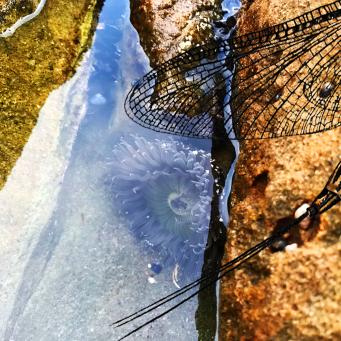 In my opinion, quality over quantity should be a guiding mantra used by almost all music-makers. It’s much better for fans to anticipate well-spaced-out new material and value a few excellent releases rather than be overwhelmed by unrelenting prolificacy, which almost always diminishes the value of each individual release. In some areas of music, this problem is unfortunately more prevalent than in others; wall noise is an illustrative example. The artists I always seem to appreciate most are those who seem to put the most time and deliberation into their work: Little Fictions, A View from Nihil, Mawile’s Fake Tears, Dirac Sea, etc. This isn’t to say that more prolific wallers just churn stuff out indiscriminately (though some of them certainly do), but the impression one gives to one’s audience is important in this regard. Spacial Absence, one of several musical projects helmed by D.C.-based musician Caden McMahan, is a great example of refined output curation: Lifespan of a Mayfly is the first release under the alias since 2017’s spectacular Primal Machinery. This new album follows a similar path as the last as it presents 12 segments of environmental abstraction. McMahan has never been concerned with obscuring source; like Primal Machinery, many of the tracks on Lifespan of a Mayfly are recognizably field recordings that have been heavily processed and manipulated, and the titles often give a hint as to what was being examined: in the more lucid moments of “Broken Water,” for example, the unmistakable sounds of rushing water currents can be heard. But here the removal from reality is also frequently ramped up even further. Elastic, percussive textures make “Plastic Rain” one of the most unique and enthralling walls I have heard in a long time, and unlike “Broken Water” neither its content nor its title make its origins easily discernible. You have to hear Lifespan of a Mayfly to believe it; somehow, across a 56-minute runtime that seems like half that, McMahan displays a mastery of a wide array of contemporary wall noise approaches, from detached glitch-scapes and digitally contorted streams to earthy contact mic bubbling and spatially isolated crackle. And if reading reviews isn’t your speed (though you’ve gotten this far), just listen to “Unwelcome Technology” and try to tell me it isn’t the craziest shit you’ve heard all year.
Review: Acchiappashpirt – Rrafsh (Turgid Animal, Apr 9)
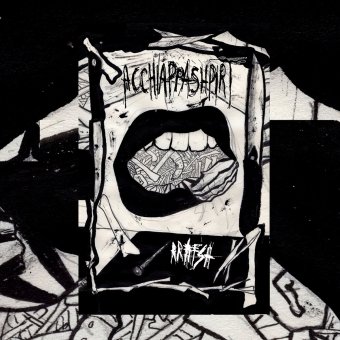 Rrafsh (which roughly translates to the concept of “tabula rasa” in Albanian) is a dark, twisted love letter to the volatility of language. The newest release from Acchiappashpirt, the transnational duo of Albanian poet Jonida Prifti and Italian sound artist Stefano Di Trapani, dives into the inky black depths to reach the true bedrock of poetic expression: not just human utterance, but simply utterance. The project’s trademark palette of screeching electronic manipulation and often wordless vocalizing reach a new level of ontological harmony on Rrafsh; it’s often difficult to even discern which is which, and even when one is able to, attention is always drawn to their inextricable similarities. You can look at it as verbal and nonverbal poetic sources, or simply two different sources of pure poetic communication, but the immediacy of their presence, the range of intensity that is spanned in the matter of seconds, the persistent sense of impending catastrophic explosion—these things are what are truly of concern when listening to this album. The sheer viscerality of Rrafsh is impossible to ignore, and despite it possessing considerably more theoretical/extramusical implications (not that that is always a superlative) fans of dynamic or cut-up harsh noise may find a fitting entry point into the fascinating area of sound poetry with this superb release.
Review: MazzaGieyn & Territorial Gobbing – Can Knock the Hustle (self-released, Apr 8)
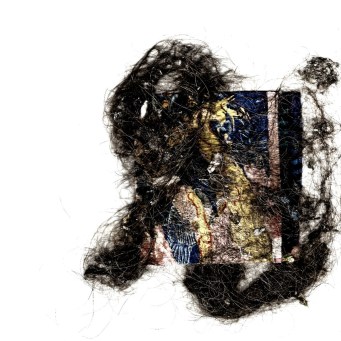
I can’t help but imagine the metallic assemblage on the cover of Can Knock the Hustle as some sort of horribly inhuman, quasi-organic entity, slipping and sliding around in the guts of old computers and activating long-forgotten sound effect patches with its many wiry tentacles. Even the purest computer music is often undeniably nature-resembling—reverb-laden microsounds like swarms of tiny underwater creatures, uncomfortably textural lashes like the wet slap of a large fish out of water—but this new release from Leeds oddballs MazzaGieyn and Territorial Gobbing is distinctively so. Following their first collaboration, 2019’s Domestic Uranium Now!, Can Knock the Hustle features TG mastermind Theo Gowans in an unusual laptop role, but he (unsurprisingly) retains his quite usual sense of irreverence and indiscriminatory sampling techniques; the sources utilized range from BBC sound archives to a video file that is presumably the 1977 Japanese cult classic ハウス (Hausu). As these bizarre interjections gel and scuffle with MazzaGieyn’s array of restless data streams and half-formed melodic flotsam, we’re subjected to some mental images that I’m sure most of us could’ve done without; now I’m just imagining that horrible alien mass burrowing into my skin to (invasively) remove my precious turnip cysts, or stealing all my poop to make its coffee. If you hear those telltale sounds of digital slither or mistakenly triggered samples, run.
All proceeds from TG’s Bandcamp sales are currently being channeled to a fundraiser for Wharf Chambers, an essential space for weirdo music in Leeds. Feel free to empty some pockets.
Mix: Abstract Psychedelia
Ditch the sunshine pop, nerds. It’s time to get swampy.
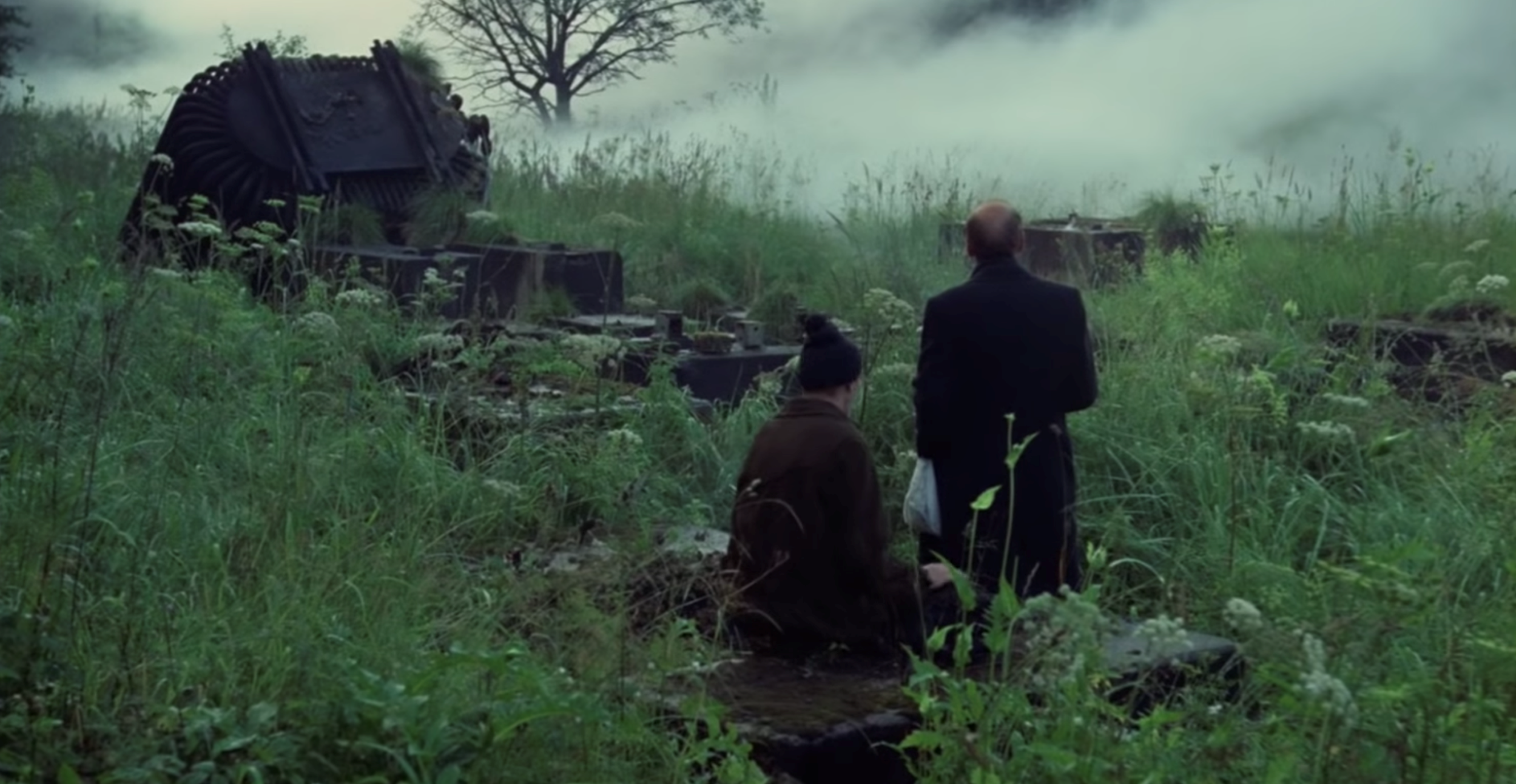
00:00. Sunroof! – “Pink Stream 1” from Found Star Sound (VHF, 2000)
02:15. Kemialliset Ystävät – “Lentävät Sudet” from Kemialliset Ystävät (Fonal, 2007)
06:07. Black Dice – “Treetops” from Creature Comforts (DFA, 2004)
12:10. Deerhunter – “Cicadas” from Weird Era Cont. (Kranky, 2008)
14:09. Open Marriage – “San Francisco” from Discover America (Permanent Green Light, 2016)
20:09. Ikue Mori – “Expresso Bongo” from Myrninerest (Tzadik, 2005)
23:36. Rambutan – “Returning to the Entrance” from Broken Infinity (Stunned, 2016)
29:22. Bart de Paepe – “Bedmar” from Pagus Wasiae (Beyond Beyond Is Beyond, 2018)
34:21. Headboggle – “Wassermusic” from Headboggle (Spectrum Spools, 2012)
Review: Joshua Abrams, Tyler Damon, Forbes Graham & Ava Mendoza – Sometimes There Were Four (self-released, Apr 7)
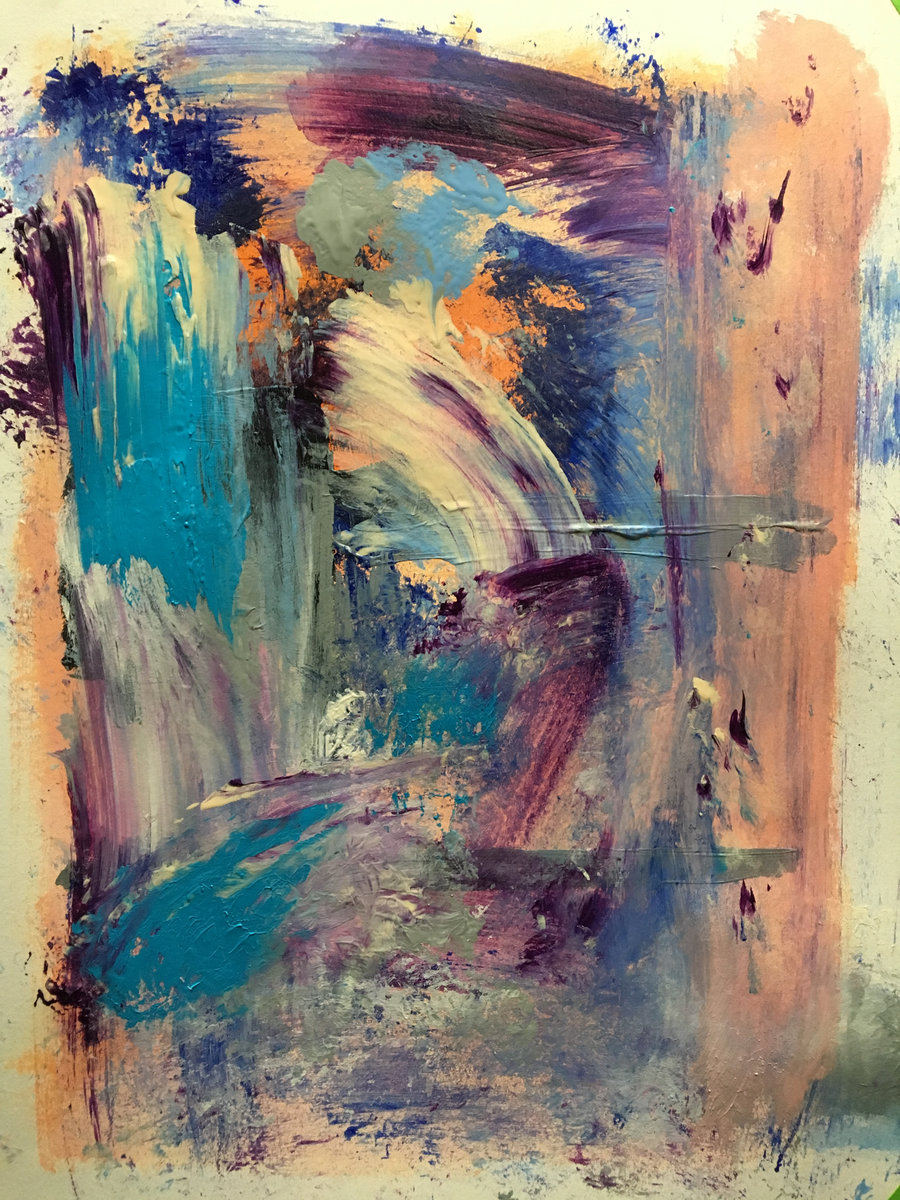 It’s always nice to see musicians you recognize from all sorts of different places coming together for a single collaborative release. Sometimes There Were Four documents 39 minutes from a live performance in Chicago’s May Chapel last year, its title a fitting heading for the lively quartet improvisations that it contains. With Joshua Abrams (Magnetoception) on bass, Tyler Damon (Both Will Escape, To the Animal Kingdom) on drums, Forbes Graham (Lagos Playground, which I reviewed here last October) on trumpet, and Ava Mendoza (who I had the pleasure of seeing live a few years ago) on guitar, the music twirls and ambles along at a digestible pace without sacrificing density. Mendoza’s guitar is the central element for much of the beginning section of “I Closed My Eyes,” her sporadic plucked chords and angular blues idioms echoing the legendary work of Zoot Horn Rollo on stranger Beefheart cuts like “Golden Birdies” before descending into textural extended technique mayhem. Each musician seems able to jump from traditional free jazz flurries to more abstract interjections at the drop of a hat; around the 17-minute mark of the opening track, Graham’s trumpet puffs a sprightly scale as Abrams shreds a punishing drone, while “Ready to Fall” flips that conventionality disparity when the latter’s bowed interjections contrast the former’s spittle-mincing squawks. A clear highlight of the album occurs once this second track settles in and Damon’s virtuosic percussion cacophonies finally unleash their full fury.
Review: Telescoping – Telescoping (self-released, Apr 7)
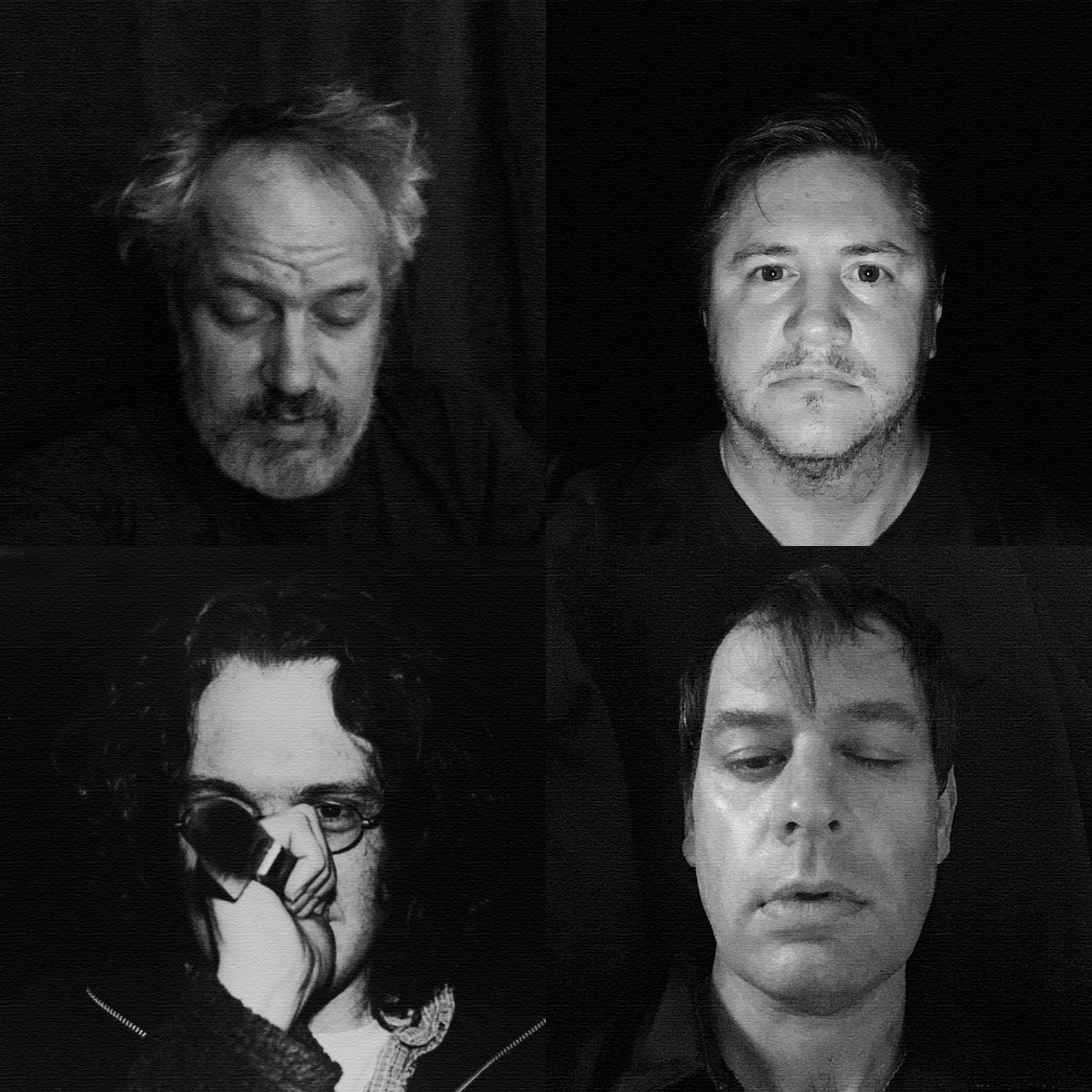 I’ve always thought “supergroup” is a dumb word, and disagreed with the implicit assumption that the collective prestige of a group of musicians somehow guarantees the quality of their music, but we’ve also been gifted with some great ones: Muleskinner, Them Crooked Vultures, Last Exit. And now, another addition to the list, and a band with a lineup I truly believe to be “super”: Telescoping. Composed of Stateside experimental music figureheads Alan Jones, Robert Millis, Dave Abramson, and Greg Kelley, the brand-new project emerges from the dark depths of isolation and quarantine with their self-titled debut: four cuts of dense, nocturnal improvised music. The sparse guitar additions lend a welcome element of conventionality to the proceedings, which move fluidly from stunning ambience to unsettling darkness in currents of loose drum set caresses, electronics, processed concrete sounds, and the ever-unpredictable sonorities that emerge from Kelley’s peerless use of extended techniques. Overall, the improvisations are cozy yet slightly morose, wispy chiaroscuros like the four mugs on the cover. It looks like a late-night Zoom conference where everyone is interacting but still isolated, which serves as a fitting analogy for the music’s exploratory, almost tentative nature. I thoroughly enjoyed this release, but I’m not yet sure of my opinion on the reading that occupies much of “More notes from A Handbook on Hanging”; Mr. Jones has a splendid voice, no doubt about that, but both the duration and source material seem like odd choices to me. Regardless of what my kneejerkingly-averse-to-spoken-word brain thinks about that, however, Telescoping is gorgeous, masterfully constructed, and essential listening for anyone feeling any of the following: confused, frightened, bored, sad, alone.
Review: Nathan Corder – System of Choice (self-released, Apr 3)
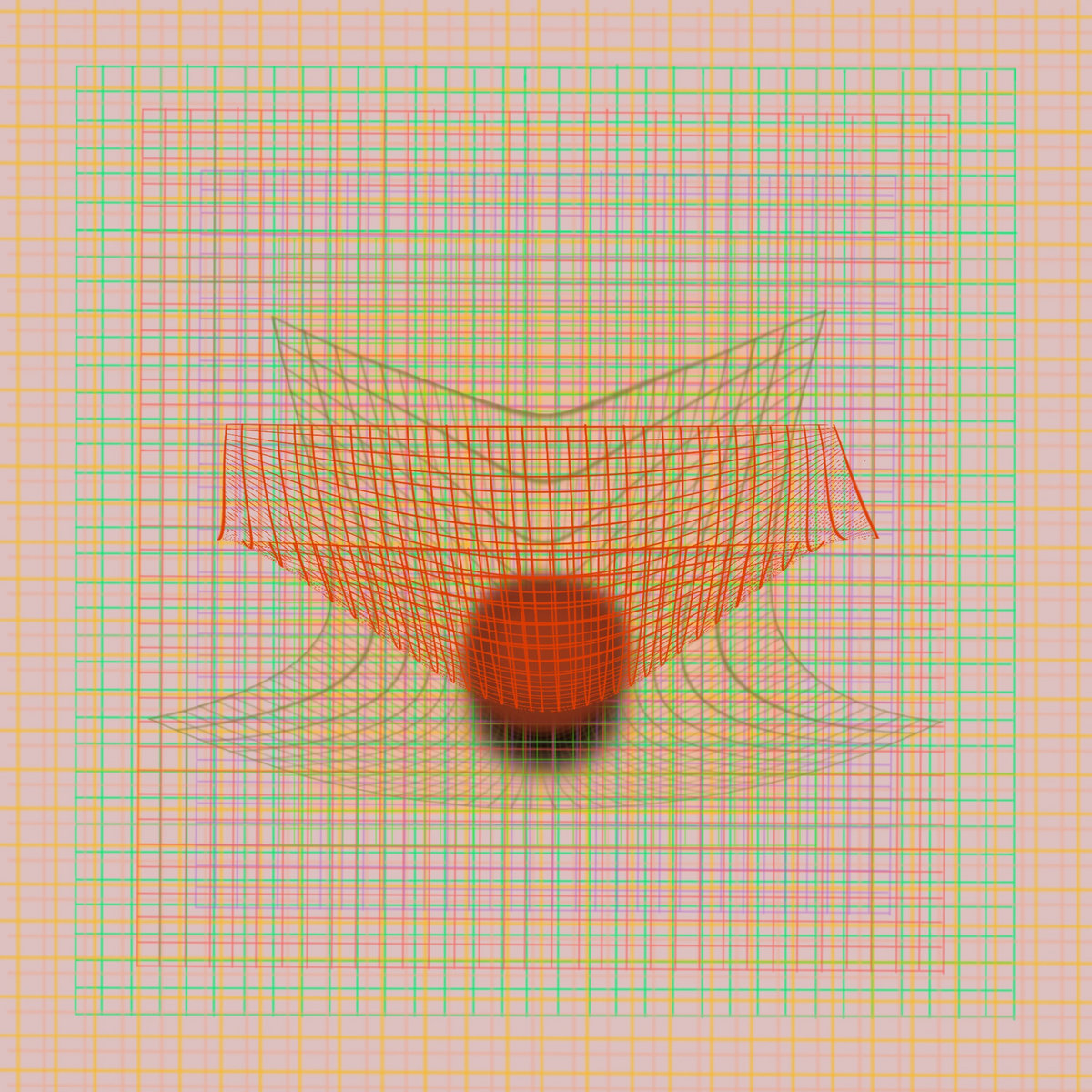 I first encountered the music of Oakland-based composer Nathan Corder when (almost exactly two years ago) I heard Anaconda, a duo recording—Corder on electronics and fellow Oakland musician Tom Weeks on alto saxophone—that’s one of the most violent, volatile documents of improvised music I’ve ever heard. On that release, Corder’s contributions were brash and abrasive, their shuddering and cracking providing much of the movement for the improvisations, so I suppose I expected more of that approach on System of Choice, the first solo release I’ve heard from him. Instead, the music on this album draws power not from immediacy, but instead its deliberate and enrapturing construction. Sounds are mercilessly processed and manipulated into an array of stereo-spacial objects for Corder to meticulously arrange and sequence, creating dizzyingly kinetic sonic events that constantly interlock and overlap. This is that sort of extreme computer music whose complexity can be intimidating; when I first listened to System of Choice I was frequently reminded of the overwhelming yet awestruck confusion I experienced during my initial encounter with Sun Pandämonium. But that’s also what makes it so enjoyable to listen to, and whether Corder’s mind-bending auditory architecture manifests as eviscerating glitch hailstorms, deconstructed electronica, or soft mechanical ambience like a robot’s final sigh, there are always countless layers and details to decipher. Repeated listens required.
Review: Translucent Envelope – Common Errors (self-released, Apr 2)
 Common Errors is the perfect soundtrack to an existence on (as Desaulniers himself puts it) “house arrest”: queasy, confusing, restless, occasionally a lot of fun, brief (I hope). The two short pieces on this new handmade tape release are eclectic assemblages of improvisations recorded last year, disparate bits stitched together into evolving chains. At play here is the usual Translucent Envelope toolbox of woozy tape warble, slivers of haunted melodies, and insectile skitter, but some surprising new territory is plumbed throughout a concise 14 minutes. Snatches of voices and dissected conversations occasionally surface, establishing more of a human presence than is usually evoked, and the dedication to producing detailed vignettes results in some fascinating and immersive soundscapes still imbued with plenty of scruffy charm: broken radios and music toys are played by ghosts in an abandoned day care, an ambient loop slowly melts in a miniature furnace, heaven briefly shines through a small hole in the muck. This is music to really dive deep into, and won’t even take up much of the inordinate supply of extra time you all have. Here’s hoping things get “better and better and better,” for all of us.
 Noise Not Music