
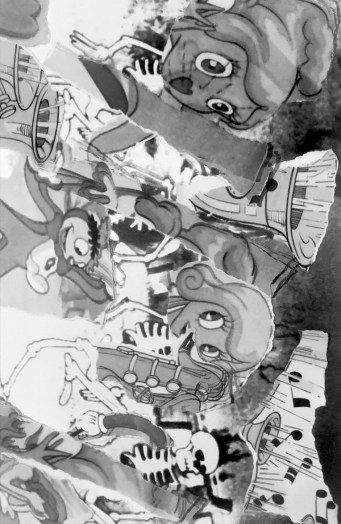
 Silly Symphonies, Vol. 1 is one of those albums that can be succinctly and accurately summed up in just a few words—”solo game calls”—but that also far surpass such modest, concrete origins. The two sides of this short C12 are filled with the sparsely arranged sounds of synthetic bird chirps, smashed squeaky toys, and general piercing misuse, an freakish orchestra of real-time processed utterance. There’s no ambiguity in regards to where these sonorities originate, but that doesn’t make the experience of Silly Symphonies any less uncanny; as humans we are constantly projecting our qualities onto not just each other, but anything we happen to encounter, even things that couldn’t be more different from us. We hear the whines and cries of petulant infants in Williams’ duck calls, shrieks of anguish in whatever the hell is making the sound at the end of “Part One” (this track was featured on my Past Vocalisms mix, and, despite being produced using an external device, reminds me of the harrowing abstractions of Ami Yoshida), yet it’s all smothered by an impenetrable layer of artificiality that throws our perception well and truly out of whack. Williams’ approach works well for such a short release, but honestly I could listen to this bizarre shit all day, so it’s great to see that “Vol. 1” subheading.
Author: Jack Davidson
I like to listen to, read and write about, and play music.
Review: T. Liefhold – The Singing Work (Falt, Jan 19)
 There are no actual vocals on The Singing Work; instead, sound artist T. Liefhold encourages inhuman objects to sing, coaxing tonal reverberations and complementary textures from a variety of sources, and the resulting work is just as harmonious as what actual human voices could produce. In large part, Liefhold’s newest release presents music of rattle and clatter; taut strings produce resonant oscillations, footsteps rustle leaves and other natural detritus, occasional guitar notes falter and feed back into a restless din. But the unique presence that The Singing Work asserts is not one of shaky, uncertain abstraction, nor do its uncanny soundscapes attempt to evoke environments beyond our earthly perceptions. Instead, the space it occupies seems to be the machinations beneath our everyday surroundings. Liefhold strikes, plucks, and vibrates the mysterious contraptions that maintain the organic processes we take for granted, and with the field recordings he also incorporates we see a sublime coexistence of cause and effect, imaginary apparatuses interacting with their real-world results, a detailed yet peaceful cross-section of a world that’s at once industrial and natural.
Mix: Past Vocalisms
This mix is based on a strange little digital-only album released last October by Spricht Editions, a Denmark imprint focused on “vocal oriented sound.” Here are where our unspoken words, random gargles, little tongue clicks we do when we’re irritated or bored, unintelligible howls of frustration, and hums of contentment all gather and congeal. Take care that your shoes don’t get stuck in the muck—but if they do, stay a while.
00:00. c.haxholm – “1” from Past Vocalisms (Spricht Editions, 2019)
06:38. Graham Lambkin & Áine O’Dwyer – “One and One Is Two” from Green Ways (Erstwhile, 2018)
10:47. Lily Greenham – “Improvisation” from Lingual Music (Paradigm Discs, 2007)
12:04. Ami Yoshida – 5th untitled track from Tiger Thrush (Improvised Music from Japan, 2003)
14:26. Gil J. Wolman – “Mégapneumies” from L’Anticoncept (Alga Marghen, 1999)
16:07. Yeast Culture – “Folk Songs of the Neskowin Indians” from Dueterium: Yeast Culture Improvacoustic Series Vol. 1 (Regional Bears, 2019)
20:54. Ute Wassermann, Duncan Harrison, Dylan Nyoukis & Claus Haxholm – excerpt from side A of Dissecting an Utterance (Spricht Editions, 2019)
22:49. Katalin Ladik – “Shaman Song / Sámánének” from Phonopoetics (Alga Marghen, 2019)
24:14. Michael Barthel – excerpt from side C of Heme (Geräuschmanufaktur, 2017)
26:26. Jamison Williams – “Part One” from Silly Symphonies, Vol. 1 (Lurker Bias, 2020)
29:19. Matthew Revert – “Dear Heath” from Letters to Friends of the Late Darcy O’Meara (Round Bale Recordings, 2018)
32:24. Rodrigo Ambriz – “Despojado al fin por su propio soplo” from Una silueta se precipita en arcadas (Szara Reneta, 2018)
Review: Women of the Pore – Folk Music (Orb Tapes, Jan 19)
 Folk Music was pretty much a must-listen on genre intrigue alone; the New Brunswick project Women of the Pore refers to itself (themselves?) as “bunker jazz,” which in my opinion is about as captivating as invented names can get. Plus, the title makes me think of a favorite oddity of mine, Grim’s 1986 album of the same name, for which “folk music” is an equally inaccurate label. The anthology of 2019 material really does live up to that bizarre label, but not in a way you might expect. Putting the tape on for the first time as I was lying down in my pitch-dark room last night turned about to be an optimal setting for my first encounter with this mysterious music. What “bunker jazz” actually consists of is immediately made apparent: thick synth loops and drum machine patches form heavyweight grooves through which various samples, mostly of horns and other jazz instruments, are woven. The electronics are usually as primitive and minimal as even the most detached examples of minimal wave music, but their impact varies; on “Gems,” the synth arpeggios and percussion hit with abrasive, EBM-like force, while on “Eyes Which Cry Love” the progressive electronic swells channel warm, atmospheric synthesizer music both old and new, conjuring equal reminders of both Tangerine Dream and the Stranger Things theme song. This is what bunker jazz is: fragments of communal, collectively generated music trapped within sterile metal walls of industrial-tinged beat music. Over the course of Folk Music the various possibilities of this unique approach are explored in depth, from the extended abstract hypnosis of “The Wailing” or the surreal stutters of “Sinking” to whatever the hell is going on in “Gravel Hill.” I’ve done my best to describe what’s happening on this thing, but there’s no other way to actually understand the strange, dark energy that’s evoked by this music than to experience it firsthand.
Review: Lost Graves – No Resting Place (Lurker Bias, Jan 10)
 I don’t know if you guys were aware, but Lurker Bias dropped TEN wall tapes all at once on January 10th, one of the most ridiculously bountiful batches I’ve seen in a long time. What makes this even cooler is that LB isn’t even exclusively a HNW label; they’ve released a wide range of experimental music on tape, a lot of which I’ve reviewed here (Butoh Sonics’ Flickers of Light, Owen Davis’s Interference, Snek Trio’s Battement Développé) in addition to some of not only my favorite wall material, but some of my picks for the best of all time: notably Smisao Života Je Sloboda by Dosis Letalis, Static Universe by Dirac Sea, and Ushinawareta Tamashi’s side of LB_120. I’m still working my way through the tremendous ten, but one that instantly stood out was Lost Graves’ No Resting Place, a two-piece set of punishing lo-fi destruction. I first came across Lost Graves with Buried at Sea on Lost Light, and this new tape continues the project’s unique talent for incorporating both intensity and lushness with an addictive crunch. “Shattered Headstones” blasts the stereo field with stuttering layers of industrial-strength crackle and rough-edged drones, establishing itself with a loud and raucous presence—yet over its thirty minute duration seems to become less uncompromisingly violent, and the roiling chunks of static begin to sound like more of a meditative swirl. “Roaming Spectres” is a fascinating counterpoint, a cloud of kinetic fuzz emanating from a queasy, unstable inception.
Review: Queue – Water Bucket (7FORM, Jan 16)
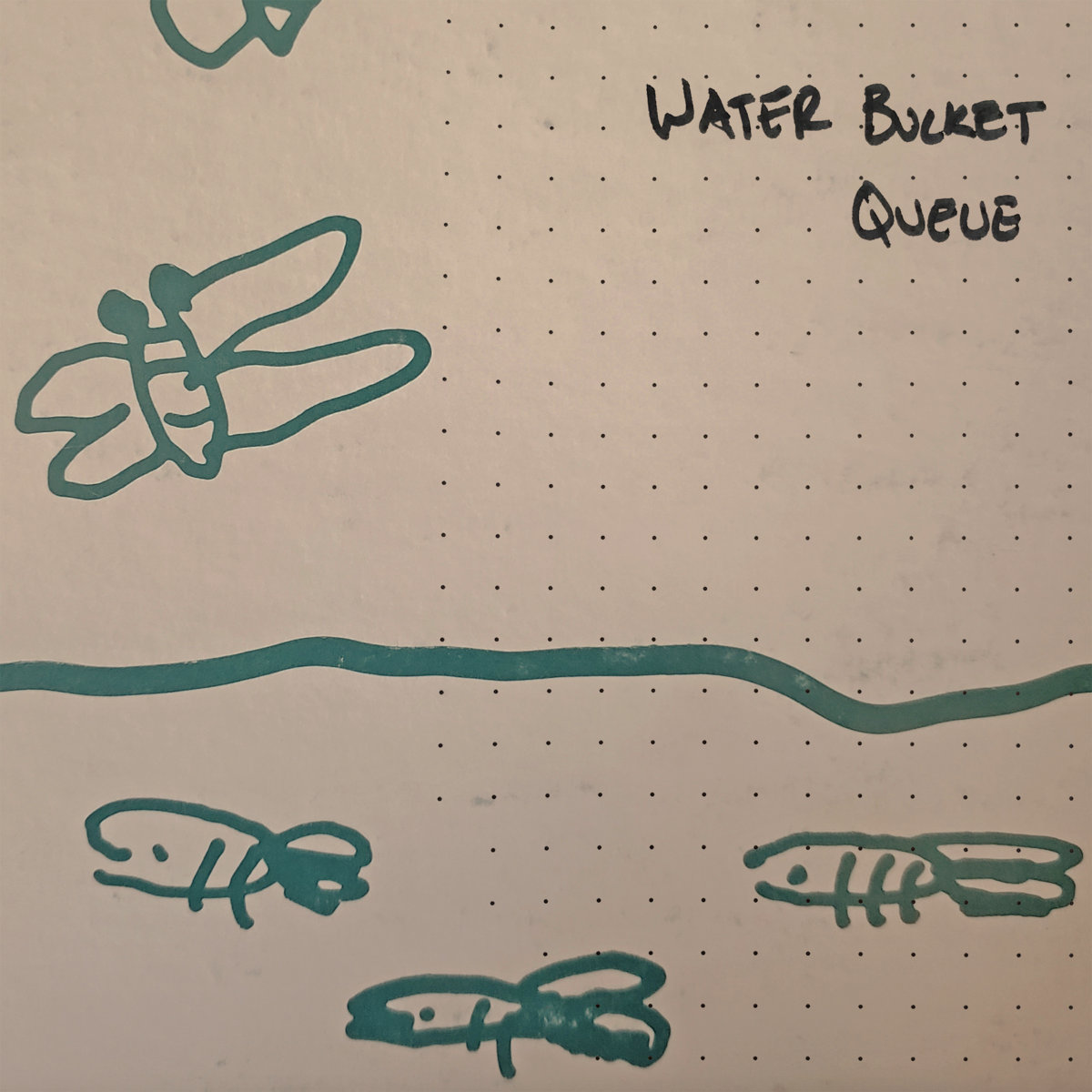 Water Bucket makes the full list of materials and captured sounds used to create it—bucket of water (unsurprisingly), vibrator, microphones, amps, feedback, record player, radio, heater, kitchen utensils, bells, a drum, a wooden box strung with hanging wire, rain, wind, other objects, people, cars, airplanes—readily accessible, but such transparency does little to make the curious little album easier to decipher. Queue’s use of trivial objects, homey extracts, and an intimate, lo-fi approach to recording results in pleasingly messy piles of sounds both familiar and uncanny, humanly imagined celebrations of the mundane. But occasionally threatening the sanctity these delicate personal spaces are intrusions of the outside world; the seam between parts one and two of the titular piece is exposed by an unceremonious interjection by a radio news station, the transmitted words describing just one small facet of our constantly discouraging reality nearly shattering the fragile bit of peace that has been so reverently cobbled together. In the following two tracks, the samples become more soothing inclusions, but on “People and Animals” their out-of-place-ness is made clear, the languid folk tune slowly encroached upon by shards of feedback and a stuttering turntable stylus. “Rain on the Rail” acts as an unassuming but unsettling conclusion, stitching together domestic detritus with the ghostliest of threads.
Review: DML – DiscordMeansLiberation (Rip Roaring Shit Storm, Jan 14)
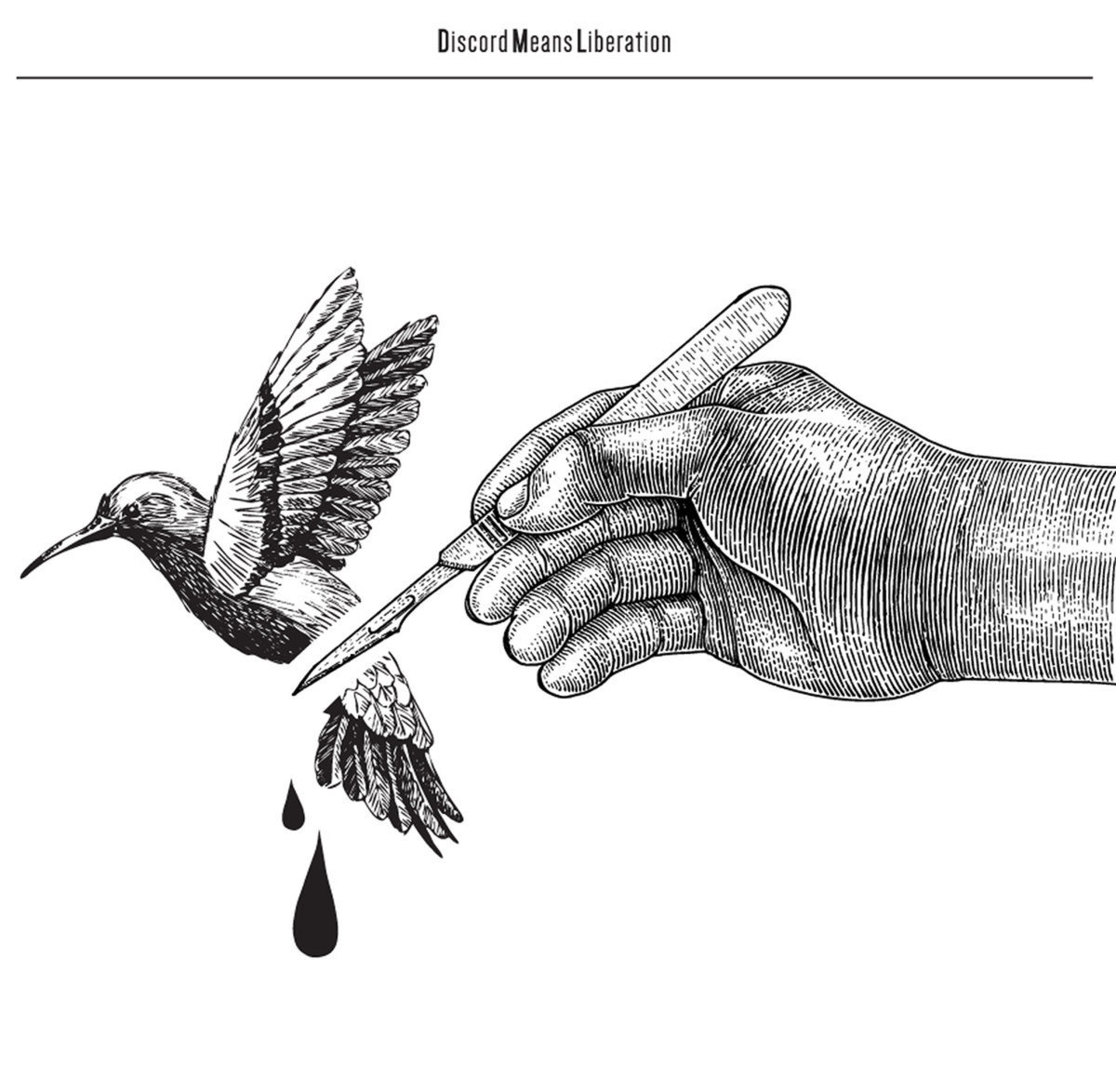 The Bandcamp tags for DiscordMeansLiberation list both “blastbeats” and “blast beats,” a pair of descriptors that would be redundant in most other cases, but in this case it’s completely appropriate. I don’t know much about DML other than that they hail from Seville, Spain and deliver some of the most intense hardcore-influenced grind I’ve heard in a while, so I’m grateful for Rip Roaring Shit Storm’s vinyl release of their first two EPs (grouped together as an LP under the title of the more recent release). “Tsundoku” doesn’t waste any time in setting the intensity level for the rest of the album, forcing its way into existence with heavily distorted punk riffs and larynx-shredding screams. The band is equally skilled at minuscule blasts of scalding fury as well as (relatively) more reticent atmospheric respites—”Endorphin Fueled Euphoria” is the shortest track on the LP at only five seconds, breaking into dizzying, lightning-speed technical fury after a brief snare count-in, while “Indentured Servants” stretches itself across four minutes of punishing sludge jams and ends with a whirlwind of harrowing, mangled shrieks. DML occupies a sweet spot somewhere between the heavily hardcore-influenced, shrill “false grind” of bands I love like The Ergon Carousel and the earthier assaults of Weak Flesh, so DiscordMeansLiberation is exactly what I needed in this brand new year.
Review: Fire Roast – Fire Roast (Single Girl Married Girl, Jan 13)
 Both a member of innovative avant-rock trio Palberta and the sole creator of the modern outsider masterpiece I Hope All of Your Dreams Come True, Philadelphia-based multi-instrumentalist Nina Ryser is easily one of my favorite musicians at the moment. On Fire Roast she lends her always charismatic, charming vocal style to a new quartet that also features Ani Ivry-Block, Zoë Talkin, and Gabe Adels. The band’s sprightly brand of art punk is much less skittery and elusive than either of the other projects I mentioned previously, but with a decidedly reticent approach to songwriting and a warm, raucous power-pop energy, Fire Roast more than competes. Ryser is the only member credited with vocals and presumably also doesn’t lend her instrumental talents to this new band, a lineup configuration that frees up space for layered harmonies and other vocal idiosyncrasies while maintaining that distinctive post-punk power trio sound. From the magnetic guitar/bass interplay on “Smash” to the slow burn start and superb lyrical imagery of “What a Pity,” the twenty-minute debut covers a great deal of ground before even reaching the wonderful concluding track “Folly or Fate,” a long and ambitious cut that proudly displays every facet of the scruffy four piece’s irresistible charm.
Fire Roast is available on cassette from the Single Girl Married Girl website.
Review: Magog – Dances with Beast and Giants (Muteant Sounds, Jan 8)
 As stated in the description, Dances with Beast and Giants is indisputably an album that suits a variety of environments, whether it’s “club, stage, [or] street.” The UK quartet, which features drum set, trumpet, trombone, and baritone sax, explodes into existence with a propulsive drum groove and cacophonous wind battles on “Bone Dance,” an incendiary opener that rivals the formidable presence of much larger ensemble pieces (one that immediately comes to mind is Angles 9’s “Equality & Death,” a track produced by more than twice the amount of musicians). Magog displays this unique ability to sound like much more than just a quartet not just on “Bone Dance,” but many times throughout the record. On “Rising,” the second track, power is found in tightly orchestrated unison licks, but “Dancing with Giants” returns to the fiery fray with clashing simultaneous solos, but eventually the jagged, unaligned cells fall into step with each other, crossing the chasm between chaos and unity in an impossibly short amount of time. Truly both a “mini brass band” and “deranged modern village band,” Magog combines traditional jazz sensibilities, exceptional musicianship, ecstatic harmony, and an ever-astute collective ear for the abstract to produce an enrapturing “dream time jazz for today.”
Review: The Serfs – Sounds of Serfdom (Detriti & Wasted Tapes, Jan 10)
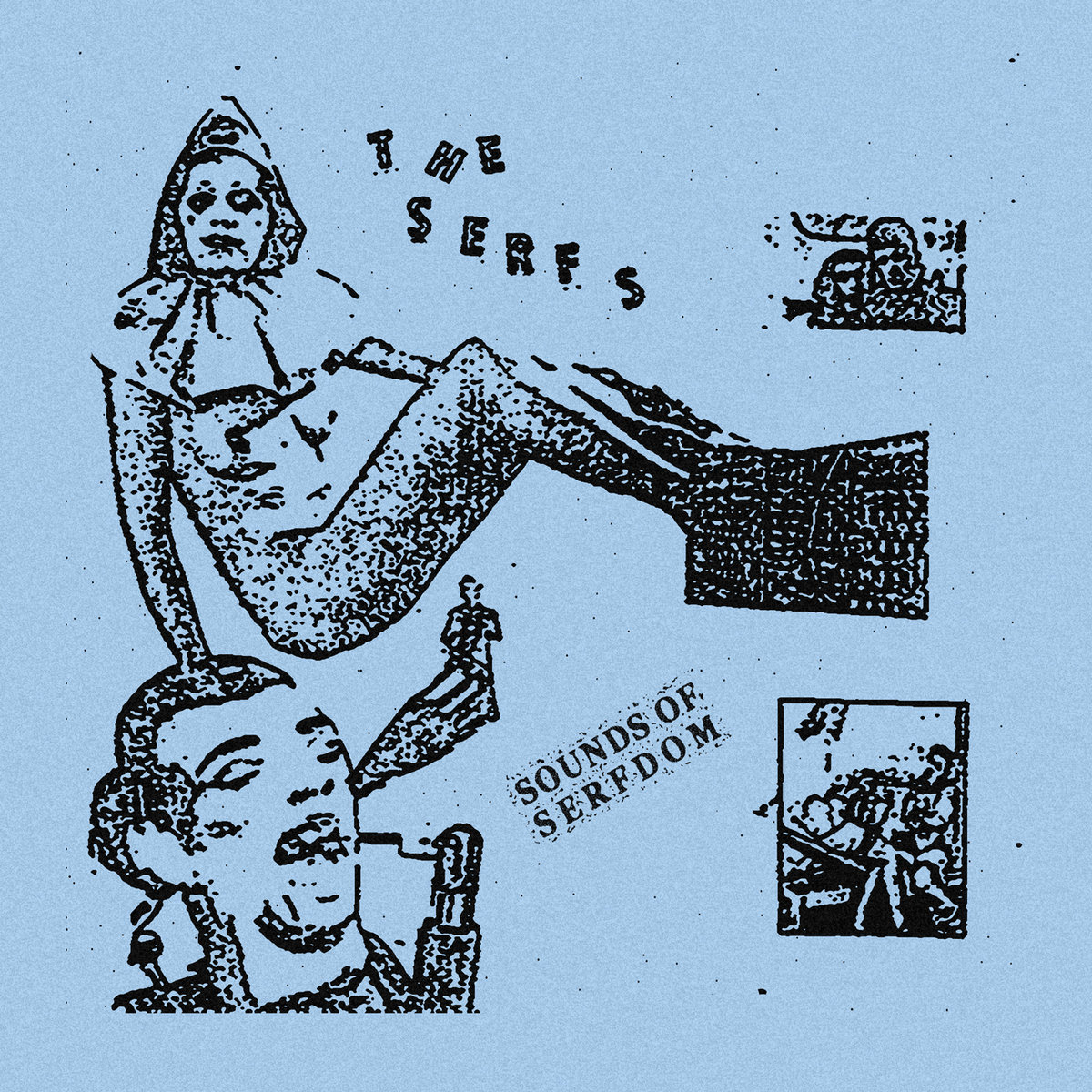 For me, “local band” has long been an implicitly derogatory, or at least separating phrase. The “local” qualifier always seems to denote a musician or act that has little appeal other than being based closed by, something that’s unfortunately true for many local bands. But if you’re fortunate enough to live in a city or town with an active scene, dig deep enough and you’re almost guaranteed to find something (or multiple things) that break the mold. This is part of the reason I’m so appreciative of Cincinnati post-punk bands like Crime of Passing and Mardou, whose releases I’ve reviewed here previously (Winter ’19 and Bitter Energy, respectively); they remind me of how amazing it is to have exciting musical output being generated so close to home. Now, musicians who have played with and written for both projects have formed a trio with The Serfs, whose reclusive, nocturnal brand of minimal wave first made an appearance on 2019’s Songs of Serfdom. All six tracks released on that EP are also featured on the similarly titled and covered Sounds of Serfdom, the band’s debut full-length released on LP by German imprint Detriti and on tape by Cincinnati label Wasted Tapes. I was lucky enough to see The Serfs play a live set a while back, and every ounce of their mysterious presence and outsider scruff is conveyed by the beautifully lo-fi production of Sounds. Energizing chants defiantly emerge from dark, dank caves of moody synth and muted drum hits on “Vanishing Act”; piddling electronics morph into cheerful, infectious melodies on “Perverted Disco”; and “Imitation” joins the ranks of other incredible “I—–tion” songs—along with Mardou’s “Information” and “Immersion”—for a lovely conclusion. Pretty much every song on this album is fantastic though, those are just the three that stood out the most on my most recent listen-through. I send eternal love to The Serfs for not just being a “local band,” but also making me feel like I’m truly a part of something by being in close proximity to them (not that I actually am, but it still feels like it).
 Noise Not Music