Feature: Favorite Compilations, Reissues, and Archival Material from 2019

2019 was a year of looking forward for many artists, but brand-new music wasn’t the only thing dominating my listening these past eleven months. From reprints of old, hard-to-find albums to collections of tracks that hadn’t previously been available at all, here are my favorite archival releases from this year.


Velo Misere – Retrospectiva de la Fatalidad (Death Kvlt Productions, Mar 1)

The Compendio de Trágicos Presagios demo (2017) and Genealogía del Eterno Desasosiega EP (2018) respectively occupy the two sides of Spanish black metal collective’s first vinyl release, a dirt-caked and shadow-drenched odyssey into lush, atmospheric soundscapes of pain, grief, and harrowing beauty. The production is murky and swirling yet never sacrifices the force of the vicious percussive onslaughts, the labyrinthine riffs, the agonized, raw inflections of the shrieks and howls. Retrospectiva de la Fatalidad feels at once fresh and out of time, a dark artifact found in the earth upon which small spots of lights begin to appear when you look at it for long enough.
Chamber – Ripping / Pulling / Tearing (Pure Noise, Jul 17)

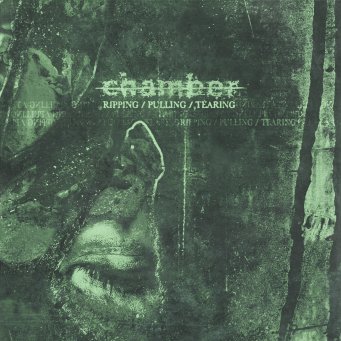
2019 was a year in which many promising hardcore bands were picked up by larger labels, and we saw plenty of faithful discography collections released for bands like SeeYouSpaceCowboy…, Year of the Knife, Fawn Limbs, and others. My clear favorite of these, however, is Chamber’s Ripping / Pulling / Tearing on Pure Noise, which is comprised of songs from the Nashville quintet’s only two releases (Final Shape / In Search of Truth and Hatred Softly Spoken) along with the brand new “Replacing Every Weakness.” This latter track is a succinct masterpiece of modern metallic hardcore, with well-penned lyrical anguish howling over razor sharp wah stabs, low end churns, and one of the catchiest and most brutal breakdowns of the whole decade.

Katalin Ladik – Phonopoetics (Alga Marghen, Jul 19)

This wonderful LP release by Alga Marghen collects eight sound pieces by Hungarian multidisciplinary artist Katalin Ladik, a visionary creative whose work nonetheless remains largely unheard by not only the general public, but also the sympathetic ears of avant-garde listeners. Ladik’s compositions and improvisations make use of a wide variety of sound sources, from the nocturnal industrial ambience of “Reflection 7 / Reflexió 7” to the layered, spectral, vocal-only performances of “Ufo-Nopoetica” and “Lament / Sirató,” but at its heart Phonopoetics represents Ladik’s development of a poetic language that incorporates more than just speech; her poetry is all-inclusive, indiscriminate, a sublime and revolutionary dialect that draws its power from the fluid ease of gesture.
Various Artists – Towards a Total Poetry (Recital, Sep 6)

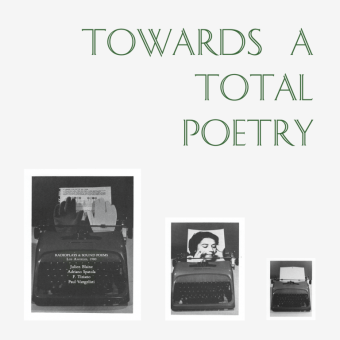
Possibly Recital’s most fascinating release even in such a formidable year, Towards a Total Poetry collects ten vocal pieces, sound poems, and radio plays by four titans of the 1980 Los Angeles text-sound scene (Paul Vangelisti, Adriano Spatola, F. Tiziano, Julien Blaine). Guttural, salivary utterances imitate surgical amputations; cardinal directions argue over a game of cards; a choral ensemble sing the “M” entries in the phone book. It’s hard to tell what’s more disorienting, the structure of the LP as a whole or the pieces themselves. Housed in a fittingly unassuming jacket with a 12 page booklet containing notes and essays by the artists, it’s definitely a document to get your hands on.

The Sawtooth Grin – Cuddlemonster reissue (Wax Vessel, Oct 4)

Ambitious Chicago passion project Wax Vessel really put its nose to the grindstone in its inaugural year of operation, releasing beloved classics of the 2000’s math/death/grind-core scene on gorgeous colored vinyl with reimagined cover artwork. So many of my personal favorites were blessed with the WV treatment in 2019 (Robinson, The Heartland, Destroyer Destroyer), but I choose to include Cuddlemonster because its reissue significantly changed my opinion of it—after only having heard low quality, compression-marred digital rips it’s truly an amazing experience to hear it now, in all of its deranged remastered glory.


Feature: Favorite Labels of 2019

Even in this era where digital music and streaming dominate, independent CD and tape labels are the lifeblood of the underground and avant-garde music community. So many, way more than we deserve, are admirable platforms for musicians and artists to get their music to new audiences, focused on supporting creativity rather than profit (though they still need your financial support too). With this piece, I hope to give recognition for the longer running labels that are still consistently great, as well as bring some newer discoveries into the spotlight.


‘Old Standbys’

Dinzu Artefacts

Dinzu is all about consistency, from its constant aesthetic focus on “contemporary art of sound by artists interested in tape manipulation, field recordings, noise and experimental practices” to the foot it maintains in the world of physical music by not providing official digital covers for its releases. The consistency, unsurprisingly, carries over into the music as well, and 2019 is an exemplary year to look to for proof. The January batch started things off strong with the acousmatic ambience of Ife from Giovanni Lami and Glauco Salvo and Fabio Perletta’s segmented sound study Hesitant. Other superb entries include Joakim Blattmann’s eclectic Bird Helmet, Eventless Plot’s captivating improvisations on Percussion Works, Andrea Borghi’s warbly textile turntabling on Tistre, and the succinct surrealism of kNN’s Granchio Pinocchio. Dinzu also released one of the year’s most impenetrable works with Luciano Maggiore’s Locu, which I am still trying to figure out.

Flag Day Recordings

Billy Pizarro’s Flag Day Recordings reached new heights of eclecticism in 2019, releasing sixteen tapes that wade through sound art, improvisation, abstract electronica, noise, film soundtrack, and many other areas. My most played release from the label this year is (perhaps expectedly) The Black Isle, a spectral phonographic work by Manja Ristić, but I also greatly enjoyed Bridges of Königsberg’s ambitious electronic odyssey Considered Parallel to Borders (Or Dividers)Without Mirrors’ nocturnal soundscaping on their self-titled tape, and both of the most recent releases from Francisco Meirino (Hear After: Matters of Auditory Paranoia) and Tim Held (Music to Come Down to).


Orb Tapes

Orb, whose motto is “fringe music on tape,” reliably presents an onslaught of refreshing experimental and outsider music every year, but 2019 was one for the books, with 16 superb new releases from new and old artists alike. Highlights include Every Meanest Particular, the newest raucous and irreverent free jazz excursion by Chicago quartet Galaxxu; Into the Disposal, a short but punishing coagulation of various split and compilation tracks by Lima noisegrind trio Landfill; and Lumb, the second fantastic release on Orb by indiscriminate dada collagers Sugar Pills Bone. Orb also inked itself into the contemporary Sun Ra revival with the release of Sun Ra with Pharoah Sanders and Black Harold, which collects long-shelved recordings from November of 1964.

Sentient Ruin Laboratories

Obnoxious release descriptions aside, the Oakland-based Sentient Ruin continued to establish itself as one of, if not the most prominent voices in extreme and avant-garde metal music. Beginning with Vessel of Iniquity’s Void of Infinite Horror LP, which I’ve identified countless times as one of my favorite albums of the year, the label put out nearly 30 new releases and reissues in styles ranging from nightmarish avalanche metal (Imminent HorrorThe Approaching RoarEkpyrosis) and lumbering death/doom (Perpetual AnimationVestigial, Nightfucker) to bewildering and abstract genre amalgams (ѪSpasm of LightHold Me Down). 2019 also saw an unexpected (yet more than welcome) reissue of Pseudocommando’s contemporary harsh noise classic A Home Beneath the Floorboards.

New Discoveries

Bank

NYC based label Bank is one of the most prominent mouthpieces for adventurous, confrontational, and industrial-influenced electronic dance music right now. I unfortunately don’t have the financial means to purchase many of their releases, but the one I do own, DJ Speedsick’s Nothing Lasts, hardly leaves my car’s cassette player. Other remarkable albums include Soren Roi’s sprawling double-tape techno masterpiece Retrograde Amnesia and Slave to Society’s stunning self-titled debut.

Careful Catalog

Besides releasing my album of the year (Shots’ stunning opus Private Hate), New York based label Careful Catalog came into its own in 2019 after a putting out just a single title last year (Will Guthrie’s 6 Days Into 8). So far it’s added the linguistics-based conceptual work of Connor Camburn and minuscule glitch-scapes of Takamitsu Ohta to its repertoire, and according to the website we’ll see two new editions by Mattias Gustafsson and barn sour before the year is out.

Collective Gut Distro

2019 was Collective Gut Distro’s first year of operation, and March saw it start things off with an aesthetically exemplary inaugural release: True Corruption by Fuck Shit Piss. CGD presses very limited runs of tapes occupying the dark and grimy corners of grindcore and other extreme punk music. Highlights include the self-titled tapes by fast-paced, furious, and fucked-up Indian grind trio xRepeatx and the rotted, rusty powerviolence project Construction Sports.

Regional Bears

London imprint Regional Bears released its first tape in 2017, but this past year saw it nearly double its catalog with three batches of three titles each. The roster of artists reads like a who’s who list of the underground “non-music” and collage scene, both old and new: blackhumour, Yeast Culture, Posset, AMK, Guido Gamboa, Shots, Small Cruel Party. But it isn’t afraid to branch out into more eclectic and even conventional territory either, with releases by E. Granby Granby, Schakalens Bror, and FPBJBC.

Honorable Mentions

I’d also like to recognize some other labels who brought me some of my favorite music this year, including Cadmus Tape, Hausu Mountain, Marginal FrequencyReserve MatineeFragment FactoryWasted TapesPenultimate PressSono SpaceChocolate Monk, tsss tapes, and Lurker Bias.

Feature: MVPs of 2019

Much like last year, December is a time for me to let up on my new music intake and sit back with some old favorites. To reflect on this wonderful year (wonderful for music at least) I’ll be posting the same summative features as I did in 2018. Hope you enjoy. My regular review schedule will most likely resume in the new year. Thank you to everyone for your support and love.


2019, just like 2018 (which is why I’ve very lazily reprinted the exact same introduction) was a year in which I discovered lots of new artists and got to hear new music from artists I already love. There were, however, several artists who managed to occupy both voids due to their prolificacy throughout the year. These are my personal picks for the “most valuable players” in music this year.

Andrea Borghi

The work of the endlessly creative and innovative Italian sound artist Andrea Borghi has been an important part of my music listening ever since I first heard Musica per Nastro God knows how many years ago. From hybrid sound composition and sculpture works in the form of his unique discomateria prepared records and other solo endeavors to collective improvisation, Borghi engages sound in ceaselessly various settings. In 2019 he’s been especially prolific, releasing 3discos, a collection of works composed between 2017 and 2018, on rhizome.s in February; VHS, an intimate yet raucous odyssey into the titular format that’s far and away one of my favorite albums this year, on Misanthropic Agenda in May; four textile/turntable experiments in the form of the Tistre cassette on Dinzu Artefacts in July; texts_und, a short cassette filled with lush, immersive, minuscule soundscapes, on Sounds Against Humanity in October; and recorded the ambitious Su Se Stesso as a member of the long-running improvisational quartet VipCancro.


Vessel of Iniquity

The mysterious Vessel of Iniquity, though officially known as the solo endeavor of musician “A.white,” can just as easily be thought of as a pitch black cavern that births this nightmarish and disturbing music. The project’s self-titled debut came out on Sentient Ruin last year, but the volume was more than pumped up in 2019 with the release of the Void of Infinite Horror LP, again on Sentient Ruin, and four subsequent self-released digital albums of remarkably consistent excellence. While Void of Infinite Horror is easily one of my favorite records from this year, I’ve not even come close to wearing it out because I have fantastic companion releases like Star of the Morning and Imitator of Miracles to give me my fix.


Mach-Hommy

Being prolific is more difficult with hip-hop than most genres, and it’s easy for artists who release too much music to sacrifice either quality or accessibility—or both. I’m sure we can all name some great examples. New Jersey MC Mach-Hommy (hereafter MH) isn’t as young as many of the NYC undergrounders currently taking the abstract hip-hop world by storm, but with a longer time on Earth comes wisdom, patience, and reticence. MH is known for his anonymity and reclusive nature, and his hermitic inclinations imbue his dusty boom bap beatscapes and cryptic lyricism with a unique sense of isolation that’s both unsettling and comforting. I first fell in love with MH’s music with the help of Fete des Morts aka Dia de las Muertos, and his 2019 ventures have further cemented that love: Tuez-les tous, the first of two superb collaborations with DJ Muggs (along with Kill Em All, which also introduced a new moniker for the duo), is easily one of the best hip-hop releases this year, and the short but sweet Wap Konn Jòj! is a wonderful entry in the contemporary abstract hip-hop canon.


Territorial Gobbing

I first encountered Theo Gowans’ music long before I heard anything by Territorial Gobbing (TG); the Leeds-based multi-instrumentalist is also a member of the irreverent noise rock ensemble Thank, whose 2017 EP Sexghost Hellscape is an all-time personal favorite. Gowans’ solo work as TG combines the same delirious, nihilistic surrealism with a more abstract palette of dictaphone skronk, mangled vocalizations, broken electronics, and anything else that catches his ear. April’s Stud Mechanism on Cadmus Tape was the first I heard, but Gowans stayed busy with releases on Cardboard Club (Ham Man Bone Jacket), Opal Tapes (Capitalist Art Is Cartoons Fucking), Panurus Productions (Sausage Chain), Infant Tree (Bit My Tongue Clean Off), and Base Materialism (Zoinks!). He also lent his talents to a collaboration with Model Warships on Wormhole World and the second side of Leap Wars’ Low Priest Run on Cadmus.


Daphne X

Daphne X (shortened from Xanthopoulou) is a very new discovery of mine, but I’ve had plenty of material to pore over in the form of her deconstructed, glitched-marred poetry remnants of January’s Jaguar 100% and the enrapturing digital dissections of To Be Brave on Sono Space. In addition to contributing a track to the third installment of Sono Space’s Sound Maps for the Dreamer compilation series, Xanthopoulou also curated Cachichi, an online radio platform for avant-garde music and sound art with a focus on her home base of Barcelona, Spain. Xanthopoulou may not have released an avalanche of music this year, but with the massive amount of excitement I feel for future endeavors she might as well have.

Review: Moth Cock – If Beggars Were Horses Wishes Would Ride (Hausu Mountain, Nov 29)

Covering as much new music as I do allows me to classify groups of releases based on some pretty inconsequential similarities. Astor’s The Aubergine Dream and Moth Cock’s newest tape If Beggars Were Horses Wishes Would Ride don’t share many qualities (apart from the fact that they’re both quite strange), but nonetheless one can associate them based on the hilarious text-to-speech introductions featured on each. On the latter the computerized deadpan is provided by Dr. Quinn Medicine Woman and honestly could function as a capable review of the album were I to transcribe it in its entirety—which I actually tried to do but the accent of the vocalizer makes a lot of the words unintelligible. If Beggars Were Horses continues the duo’s evolution into a style that brings together toy percussion patches, processed wind instrument skronk, erratic electronic freakouts, and God knows what else to create a roiling stew of noise. Even the most abrasive noises that Moth Cock conjure are swaddled in a smooth, synthetic outer coat of shininess, and much like their previous album 0-100 at the Speed of the Present the compositions often tread through territory that resembles meditative ambient music. After a tumbling and tumultuous A side (the latter quality is especially present in the volatile sonic amalgam of “If Beggars Were Horses”), the tape concludes with a pair of twelve-minute tracks that prove how truly bizarre yet infectiously magnetic Moth Cock’s creations can be. From the way “Wishes Would Ride” starts it definitely doesn’t seem sustainable over that long of a duration, but the bouncing rhythm loop soon reveals itself as a base for steadily unfurling waves of squalling distortion and effervescent pulses as its propulsive hi-hat hits drive everything forward—that is, until around the halfway point, when it all breaks down into frenetic chaos. The incendiary drumming and cavernous atmosphere of “If Bayonets Were Turnips” bring this wonderful release to a fitting close.

Review: Filtro – Forma (nausea., Nov 27)

Aside from the name itself, many examples of experimental music evoke the controlled explorations and examinations of a scientific laboratory environment, from the almost industrial whirs and crackles of Andrea Borghi’s VHS machine dissections to the dynamic sterility of Keith Rowe’s arcane setups of pocket fans, objects, tabletop guitar, and other devices. I and many others greatly enjoy the sonic results of approaches like these, because while the sounds themselves may not contain much humanity they’re always introduced and manipulated with a distinctly human level of control. Filtro, the duo project of Italian sound artists Angelo Bignamini and Luca de Biasi, presents two extended pieces that certainly embody what I’ve just described on FormaThe two musicians rely on the limitless possibilities of “concrete sounds and electrical interferences” as sound sources for their improvisations, the material “treated with extreme dynamism using a reel to reel recorder and a modular synthesizer” to produce the shifting mass of buzz, hum, flit, and clatter that spreads itself across the two tracks. The warbling tape manipulations are flung into the fray like multicolored fishing nets, harnessing the lush combinations of found sound in maneuverable physical form while darting clouds of electrical static and radio noise are carefully woven throughout. Forma finds itself somewhere between call-and-response improvisation and collective cacophony as Bignamini and de Biasi form an immersive mass of sound through their interactions.

Review: Catriel Nievas – El Lago de los Seis Lugares (Isla Visión, Nov 25)

While I’m often told that my musical intake is above average, my equally above average amount of free time is nonetheless limited. I can’t listen to everything people send me, and regrettably I even sometimes turn off albums when they’ve barely begun because I can already tell I won’t like them. Unfair dismissiveness in the name of efficiency, a tale as old as time. This was almost what happened with Catriel Nievas’ newest solo release, which was brought to my attention via Tone Glow honcho Joshua Minsoo Kim’s top ten 2019 albums list (check it out, it’s a good one). The use of plucked guitar in ambient music is hardly ever something I enjoy, so right away I wasn’t feeling too optimistic about my opinion of El Lago de los Seis Lugares. For once in my life, however, I exercised some of that elusive virtue we sometimes call patience, and I’d recommend anyone who listens to this album do the same because it definitely pays off. The level of calm and therapeutic stillness that Nievas evokes here is astounding, and the intermittent interjections of guitar harmonics or delay-affected chords are a splendid addition that provide an important counterpoint to that wispy, peaceful atmosphere. The three untitled pieces are largely unconcerned with drastic dynamic progression; instead, they rise from silence to float languidly in midair as Nievas gradually adds delicate layers of found sound, effects, and other complementary ornamentation. El Lago de los Seis Lugares hardly reinvents the wheel when it comes to abstract ambient music, but I come to this sort of thing to be lulled, not amazed.

Review: Breeze – Toad Crossing (self-released, Nov 26)

Oakland DIY duo Breeze truly put the “no” in “no wave.”  Their irreverent brand of anything-goes improvisation isn’t entirely indebted to the archetypal no wave sound, but more often than not Jackson Blumgart and Max Nordile find themselves falling into the lumbering, not-quite-in-time grooves, nonsense vocalizations, and razor-sharp guitar skronk that we all know and love. I first encountered the band through their short digital-only release The Guilty Baby, which luckily was not that long ago so I didn’t have too much time to wait for new music. Of the two releases with which Breeze graced us on November 26th, Toad Crossing is definitely noisier and harsher, frequently delving into straight-up terrifying territory as the two friends summon unholy frenzies of punishing synth noise, piercing saxophone wails, ear-splitting feedback, and completely unintelligible ranting and raving. This 26-minute release is greatly helped by its high volume and substantial dynamic range, both of which imbue the music with a sense of dangerous instantaneity. Hulking cacophonies of rusted metal and studio detritus threaten to collapse at any moment, and any brief respite from the madness is unceremoniously pulled away on the most fleeting of whims.

Review: Deathbird/Budman – Fruits from Saturn (Cadmus Tape, Nov 22)

It’s not uncommon for bands who have crafted a unique or eclectic style, or even labels that cultivate a singular aesthetic, to carve out a “personal genre” for themselves (R.I.P. David Markson) with some crazy name. Some personal favorites of mine are “vapor punk,” “fog electronics,” and “shitgaze.” Self-classification, however, is notoriously unreliable, and many of these artists’ music ends up failing to meet the expectations that such creative titles evoke. I thought for sure this would be the case with the “death Appalachia” that allegedly graces Fruits from Saturn, the new collaborative tape from Deathbird Stories and Vadim Budman; there’s no way anything could sound that cool. As you can probably guess, I was dead wrong. The pairing of these two musicians spans the quite large expanse of ocean that separates the U.K. from Canada, a geographic scope that is somehow matched by the formidable racket the duo conjures. “Gone to Croatoan,” perhaps fittingly named for the word found carved into a tree after the mysterious disappearance of the island colony of Roanoke, is among the tape’s shortest tracks, but doesn’t waste any time whipping up a howling storm of distorted guitar gunk. Whether Deathbird and Budman are getting right to the point on “Gone to Croatoan” and “Moons of Gomrath” or constructing massive sprawls of harrowing, dissonant atmospherics on “The Word for World is Forest” and “Tindalos,” their ability to swirl various sound sources into gargantuan drones that rival the apocalyptic meditations of Daughter of Darkness is pretty astounding. The length may intimidate some of you, but personally I hadn’t even looked to see how long Fruits from Saturn actually was until about two-thirds of the way through and was baffled to see how quickly the time passed. I assure you, listening to this hefty slab of true “death Appalachia” will be eighty minutes well spent.

Review: Chow Mwng – Dis-Ordnance (Recordiau Dukes, Nov 18)

Most questions along the lines of “what’s the best ______ ever?” are pretty damn difficult to answer. But when someone asks me who I think is the best guitarist of all time, my response is an absolute no-brainer: Derek Bailey. No other practitioner of that classic instrument has seamlessly combined sublimity, technical skill, and uncompromising originality with such aplomb in a staggering variety of contexts. Across enrapturing solo performances (Aida, Standards), unconventional experiments (String Theory, Music and Dance), mind-blowing collaborations (live album with Han BenninkMirakle with Jamaaladeen Tacuma and Calvin Weston), and even more conventional ventures like Arcana’s Arc of the Testimony, Bailey created an impossibly idiomatic musical language, the impact and legacy of which reverberate long past the musician’s death in 2005. On Dis-Ordnance, Welsh artist Ash Cooke (also known as Chow Mwng) pays homage to every avant-garde guitarist’s hero with a style he calls “Gwrth-gitâr,” which translates to “anti-guitar” in Cooke’s native language. For Cooke, “Gwrth-gitâr is free playing in the sense that anything goes. It does not explicitly reject standard Western tuning, melody or harmony, but it does reject the need for such things. It seeks to explore new ways of using a traditional and universally familiar object to paint an alternative view of the world. It is unrehearsed and leaves as much to chance as it does to the ability of the operator. It has no interest in being reproducible.” In the case of Dis-Ordnance, Cooke seeks to paint more than just an alternative view of the world; he grounds the five elusive improvisations that comprise the album in specific locations around the mountains of North Wales, using found objects to coax unfamiliar timbres from his acoustic guitar and fragments of more traditional playing to retain an element of conventional harmony amidst the abstract explorations. The recordings are focused on the assaulting sounds of the guitar, but snatches of the surrounding environment often sneak in, and can be viewed as either auxiliary elements of the improvisations or as their sources of inspiration. Dis-Ordnance is simultaneously familiar and alien, personal and primordial, intimate and grandiose—a series of paradoxes made possible by the all-encompassing ideology of Gwrth-gitâr.

Review: Sugar Pills Bone – Lumb (Orb Tapes, Nov 18)

Looking at the credited musicians for Lumb (Boney Dog Davis and Sleepy Sugar Thompkins) and the absurd list of instruments, which includes anything from “possum fiddle” and “git’r” to “tall tales” and “crunch and twinge,” it’s just as hard to discern what’s actually real as it is in the music itself. Do any parts of those aliases come from the artists’ real names? Is there really audible use of a “hobo sack” in any of these recordings (because yes, it’s entirely possible, if a hobo sack is what I think it is)? Where exactly do the “gravy samples” stop and the actual musicianship—a term used quite loosely here—begin? But the answer I, and you, should give to these questions is who cares? The newest tape from the enigmatic Sugar Pills Bone project is about as intellectual an affair as you make it to be, but by the time you come across the… gratuitous “Without Me” sample on “Greasy Piece E” I’d venture that you won’t want to lean too heavily into some astute critical analysis. Like Proud Trash Sound, an album with which Lumb shares some notable qualities, the primary goal here is fun, and it’s not hard to have it as you submerge yourself in these jittery junk piles of frantic bluegrass blasphemy, startling noise blasts, disorienting tape-sample tendrils, hilariously recognizable snatches of pop songs and who the hell knows what else. I implore you not to just take my word for the astonishing heights of absurdity this thing reaches; at the very least just listen to “Cain’t Deny My Wormhole, Buckaroo.” It’s always great when you enjoy music because it cracks you up—something that’s very hard to pull off. If I end up grabbing this tape it’ll go with Horse Cock Phepner in the “Jack just needs a good laugh” pile.