
 Christian Schiefner’s work under the Chemiefaserwerk moniker never ceases to astonish. The third release on his personal Bandcamp page, Rede des Jahres, is also his longest continuous piece yet, nearly 40 minutes of uninterrupted ambient cascades and altered realities. According to Schiefner, much of the tape used to construct “Rede des Jahres” comes from his own collection kept for “reminders” and “memories.” It’s not only this preface that casts a foggy shroud of reminiscence over the music, but also the qualities of the sounds themselves; the track is made up of achingly delicate elements, and its overall presence is one of thinness and slight obfuscation. Besides a brief appearance of what sounds like a short jam session demo—an addition that only adds to this atmosphere of recollection and nostalgia—Schiefner’s manipulations are quite removed in their final form, stretched and clouded and muddied in a peacefully sublime way that only he can conjure. Looking back, there are several distinct movements throughout “Rede des Jahres,” but the piece doesn’t feel episodic or segmented. The builds and releases of tension amidst the initial drones fade into the guitar/drum meanderings in an inexplicably natural manner, and suspended between stretches of abstract tape concrète is a somber hum like cold wind through a tunnel. Uniting these wide-ranging explorations are the very closely recorded clicks and clatters of unidentified objects, once again placing Rede des Jahres in Schiefner’s amazing sence of balance between tactility and incorporeality.
Author: Jack Davidson
I like to listen to, read and write about, and play music.
Review: Mark Vernon – Ribbons of Rust (Flaming Pines, Jun 26)
 Glasgow-based sound artist Mark Vernon’s newest work could be described as many things: an intervention, an examination, a document, even a dissection. But there really isn’t a single label that I can confidently apply to Ribbons of Rust, which draws its inspiration and source material from a remote, abandoned vacation resort in Thailand; Vernon doesn’t base his music around a specific technique or set of restrictions, instead utilizing a variety of methods to approach a comprehensive representation of this place that so notably resonated with him. Arguably central to the album’s construction are the worn, damaged tape fragments extracted from cassettes found on location, essentially the literal “ribbons of rust” that ground everything in a manner that’s both tangible (the distortion, crackles, and stutters that mar the tape playback) and abstract (the sampled music itself). Though there are a great deal of spacial field recordings and physical elements that evoke a strong sense of there-ness, Ribbons of Rust does much more than just reconstruct this mysterious environment. It presents a singular perception of a place, resulting in a work that is deeply personal and completely unique.
Review: Sammartano – Walkman Jazz (Canti Magnetici, Jul 8)
 First off, I just want to say how much I love Canti Magnetici. The label’s been around for less than four years but has already built an amazing canon of wide-ranging experimental works, featuring releases from all sorts of burgeoning sound artists as well as by founders Andrea Penso and Gaspare Sammartano (Donato Epiro has not yet put anything out under the imprint). With dedication to both subversive, barely classifiable “non-music” as well as more developed fields such as field recording, sound poetry, and electroacoustic composition, it’s by far one of my favorite labels out there right now.
Walkman Jazz is the second release by Gaspare Sammartano on Canti Magnetici (preceded by 2017’s Rompighiaccio Destiny), once again a single piece presented on a one-sided cassette. This time, however, in tandem with the album’s dark dominion of murk and gunk, the music is dubbed onto recycled tapes, each housed in a black clamshell case. Sammartano’s vision for this work is a singular one, represented both by the track’s hallucinatory, lethargic collage structure and by the sense of uniqueness and discovery evoked by the packaging—it feels like something you’ve found. Walkman Jazz is a monument to forgotten remnants, to languid congealment, to disparate amalgams, an immersive journey through familiarity rendered almost completely unrecognizable (but I was pleasantly surprised to hear a brief appearance of Scarface’s “I Seen a Man Die,” especially because I was just listening to The Diary on the way home from work). Come witness this “funeral party on a ship that sails a radioactive sea towards a new promised land (that obviously doesn’t exist)”; you won’t regret it.
Review: Detach the Islands – The Burden to Become Fact (Dental, Jul 5)
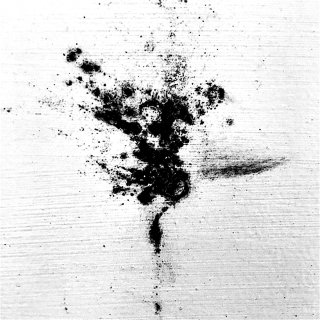 The Burden to Become Fact, New York art-hardcore quintet Detach the Islands’ debut studio release, is razor sharp. Seriously, there are parts of this album that are truly the sonic equivalent of jagged blades and gouging claws, many of the intricate arrangements coalescing into maelstroms of abrasive guitar stabs and throat-tearing vocals. The whiplash songwriting of “Who Holds My Head Down?”, the short instrumental that opens the album, is a fitting introduction to the band’s enrapturing musical chemistry; though almost always chaotic and disorienting, the five members move as one entity, every pound of the drums helping to drive home a particularly harsh chord or the desperate vocals seeming to pull everything upwards with their climbing insanity. Also present in Detach the Islands’ eclectic palette is a distinct emoviolence element, cropping up in the form of melodic interludes—exemplified by “Placebo”—and moments of cathartic, unfettered passion. Yes, there’s a lot going on in The Burden to Become Fact, something you could probably pick up on just reading this review, but this young band’s sense of pacing, transition, and dynamics are nothing short of incredible, and ambitious tracks like “Love Is the Miracle We Fabricate” and “Refugee Anatomy” are sure to become classics.
Review: Ivory Trade – Atlas (A R C H I V E, Jun 24)
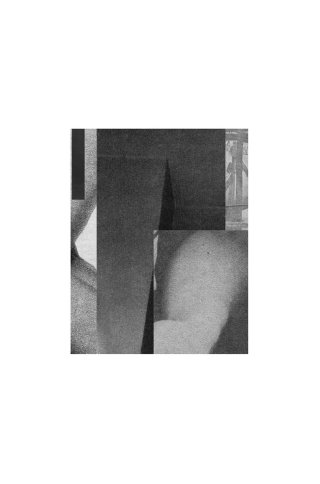 Little is known—or even can be known—about the obscure Belgian project Ivory Trade, whose modest discography is allegedly concluded by this latest release on A R C H I V E. The familiar elements are still at play on Atlas, a “grief settlement in familiar surroundings”: the muffled, fuzzy, marred bits of woozy keyboard ambience and field recordings are as sullenly detached yet beautiful as ever, trapped in languid enclosures of tape hiss and distortion. Most of Ivory Trade’s releases feature covers that frame a simple design with a pronounced white border, a visual representation of the profound claustrophobia evoked by the presence of the music. But it’s not always an unpleasant sense of compression or imprisonment; the more sublime tracks often seem to begin to drift beyond their bounds, faint beams of warm light slowly breaking through a shell of shadow. Atlas, though all in all a quite minimal affair, runs the emotional gamut, touching on murky uncertainty with the title track, bewilderment and queasiness with “Feinting Around the Furniture Like Dog Handlers,” and soothing comfort on “Crystal Dogs”… and that’s all within the first ten minutes of the tape. As it progresses, the music begins to reveal more and more pieces of humanity, and by the end Atlas presents a wonderful summary of Ivory Trade’s work.
Review: Harae Nagoshi – 120-1380 (self-released, Jul 1)
 Translating concrète music to a live environment is difficult, but even more difficult is the task of creating a means for fluid improvisation. Geniuses like Jérôme Noetinger or Jason Lescalleet make it look easy, coaxing the most abstract textures from unconventional sources like their tape machines are extensions of their bodies. And even if a piece is entirely improvised, on a recording it may end up sounding very composed. What I’m trying to say that it is not an easy thing to make this sort of music come across as naturally conjured as, say, a solo improvisation using guitar or saxophone. On 120-1380, enigmatic Japanese sound artist Harae Nagoshi’s latest independent tape release, delicate crinkles, clicks, and cycles flow into existence with palpable spontaneity, framed with well-placed silence—especially in the piece’s sublime beginning—and manual manipulations that reveal the presence of an active participant. Nagoshi’s typical palette of diminutive, tactile timbres is presented in a new light, and near the halfway point of the track the sounds are embroiled in a fragile but undeniably kinetic state of unrest that feels much more unpredictable and immediate than the artist’s previous releases.
This review is based on the digital version.
Review: Yellow Eyes – Rare Field Ceiling (Gilead Media, Jun 28)
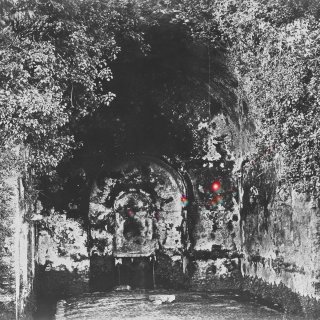 I still remember the first time I heard Sick With Bloom, Yellow Eyes’ 2015 atmospheric masterpiece. With lo-fi grit, a palpable love for nature that isn’t at all forced or cheesy, and constant, unbridled passion, it’s a crowning achievement of the stateside black metal scene. 2017’s Immersion Trench Reverie was a bit of a new direction for the band that I admittedly didn’t enjoy as much, the New York quartet experimenting with psychedelic elements and a new vocal direction, but the emotion and reverence is still there in spades. But even though it just came out, I’m inclined to say that Rare Field Ceiling might exceed the amazing heights of both of these great albums. The record shows the band soaring with a newfound freedom: every evocative, climbing tremolo riff, every hypnotic double bass pulse, every desperate shriek flows forth with spellbinding fervor, an undammed river of nocturnal beauty. I can barely even express how perfect the production is. The album is mixed so well but also shrouded in a slightly muffling, blanketing warmth that imbues the music with a consuming, meditative atmosphere, like it’s blasting from the yawning mouth of a forgotten cave. From the cathartic guitar ascensions of “No Dust” to the angular rhythmic interplay of the title track to the sublime, reserved closer “Maritime Flare,” Rare Field Ceiling is nothing short of magnificent, an enduring triumph.
Review: Sweet Dreams – Insane (Sputo, Jun 27)
 The term “noisecore” is a case-in-point for the futility of genre specificity. Sometimes it refers to the harsh, spastic, often comedic blast miniatures of bands like The Gerogerigegege or Nikudorei, other times I’ve seen it applied to more structured noisegrind releases, and people even try to tack it on to records with a raucous, abrasive brand of hardcore punk… not exactly a well-defined moniker. But what the hell else am I supposed to call something like Insane, a razor-sharp release that (allegedly) blazes through 22 tracks in less than six minutes, all distorted explosions of electronic blast beats, fractured shrieks, and waves of screeching, chunky noise. Like some of my favorite albums in this musical grey area—Sissy Spacek, Unyoga, The Hermeneutics of Fear of God, etc.—Insane uses the warped, blurred grind segments as elements in a twisted collage, constructing a nightmarish sound environment that draws its formidable presence from the unnerving blends of speeds, palettes, and genres. Despite the release having 22 tracks, it’s essentially a single Instruments Disorder-esque maelstrom full of noise in every form. If I had to argue, this is what “noisecore” should really be.
Review: Taiwan Housing Project – Sub-Language Trustees (ever/never, Jun 28)
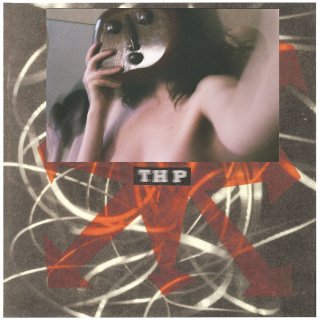 Taiwan Housing Project’s (hereafter THP) incendiary follow-up to 2017’s Veblen Death Mask is more intense, abrasive, and overwhelming than its predecessor in virtually every way. Sub-Language Trustees moves beyond the angular post-punk slithers but retains the raucous garage rock energy, losing a lot of its sanity in the process (a change for which I couldn’t be more grateful). It’s more in the vein of “Luminous Oblong Blur” from Veblen Death Mask, further exploring the stumbling, deconstructed rhythmic structures and grating, Pop Group-esque sax skronk. Kilynn Lunsford’s vocals are as mesmerizing and disconcerting as ever, and the renewed power granted to them by THP’s new stylistic formula is no better exhibited than on opening track “Charitable Fiend,” a nearly five-minute inferno of jagged noise rock carnage. How the band manages to loosen the ties of their music to this extent yet still bring it back together for infectious, propulsive moments like the coda of “Universal Size” is beyond me, but Sub-Language Trustees is so amazing because it makes very little sense. It’s dark, menacing, and completely disjointed at some points, head-bobbingly catchy at others, and the whole thing ends up as one of the most entertaining cases of musical whiplash you’ll hear this year.
Review: Connor C. Ellis – Improvisations with Various Objects, Gestures, and Weather Conditions (self-released, Jun 28)
 Improvisations with Various Objects, Gestures, and Weather Conditions is a wonderful title for sound artist Connor C. Ellis’s newest release, not only because of its inclusion of the Oxford comma or even because of how straightforwardly descriptive it is; the album’s humble heading, track names, and cover art are a nondescript argument for the power of unconventional sound sourcing. Yes, each track is just what its title states, an improvisation using the provided materials, but Ellis touches on truly breathtaking subliminity with his minimal approach, an enrapturing quality only enhanced by the album’s modesty. This direct relationship goes even further when the sounds that the listener hears are made more mysterious by their clearly elucidated source material. This is especially the case with “(water, gravity),” where a tactile soundscape materializes from percussive clicks that, to me, sound much more like a crackling campfire than falling water. Improvisations is one of those special works where singular simplicity is imbued with beauty and emotion via the ears and gestures of a creative artist.
 Noise Not Music