
 From the second the distorted speech sample and growling dissonance of “Empty” tears its way into your eardrums, The Light Dimmed Eternal establishes a dark, oppressive, and absolutely crushing atmosphere that never ceases until the last mud-dripping chord rings out into silence. Though Elder Devil consists of only two members, their sound is dense and weighty, and every note smashes with nothing less than full force. The Light Dimmed Eternal also never concerns itself with relieving the pregnant tension that the staggering, barely-held-together unison hits of the opening track introduce; there are no predictable tempo changes precipitated by speedy drum fills or satisfying conclusions that wrap everything up nicely. Instead, the duo maintains its deliberate, lurching pace even in the fastest blast sections, focusing on the dark and hypnotic atmosphere that they weave through meditative, droning repetition. Stephen Muir’s anguished yells grate across the chunky soundscapes without the hindrance of high-pitched guitars or even cymbals—moments like the coda of “May the Light Be Dimmed Eternal” where a merciless low end is led by Jacob Lee’s forceful tom and bass hits while the vocals fill the remaining void are by far the album’s strongest and most magnetic. The Light Dimmed Eternal is clearly a product of two musicians with a defined vision, a quality that comes across in every minute of its carefully composed chaos.
Author: Jack Davidson
I like to listen to, read and write about, and play music.
Review: Savvas Metaxas – Hypnos (Coherent States, Jan 28)
 Hypnos is the sound of tension, a spiderweb of stretched strings that hum, vibrate, and rattle. This is not to say that Greek artist Savvas Metaxas’ palette was limited to just materials commonly thought of as tensile; instead, he sculpts straining, groaning structures from modular synth and and processed percussion samples to complement the restless scratches of a piano’s inner strings. The hooks that adorn the album cover aren’t just for show—Hypnos takes a step past intense aural immersion into an almost physical domain, trapping the listener in its claustrophobic, carefully woven tunnels. Don’t be put off by the spoken word intro, which took a while to win me over; the sound-world of Hypnos is much more adventurous and ambitious than its opening moments would lead you to believe, and by the time concluding track “Morpheus” rolls around the female vocals are back, this time providing a spectral counterpoint to the shifting mixtures of sound, bookending the tape with hints of escape from its visceral, unsettling intensity. Even just the masterful construction of this work warrants a listen—it’s one of those albums that can only be fully explored after the initial intimidation its density invokes—but I’d go so far as to say that there’s something here for everyone.
Review: Mal du Siècle – Dark Ceremonies Under a Cursed Moon (Death Kvlt Productions, Feb 1)
 If you’ve ever been to an eclectic music shop, there was probably a decent amount of black metal tapes, whether meticulously organized on shelves or stacked haphazardly in a corner. With their ornate medieval fonts, depressive imagery, and overwhelming use of (surprise) the color black, it’s hard for just one to stand out. Dark Ceremonies Under a Cursed Moon fits that tape kvlt triad to a T, but it also hits on another aspect of why buying obscure metal tapes is such a fulfilling pastime: occasionally you find a random one that is just fantastic. One-man Spanish project Mal du Siècle (‘sickness of the century’ in French) doesn’t exactly reinvent the wheel here when it comes to raw black metal, but it’s a homogeneous genre for a reason, and all of the essential elements are here in flawless form. The drums, while obviously programmed, are draped in enough dust to add texture while grounding the airy tremolo riffs in a constant rhythm. They also add a unique propulsiveness to the music, especially on “Martyrium Mysteriis,” which blazes forward on the back of a beefy double bass assault. True to the project’s name, the vocals are sufficiently tortured and full of anguish, communicating the “ennui, disillusionment, and melancholy” that the unnamed artist cites as their musical provocation, even without clearly discernible lyrics. Dark Ceremonies Under a Cursed Moon barely reaches 16 minutes with its four tracks, but by the time the angular 6/8 riff hits right before the fadeout in “Lost Relics From the Satanic Cult,” I’m ready to go all over again.
Review: Chemiefaserwerk – Listening Stations (self-released, Feb 7)
 The France-based tape label Falt is one of the leading entities in contemporary do-it-yourself experimentalism, releasing cassettes wrapped in 8.5×11 pieces of paper that contain a wide range of sound, from highly composed tape pieces to field recordings and even more abstract sources (check out the unusual techniques used to produce Phil Maguire’s Empty Damage for an example). After releasing several of his own recordings on Falt, label head Christian Schiefner (who releases music as Chemiefaserwerk) has begun an independent Bandcamp page for future works, with Listening Stations as its inaugural release. The four pieces provide a welcoming entry point into the ideas that Schiefner examines and evokes with his music, their reliance on the trademark hiss and slightly muffled acoustics of tape playback framing spectral drones and processed recordings. The tracks are subtitled with dates, presumably identifying when each was recorded, an element that introduces an interesting chronology between pieces. “For Midnight Circles” is memorable for its sustained rustling, a recognizable sonority that places the track somewhere between the familiar and unknown, while the untitled work that follows it delves deeper into subdued drones swathed in resonant mid-range frequencies. The title track presents a more fractured structure of tactile sound loops, a counterpoint to the sluggish, atonal collages of “Estaque.” With each release Schiefner seems to further refine his technique, steadily becoming more virtuosic in his stitchings of sound and noise; and therefore I couldn’t recommend following his new page more.
Review: Giovanni Lami – Sinalefe (Thalamos, Feb 12)
 Giovanni Lami’s unique brand of musique concrète has an energy that is all its own. 2016’s Bias, an unmatched modern masterpiece as far as I’m concerned, distilled Lami’s examinations of degradation and interference to a brooding, nocturnal palette of immersive sound. This work is continued on the Italian sound artist’s more recent releases, notably last year’s In Chiaro / In Guardia and here on Sinalefe. The short tape is comprised of an intimate pair of pieces, their unassuming and subtle presence concealing that inexplicable dark tension that haunts so many of Lami’s compositions. “I” settles into an uneasy drone of quiet rustling and mechanical hum, slowly unraveling as stuttering VLF frequencies unseat the delicate balance of textures. The track only becomes immersive as it progresses, reaching fragile catharsis with the introduction of spidery, high pitched tones and mysterious rustling. A truly uncanny marriage of timbres is achieved here, creating a hypnotic and meditative soundscape that makes the side’s abrupt end even more disarming. “II” begins with a muffled field recording before growing into an even more harrowing mixture of electric crackles and metallic resonance. Lami really seems to be closing in on a style that I could not be more excited to hear more of, and I can’t wait to see what he conjures next.
Review: Diane – The River by the Tree (Jungle Gym, Feb 8)
 I’ll never get tired of artists making music associated with green. At its heart, it’s a color that we equate to nature, environments, the living world around us, a source of sound and energy that will never be fully explored. The River by the Tree is an album that’s based heavily in the natural world, from its vibrant, mossy cover to the birdsong and flowing water that frequently emerge in its palette of sounds, but it also keeps itself at a respectful, reverent distance, examining a lush landscape through a lens of careful processing. The shimmering drones that newcomer project Diane crafts on this tape encase their organic sources much like the reflective surface of the water in the cover photo, initially obscuring with a protective shell of effects and alterations before the unmanipulated elements appear. Each of the three tracks is given plenty of time to breathe and expand naturally, especially the concluding “September,” whose quiet, meditative ambience allows soft guitar, dove calls, and bubbling brooks to slowly unfurl as the piece progresses. I can see The River by the Tree functioning both as a reminder of nature when it is far away and as a subtle augmentation when that rich green world is right there in front of you.
Review: Various Artists – Free Percussion (Tsss Tapes, Feb 6)
 Free Percussion, the inaugural release on Francesco Covarino’s fledgling Tsss Tapes imprint, collects recordings by twelve abstract percussionists, each presenting an unrestricted improvisation using anything from a standard kit to toy instruments and bells. Claire Rousay, a San Antonio-based artist examining a wide range of concepts through her music, begins the set with an object-based kit performance whose unchecked scrapes, swirls, and rolls are mirrored by similarly whimsical later pieces such as Simon Camatta‘s “Concrete Love.” This is the best part about Free Percussion, that it both distinguishes and exposes similarities in these singularly creative musicians; comparisons can be drawn between the Tinguely-esque junk cacophony of Ted Byrnes’ “No” and the fluid drones explored by Tim Daisy on “For Ogden,” a kinship strengthened by their adjacent placing in the track list, even though it’s not as easy to conclude that the artists had anything alike in mind when they began playing. In addition to introducing and tracing connections between artists new to me, Free Percussion also gives me the opportunity to view pieces by my favorites in the context of their contemporaries; the intimate object orchestras of Rie Nakajima, the instantly recognizable malleted cymbals of Will Guthrie, and Covarino’s own quiet drags are even more captivating amidst kindred works.
Review: Vortice Group – Vortice Group (Anahuac Editions, Feb 1)
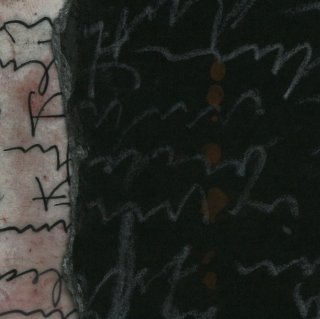 The ambling tracks that comprise Vortice Group’s self-titled debut release are constructed with a framework of loose drum machine loops that stumble and stutter underneath flowing melds of acoustic instruments, distorted spoken word, and samples. Rhythmic elements in such fluid, abstract music are difficult to get right, and it’s refreshing that this mysterious quartet treats their lurching percussion cells as just another component in these diverse and surreal collages. The four tracks on side one are mainly focused meditations on single ideas, with the band allowing each to progress through very subtle alterations. “Wind Rises From Somewheres” sets the scene with its flimsy synth bloops and delay-blanketed clips of metallic clattering, occasionally allowing these respirating textures to interlock with the spidery drum machine sample. The remaining three continue to experiment with similar sounds, and even though they are documented as separate tracks the side feels like a single entity that seems to slowly and beautifully decay. From the derelict ruins of the whimsical first half comes the much more withdrawn and immaterial second side, its formless forays into droning woodwinds and conversational improvisation bisected by a stretch of unaccompanied field recording that captures the tape’s atmosphere well with muffled clunks and gritty analog hiss. Vortice Group is an evasive debut effort that defies classification, and would be greatly enjoyed by fans of acts like Good Area, Parlours, and The Shadow Ring.
Review: For Your Health – Nosebleeds (Middle-Man, Jan 28)
 Emotional hardcore offers up catharsis in a variety of forms. Some bands express feelings and atmosphere through rough, throat-tearing screams and blast beats, while others stick with melodic guitars and earnest, to-the-point lyrics. For Your Health, a promising new quartet from Columbus, OH, bursts out of the woodwork with guns blazing on both of those fronts. The short-and-sweet (well, depends on your definition of ‘sweet’) Nosebleeds 7″ is their first studio release, and sees the band cutting their teeth across the gamut of screamo music. The seven tracks, the longest of which barely reaches two and a half minutes, garner their powerful, almost overwhelming emotional weight from moments of both twinkly beauty and eviscerating stretches of violent, percussive freakouts. The quite straightforwardly-titled “FUCK ICE” emerges from a well-placed sample into an accelerating cacophony that drips with delirious anger, and is the peak of the furious whirlwind that’s conjured by the first five tracks, before the wistful singalong of “Second Aid Kit” and patient repetition of “Exit Flesh” bring it all to a satisfying conclusion. Every time I finish this thing I find myself bewildered by how little time has actually passed since I put it on, because in just eleven minutes these guys put you through a gauntlet that feels a whole hell of a lot longer (in a good way, of course).
Physical copies of Nosebleeds on 7″ vinyl and cassettes will be available here in March.
Review: Fletcher Pratt – Rituals for Magnetic Tape Vol. 1 (Never Anything, Feb 3)
 With Rituals for Magnetic Tape Vol. 1, Oakland-based sound artist Fletcher Pratt evokes the spectral compositions of early tape music pioneers such as Xenakis and Ferrari, with a distinctly modern element of improvisational fluidity. “Ritual 1,” the sole track on the tape, adopts an approach faithful to the original principle of musique concrète—that is, everyday sounds and noises are transformed into something new and unrecognizable. Pratt’s skillful spindle work largely obscures his (probably) wide range of sound sources, molding and melding raw recordings to produce ghostly drones, synthetic pulses, and virtuosic blasts of frenetic blips. There isn’t a single part of “Ritual 1” that sounds anything close to organic, but it is far from feeling detached or sterile. Pratt manipulates his auditory arsenal like an urgent sculptor, raising abstract yet physical constructions from suspenseful silence. It really does sound like a ritual of some sort (though not one that I’ve ever seen); most of the elements are quite percussive, and the way each is sequenced or combined with the others is where the piece draws its mysterious energy. Rituals for Magnetic Tape Vol. 1 is both a breath of fresh air and a reminder of everything great about the early stages of these widely used techniques. I really hope that this tape being subtitled “volume 1” is an indicator that there will be many more installments.
 Noise Not Music