
 If they maintain the schedule that’s been steadily expanding since the turn of the century, the Monk will reach choc.600 by the end of 2023, and be well on the way to 1000 at the decade’s close. The beloved label’s endlessly circulating potpourri of new music is always more buffet than multi-course sitdown, offering up oodles of options for those whose honkers are drawn to the smell of must and spittle (but of course no champion chomper will be left unsatisfied should they devour it all). Some artists’ work is on the whole more at home here—Cody Brant, Bob Desaulniers, and Shareholder are some personal favorites of the usual suspects—but with a CM rag any and all roads seem to lead to the same nexus of oddness. Eight Knots Bathing is Hardworking Families’ first tack on the Chocolate board and also a fresh next step, migrating from the humming micro-electronics of the past few releases to an anything-goes collage approach that revives the raucousness of stuff like BA / LS / BN. It’s more lackadaisical than that one, though, lethargic almost, as stumbling and sluggish as it is spry and spacious. Opening cut “Last Day” is the longest of the titular eight knots and also perhaps the most memorable, dual-functioning as a sampler for the countless textures and locales we’ll visit in the ensuing seven. While loose, the sound-stitching isn’t particularly careless or overtly surreal, nor are any of the recordings themselves processed beyond recognition, and yet there is a sort of dream-logic that prevails over the proceedings, a frail fugue that ends in beautiful, warm quietude with “Firle Harmonics.” Many thanks to Constance/Nyoukis and their confessed “pestering” that made this disc happen—it was worth it.
Category: Reviews
Brief summaries intended to describe and express my enjoyment of albums. My opinions are not the focus: I purely seek to facilitate discovery.
Review: Matthias Urban – Intermission (Ultraviolet Light, Jan 30)
 With still-memorable past releases such as SiAl and Half-Silvered Mirror, Austria’s Matthias Urban has established himself as a maestro of immersive, meticulously detailed sound of all sorts, from the more direct phonographic approach of the former to the lush concrète assemblage of the latter. The artist’s most recent tape was just released at the end of last month by Ultraviolet Light, and though the new material unsurprisingly clears the high bars set by its predecessors, it is also very fittingly UVL (i.e., ambitious, posthuman, utterly unlike anything you’ve heard before). With a straightforward enough mission statement—“Collages of algorithmic compositions, saxophone / voice / prepared piano improvisations and AI human-machine interactions. Realized and processed with MaxMSP, various other DSP, ASC tape recorders and chemical tape treatment”—Intermission is indeed once again concerned with space and scale, an almost gleeful dismantling of the boundaries between the smallness of individual objects/instruments and the staggering size of the dissonant Katamaris they’re rolled into. Even when the more conventional harmonics of the sax and key fragments come into focus, Urban’s ear is always for the tactile, sending percussive textures askitter whether he’s performing or processing.
Review: Witches Bitches – Witches Bitches (self-released, Feb 2)
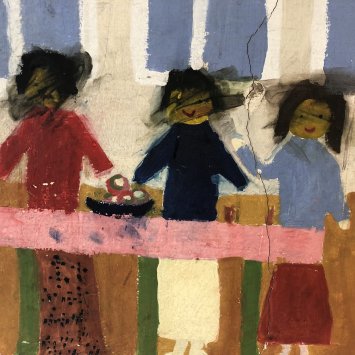 Witches Bitches. Witches Bitches Witches Bitches. Witches Bitches Witches Bitches Witches Bitches Witches Bitches Witches Bitches Witches Bitches Witches Bitches Witches Bitches Witches Bitches Witches Bitches. WITCHES B
Had to get that out of my system first. But there is something thematically relevant about a phrase or sound invoked ad nauseam to the point that its once-intact meaning starts to slough away. The anonymous Polish newcomers’ approach isn’t strictly repetitive or nonconversational a la early AMM, though they do generate austere rackets as intense and insurmountable as the Gare-heavy bonus tracks on the 1966 CD release; nor do they seem to concern themselves with conventional improvisation tropes, rejecting tried and true structural stencils for obtuse, uncooperative cacophony. In this debut set the unknown number of participants (sax? electric guitar? ritual sacrifice???) seem to at once extricate and embrace beauty in their individual contributions, in all appearances actively trying not to build toward anything yet also not shying away if it happens on its own. Ravaged by constant artifacting and distortion, the lo-bit recording is unruly in a truly essential way, filled with countless contradictions of which I’ve only acknowledged a few. This is the music we were always warned about.
Review: Chad M. Clark – Vast Mass (Distant Taxa, Feb 3)
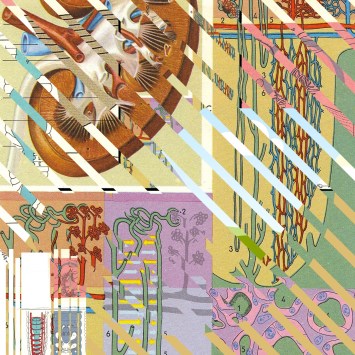 Vast Mass, perhaps even more so than its equally catchily named and colorfully covered predecessor Cashmere Spheres, is consistent with a wider trend in post-Bailey “total guitar” improvisation of engaging not only with the full extent of the instrument’s physical soundmaking potential, but also with external sounds and textures that align with the central action—Ash Cooke/Chow Mwng dubbed his own particular approach “Gwrth-gitâr,” drawing in chunks of inspiration and serendipity from outdoor environments and nonmusical objects. Chicago’s Chad M. Clark shapes even more complexity through the use of multitracking, overlaying, and collaging, stuffing each track full of countless layers that nonetheless seem to have sprung from the same place. Even when brief flurries of sax skronk or frantic arco surface in the stew, even when the spiderleg bridge taps and rattling plectrum scrapes feel so alien they couldn’t possibly have been produced with a guitar, every audible sound embodies and emphasizes the central, irresistible tension that keeps ear after ear returning to records like Aida more than forty years later (and who knows, probably this one forty years on): the strain and wrack of strings stretched taut, the aching gasp of a half-formed harmonic, the creaking breath of the wood itself.
Review: Vid Edda – T.O. (Sensorisk Verden, Jan 27)
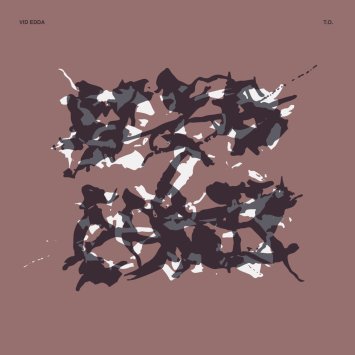 Vid Edda’s tenure has largely unfolded alongside the operation of small-batch specialty imprint Sensorisk Verden, run by Alexander Holm, one half of the Copenhagen duo with Chris Shields (Ro). Fittingly, the restrained eclecticism of their approach to electroacoustic music is almost a comprehensive synthesis of everything SV is concerned with, represented more specifically by other artists and projects: vocal abstraction and text-sound (Claus Haxholm/Soft Items), acoustic drone (Tabloid), spectral soundscaping (Vincent Yuen Ruiz), etc. It’s been more than four years since the sleeper hit Geneves Mi Sansi on Anathema Archive, and T.O. is accordingly novel and fresh-sounding, without the sketchbook scatter of its predecessor; the immersive texture collages, still always toeing the line between analog and digital concrète, reveal a new interest in sound design and spatiality, to the point where I could see many of these pieces (especially “Skygge Flakser”) being just as mesmerizing as multichannel acousmatic installations as they are through regular speakers or headphones. I suppose that’s always sort of been the appeal of Vid Edda, the unique double dose of warm-blooded human input and austere computer-based processing, but T.O. climbs to new levels of singularity. What is voice, and what is just sound? Is that even a meaningful distinction to make?
Review: Greymouth – Can Run (Cost of Living, Jan 27)
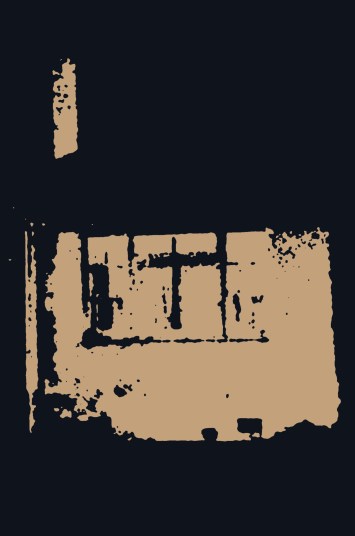 The spirit of Quemada Records lives on in Japan-based duo Greymouth and their consistently inventive output of squirrely anti-rock and tape-tracked outsider dross since 2015’s self-titled debut LP. That being said, Can Run might be their least rockin’ material yet, and certainly features the most uninterrupted improvisational stretches they’ve released. With the stuffy backroom tabletop feel and the use of both conventional instruments and objects/electronics, much of this tape feels more like a toy-chest Teletopa than the previous echoings of Armpit or Witcyst, and that, unsurprisingly, is A-OK with me. The majority of the two twentyish-minute sides, though not exactly filled with high-fidelity stereo width, plays as if one were sitting in the center of a shed while Anderson and Sadgrove make their slow, deliberate rounds along the rows of plastic synths and tape machines and tchotchkes, setting a loop to unspool here, fiddling with a dial there. It all seems to lead somewhere and nowhere at once, an aspect that is perhaps clearest on the B side, which sounds like a whole lot of (albeit beautiful) water-treading, until guest vocalist Motoko Kikkawa—who has previously recorded with excellent but unsung collaborators (and house favorites) Lee Noyes and Radio Cegeste—enters the fold and you realize how much everything has progressed. Yes, this is probably the project’s most abstract work, but no matter how many remnants of recognizable “music” are or aren’t present, Greymouth always fully draw me into their ramshackle little world.
Review: Zbyszko Cracker / MAURICIO – Shovlin’ (Grandmother’s House, Jan 13)
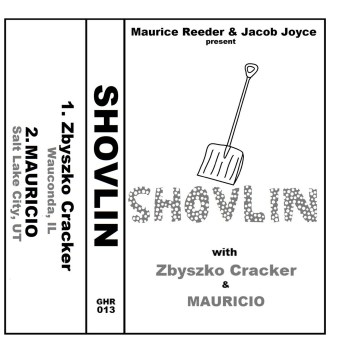 Despite the not-quite-welcome reminder of the alarming fact that New York hasn’t seen snow this entire month, the sequel to 2021’s Mowin’ I didn’t know I wanted—no, that’s not right; the sequel I wanted but didn’t think I would ever have—is a wonderful way to start the year. Just as literal and straightforward as the first installment, Shovlin’, this time on slim-cased CD-Rs (with a j-card as the cover, which is never my favorite choice, but it works better here than it does in most other contexts), documents each of the same two toilers reverently performing their seasonal housework, this time amidst the crisp crunch of wintertime. Wauconda, IL’s Zbyszko Cracker’s scooping session is ten minutes longer than the entire Mowin’ tape, and even though that one wasn’t in a hurry either by any means, it feels more spacious and mobile, yet also closer to the cold tactility of the ground rather than the heat-hazed, clipping-flecked summer air, even as heavy winds max out the mic from time to time. Presumably having to cover less ground in Salt Lake City, MAURICIO (credited as MO on the last go-round) works up quite a cacophony, the forceful stabs and scrapes of the shovel edge locking into brief but deep rhythms, lending some—but not all—of the satisfaction that comes with clearing a whole section of besnowed concrete to the listener as one hears patch after patch of the stuff being peeled away.
Review: Shadow Pattern – Outside Inside (Inside Outside) (Radiant Clay, Jan 13)
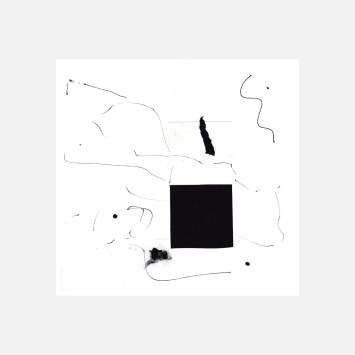 It’s been a while since I was last a devoted field recordist, both because I now mostly prefer to just appreciate sounds in the moment and because there are just so many other people much better at it than me. Outside Inside (Inside Outside) is a beautiful reminder of that, a slipshod but nonetheless fluid audio journey that somehow manages to mean just as much to its listeners as it seemingly did to its capturer. I believe this is the first proper full-length from Shadow Pattern, one of the more abstract projects of Nathan Ivanco’s that has surfaced on various Hamilton Tapes releases, Various soundwalks, actions, improvisations, and some less intentional-sounding bits recorded over the course of two years are spliced together into a muffled mélange that’s both captivatingly narrative and comfortingly trivial, birds and voice and bells and violin and all of the ephemera in the space between. The artfully careless blend of observance and performance call to mind other favorite artists doing similar work—Max Nordile Hair Clinic, Ruda Vera, Staubitz and Waterhouse—but the organic scrapbook synthesis sets Shadow Pattern apart, cellotaping otherwise disparate clippings to the level playing field of magnetic tape. It’s only January, but it’s hard to say if the rest of the year will offer up anything as gorgeous as the middle section of the B side of this LP. Pure magic.
Review: Yama Yuki – Tufan (Impulsive Habitat, Dec 5)
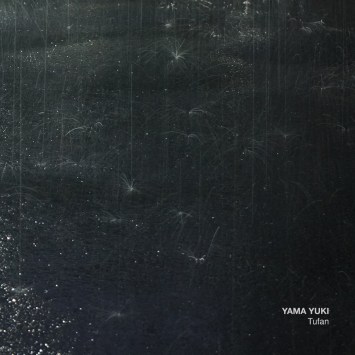 Mie-born, Tokyo-based sound artist Yama Yuki deserves my thanks not just for the generally excellent phonography on display here but also for reintroducing me to Impulsive Habitat, a netlabel I’d previously encountered through Alma Laprida’s Teleférico and then promptly let slip from my memory. Each work is fully Creative Commons–licensed and available for free lossless digital download—something that, if you’ve been following this site for any length of time (let alone the past year), you know I appreciate. I was also drawn to Tufan because of its duration. Approximately 3″-length single track releases are an ideal medium for field recordists, the perfect amount of time to develop the character of the captured or created environment with just the right amount of progression. Yama’s latest, recorded over the course of 24 hours after a typhoon made landfall, is all about rain, from the soaking, blurred rhythms of torrential downpours to the soothing drone of a receding storm. At first it’s hard to tell if the latter is what’s occurring at the outset of the piece, the sounds of a wet night bifurcated into closeby droplets and a distant low din, but the two elements soon seem to phase in and out with each other, sometimes layering into a full immersive experience of both humans and nature getting drenched, other times refurling into their disparate state, as if the observer has just stepped under an awning or onto a porch. The stereo breadth is fantastic, allowing for the most fleeting of brake squeals and digital interference to seep in on each side, but Yama also knows when to yank it away, which is an experience I’d rather not spoil (you’ll just have to listen). It speaks volumes of the artist’s skill and sensibility that such an ambitious concept statement is successfully conveyed in just 23 minutes:
This track was created as part of my study to understand how intensely humans and surrounding objects/beings are subjected to external natural forces. If you happen to be outside during a natural hazard, there is no way you can avoid being involved in it. Throughout human history, we have continuously tried to protect ourselves from the force of nature, but that is still an impossible task, and we always find ourselves vulnerable to it. In this work, I wanted to explore the theme of vulnerability of human existence within this world. Tufan means “rainstorm” or “flood” in Turkish and it has its origin in Arabic, but similar words are found in many languages, including the Japanese “Taifu.”
Review: Various Artists – PP-01 (Party Perfect!!!, Dec 2)
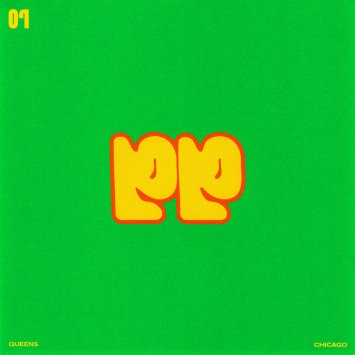 For the debut release from new Chicago- and Queens-based arrival Party Perfect!!!, three contemporary sound artists and one duo—Hunter Brown and Dominic Coles as Other Plastics, whose Overtime Liquor I reviewed here in 2020—each contribute an album-length section to a massive tetraptych compilation, simply titled after its own catalog number. It’s an interesting way to take the first step, and intuitively seems to center the label as just as much collective as imprint. What’s more, each self-contained work fits both thematically and sonically with those that come after and/or before, making a full listen a lengthy but worthwhile endeavor. Despite the duration, boredom isn’t really a concern here; composer and improviser Michelle Lou’s untitled suite of four tracks kicks off with a bang, ripping ragged digital knives through plasticine barriers, filling the field with thick glitch storms that break into sawtooth drones and quieter, sparser realms. The MEGO-esque maelstroms continue with The Arranger, a machine-listening algorithm written and performed by Stefan Maier at Haus der Kulturen der Welt in 2018, which has all the volatile, stochastic kinesis of Florian Hecker’s noisiest records with the heady conceptualism of his more recent work. Both “diffusions” of Maier’s piece, one via speakers and the other via headphones, are absolute joys to experience, the movements so manifold I’m convinced the code is somehow processing more than just itself.
By far the briefest segment, multidisciplinary artist Michael Flora’s Emergent Spectra covers immense ground despite the short lengths of the title tracks and the constricted minimalism of a pure data palette. Some of the sketches, namely 004 and 006, blow through a half-hour’s worth of complexity in less than a minute, the wrenching cut-ups and hard pans leading up to the starkly linear progression of “Folded Spectra.” The stretch of sterile synthesis is followed up by what is perhaps the most “human” of the quadrants, a field recording–based effort by Other Plastics to reveal “the rhythmic profile of various forms of contemporary leisure.” almost leisure has a much more defined thesis than the duo’s traditionally improvised debut, its sprawling sound-map of decontextualized conversation and spatial wormholes evoking the uncanny humor and illuminations of Network Glass’s Twitch user anthropology. As is probably clear by now, any of these could easily hold its own as a distinct release, but I think PP-01 is greater than just the sum of its parts.
 Noise Not Music