
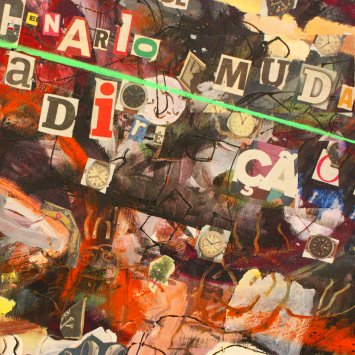
 A particularly unruly gaggle of radios set up for a performance of a Cage piece acquire group-sentience and produce a “composition” of their own in Colagens, a rare new entry in the solo catalog of Portuguese artist and curator Filipe Leote. The music is pristinely rendered in full digital clarity, and yet this still very much feels like something contemporary-in-spirit with the most eclectic of the mail-art titans (indeed, other adventures in the same vein can be found in Gen Ken Montgomery’s recent Unknown Destination). After the brief opening fanfare of “Jingle,” Leote draws us into an enrapturing, narrative collage of everything from detailed car-horn symphonies and dense pseudo-concrète melanges to disaster alarm systems layered alongside irreverent synth-punk and speeches. At the risk of making too many comparisons—though the rich, indiscriminate approach taken here seems to engender such things—“Revolução Industrial” is very Negativland in its deliberate yet abstract pace and blurring of contrast and homogeneity. But, thankfully, that’s not limited to just that track; “Meddley” features even more unholy juxtapositions and a stretch of porno moan speed-switching that would make even Joseph Hammer blush, while “XTC” unfolds like a radio play of a carnivalesque apocalypse, all ominous rushing winds and helicopter blades and maniacal delirium and other assorted bits of chaos. By the end you’ll feel like you’ve walked a thousand miles, but perhaps (probably) only in a circle. Colagens is what we’ll hear when we finally spiral as far down as we can go.
Category: Reviews
Brief summaries intended to describe and express my enjoyment of albums. My opinions are not the focus: I purely seek to facilitate discovery.
Review: Faces of Death – 1977 (Sour Tapes, Dec 31)
 December of what is now last year ended up being a formidable month music-wise, but I think my highlights were reasonably well-represented in the end-of-year coverage (thanks to everyone who read or shared, by the way), but my 2022, for better or worse, begins with one last decrepit relic from the rotten past. I’ve been a fan of Sour Tapes ever since I picked up Slacking’s Tape Cramp and Mallard Theory’s Duck Soundtracks, both entries in the label’s excellent ongoing Pittsburgh Noise series, in a random Discogs spree, but two new pairs of blasts from fresh-out-the-oven project Faces of Death, specifically 1977, have me more excited than anything else they’ve put out. Extreme stereo-field fuckery is something I’ve come across a lot of recently, and it’s something that’s so easy to mess up (and so often is), but both sides of this tiny tape totally make it work: the first sends percussive industrial blasts screaming from the left-confined void to counter the piercing squall of the right, while the second decays from a mesmeric sheet of full, high-pitched harsh and what sounds like distant vocal sources into a bifurcated, left-favoring nightmare. It feels so much longer than the less than eight minutes it is, and yet it’s so endlessly replayable, somehow always offering up new undiscovered quirks. $10 is a bit much for a tape in my opinion, but it is only a run of eleven, so if either or both of your connection to this music and your wallet are larger than mine, I say go for it. Satisfaction guaranteed.
Review: TUSK – Cotard (self-released, Nov 21)
 Not unlike Sidon Coleman’s The Box, which I reviewed last month, Mansfield, OH newcomer TUSK’s digital debut is an eclectic, slipshod collage covered in countless sets of one person’s fingerprints. Though the album’s title might imply its contents are more subdued or drone-based (in the vein of Depletion’s Cotard Delusion, perhaps), Cotard, despite most of it not being overtly abrasive or frenetic, feels shifty and paranoid, always either crawling toward the next sonic episode with plenty of furtive over-the-shoulder looks or writhing within the current one to the point of complete exhaustion. And “exhaustion,” it turns out, is the name of the game here; much like the altered perceptions of those diagnosed with its namesake disorder, this release is anemic, artificial, torpid, dead. The unnamed artist behind the TUSK alias wields a reasonably diverse repertoire in the form of guitar, drums, samples, and “guts,” yet each of the nine tracks is a tightly contained, often oppressively claustrophobic exercise in raw auditory minimalism. The beginning of “Basement Couch” is a misleading bit of bubbling brightness before we make our slow but sure descent below ground, where TUSK manages to scrape up the most lifeless of textures: limp thrift-store amplifier worship on “Fuck Around n Find Out,” barely audible bass frequencies on “Subconscious,” paper-thin trash electronics on the lengthy “Focus on Yr Inner Beauty.” While the whole thing is great, it’s the last few tracks that truly seem like something special, particularly “One More Stormy Night.” I am God and He is dead.
Review: Old Saw – Country Tropics (Lobby Art, Nov 19)
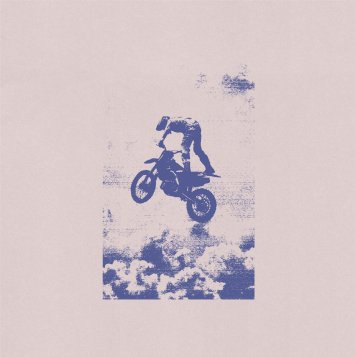 After a thoroughly demoralizing week, this gorgeous debut LP from motley instrumental collective Old Saw came at exactly the right time. Guided by the meditative drifts of composer and sound engineer Henry Birdsey’s steel guitar (both lap and pedal), the sextet also features Ira Dorsett on fiddle, Bob Driftwood on banjo, Rev. Clarence Lewis on pipe organ, Harper Reed on guitars, and Ann Rowlis on bells. I briefly wrote about the elusive category of devotional music in my Dun Sug review a few days ago, and the introductory text to Country Tropics continues the conversation much more eloquently: “However, devotional music is not solely concerned with a skyward glance—what does it look like to raise up the rust, look upon fractured branches, gaze at the density of a low fog across a field? Instead of us looking up at the land, what if the land was looking back at us?” In this way, the delicate ambience woven by these skilled musicians is not simply made up of reactions to or harmonies with each other, but also individually and wholly comprises responses to the beauty of the world around them.
The liner notes again hit the nail on the head when they describe how “the crew stretches and bends chords to their resting place”; though these four loosely structured pieces ascend to great (yet still humble) heights with elegiac laments, subdued textural swells, and pillowy climaxes like the pale winter sun emerging from the grayness of the sky, they are all also profoundly anchored odes to the earth, peaceful appreciations for the rocks and plants and water and soil that will eventually become our resting place. What’s more, it’s as if each track is designed for each performer to shine: “Dead Creek Drawl” trusses triumph with Driftwood’s evocative rolls and thick beams of radiance from Lewis’s organ; “The Mechanical Bull at Our Lady of the Valley” draws primarily from the interplay between Reed’s fingerpicked nylons, Rowlis’s bells, and Birdsey’s seraphic phrasings; “Dirtbikes of Heaven, Grains of the Field” opens the skylight for Dorset’s emotional bow drones to soar through; and “Chewing the Bridle” is a unifying tour-de-force for all six musicians. Music for those who have ever hit a huge jump on their bike and briefly wished to remain suspended in the sky forever, but then immediately after that wanted nothing more than to return their feet to the ground.
Review: Blood of Chhinnamastika – Black Dakini (Enforced Existence, Nov 17)
 Though I originally found the label via some of their tape releases (Reid Karris’s Obscure Sorrows, Tissa Mawartyassari and PBK’s And the Angels Wept Upon Descent collaboration), it’s the humble, handmade CDr editions of RY Myato’s Enforced Existence that are a reliable and consistent source for new music I love: xfeverx’s spellbinding, gestural Trans Body Music; the tactile textures and automated percussion of Jo Bled’s Cleanses the Way Stars Open; and Malice in Their Hearts, a radically reticent set of walls from eternal genre keystone Dosis Letalis. Plus, each will only set you back $3. Yet another great entry has arrived in the form of Black Dakini, California cut-up curio Blood of Chhinnamastika’s newest material: five sprawling tracks that unite several infernal tentacles of stylistic exploration under a single apocalyptic atmosphere. The relatively succinct title track makes a conspicuous entrance with high-velocity stop/starts and brutish live noise collaging that measures up to the best, while “I Was Tortured” takes a vastly different route into a hellstorm of hallucinatory power electronics and seething psychedelia. Though the frenzied aural punishment of “The Terror of the Expansion of Consciousness” may be the album’s centerpiece, both parts of “Offering Into the Fire” present plenty of squalling lo-fi goodness.
Review: Dun Sug – Chump (self-released, Nov 17)
 Yet another killer enigmatic project emerges from Leeds in the form of Dun Sug, who after a pair of single track releases has dropped their debut album both digitally and as a “decent cassette” edition of ten. A never completely reliable but mostly consistent rule of thumb is that the smaller the physical run, the weirder or more interesting the music, and thankfully Chump is not an exception. Each of its six sketch-like tracks feels like a profoundly personal exercise, sort of the musical equivalent of “looking out to look in” (and thus it deserves the oft-misused “devotional” tag on Bandcamp much more than most): opener “Rut” is a dense, swathing realization of some echoey indoor area, both spacious and claustrophobic with its counterpointing of expansive reverberations and up-close metallic scrabble; “Snicket” is a fibrous, insectile concrète exercise reminiscent of my favorite material from every anti-music hermit’s eternal inspiration, Yeast Culture; and “Crank” is a reticent excursion into gestural object improvisation. Though the tape never abandons its earthy, homemade appeal, even more ambition manifests in the captivating final three tracks, particularly “CDz,” which traces a thinly sliced skeleton-scape of hiss, shuffle, and paranoiac sublimity. For fans of Dan Gilmore, Small Cruel Party, Angelo Bignamini, and nighttime games of hide and seek.
Review: K.W. Cahill – Two Films (Power Moves Library, Nov 15)
 In March 2019, I walked about ten minutes down a hill from my house at the time to see Sigtryggur Berg Sigmarsson play. I still remember much of that night, even minor details, because perhaps more so than any other live set I’ve witnessed, the power and significance of Sigmarsson’s has increased dramatically in retrospect. For those who haven’t seen this particular performance, I would highly recommend watching it; not much actually happens—he vocalizes for about ten minutes, his unintelligible utterances filled with the frustration and misery of someone whose communication cannot be understood, and then puts on a record that plays an abrasive industrial loop as he stumbles back and forth across the stage—but there’s something profoundly human (and therefore profoundly upsetting) about it.
K.W. Cahill’s Downer Canada TCVP (2021), the first half of the Two Films digital/video/cassette release, feels similarly primordial and circadian, but instead of burrowing to the root of existence it examines its superficial features and what might lie behind them: idyll waterfronts, gestures, quiet in-betweens. Despite its episodic structure, the piece feels ultimately circular, tautological even, with every vignette spiraling out with the hidden dramas of the mundane and then curling in again to seal the opened moment back up. Unlike with Sigmarsson’s approach, the bleakness of life is both magnified and hushed to a murmur here, or perhaps stripped down to a piercing whine while motion, now completely decontextualized, continues in its wake.
 In the case of The Fixed Author (2021), immediately a more cryptic and reticent effort, the audio track unfortunately might be more compelling without the visual element than with it; most of the sequences just feel stretched beyond their capacity for significant evocation. There are moments of brilliance in both movies, like the whirling lattices and foregrounded objects in Downer and the shot of the butterflies through the tree-hole in Fixed, but otherwise there are too many indulgences to wade through—the car ride tracking shots, probably filmed with a smartphone, are uninteresting to say the least, and the color filters are often just excessive. Overall they feel more like materials for a larger multimedia installation than self-contained objects, and perhaps that triviality is part of the point, but it just didn’t work for me.
To anyone interested in either experimental music or film—despite the many commonalities and points of intersection between the two areas, I know very little about the latter—I highly recommend checking out this hybrid-format release. Despite my nitpicks (sorry; when it comes to my eyes, I can’t help it), K.W. Cahill’s work here is fantastic and inspired whether you’re listening to it or watching it. Support guerrilla art!
Review: Hoggle – The Knockers (Mercium, Nov 15)
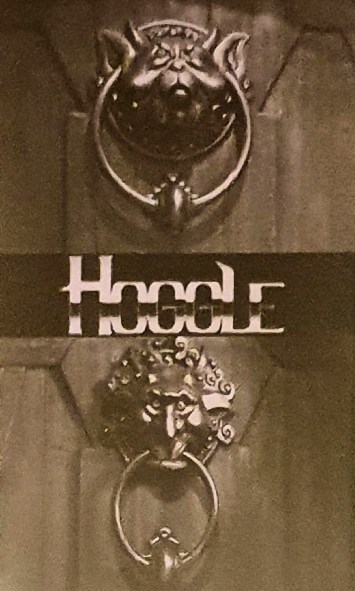 I’m not really sure why I like Labyrinth so much. Connelly’s performance is strained, the Muppet voices sound like they were recorded by kidnapped local theater performers held at gunpoint, and of course no one really wants to watch David Bowie acting out a fictional fantasy version of his ephebophilic predilections with his junk practically hanging out. But it’s also a fun, mostly inoffensive nostalgia-fest, and even decades later is still inspiring tangential works of art, like this tape by Longwood, FL project Hoggle, named for the crotchety dwarf that serves as Sarah’s guide through the labyrinth. Since 2019, releases have appeared sporadically on Altar of Waste, Muzikaal Kabaal, and Okto Media, and now, with what is perhaps the artist’s best material yet, on the Copenhagen-based Mercium imprint. Each of the four slabs introduces itself with a different sample from the movie, each centering around the door knockers scene, probably one of the more iconic examples of the knight-and-knave trope. As far as the walls themselves go there’s nothing too startling or revolutionary, but even though they’re mostly confined to mono, the punishing noise still jets through with incendiary force and energy, sometimes resembling a brutal torrent, other times an all-consuming spiral. While there’s much to be said for the inventive sound design and compositional techniques that make modern wall noise so compelling, The Knockers is a reminder that the classic approach is never a bad idea. Make sure to stick around for the whole thing; “Despite Protest, the Ring Must Be Replaced to Knock” is a real treat.
Review: Carlos Issa – A Beginner’s Guide to Objeto Amarelo (scatter, Nov 11)
 A Beginner’s Guide to Objeto Amarelo, though not nearly as abrasive or uncompromising as fellow South American Daniel Iván Bruno’s Brazo, still somehow shares that album’s intimidating, radical defiance, which can only be born from a meticulous, singular de- and/or re-construction of musicality into a completely new dialect. This short digital release from the recent netlabel formation of the indefatigable scatter label collects “miniatures” produced by Carlos Issa for his long-running Objeto Amarelo project between 1999 and 2019, and is even more eclectic than such an extended creation period implies. From what I can tell there’s little to no chronological order, either, so you get jarring transitions like “A Ocasião,” recorded circa 2018 for the Segundo Prédio Irmão CDr, into “Três Terríveis Rios,” a much more conventional oddball synth cut from 2006 (though it didn’t appear until 2019’s Três Terríveis Rios). It seems like this arrangement would make for quite a whiplash-heavy listening experience, and to some extent (but not a bad one) it is, but there are also plenty of tracks that gradually begin to fill in the gaps between the two aforementioned phases of Issa’s style, like “Sinal” and “Muita Polícia Muita Diversão,” which combine the unlikely pairing of minimal drum machine rhythms with searing, clinical computer noise to spectacular effect. There’s so much more to discover, so I don’t want to spoil much more (it is a beginner‘s guide, after all), but do know that “Americanos com Problemas” bears an uncanny resemblance to the more recent music of a certain Venezuelan visionary.
Review: Guttersnipe – Alive on Tuesday (self-released, Nov 11)
 Despite their thoroughly proven track record of superb instantaneous chaos-composition, Guttersnipe, the Leeds duo of drummer Timpani Kombucha and guitarist Rhinoceros Pizzas (or whatever the hell their names are now), have yet to release a full-length studio record since 2018’s My Mother the Vent. It’s a good thing that one is so enduring and endlessly replayable, because in the three years since I’ve managed to get by with that and their demo while snatching up every ounce of new “deep sea fissure funk” the band elects to make available, and each little oodle is indeed reliably excellent. Alive on Tuesday, a live recording triptych from the Tusk Virtual 2020 streamed festival last October, is no different, and with its full-LP length could even be thought of as a complete album of its own. Part one is a formidable tour-de-force of the pair’s uncompromising astral-rot free rock and the unearthly musical chemistry they display while creating it: Kahlúa rides heavy on the snare, the hits often in ersatz unison with what sounds like a struck xylophone fragment or spoon or some other melodic percussion piece, and Sweetgrass summons a tidal wave of whirling, slicing distortion, their dual vocal attack howling overtop all the while. The following part is something different and singularly engaging, even relative to past work, as strangled vocalization interplay sluggishly sprouts into a malignant growth of cloying electronic squeals, muddy low-end guitar abuse, and percussion that sounds like Anchusa is picking themselves up and just falling onto their drum set repeatedly. It’s a particular shade of raucous delirium that feels new for Guttersnipe, even as things escalate more toward the end. And part three is the cathartic finale anyone listening to this will crave. God I love this band.
Watch the video of the original performance stream here.
 Noise Not Music