
 On his full-length CD debut as Robert Fuchs, Dean Fazzino summons his most minimal apparitions yet. The newly Queens-based artist’s best-known alias has gathered a substantial following from the strength of several tapes on New Forces, White Centipede, and his own in-house imprint, but the change in format for this digipak release on Usagi represents a similar development as Dogmono in that it marks a new high point for the project. The separation between the Fuchs and Spate material has always been somewhat clear—albeit muddied by loud, screeching live performances as the former that sound more like the latter—but never this pronounced. Where Spate has expanded into harsher and more complex realms, C.O.T.H. documents a burrowing inward, a descent into somewhere grey and shadowed. These seven tracks feel both assured and experimental, purposeful with regard to the approach taken but mercurial in terms of the directions they go. “A Number of Two Figures” is a mission statement of sorts, narrowing the focus to the haunted interiors of a motley electronics system. The familiar electromagnetic hum is agitated, shifted, and transformed by a series of discrete actions, shuffling steps along a path toward an elusive equilibrium point that’s never quite reached. Built-up tension discharges in the noisy seethe of “Small Molecule” and further decomposes into the spectral “Allele.” Fazzino’s work as Fuchs is memorable not just in itself, but also because of the range of reactions it elicits, and C.O.T.H. is no exception; a friend called it “almost… incidental, like it would exist without human intervention or observation,” while the website description muses that it is “restrained, somnambulant and perhaps even heartfelt.” “Pure” is a descriptor most agree on, though: this is abstract sound stripped of all context and pretension, neither cold nor warm, or maybe both. Ghost in the machine music.
Category: Reviews
Review: RM Francis & Jung An Tagen – H E L L O After-Person (ETAT, Apr 2)
 If there’s anything we humans are good at, it’s finding meaning in the meaningless. Some would say it’s what defines us. Is it a worthy pastime? Does it bring us joy, reduce our misery? Sometimes. The jury is definitely still out in the case of H E L L O After-Person. RM Francis’s extensive release notes place the work in context with Steven Knapp and Walter Benn Michaels’s provocative essay “Against Theory”, which challenges the usefulness and validity of the act of interpretation itself. Neither Francis and Tagen nor Knapp and Michaels are presenting completely novel ideas, but this particular line of thought draws relevance (and efficacy) from the specific form it takes. Here, in one of two new entries in the ETAT catalog, the framework is a computer algorithm: “The script […] was generated by speech-to-text software listening to pulsar synthesis files processed to approximate the formant structure of the human voice.” Any actual words (or, god forbid, sentences) uttered by the program are incidental, merely chance resemblances of random sound waves to tattered fragments of the English language. Though it is “semantically null to human ears,” we cannot help but perceive some secret agenda in the aleatoric sputter, some forbidden yarn that can only be spun by a neutral third party. When I saw Francis perform last year he used a very similar setup, and the results were both hilarious and horrific. That continues in H E L L O, although for me it leans toward the latter side of the spectrum, especially when heard alone in the dark. The plasticine voices we hear are urgent, frantic, scared… until we remind ourselves that they aren’t. “And he had a brother / on / the inside of a boat / who was a shadow puppet,” one confides; “And all I can clearly see to do / is write it down / but then you’ll just haaang it in the back / of your head,” another warns. The language that manifests legibly seems to actively convey the same truth as its “objective” lack of meaning passively does (no, sorry, just popped the last ibuprofen I had). The irony, of course, is that this 31-minute album is probably not the unedited output of the algorithm, but rather choice selections to boost the rhetorical heft of the argument that there is no argument. Everything is futile, especially futility. “Have you ever gotten into trouble for being curious?” “It exists.”
Review: Opera Benezet (Postal Swing, Mar 16)
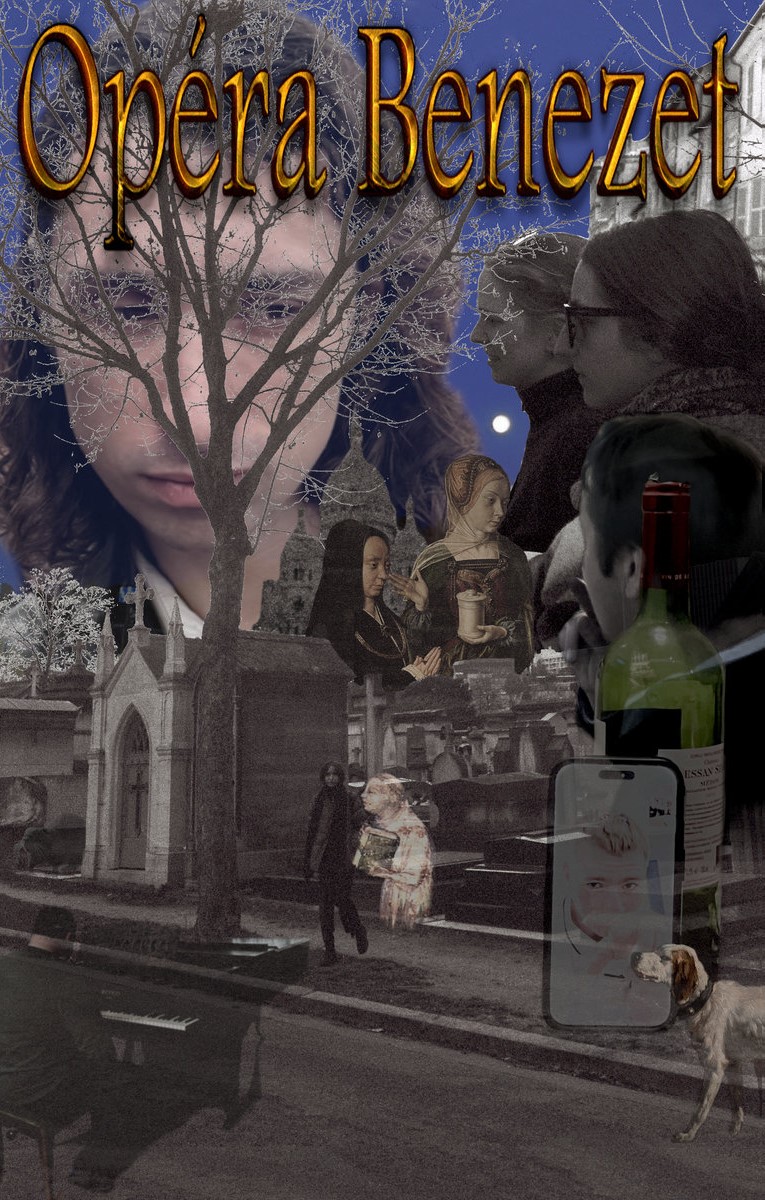 The audio-travelogue is an underexplored tradition in abstract music-making. Montréal sound artists Christian Calon and Chantal Dumas demonstrated its full potential with their classic Radio Roadmovies, the first disc of which features on-the-go vignettes from a scattershot trip through the Canadian countryside, and now this new globetrotter joins them and a few others (Daphne X, Ezio Piermattei) in a modestly sized canon. The uncredited person(s) behind Opera Benezet—likely Zach, who we hear speak around the 19-minute mark—gives the following description of the tape: “The spark bardo passage of the bridge building Saint Benezet by a chance geographical crossover with a Delco man following a Paris power outage. A cross consciousness hallucination between Benezet and a foreign fan club trailing one man’s wheel path across France.” The supernatural aspects aren’t entirely overstated. The collage piece drifts like a dream, its progression more stream-of-thought than a single line across a roadmap. We find ourselves in bustling urban locales and sleepy liminal spaces with no knowledge of how exactly it happened, but it sure does make sense once we’re there. Overheard music from buskers and/or local concerts plays a central role, often clipped into echoing loops that add to the hazy atmosphere. Come to think of it, it’s a more accurate representation of a journey than a straightforward series of recordings could ever be. The traveler often ends up being a passive presence, caught in some other current that could never have been foreseen (in this case, a DIY tour de France). As listeners we too are just along for the ride, slack-jawed and wide-eared at endless mundane majesties.
Copies come with an 11″x17″ poster and a photograph and are available via email: postalswing.key@gmail.com.
Review: Slacking / Black Corolla – Lonely God (Clangor Tapes, Mar 21)
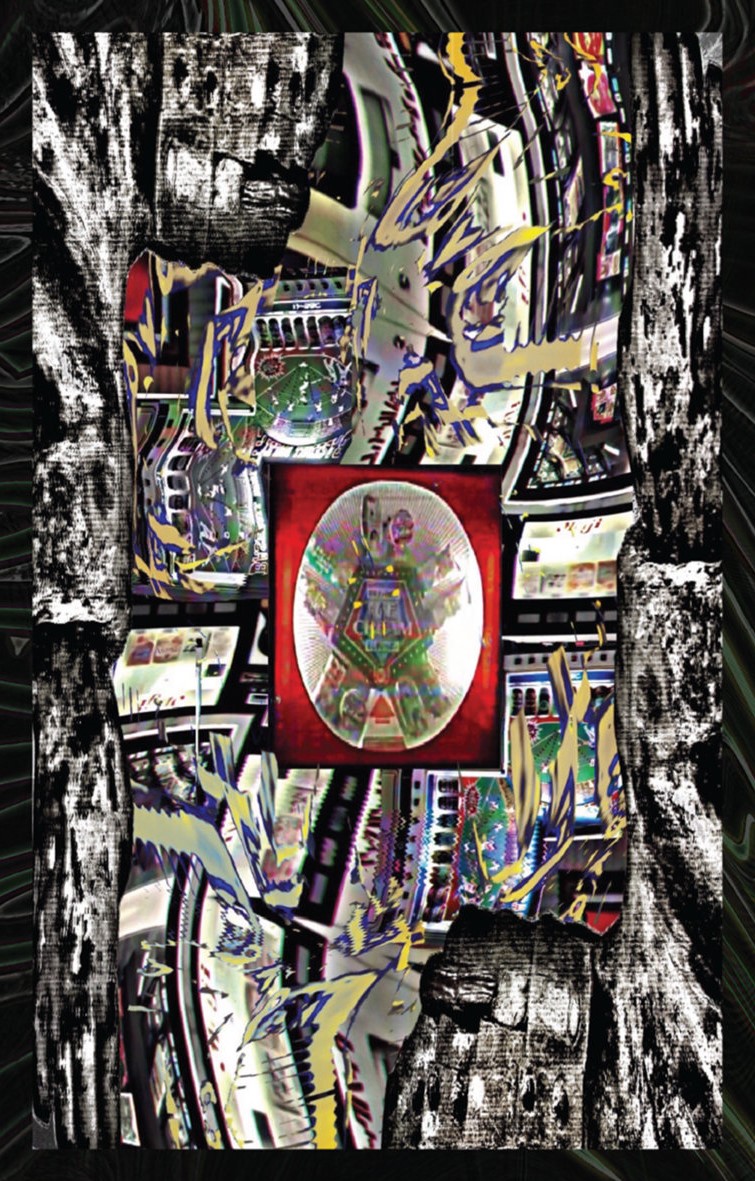 One of the things I miss about Cincinnati (and Dayton too, of course) is the noise. That does have a dual meaning—for example, there were these beautiful train-brake squeals that carried all the way up the hill to Clifton from the Queensgate Yard—but here I refer to the music. It’s always great to hear about new things going on in the city, and right now I’m excited about Black Corolla and their label Clangor. Zach Collins and Lauryn Jones just released their debut tape in October of last year but are already generating plenty of buzz, sure to surge after their set at Ende Tymes on Saturday. For Lonely God they teamed up with head favorite Slacking from Pittsburgh, also with a highly anticipated slot this weekend, and the results are explosive. This C20 features what might be the best material I’ve heard from both projects. Slacking throws the psychedelic nightmare collaging honed on last year’s Sacred Heart of Reinvention into high gear for “Do What Thou Droop,” an anxious suite that never stops twisting into increasingly horrific knots. Each stage of the the cascade is stuffed to the gills with detail, all of it swirling in hallucinatory murk. The curse passes on to Black Corolla and their pall of contact-mic’d glass abuse, blasting from a dark corner into a room filled with ghosts. The duo is already fine-tuning their pacing and execution; a well-timed break (literally) takes the last third of the track to a new level, a plane of desolation that runs through the true center of the mind. The lights are off, Gonga’s a fraud, everything shatters into dust. Music for the ende.
Copies are available from Puke Pink as well as former Cincy stalwarts Torn Light, along with other Clangor titles.
Review: SCRY – CAPTCHA (self-released, Mar 10)
 Anyone who knows a gen-alpha kid is well aware of the massive presence Roblox still has. The dissonant combination of creativity (players design and share their own games) and exploitation (Roblox Corporation, which reported $3.6 billion in revenue last year, profits off that unpaid labor) is already emblematic of the horrors of late-stage capitalism, but the other day I discovered a new aberration when a young library patron asked for help logging in to the game. I immediately saw that the barrier was the most convoluted CAPTCHA I’ve ever come across. It instructed the user to click through a series of ten images to select the cup with the most liquid that also matched the given symbol… TEN TIMES. It took me, a grown adult (debatable, I’ll admit), several minutes to figure it out, during which time something we’ve always known but tend to ignore became unignorable: we are now human data feeders for predatory algorithms. This absurd reality is the impetus for CAPTCHA, an audiovisual collaboration between multimedia artist Berto Herrera, producer Manao (a.k.a. Oswaldo Rodríguez), and graphic designer Shamma Buhazza. It’s one of the more ambitious submissions that’s come into the inbox this year, and while I’m usually turned off by fancy press releases and headshots, it’s great that the concept was taken so seriously and this much work was put in.
 The composition itself is a single hour-long suite of bleak repetition and synthetic atmosphere, owing its lurching pseudo-rhythms and digital intricacies to Rodríguez’s background in club music and its emotional dynamics to Herrera’s eye (and ear) for abstract sublimity. It’s part mood piece and part main attraction, at home in both the background and the foreground—which, in fact, represents the same blurring of boundaries as the “endless shadow economy” it critiques. Those contradictions abound throughout all elements of the project, whether it’s the dark beauty we’re reluctant to recognize in the music (that’s inevitably torn apart by a recurring synthesized voice instructing us to PLEASE TYPE THE NUMBERS YOU HEAR) or the dual consumerist/aesthetic urge to purchase the physical editions of the release: twenty tapes with handmade collage covers and seven handmade hollow “river stones” housing SD cards, both of which feature Buhazza’s visual contributions. I’m reminded of the packaging for Seth Cooke’s Selected Works for No-Input Field Recorder, and I’m also led to ask similar questions—and acknowledge a similar futility in trying to answer them. CAPTCHA strikes back against the descending big-tech boot with a glimmer of hope for “a return to spaces of silence and human connection”… but is a glimmer enough? It sounds like it, at least.
Review: Mark Anderson & Anthony Guerra – River Transcription (Regional Bears, Mar 11)
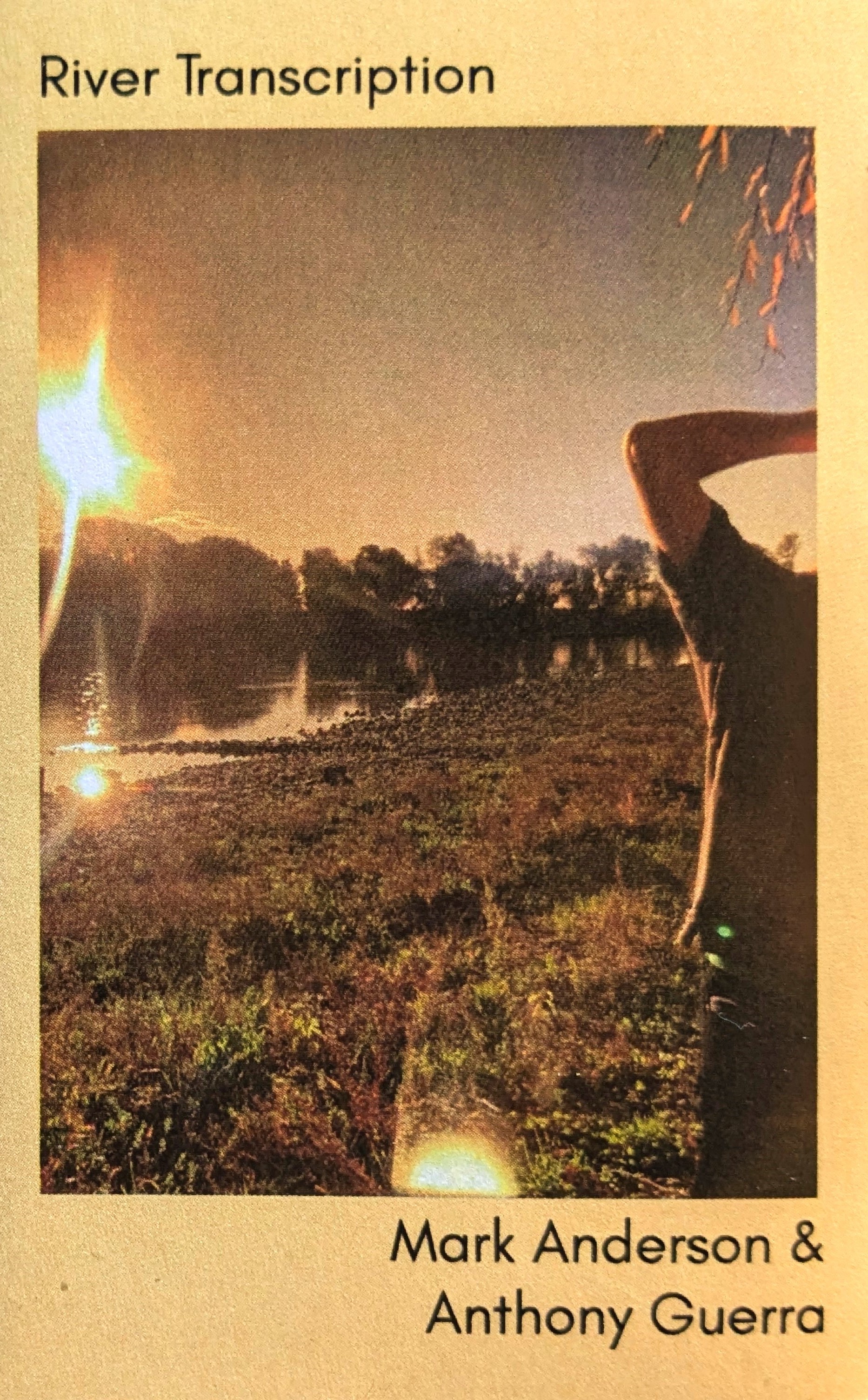 Certain duos were always meant to be. Mark Anderson and Anthony Guerra have been crucial parts of Australia’s off-kilter underground scene for the better part of this century so far, whether lending their shambolic instrumental talents to various avant-rock efforts both together (Mysteries of Love) and separately (Greymouth, Love Chants) or holding it down in even more abstract contexts (Guerra’s improvised meetings with Joel Stern are eternal favorites of mine). Their newly minted collaboration, which seamfully melds those two realms of interest, found its footing with the spellbinding Earth Diffusion CD on Index Clean last year. The renowned Melbourne text-sound source was a perfect platform for the pair’s surreal voice-based sketches, each fleeting collage a lush universe of moans, groans, and psychedelic undertones. Stationed on the opposite side of the globe, Stockport’s Regional Bears has a proven track record of letting promising projects shine on longform canvases, so I was excited by the prospect of a continuous forty-minute piece from these musicians, and the only thing River Transcription fails to do is disappoint. Recorded in a single session on the shore of the Tukituki river, the sun-bathed suite seems to melt time; when my deck stopped I thought something was wrong with the tape, because there was no way it was over already. And yet there’s not a moment of hustle or hurry to be found throughout the drowsy meditation. Anderson and Guerra are content to be mere features in a much larger soundscape, bleary-eyed rivermen whiling away an amber autumn day as the current ambles by. Stones slide and scrape, breezes rush and birds sing, a guitar briefly noodles before deciding it would rather bask in the grass, shouts ring out from across the water: time to turn in.
Review: Skafrenningur – Þríleikur (Malevolent Relics, Mar 1)
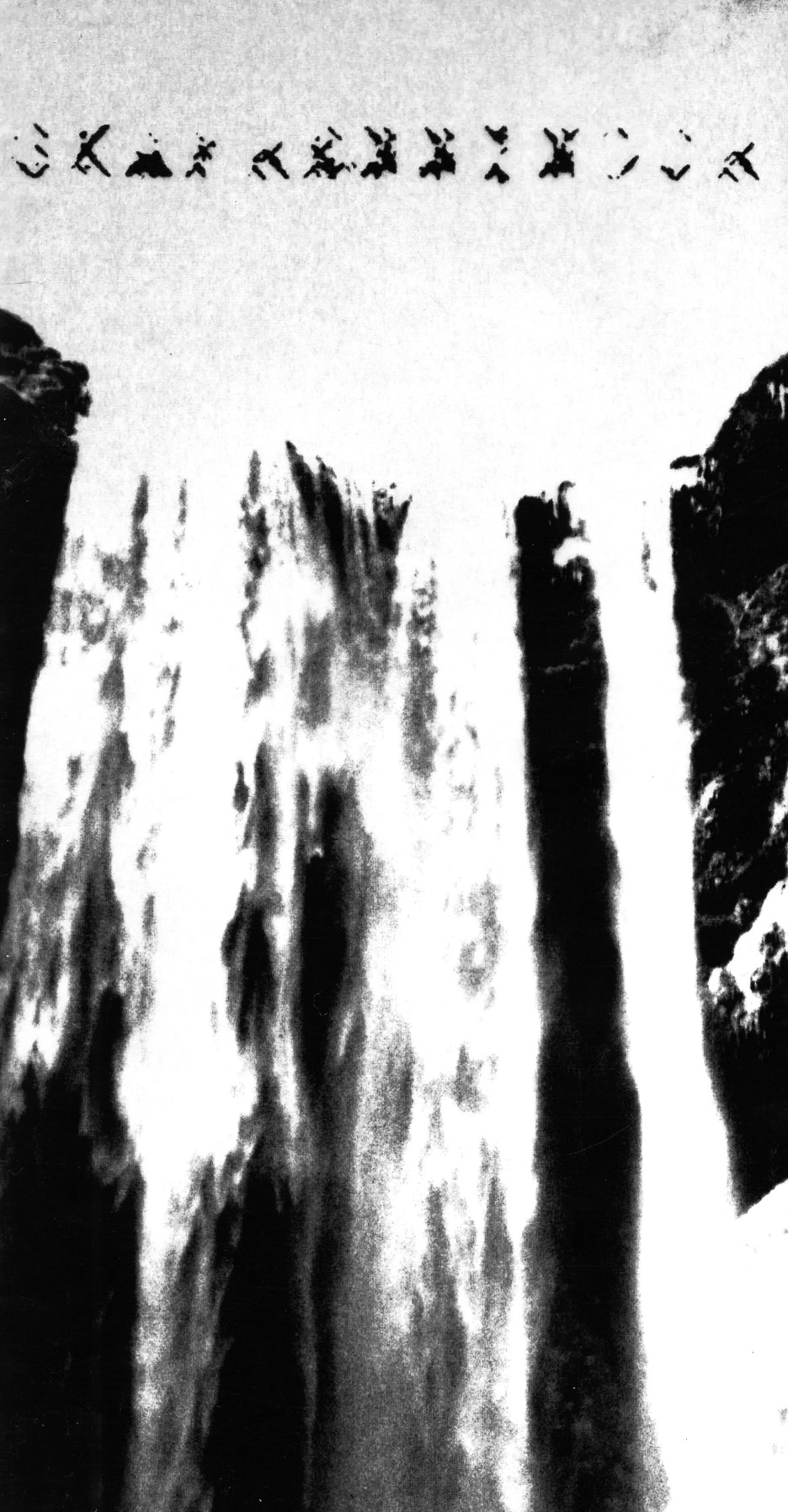 As many of you know, I do my best to stick to writing about brand-new stuff. Gotta keep things fresh, after all. But as with Velo Misere’s Retrospectiva de la Fatalidad (which, serendipitously, dropped six years to the day before the release at hand) these kinds of lovely catchalls help lunks such as myself stay abreast of new adventures in kvlt-fi. Here we have Þríleikur, a handsome triple-CS box assembled by label/distro Malevolent Relics that collects the first and perhaps only demos by solitary Philly sorcerer Skafrenningur (a.k.a. Extispex). With the abundance of projects out there, any raw black metal purveyor runs the risk of sounding a lot like everyone else, so it takes a certain special something to rise above the horde. In this case it’s the formidable combination of painterly atmospherics and tight songwriting. Only a few tracks across the three tapes run for longer than four minutes, and yet each of the total twenty-one is its own treasure chest of dense murk and invigorating consonance. “Dauðleikr,” which kicks off both Allsköruligr Jökull and the entire trilogy, yawns open like a cavern so wide you can’t see the edges. As the lengthiest and most ambitious cut, it’s a perfect overture, casting everything that ensues in its hulking shadow. The riffs themselves are never complex; most are based on repetition and straightforward chromatic shifts, with the thrill often coming from the hypnotic drudge itself—and the anguished howls that rip through it. Ska also always knows when to brighten things up with a cathartic major-key resolution… when those harmonies in “Sigrblómi” hit it’s like a new spring sun melting the frost. Though the individual demos hold their own as self-contained installments, the whole set works quite well as a single experience, due in large part to the anchor points provided by the openers. Last but not least of these is “Drephríð,” a short and sweet Paysage-esque intro gust that blows into the darkest and heaviest tape, Himneskr Tárabrunnr. Almost makes you miss winter. Almost.
Review: Scathing – Venomous Blossoms / Carnivorous Blooms (self-released, Feb 28)
 Ah, the C10. A format/length that’s incredibly easy to fill up but incredibly difficult to actually pull off. When it’s done right you get the perfect mix of densely packed quality noise with the inevitable desire for more… but there isn’t any more, so you just have to flip it over and play it again, and again, and again. As Scathing, Kenny Brieger is no stranger to well-executed brevity (his various C20s over the years on New Forces, Narcolepsia, and Cruel Symphonies, as well as a previous C10 on Oxen, attest to that) but the quietly self-released Venomous Blossoms / Carnivorous Blooms is a different kind of beast, born from a hefty chunk of raw material that he hacked, sculpted, and faceted into a razor-sharp jewel. Needless to say, there’s not a single second of wasted time. Brieger has always thrived off both an abundance of ideas and an agility in moving between them, and even with the extensive editing, the explosive momentum of his live sets also comes through. I often associate Scathing with an interest in screeching, upper-register frequencies that other artists would use merely to contrast the low end; he, on the other hand, jumps into those treble-storms headfirst, anchoring the noise high and then diving down. But all that said, neither of these two tracks are anywhere near that simple. There are always three or more things going on, layers gnashing against and twisting into each other, squeals and wails answered by skull-shaking crunch. Any time there’s even a hint of a lull, a new wrench gets thrown in. “Venomous Blossoms” is already ridiculous before it crashes to earth with one of the most life-affirming loops I’ve ever heard. At first, “Carnivorous Blooms” almost seems tame in comparison before it reveals itself to be more of a slow burn, until… well, I won’t spoil it. This is truly top-shelf harsh, the kind that leaves only ash in its path, and all you can do is yell “FUCK!” and—you guessed it—play it again, and again, and again.
Copies will soon be available from Scream & Writhe, or direct from Brieger.
Review: Clearance – Life Hack (self-released, Feb 13)
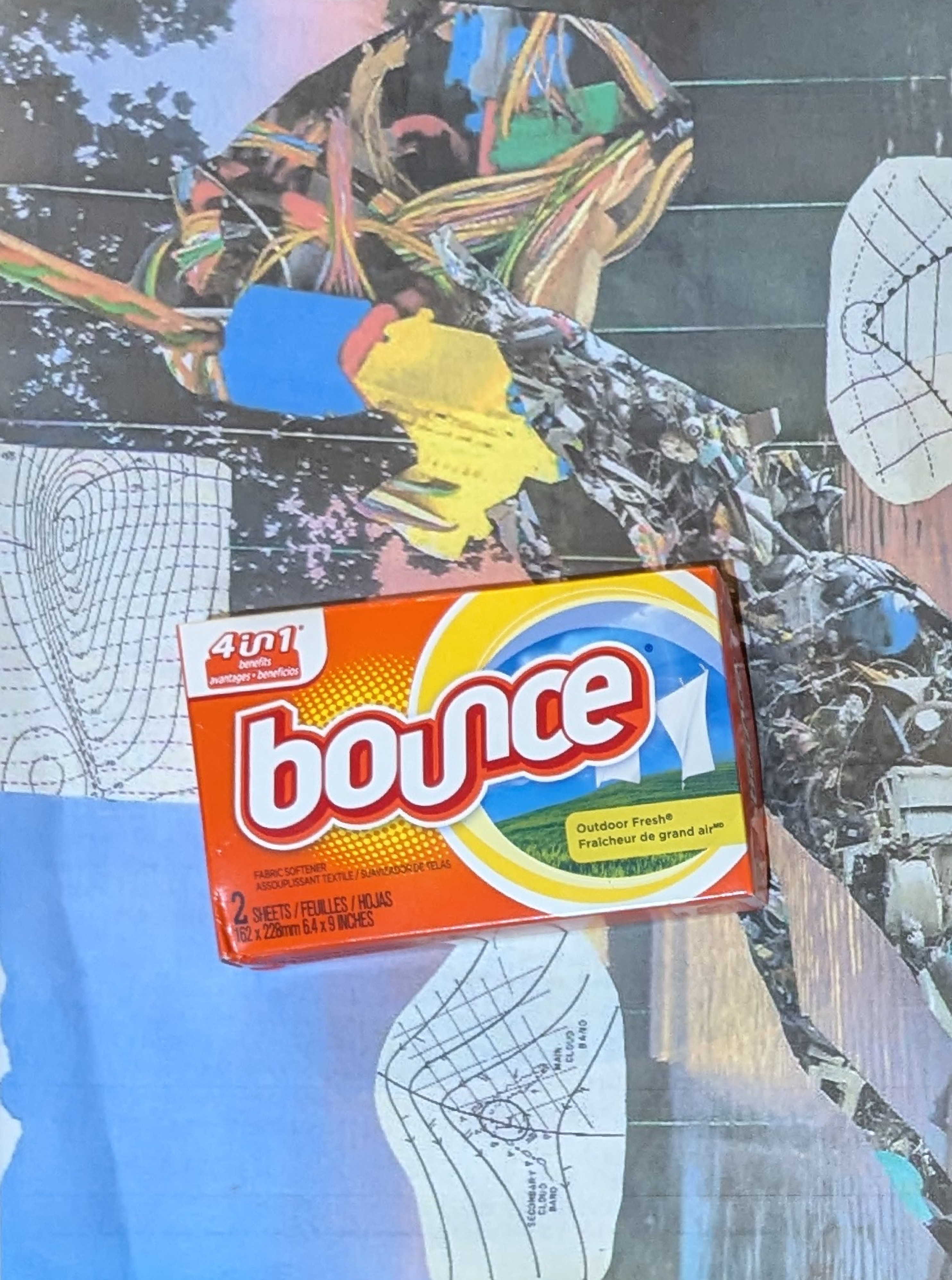 To open up a new Clearance release is to assail oneself with stimuli. Colors, textures, contrasts; images, narratives, mysteries; relevance, irrelevance, everything in between. Old hat, maybe, to those of us trained by gas station screens and FYPs… but it’s also different to be confronted by the physicality of the information, the evidence that the items and ideas were assembled by actual hands rather than the algorithm, the possibility of there being some puzzle to solve, some answer to know. This futile human hope that we can figure it all out is what Zac Davis’s project is all about—in his own words, “when rhetoric is all we are force-fed, in the absence of proper logic we create new grammars which sort of act as a map for the nonexistent logic, which can’t be illustrated.” The “logic” of Life Hack is more intimate than The Seeds That Were Silent and less apocalyptic than Information Warfare, summed up from the get-go by the juxtaposition of a bright orange box of fabric softener sheets on a washed-out inkjet collage insert. Reach inside the bag to find some title pages, a sheet of handwritten prose, and a comprehensive list of favorite Dead shows. What a spread! As easy to get lost in it all as in the music itself, which you have to crack open the Bounce box to get at. Davis deploys his usual arsenal of crisscrossing frequencies and tape feedback at full tilt: layers constantly phase in and out, transmissions scramble for a place to land, garbled propaganda fights to convince. Much like his live sets, the material feels more like jams than compositions. We can hear knobs being turned, patches being activated, and the dial of a handheld radio—always a welcome presence, and here harnessed to great effect—being tuned. The electric clouds are agile enough to bend around much more obtuse elements, like the Dead song in the final track, which actually ends up seeping into the soundscape both sonically and conceptually. The airtight ziplock and secondary cardboard protective shell is crucial for preserving the fidelity of the most fried sounds in existence, so ask yourself before you open this can of worms… Do I really want to know?
Copies available via email (doublebindhotline@gmail.com), Discogs, and various record stores.
Review: Posset – SCUM (Index Clean, Jan 27)
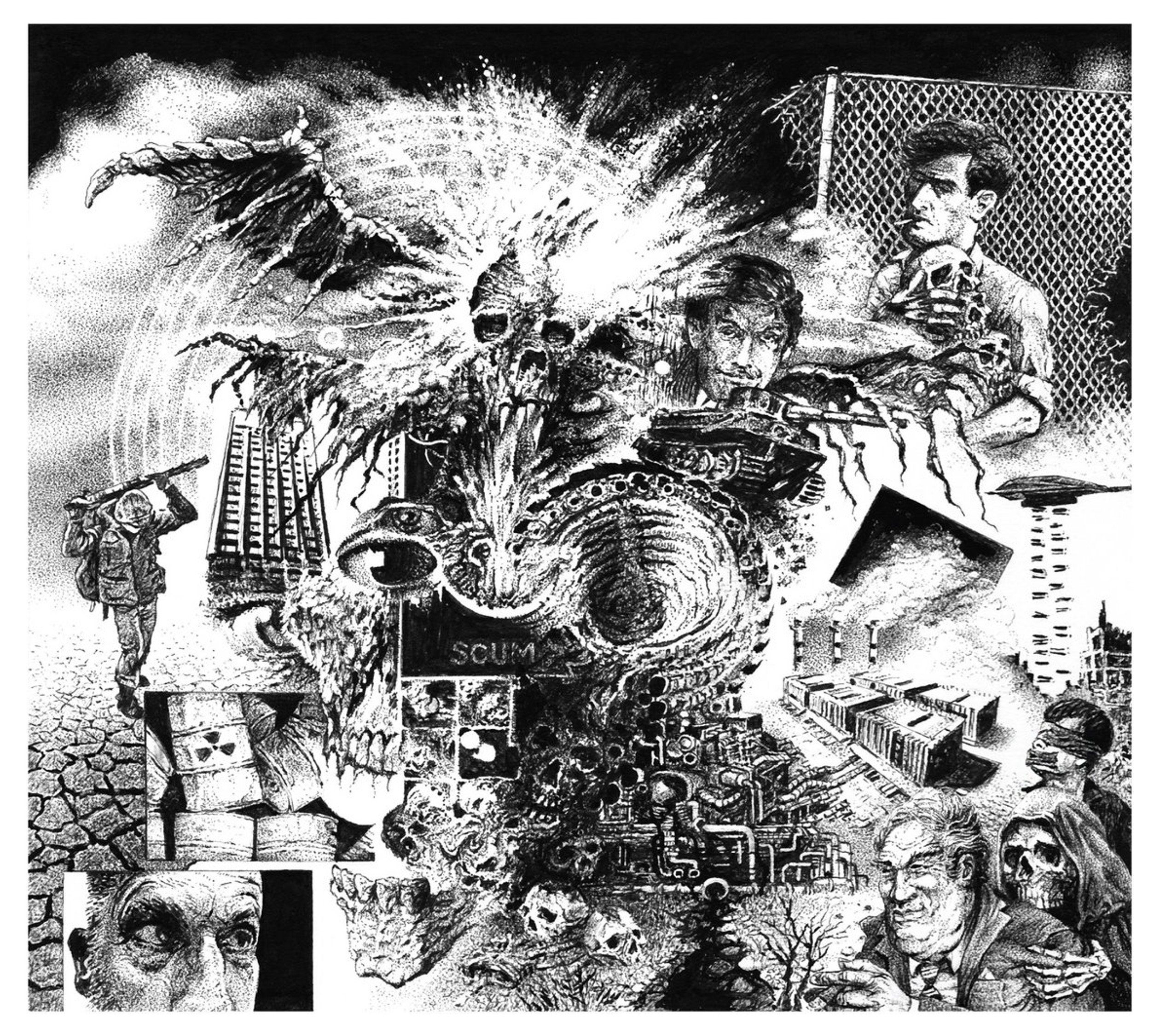 Is the tribute album a lost art? Was it ever an art to begin with? If it wasn’t, it is now. This deconstructed love letter to Napalm Death’s cornerstone grind record redefines what it means to pay tribute to a work of art: to celebrate the reasons it’s so important to you while also injecting your own ideas, to tease out subtle undercurrents and extrapolate them into full-fledged reimaginings. Foreshadowed by “Reading the track list for Napalm Death’s ‘Scum’ into a broken tape recorder” off 2018’s Totally Corporate!, SCUM is perhaps what Joe Murray’s decades-spanning work as Posset has always been leading toward. The Newcastle dictaphone wizard details his “forensic” approach to this massive undertaking in the release notes: “…considered listening, pen in hand, marking up file cards for each of the twenty-eight songs. What was I hearing here? What stood out? Was it dynamic tension and release, sharp changes in velocity, a rare disembodied guitar solo or a grumpy mammoth hum? The more I listened, the more I imagined I heard the band’s hidden structures and intentions; small cells of ideas moving from song to song.” He then stitched the tracks together from their dissected pieces, each one a miniature sonic Frankenstein’s monster, a self-contained universe of free-associative antilogic. The eclecticism at work is immediately apparent from the first few tracks: “Multinational Corporations” is classic Posset, complete with lip smacking and hissing analogy humidity; “Instinct of Survival” is a straightforward (albeit ramshackle) rendition with vocals and acoustic guitar; and “The Kill” is somewhere in between. The curious are likely to jump straight to “You Suffer,” and will be surprised to learn that it’s the longest track on the whole disc. Because this is not a collection of covers, but rather the blackened remnants left behind if Scum were boiled on a greasy stovetop—a reverse distillation, a makeshift magnifying glass put to what Murray cites as the essence of the iconic LP: “a moment of existential terror bathed in the weak Midlands sunlight.”
Copies are also available from Blacksound Records (AUS), adhuman (UK), and direct from Index Clean.
 Noise Not Music