
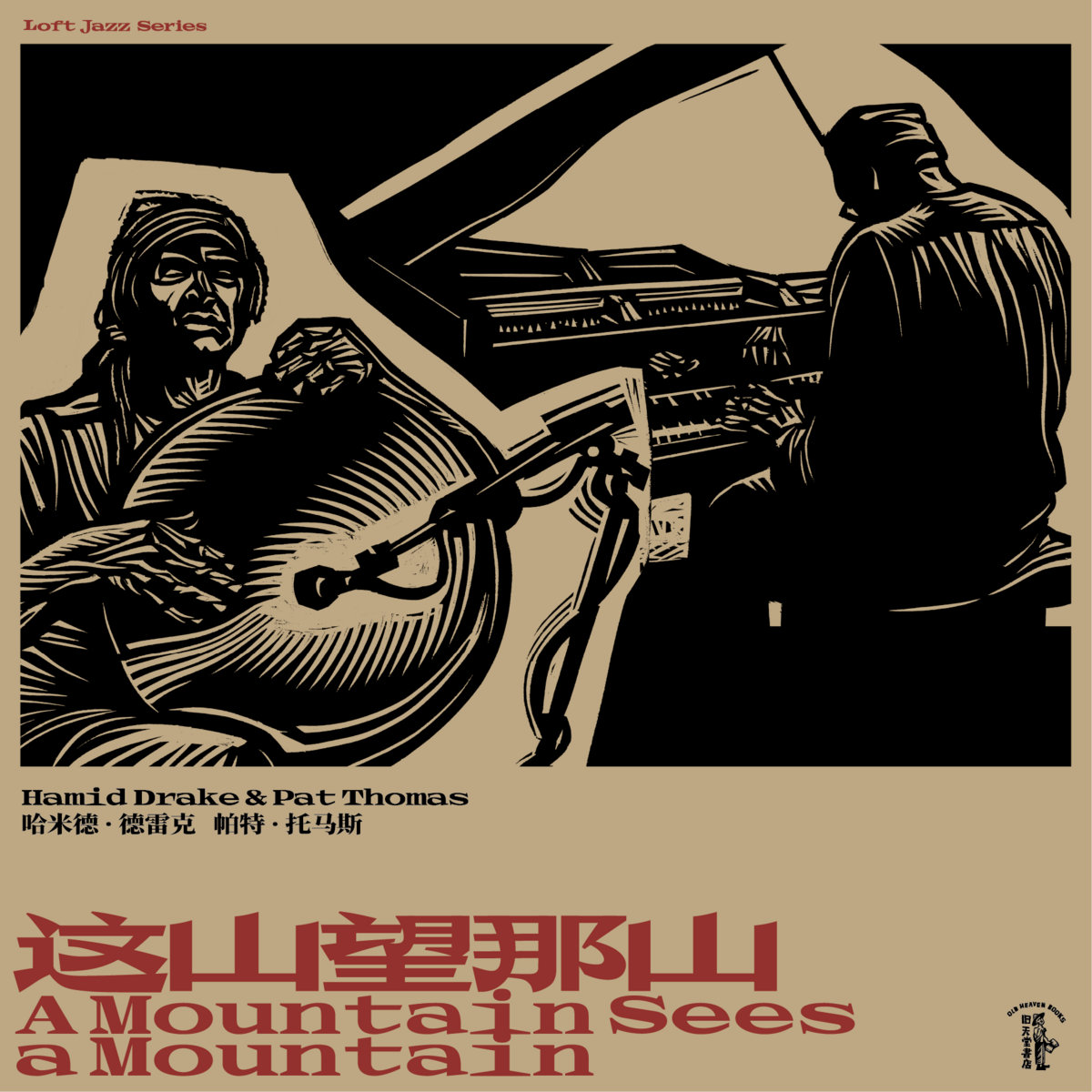
 Having not heard of the OCT-Loft Jazz Festival held annually in the Nanshan district of Shenzhen, I assumed the “Loft Jazz Series” label on the cover of A Mountain Sees a Mountain was a reference to the 70s New York loft scene. This assumption quickly fell apart, of course; I remembered that percussionist Hamid Drake, though based in the city, only began performing a decade after rising rents and institutionalization brought that boom to an end, and that pianist Pat Thomas is English. While the series name may or may not be an homage, OCT-Loft references the area surrounding the OCT metro station, where the two free music heavyweights played as a duo for the first time in 2019. Six years later (to the day), their extended live session sees new life as a multi-format release on the record label arm of Old Heaven, the bookstore that curates the festival and serves as the venue for its performances. Drake and Thomas have met before in larger ensembles (twice on record, both at OTO via various configurations of Thomas’s Black Top project with Orphy Robinson) and their chemistry sits in a sweet spot between established rapport and boundless possibility. Thomas fires off a flurry of muscular dissonance to match Drake’s thumping intro to “The Spider’s Web,” but then they drop into a slow textural build that morphs into a lurching swing. Thomas deals in both convention and abstraction interchangeably: there are several electric moments when he’s banging out thick erratic five-finger clash chords or dizzying atonal right-hand runs, and then suddenly a surging groove appears as if out of nowhere. Drake’s hits and rolls are as raw and painterly as ever, but his singing doesn’t work as well here as it has elsewhere. “Friday the 13th,” the first of two brief encores, is a fleeting but thrilling climax that offers a glimpse of the raucous glory the duo could have worked up if they’d wanted to, but their restraint makes it all the more satisfying. Though the circumstances that led to this lovely hour of music may not be directly connected to the historic loft era, its eternal spirit is alive and well—this is the sound of community, of two artists separated by one ocean crossing yet another to meet an eager audience. As Drake himself says in “Time for Learning”: “This is something that we’re all doing together as one spirit, one family, you know, one love, one light, one harmony. One light.”
Category: Reviews
Brief summaries intended to describe and express my enjoyment of albums. My opinions are not the focus: I purely seek to facilitate discovery.
Review: Stimulant – Sub-Normal (Nerve Altar, Sep 19)
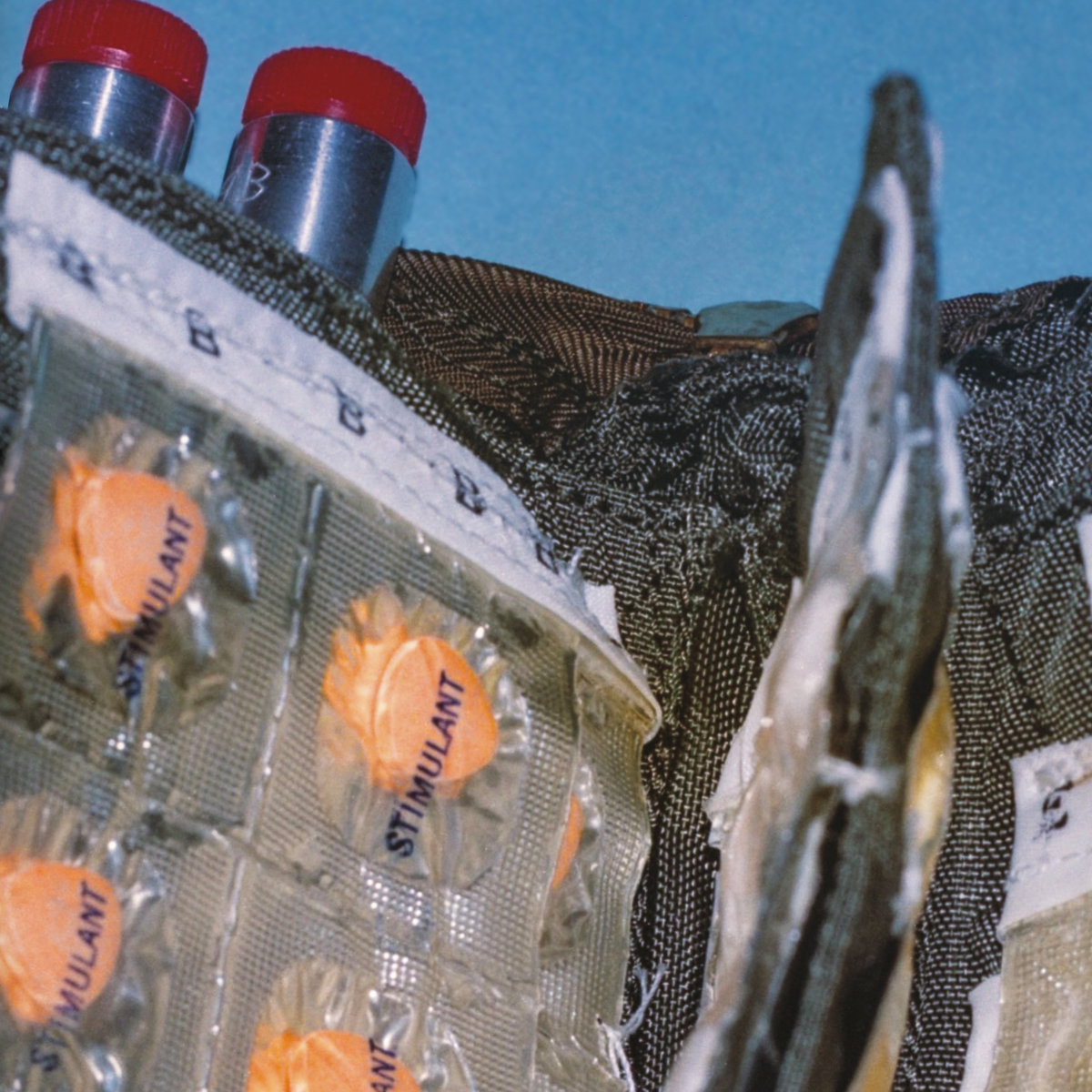 Though only around for a few years in the early ’10s, hardcore trio Water Torture are still remembered and beloved by many. Out of their ashes emerged Stimulant, a new band comprising two thirds of the WT lineup—one of whom, Ian Wiedrick, had the honor of playing with the legendary fellow Buffalo locals Snapcase post-reunion—and three thirds of the creativity and aggression. They’ve been quiet but not completely inactive since their last LP in 2020, notably making a live return last year at the Yacøpsæ/Extortion gig here in New York. Now they’re back in full force with Sub-Normal, a new full-length that offers up their best material yet (and they aren’t the only Nerve Altar alums who have reemerged with a vengeance; don’t miss out on Tempo Severo, the first CD from São Paulo shredders D.E.R. in nearly a decade). As usual the program is chomp-sized assaults of straight-shooting grindviolence. “Internment” is a reminder of what we’ve been missing, a tightly wound track that deploys the duo’s winning formula of catchy interlude riffs, muscular blast gallops, and dual vocal attack to crushing effect. Neither Wiedrick nor Thomas Leyh are strangers to noise, having also recorded a tape of unhinged power electronics together as DNR, and as always they meld it well with the music instead of resorting to undercooked interludes; the six-second “Standing Water,” for example, is almost Spacek-esque. And a Stimulant record wouldn’t be complete without a chugging sludge closer, a box that “Hubris” checks with confidence. I know this year already has you beating your head against the wall—might as well do it to this.
Review: Rhodri Davies & Alfredo Costa Monteiro – Widdershins (ICR Distribution, Sep 5)
 You could say the “golden age” of electronic improvised music is over—maybe point conservatively to the closing of Günter Müller’s mighty For 4 Ears imprint circa 2010, or liberally to Keith Rowe’s retirement from guitar in 2021, for an end bracket of a creative epoch. But even though the conventions have long been established and the enthusiasm has quieted, an inspired matchup will always prove why this stuff is so exhilarating to listen to. Seasoned stalwarts Rhodri Davies (harp, electronics) and Alfredo Costa Monteiro (objects, devices) have somehow never played together until now, at least not that I can find. Both have lent their talents to named ensembles that are behind some of my favorite music in this sphere—No Spaghetti Edition and Cremaster, respectively—and have built formidable bodies of work on mainstay labels Another Timbre, Sofa, Moving Furniture, etc. The closest they’ve come to a collaboration prior to Widdershins was the second CD by the superb trio Muta, on which Davies played and Monteiro contributed a poem for the layout, and yet this galvanic live recording sounds more like a fifth meeting than a first. Recorded back in May in the small Juan Naranjo gallery in Barcelona, the 42-minute set evokes an expansive world that extends far beyond the modest white-walled room. It’s slow, pensive, shaped around sighs and hum and clatter. The room recording gives Davies’ harp a dark, almost somber aura, and Monteiro’s minimal drones get some color in the open air. The duo’s approach echoes both familiar and novel territory. The tensile dramas, the austerity with the barest hint of warmth remind me of such classic sessions as Beins and Neumann’s Lidingö; the organic pace and blurred ambient drifts in the second half are a fresh and fruitful new direction. Several magical moments have kept me coming back: the pure harmony that rings clear near the nine-minute mark, the surprise string pluck in a wash of coarse resonance.
Review: Stalking – Feedback Destroyer (Breaching Static, Aug 29)
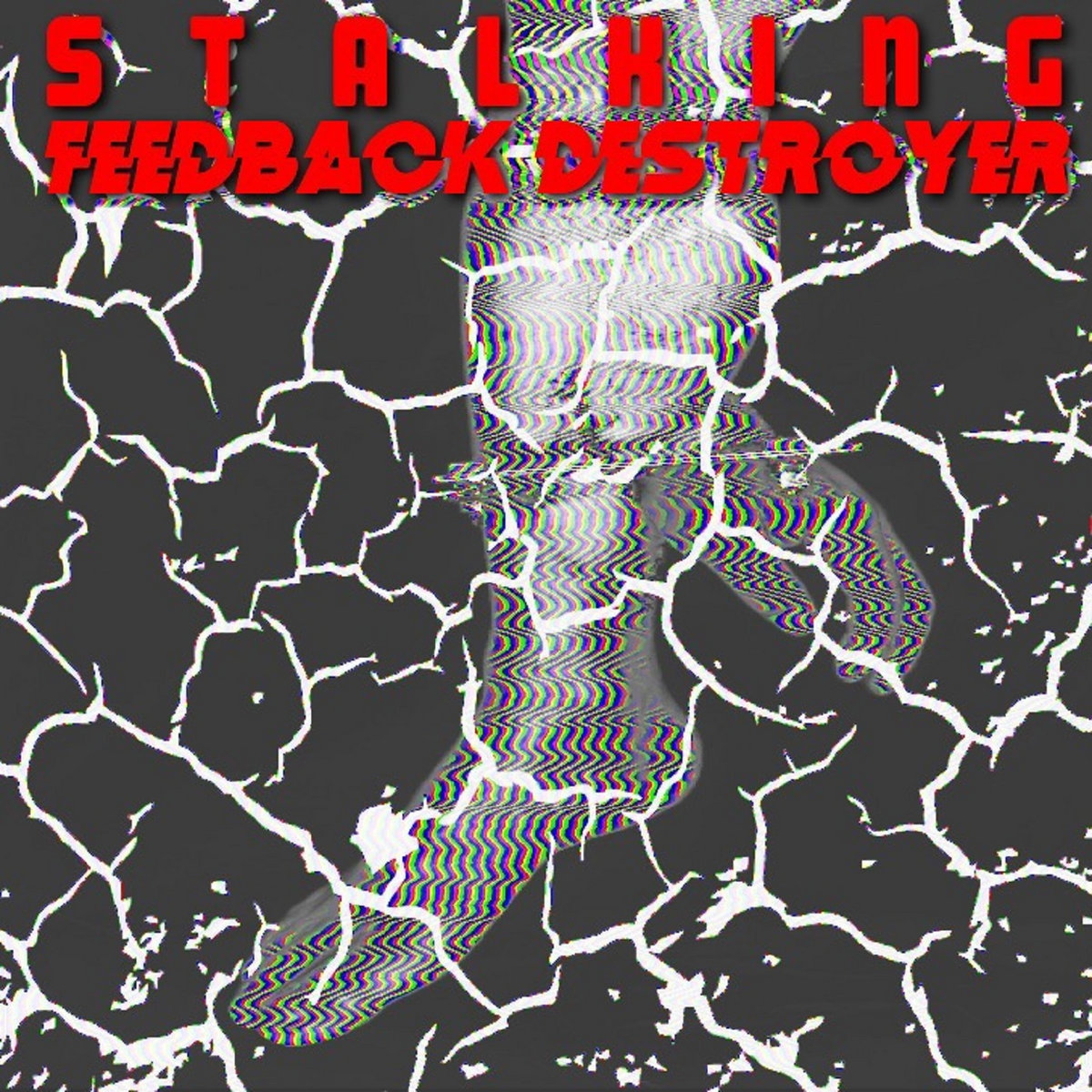 Feedback Destroyer is a misleading title. On his first outing as Stalking, Matt Hex does plenty of gating, chopping, strangling, crushing, warping, all actions that one might call destructive. But feedback is like energy—indestructible. In lieu of being ground into nothing, it escapes to areas of less pressure, contorting into unpredictable and exciting shapes. This is the essence of feedback noise, and it has been for decades; this new CD-R from underappreciated Dubuque imprint Breaching Static doesn’t try to reinvent the wheel. What it does do is carve out ample space in a surging cut-up harsh revival that spans the States and beyond. Stalking is not yet another high-tech modular initiative doomed to stand in the shadows of modern titans Negation or 886VG, nor is it a novel deconstruction of the tradition itself in the vein of Prolepsis or Parasite Nurse. The closest comparison that comes to mind is Developer: no-frills, muscular pedal-chain frenzy that doesn’t waste a single second. At 21 tracks, there’s no shortage of ideas. Other artists might have shelved some of these sketches for future releases, but Hex lays it all out on the table, opting to offer an LP’s worth of material for his first outing. No samples, no silent stretches, no ambient interludes, just noise. The stereo field gets a comprehensive pummeling, the crunch blasting through mono, left, right, and all over, always changing up just as you start to find your footing. The pace is incessant and intense, but Hex isn’t afraid to fuck around a bit now and then either; there’s more than one grin-inducing delay noodle. Solid, satisfying stuff, and a great debut for this project.
Copies available via email: breachingstatic@gmail.com.
Review: Zhao Cong – blow,blow,blow,blow,blow (Oigovisiones, Aug 14)
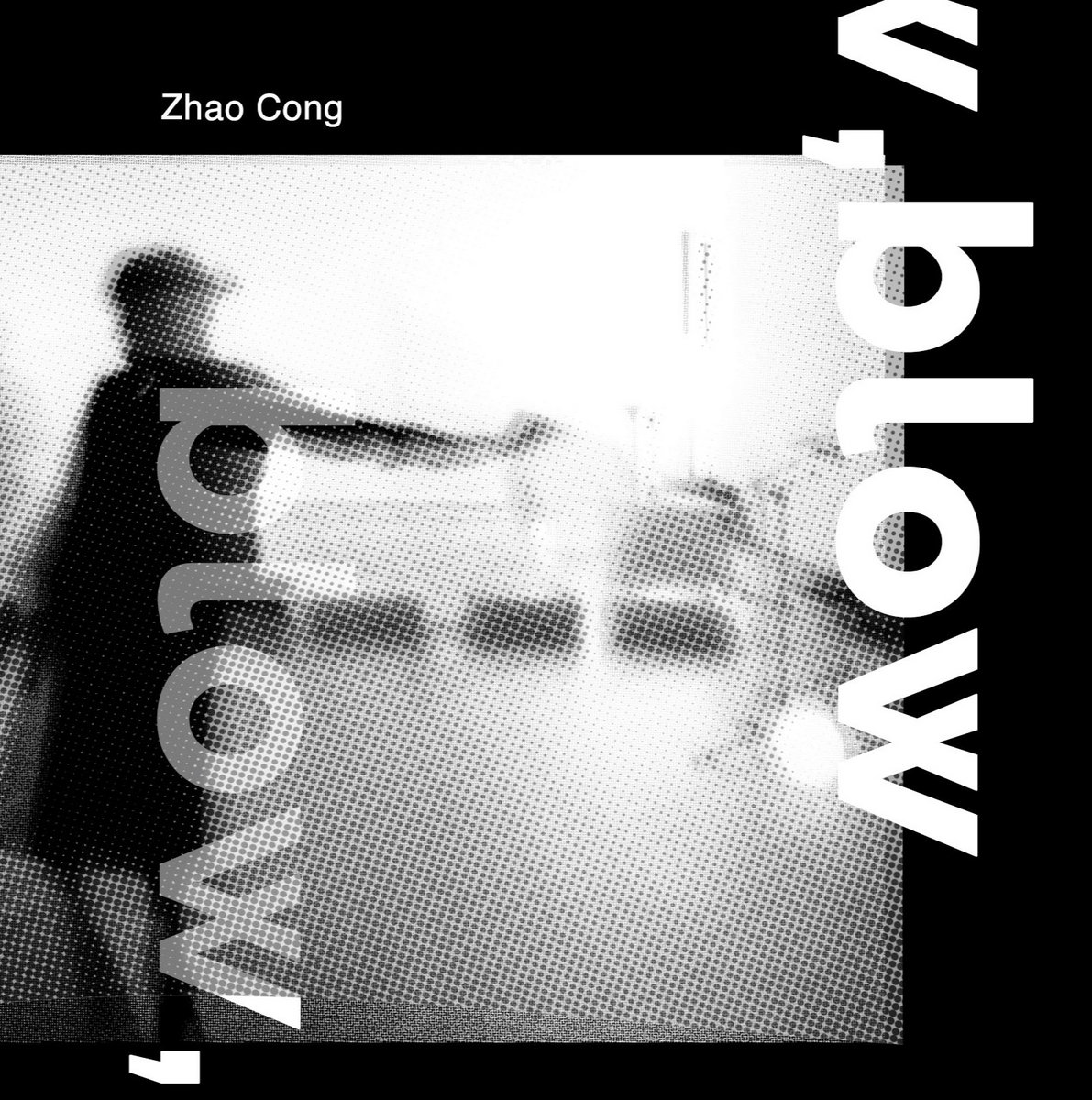 Zhao Cong is one of the central fixtures of the Beijing avant-garde scene. Like many of her peers, her sound practice is humble and unassuming, rooted in tangible aspects of the everyday. These aspects are often objects or even novelties with sonic profiles that are familiar but not conventionally “musical”—her repertoire includes cardboard tubes, light fixtures, fans, pop rocks, spray bottles, playing cards, bug zappers. She devotes extraordinary attention to the simplest of interactions. In the case of blow,blow,blow,blow,blow the focus is the most basic of all: inhale/exhale. Balloons are her tool of choice to isolate and magnify the elusive mechanism, and thus her interest is not in the properties of the stretched latex that Judy Dunaway explored in an improvisational context, but rather in its use as an elastic vessel. “Blow” is a brief invocation of sorts, amplifying the physical influxes of air that will be let back out in “Expel.” Zhao’s mic placement is just as crucial as her materials, and this pair of tracks makes that apparent with their fundamental contrast; the precise binaural array used for “Blow” makes it sound like the inflations are happening inside our ear canals, while “Expel” widens the lens to capture both the hissing flow and the surrounding environment. After the scope of the palette is established, its potential is fully reached in the lengthier pieces that follow. So much of the beauty of Zhao’s work lies not just in the happening but in the doing, the rustle of shifting hands and the creak of the table and the immanent intimacy of it all. Music via escaping gas. Might be my new favorite of hers.
Review: A Fail Association – “Only Connect” Sessions 2024–2025 (Limited Hangout, Aug 5)
 In addition to putting out the best in extreme sound on his long-running label Dada Drumming, Greg Babbitt contributes to it himself as A Fail Association. Alongside Kevin Novak of T.E.F. his early work in the mid aughts carved key contours in the exploding harsh noise tradition in the Lone Star State and beyond, honing the strain of muscular, virtuosic cut-up that we’re still hearing rip two decades later. After a ten-year break Babbitt doesn’t seem to have lost any steam, releasing material at least yearly since 2018. The slung-together “Only Connect” Sessions C30 doesn’t concern itself with the crystal-clear production of East V. or This Will Hurt You More Than It Will Hurt Me; the first track was recorded with a mobile phone, the second with a handheld Tascam, all live and uncut. But as Texas friends have told me, that’s where AFA shines, which I finally got to see for myself at Red Light District last weekend. Both of these recordings are fair and accurate representations of the ear-shredding assault he hurls through the speakers. His style feels less surgical, more of a free-associative brute force surge—even if he rehearses it doesn’t sound like he does, and that’s a huge compliment. The blasts hit in all the right places, the rapid-fire loops capture and amplify the momentum like lightning in a bottle. Side B wrestles with piercing feedback squeals that probably would have euthanized the dying PA used for the flip. The honest “postscript” Babbitt leaves in between is the cherry on top. The stakes are low, the reward (clearly) is high as can be.
Copies are available from the label via email—limitedhangoutrecordings@gmail.com—or eventually from Tobira.
Review: Rhizome Weaving – You Are Not Sorry Enough (Venalism, Jul 31)
 It never feels inaccurate to call Rhizome Weaver’s sprawling texture-feasts “walls” even as they shift and splinter with a sinewy restlessness, because the essentials are all there: the crushing initial blast, the lush crackle interwoven with rumbling low end, the immobilizing hypnosis. This refreshing new German project from Silken Heart co-founder Lukas Gerhmann brings to mind several points of comparison—Kakerlak’s recent work, Nascitari’s Your Sewer / My Church, the cosmic crumble of Train Cemetery—but there isn’t anything else quite like it, which is the greenest of flags, especially these days. Amidst the hyperbolic (though endearing) release description for You Are Not Sorry Enough, one phrase stands out: “a sea of granite incrementally surging and receding.” The coarse, crystallized igneous rock is an apt analogy for the forces at work here. Each track is both monolithic and constantly in flux, breaking apart into the magma only to reform seconds later. “Urn Stock” is a great example. Settle in for its nine minutes and find that it never lands at an equilibrium point. This low frequency range falls out and then slams back in again, that high one trembles between the stereo channels, until it all sputters out into near-nothingness… and then “Arche Fossil” erupts and obliterates what’s left. Despite all the primordial imagery, however, the energy Gerhmann harnesses is not just the slow, indifferent flow of nature but also that of his own scrambling human hands, and the result is a raw volatility that I can’t get enough of. It’s hard to tell whether this material emerged out of an analog or digital setup (or some blend of both), but intense live footage makes clear that Rhizome Weaver is grounded in tactility, in all its smashing, crashing glory.
Review: Radio Species – Compressed Knowledge (Soda Gong, Jul 18)
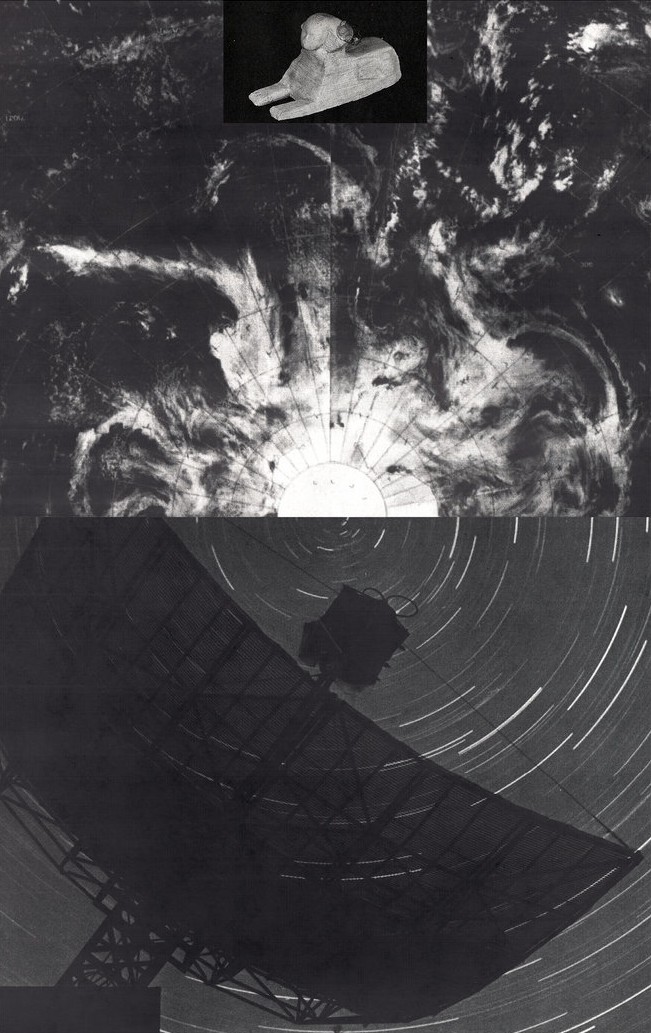 For the handful of heads who would name Yeast Culture, Small Cruel Party, Kapotte Muziek, and Damien Bisciglia (RIP) as the Four Evangelists of fringe cassette culture, the brief existence of Born Physical Form was life-affirming. Between 2019 and 2022, Philadelphia-based artist Tyler Games quietly released twelve cassettes by a motley roster of enigmatic aliases, all worth listing for those unfamiliar: C720, UVC, Winston 1, Bill Lewis Medicine Cabinet, Megawatt Mike, Eye Walk Eye, Van Gelder Skelter, Microphone Crumb, Mongo’s Head Disease. Except for flagship-ish moniker UVC, which also graced like-minded imprints Hologram, Irrational Tentent, and Regional Bears, these projects were one-shot exercises in elusive sound-making, each tape a singular variation on a base setup of tape and electronics. It’s hard to describe what exactly it is that makes this unassuming music so beguiling (I plan to write a longer piece on it at some point). For now, we’ve been blessed with this wonderful surprise that opens up the question to a much wider audience. Games’s return as Radio Species sees him shifting similar ideas in a new direction, and hopefully Compressed Knowledge is just the beginning.
The release description succeeds in verbalizing what’s going on here with its mentions of “broadcast without a source . . . hinting at formal structures while continually slipping away from them.” These nine short tracks are somehow at once sketches and final drafts, built on stumbling repetition that feels less like loop playback and more like a homespun series of cybernetic cells, the iterations near-identical but nonetheless novel. The delicate systems trundle along, deceptively complex and dependent on close attention. “Vastu” and “Apiary” evokes the humble process music of Takamitsu Ohta, but earthier, more reflexive to the noise that intrudes and disrupts—or does it come from within? The title track is something entirely new, a stuttering mashup of swung brush-drumming and chopped-up speech samples. Does it lose something in stepping out from under the veil of hermitic obscurity? Maybe. But it gains plenty too. Among the welcome new additions: the eager eclecticism, the sense that this time it’s not a one-off.
Copies of Compressed Knowledge are or will soon be available from Forced Exposure (US), Boomkat (UK), Soundohm (EU), and likely Tobira (JP).
Review: Double Goocher Shop – Radio Carrion (Reading Group, Jul 9)
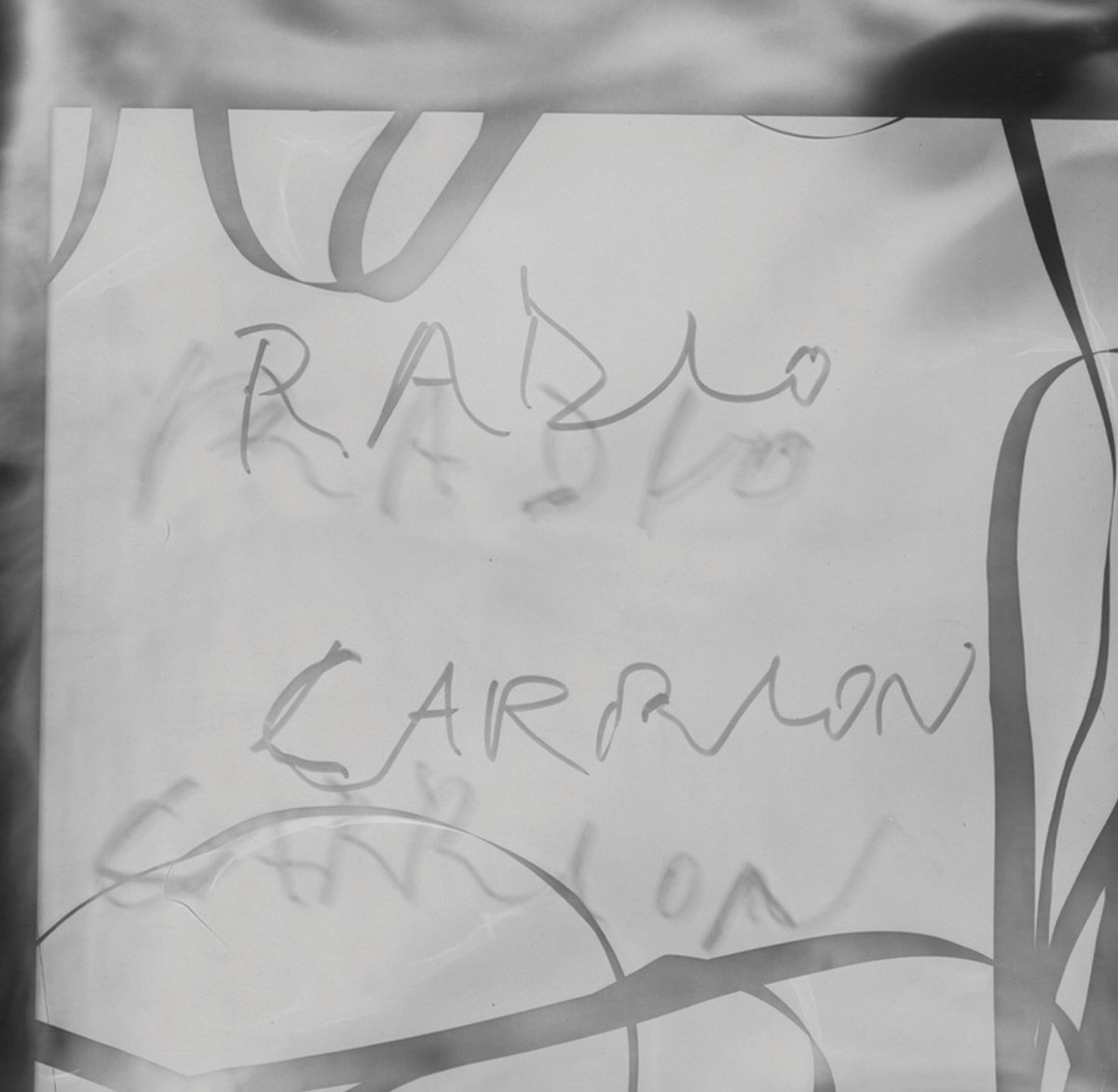 With their 2018 self-titled debut tape, Double Goocher Shop established a definitive and compelling approach rooted in the space where the two members’ aesthetic interests intersect. Throughout their respective careers, Renato Grieco and Moss Hopkins have both plumbed the fecund depths of text-sound, concrète music, tape assemblage, and field recording to achieve singular ends—Grieco’s work brings to mind the complex, theatrical “cinéma pour l’oreille” of the tradition’s pioneering composers with a modern twist; Hopkins’s is more domestic, introspective, self-conscious—but their ongoing collaborative project proves how complementary those ends are. Radio Carrion is their first material since The Kaplan Text back in 2021 and sees the pair diving into the paranormal currents of their sound that had previously only been implicit. The technique of using shortwave radio to make contact with the dead (or otherwise ontologically displaced) is a familiar one, both in experimental music specifically and ghost-hunting in general, but here the artists engage with a meta dimension to the practice as they investigate the “anthropological hoax” of the concept of the supernatural itself. Though humbly distinguished with mere numbers, each “Finding” is a mesmerizing and well-structured shadow-world, a promising new lead in the duo’s cryptic investigation. #1 tugs at the veil with speech dissections, motheaten piano gloom, and wisps of electromagnetic interference; #2 lets us waltz through a flooded cathedral. The casual, assured sparseness of the compositions is what makes them so harrowing. A rustle here, a few footsteps there, and all the thick grey nothing in between. We create our own hauntings. #13 is like a nightmare with an oddly hopeful ending, capping off this stellar CD (that gets better with every play) with an invitation to stay forever.
Review: Sick Days – Dress Entire (Vacancy, Jun 16)
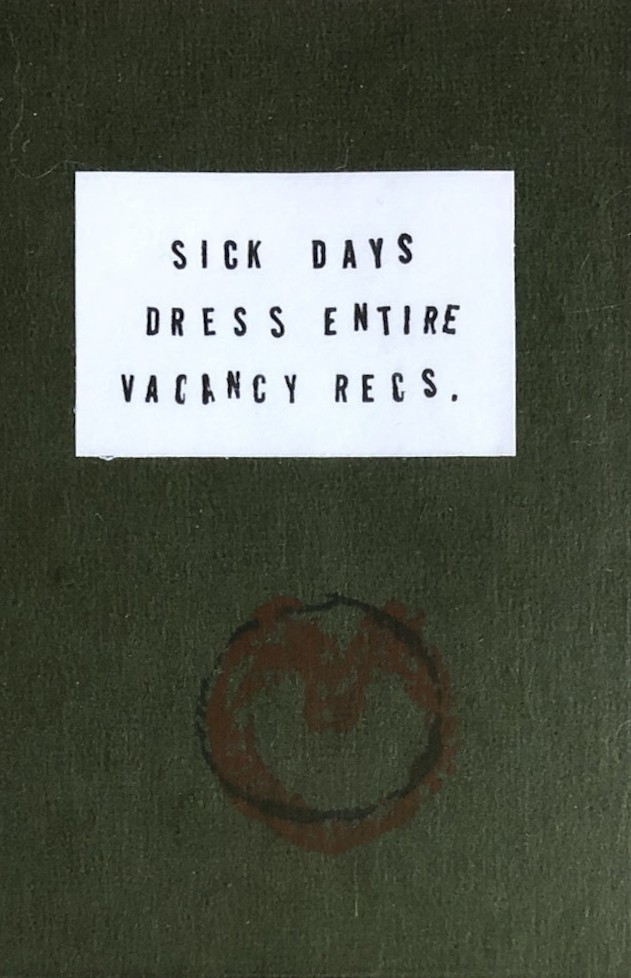 Sick Days is music for the summer. Vacancy operator Jeffrey Sinibaldi’s flagship project wrests sleepy beauty from the heat-shimmered doldrums, the lengthy meditations leaving plenty of room to breathe. Since the release of the sprawling and eclectic self-titled double CD (a modern classic of DIY experimental music if you ask me) back in 2019, subsequent cassette documents like The Calm Before and Org Chert Baker have narrowed the focus to patient, droning collages of slurred field recordings, reticent improvisations, and everything in between. There’s an easygoing holism to Sinibaldi’s approach that makes for an understated yet irresistible atmosphere. He uses every tool at his disposal to cobble together unified soundscapes that feel ambiguous and straightforward, tense and languid, all at once. Even with such a high bar already set, Dress Entire offers up his most magnetic material in years. Each side grounds itself in drowsy tactility—A with lapping water and percussive shuffle that could be a washing machine, ghost-train traffic, or one of the project’s mysterious “live installations”; B with delicate precipitation tickles and distorted speech—and slowly but surely progresses with measured momentum. Nothing happens suddenly. New textures ease themselves in as if submerging into a pool on a sweltering evening, already deep in the mix before you realize what’s happening. Both the sweat on your brow and the cool cloth you use to wipe it off. The crickets and the condensation and the steam of life.

