
 In what may already be one of, if not the culmination of a fantastic calendar year for harsh electronic music, Portuguese mainstay Narcolepsia and Hiisi Production’s from the artist’s home country of Finland team up for the monstrous Kulotus, a double-CD anthology of twelve Umpio recordings from the past decade. Other than Bizarre Uproar, there isn’t too much noise that makes it over from the Land of a Thousand Lakes with much oomph left (that I’ve heard about, at least… and I’d love to be proven wrong), but Umpio has been churning out increasingly interesting music since 2009, and now uninitiated listeners (including myself) can get a summative look into his stylistic and creative development throughout the ensuing years. Texturally intricate, dizzyingly detailed, and selectively intense, each and every recording included on Kulotus is its own overwhelming onslaught of whirling kinesis, the unique result of a refined system of oscillators, effects, and feedback manipulation pushed to heights that consistently flirt with the atom-splittingly primordial. We’re at the mercy of violent chain reactions, scalding Velcro-rip abrasions, and tectonic roils from deep within the earth—naïve volcano-voyeurs on the hunt for sounds whose potency is, to say the least, incompatible with the human eardrum. This definitely feels like a collection of various material, but it’s more than atmospherically coherent all together, and 80+ minutes ends up feeling more like 40. Not the worst way to experience ten years of fire and brimstone, or whatever.
Category: Reviews
Review: Painflux – Anew (Gates of Hypnos, Jun 3)
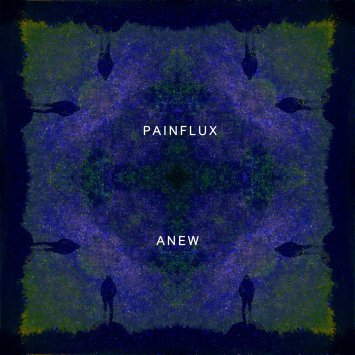 Poland’s Gates of Hypnos netlabel has been putting out some of the best material in contemporary wall noise since its inception last year, already boasting an impressive catalog of over a hundred forward-thinking releases by established and unfamiliar names alike, and Anew (perhaps somewhat ironically) is no different. The 31-minute piece marks Thai project Painflux’s second solo appearance on an external label (following a number of splits and Pratyahara on ░░ HNW ░░ ) and fits GoH’s eclectic, descriptivist aesthetic to a T. Like a massive robotic butterfly trying to escape from a thick, sticky chrysalis, gummy goop and oil and chitin clogging creaking joints and sheet-metal wings, Anew embraces intense textures both organic and synthetic. Vine-like stems of bulbous crepitation are tightly wrapped into a single shifting mass that seems to at once be implanted in the center channel and free to extend its countless tendrils outward—it’s like a tremendously complex cluster of rhizomes bulging with so many nutrients that its aboveground form is nearly animate. Fully executing this “rattling cage” type of wall in terms of sound design is quite difficult, but when done well, as is certainly the case here, the effect is spellbinding, even immobilizing. After a long enough time caught up in the strangling grip of these flagitious flora, the listener themselves begins to feel caught in the trap, and not long after realizes here is where they were always meant to be (pay no attention to the root that has covertly replaced your brain stem).
Review: Hit with the Joke Hammer – Hit with the Joke Hammer (Crooked Branch Collections, Jun 4)
 Several promising new labels have either started or found their stride in 2021. That latter milestone, unsurprisingly, looks different for everyone; for smaller, understated labels with narrow focuses, such as Crooked Branch Collections from Nashville, it might mean simply putting out their first single-artist tape. And the eponymous debut by Hit with the Joke Hammer, an unknown, previously undocumented project, is a more than fitting entry to mark such progress. Confined to muffled, claustrophobic mono and delivering a sickly, understated intensity that just barely tickles the fringes of what I would call “noise,” the concise C24 complements CBC’s minimal artisan aesthetic with its slipshod humility. Unidentifiable concrète recordings, which originally could have been anything from trickling water and domestic doldrums to repurposed feedback loops and shortwave fiddles, rake across rusty tape heads with a lethargic, tedious sputter a la UVC (though without the same sense of exteriority). In passing, each of the four short tracks seems to twitch and amble with almost indistinguishable gaits, and it’s only through close attention that the exact character of the specific agitations can be identified—nuance that one might not expect based on the unapologetic castoff-ness of the music. Recent readers are almost certainly aware of my fondness for stuff like this; if you possess similar tastes, definitely do not skip this one.
Review: Violeta García & Émilie Girard-Charest – Impermanence (Inexhaustible Editions, Jun 1)
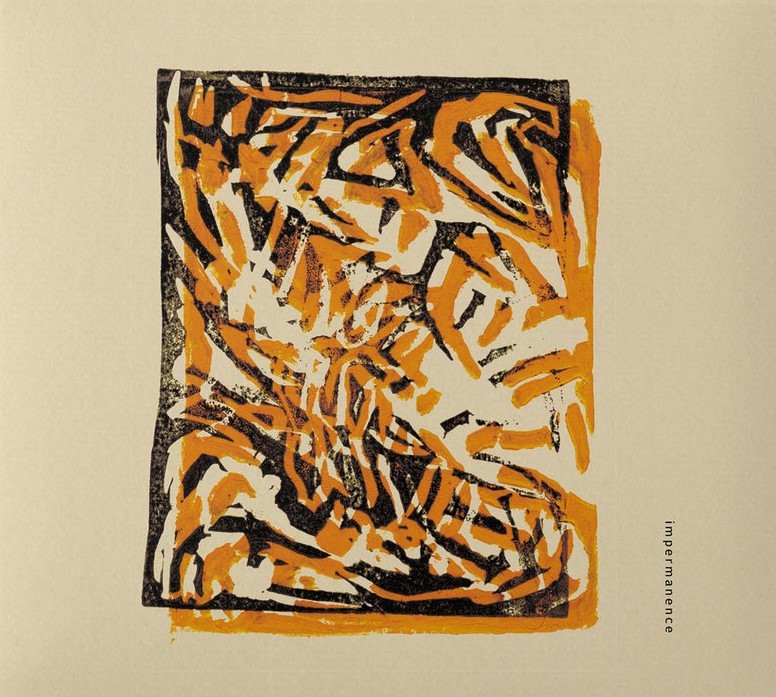 When choosing a title for an audio document of improvised music, you really can’t go wrong with Impermanence; it’s not exactly original, in terms of either the specific genre or music as a whole, but it will never not be accurate. In the case of Violeta García (a cofounder of the splendid TVL Rec imprint) and Émilie Girard-Charest’s first meeting as a duo, the word accumulates a more unique meaning because of the two musicians’ chosen instruments. Cellos are often associated with their ability to emit sustained, “eternal” tones, and are utilized as such in anything from acoustic drone music old and new to traditional classical and chamber accompaniments. But in García’s and Girard-Charest’s hands they frequently become anything but eternal, instead acting as boundless surfaces for all sorts of extended technique scrabble, auxiliary object play, short stilted bowings, and barely-there below-the-bridge vapors. Despite the differences between the two artists’ careers (García operates almost entirely within improvisational contexts, while Girard-Charest primarily performs solo and ensemble compositions) their musical interplay is superb; some of the best moments of their interactions surface when both take a step back from volume and intensity and deal in quiet timbral harmonies of scrape and rustle, but the louder stretches are excellent too, especially the high-octane tense trills and punchy pizzicato plunks of segment III—which in turn dissolve into and rematerialize from their own forms of sonic reticence. And the near-apocalyptic resin-shredding of V is simply breathtaking. To think that my first reaction when I found this release was, Two cellos? Yeah, right.
Review: Jørgen Brønlund Quartet – Landscapes III (self-released, Jun 1)
 It’s difficult to tell whether the so-called Jørgen Brønlund Quartet is actually made up of four individuals; based on the often extreme minimalism of their music, I might be inclined to assume that’s not the case, but multi-member bands like Shots prove that sparseness can be deceiving. “Best played at moderate volume,” the five pieces that comprise Landscapes III seem culled from the same forest as is featured on the cover, bubbling brooks and crunching leaves and auditory constellations of birdsong. There’s definitely some contact mics and/or hydrophones at work in segments II and IV, which sieve delicate, microscopic texture recordings through what is either subtle threads of auxiliary electronic processing or simply unusual sound-capture techniques (or both) to yield meditative rustle-scapes, the hidden organic hustle and bustle revealed when one turns over a partially buried rock. In contrast, the more spatially generous I and V swirl blending long exhales of wind and water in fluid arabesques, not quite the almost overwhelming physicality of some of Jerman’s more immersive nature evocations (I’m particularly reminded of his track on Underwater) but instead viewed from a comfortable distance: a waterfall of cascading spray observed from the safety of the hiking trail, ripples and rapids rushing by beneath a sturdy wooden bridge. As if I didn’t miss autumn enough already.
Review: Citysynthesis – Citysynthesis (Noland, May 28)
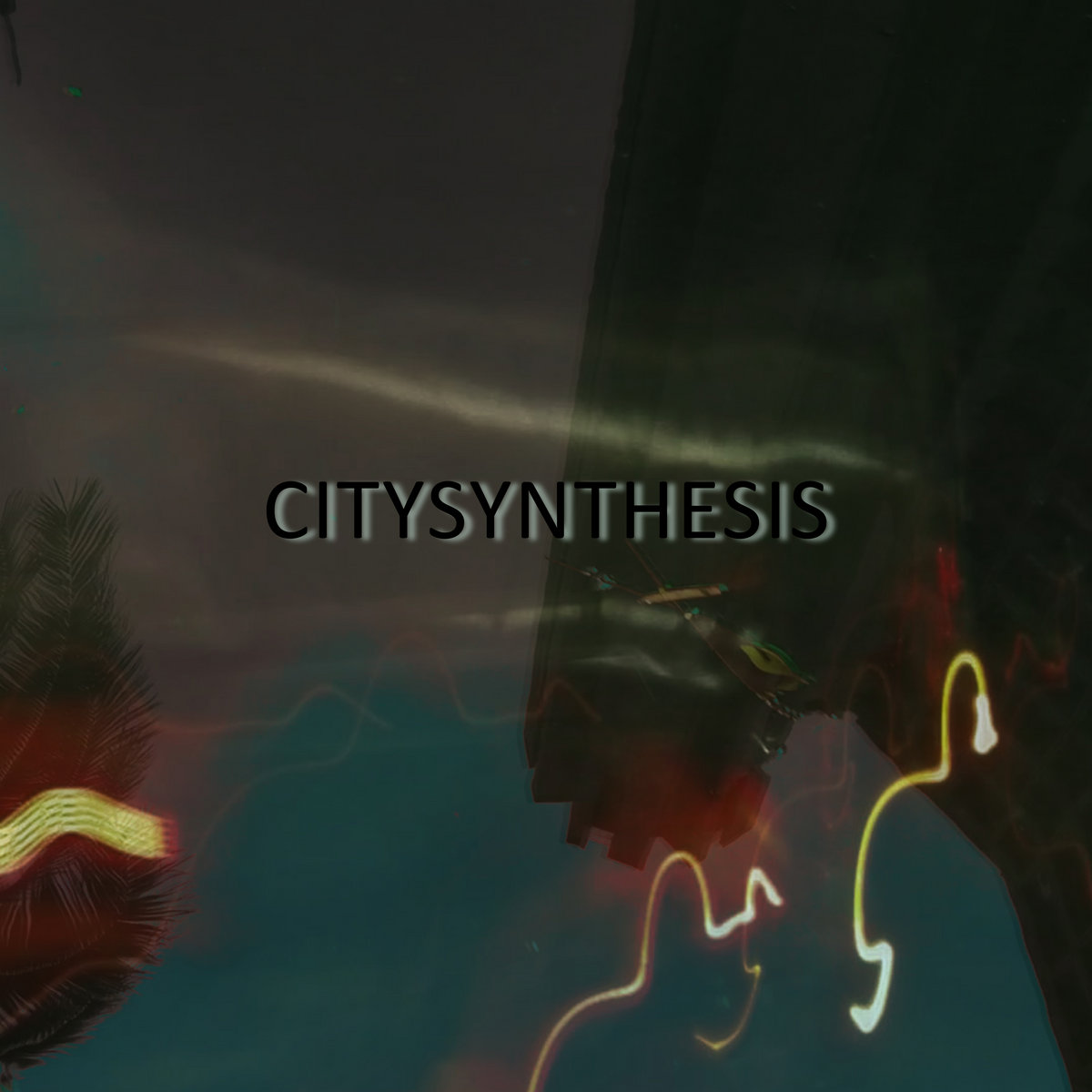 Nairobi musicians, artists, and community builders DJ Raph (Raphel Kariuki) and Sophia Bauer team up for an eponymous debut as Citysynthesis, the latest in a series of collaborations the pair have undertaken involving each other as well as sound enthusiasts from all over the populous Kenyan city in the interest of mapping its sonic characteristics and geography (read more about these ventures, particularly the World’s Loudest Library and Sound of Nairobi, here). Despite Kariuki’s musical background in beat-centric electronic music, “Pulpit” begins the digital-only EP in a rather formless, abstract manner, setting the stage for the sort of urban soundscape dissections that are used throughout: fragmentary, volatile, textural, but not to the point where a single iota of natural atmosphere of is lost. This is especially apparent on the following “Sitaki Kuongea Mob,” which seems to simultaneously deconstruct and reconstruct some sort of street performance, the jarring jump-cuts and splitting rhythms woven together with persistent speech. Then, on “Trio,” it’s the voices that become the object of structural recontextualization, floating ephemerally around a seething center like the beating heart and lifeblood of the city itself. The many paradoxes upon which Citysynthesis is built extend to the actual effect it has as well; one feels as if these meticulous assemblages convey more potent information about what it means to live in Nairobi than simple unaffected field recordings would, and yet it’s difficult to say exactly why that is. My theory is that with passionate residents Kariuki and Bauer acting as deeply involved sonic filters, anything they create will be imbued with the same love and appreciation for their city as is held within them.
Review: Urall – On Broken Stairs (Dadaist Tapes, May 30)
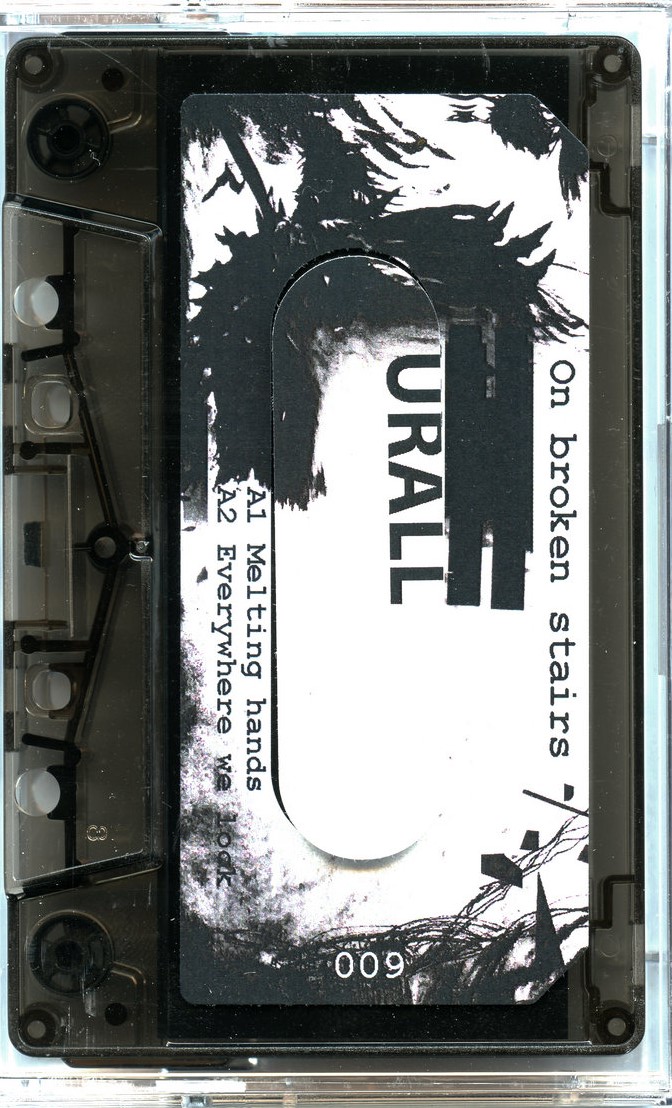 I was, as the kids say, “today years old” when I discovered the Geel, Belgium–based Dadaist Tapes. They’re “funded by a cycling allowance” to give away editions of 25 free tapes in the interest of “discouraging product sales,” which is a goal with which I can definitely get on board. Though the label most likely remains incredibly obscure from any standpoint, one could say it is known by enough people since, according to their simple website, each and every copy of the nine tapes they’ve released have found a home. I’m glad to be introduced to this gem of a venture via Urall’s On Broken Stairs, a condensed suite of moth-eaten tape music that strikes the same deep dust-covered chords as Termite Acropolis and Darksmith. Swaddled in lumped-up layers of scum and fuzz, a range of disoriented emotions make attempts to break the oil-slicked surface: almost sunny no-fi drone psychedelia cracking under dizzying industrial collaging on “Melting Hands”; warbling, uneasy tranquility delicately distilled for “Everywhere We Look”; and, finally, complete, terrified delirium on “Taking Turn,” hoarse cries into the void as all around you it crumples into cold mechanical doom. All five tracks are superb compositions in their own right, each using the rich, fecund emptiness of blank (or mostly blank) magnetic tape to its fullest textural possibilities. I’ll be listening to this—digital downloads of Dadaist releases are, unsurprisingly, also free—as I sit at my computer constantly refreshing their website until I can grab the next one.
Review: Springboard – Midwest Radiator Sessions (Structures Without Purpose, May 28)
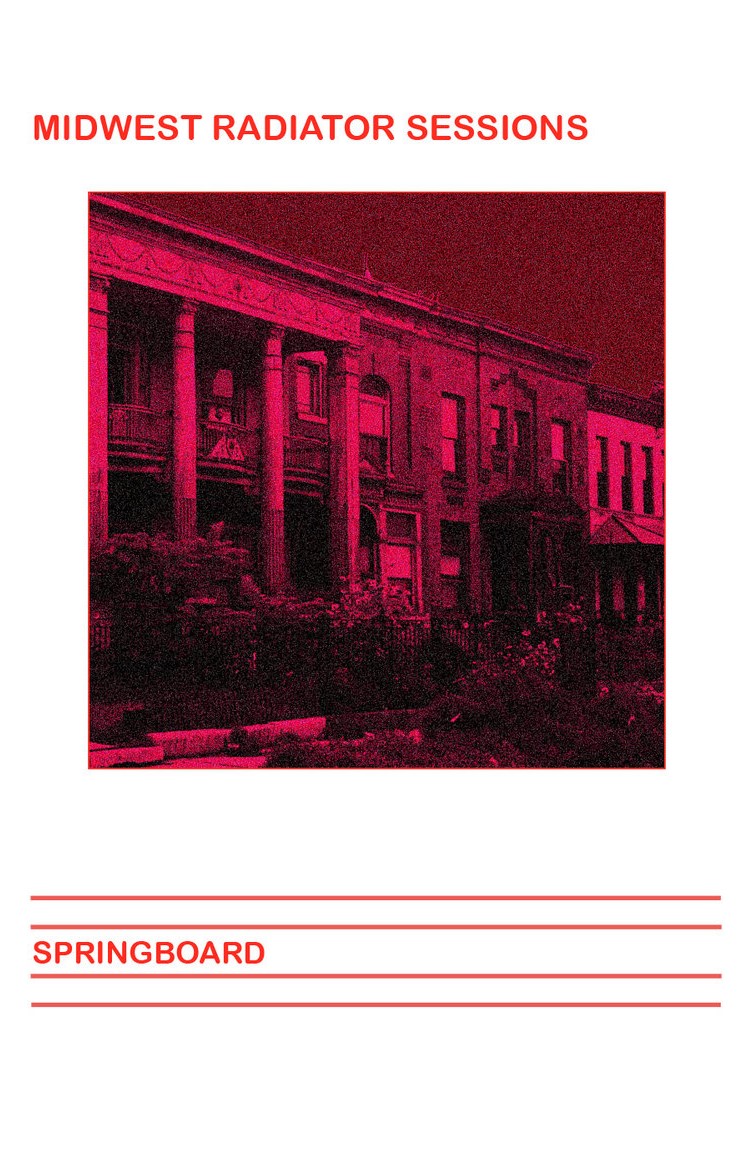 Midwest Radiator Sessions marks Chicago musician Joe Cavaliere’s 25th release as Springboard, and yet the vast majority of his work does not get anywhere near the amount of recognition it deserves, which is why I don’t mind writing this even after covering “The Coward” a few months ago. In almost direct contrast to that album’s eclectic array of disparate sound sources and hyperactive, impatient pacing, this new tape from Structures Without Purpose is an entrancing series of moody, grime-smeared industrial phantasmagorias. Even behind the fuliginous curtains that shroud most of the pieces, Midwest Radiator Sessions often seems to be above all else a search for textural sublimity within that which is stubbornly unmusical in its pragmatism—something it achieves quite frequently, whether it’s the pestilential ambience like a squelching symphony of microscopic decomposers on “Rustler” or the humming mechanical monotony of the following “Boiler.” Much of the lumbering assemblages end up somewhere between the material-detail experiments of Small Cruel Party and the indiscriminate manual chaos of classic Haters, both beautiful and crude in an entirely unassuming, almost completely neutral manner. The sluggish “Conductor” offers a change of pace in the form some good ol’ melted-junk noise that sounds like it was extracted from tape buried under ten feet of earth, and “Dweller” wraps things up with a mildewy whirl of gouged frequencies and hisses of decay. By the end I’m not sure whether I want to go urban exploring or curl up in a dark corner.
Review: Ugogg – 涛涛 (self-released, May 23)
 In noise music, well-executed tributes, whether explicitly identified or arbitrarily ascribed, tend to be applauded and appreciated at a much higher rate, perhaps higher than any other genre with a similar breadth of history. From my view there’s an easy explanation for this: because the tradition is so distinct from conventional and even other unconventional musical approaches in its stripped-down, confrontational viscerality, it often flips the usual script of sound 🡲 emotion, supplanting the instantaneous impact of its extreme volume, presence, and timbre over any other more complex point of analysis one might make—thus creating the very immediate “you like it or you don’t” quality. This happens occasionally with specific songs or albums in any genre, but it’s significantly more consistent in noise, and allows for fans new and old to hear recent acts like Wolf Creek or Berserk and be swept in right away, heads nodding and eyes scrunched up before any thoughts of “hey, this is definitely in the vein of older stuff,” and by that time one is ready to finish that sentence with “…and that’s okay.” This discussion is quite relevant to Yamagata artist Ugogg’s new release 涛涛 (pronounced tao tao), which not only takes plenty of cues from classic Japanese pedal stalwarts in the music itself but is also tagged with the “japanoise” descriptor. Much of the succinct release has that merciless high end that seems to grind and screech at the same time as masses of electronics flash, flicker, and fracture in the lower ranges. “壺壺” starts out violently loud and only grows more intense as massive sonic caverns open below the caustic crackle, shifting with tremendous weight like tectonic plates made of dark matter; “線線” is like the searing metallic squeal when the dentist goes overboard with the drill (and the pain that comes along with it); “礬礬” and “拷拷” both feature ruthless virtuosity and buried vocals that make me want to hear it blaring at an unhealthy volume from speakers in some cramped back room and with my own eyes watch this merciless mangler bring silence to its knees.
Review: Wasteland – Mora (Ancient Entity, May 26)
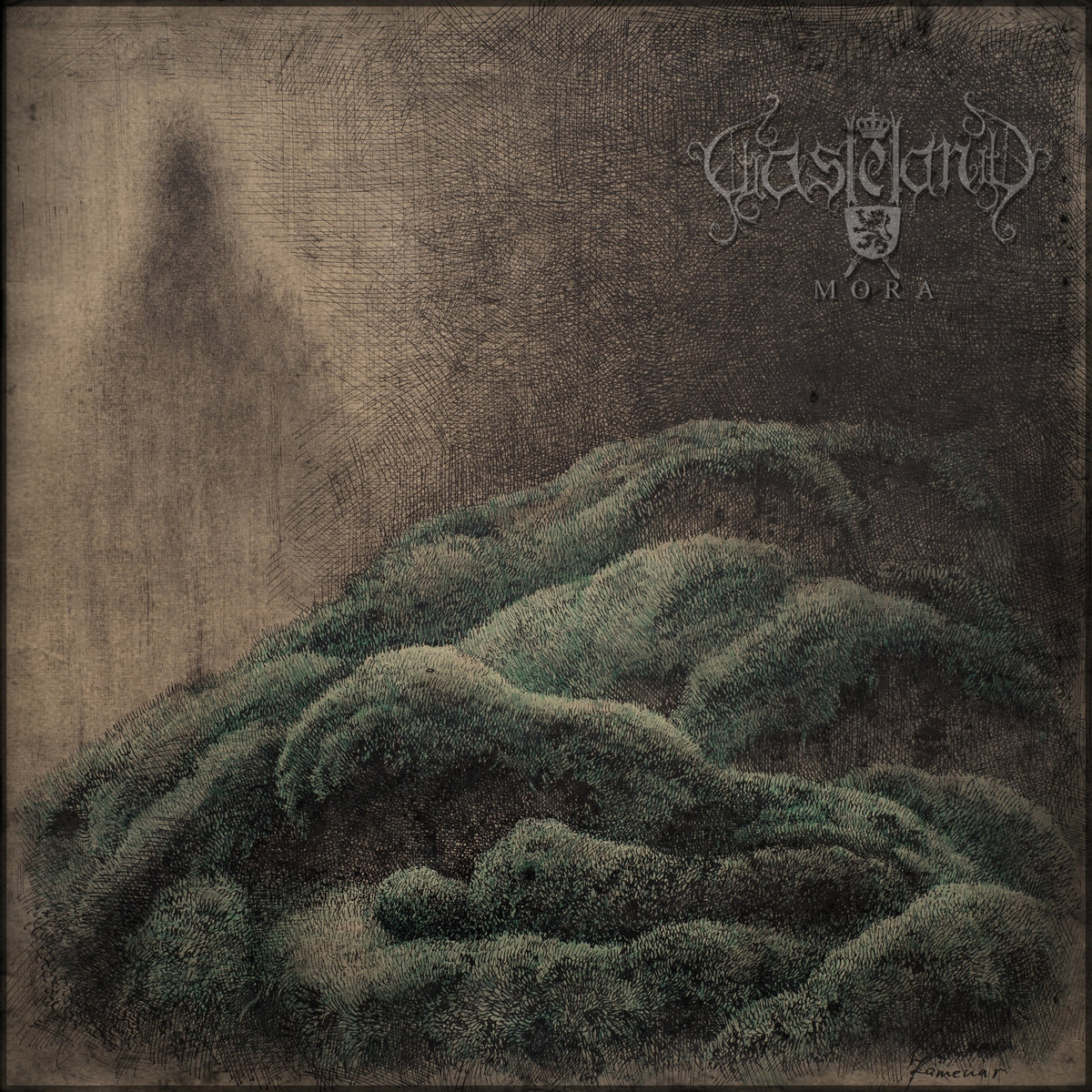 Besides the initial serendipity of their sharing a name with one of the greatest unsung hardcore punk bands of all time, Croatian quintet Wasteland first caught my undivided attention with the bestial power of vocalist Morgoth’s screams, which combine the hoarse, raked-across-a-razor rasping of old with a fresh fervor as clear as a mountain spring, often double-tracked and layered in a way that makes them resonate even more. Mora, from both an instrumental and lyrical standpoint, is uncompromisingly pagan, not in the neologized sense of simply incorporating folk flavors and an appreciation for the natural world, but rather the original definition, which from a Slavic perspective harkens back to pre-Christianization when the spread of western religion led many European groups, notably the Narentines in southern Croatia, to become even more obstinate and zealous in their nature-centric and polytheistic belief systems. This historical atmosphere comes through most saliently in the words of the incendiary opening track “Ledene Duše,” an intensely apocalyptic and anti-Christian disaster story, and “Pokolj,” which embodies the fearful but ultimately courageous Nordic forces that fought off their evangelist invaders. Throughout these vivid evocations runs an unyielding current of superbly executed black metal bells and whistles, from percussion that seems to shift between programmed and live kit drums (or, perhaps, programmed and better-programmed) to memorable melodic guitar licks and well-placed In the Nightside Eclipse synths, all of which come together on magnificent closer “Zvijer II.” With all of the nauseating, fascist nationalistic ignorance so deeply embedded in this genre’s chronology and culture, it’s always immensely refreshing to find and enjoy something that understands what we should actually love about our “nations”: the awe-inspiring, terrible beauty of the land itself.
 Noise Not Music