Soft Shoulder’s 2020 LP Not the New One was and is everything I want in a scuzzy, shifty slab of deconstructive art-punk: rudimentary garage jams and trash-can-lid drums, $5-plastic-megaphone vocals, off-kilter arrangements, churning background collages, you name it. What I didn’t know until much more recently is that the Arizona-based collective has been kicking a lot longer—since 2010, in fact—and that they have made the entire 7″ format their bitch. Copy Machine Fall Down is just the newest in a long line of excellent singles, double-singles, and lathes, but there’s something about it that really makes it stand out. It could be how much the A-side track, “Touchless Display,” reminds me of Stutter’s forgotten classic Broken Snakes, the blueprint for pretty much any contemporary species of pasted-together-punk or rhythmic collage freakout; it helps that the track, along with its partner on the B side, was in fact assembled remotely by the groups most mainstayish member, James Fella. These roughly wrangled recordings twist into a dubby backbone that somehow lumbers and skitters at the same time and then into, well, the compositional equivalent of a spine lying in disconnected piles of jagged vertebrae on a cement floor. Anxious sax skronk, clumsy guitar detritus, and jarringly apathetic vocal ramble make the nearly 7-minute “Treat for Samson” an unforgettable clusterfuck.
Category: Reviews
Review: Karen Willems & Jürgen Augusteyns – Rapper! (bwaa., Mar 5)
Rapper! is a guitar and drums album that captures the spirit of Bailey and Bennink’s legendary June 1972 live sessions, transposing its bashing brutality and unhinged, rabid fun to a new era. Accomplished Belgian improvisers Karen Willems (drums) and Jürgen Augusteyns (guitar) had never played together before recording the material that would become Rapper!, but their sonic rapport is of that sort that defies typical conceptions of seasoned interplay or mutual preoccupations, and instead is perhaps more comparable to the boundless, breathless adventures you had with that kid you met at the park when you were five and never saw again. It’s impossible not to listen to ecstatic nonsense-frescoes like the opening title track or amorphous jams a la “Trager, of neen, toch rapper!” without imagining Willems and Augusteyns face-to-face in a cramped studio, dripping with sweat and just screaming at each other as they mash and mutilate their instruments with unyielding force. Amidst the chaos there are moments of reticence and even tenderness, but they always retain some semblance of bizarreness; take “Altijd,” for example, in which a simple, incessant fingerpicked line is haunted by whips, rustles, and whispers from Willems at the music’s furthest edges. It’s bits like this that establish the presence of something beyond just the two talented musicians having fun. There’s a wordless connection, an understanding—a garishly colorful and misshapen one perhaps, but an understanding nonetheless.
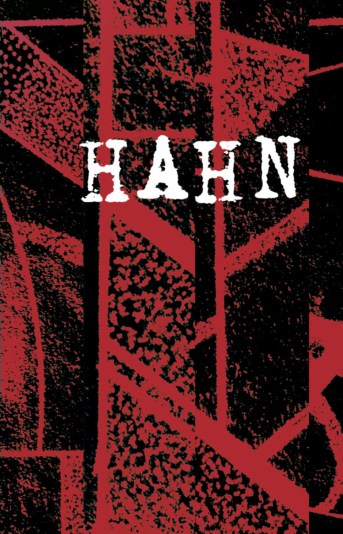
Review: HAHN – Handed All He Needs (Zazen Tapes, Mar 5)
For those of you whose desert-island harsh noise classic is the Blod Red Light Companion box set, look no further for some fresh slabs to cut your buckteeth on. On Handed All He Needs, the first in a series of acronym-extrapolated titles to see a physical release, New Jersey artist N.E. Hertzberg puts on a clinic for one-minute blasts, of which there are 40 in total—a nice symmetry for something of this length, like Commercial Album and others whose conspicuously neat track durations and quantities elicit a necessary second look. In some sense this tape is similar; the vivid, meaning-rich titles were simply jotted down stream-of-consciousness–style in a fleeting fit of inspiration, while Hertzberg explicitly encourages shuffle-play, both of which seem to be qualities that undermine the completeness and intentionality we expect from finished albums. But the music itself is another story. Each cut is its own inferno of delirious chaos, with enough ornamentation around the main course of skull-rattling pedal crunch to keep every chunk of the LP-length run time engaging: mangled screams, bleep-blooping glitch cycles, melodies caked and baked in distortion, delirious center-channel obfuscation. Hertzberg’s versatility is on full display whether one plays through the provided track order or makes their own; at times he waxes psychedelic with descents into hallucinatory murk and climbs to somewhere near C.C.C.C. sheet-metal-squall bliss; and at others he keeps things muscular and immediate, often reaching that elusive state in which the electronics seem to control the noisemaker rather than the other way around.
Review: Fsik Huvnx – Spires That Rise from the Earth (Noir Age, Mar 5)
After yesterday’s review, as well as the fact that I’ve actually been able to read outside without a jacket on the past few days, I think we’re in need of something more… soothing. And that’s exactly what Fsik Huvnx’s new tape is (by the way, it’s much easier to pronounce the actual name of the person behind the project: David Brieske). I almost gasped aloud when I first put it on after getting it in the mail and “Distant Islands” faded into existence… the title Spires That Rise from the Earth is probably the most fitting phrase to describe the ecstatic heights this album consistently reaches, because while it hovers and dwells in a bath of seraphic glow far above us it remains steadfastly anchored to the unyielding ground. The way in which Brieske has captured these modest sounds is understated and yet unshakably exquisite; for example, “The End of a Day” is nearly eight minutes long and consists only of slow-shifting organ dirges, but its soft, muffling cocoon of hiss and distance makes the act of listening to them a much more significant experience—one that is somehow remembering, forgetting, creation, and exhumation all at once. Successive tracks add flavor with bird twitters and nature-sighs nestled in the left/right channels or densely layered, interlocking melodies that eventually meld into languid, transcendent drone symphonies like the song of a massive golden wind chime. Though I wish more of the tracks were as colorful and complex as the opener (especially with all this talk of painting), the tape as a whole gains a lot from the depth of these hermetic laments: threnodies to something no one—or, perhaps, only Brieske—remembers.
Would really recommend getting a tape copy of this… can’t really imagine listening to it any other way.
Review: Daniel Iván Bruno – Brazo (TVL, Mar 5)
A harmonica. That is where all of the sound used to create the punishing, artificial majesty of Brazo was originally sourced; yes, those little hollow, rectangular blocks of metal and imitation wood you used to get for Christmas as a kid and forget about weeks later or that some prop up with those ingenious neck-holder devices. The actual music that Daniel Iván Bruno summons via a gauntlet of adaptive digital processing bears negligible resemblance to the familiar warm, metallic rasp of that classic instrument; instead, it’s loud, abrasive, mechanical, antiseptic. Profoundly detached and dissected bits of broken notes become bullets in an endless, rapid-feed machine gun belt, sending microscopic bits of eviscerating noise into the fluid space of Bruno’s own sculpting and manipulations. Opener “MDA” rattles all the little screws securing your eardrums right out of their holes with its relentless, piercing, stuttering onslaught, while “Marzo” plays with the kind of awe-inspiring electronic spatiality that make expert system-spanners like Hecker and Ikue Mori so compelling. But even though Brazo is computer music through and through, much of its enthralling roil engages the ears with the same slipshod agility and restless twiddling as the best tabletop harsh noise, which gives these crystal-clear eruptions of causticity an irresistible scruffiness.
Review: Angelo Bignamini – Feu de Joie (Ambient Noise Session, Mar 2)
The first thing we hear on Feu de Joie is the violin, a warm, plodding octave vamp in the same spirit as the opening moments of Jim O’Rourke’s Happy Days, and just based on this section one might think they’re about to hear a very different album. But Bignamini and his arsenal of deconstructive sensibilities do not disappoint; this rather short tape is an expansive and expressive patchwork of beautiful abstractions that nonetheless is haunted by the tangibility of the most ubiquitous classical string instrument. Between lush, heavily tape-processed crackle-scapes, rainfall, everyday ephemera, and decontextualized voice, the violin is in turn meditative, elegiac, wistful, spectral. According to Bignamini, much of the less identifiable textures were created by it being “manipulated, broken down and corroded through the use of tape recorders and some electric interferences produced by various loudspeakers and cheap microphones,” so it likely has a place in most if not all of the handful of untitled tracks, but it is these moments of lucid convention that anchor the artist’s elusive assemblages. The stated classic musique concréte influence is also an enjoyable and unifying current throughout the tape. I’m especially partial to the fourth (or maybe the third?) piece on side B, in which minuscule electronic pinches, crystalline fast-forward blur, and aquatic modular bloops form a tried-and-true amalgam. This is, as expected, fantastic stuff. Curse you IT→US shipping prices!
Review: Stephanie Cheng Smith – Forms (a wave press, Mar 1)
With Forms, LA-based sound artist Stephanie Cheng Smith accomplishes that rare feat of a distinctively halved LP-length set in which each of the halves are markedly different but pull equal weight in terms of intrigue, quality, and overall structure. I knew of Smith from her participation in the now-unnamed Animal Crossing performance quartet that streamed several unforgettable sets via Twitch last year, but this CD collects two solo works recorded between 2018 and 2019 that exhibit the eclectic artist’s knack for harnessing the magic of the real world as well. “Bird,” with regard to both its concept and its actual textural palette, is a dream come true for me: a lush, discretely cacophonous swarm of the tiny touches and contacts of many objects suspended in a system of vibrating plastic bowls (dubbed “b-z-bowls” by the artist) that shifts from meditative avalanche to swirling gestural slices to soothing pitter-patter. I’m sure seeing Smith actually perform with the setup adds a whole new dimension, but even with just audio it’s a breathtaking piece. “Fish” couldn’t be more of a stylistic shift; where “Bird” was mechanically effervescent and emotionally neutral, it is dark, brooding, expressive, teasingly tonal. The “dark energy synthesizer” almost drags things down with a rather cheesy sci-fi/deep space type patch, but Smith’s Flynt-esque violin scrapes and shrieks handily steal the show. And soon enough the synth too spirals out of control, oscillating between distant hum and noisy wrack for the remainder of the composition, which retreats and quietly seethes for a bit before exploding into a piercing maelstrom of glitch churn and vicious string abuse that would make even the most extreme Mego releases blush.
Review: Whisker – Moon Mood (Husky Pants, Feb 23)
On Moon Mood, their first album as Whisker, Tiger Hatchery drummer Ben Billington and bassist Andrew Scott Young weave one of the more unusual—and enthralling—duo improvisations I’ve heard. Though Billington pounds the kit mercilessly in the aforementioned project, a trio with saxophonist Michael Forbes, here he embraces a much more subdued palette of abstract electronics. At first, the contrast between these burbling transmissions and Young’s dissonant but largely conventional playing is stark, almost off-putting even, but the pair’s particular style of musical conversation soon becomes not only palpable, but visceral. It’s a strange combination of edge-of-your-seat, suspenseful volatility and something much more languid; each musician has a wide range of intrusions at their disposal, from sparse to punishing, but the detailed noise they produce together is not an outward assault, nor even a muscular, indulgent chaos of Euro free jazz (I can’t help but think of Kowald when lost in Young’s throaty, expressive bowing)… they’re just jamming. Though that may sound reductive, it isn’t at all, because for me all the intrigue of Moon Mood is in the fluidity of exchange, wordless questions and proposals and answers and reactions. It’s well-recorded but you still feel like you’re in the room with them; at one point Billington rides on a low, buzzing throb that could very well be a vibrating cell phone, and it has the interesting effect of grounding one’s perspective to a space only hinted at, within which the instrumental gestures are even more astounding. Right now I’m particularly obsessed with a moment about four minutes into the second track, when the duo tries their hand(s) at a whimsical call-and-response, and their flurry of jutting tones and scant bow slices just absolutely nails it. Looking forward to more stuff from Whisker.
Review: Brandstifter & Diurnal Burdens – Miraculous Seepage (Crow Versus Crow, Feb 26)
The second of two freshly released collaborations between the hermetic Brandstifter and Steep Gloss operator/poet/tape-mangler Ross Scott-Buccleuch (a.k.a. Diurnal Burdens), Miraculous Seepage is a sickly product of a sickly time, the dark, murky currents of uncertainty and unease that lurk and drip between the sparse, loosely-strung chain of bright spots we’ve taught ourselves to call life. The stuffy queasiness of “The Crazy Sandman’s COVID Coughdrops Swallowed by a Flock of Seagulls” sets the stage for some good ol’ auditory théâtre de l’absurde, its sweaty, humid lethargy surprisingly inviting despite the unavoidable association with
that awful pre-sickness twinge. “S. Scheint in Solcher Zeit” is indeed a series of “spliced scenes on a carousel looping,” and one of only a select few of the pieces with a grounding element in the form of graspable tape cycles; the versatile medium is almost certainly used on every track, but lost in the insubstantial, steaming wisps of “Sigue Sigue Sea Lions Rolling Iced Dices in Polar Nights” or stifled sewer-drain stumble of “Frozen Digeridoo Talking about Foot Fetish by Church Bells” it’s not hard to lose one’s footing, and after that there’s no floor—let alone a rotating carousel—on which to regain it. At first, it really seems as though there isn’t much here, so one must look closely to see the gold.
“My father in a broth-stained undershirt
as he laughs weary in our weak-light kitchen
sounds like a mouse running—raspy chuckle,
fear scurry, grain of rice seized and bitten.
How small one life is, and how tightly
we hold on to it. But cancer (for example)
can grab life back, knot up a tumor fist
unremovable. What then must a person do?
Live smaller and smaller. Wash a bowl
as my father does, with a motion as of
panning for gold, glint in his mouth
as he peers down—not smiling, not grimacing—
into the water, dimmer and dimmer, knives at the bottom.”
—Roger Fanning, “Glint of Gold Tooth in a Poorly Lit Kitchen”
Review: Ezio Piermattei – From Afar It Looks Like an Oriflamme (More Mars, Feb 25)
Prior to 2021, Italian soundmaker and curator Ezio Piermattei was just on the cusp of becoming one of my favorite artists, but with only a handful of releases since 2015 it wasn’t a classification I could yet bestow with confidence, even though short sputtering curios like Turismo dentale and Holo Orbita were already some of the best “music” I’d ever heard. His newest work, however, is nothing if not a tipping point that cements Piermattei’s recent creative direction, and his recording career in general, as something truly great. Continuing in the vein of the clearly recorded conversations, mundanities, and abstract narratives rolled into enigmatic bricolage that was first explored on Tre madri ludopatiche and honed to a sublime focus with Gran trotto, From Afar It Looks Like an Oriflamme is something more still: a liminal odyssey along the tightrope strung between unexpectedly ambiguous designations of “inside” and “outside”; a finely crafted barrage of muck, mystery, memory; the sonic equivalent of a haggard travel journal stuffed full of musings and drawings and findings, ephemeral in their inconsequence yet ineffable in their tangibility. Piermattei’s own words and voice (I think) are a somewhat significant presence, emerging between episodes of shake, rattle, and stroll to clumsily inject elements both sentimental and surreal: “in my… sometimes like that… purse in my… brain…. And, uh… and sometimes they remind me of my youth…. She used to slap… me… too much. I do not like to be slapped. That’s why… I like… it raw. I like it raw. (Don’t laugh at me).” Oriflamme is a near-flawless distillation of the artist’s ability to tell an enthralling story without really telling any story at all.