
 One of two new full-length CDs officially declaring the existence of FIM Records, the record production arm of the prolific concert series of the same name, Blessed captures the unruly quartet machinations of in-house curators Caleb Duval (bass guitar) and Luke Rovinsky (electric guitar) in session with Ben Eidson on alto and James Paul Nadien on percussion. Though it was recorded at The Record Co. studio in Boston, the lengthy album is filled to bursting with the electricity and irreverence of a raucous live performance—a memorable moment occurs at the beginning of “Some Joyful Sound,” when Nadien yells “Do it to ’em! Do it to ’em! Do it!” as Rovinsky works up an infernal racket with a radically pitch-shifted guitar. Seeing the mix and master both credited to Oakland’s Nathan Corder was no surprise; Stalwart’s heavy yet lively interplay very much belongs to a thriving new school of improvised music that transcends state (and national) borders, distilling both the silliest and most serious aspects of the wider tradition’s six-plus decades of existence into an exhilarating, ever-diverse tincture (of which Corder’s records with Tom Weeks, as well as with other projects like Mechanical Bull and Monopiece, are also excellent examples). The longer tracks on Blessed are its best, especially the eighteen-minute burner “All Bad News (Variable Red Pitch Modulation Device and Four Gunshots)” with its effortless shifts between sparse, anxious skitter and full-force surge, but there’s not a single throwaway cut here. The shorter ones bottle fleeting bits of brilliance: serpentine pseudo-rhythms in “A Rare Glimpse,” muscular call-and-response jerks in “Electric Powered Memorial Candle.” A common talking point in free improvisation “theory” is knowing when not to play. These four are well past that—they always know when not to not play.
Category: Reviews
Brief summaries intended to describe and express my enjoyment of albums. My opinions are not the focus: I purely seek to facilitate discovery.
Review: Dépaysement – Tulpa (Stills, Jan 10)
 Many, including me, are drawn to cut-up for not just the exhilarating pace and gestural kinesis, but also the intentionality; few other noise subgenres are as directly reliant upon the artist’s mastery of their own equipment and the musical vision they set out to accomplish. But what happens when the wracking blasts of distortion and cross-stereo jumping become more incidental than intentional, as if the gear itself is internally disintegrating, spitting out the textural equivalent of catastrophic error codes through overblown speakers? This is no hypothetical—Dépaysement’s new C20 Tulpa fully embraces such a messy, volatile approach, the assaults of crunching harsh constantly cracking under their own weight and crumbling into swaths of pensive nature recordings and sighs of fraught ambience. It’s one of those tapes that is strangely satisfying precisely because it seems to outright reject any sort of conventional satisfaction: the loud parts are gone as soon as they arrive, the quieter stretches refuse to resolve or climb toward a climax; listening is like trying to scale a jagged, landslide-prone mountain that actively resists your very presence. But at the same time there’s a certain logic at work, one that reveals an aesthetic purpose not immediately obvious. It’s about unpredictability, the excitement of being completely uncertain what will happen next. That bubbling brook/contact-mic shuffle duet in “Skin” draws ears into a false stasis that exists only to be broken, while the delicate drone of the latter half of “Visage” does the exact opposite, leading up to something that never actually happens. As much frustration as there is fulfillment: a lost art in noise these days.
Review: Pacing Animal – Pacing Animal (self-released, Jan 6)
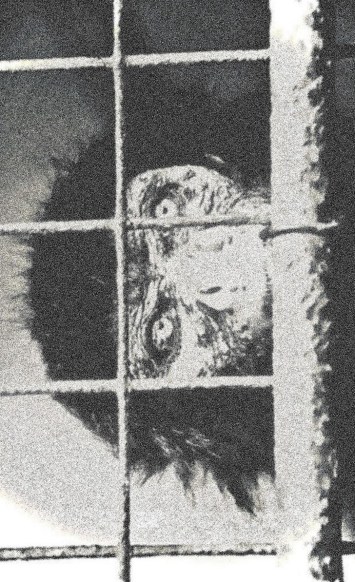 The jailer flinches when the prisoner slams against the steel, reaches through the gaps in the bars, howls and harangues. But the true terror sets in when they hear the cell’s occupant begins to move quietly, methodically: “They walked in a space even smaller than the confines of the cages made necessary, moving in an area just barely the length of their bodies. A few steps up and turn. A few steps down and turn.” A plan is in motion—one antithetical to the jailer’s wellbeing. Pacing Animal captures that steady seethe of pooling resentment and righteousness on their self-titled debut tape, wrangling heavily distorted textures that writhe and rattle with the patient fury that only a cage can create. There is no fancy digital hardware within these unforgiving confines, only a latrine that’s always overflowing and a filthy food bowl that’s never full; the new Hudson Valley project restricts their palette to the warm-blooded roar of a ragtag analog chain, riding dense torrents of rumbling heavy electronics intermittently gouged by pained yelps of feedback. At time the sound resembles a disintegrating diesel engine, at others an foundation-shaking quake—always brazen and brutal. Slow-burn harsh noise that does not hesitate, but rather bides it time, waiting for the perfect moment to strike.
Copies are available via email: pacinganimal@gmail.com.
Review: nula.cc – Mayrau (self-released, Jan 1)
 “This work’s namesake is a coal mining pit in Bohemia turned into a museum. The ghosts of Mayrau still hang in the changing room, where the workers’ street clothes were hung high above the floor to serve as a visible sign that their uniformed selves were still down in the pit. The chain and pulley system has grown rusty, and its squeaks have become one of the voices in this piece.”
Mayrau is a 3″-length electroacoustic piece that examines the sonic ecology of the Mayrau Mining Museum in Vinařice, Czechia. One of six new “filecast” entries in the ever-expanding catalog of Lloyd Dunn’s multimedia project nula.cc (both an alias and a URL), it might be my favorite release so far. The descriptive text reprinted above explicitly introduces a paranormal aspect, which is then explored further in the actual music; the scrapes and shrieks of the time-gnawed pulleys soar and then fade in a sweeping expanse of darkness, conjuring a haunting atmosphere that lingers long after the track is over. The composition is built upon field recordings that are both presented in original raw form and digitally processed into shifting shards that contort and complicate the soundscape, reaching toward and occasionally coaxing out the intangible currents of a location marked by hardship and pain. Mayrau is an excellent example of interpretive phonography in how it both depicts and deconstructs the physical environment, achieving a rare strain of hypnosis with its carefully sculpted industrial churn and paranoia-inducing signs of human presence like voices and applause. “Rich” is a word that keeps coming to mind… there is so much detail here, the kind that rewards any level of engagement, whether one just puts it on in the background or listens closely for a deeper investigation of how much of a place can really be preserved, and what that “preservation” does (or doesn’t do) to the things people leave behind.
Review: Éric La Casa & Seijiro Murayama – Supersédure 2 (Swarming, Nov 21)
 The long-awaited but nonetheless unexpected sequel to one of the most widely beloved documents of improvised music is finally here in the form of Supersédure 2, the first material from field recordist Éric La Casa and percussionist Seijiro Murayama since the original Supersedure in 2009 (I’m not sure of the significance of the presence/lack of the accented E, if any). The two seasoned sound artists’ collaborative formula remains largely the same for this formidable follow-up, though the sonic milieus captured, transformed, and occupied seem to lean more toward interiors than exteriors. Fourteen years is a long time, but La Casa looks even further back in time to assemble the arsenal of recordings he wields, with some of them being unearthed from as early as 2003. Recurring elements include echoing footsteps, digital appliance tones (barcode-scanner chirps, forklift backup beeps, mouse clicks), and more. Murayama is as sparing and precise as ever in his contributions, often deliberately mimicking the metronomic intervals of the aforementioned motifs. The first section of Part I is an immediate and representative introduction or (re-introduction for those already familiar) to the duo’s dynamic, with precise snare cracks cutting through and building tension between intermittent unfoldings of industrial environments like auditory pop-up pages, while the third reverses spatial trajectory to transform wide-open warehouse spaces into intimate tabletop operations, helped along by muted stick rolls. Yes, the overall focus is definitely on indoor dramas, but Supersédure 2‘s most affecting moment occurs at the end of Part II when the action abruptly moves outside, concluding the suite with a birdsong/snare duet that I can’t stop thinking about. Even after several listens I’m still extremely excited about—and grateful for—this wonderful release.
Review: B33N – Whole Kernel Niblets (Phons, Nov 6)
 Even if you haven’t yet heard the first release by B33N, it should come as no surprise that Seamus Williams once collaborated with New England neighbors Staubitz and Waterhouse. I bring this up because the same flavor of masticated mundanity that so enthralled me when I first heard “Pickup for Mark” on the Pawtucket duo’s first double-A 7” emerges right off the bat in this debut collaborative release from Williams (of TVE and Ayurvedic fame) and fellow anti-music apostle Liam Kramer-White (check out excellent solo documents Every Moment Worldwide and this year’s For Every Moment Upon Which It Was, as well as LOL with Arkm Foam as LMFAO), though the overall effect is markedly different. The pragmatically named project—Kramer-White: “It’s called Been [sic] because it’s something we’ve been working on”—sees the two artists sharing recording and editing duties, the former and quite possibly the latter accomplished using mobile phones. Electroacoustic manipulations are applied sparingly, usually adding only minimal wrinkles or tinctures to a mostly intact soundscape rather than complete restructurings. The single 3”-length piece that comprises Whole Kernel Niblets is wrapped in a queasy plastic sheen, evoked by both diegetic sounds from food packaging and shopping carts and the distinctive digital slur of gutted spectra and bitrate reduction. Though largely absent of explicit human presence, it at once captures and replicates the rhythmic, numbing tedium that occupies a much more significant portion of everyday life than many would care to admit, as well as the fleeting bursts of happiness and horror that hide in the most inconsequential-seeming of moments.
Review: Murmur / Fowl – Balcony (Buried in slag and debris., Oct 27)
 Only one of several multi-artist entries in the latest Buried in slag and debris. batch (which also includes a collaboration between label alum dang. and Howard Stelzer and a sprawling 2xCS faceoff between household names Knurl and ARTBREAKHOTEL), this inspired pairing of two newer voices in minimal analog noise takes a less contrastive curatorial approach than the Slow Blink / Stomachache matchup reviewed last week, instead featuring artists with similar but nonetheless distinct sounds. Toronto-based project Murmur (Ross Henteleff) has been around since at least 2021, self-releasing scuzzy low-profile music on digital platforms and DIY physical media, but even 2022’s excellent Anecdotes and this year’s untitled CD-R also seem like stops along the road to the four short pieces that comprise the A side of Balcony. Henteleff dexterously mines both the caustic and the clement textures of a tape-centric setup: the rough-hewn second cut wields the former; the pensive third the latter; and the fourth both at once, stitching together sandpaper loop tendrils as an almost tender undercurrent swells. Not much information about Fowl (Ben Symonds) is available yet, but the side speaks for itself. These tracks seem scraped from an even grimier undercarriage than the previous four, hissing and sputtering like an off-brand infernal machine. They lean toward stagnancy in a way I really enjoy, especially the third, in which paranoid clunks and creeping feedback inflect the filmy stream draining from a rusted sonic spigot. The aesthetic comradery between both projects makes for a cohesion rare among splits; Fossils’ and Darksmith’s Million Year Spree comes to mind as another example (that also serves as a pretty good RIYL).
Review: Slow Blink / Stomachache split tape (Hectare, Oct 17)
 Visionary hermits hailing from Chattanooga and Minneapolis, respectively, pair up for this dusty split C42 on the latter’s new imprint Hectare. (Side note: shout out to Stomachache for always keeping me stocked with copies of his new releases; 2021’s Good Machine cassette and this year’s Capacity Limit / Compressor lathe 7″ are also great and well worth checking out.) I had never heard of Amanda Haswell’s Slow Blink project before now, but consider my ears opened because her contribution, the side-spanning “Axis Tilt,” is a tremendous feat. Longing loops spool up haunting laments that breathe and grow instead of decaying away, letting more and more light in as the piece progresses—dissonance becomes harmony, tension dissolves into catharsis. The piano-led second half that melts into bliss like frost on a sun-drenched window is so affecting that listening to it aloud alters the very essence of the space you’re in. On the moodier flip, Stomachache delivers a pensive suite of his distinct spin on stripped-down, subdued analog noise: “Zone” turns the equipment-strewn tabletop into a miniature dramatic stage production with narrative arcs of shifty stumble and rickety rumble; cryptic whispers haunt the shadowed crawlspaces of “Finally Secret.” Both artists, each having been active for the better part of a decade, are at the top of their game here; even with somewhat disparate (though complementary) approaches and atmospheres, this tape offers up some of the best tape music I have heard in recent years.
Review: I Cut People – The End (self-released, Oct 13)
 Even before “hyperreality” is explicitly invoked in “Heart-Shaped Reality,” Baudrillard was already brought to mind by the overloaded maxi-collages of The End. Here is a grotesque, ouroboric cultural semiotics, a festering mass of neon signs abstracted to such a degree that they both consume and signify only themselves; Burroughs’ cut-up polemic also lurks behind the scenes, but there are no accidental premonitions or moments of serendipitous sublimity to be found, only the death spiral of the modern era to which we are already subjected each and every day. Though venerable multimedia project I Cut People doesn’t exactly deal in obscurities when it comes to source material—within the first ten or so minutes you’ll hear, among other things, such deep cuts as “Yeah,” “Everybody Hurts,” “Sexy and I Know It,” “Everybody Wants to Rule the World,” and “Gangnam Style”—and yet the double whammy of pseudo-narrative splicing and abstract textural play is anything but passé. “Thirty Percent” is an especially harrowing cut that directly engages with the recent escalation of the Palestinian genocide; “HypeRealove” maps the horrors of consumer AI. This is dense, mile-a-minute, often truly disturbing stuff, but it’s usually funny, in a ruthless and absurd and desperate kind of way (see “The End”). There are also times when it is genuinely pretty: the coda of “Out of Existence” with Buttress O’Kneel pairs the Scientist’s monologue in Bad Boy Bubby with the strums of The Velvet Underground’s “Heroin,” and “calc( hurt x 2 )” delivers a haunting and somehow tender threnody for the extinction event just witnessed (experienced). “People: they tend to collapse in on themselves.”
Review: Ellie Kokoro – Curious Cryptids (Wouldn’t Know, Oct 8)
 “I’m on a budget right now, but using the skills I have to continue to make music.” So goes Ellie Kokoro’s humble introduction to their newest release on nebulous in-house netlabel Wouldn’t Know (this quote is followed by a much lengthier discussion of audio quality standards and mastering techniques—long story short, the artist’s production paradigm leans minimal and laissez-faire, and stands in opposition to the still-snowballing loudness wars). The music comprising Curious Cryptids itself possesses plenty of humility as well, taking the form of six ragtime-influenced piano improvisations recorded outside at a gazebo in Sewickley, PA. Kokoro is clearly a talented and adventurous pianist, but neither virtuosity nor subversion are the focus here; each piece is a straightforward and often danceable bit of musical impressionism, no more and no less. Simply recorded with a smartphone, the rolling melodies and off-beat accents are frequently joined by the surrounding ambient soundscape of the park—birds chirp, leaves and twigs tumble in the wind, cars on nearby roads breeze by at audibly relaxed velocities—but it feels more incidental than intentional, i.e., I don’t hear the same co-emphasis on contribution and observance that characterizes the ostensibly comparable work of Áine O’Dwyer, Nick Keeling, or Natalia Beylis. Rather, the “point” of Curious Cryptids is purely that it is music that just happens to have been performed in a particular place, which ironically makes the unexpected moments of textural harmony all the more serendipitous. I am a big fan of Kokoro’s aesthetic credo, or perhaps the lack thereof… where else could you hear a track titled “Spitroasted by Mothman and Bigfoot” that sounds this cute?
 Noise Not Music