
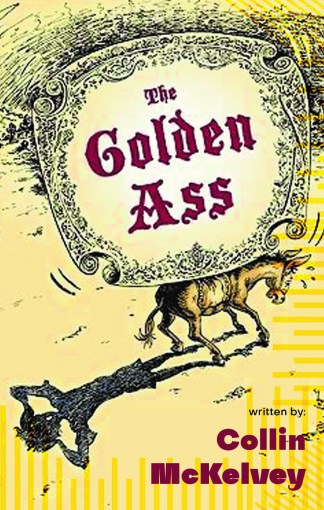
 “The Knave,” the second track of Collin McKelvey’s ambitious new C78, The Golden Ass, has moments whose uncanny beauty is difficult to put into words. The reserved composition employs manipulated string drones, digital processing and synthesis, and source-obscured recordings, all tools with which McKelvey often works; but here the combination reaches incredible depth and resonance, as the woody drones flit across what sounds like a creaking ocean liner until they are the only thing remaining in the mix, the tones stretching, straining between your ears until the track ends quite unceremoniously with an unsettling clip of laughter. “The Knave” is only one of four tracks on The Golden Ass, but it is perhaps the best possible representation of McKelvey’s mastery over the sounds he uses. The music throughout the tape is well-composed, almost approaching contemporary electroacoustic composition in scope, but with a pleasing roughness and grit that makes it much more personal. Even in the quietest stretches there is a captivating coexistence of tension and beauty, and you’re never sure whether the grainy constructions will spiral out of control or softly vanish. Don’t be intimidated by the length; McKelvey makes these 75 minutes feel like much less. This wonderful journey awaits you.
Review: Carlo Giustini – Manifestazioni (Lontano Series, Sep 28)
 The first release I remember really loving this year was Carlo Giustini’s La stanza di fronte, the Italian sound artist’s debut tape on ACR. Since then, Giustini has released over five hours of music across three ambitious tapes further exploring and refining his unique harnessing of the acoustics of minimally treated, low-fidelity tape and contact microphone recordings. Manifestazioni is his latest and best, achieving new, gorgeous heights in its dusty nebulae of analogue hiss and reverb, the same elements that made the aforementioned albums so great. As with those, Manifestazioni is based on an environment; where La stanza di fronte captured the haunting creaks and groans of an old house and Sant’Angelo magnified the organic beauty of its eponymous gardens, it takes us through abandoned streets in Giustini’s home town of Treviso, whose sonic qualities are both desolate and comforting. The muffled passing of occasional cars, distant unintelligible voices, the solitary bark of a dog far away; all the sounds contribute to a rich blend of textures, each distinct yet still obscured by the murk of the medium, painting pictures of lonely alleyways and crumbling house fronts that hide in the mist.
Review: Forces Spéciales – Leviathan (Absent Erratum, Jun 24)
 This was released nearly three months ago, but I only recently discovered the Absent Erratum net label, which focuses on releases by one-off projects in the area of harsh noise wall. As I and other HNW listeners are well aware, the prolificacy of many artists within the genre makes it difficult to figure out what to listen to — it’s often the case that artists seem to be making albums faster than we can listen to them — so it’s nice for a label to set such a requirement. Out of the three projects so far, Forces Spéciales has made the most powerful wall. The massive, sludgy sonic construction that is Leviathan emerges from the deep much like the titular beast, rising up from yawning underwater chasms filled with darkness. The wall remains in a low range of frequencies, avoiding any harsh, trebly attacks in favor of a thick, oily, aquatic atmosphere that immerses and envelopes. I’d recommend playing it over speakers with good low-end capability; the physical element is very important, and the rumbling bass that underlies many HNW releases is executed very well.
Review: Haiku Salut – There Is No Elsewhere (PRAH Recordings, Sep 7)
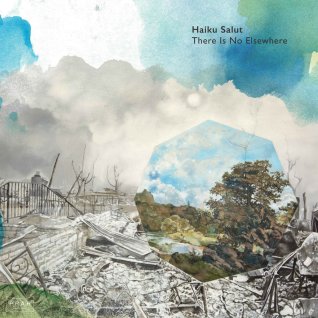 This morning, I realized the true beauty of Haiku Salut’s There Is No Elsewhere as I listened to it while waking up to my cat curled up at my side and a warm blanket of sunlight flooding in through the window. The ebullient melodies harnessed by the Derbyshire trio are just gorgeous; played on a variety of instruments, from lively, music box-esque chimes to more somber piano and even a variety of winds, they bounce across a bubbling brook of manipulated textures and electronic drum loops throughout the record. While There Is No Elsewhere is, for the most part, reminiscent of all things cheery and sunny, it often has that faint melancholy, even a subtle hint of sadness, that only makes the music more stunning. Such a contrast is mirrored by the incorporation of elements of electronica with the more organic instruments, a combination whose effectiveness is at its height on tracks like “Nettles,” where the airy textures of fuzzy synths flirt with the more earthy ones of what sounds like mallet instruments. Penultimate cut “I Am Who I Remind You Of,” the longest on the album, leads you on an odyssey through a magical forest, full of cascading vocal harmonies, twinkling bells, and effervescent glitches that ebb and flow at an intoxicating pace, somehow making seven minutes feel more like two. As summer winds down, There Is No Elsewhere should be your soundtrack to enjoying these last days of warm sun.
Review: Kathy Mattea – Pretty Bird (Captain Potato, Sep 7)
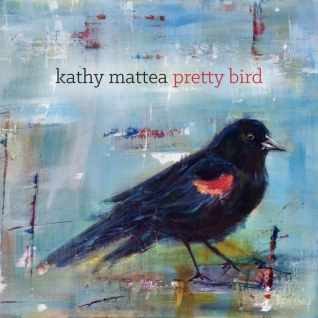 I hear a lot of expression of disdain for long musical careers. “They’re too old now,” “they should have quit while they were ahead,” and the like. And I’d be lying if I wasn’t occasionally guilty of it too. But we forget that most of these artists are ultimately making music for themselves, so who the hell are we to say when they should stop or not? Luckily, I don’t think I’ve ever heard anyone say that legendary country singer/songwriter Kathy Mattea should cease her music making, and I sure hope she doesn’t any time soon. Pretty Bird, independently released via Kickstarter on Mattea’s own Captain Potato imprint, collects the artist’s performances of songs that “helped [her] reclaim [her] voice, and [her] joy in using it.” Mattea is certainly older now than she was when she made my favorite records — notably 1997’s Love Travels and 2006’s spellbinding Coal, the first release on Captain Potato — but her voice is equally as impacting and emotion-filled as it was then. The wear that so many years of passionate singing has put on her vocal cords is palpable, but through retraining old habits Mattea uses this aging to her advantage, harnessing a chocolaty richness that is, fittingly, immediately apparent in opener “Chocolate on My Tongue.” The arrangements are simple, mainly consisting of guitar, minimal percussion, and the banjo of producer Tim O’Brien, and couldn’t support Mattea’s voice in a livelier, more buoyant way. As always, Mattea makes these songs her own, and the rich intimacy might bring you to tears more than once (it’s definitely not just me, right??).
Review: Endurance – Celestial Governors (Tymbal Tapes, Sep 1)
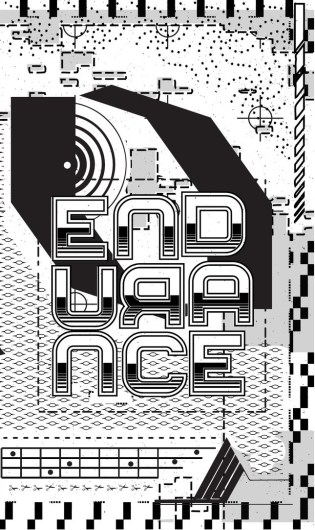 The final track of the newest tape from Endurance, also known as Joshua Stefane, is titled “Micromosaic,” which happens to be an excellent descriptor for what this music sounds like. Celestial Governors sounds every bit as heavenly and ethereal as its title would imply, but there are also much more diminutive, detailed inflections amidst the clouds of reverb, minuscule textures placed against a larger sonic backdrop in much the same way small pieces compose the sprawling image of a mosaic. The album “takes on the shape and scope of visual art,” a quality that manifests as the music’s instantaneous lushness but minimal progression. Usually, static ambient pieces tend to bore more than enthrall, but each component of these compositions is positioned with enough care and purpose that I don’t find myself lamenting the lethargy. Celestial Governors is perfectly satisfied with the way its pieces fit together, nestling muffled clatters and metallic shifts within frosty blankets of effect-drenched drone. Honestly, any moments throughout the tape could freeze in place and play forever and I wouldn’t even complain (or notice).
Review: Shitty Life – Switch Off Your Head (Spastic Fantastic, Sep 28)
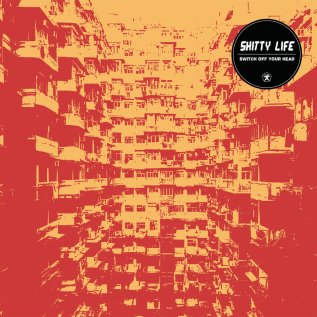 Sometimes we just need hooks, even in the genres we typically don’t think of as being defined by their catchiness. I went into Italian quintet Shitty Life’s new LP Switch Off Your Head expecting some pretty straightforward fastcore, but instead I got a bouncing dose of “power punk.” With mostly clean power chord garage riffs, some amazingly recorded drums, and raucous, pissed-off vocals, Shitty Life does nothing new in the absolute best way possible. This is what I want when I think of the phrase “pop punk”; just really infectious, well-written punk earworms that even non-hardcore fans will love, and that wouldn’t sound out of place if they came on at a party. But the pop sensibilities don’t prevent the band from baring their aggression; for pretty much the whole album you get the sense that these tightly wound tunes are about to burst at the seams, a vicious explosion of aggression struggling against its candy coating. Switch Off Your Head is a simple album, but can serve a variety of purposes: afternoon pick-me-up, skate session soundtrack, friendly fist fight music; everything except calming down in any shape or form.
Buy the LP here.
Review: KEN mode – Loved (New Damage, Aug 31)
First off, I want to explain and apologize for my absence over the past week or so. I’ve been in the process of moving into a new apartment, and between dealing with getting utilities set up, classes, and not even having wi-fi, it’s been hard to sit down and write reviews. Hopefully I’ll be able to return to my normal schedule soon. Thank you for your patience.
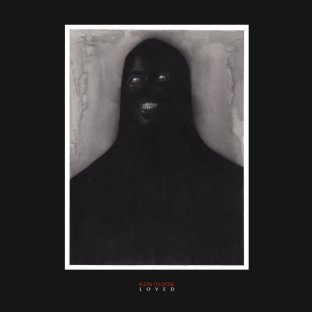 From the brutal opening moments of Loved, it’s clear that it’s going to be a wild ride. It’s the seventh full-length release from the Winnipeg noise rock outfit, and continues their odyssey of muddy, brash, angry hardcore. The metalcore influences are not as strong on this one, with most of the tracks employing either propulsive punk pounds or slower sludge sections. There’s nothing that immediately stands out as innovative about Loved amidst an over-saturated genre, but further listening reveals some truly unique inflections and stylistic idiosyncrasies that make it interesting and immersive as well as visceral. The use of repetition works really well, especially on songs like “Learning to Be Too Cold” where a persistent riff is deconstructed from a dense cacophony to something more skeletal and angular before the aggression returns at the end. Peculiar samples on “The Illusion of Dignity” and the ambitious closer “No Gentle Art” are only further indicators of KEN mode’s creativity. I suppose it’s time to explore the other six albums as much as I have this one.
Review: Funeral Mist – Hekatomb (Norma Evangelium Diaboli, Jun 15)
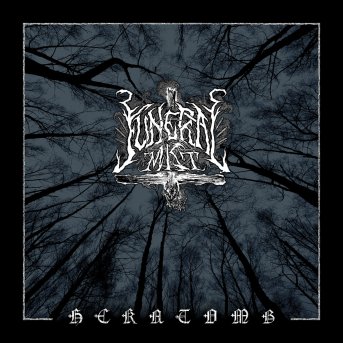 Having not heard Funeral Mist’s previous two records, I’m unequipped to state how Hekatomb places in the context of their career. It’s only the third album in just over fifteen years from the Swedish band, who have been active since 1993. But as someone who appreciates awesome black metal, I’m more than equipped to state that Hekatomb is an incredible album. Strange, even bizarre at times, furious and invigorating at others, and somehow able to juxtapose fiery anger with cold despair on the same song, it’s simultaneously the most concise and versatile black metal record I have heard in a long time. Beginning with a dense sound collage that immediately confuses and disorients, “In Nomine Domini” soon launches into blurring drum cacophonies, dizzying tremolo guitar, and absolutely deranged vocals, a winning combination that continues throughout the rest of the album. “Cockatrice” closes the record’s first side and has what is probably one of the most infernally cathartic moments, when a frigid synth interlude is shattered by a body-wrackingly intense blast of blackness. Hekatomb has not only persuaded me to listen to the rest of Funeral Mist’s work, but also to make sure I haven’t missed any other amazing metal releases this year, because if I can find even one or two as good as this one I’ll be set.
Review: Jesus Piece – Only Self (Southern Lord, Aug 24)
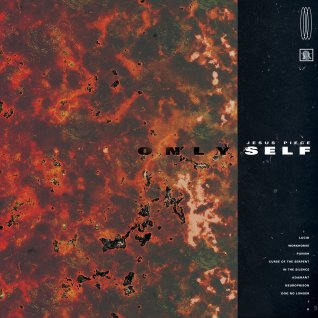 There are a hell of a lot of metalcore acts out there. Now more than ever, as the genre approaches the end of its third decade of existence, it’s difficult for bands to stand out while remaining somewhat true to the original sound. Philadelphia quintet Jesus Piece’s debut full-length Only Self is definitely one of the most refreshingly creative albums that still pays significant homage to the classic metalcore style. They bring progressive song structures and some pretty entertainingly crusty old school death metal inclinations into the mix, an efficient arsenal of eccentricities that never detract from what we all love about this stuff. Yes, there are plenty of breakdowns, and thankfully they’re equal parts unpredictable and crushing, employing angular riffs and breaths of silence that only emphasize the heaviness. “In the Silence,” one of the record’s longest tracks that ends the A side, concludes with a labyrinthine sequence of off-kilter rhythms and crunching double bass pounds. This one also precludes what is in my opinion the best part of Only Self, the three song stretch from “Adamant” to “Dog No Longer,” the latter showing the strongest OSDM influences. Unfortunately, the final two songs put way too much stock in some weak ambient noodling and halfheartedly ends what could have been a concise and dense record. Still, for a first album it’s pretty damn awesome, and once again it’s so great to see a classic metalcore release in 2018 that has me headbanging this hard.
 Noise Not Music