
 Following just months behind the churning wake of CSL Welland, the project’s superb inaugural recording, Bulk Carrier’s first full-length is already a definitive artistic statement in both aesthetic and sonic terms. Those captivated by the debut tape’s minimal, low-fidelity, not-quite-static evocations of rusting hull plates and buried combustions will find no shortage of square footage to enjoy on Federal, a double C20 with each side titled for a nationalized carrier—Fraser and Yukina (Marshall Islands) and Columbia and Sakura (Liberia). All four tracks draw from cavernous commercial-maritime innards, and perhaps as well the depths of the body of water being trundled over, filtering the raw, gargantuan atmosphere through a choice rig of analog electronics to drum up hypnotic stretches of creak, groan, and rumble. But what’s most exciting about these walls is that while they are monotonous, lumbering, massive, they are anything but stagnant, expanding on the subtle progressions of CSL Welland into new variations and detours that enhance the core textures: recurrent crescendo/drops like miniature engine-boosts halting the turgid torrent of “Fraser”; power lulls and exhaust-vent flushes breaking up the visceral crunch of “Yukina”; barely perceptible undercurrents lurking throughout “Columbia.” All of it, it turns out, leads to “Sakura,” which is just so enormous that I don’t want to spoil the surprise for anyone who hasn’t yet heard it. But by now anyone reading should know that Federal offers the best and bulkiest of the St. Lawrence Seaway in the comfort of your own home, forty unforgettable minutes of feeling like the room is being borne down upon and flattened by hundreds of thousands of tons of steel. A no-brainer.
Review: Darksmith – Imposter (Throne Heap, Jul 1)
 It’s been just over fifteen years since Darksmith released his first limited-edition Mom Costume recordings and self-titled tape via Hanson, and almost exactly fifteen since Weightless came out on Chondritic Sound. Since then, unsurprisingly, the reclusive California-based artisan has covered a lot of ground, and yet each and every entry in his oeuvre has the same core element, an indefinable but undeniable stylistic singularity (or void) at the heart of the music that makes it distinctly Darksmith. That shifty, shadowed, corner-born juh naysay qua is especially relevant in the case of Imposter, the first proper full-length we’ve gotten since 2019’s Poverty of Will. Originally slated for an in-house LP release, the two 15-minute sides ended up in the capable hands of Throne Heap, who elected to press them on a run of gorgeous digipaks that feature some of the project’s most unsettling art yet. Like Hatred of Sound, the four tracks mine a lengthy span of source material (2012–2019), the eclectic mess carefully shaped into a focused half-hour suite that runs the gamut of sonic preoccupations old and new. “Looking for Idiots” and “Problem with Everyone” feature both bedroom-Blockaders clatter that would be right at home on Broken Brain or Dancing Out the Door and nocturnal, precariously cozy tape drone very much in the spirit of Gypsy. The titular imposter is caught between inside and out, lurking by rotting birdhouses and sputtering HVAC units for just as long as it spends creeping through basements and bedrooms. There are countless moments of brilliance scattered throughout, but the humbly harrowing end of “Hold Everything” might win out, shuddering to nothingness like a rattling final respirator breath. Imposter, perhaps more than any other release so far, permanently inks Darksmith in as “the master of externalizing the inner maelstrom.”
Listen to excerpts from the CD here.
Review: Leisure Knots – Live at the Structure (Sweet Wreath, Jun 26)
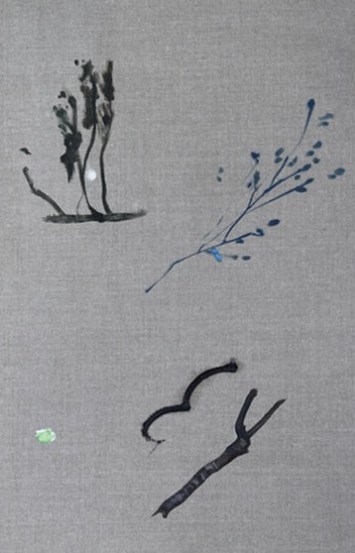 Between not one but two unforgettable releases by not-of-this-world duo Ghost Food, Johnny Coley’s Antique Sadness, and now Live at the Structure, Irondale imprint/collective/movement Sweet Wreath has affirmed its role as a leading purveyor of haunting, home-spun creative music. Just the latest in a line of exciting debut recordings from central Alabama and beyond, this first full-length by Virginia- and North Carolina–based ensemble Leisure Knots is a thoroughly engrossing and evocative stretch of sublimity that both reflects the dark uncertainties of the present and gestures toward a brighter future. The quintet (joined by saxophonist Daniel Brooks on the B side) improvises at an easy yet purposeful pace, each member utilizing a rotating group arsenal of everything from found objects to computer processing to conjure individual but sympathetic strands of the most subdued cacophonies. Not all of the ambience that graces the tape’s five sections is conventionally warm or pretty, but that of the first certainly is, building the foundations for what lies ahead with wooden wands and cattail harps by an enchanted forest pond. “III” is probably the most active track, its nocturnal radio-scapes even getting a bit menacing at times, but then the beauty returns in the latter half of “IV” and the gorgeous closer “V,” helped along by Brooks’ brilliantly reserved contributions and some very well-placed field recordings. As usual, the liner notes say it better than I ever could: “These tracks vent the soft glow of their homes through an open window and into an unearthly outside.” Collaborative serendipity that makes the end feel like the beginning.
Review: F****t Front – Cocksucker Blues (Cleaner Tapes, Jun 24)
 Released in the inaugural batch from new label and novelty tape cleaner distributor Cleaner Tapes alongside Embrasa and the legendary ensemble collective Black Leather Jesus, Cocksucker Blues is the perfect choice for the queer-focused imprint’s first catalog slot. The newest release by Dom Colucci’s confrontational harsh noise project is glowingly marketed as “the perfect soundtrack to getting head in a car crash,” and after both hearing the music and running some tests, I can wholeheartedly endorse this assertion (experimental methodology will remain confidential; peer review is for virgins). The garishly packaged C30 comprises two side-long scorchers, each a ruthless collision of twisted metal feedback and burning engine crunch: “Cigarette Burns and Cum Stains”—if this happens to be a Blod reference it somehow makes this tape even cooler—keeps one wheel on the rumble strip with its lumbering low-end, while “I, Cocksucker” sticks more to the high frequencies, riding waves of piercing screech and then smashing back into the pavement. Both tracks maintain an impressive lushness even as they tear up the mono-median with PE-esque brutality, making Cocksucker Blues at once a T-bone of violent immediacy and a slow, savory junkyard compactor crush. In other words, this shit makes Ballard’s Crash look like Pixar’s Cars.
Mix: Blunt Scissors
The dizzying technicality of fast-paced cut-up noise is often best rendered with a production approach that reflects the sharp, sterile abrasiveness of the music—often, not always. These are the other cases: the crudely clinical, the sloppily stitched, the rusty-blade incisions. Ouch.

Âmes Sanglantes
00:00. Romance – “Organ Builders Manual” from Gateshead Sessions split w/ Shift (Unrest Productions, 2006)
08:23. T.E.F. – eighth untitled track from Armature (Trauma Tone, 2002)
11:35. Laurel Noose – “Midwest Farmers Use Anhydrous-Ammonia Fertilizer on Crops” [excerpt] from Chirality (unknown label, 2012)
15:36. Âmes Sanglantes – “Satin Vagina” from Once You Bleed (Antihuman, unknown year)
19:14. Mason – “Imminent Collapse” from Cremation Limit (Deathbed Tapes, 2021)
25:07. Negation – “Optimism” from Solar Torque (Unseen Force, 2020)
33:57. Anthracite – first untitled track on A side of LA Times Building 1910 (Joy De Vivre, 2015)
37:10. Breaking the Will – “Counterinsurgency Doctrine” from Summer Scum 4-way split (New Forces, 2013)
Review: Faded Ghost – Faded Ghost (Hamilton Tapes, Jun 23)
 Of all the haunted, liminal lo-fi music that has found a home on Hamilton Tapes, this self-titled debut from Faded Ghost (an artist I don’t know anything about and likely never will) is perhaps the purest distillation of the Ontario label’s distinct aesthetic. Much like previous releases, there isn’t much to go on in the way of liner notes or a track list, so whether the segmented spectrality of the A side comprises a single piece or multiple individual tracks is uncertain. It turns out that uncertainty is the name of the game here, however; the ephemeral sonic sketches are just as, if not more ambiguous than their physical enclosure, drawing up a half-full bucket from the well where field recording and ambient music join with tape-recorded dreams and ghosts of ghosts unite in a stagnant lagoon. 4-track whir and muffled snatches of reality (a city street? a bowling alley?) warble alongside subdued electronic mists, the scene constantly shifting and swimming until about five or six minutes in, when a single hypnotic loop, of course draped in blankets of fuzz and dust, takes the reigns for the remainder of the spool. This earnest, unassuming transcendence flows through to the soundscapes on the other side, which are more elegiac than anything, blurred musings on and moonlit laments to something that no one is young enough to remember. It’s one thing to die; it’s quite another to fade. That is to say, the former, no matter how many loved ones are by our side, we can only do alone; the latter, as the sublime conclusion of Faded Ghost reminds us, we can do together.
Review: Total Sweetheart – Early to Bed (Dada Drumming, Jun 17)
 The first recordings by freshly minted Dallas duo Total Sweetheart come at a perfect time. A host of releases by the either defunct or long-hibernating band Ascites have been hitting the spot recently, so all it took for me to pick this one up was reading that founding member Nathan Golub was involved (and listening to about five seconds of the promotional excerpt). Regardless of expectations, Early to Bed is almost certain to surpass them; this is not only the best, but also some of the most unique and memorably idiosyncratic harsh I’ve heard in a long time. I haven’t been able to get my hands or ears on anything by Struggle Session, the former project of fellow sweetheart Ryan Jones, so it’s hard for me to tell exactly where one member’s contributions end and the other’s begin—but that kind of feels like the point. The initial rupture of the title track, the first of two half-hour side-spanning cuts, is thick and brutish, confined mostly to mono as it throbs and pummels the exact center of the skull, but the bit of the bone drill gradually widens as the session progresses, blooming into layered assaults full of pedal-gouged churn and phase, wracking and warbling modular surgery, and the amplified, mortally distorted sounds of what are allegedly medical instruments. Even beyond that last ingredient, the Ascites twinges are never out of reach, but at the same time Early to Bed is so much more active and higher-octane than the sickly crackle and crunch of Fluid Excess or Resection, and who could ever complain about that? Plus, somehow, even as it surges forth in a single punishing torrent, the improvisational duo approach ensures that every moment is densely packed with new bits and pieces to discover. That is to say, I could write a hell of a lot more about this tape. But I’m not going to, because I’m about to go listen to it again.
Review: The Lloyd Pack – I Bet You’ve Got Some Good Stories (Low Company, Jun 17)
 “What do you think of music? Did it help?”
Durham-based Surrey transplant Dan Melchior has been making music for more than two decades now, which makes it all the more significant of a statement when I say I Bet You’ve Got Some Good Stories may be his crowning achievement. Though tightly (in the loosest sense of the word) anchored by a distinct, developed sound and Melchior’s deadpan spoken vocals, this fourth LP from the inimitable project—that also features Anthony Allman of El Jesus de Magico, Russell Walker of Charcoal Owls and the False Face Society, and Primitive Radio Gods member Johnny Brewton—plays like a retrospective love letter to lo-fi music as a tradition, evoking in turn everything from Beta Band and Sebadoh to Half Japanese and Strapping Fieldhands. A Shadow Ring comparison is almost impossible to avoid due to Melchior’s still-intact accent telling circular tales of tedium and the repetitive, simplistic instrumentals, but I bring it up as more of an endorsement than an analysis, because the Lloyd Pack’s brand of irreverent anti-rock is entirely its own, fresh and fecund and, above all, fun.
While “Sue Ryder” is a relatively conventional opener, complete with headbob-worthy acoustic strumming and idle musings on middle age, the ensuing tracks on the A side bring the weirdness hot ‘n ready: basement-cabaret singalongs on “Australia,” stereo-spanning percussion skitters beneath hypnotic harmonies on “Water Biography Babies,” plucky toy electronics on “Swaddling Jokes.” Each piece is its own stumbling, surreal experience, peddling bristles and beauty in equal measure, so it’s impossible to pick a favorite; maybe “I Have a Client Waiting” with its dirgelike xylophone plod or the atmospheric, Ivor Cutler–esque “I Won’t Hit Easter,” but why bother? There’s plenty else to think about, like what the fuck “swaddling jokes” are. In conclusion, the stories are indeed good! Listen in! You won’t be forgetting these songs anytime soon.
Review: Rose Sobchak – Intangible Asset (E.S.O.D. Productions, Jun 17)
 It’s been a while since I heard anything new from Rose Sobchak, the flagship alias of Moscow’s Aleksandr Cheskidov; a few years, in fact. It seems the project has taken a new direction during that time, leaving behind the straightforward, loud analog churn of the 2019 untitled CD-R on Heart Shaped Box in favor of a more stifled, sleazy atmosphere in the vein of Legless, Sissisters, or many of Chris Conroy’s various aliases. (In other words, to quote the release page of love shy clown, “Smart harsh noise […] decided to be a little sad.”) Though audibly recorded straight to tape—if it’s not a four track I’ll eat my Rat—Intangible Asset somehow feels remarkably well-suited for a digital-only netlabel release, especially one made freely available on archive.org. It’s all over the place and yet still quite focused, the disparate anemic assaults of feedback squeal, chunky pedal-chain bursts, radio grabs, and home-glued junk electronics threaded together by the fuzzy, limiting fidelity in which all is swathed. The first untitled piece is a bit odd on initial listen, broken up by several lengthy pauses that at first seem more like dead air between tracks than suspenseful stop/starts, but in no time at all I came to greatly appreciate it for how it obfuscates and loosens everything, especially in conjunction with the following track, the misdirect-opening of which is probably the release’s finest moment. The ten-minute closer is the most traditionally harsh of the four, and it is excellent, the final damning piece of evidence that Intangible Assert is really something special.
Review: Komare – Grace to Breathe That Void (Penultimate Press, Jun 12)
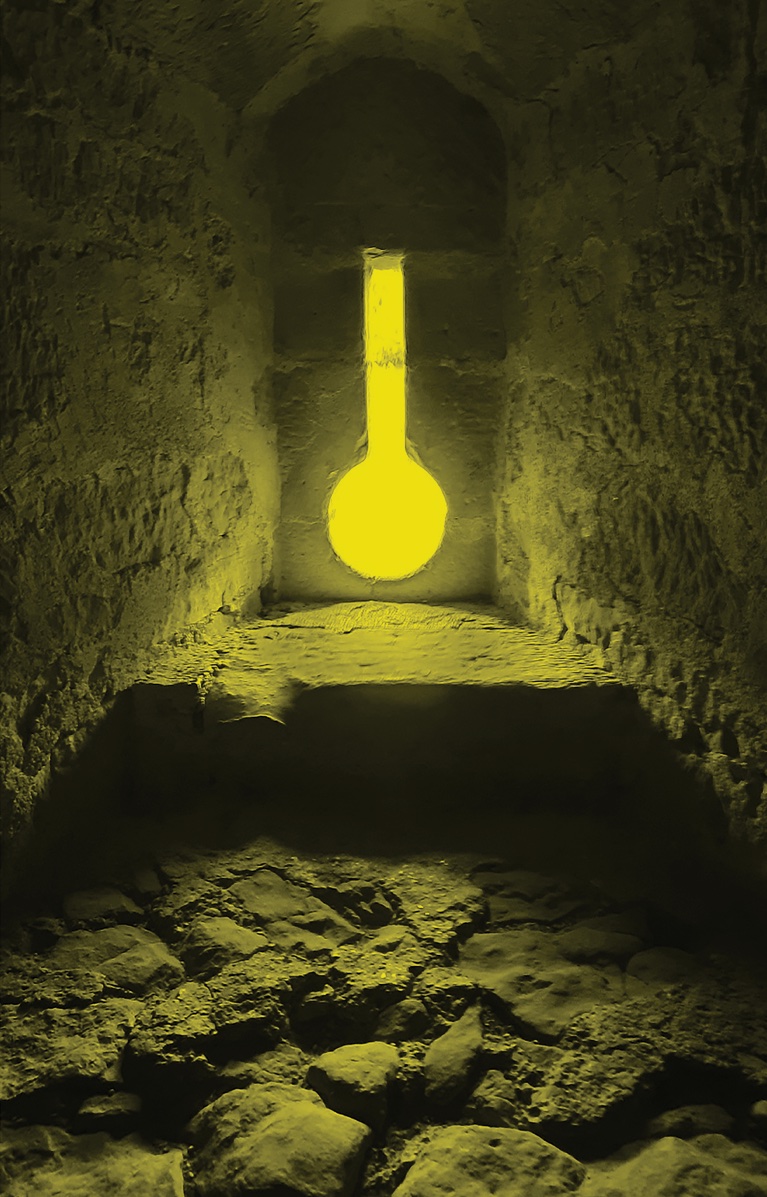
It was sad news last month when London deconstructed rock trio Mosquitoes announced they’re closing up shop, issuing the Outlines / Infinity Fault 7″ on Digital Regress as their final recording. How good those two tracks are alone makes a non-negligible dent in the gaping vacuum the legendary project left, and less than month later there’s an even more expansive step forward in this resolutely singular realm of avant-garde music, one that, at least for now, isn’t an endpoint. But, much like Peter Blundell and Dominic Goodman’s previous material as Komare, there is plenty of “end” throughout Grace to Breathe That Void—and, in fact, “end” is even more apropos, because the tape’s title is taken from Ill Seen Ill Said, one of The End author Samuel Beckett’s later prose works. This connection isn’t necessarily new, either; I brought up Beckett in my review of the duo’s LP The Sense of Hearing, not due to any explicit link but because there are very few, if any, other comparisons to make when artists venture this far into the nothingness.
Ill Seen Ill Said is full (empty?) of the near-subjectless ontological meditations for which the late author is renowned, but it tellingly begins with humanity, however removed, a “she” that both exists and observes: “All this in the present as had she the misfortune to be still of this world” (7). Similarly, Grace to Breathe That Void never leaves the human nor the human-adjacent completely behind, even as it burrows deeper and deeper into total abstraction. Blundell’s vocals are the most purely textural they’ve ever been, curling in from the corners of the left and right channels like creeping shadows, conversing with and fending off queasy timbral twinges and errant ambience. Birdsong also plays a curiously prominent role, its trembling presence emphasizing the wrongness with which these disparate pieces of familiarity are sewn together. The third unnamed track, though the briefest, is also one of the most succinctly atmospheric, smearing something that was once concrete into ephemeral rays of sickly light, now evoking the scraping shovels of metaphysical graverobbers or the desperate rattling of a cosmic cage. And in a (perhaps unsurprising) final twist, the arguably optimistic closing of Ill Seen Ill Said, from which the titular phrase comes—“No. One moment more. One last. Grace to breathe that void. Know happiness” (59)—is subverted in favor of harrowing, delirious monotony… Grace to Breathe That Void. No happiness.
 Noise Not Music