
 An album’s cover is frequently a reliable indicator of how harrowing of an experience the music contained within will be. This is certainly true for Extravios, the first release by the duo of Christian Moser and Paula Sanchez under the name The Tongue Is an Eye, whose artwork is not overtly disturbing yet barely belies a dark uneasiness (my theory is that the covering of the eyes of a human face, while the mouth remains visible, triggers a response of revulsion consistent with the Uncanny Valley phenomenon). The three improvisations that comprise the album are restless hodgepodges of tensile agitation, percussive clatter, and nocturnal claustrophobia, with both Moser and Sanchez contributing conventional instruments abused with extended techniques (oud and cello, respectively) as well as objects and found ephemera. Sanchez also makes use of abstract vocalization on “Fibra 2,” the longest and most diverse of the three, her stuttering inhales and strangled utterances colliding with equally unpredictable shards of unidentifiable rattle and pained string emissions. The second half of this piece gravitates toward the enrapturing interplay between the oud and cello, the recordings sounding as if they were captured with microphones less than centimeters away from the necks as sliding fingers and atonal attacks snake directly into the eardrums. This could either be a document of the duo’s first meeting or the culmination of many rehearsal sessions; the two musicians have mastered an approach to interaction that somehow sounds both tentative and seasoned. I certainly look forward to hearing more of their wonderfully bizarre and confrontational creations.
Review: Don Malfon, Juan Castañon, Itzam Cano & Chacal del Tamborazo – For Ornette (self-released, Jul 20)
 Even as someone who prefers Ornette Coleman’s more structured 70’s work (Science Fiction, Dancing in Your Head, Body Meta), it is utterly impossible not to acknowledge his invaluable contributions to the free jazz tradition, which he essentially both created and named with his revolutionary group improvisations in the late 50’s and the prophetic 1961 LP Free Jazz. Though the genre has undoubtedly come quite a long way since then—Coleman’s approach seems rather tame even in comparison to albums released less than a decade later—every musician playing adventurous, formless jazz music is well aware of his name, legacy, and power. On For Ornette, the quartet of Don Malfon (alto sax), Juan Castañon (guitar), Itzam Cano (upright bass), and Chacal del Tamborazo (drum set) imbue their deep reverence for the late visionary with both a titular and conceptual significance, channeling his influence through performances of his compositions as well as original conjurations. The band displays a seamlessly dichotomous interest in abstract dissonance and harmonic interplay, fluidly trading moments of full-throttle chaos for driving solo exchange sections and lightning-fast call and response. Castañon’s use of a clean tone with occasional wah pedal wobble is the perfect choice for a collective style both abrasive and whimsical; his off-kilter backing shells and serpentine scalar runs are only made more agile by their clarity. The album ends with a stunning re-imagining of “The Sphinx” from Something Else!!!!, a fitting dual-dose of melody and mayhem.
Review: Druuna Jaguar – Memória Aumentada (Robert & Leopold, Jul 20)
 There’s an important distinction to be made between “spooky” music and “scary” music. The former is the fun, festive tunes you hear come Halloween season each year—BOR-ING. Druuna Jaguar’s newest release Memória Aumentada is an example of the latter, the sort of music that deeply unsettles, sends inexplicable chills down the spine, evokes horrible isolation, fear, and existential despair. Unlike other notable instances of this (Penderecki’s “Threnody for the Victims of Hiroshima,” Dolden’s “Below the Walls of Jericho,” etc.), Memória Aumentada is much more reserved, forgoing harrowing blasts of overwhelming discordance and hair-raising dissonance for creeping drones and cloying aquatic textures conjured entirely from manipulated field recordings. It is certainly a “dramatic pivot from visceral noise as a focal point” as stated in the description, but the extent to which the music stirs the deepest, unnamed emotions is not at all compromised. One feels intensely disconcerted by the contrast between ethereality and the uncomfortable closeness of the water recordings, the latter of which are almost presented as invasive violations. The final moments of “Musée Des Yeux Clos” produce intense dread via a tense drone that eventually dissolves into a confusing cacophony of delay-effect feedback and eviscerated human speech. The piece ends, however, with yet another appearance of dripping, sloshing liquid, further cementing its role as a successful counterpoint element. “Tillandsia” seems to tap into the subterranean underbelly of the Earth, summoning a bassy, barely perceptible seismic rumble, later complemented by the light, flitting textures of a field recording played backwards. If you’re looking to feel like whatever is happening on the album cover, like your soul has been ruthlessly dissolved and escapes your body through your face in horrific tendrils… fulfillment definitely awaits.
Mix: “Exhaust Pipe Soul”
The name and concept of this mix comes from a Bandcamp review of Pulgas’s self-titled LP by Ryan Sarno. This is the grittiest of soul music and its related genres, wafting up through dusty vents from dingy old basements, oozing out of cluttered bedroom studios, reverberating through your body until your bones shake.

00:00. Unknown Mortal Orchestra – “American Guilt” from Sex & Food (Jagjaguwar, 2018)
04:21. AcidSlop – “Lament for the Sky” from Freedom to Talk (Mandarin Dreams, 2019)
08:14. Flanafi – “Gonna Spend the Rest of My Days in Here” from Flanafi (Boiled, 2020)
12:58. Clever Austin – “Blue Tongue (feat. Jon Bap)” from Pareidolia (Touching Bass, 2019)
16:07. Harco Pront – “Mercedes” from Jibberish (Music for Speakers, 2003)
16:59. Nick Hakim – “Crumpy” from Will This Make Me Good (ATO, 2020)
20:05. D’Angelo and The Vanguard – “Ain’t That Easy” from Black Messiah (RCA, 2014)
24:54. jitwam – “Alone” from ज़ितम सिहँ (Cosmic Compositions, 2017)
27:38. Mo Kolours – “Curly Girly” from Mo Kolours (OHM, 2014)
28:51. Gonjasufi – “Change” from A Sufi and a Killer (Warp, 2010)
30:54. Pulgas – “Golden ShawT” from Pulgas (Boiled, 2017)
34:51. JD & The Evil’s Dynamite Band – “Heavy, Heavy…Heavy” from Explodes Across the Nation (Soul Fire, 2001)
38:57. Wool & The Pants – 10th untitled track from Wool & The Pants (self-released, 2017)
41:06. Raw Humps – “The Awakening” from Sugar Slave Babies (Mandarin Dreams, 2019)
Review: précède l’essence – DETERRITORIALIZED ZONE (self-released, Jul 19)
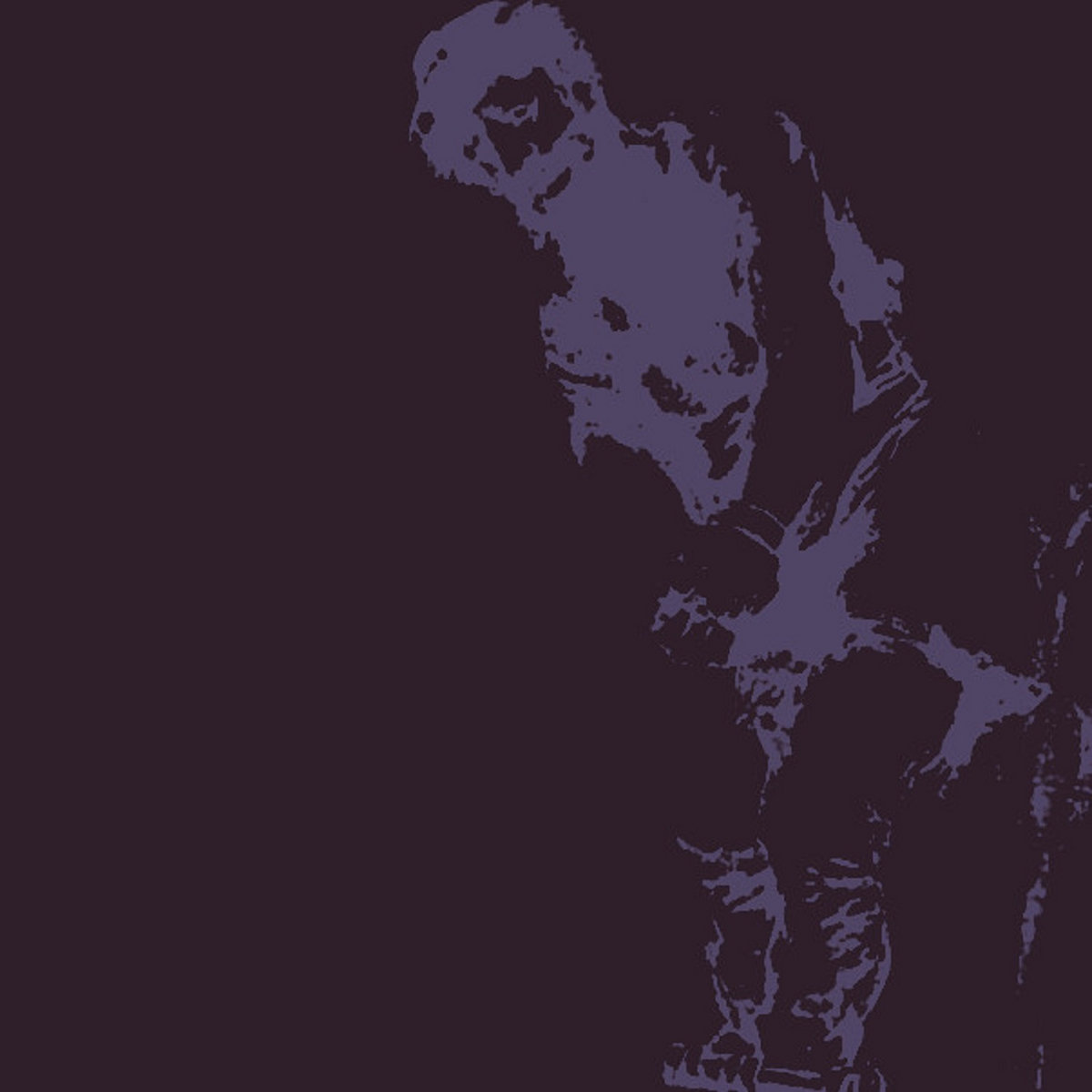 Though DETERRITORIALIZED ZONE was the first album by mysterious Tampa project précède l’essence that I discovered, fans who have been listening to the artist prior to its release might be a bit taken aback by its drastically new style. Whereas previous documents were experiments in various electronic dance music subgenres and other more generally palatable areas, DETERRITORIALIZED ZONE is an all-out harsh noise assault, a deafening bitcrushed maelstrom of disparate sound materials mangled into the most punishing auditory forms imaginable. For an ostensibly digitally-generated album it has all of the visceral density and tactile crunch as the meatiest of analog pedal sets, adopting a hyperactive dynamic approach that consistently engages. The tracks dive and whiplash between lushly-panned stereo destruction and brief, unpredictable stretches of mono error tones, feedback squalls, and electronic squelch, with track two presenting some of the most enthralling textural hodgepodges I’ve ever heard in harsh noise, assimilating everything from looping, fractured samples to what sounds like dead air from an FM radio. précède l’essence is clearly a newcomer to this type of music, but if on their first attempt their ideas and techniques are this refined, I hotly anticipate future works.
Review: Depletion – Cotard Delusion (Invisible City, Jul 17)
 If you’re anything like me and are pretty much always fiending for some loud, violent harsh noise, you’d be forgiven for expecting that on Cotard Delusion based on its description: “A continuing descent into the metallic void. Heavy electronic squall. Oppressive machinery. Melancholic currents.” However, Martyn Reid’s solo project Depletion is more concerned with the words “void,” “machinery,” and “melancholic” rather than “metallic,” “heavy squall,” or “oppressive.” The four pieces on his most recent tape slowly spread like spilled oil on a warehouse floor, evolving from modest beginnings into lush, multifaceted soundscapes. Any of the sounds Reid uses might sound cold and artificial on its own, but when they coalesce in this patient, gradual way, something much more organic is achieved. The title track manifests a puddle of hum, draft, and crumble like a mixture of condensation skimmed off surfaces of different industrial appliances, while “Mirror Image” sounds more like it originates in the innards of those devices, with intersecting tendrils of dissected electronic transmissions and other mechanical ephemera. Rounding out the tape is the side-long closer “Trauma,” a delicate yet seething current of menacing drone and crackle that always threatens to tip over into chaos—but instead concludes in a completely unexpected way. Cotard Delusion is a release entirely in gorgeous greyscale, and thus a perfect addition to Invisible City’s established aesthetic.
Review: O Yama O – Awadatete Yoku Arau (The Sonic Art Research Unit, Jul 16)
 Truly disparate fusions of abstract music and pop/folk conventions that are actually successful are few and far between. Musique concrète masters Jérôme Noetinger and Lionel Marchetti lent their talents to experimental rock collective Soixante Étages, but their electronic contributions are still largely overshadowed by the standard lineup of guitars and drums; the sneeze awfull and IT IT crew frequently intertwine odd textures and diverse samples with their music; Áine O’Dwyer blends mundane environments with her own voice and organ dirges. However, none of these projects have the immediacy nor the intimacy of the music of O Yama O, the duo of Japanese-born, London-based sound artists Rie Nakajima and Keiko Yamamoto. Their recordings and performances pair Nakajima’s phantasmagoric toy improvisations and handmade machinery manipulation with Yamamoto’s haunting voice and more harmonic contributions such as flute and recorder. Both their 2018 self-titled debut and the newly released Awadatete Yoku Arau both feel impossibly fluid, as if the music is simply being sighed or exhaled into existence. Yamamoto’s words are not bolstered (in this case, I believe a better word might be limited) by any conventional rhythmic structure or repeating phrases; instead, they breeze forward with the same freedom and frangibility as the whining melodica or clunking objects. I think I like this new EP even more than the duo’s debut, because rather than feeling like sketches or excerpts these tracks are more fully fleshed-out and memorable.
Review: Thomas Tilly – Le Vent Relatif (sirr-ecords, Jul 16)
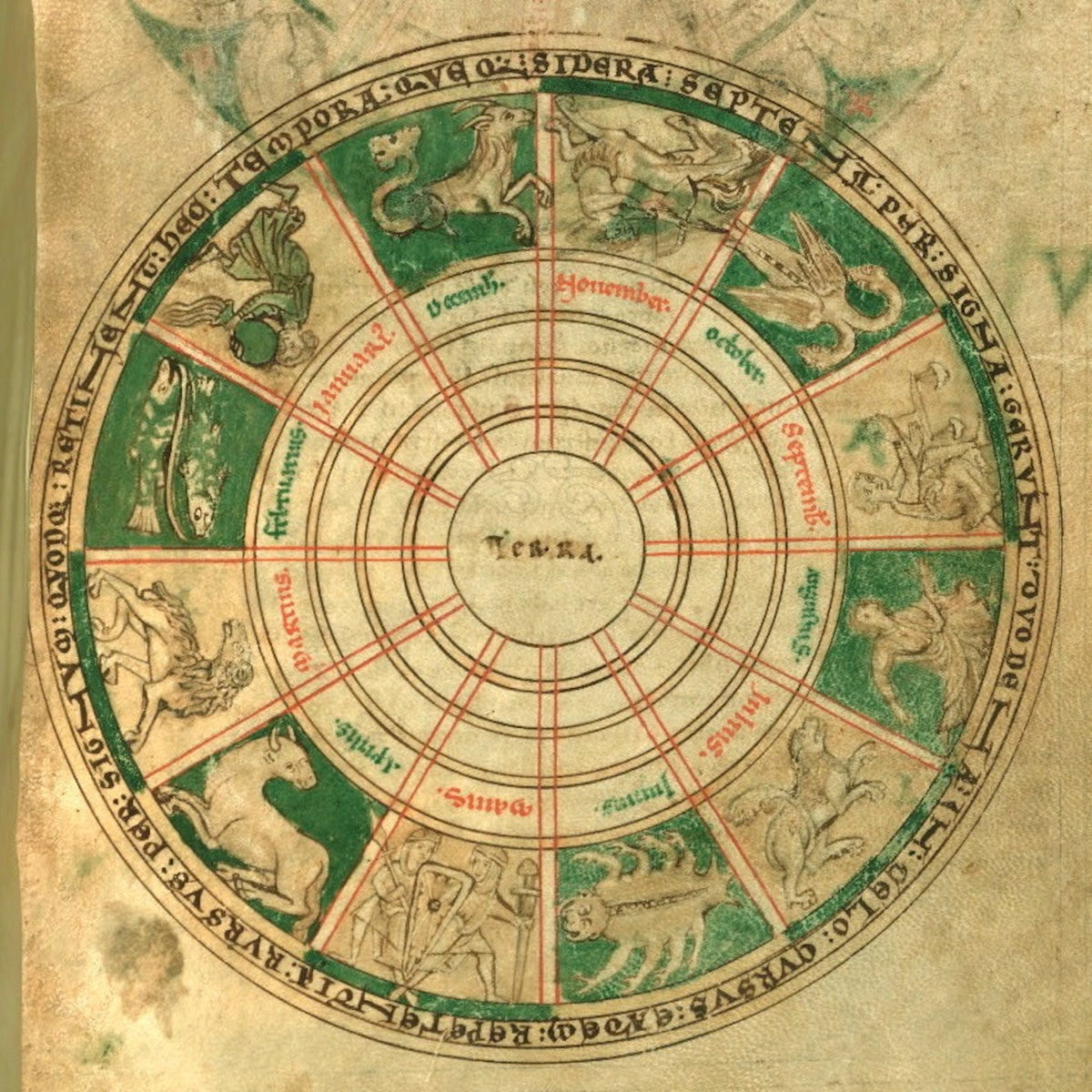 The first music by Thomas Tilly that I loved was also the album that introduced him to me: 2018’s Codex Amphibia on Glistening Examples, which was both a crucial introduction into the world of exploratory phonography and one of the first Noise Not Music reviews. Since then I’ve devoured his many spectacular releases—A Semiotic Survey, Stones, Air, Axioms / Delme with Jean-Luc Guionnet, Script Geometry—but nothing has truly amazed me so intensely and immediately as Le Vent Relatif, his most recent album. These pieces were produced in a metal workshop long ago for a documentary, and it boggles my mind that Tilly has sat on these absolutely superb, fully fleshed-out compositions for nearly a decade. Harnessing an assembly line’s worth of machinery, tools, scrap metal, and other industrial ephemera, each self-contained track is an enrapturing episode of tactile immersion, submerging the listener in a cold yet comfortable world of whir, spin, scrabble, and scrape. The fluid agility of the performances and processing, coupled with a subtle undercurrent of sizzling electricity, reminds me a great deal of Andrea Borghi’s VHS—an esteemed comparison I was unable to justifiably make until now. Le Vent Relatif is an indirect love letter to everything that is so magnetic about machinery noises: the neutral, apathetic tension; sublime overtones emerging in a seemingly static din; the pure and always slightly unsettling beauty of detachment.
Feature: Lal Lal Lal
Founded in 2001 by Avarus members Roope Eronen, Arttu Partinen, and Kevin Regan, the Helsinki-based Lal Lal Lal has been a mainstay of consistent quality and innovative sounds for nearly two decades, putting out material by both obscure acts as well as more recognizable names such as The Skaters, F.Ampism, and Aaron Dilloway. In July the label have joined Yellow Swans and many others in uploading official digital versions of their numerous releases, almost all of which can be streamed for free, so their page is an absolute treasure trove of wondrous curiosities for the uninitiated (or even the mostly-initiated). As usual with these label features, below I highlight some of my favorite entries in their catalog as starting points. Not included is Red Brut’s recently-reviewed Cloaked Travels, which Lal Lal Lal co-released with Ikuisuus.

 Francesco Calandrino – varie/azioni (2016, CS)
This tangled, textural oddity is a completely new discovery for me. Throughout the four tracks Calandrino utilizes a unique combination of tape techniques and playback devices to manipulate instrumental source material. In a twist somewhat reminiscent of the work of Giovanni Lami, much of the sound Calandrino actually produces comes from the process of handling and playing the tape, leading to immersive stretches of dead air, hiss, churning gears, ghostly musical semblances, and mechanical clunks.
 Avarus – Jättiläisrotta (2004, CD co-released w/ Secret Eye)
This was an important album for me, even though I discovered it well after its release, because it was what led me to discover the incredible enchanted wonderland of avant-garde folk music and related genres, both in Finland and around the world. Avarus’s scruffy, low fidelity drone hodgepodge is one of the most archetypal examples of the earthy DIY sound I so adore, and I wouldn’t be surprised if it was a key factor in establishing that adoration in the first place.
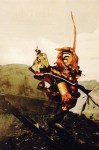 The Parels – The Parels (2016, CS)
This album has so much going for it despite only being thirty minutes: meditative tribal percussion, scorching drones, electronic freakouts, moments of pure bliss. The first of (sadly) only two releases from the duo of Jim Goodall and Eddie Ruscha, The Parels’ self-titled tape is a moody yet vibrant descent into a humid, feverish soundscape, its atmosphere equal parts manic and panicked. A perfect choice for the cover artwork as well.
Buffle – Constrictor (2006, CS)
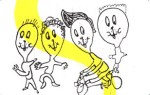 Adorable outsider pop jams from the quartet of Denis Duez, Benjamin Francart, Xavier Garcia Bardon, and Emmanuel Gonay. The clunky jams are composed of cheesy drum loops and plastic toy instrument extravaganza, equal parts comedic and complex. An irresistible bite-sized serving of colorful, hypnotic, wonderfully amateurish instrumental stumbles that progressively get more intricate.
 Mikko Lagerbohm – Digulations (2012, CS)
Digulations could be just an assemblage of forgotten, decayed microcassette recordings, but for things like this the amount of artistic involvement really isn’t of concern. Whether any or all sounds are intentional is impossible to discern. In a manner similar to artists like Michael Prior or Duncan Harrison, the primitive fidelity of the recordings frees their contents from context, allowing them to exist as textural objects as disconnected from reality as something synthesized or heavily processed.
Also make sure to check out Maniacs Dream, Fricara Pacchu, and other great acts I haven’t mentioned here.
Review: Tomutonttu – Elävänä Ullakolla EP (self-released, Jul 11)
 Applause is really a weird thing when you think about it. It’s so ingrained in our social existence that it’s one of the first gestures a child learns, a universal human reflex to show appreciation or support, an unmistakable sound of numerous single sources melded into one. As a texture in abstract music—that is, when it’s element triggered, intended, or purposefully highlighted by the artist—it always struck me as sort of austere, overly weighty, like it just shouldn’t be there. But the communal sublimity of Green Ways completely changed that opinion, and since then I’ve encountered several examples of interesting and effective use of injected applause; one that immediately comes to mind is Astor’s wonderfully strange The Aubergine Dream cassette (Mark Harwood’s recent work in general is a treasure trove of fascinating structural distortions). A new “live” release from Tomutonttu, the sprightly solo project of Kemialliset Ystävät founder Jan Anderzén, is an unexpected but welcome addition. On Elävänä ullakolla EP, presumably as an acknowledgement or exploration of the May 8th performance’s lack of physical audience (Anderzén played the set for the Musa Ullakolla 5 Online Festival), various recordings of collective claps, cheers, and other crowd-conjured cacophonies are woven together with the usual Tomutonttu toolkit of agile electronic noodling. Once each piece really gets going it eventually settles into the stumbling melody-messes and futuristic new age flavors I’ve come to expect, but Anderzén’s family of cheerfully bizarre “folk” music is a pillar of my taste for a reason, so Elävänä Ullakolla EP is yet another new favorite, and the applause splicing is pretty unforgettable.
 Noise Not Music