Mix: Wholesome Halloween

Halloween has been my favorite holiday literally since I was born. See below for proof—I’m on the left. I hope you enjoy this collection of wholesome Halloween tunes (appropriate for all ages).


00:00. Lonesome Wyatt and the Holy Spooks – “Halloween Is Here” from Halloween Is Here (Tribulation, 2013)

02:24. Ray Parker Jr. – “Ghostbusters” from Ghostbusters Original Soundtrack (Arista, 1984)

06:19. Dead Man’s Bones – “In the Room Where You Sleep” from Dead Man’s Bones (Anti-, 2009)

09:29. The Marshmallow Ghosts – “The Hearse Song” from The Marshmallow Ghosts (Graveface, 2011)

13:10. Oingo Boingo – “Dead Man’s Party” from Dead Man’s Party (MCA, 1985)

19:30. DJ Jazzy Jeff & The Fresh Prince – “A Nightmare on My Street” from A Nightmare on My Street (Jive, 1988)

24:28. David Bowie – “Scary Monsters (and Super Creeps)” from Scary Monsters (RCA, 1980)

29:17. Whodini – “The Haunted House of Rock (Extended Version)” from The Haunted House of Rock (Jive, 1983)

35:45. Rockwell – “Somebody’s Watching Me” from Somebody’s Watching Me (Motown, 1983)

39:31. Orange Hell – “Hybrid Moments” (Misfits cover) from Three Hits From… (Funeral Party, 2018)
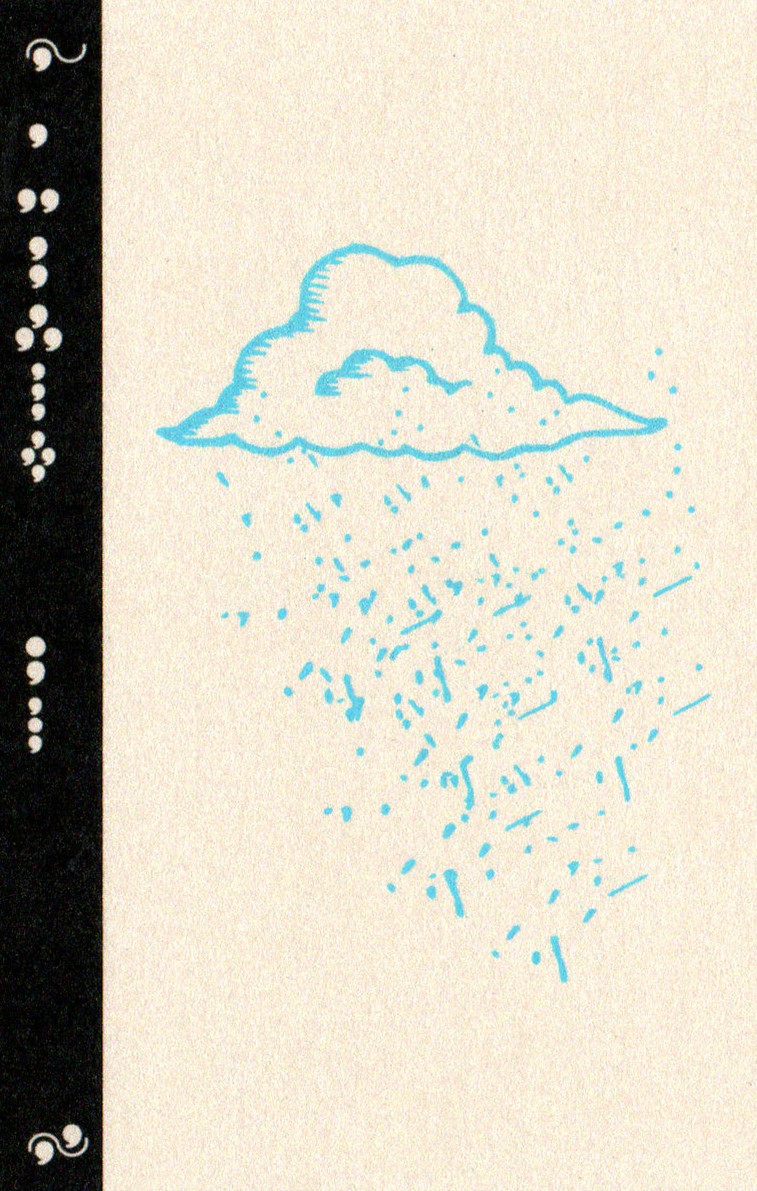
Review: Henry Collins – Prepared Rain (zamzam, Oct 5)

After Tuesday’s review of Raven Chacon’s new album, the gloomy water-filled grey skies of today’s edition of The Slog™ bring me to examine another recent work by a sound artist with a sporadic release schedule. Though Henry Collins has a formidable arsenal of aliases and side projects credited to him, since 2013 he’s only put out a few things under his own name: a couple of splits with fellow UK noisemaker Robin Foster, the sprawling Astral Projecting on S.S Great Britain on Treguard, and a pair of fascinating sonic redaction/erasure works on Seth Cooke’s Every Contact Leaves a Trace (Music of Sound, which consists of the audio of The Sound of Music, and The Masters, which features recordings from the BBC broadcast of the titular golf tournament; both sources have had any speech, music, or other impurities removed). It’s clear that Collins doesn’t shy away from either totalism or absurdity—indeed, the two often come inextricably hand-in-hand—in developing the conceptual basis of his art, an open-mindedness that makes his music some of the most fascinating I’ve ever heard. Prepared Rain, to my knowledge, is something new, less focused on direct defilement or fundamental alteration of relevant sources/mediums and more on, unsurprisingly, active preparation. Playing back the audio of a movie with all of the voices and songs scalpeled out is a relatively passive creative role, but for the 55 minutes of this new tape Collins is ostensibly always moving around, rearranging various elements of his haphazard “drum kit for the sky” as well as repositioning the microphones capturing the sounds of the raindrops hitting it. For the completely passive role the rain has in this process, it acts as a surprisingly astute agent of dynamics and pacing, sending the makeshift soundmaking spiderweb—comprised of what could be anything from plastic bowls and cups to elaborate metal contraptions and Rube Goldberg machines—into a lushly cacophonous blanket of percussive textures at the outset of the album, slowly easing its weight and breadth as the track progresses, then following up this faltering frenzy with a sparser and more rhythmic B side. This is music for rain at any time of the day, or even to provide the sound of rain when it’s desired but can’t be found. As Mark Anthony Pierce says in the foreword, “I hope you get thoroughly soaked listening to this.”

Review: Raven Chacon – An Anthology of Chants Operations (Ouidah, Oct 2)

“Deeply introspective, Chacon’s work rests at the root meaning and intention of experimental practice. It is the outcome of an action that, at its inception, responds to a question for which the answer is unknown. In his hands, sound is a raw, democratic material, with a near infinite number of possibilities and sources—sometimes found and encountered, others self-generated—reformed into an image that refract the notions of humanity and being outside of themselves.”

This short paragraph does more to properly introduce the sonic tour-de-force that is An Anthology of Chants Operations than I probably ever could. Rarely does one hear a work so intensely devoted to the primordial traditions of “sound art”—installation, performance instructions, constrained improvisations—and yet still so personal and emotionally resonant, beyond the “pure,” textural beauty of the sounds themselves. I highly recommend digging deeper into the write-up on the release’s Bandcamp page, as it offers titles and astute description-analysis captions for each of the LP’s nine pieces, which together unfold like episodic suites despite being composed or conceived separately. The territory Raven Chacon explores here is immense (almost as immense as the breadth of his work across countless other art forms): intimate, almost abrasive physicality; sustained meditation; innocence, tentativeness, cultural disconnect (“MVHS”); collage and combination; the list goes on. Violent rushes of air forced from an unknown source, twittering squeaks and bubbling warbles land somewhere squarely between artifice and nature, discrete but sprightly cacophonies of rustling tendrils swarm a space as tectonic shifts groan ominous below. Rather than homing in creatively on a limited formal or stylistic focus, Chacon looks to them all to find the most effective outlet for what he wants to do—and succeeds each and every time. An Anthology of Chants Operations sees the Diné artist at the peak of his powers in the auditory plane.

“Filled with life, vitality, and the curiosity that follows, Raven Chacon’s An Anthology of Chants Operations presents a wildly expanded and revitalized notion of experimental practice that stretches far beyond the potentialities within which it is normatively conformed. A deeply human music, asking after the effects of place on who we are.” (again, better than I could ever do)

Mix: The Shadows of Memphis

Someone once asked if it was perpetually Halloween in Memphis, referring to the oppressive, gloomy, even disturbing atmosphere that was laid to so much tape by many of the artists in this selection, among others. One could spend their entire life studying the complex 90s Memphis hip-hop scene and its stylistic or cultural impact, and this fascination with the gritty and the macabre is just one part of these formidably creative artists’ work that survives in modern trap and other subgenres. This is the first of several Halloween-themed mixes I’ll be posting over the next few weeks (I am attempting to salvage at least some of the holiday spirit that seems to be dead-on-arrival this year), and combines my favorite examples of actual horrorcore both classic and contemporary.


00:00. Blackout – “Mission of a Murda” from Dreamworld (Snubnoze Muzik, 1995)

04:44. Lord Lyrico – “Hell Made Me w/ ayeisaac” from Heartbreak & Savages (self-released, 2017)

07:27. Graveyard Productions – “Lookin for a Murderer” from The Havoc (self-released, 1994)

10:51. JAK3 – “Vulture (feat. DJJT & Outby16)” from Moonlight Radiation (self-released, 2019)

13:13. MC Holocaust & DJ Akoza – “Time 2 Brutalize” from Products of da Undaground (DOOMSHOP, 2017)

15:42. Lady Bee – “Mask to My Face” from Strictly for That N***a (Gimisum, 1994)

19:47. Orange Juice Click – “Homicide” from Gangsta Tales (self-released, 1994)

25:10. Lo Key – “Wassup Now” from Test My Nutz (Street Smart, 1994)

29:41. Slim Guerilla – “Morgue 12 Gauge” from Blue Light Cemetery 2 (self-released, 2020)

31:21. Koopsta Knicca – “Crucifix (feat. DJ Paul)” from The Devil’s Playground (self-released, 1994)

35:24. Krone – “////AMMONIA//// (feat. EVILLAIRE)” from XRK NeBULA (self-released, 2019)

37:43. The Buttress – “Ratcatcher” (demo) from My Name Means Heavy (self-released, 2016)

Review: Patrick Shiroishi & Eldar Tagi – Flock (Fort Evil Fruit, Oct 2)

The title of the first of the four pieces that comprise Flock, “Cohesion,” works well as a succinct summary of these two musicians’ approach to their inaugural recording. Patrick Shiroishi’s virtuosic saxophone is entirely assimilated into Eldar Tagi’s arsenal of modular synthesis and amplified objects as both adjunct and source, the uneasy scalar runs or non-musical extended technique meanderings seeming to seamlessly morph from being solitary elements into the dense layers of loops, effects, and other processing in real time. But if such a description implies that this tape is in any way homogeneous, think again. The adventurous duo examines every possible angle of this collaborative setup, constantly exploring the various forms this unusual hybrid of improvisational “hierarchies” can take, from the initial chaos and successive cathartic swell in “Cohesion” to the broken sound bits and fractures writhing in the bottom of a deep abyss in “Herebefore” and the sparse spider-leg textures of “Fragments of I.” This latter track, which closes out the just-under-30-minute release, is probably my favorite, and demonstrates the most compellingly evasive results of Shiroishi and Tagi’s singular instrumental arrangement while also somehow being the most palatable. This is a tape that seems to be over too soon; each segment drifts imperceptibly into the next, and within each one the clock seems to be changing faster than it should. Beware: compulsive relistening will almost certainly ensue.

Review: Illicit Relationship and Bryan Lewis Saunders – Walk Before You Crawl (self-released, Oct 1)

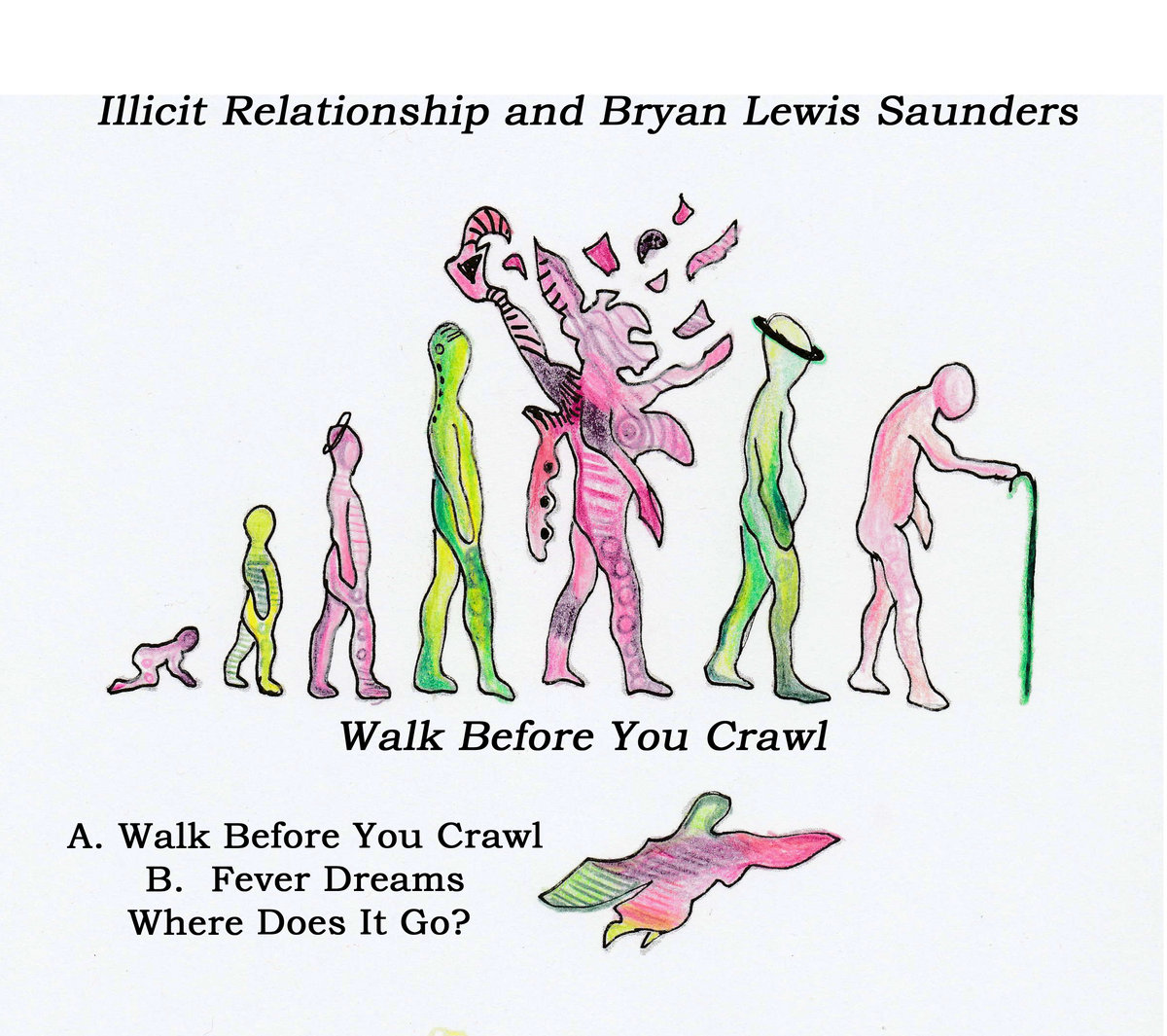
Though Illicit Relationship was an unknown name to me when I came across Walk Before You Crawl, I was already somewhat familiar with Bryan Lewis Saunders, the avant-garde multimedia artist who, among other bizarre and both physically and emotionally taxing projects, is well known for composing a self-portrait every day of his life, including a stretch of 11 days in 2001 during which he consumed a new psychoactive substance every 24 hours to examine their effects on his art. Nearly two decades later, he’s apparently still truckin’, here collaborating with the Houston duo (composed of Austin Cooley and Carol Sandin Cooley) on the A side of this LP via “dreamspeak,” i.e., half-nonsensical mutters, mumbles, musings, etc. that serve as both textural and directly meaningful elements. The way this unfolds—as Saunders’ stream of partially formed thoughts and constant trail-offs swirls into a hallucinatory sludge of additional vocal contributions by Sandin Cooley, assorted birdsong, tense electronic hum, feedback, and various effects—reminds me of the somnambulistic delirium of releases like Automatic Writing or the much more recent Undercovers. It hovers somewhere in that general no-man’s-land between intelligibility and gibberish, yes, but “Walk Before You Crawl” does so in a manner that allows voice, even mostly-decipherable speech, to exist as something much more abstract, gestural, and psychedelic. This continues with the two pieces that comprise side B, “Fever Dreams” and “Where Does It Go?,” both slopping layers of answering machine messages, monstrous growls, screeching industrial squall, absent-minded thinking aloud, and slurred swathes of dusty slime onto a slow-spinning lathe of groan and gloom.

Review: Alice Kemp – Songs in the Key of NO (Fragment Factory, Oct 1)

The England-based sound artist Alice Kemp is easily one of the most distinctive figures in the contemporary avant-garde when one thinks of particular styles or approaches. Her ability to sew the smallest slivers of sound into expansive, immersive tapestries is easily seen in the surreal microscopic throes of 2016 modern classic Fill My Body with Flowers and RiceSince that album, official recorded releases from Kemp have been quite sparse, limited to a difficult-to-acquire LP on Tochnit Aleph last year, a brief single-track contribution to the Amplify 2020: quarantine “festival,” and an even briefer appearance on Regional Bears’ recent sound poetry cassette compilation New Tulips. Thankfully, Songs in the Key of NO, despite being released by the often physical edition–reliant imprint Fragment Factory, is available for paid download or streaming on Kemp’s Bandcamp page, and offers a multi-course meal of both expected and completely unanticipated sonic delicacies. Like Fill My Body…, as well as the short Doll EP from the same year, this 20-minute affair is not for the faint of heart, but in the subtlest of ways. Largely absent, however, are the extended yet minimal spacial meditations or conventional instrument deconstructions; here, Kemp unfurls her creations in a manner much more gestural and impermanent, each new texture or recording a fragile, fleeting brushstroke across canvas disintegrating before our very eyes/ears. Bizarre disparities are unabashedly layered atop one another, resulting in unsettling coagulations like the queasy, shifty “Putrefy My Love,” while the somehow unclean silence left behind when it all fades away is treated and presented with equal reverence. The second part of that track unfolds like a fatally damaged industrial composition, beaten and broken into a metal-filled pulp yet forced to play back anyway, while “Hot Fat Conduit” burbles like the desperate half-breaths of a newly-reanimated corpse. This one will have you looking over your shoulder and checking behind the shower curtain for the foreseeable future.

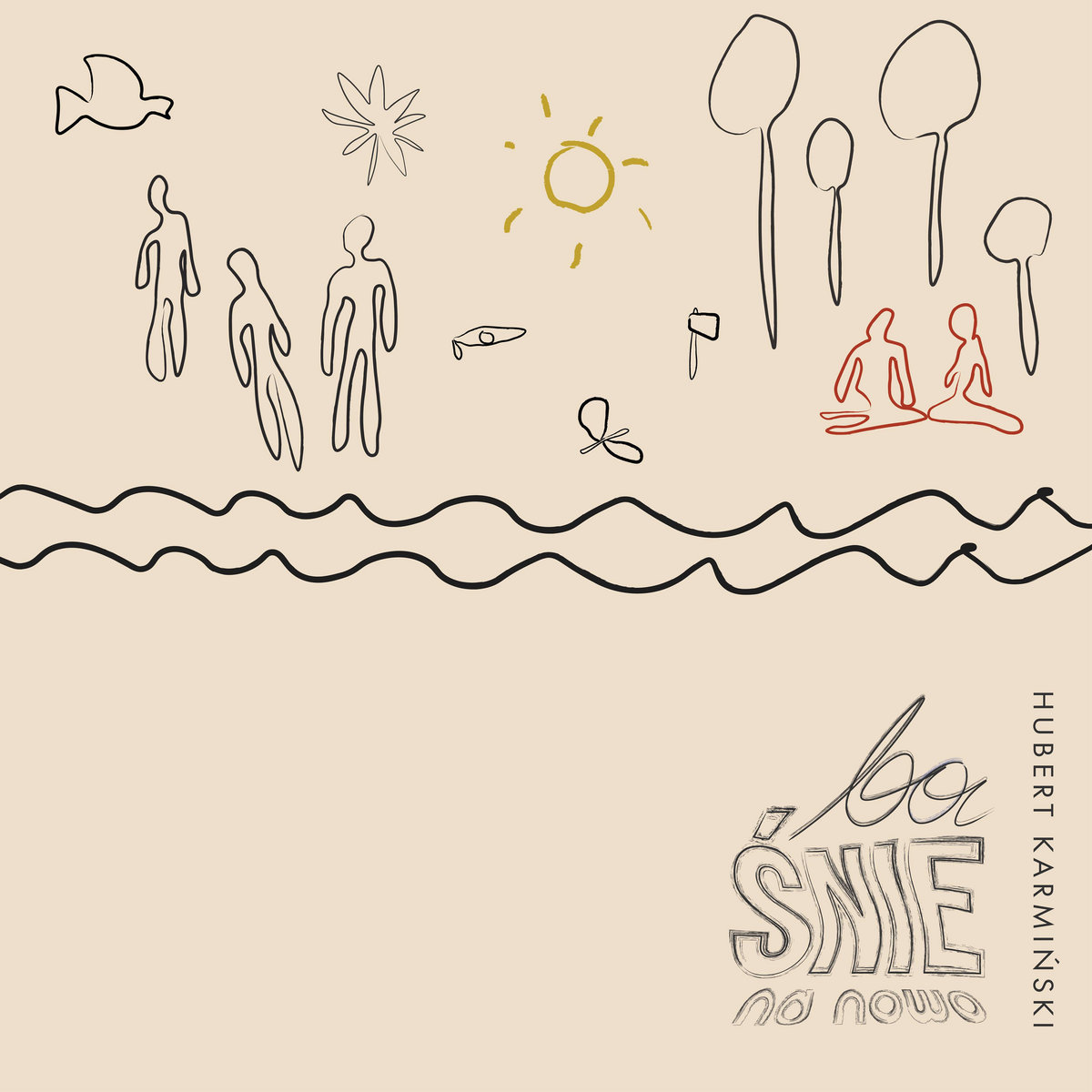
Review: Hubert Karmiński – baŚNIE na nowo (wielu, Sep 27)

Listening to baŚNIE na nowo for the first time was like the climax of those videos you’d watch as a child in which some kid would be scared to go to the dentist or some shit and imagine all of these horrible monsters lurking around corners waiting to eat them—and then the vibe totally shifts when they realize that there’s nothing to worry about because it’s just a regular old dentist’s office (and hey, the dentist herself is actually really nice! Who would’ve thought??). I suppose if one were familiar with Karmiński’s approach to abstract electronica, there wouldn’t be as much of an element of surprise, but since this seems to be the only release of his that can be found anywhere, I doubt anyone would be in such a position. Reading this review before you listen to the album isn’t spoiling anything, either, because even after the true bright, joyful essence of the album is revealed in the second track the listener still hears the brooding minor key arpeggios and unsettling throbs as portents of impending chaos—chaos that never actually arrives. Instead, our expectations of abrasion and dissonance only make the fleeting moments of saccharine beauty even more special. baŚNIE na nowo occasionally echoes the adventurous electronic music that dominated experimental CD culture in the late ’90s and early ’00s yet never leaved behind its modernity—the singular but accessible style of this album makes one wonder if Karmiński has somehow synthesized every subgenre into a deceptively fluid amalgam—or its refreshing brevity.

Review: Dylan Burchett – coast to coast (self-released, Sep 26)

Like the release of Burchett’s I last reviewed (January’s bread, since which he has published six new albums to his Bandcamp) a great deal of coast to coast consists of interplay between inner and outer realms, this time in shorter sketches and miniatures rather than a single longform meditation. But while bread was, in large part, confined to the tabletop as Burchett crafted fragile drones from feedback, synthesis, devices, objects, and other supplies at his disposal—while the sounds of his actual body moving and the silent weight of the surrounding room were somewhat secondary—this new collection of tracks embraces a much less limited and in fact gleefully mobile lens, which captures an endless variety of auditory events both everyday and consciously improvised: sublime crystalline shriek of metal on metal, someone coming home and setting all of their groceries down, Small Cruel Party–esque soundmaking knickknacks twirling on the floor, a heavy garage door closing, barely audible wind chimes clinking in the distance, assorted shuffles and scrapes, earnest electronica warbling from an old tape player. These last few elements all occur in the initial moments of closing track “whistling in the wind,” a piece largely hinged on the unceremonious but excellently executed transition from conversation snippet to euphoric drone—that chord didn’t gradually materialize or fade in, it was left behind by what came before, and slowly decays over the remaining seven-or-so minutes, struggling to sustain itself as more and more imperfections intrude upon its pure beauty. This is a new favorite from Burchett.

Review: Raised by Volts – Eye Fern Eye, Tooth Fur Tooth (Wealth and Physical Stamina, Sep 25)

The older I get, the more I wish people who have absolutely no musical knowledge or “talent” would pick up an instrument and just see what happens. “Outsider” designations are becoming increasingly dubious as the lines between chaos and convention, amateur and adept, and other previously established dichotomies progressively disappear. Why listen to well-produced work with crystal-clear technique when you can get lost in the shadowy smog of Mosquitoes, the fuzz-drenched frolic of Marsilioficino, the fluid dissections of Greymouth, the orchestrated off-kilterness of Palberta? The answer, of course, comes down to personal preference, but I still challenge everyone to question their unwavering, unquestioning allegiance to order in rock and pop music. Raised by Volts, the mysterious and possibly long-defunct duo of Tony Massarello (Who Cares How Long You Sink) and Larry Robertson, certainly abandoned any faithfulness to tradition, instead using an overstuffed toolbox of thrift-store guitars, circuit-bent toys and effects pedals, and a general creative irreverence to improvise fleeting stretches of the messiest possible rock music. Eye Fern Eye, Tooth Fur Tooth, released digitally by Wealth and Physical Stamina, seems to be their only release. The source recordings were made over a decade ago using “multiple consumer-grade tape recorders thoughtfully placed around the room” (truly “Culled from Shreds”), their age only adding to the album’s overall atmosphere of delirious haze and distance both temporal and physical, and have since been “layered,” “spliced,” and otherwise combined or stitched together to create this sketchbook-like collection of half-formed tunes. Would moments like the wonderfully sloppy major key riff in “Delect” or the sprightly, bubbling drift of “Reanimator” be as unforgettably beautiful if not for the low-fidelity, shaky structure, and much-less-than-perfect musicianship? Absolutely not.