
 Zeal and Ardor’s previous album, Devil Is Fine, was an interesting experiment. The unique blend of soulful spiritual and work song inspired vocals with melodic black metal sounds impossible, but the NY-based ensemble pulled it off much better than you’d imagine; it just didn’t result in a tremendously enjoyable album. Stranger Fruit, however, is. It is immediately clear that the stylistic elements are better integrated, whereas on Devil Is Fine they seemed to just be placed next to each other. The songwriting is absolutely incredible, keeping with the shorter durations which works well. “Intro” succeeds in its titular task, melding wordless soulful humming with a metal break that immediately reveals what listeners are in for. “Don’t You Dare,” an early highlight, is a perfect encapsulation of what makes Stranger Fruit so great. The emotion and, erm, zeal of the bluesier parts is continued during the blasting, rather than abandoned, and it results in some of the most exhilarating black metal I have heard in a long time. “Coagula” is another success, again demonstrating the power of the hybrid of styles as throaty syllables are bolstered by palm muted guitar thuds and pounding drums. At 16 tracks, Stranger Fruits still feels too short, but less in a detracting way and more of a holy shit I can’t wait to listen to this again sort of way. I’m truly excited about how great this record is.
Author: Jack Davidson
I like to listen to, read and write about, and play music.
Review: Tsembla – The Hole in the Landscape (NNA, May 25)
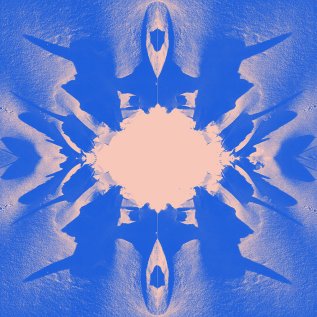 Humanity doesn’t deserve the Finnish folk scene. I can’t think of a single other milieu that can compete with the amount of creativity, originality, and experimentation that is spawned from this group of wonderful artists and musicians. Its latest contribution, The Hole in the Landscape out on NNA Tapes, is consistent with the electronic-heavy collage works on related project Kemialliset Ystävät’s most recent releases. Tsembla (Marja Johansson) harnesses an arsenal of woozy electroacoustic sound elements that lazily bounce and roll with loose, playful rhythm. The songs feel free and unrestrained but don’t overstay their welcome; Johansson seems to fuse natural expansion and contraction with a modest amount of explicit composition, creating tracks that meander with an end in sight. The Hole in the Landscape marries the conventional and unconventional in a disarming way; penultimate track “Phantom Limbs” feels like a pop song, short and sweet and catchy, but its hooks and verses are instead composed of manipulated acoustic sounds, electronic glitches, and spectral crackles. It’s because of this that Johansson’s newest reaches such a wide audience, and for some of those people (including me) it’ll be exactly what they need.
Review: Singular – Singular (self-released, Apr 20)
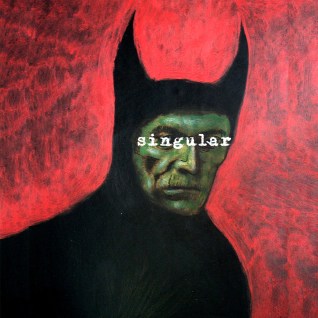 On his first official studio release, one man band Singular (a.k.a. Mierul) stirs up an inferno of fiery blackened emo-violence. The self-titled EP is short but furious and journeys through a plethora of stylistic experiments – all of which succeed in one way or another. From the fast-paced hardcore romps of “Land of the Dead” and “Wayang” to the repetitive build-ups of “アニダ” and the pounding black metal of “Scophobia,” there doesn’t seem to be a very specific sound in mind, but Singular‘s sprawling explorations don’t show any weakness. The purpose of the guests is unclear, because Mierul is obviously capable of handling these songs on his own, and one of the songs might have even been better off without them – though I recognize that not everyone despises whiny post-hardcore vocals as much as I do. The production is fittingly dense and dark, but seems overblown to the point of tearing in the higher dynamic ranges. It’s never enough to reduce my enjoyment (or my headbanging) though, and I’m really just being nitpicky here; Singular is an incredible debut effort, and the fact that it is mostly the work of only one musician is even more so.
Review: The Hands Free – The Hands Free (New Amsterdam, May 25)
 Though New York acoustic quartet The Hands Free is described as “new” on their Bandcamp page, the music on their self-titled debut album sounds like it was made by people who have been playing together for decades. Though the musicianship is solid and stellar, The Hands Free is the band trying to find their footing, exploring various styles and structures throughout. By no means is the record a hodgepodge, nor does it sound thrown together or incoherent; but there are certainly some songs here that work better than others. The band seems to be at their best when they are freely improvising without any sort of (audibly) premeditated melodies or rhythms. “Yes or No,” the track that opens the album, is a lively but angular piece, garnering its charm and success from the musicians playfully bouncing off each other. Eleonore Oppenheim’s bass is a highlight here, always clacking and thumping underneath, and stuns when it comes to the forefront. “Sade,” in contrast, is an accordion-led number that seems much more orchestrated, and as a result not quite as enjoyable. The parts are complex, sure, but the band still sounds restricted, almost battling their own composition. I will admit, though, that the mostly rhythmic swells and crescendos of “It’s She” are without a doubt some of the album’s best moments, and it’s probably one of the best songs I’ve heard this year. Hopefully the band focuses a bit more on what they do best on their next release; but The Hands Free is a fantastic start.
Review: Braeyden Jae – Flagrant Foul (Aught \ Void, May 25)
 Braeyden Jae’s new full-length tape on Aught \ Void is his harshest, most challenging work yet, but also some of his most beautiful. Flagrant Foul starts with a bang thanks to opener “Fresh Fists,” immediately assaulting the listener with grating, high pitched, metallic tones. Though the track is initially very abrasive and uninviting, the snaking, twisting notes soon reveal pleasant melodies and satisfying resolutions, and by the end I am almost brought to tears by their subliminity. Jae uses similar techniques on the album’s other tracks to equal or even greater effect. Overblown, distorted harmonica-like sounds layer and coalesce into gorgeous climaxes on “Hope Threading;” piercing feedback bursts emerge from peaceful synth cycles on “Regret American;” and sun-drenched noisy drones soothe the soul on “Post Hammer.” The razor sharp edges of these overall very subdued songs somehow only magnifies their beauty, and results in Flagrant Foul being a compelling, spellbinding tape that calms and placates… but doesn’t let you drift away.
Review: Nagual – Florida (Hologram, Apr 10)
 Florida sees drone duo Nagual delving into much softer, less abrasive territory than previous releases. Shapiro and McColm forgo the harsh clattering and brooding atmosphere of 2015’s String Music for the End Times and their split with Tongue Depressor earlier this year in favor of extended, electronics-heavy pieces that breathe and sigh at an organic pace. Nagual’s focus this time around seems to be placed on the post-production; though I wouldn’t be surprised if guitars were still the main sound sources, there’s hardly any concreteness here. Instead, the lengthy tracks are based on airy synth sweeps, glitchy electronic textures, groaning harmonium, and heavy bass intrusions. The tremendous stereo space of both “Miami” and “Gainesville” ensures that Florida will immerse you in its world for all of its 60 minutes. Nothing ever drastically changes, but the sound elements emerging from different places, twisting in and out and around each other like lazy cosmic snakes, give the album a special magnetism.
Review: rhizome.s – Affinités Sélectives Volume 1 (self-released, May 17)
 This album, released by the internet label rhizome.s, consists of two live improvisations. The first, “Back Feeder,” was recorded by Gaudenz Badrutt, Ilia Belorukov, and Alexander Markvart; while the second, “Gezeugt,” was recorded by Quentin Conrate, Matthieu Lebrun, Laure-Anne Pudbut, and Fréderic Tentelier. Consistent with the label’s main focus, the two pieces are quite minimal, developing and unfolding with quiet creaks, reserved electroacoustics, and the careful use of instruments. The elements of “Back Feeder” are more scattered, but begin to subtly coalesce like dispersed magnets slowly attracting into a cluster. Markvart’s prepared guitars take on an almost cello-like throatiness, only joined in this register by the electronics while wispy cacophonies clash in the high end. In contrast, “Gezeugt” is a deliberate, droning piece, its hypnotic sustained tones beautifully complemented by Conrate’s textural percussion and distant, muffled tape samples. One of the album’s most sublime moments occurs when the drone retracts and reveals a field recording of what sounds like a security checkpoint at an airport. Affinités Sélectives Volume 1 was a beautiful introduction for me into the extensive catalog of rhizome.s.
Review: Jean-Luc Guionnet & Seijiro Murayama – Idiophonic (Ftarri, May 27)
 Jean-Luc Guionnet and Seijiro Murayama’s third studio record as a duo is a pretty drastic departure from their previous work. The most obvious change is that Guionnet plays a pipe organ instead of his usual alto saxophone, giving Idiophonic a much darker feel. I get the distinct impression that the two musicians were very far apart from each other while recording; the album’s three improvisations feel oddly split, even disconnected, but not in a way that hinders their impact. Guionnet’s organ playing is unlike anything else I’ve heard produced by the instrument. Instead of embracing and utilizing its natural droning, cavernous sonority, he attacks the keys in an almost percussive manner, forcing notes out of it rather than letting them escape. Murayama’s approach is similarly aggressive, his snare snarling and gnashing with disarming hostility; there’s even a point in “Idiophonic 2” where his furious rolls almost reach blast beat territory. There’s an interesting contrast present here between the artists’ vigorous improvising and the sense of separation between them; and I’d expect nothing less from these notoriously cryptic and creative musicians.
Review: Audiomat – Audiomat (Committee for Sound Research, May 26)
 Audiomat is a new duo consisting of Andreas Brüning and Gerald Lindhorst, both accomplished artists in the area of adventurous electronic music. Their self-titled debut album is a joining of both musicians’ areas of expertise to form a new, unique identity. It’s dark, synthetic, and mechanical, making use of repetitive rhythms that form bases for immersive textural compositions. Opener “Ein Traum aus dunklen und beunruhigenden Dingen” is the album’s longest track and also its most ambitious. It begins with a hypnotic percussion loop that persists throughout despite subtly morphing in response to the dizzying arsenal of industrial textures and electronic drones that emerge. “Ein Traum…,” as well as the majority of the rest of the album, tempers its abstractness with rhythmic elements to keep itself grounded. It’s a balance that mirrors how each member’s contributions result in Audiomat’s singular style; Brüning’s loops and meditative monotony are a perfect foil for Lindhorst’s lush modulations and soundscaping. From the binary oscillations of “Microtonal Errata” to the harrowing, distorted chords that conclude “Kwan Jun,” Audiomat is a stubbornly neutral and rewarding album.
Review: Red Brut – Red Brut (KRAAK, May 26)
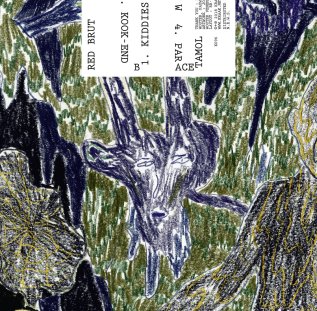 Marijn Verbiesen, also a member of Sweat Tongue and JSCA, embarks into solo territory on her new self-titled record as Red Brut. It’s a short but fruitful foray into a unique brand of do-it-yourself experimentalism, with Verbiesen stitching together haphazard compositions from fuzzy tape loops, lo-fi ambiance, and bouts of enigmatic cassette concrète. The pieces that make up Red Brut create a unique atmosphere that’s somewhere between cute and unsettling, residing in an enticing sonic uncanny valley. The sounds themselves are thin, plasticky, even novel, but when put together they make up something much more formidable. Closing track “Paracetamol” is one of the record’s strongest, built atop muffled tape loops that find harmony with out of context acoustic explorations, a murky sample of a woman softly singing (possibly Verbiesen herself), and a peaceful section of ambient synthesizer. The piece covers a lot of ground in under five minutes, but the palette used is so demure that there’s no feeling of disjointedness. And the rest of Red Brut is very much the same way; Verbiesen accomplishes so much with so little, and the record’s humility only gives it more strength.
 Noise Not Music