
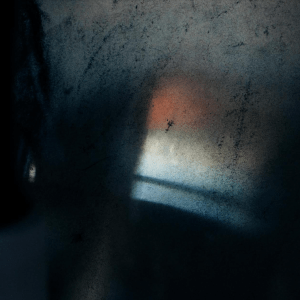
 The music of Anne Guthrie is difficult to pin down. Despite the fact that much of it is composed of usually identifiable found sounds and Guthrie’s unmistakable French horn playing, the end result is never so transparent. Both Perhaps a Favorable Organic Moment (2011) and Codiaeum Variegatum (2014) are among the most abstract and cryptic records I have ever heard, a trend that is continued with Brass Orchids, Guthrie’s second release on the Cincinnati-based imprint Students of Decay. But while the impenetrability of the two former albums was always something that obstructed my enjoyment, it has quite the opposite effect on Brass Orchids. The album’s five tracks are murky and abstruse, slowly exposing various sounds amidst a consistent darkness. Muffled voices, wispy horn blows, distant clatters, and almost alien-like whirs are all interwoven into the nocturnal, recondite tapestries, creating an atmosphere that is immersive and ominous. The feeling of something lurking in the dark just outside of your vision, the uncomfortable sensation of being surrounded, an uneasiness you can’t really explain; these are all sensations elicited by this opaque, mysterious music, and are what draws me back to it again and again.
Author: Jack Davidson
I like to listen to, read and write about, and play music.
Review: Dosis Letalis – Confronting the Inhuman (Breaching Static, Jan 12)
 Wall noise is difficult to review, and to explain in general. I often find that I am unable to eloquently justify my enjoyment of it, despite it being an area of music to which I listen frequently. One thing I can confidently say, though, is that while an individual wall track may be homogeneous, the overall genre is anything but. Nothing better proves this than the widely varied and idiosyncratic work of Serbian artist Nemanja Nikolic, who most often operates as Dosis Letalis. His walls draw from a large pool of sound elements, including assaulting harshness, wriggling electroacoustic manipulations, and more. Confronting the Inhuman is a particularly soft and meditative album, its muffled field recordings slowly unfurling under a kinetic yet oppressive layer of noise. As with most Dosis Letalis releases, there is almost no progression throughout the duration, which for some may be a significant downside. But Confronting the Inhuman‘s organic, natural constitution lends itself well to stagnancy, and the album is anything but boring as I unpack the various layers whirling in my ears.
Review: lojii – Lofeye (Youngbloods, Mar 23)
 I recently mentioned that lojii & Swarvy’s Due Rent was one of the only hip-hop albums I loved last year. While I was initially drawn to its dusty, inventive production, it was lojii’s entertaining flow and lyrical earnestness that kept me coming back. His chops have only improved on his new solo record Lofeye, tackling less concrete subject matter with dizzying rhyme schemes and endlessly creative instrumentals. lojii employs a wide variety of producers across the album’s 14 tracks, with results ranging from Thook’s dark atmospherics on leading track “Spook Who Sat by da Floor” to the schizophrenic musique concrète of Marc Rebillet on “Run It Down,” which probably has the craziest beat I’ve ever heard in a hip-hop song. Despite the much larger talent pool, everything on Lofeye feels like it fits; it all has a smoky, shadowy feel to it, and lojii’s smooth bars are always center stage. It’s a lot to take in at first, but Lofeye has already well exceeded my expectations, and I’m hoping that further exploration will only cement its quality.
Review: Lauren Tosswill – My Home in the Year (Enmossed, Jan 31)
There’s an almost uncomfortable tactility to My Home in the Year. In the monstrous opening title track, heavy metal objects are dragged and feet clunk on hardwood floors, juxtaposed with heavily manipulated loops of Tosswill’s spellbinding voice. The sounds are never fully unveil their identities, yet are present enough that the listener can fully explore them. This balance is key to the album’s amazing composition, with the unique timbres evoking a variety of emotions as they build in volume and interlock with each other, always hiding just behind a shield of enigma. Even the vocal elements are mysterious despite their origin being known. Tosswill’s wordless scrapes, grating inhales, and Yoshida-esque oscillations introduce incredible textures, allowing for an entirely a cappella track like “Kes” to be equally as captivating as any of the others. Despite making use of a relatively sparse sonic palette, My Home in the Year is impossibly lush; on the album page, it’s explained as residing “beyond the eye’s eye to our depths,” and somehow that arcane description kind of makes sense. Don’t ask me why, just listen.
In addition, Ms. Tosswill did a fascinating interview about her work with ATTN:Magazine. Also, all proceeds from Bandcamp sales of My Home in the Year go to Maine Inside Out, a nonprofit that works with incarcerated individuals to put on theatre productions.
Review: Rafael Anton Irisarri – Sirimiri (Umor Rex, Mar 16)
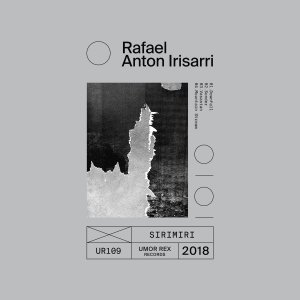 It seems like not too long ago that I was reviewing a Rafael Anton Irisarri album (that being because Midnight Colours came out less than a month ago). Not many artists can maintain such a frequent release schedule and consistent quality at the same time, but Sirimiri will silence the skeptics. Where Midnight Colours was bright and chromatic, Sirimiri is cool and nocturnal, with Irisarri’s masterful drone sculpting taking on an icy edge. The lush constructions and attention to detail has not been abandoned, however; every track draws from a variety of ideas, moving through and layering each of the elements in a way that feels very natural. Closing track “Mountain Stream” is one of my favorite things Irisarri has done, its cold synth melodies and shifting wintry ambiance somehow masking a hidden warmth. It evokes an alluring snowy landscape; but one that is viewed safely from a warm living room. Really wish I would’ve picked up the tape before it sold out, but what can you do.
Review: Setsuko – The Shackles of Birth (Dog Knights Productions, Mar 6)
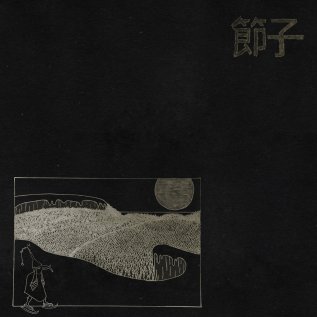 I had a strange experience with The Shackles of Birth today. Towards the end of my first listen, the realization of how awesome it really is sort of crept up on me, a pretty uncommon thing in very in-your-face, immediate music like this. I was confused, until I realized that my delayed acknowledgment of its badassery was due to my brain automatically filing it away as a hardcore classic that I listen to regularly, rather than a new album I just discovered. Yes, the record is that good; it’s short, furious, and to-the-point, the gritty yet dynamic mix bowling you over like a freight train. The Shackles of Birth has everything I could possibly ask for, with vocals that sound more like tortured howls than screams, powerful drums that pound away blasts and d-beats alike, and dissonant, angular guitar interplay that stops things from even coming close to boring. It’s been a long time since I’ve been just plain excited about an album, but this one is seriously an accomplishment. And I guess my brain was mostly right; I will definitely be listening to this regularly, and it is most certainly classic material. You can pick up the physical LP here.
Review: Kate Carr – I Ended Out Moving to Brixton (Flaming Pines, Mar 9)
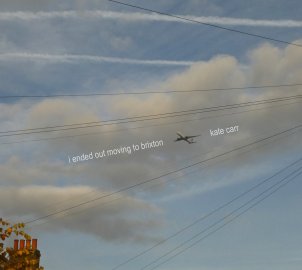 London-based artist Kate Carr’s unique soundscapes could almost be compared to paintings. In much of her work, and especially in I Ended Out Moving to Brixton, she aims to describe a physical location or environment using the variety of sounds heard within it. This new release on Flaming Pines is especially vivid, presenting Carr’s perception of the rapidly changing city of Brixton. “Rapid” also describes much of the piece; individual sounds and recordings dissipate almost as soon as they appear, forcing the listener to pay close attention. It’s the same feeling I get when I’m walking through downtown at rush hour, when everyone around me is hurrying somewhere and I almost feel as though I should be hurrying too. Carr captures this almost stressful feeling of movement with disarming panning, frequent splicing, and the layering of noises on top of each other, but she also somehow presents a feeling of comfort within the chaos; initially unfamiliar sounds are repeated throughout the piece, subtly developing an almost rhythmic security amidst the hustle and bustle. I’d say the non-diegetic contributions are the weak points here; I have nothing against musical elements within field recording based pieces like this, but the new age-esque synths and computerized percussion are so out of place against the careful beauty of the environmental sounds. But regardless, Carr succeeds yet again in painting a colorful sonic portrait, and even though I’ve never physically been to Brixton I feel like I know it a little better now.
Review: Nick Keeling & Kaily Moon Schenker – Marker (Torn Light, Jan 8)
 This tape came out quite a bit earlier in the year, but I only recently got my hands on it; it was a physical-only release and Torn Light was sold out of copies. However, I had the opportunity to see this duo perform some live improvisations last Saturday, and was able to pick up Marker at the merch table. It’s the first and possibly only collaboration between musician/sound artist Nick Keeling and classically trained cellist Kaily Schenker, and is mainly composed of improvisational pieces with cello, piano, vibraphone, and 8-track tapes. Needless to say, both artists are tremendously skilled at their respective instruments, but the real treat here is the evolution of Keeling’s tape work, which is more developed than ever before. He uses a custom-built system of three modified 8-track machines, the tape circling in an infinite loop in and out of each, allowing for live manipulation of both his and Schenker’s playing. The dusty stutter of the imperfect loops blends incredibly well with the sounds coming from the actual instruments, giving Marker a unique, fragile beauty that is only extended by its exclusive presentation on cassette. I’ve been told it can be purchased from Thousands of Dead Gods’ Discogs page despite not being listed.
Review: Nagual / Tongue Depressor Split (Pidgeon, Feb 22)
 Both sides of the new split tape by Connecticut-based duos Nagual and Tongue Depressor are abrasive in a way that is somehow not off-putting. The noisy, clattering guitar and effect interplay between Nagual’s David Shapiro and Ian McColm is chaotic, violent even; but it’s also inexplicably warm, and magnetic. The way these musicians sculpt string buzzes, rattles, angular notes, and hypnotic loops into detailed soundscapes is truly amazing. Tongue Depressor’s side, composed of fluid violin and fiddle drones performed by members Zach Rowden and Henry Birdsey, is equally dense despite its sparser palette. You can almost hear the resin crumbling off the bows as they are mercilessly dragged along the strings, giving the lush harmonies a jagged edge. I’m undoubtedly reminded of the organic pieces of the Dream Syndicate, but Rowden and Birdsey are not concerned with “eternal music;” near the end of the track, the notes dissipate, and we are left with jarringly percussive bowing that builds to a noisy conclusion. A fantastic showing from both artists, and thanks to Pidgeon Records for putting it all in a nice package.
Review: The Orchardist – Mercurian Vineyard Surgeries (Nonlocal Research, Feb 22)
 Some might say that an element of mystery and wonder associated with underground music is lost in this age of the internet. And it’s true; there’s really nothing like finding that unmarked LP in the bargain bin that blasts lo-fi industrial sounds out of your speaker system when you put it on the table or pulling a cassette wrapped in some sort of felt-like material with no identifying information to be found out of a dusty, forgotten music store shelf. But I’d argue that I came damn close to that pleasing feeling of bewilderment when I came across Mercurian Vineyard Surgeries on Bandcamp the other day. It’s the newest tape from multimedia artist Grant Corum, under his bizarre alter ego The Orchardist – a self-described “cryptopodian composer” (your guess is as good as mine). The album itself is equally odd, with ethereal nature recordings and bubbling water flows sharing space with primitive analog tones and warm synth washes. Stated as being recorded entirely within The Orchardist’s greenhouse, the tape is joyfully organic and fluid, somehow finding compromise between painstaking attention to detail and charismatic messiness. And though a few clicks led me to a website where I could learn all about where it all came from and how it was made, my love for the unknown – one that I’m sure I share with a lot of you – was initially what spurred me to listen, and I’m grateful that still survives in some form today.
 Noise Not Music