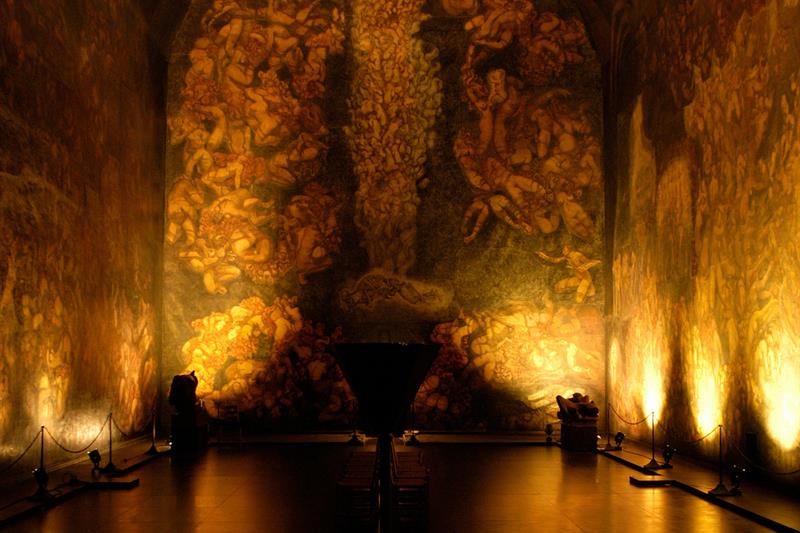
 Though “Dahl-Tah-Ghi” was originally performed for a small audience of only 30, this spectacular recording allows for any number of people to experience the intimacy and power created by Okkyung Lee’s lone cello improvisations. Recorded in the Emanuel Vigelang Mausoleum in Norway, a cavernous building with extraordinary acoustic properties, “Dahl-Tah-Ghi” is an example of both how unique environments can become a part of the performances they house and Lee’s ability to interact and respond to those environments. The wide range of timbres she coaxes out of her instrument linger in the air for seconds after the actual notes are played, allowing for Lee to build upon sounds that already would have vanished in another location. Her reverent playing alternates between frantic cacophony to almost imperceptible drones and string rattles, expanding and contracting in a way that makes the 41-minute performance seem much shorter. I’m sure everyone who listens to “Dahl-Tah-Ghi” apart from those lucky 30 individuals wishes they could have witnessed it take place in person, but the care taken in recording, as well as Lasse Marhaug’s spectacular mastering, ensures that our experience is almost as amazing.
Author: Jack Davidson
I like to listen to, read and write about, and play music.
Review: Aries – Naturalismo (Colectivo Casa Amarela, 2017)
 Naturalismo is a painful album. Not only because of its quick and surprising transitions from near-silence to loud, crushing distortion, but also because the raw emotion behind the music is palpable to say the least. Though the wordless language used by Portuguese artist Aries to convey these things is one I’m not sure many could translate, I’d argue that anyone who listens can understand. Naturalismo is filled to the breaking point with despair, defeat, anger, with brief islands of hope and peace appearing amidst the roiling ocean of sound. But these are just words; there really isn’t any way to verbally convey how I felt when a colossal tower of noise grew out of the barely audible glitches in the first part of “Precisamos de espelhos,” or the uneasy calm elicited by the lush ambient drifts of “Todo o tipo de ossos excepto o osso que eu queria.” It all just needs to be experienced.
Review: Matthew Atkins – The Subtle Silence (Midnight Circles, Mar 11)
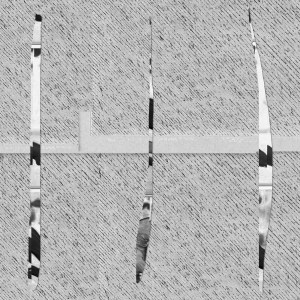 German cassette label Midnight Circles describes their main focus as being on “sound and occasional music.” This happens to be a perfect description for Matthew Atkins’ The Subtle Silence, one of their newest tapes. The London-based artist, who also operates under the alias Platform, coaxes fragile beauty from soft patchworks of processed sounds and loops. Scrapes, brushings, the clinking of chimes and other metal objects, reverb-y recordings of cavernous environments; these are only some of the elements that come together in uneasy harmony across the six songs, a harmony that is placated by achingly gorgeous piano chords and wistful drones. The short album is more episodic than continuous, each track a self-contained development; but this is by no means a disadvantage. It’s pleasing to see how each evolves from different starting points, from the airy shuffles of “Sunken Shell” to the oddly rhythmic pulse of “Illuminated Index.” I couldn’t be more grateful that the “music” is only occasional amidst the “sound;” that only means I appreciate it so much more when it does appear.
Review: Farwarmth – Immeasurable Heaven (ACR, Mar 12)
 Immeasurable Heaven is somehow just as poetic as the album’s lofty title. It’s an entirely instrumental release that conveys a stunning range of emotions, probably due to the elaborate layering of both textures and melody that young musician Afonso Arrepia Ferreira constructs. The young artist provides both elements, his expressive acoustic piano playing drifting in and out of noisy ambiance created by synth patches, keyboard, and processed samples. Other musicians who lend even more diversity include Victoria Mailho (flute), Bruna de Maia (cello), Guilherme Tavares (additional sampling), and Filipe Baixinho (bass), allowing Ferreira’s ambitious compositions to achieve their full potential. Described as being based on the connection between humanity and the cosmos, Immeasurable Heaven is an album that somehow embodies both the earthly and the celestial; its supernal atmosphere and weighty, dense harmonies often reveal the more modest and intimate sounds within. The record emphasizes the beauty of being such a small part of something much larger, the bittersweet reality that our lives are so insignificant, yet reminds us that we still matter.
Event: Nick Keeling & Kaily Moon Schenker Live Performance and Demonstration (Herzog Music, Mar 17)
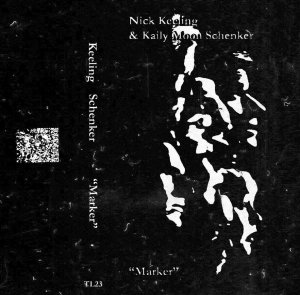 This Saturday, March 17, experimental musicians Nick Keeling and Kaily Moon Schenker will be performing at Herzog Music on Race Street, in downtown Cincinnati (full address in Facebook event). The duo just released a cassette called Marker on Torn Light Records (listen to a sample here), and to celebrate they will be performing as well as demonstrating and taking questions about their unique music made from cello, piano, and custom-built tape machines. If you’re anything like me and love to see the actual process behind such unique sounds and compositions, this will be fascinating and a lot of fun. I’ll definitely be there, so come hang out.
Review: Brett Naucke – The Mansion (Spectrum Spools, Mar 9)
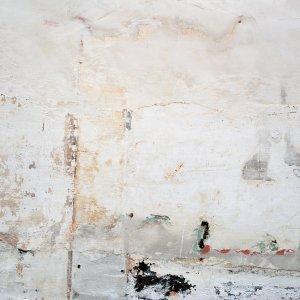 Chicago-based experimental electronic musician Brett Naucke is an artist who clearly loves his craft. Even passive listens of the various albums he’s released over the past eight years will reveal an attention to detail that can only come from an individual who is truly passionate about what they make. This couldn’t be more evident on his newest LP, The Mansion, which is probably Naucke’s most ambitious release yet. It explores a wide variety of unique textures amidst his usual palette of lush electronics, every sound meticulously placed within an almost disarmingly physical space. This is aided by some of the best production I’ve heard this year. The panning is jaw-dropping; clips of field recordings, bizarre glitches, and impossibly well-crafted concrète collages shoot in from various angles, somehow never obscuring each other in the mix. I wouldn’t say that The Mansion is necessarily playful or light-hearted as a whole, but it’s undeniably fun to listen to, rivaling some of my most treasured “headphone albums” in that regard. And, somehow, atop all of this density is a bewildering melodic sensibility, one that gives each of the songs a remarkable staying power and subtly bolsters the impact of each element. It all seems like a recipe for an overstuffed mess, but believe me when I say that The Mansion is some of the best-developed music I’ve heard in 2018 thus far, and cements Naucke as an exciting new artist in the equally exciting contemporary avant-garde climate.
Guest Review: Beautiful Day Design on Lea Bertucci’s Metal Aether (NNA, Feb 9)
 Lea Bertucci’s latest album, Metal Aether, sounds like the space its title suggests: a dense, echoing chasm of supernal saxophones and fluttering field recordings. Fans of her previous album, All That Is Solid Melts Into Air, will likely appreciate Metal Aether’s ambient, electroacoustic atmosphere. Her new LP trades All That Is Solid…’s anxious strings for ominous drones. It swaps brief, blissful harmonies with tape collages that sometimes submerge her songs in showers of shifting static. Metal Aether feels like a fresh, natural progression of Bertucci’s style. She retains her strong sense of dynamics and space. A tense energy permeates the record, even during many of its quieter segments.
“Patterns for Alto,” the album’s opener, abounds with this anxious energy. Chaotic saxophones race against each other, building a residual ambient hum. The piece sounds like traffic patterns on a busy city street in a dream — it may reflect the New York-based composer’s urban environment. After “Patterns for Alto”’s breathless buildup and sudden ending, “Accumulations” marks a stylistic shift. Brooding saxophones tentatively creep into the mix and uneasy microtones and shrill brass glissandos seem to foreshadow a harrowing climax. The piece’s title, even, suggests a gradual layering of sound, a buildup of layers into something gigantic. It never reaches that point, however. “Accumulations” instead fades into jittering tape noises, which combine with the saxophones to create a sparse and vaguely jazzy soundscape. One venue’s advertisement for Bertucci describes her as “…unafraid to subvert [listener] expectation[s]”, but perhaps indulging them would have been better here.
“Sustain and Dissolve”’s first ten minutes feel equally insubstantial. Bertucci’s layered saxophones phase in and out like supersaws, creating a fairly peaceful yet disengaging full-on ambient detour. Occasional dissonant moments filigree Metal Aether‘s least developed segment. Eventually, though, the thin wall of brass crumbles into something more interesting: a distorted, muffled prepared piano resonates like a bell while lo-fi field recordings give way to paradoxically chaotic and subdued whirring tapes. The track’s latter half submerges the listener in a warm ocean of bubbling analog glitches and found sounds drenched in dense digital processing. “At Dawn” builds on “Sustain and Dissolve”’s interesting parts. The piano returns as a bell, but far more ominously. Tape recordings rustle and flutter like leaves in a windstorm, creating a natural and organic chaos. Sharp, resonant drones occupy the piece’s higher register briefly, complementing bustling crowd noises. Bertucci puts down her saxophone for this piece, and it feels like welcome sonic variation after its droning omnipresence in the lengthy first halves of the middle two tracks. “At Dawn” ends the album as successfully as “Patterns for Alto” begins it, even though the two pieces bear almost no similarities.
The fact that Metal Aether’s beginning doesn’t resemble its end testifies to the album’s sense of development. Bertucci successfully evokes different emotions and creates distinct atmospheres in each track, yet the album still feels wonderfully cohesive. Overall, Metal Aether surpasses its isolated weaknesses, establishing itself as an original and well-developed work.
Review: Conjurer – Mire (Holy Roar, Mar 9)
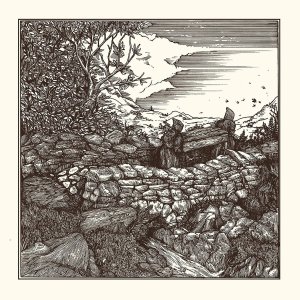 Well, it’s happened again; I’m so excited about an album that I’m reviewing it on the same day it came out. But Mire is so awesome that it’d be an injustice not to attempt to bring it to the attention of as many people as possible. It’s the debut full-length from the U. K. band Conjurer, and though they released an EP back in 2016 it’s the first thing I’ve heard from them. Needless to say, I was blown away. Though elements of various metal subgenres and the anthemic passion of post-hardcore can be found amidst Mire, the final sound is surprisingly unique, forging a new path through this range of styles that touches on each but remains distinct. The riffs are sometimes catchy and other times angular, always bolstered by thick, meaty production that gives everything its own weight in the mix. With emotional vocals shifting between guttural growls and invigorating screams, drums that go from pummeling blast beats to spacious doom hits, and a crushing heaviness that presides over every song, Mire is a crazy trip that I want to experience again and again.
Review: Holy Grinder – Cult of Extermination (self-released, Mar 2)
 Aside from the main reason I love Holy Grinder – the fact that they have probably one of the best band names I’ve ever encountered – they pretty much have everything I look for in grind nowadays. Cult of Extermination, their newest independently released album, encapsulates this perfect storm in thirteen brutal minutes. The vocals rip through the invigoratingly heavy mix just the right amount, the instrumentals are tight but never sound too polished, and the whole thing is shrouded in noise and grime yet every hit shakes me right to the bone. Holy Grinder have also somehow accomplished something that many of their contemporaries have not; they don’t take themselves too seriously, which is always a plus in any area of music, but they also take themselves seriously enough not to discredit their music as purely for shock value or awful humor. It’s not usually my modus operandi to talk about a band’s, for lack of a better word, “image” on equal footing with their music, because I usually don’t see it as being nearly as important, but it’s just so refreshing to encounter stuff in this genre without track names like “Fornicating in Pulverized Feces” or an album cover that depicts a similarly disgusting scene. That being said, Cult of Extermination is so pulverizingly awesome that I could probably look past all of that, but thankfully I don’t have to.
Review: Grant Evans – Ergot Dogs (Adversary Electronics, Feb 1)
 Grant Evans is a ridiculously prolific artist, releasing an inordinate amount of music over the last ten or so years under his own name, various aliases, and as a part of collaborations. Recently, most of his output has been focused on the Adversary Electronics imprint, which Evans founded with his wife Rachel – also a musician, who goes by the name Motion Sickness of Time Travel – in 2015. Despite the label’s catalog consisting only of both artists’ solo work and their duo project Quiet Evenings, they’ve released over fifteen tapes. Ergot Dogs is one of three Adversary releases in a new 2018 cycle, and is among Evans’ most ambitious material. Immersive field recording collages and rough electronics dominate the thirteen short tracks, soft and jagged textures continuously clashing to amazing effect. I’m never quite sure whether to feel comforted or scared; I suppose it’s a testament to Ergot Dogs‘ uniqueness that I end up experiencing both at the same time. Despite never having been anywhere in rural Georgia, the tape instantly transports me there. I sit in the dilapidated old house depicted on the cover, as the wind howls and the forest groans and sighs around me, wondering where all those voices are coming from; then the sun shines on my face through an open window and somehow everything is beautiful again.
 Noise Not Music