
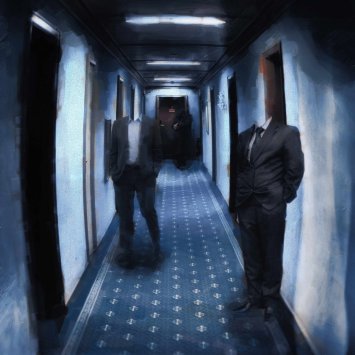
 Somewhere down the road, years or maybe even decades after you get your first trade box full of tapes literally no one else in the world has heard or pay $15 to watch someone push a button and play a frequency only half the audience can hear, you start to lose touch with the “weird” classifier. Whatever walls were there in your brain previously just sort of crumble after a point and the relevant appreciation/enjoyment neurons clump into a single switch that flips to YES or NO. But also, if you’re doing it right, every once in a while something will come along that redefines “weird,” necessitates some sort of distinguishment from the rest because of how utterly, undeniably singular it is. Men Who Lost Their Heads is one of those. Bodies with heads not decapitated but missing lie somewhere on the sweeping slopes of the uncanny valley, so the album art immediately introduces a sense of unease and nonconsensual anonymity—which, unsurprisingly, is a fitting shadow for mockART’s unusual music to fall under. The term “post-industrial” has been used to describe many things, and yet I’m not sure if it’s ever been so accurate as now; these cave-and/or-corridor-dwelling rhythmic excursions draw occult energy from both the clipped, primitive brutality of early industrial acts like EN and SPK and the complex abstractions of the many artists those bands inspired. “Hollow Earth” unfurls as a shifty but ultimately quite conspicuous introduction to the bizarre cocktail of ritualistic trance-states, surreal suit-and-tie concrète, Faust-esque hermitic delirium, and hints of brighter (or probably just less dark) horizons that continue to surface in ever-changing cycles throughout the lengthy album. Tracks like “Behind Closed Doors” and “Some Fashion Advice” are slightly less storm-clouded meditations complete with mutter musings and fluttering flutes, and “The Earth Is Flat Now” ends things on an unexpectedly contemplative note. One of those things everyone should listen to at least once.
Author: Jack Davidson
I like to listen to, read and write about, and play music.
Review: Homeskin – Subverse Siphoning of Suburbia (self-released, Nov 5)
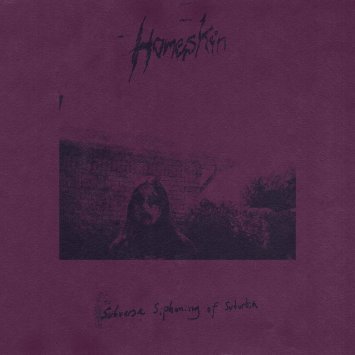 Typically, the advantage of black metal music recorded by a single person over that played by a band of two or more people (or vice versa, of course) is the unitary of sonic and aesthetic vision that can often only originate from a singular source. There are exceptions of course—solo albums that sound like a mess whipped up by cohorts of five, ten, twenty; ensemble performances with such disciplined tightness and technique that they end up surpassing what any one of the members could achieve on their own—but it’s enough of a trend for me to pick out, and it’s certainly rare to find a release that somehow hits both spots, especially on the “solitary creative” side of things. The fact that Subverse Siphoning of Suburbia does can perhaps be attributed to its extremely quick production process: GB, who contributes all of the instruments and vocals for their new project, composed, tracked, and then uploaded everything on this sizeable debut EP within 13 hours between November 4 and 5. A feat in itself, even if the results weren’t stellar, but they are, which makes Subverse Siphoning even more impressive as an inaugural declaration. Dense mazes of tremolo guitars slicing with both single-note melodic riffs and painterly chord-sweeping thread with invigorating drum work that’s precise enough to be a machine and full enough to be a real set, breaking into groovy, interlocking vamps on “Mounds of Dead Skin” and animalistic thrash stampedes on the sprawling “Crevice in a Window to Reality.” It’s all capped off by the immobilizing atmosphere of “Underside,” which true to its title feels like the tarry residue left over after the previous three tracks, the globs of darkness and shards of melody that have dripped to the bottom like an infernal grease trap.
Mix: Field Research
These are sonic investigations engendered by curiosity, appreciation, or any other feeling that would drive someone to record the soundscape of a certain place to preserve, transmit, or otherwise immortalize it. Sometimes warm and intimate, other times distant and voyeuristic. With all of its concrete anchor points in the familiar and not-so-familiar liminal spaces we take for granted, I suppose this is a kind of travelogue as well, one for a trip that can’t be taken until you make the jump yourself.

Annea Lockwood recording for ‘A Sound Map of the Danube’
00:00. Christian Calon & Chantal Dumas – “Histoire d’Ours” from Radio Roadmovies (326 Music, 2003)
04:29. Agata Stanisz – “48h Pauzen Machen / Gas Station in Mulhouse, FR [14.7.12]” from 3 Square Meters (Szara Reneta, 2020)
07:38. Ernst Karel – “Scuol–Motta Naluns” from Swiss Mountain Transport Systems (Gruenrekorder, 2011)
11:39. Job History – “Super 88 in Allston, Massachusetts” from Sounds of North American Grocery Stores Volume One (Hen’s Ear Recordings, 2021)
16:48. No Artist – “Washwatch” from The World a Wash Away (Modern Concern, 2021)
21:26. Adrian Rew – “1/11/2014: Majestic Star Casino, Gary, IN” from Slot Machine Music Vol. 2 (Ergot, 2014)
25:35. Cahn Ingold Prelog – “Baggage Reclaim” from Non-Music 2 (self-released, 2018)
29:13. Daniel Menche – From Here to Electricity [excerpt] (self-released, 2018)
33:32. Greg Hooper – “Damp Gravel with Cars, Rocklea” from Carparks (self-released, 2021)
38:00. Yparxei Provlima Amalia – fourth untitled track [excerpt] from side B of Kona Kai (OMFT, 2013)
Review: Zebra Secrets – HTCH 221 (self-released, Nov 1)
 It is almost invariably a good sign when one or more performers on a release are credited with contributing “barking and chains.” However, the next thing that caught my eye after that was the fact that the San Francisco–based Zebra Secrets are a trio, so who are Argus and Leica? Oh. Right. And honestly, it’s great, because the fact that the pets of the members participate in the recordings is directly indicative of the project’s philosophy and approach to improvisation: anything goes, boots (or paws) on the ground, plenty of organic looseness and abandon. John Alderman, Brent Johnson, and John Seden tracked the two ambling pieces that comprise HTCH 221 at the San Francisco Art Institute, nearly 400 miles northwest on I-5 from where the many cross-eyed hydra heads of the Los Angeles Free Music Society continue to rear, and yet the energy of the latter is very much present in the former. Anemic but effervescent electronics, scattered clomps and skitters of percussion, thrift-store electric guitars thumbed and shredded, and all sorts of other carelessly psychedelic doodads and vapors (there’s even a mandolin in the mix at one point) are the only guideposts in this stumbling march of lavender-hazed revelry, but whether you’re bumping into every single one or sliding between them like a smooth, sly snake, the contact high will set in soon.
Review: Dart Drug – Recovery Tapes Vol. 1 (nausea., Oct 31)
 The clattering straight-to-microcassette improvised music of Dart Drug, a new duo of nausea. operator Angelo Bignamini (also known as Inés Wiarda, Lucifer Big Band, Billy Torello, and now apparently LKL as well) and Marcello Groppi (who so far has released two superb solo works that are available digitally, one also on nausea., as ATRX: Phase Two and Third Report), is a perfect merging of the two Italian sound artists’ singular interests. I associate both with textures and sonorities often considered useless or undesirable—extreme low fidelity, moth-eaten recordings, grimy basement shuffle—so this humble but memorable excursion into the gloriously tinny, toddling aesthetics of mono-only, extra-thin microcassette tape is a quite natural development. Groppi’s table is piled with electric string instruments in addition to the playback rattle, knob-twiddling, and auditory scene-splicing that occupies much of the nearly half-hour run time, presumably prepared guitar and bass that manifest as muffled, plodding plucks and metallic clamor. The interplay here is at once clumsy and calculated, two sources becoming one current in the cramped single channel. For me, the best moments on both sides is when vocal elements are used: echoing, static-soaked radio chatter near the end of side A amidst delirious, almost psychedelic toy-industrial drone; slurred speech tripping over itself and sliding into sludge midway through side B. Best to just open your ear-hole wide and let it all drain in at once.
Review: ECT – ECT1 (Machine Tribe Recordings, Oct 30)
 If, like me, you were unaware what the initialism ECT stands for with regard to construction, it abbreviates “edge crush test,” which determines how much force the side of a piece corrugated cardboard can resist before crumpling. This information isn’t important to anyone not in a field where regular purchases of cardboard pieces or boxes with varying strengths, but it does also provide the unusual artwork for the brand new Brooklyn wall noise project of the same name’s debut, and since there’s not much of anything else to go on, every detail counts. “Detail” is also the name of the game in the 75-minute ECT1, a thin but loud slab of static built from expansive, membranous crackle currents that are simultaneously muffled by low fidelity and bejeweled with complex textures. I’ve discussed how the general “motion” or kinesis of a wall is often an important, even an essential aspect, but it’s hard to pin down exactly where the endless flow of cacophonous plasticine rattle originates and terminates, even in the abstract sense: it seems to lean in like twin bowing tidal waves curling from both channels, rise upward in a self-replenishing geyser, and fall from a fixed point as a constant sheet of precipitation all at the same time. But this absence of a consistent form to latch onto and follow somehow makes ECT1 even more hypnotic than it would (I imagine) be otherwise; to listen is to drift unmoored somewhere there isn’t anything to moor to in the first place, the surroundings both embodying and resisting reality all the while. And to cap it all off, later on in the piece there are also some unexpected variations that will have you questioning your sanity. You’ll have to just experience that on your own.
Review: James Fella & Gabriella Isaac – CCTK Music (Gilgongo, Oct 29)
 The two tracks that comprise CCTK Music being named for lacquers (the physical master materials used to mass-produce individual units in runs of vinyl records) is fitting. This LP collaboration between Arizona sound artists James Fella (Gilgongo owner/operator, Soft Shoulder) and Gabriella Isaac is extremely mechanical and process-based in both sound and execution: “[t]he duo incorporates each other’s material in real time [on side A], cutting the content onto 6 singles-sided reference lacquers. The lacquers were used to assemble a collage in a performance setting in late 2019, and again in a studio setting for side B.” As improvisers and performers in general, both Fella and Isaac tend to at least hint at the loud and abrasive side of things, if not lean into it completely, but whether the loudness and abrasion came from each musician’s individual contributions, their mangling of the other’s, the process itself, or some combination of all three is of little consequence here; “Reference Lacquer” and “6 Lacquer Ensemble” are both masterpieces borne of an agile, magnetic amalgam of glitch, industrial, and noise that is neither instantaneous nor composed—or perhaps both at once. Detailed metallic textures like intricate machine automations, creeping feedback, and restless live-electronic squall stake an expansive but ultimately ephemeral claim on the first side before being assimilated into something more dense and linearly dynamic on the second, and in both cuts the incredible sound design supports a vivid spatiality that’s impossible not to be enthralled by.
Review: DJG & Playworker – Tired Out (Outsider Art, Oct 29)
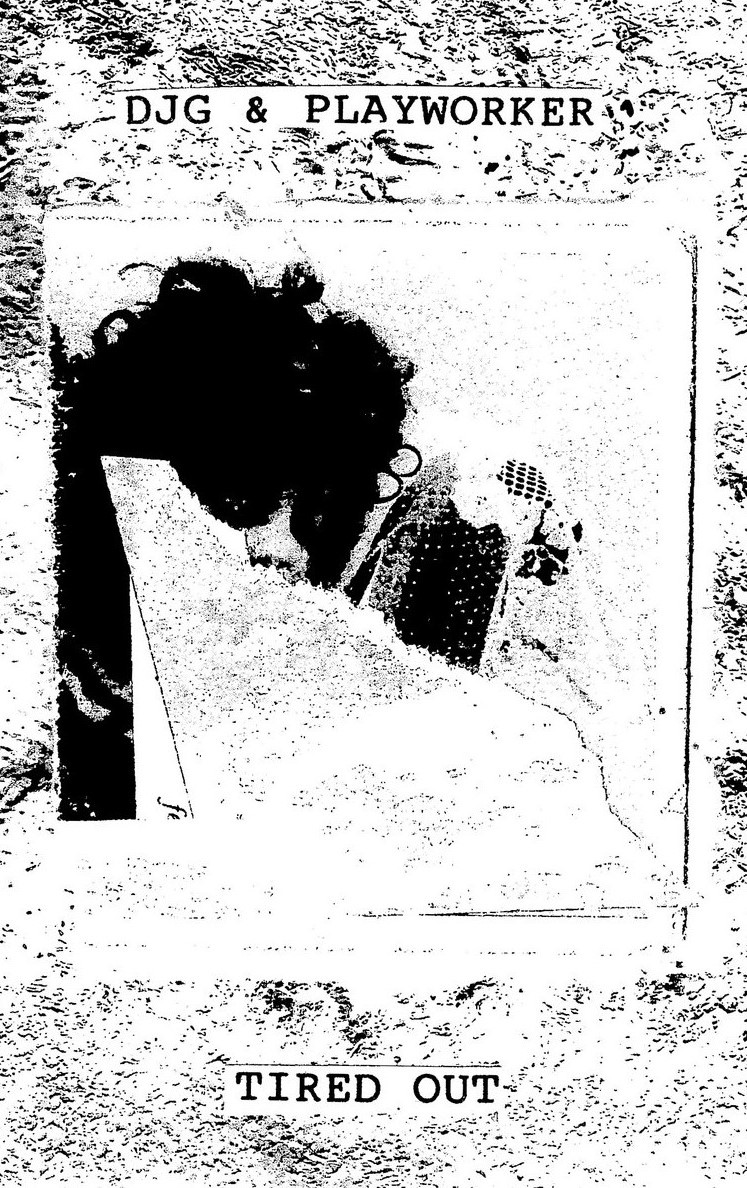 The U.K.-based Outsider Art label continues to consistently impress with both musical curation and visual aesthetic (I’ve written before about how tired and casually offensive the classic “noise art” style has become, so it’s great to see it refreshed and repurposed in such an appealing way) with their most recent batch of releases, which dropped on October 29—and though there’s not a dud among them, my favorite of the new tapes has to be Tired Out, the short but savage duo collaboration between Aylesbury “object botherer” Daniel J. Gregory and OA veteran Playworker. To me, Gregory’s greatest strength is the nuance and micro-drama with which he imbues his restless, chaotic movement of whatever pile of tabletop- or floor-strewn miscellany is the current flavor(s), and it’s not much of a leap to assume these idiosyncrasies may be lost in the caustic torrent of maxed-out-levels junk noise, but that assumption would be wrong. Opening cut (and that word choice is much more apt than usual) “Torn Out” immediately demonstrates the double-edged blade of complexity and brutishness that’s in store for anyone who puts this tape on with its gloriously grating squall that sounds like an industrial blender full of loose machine parts shredding itself to pieces while someone below (or above?) works on the motor with a power drill. For all of its brash cacophony, though, Tired Out has a well-implemented quieter side that surfaces in the downtime of longer tracks “Ripped Out” and “Tired Out,” cold electronic tones and gently agitated scrap metal that make the inevitable return of the noise (whether that’s in the form of the next track or the first as you replay it over again) even more cathartic.
Review: Water Source – We Went for a Swim and Parted Ways (self-released, Oct 25)
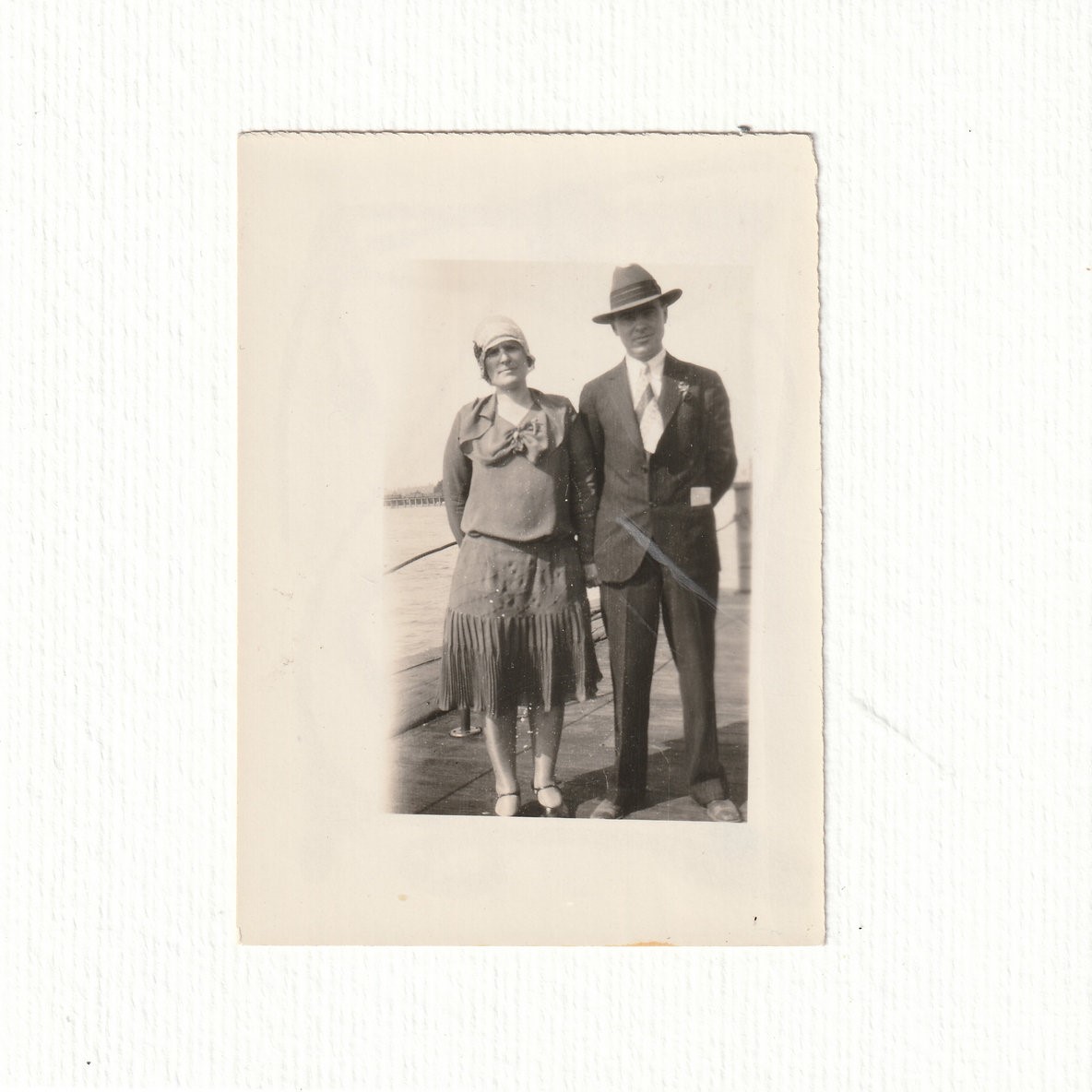 Water Source, a new project based in Portland, seems to be deeply concerned with distance. Besides the fact that distances from water sources are significant pieces of information for architects and planners, the artist’s visual and auditory aesthetic evokes it more in a sense of removal or detachment: brightly colored sledders and a barn through the wintry expanse of a cloudy-day snowfall, a yellowed old photograph bordered by simple white fabric, quotidian transmissions played back on a janky deck surrounded by the pressurized swell of silence. Tape music in this style is already interesting on its own, all languid blur and noisy nothingness, but when placed within a larger environment, whether real or artificial, casts it in an exquisite new light (UVC, Emily Eigner, Muddy Pussy). While the first part of the brief We Went for a Swim and Parted Ways is steeped in the warm comfort of passed time and memory, with fractured melodies and chord progressions twirling shakily on sticking spindles that thread between sparse object fiddling, the two following it seem to align with the subtle maritime theme hinted at by the title and artwork. II is a fleeting sketch of docked seafaring vessels bobbing against their restraints fused with a sputtering stem of shattered speech, and III, perhaps the most eclectic section, dances an erratic broken-toy waltz through tangentially theatrical episodes of no-fi concrète loops, ponderous piano, and clumsily bowed cello. Yes, much of We Went for a Swim takes place “far away,” no binoculars are necessary, not even a slight squint; there is beauty in the beyond.
Review: Natural Temple – Natural Temple (Lab Rat, Oct 24)
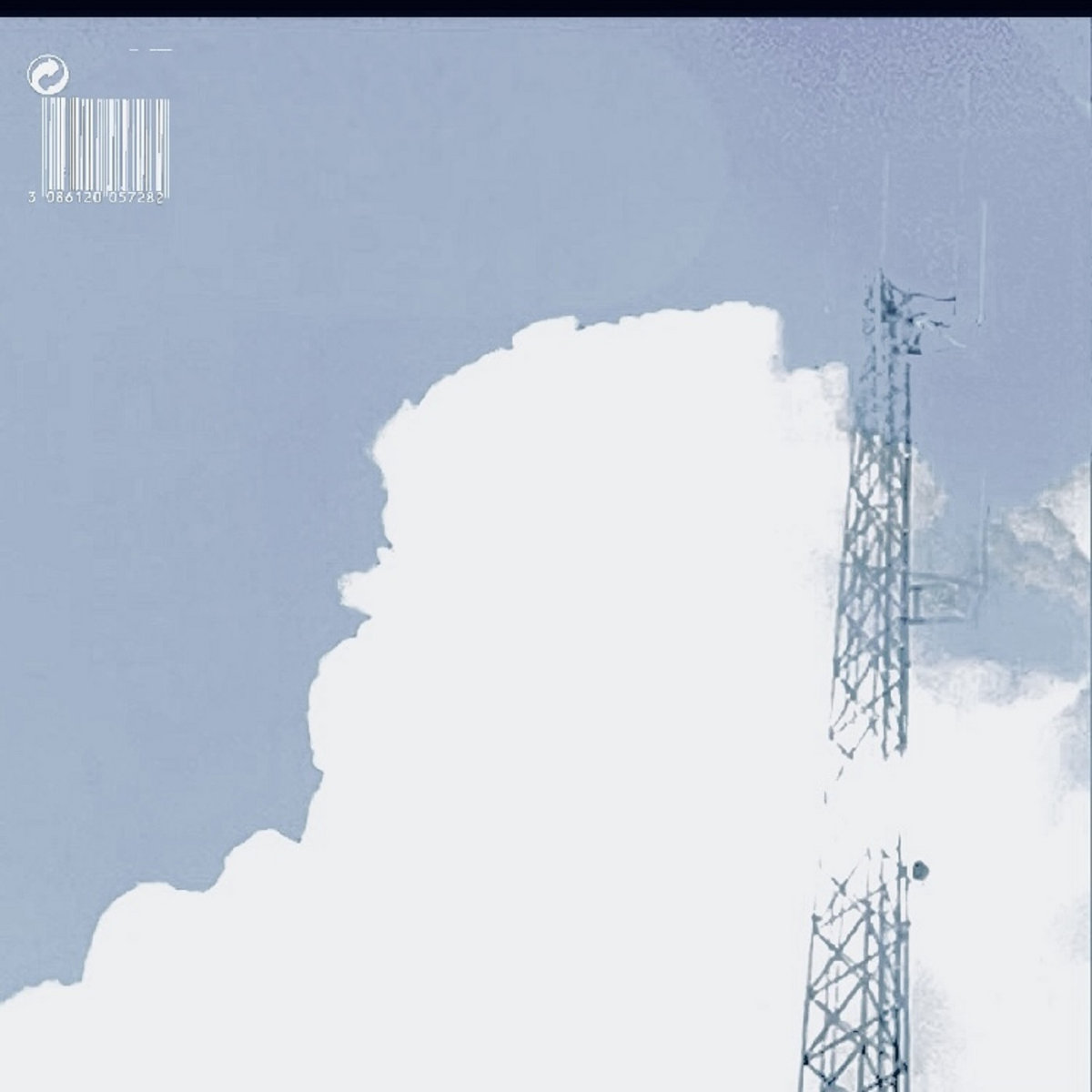 Natural Temple’s self-titled reminds me quite favorably of some of the weirder stuff I’ve stumbled across on both Free Music Archive and Youtube—Recordings, Disk 01; Multi-Channel Analysis of Naive Doppler Simulation; Dial Up—but also has the added bonus of being just a bit more discoverable (we have all seen over and over that, when it’s done well enough in the first place, accessibility does not cheapen obscurity). This mysterious, ephemeral little release is one of only a few digital-only albums currently uploaded to the Louisiana net label Lab Rat’s page, and it’s also my favorite so far, even setting aside my affection for eponymous debuts from reclusive or otherwise anonymous artists. Each minuscule track is sparingly formed with low-fidelity digital interference like bitcrushed shortwave signals or corrupted sound files, often rendered in an unexpectedly tactile form via microscopic sound design, processing, and arrangement. It’s pointless yet still entertaining to compare these completely detached, abstracted textures to familiar real-world sound events; for example, “Underneath” could simultaneously be a reticent, hermitic extended-turntable improvisation, a close amplification of liquid sizzling on a hotplate, a proximal hydrophone voyeurization of a crowd on the boardwalk above. The artist experiments with silence and reductionism as well, paring down their already minimal sonic palette to barely more than a ghost-in-the-machine whisper on “The Signal (Long Lost),” which despite its profound artificiality somehow manages to evoke the same spectral nostalgia for nonexistent futures as the most organic of hauntological works. Looking up the barcode on the cover doesn’t answer any questions; the numbers, at least, are the EAN-13 for the eight-pack of BIC Velleda 1721 whiteboard markers. Maybe you’re supposed to chow down on them while you listen. Worked for me.
 Noise Not Music