Mix: From Now On


00:00. Désormais – “From Now On” from Iambrokenandremadeiambroken… (Intr_version, 2003)

05:21. The Wind-Up Bird – “That I’ve” from Whips (Music Fellowship / Translucence, 2003)

10:40. Arden – “Cello for Sudden Goodbyes” from Conceal (Stilll, 2005)

15:53. Nicolas Bernier & Simon Trottier – “Bois Mort” from Et Retrouvé en Fôret (12rec, 2009)

19:36. Guillaume Gargaud – “Pas Là” from Lost Chords (Dead Pilot, 2011)

23:15. Joshua Treble – “A Serious House on Serious Earth” from Five Points Fincastle (Intr_version, 2004)

27:52. Mountains – “Simmer” from Sewn (Apestaartje, 2006)

33:00. Lilien Rosarian – “I’m Wide Awake!” from Every Flower in My Garden (self-released, 2022)

36:01. T. Jervell – “The Warmth of Your Hand as It Brushes Against Mine” from A Love Letter to Coco (Take It Easy Policy, 2023)

List: Favorites from the First Half of 2024

I always used to say that if a year seems to be lacking in terms of good new music, I’m just not looking hard enough. But then 2024 happened. I know I’m not the only one who feels like those first five months were slow as hell (with some scattered gems in the rough, of course). Thankfully, things started to pick up in a big way recently—you’ll probably notice that the lion’s share of the releases on this list dropped in June. Let’s hope that trend continues, because I could use the win.

As always, if I’m missing anything, please let me know.


Kazumoto Endo – At the Controls (Dada Drumming, Jun 10)

I’m embarrassed to admit it, but I was a bit skeptical about a new CD from Kazumoto Endo after I didn’t really connect with 2018’s Keiyo. The three fifteen-minute rippers that comprise At the Controls took that skepticism and shredded it to ribbons, reassembled it anew, then pulverized it again. According to his own liner notes, Endo went “back to the basics” to record each masterful slab of piercing harsh, experimenting with variations on a stripped-down methodology: no samples throughout the whole thing, the title track has no loops, “Out of the Controls” has “the most loops ever.” This is the kind of album that reminds you why it’s all worth it.

Fatboi Sharif & Roper Williams – Something About Shirley (POW, Feb 14)
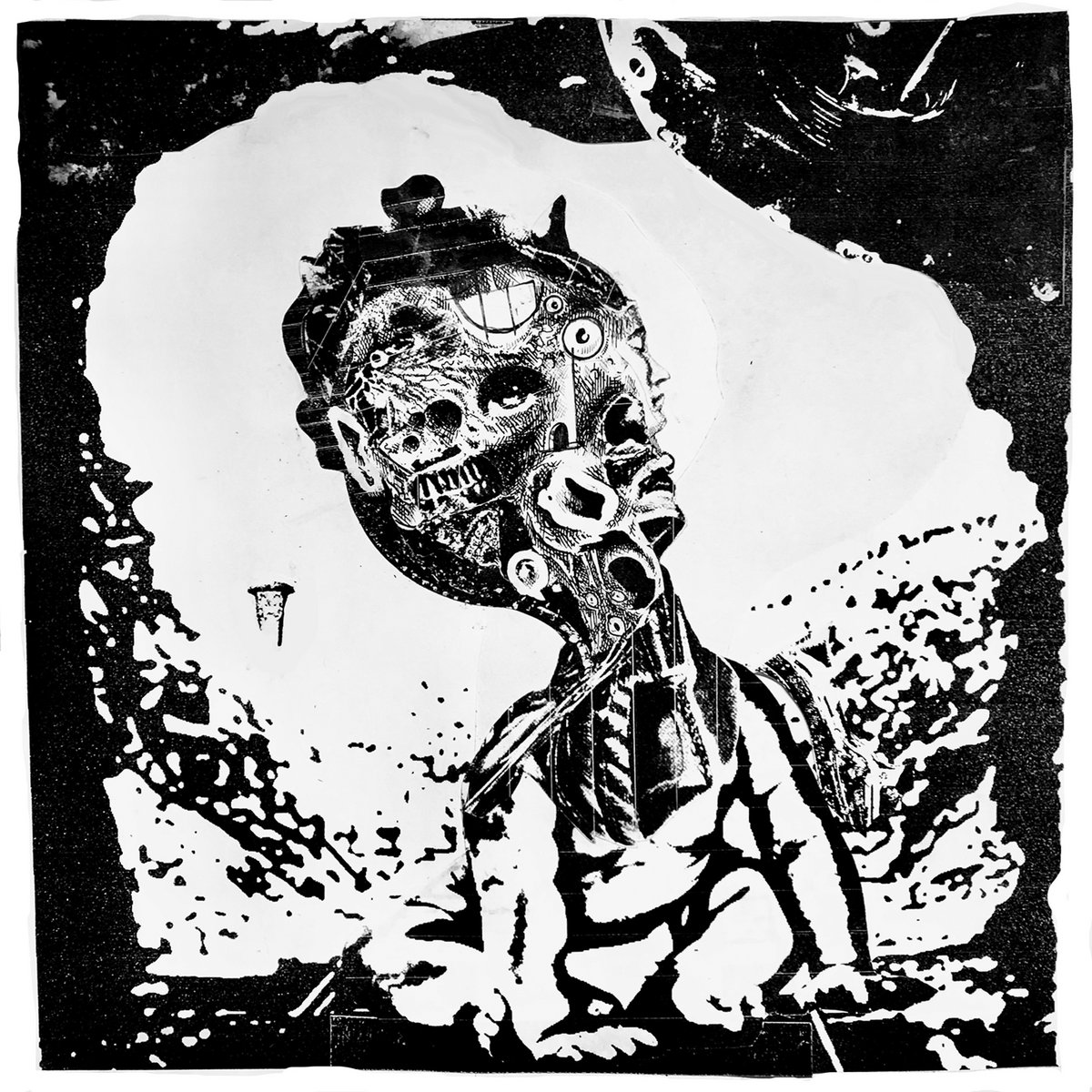
Fatboi Sharif is one of the most captivating underground MCs at the moment. With Decay it felt like he finally distilled his MO into something truly unique, and this year Something About Shirley proved it beyond doubt. This is the third (and best) of Sharif’s collaborations with Roper Williams, a short suite with an atmosphere more terrifying than any I’ve heard in hip-hop. I hesitate to label this “horrorcore” because it feels so far abstracted from the genre’s roots; here the concrete threats of torture and murder are overshadowed by crushing existential dread, with instrumentals so dark and psychedelic they feel like they’re coming from the depths of your own mind.

OsamaSon – Still Slime (self-released, Mar 12)

Charleston’s OsamaSon has been making waves recently with a blown-out rage sound that’s both menacing and melodic. But over the course of his short career he’s tried his hand at countless other styles, and the softer side that he finetuned with Osama Season is my favorite at the moment. Here he teams up with producer boolymon once again for a sequel to last year’s excellent 2 Slime EP, and the outcome is some of the best work either artist has put out. The whole album is infinitely replayable, but “No Smoke” is already a shoe-in for my most-played track this year—and probably the best plugg song I’ve heard.

Bloated Data – The Aesthetic of Death (Minimal Impact, Mar 25)

Though it’s far from the only harsh release with an aesthetic focus on motorsports (for another 2024 example, see Peking Crash Team’s Horns Below Helmet on Pube Provisional Society), The Aesthetic of Death stands out due to its balance of exhilarating noise and thematic sampling. “Engine sounds, commentary and interviews” comprise Bloated Data’s source palette for this tape, and the resulting collages avoid the common trappings of such an approach, gassing up the textural idiosyncrasies with analog nitro. Torque and tragedy, seventh-gear surge, pedals to the metal. Copies are also available in the US from Malevolent Relics.

Stalwart – Blessed (FIM, Jan 25)
Caleb Duval and Luke Rovinsky’s FIM initiative is an exciting development in a burgeoning new improvised music tradition. Though the concert series began over two years ago, the production imprint arm kicked off this past January, and the incendiary irreverence of Blessed acts as a sort of mission statement. Ben Eidson (sax) and James Paul Nadien (drums) join Duval and Rovinsky as Stalwart, and the raucous quartet’s first recorded hour is a feast of clashing timbre, desecrated tonality, and interplay that’s as considered as it is inconsiderate. Original review

ElyannaWOLEDTO (SALXCO UAM, Apr 12)

Now this is a debut. There’s not a single track on WOLEDTO that fails to get the head bobbing and the feet stepping—especially “Al Sham,” which features a slinky trip hop ayoub beat with a bass line that will make your body move whether you like it or not. Elyanna’s melodies are gleeful and invigorating even as they haunt with taut chromatic tension, and her songwriting matches that energy with stories of heartbreak laced with joy. “Sad in Pali,” unsurprisingly, is a harrowing closer, a poignant meditation on distance, memory, and olive trees.

Global Thermonuclear War – Total Demonstration (Symphony of Destruction, Jun 6)

A vinyl expansion of the band’s first demo with three bonus tracks on the B side, Total Demonstration is Global Thermonuclear War’s official declaration of existence. This is fast and brutal thrashviolence, but one only needs to know that the LP closes with a cover of Aus-Rotten’s “Factory” to tell where the influences lie; a grimy layer of crust and even twinges of classic stenchcore coat the propulsive blasts and churning breakdowns like soot in the furnace. The demo cuts are still killer, but it’s “(Bloodlet) The Aristocrat,” specifically its gloriously filthy midtempo chug bridge, that ends up stealing the show.

Stefan Maier & Michelle Lou – Live at UCSD (Dinzu Artefacts, Jun 7)

These two dedicated practitioners of contemporary computer music (who are also both members of the Party Perfect!!! roster, and apparently good friends) joined forces for a residency at UCSD last year, a fruitful meeting of the minds that yielded this extended improvised session. Though both Maier and Lou are known for their compositional leanings, the instantaneity here is fresh and exciting. The collaborative soundscape grows slowly, the rapport developed during the preparation period allowing for an agile exchange of ideas. Precise crescendos and satisfying catharsis.

Joshua Virtue – Black Box: Joshua Is Dead (Why?, Jun 10)
Alex Singleton’s final album as Joshua Virtue might also be his best. Centered around the ubiquitous but often ignored concepts of death and loss, Black Box directs Singleton’s cutting yet compassionate political lens both inward and outward. From the mercurial overture piece “Box” through incisive sample interludes, intricate lyrics, and some truly great features (including a chilling verse by another MC on this list), it couldn’t be a more fitting sendoff for the project. Thanks for all the music, Joshua.

Nursing Death (Post-Inventor, Apr 5)

With his second(?) self-titled release on Post-Inventor, Nursing Death presents five cuts of his most intense material so far. Not quite pure harsh, not quite pure wall, these tracks combine static hypnosis and dynamic variation in a way that hearkens back to the days when the boundary between the two traditions wasn’t as clearly defined. The caustic masses of “Prednisolone” and “Renal Failure” blasts in shivering waves, its dense weave of distortion cracking and faltering before rushing forth again, as if hands are scrambling at buttons and knobs to keep it afloat. Manual, direct-action wall.


Review: Marsha Fisher – Postures (Hectare, Jun 10)

Magnetic tape, as a sound-producing material, is often something to be wrangled or wrestled with. Though it can be elegant in its humble warble, its insubstantial and unpredictable nature is usually the selling point. Concrète and/or collage conjurers can achieve greater precision and more complexity with digital tools, but analog remains many artists’ first choice for a reason. On Postures, a new C23 from Minnesota’s Marsha Fisher, small-scale percussion performances serve as the basis for a concise quartet of sketches, each one a great example of how the classic approach can give new life to already active sound events. Fisher’s technique here is straightforward yet quite gestural: the source material is unprocessed, only recontextualized in a solely kinetic manner. Knocks and scrapes, rattle and rustle stretch across the stereo field, every individual texture agitated into a lurching waltz. Despite their rough tactility, the samples weave together with grace and purpose; it’s like Fisher is tying a system of boating knots, the nodes and tension choreographed quickly yet precisely, braids braided (needless to say, the track titles are apt). For fans of Translucent Envelope, Dressing, and things that go bump in the day.

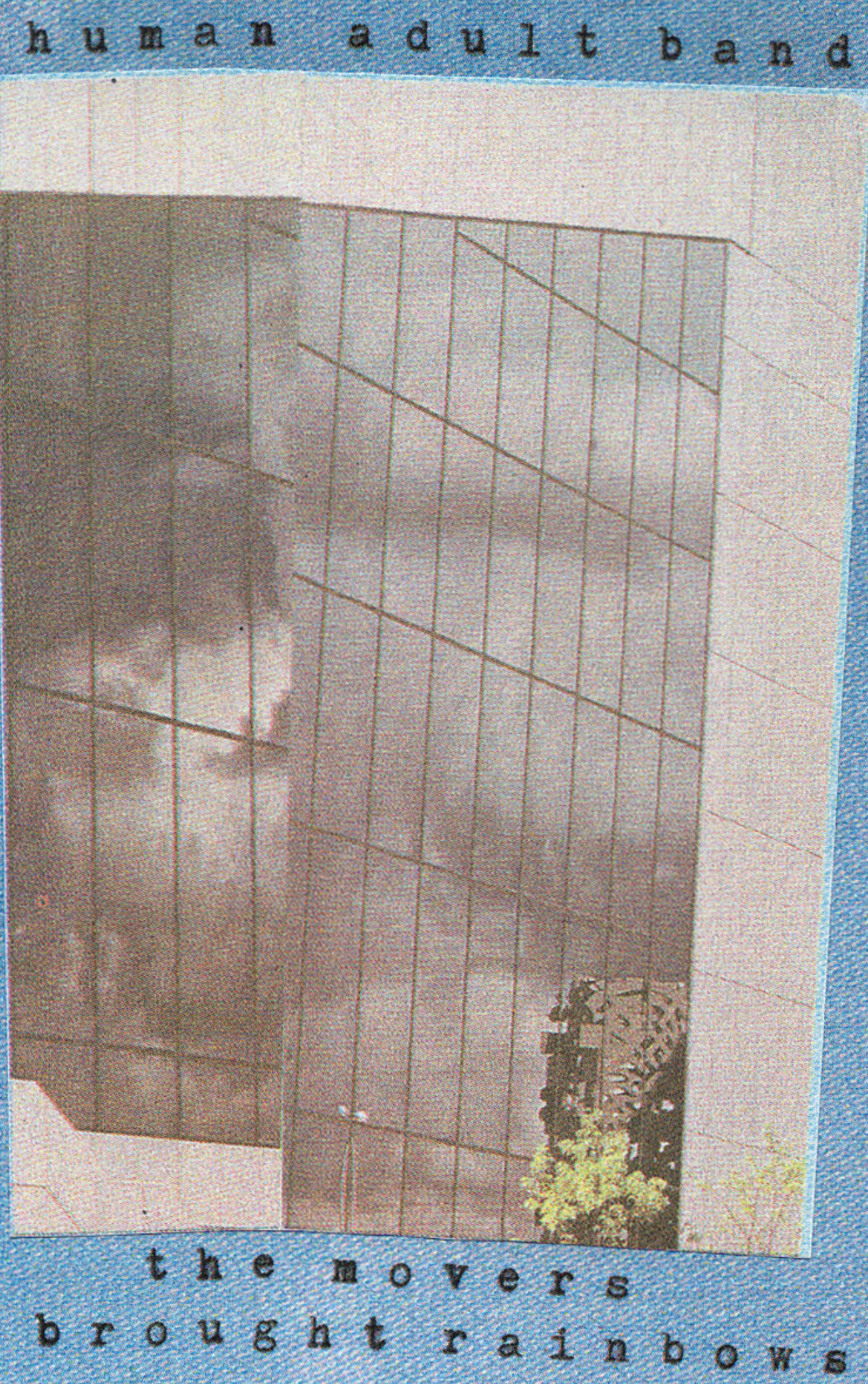
Review: Human Adult Band – The Movers Brought Rainbows (sPLeeNCoFFiN, Jun 7)

The members of Human Adult Band each have one foot in the world we know and the other in someplace entirely different. The crucial components of Western popular music are present, at least: guitar, bass, drums; some sort of dynamic progression; semi-intelligible recording techniques. The way in which these ingredients are baked, brewed, and fermented, however, follows no known recipe. The Movers Brought Rainbows, the project’s newest offering, feels like it was conjured on an interdimensional plane, aspects from both this and that side of familiarity curdling into a psychoactive mass. It’s not that “rock” bands have never dabbled in deconstruction—the actual music here is not too far from that of Fushitsusha, Mouthus, or various Kiwi hermits old and new—but the hazy, profoundly distant production approach further blurs the concrete essence of the performance itself, melting the psychedelic slouch-jams into a screeching industrial soup. The A side especially howls and heaves with seismic force, the title cut rendering the quartet(?) as mere specks at the center of a maelstrom. The release notes mention a gauntlet of “tortuous electronic post processing,” so it’s hard to tell whether the expansive space these tracks fill is natural, artificial, or both, and I wonder how similar it is to the live experience. But something tells me that these alleged human adults put on a good show regardless.

Review: Billy Gomberg – Nanahari Edit (Dinzu Artefacts, Jun 7)

Sometimes you just need to lie down, listen, and smile. That applies to both the source recordings from which Nanahari Edit grew and the finished product itself. Billy Gomberg (whose work I originally discovered by way of Fraufraulein, his ongoing duo project with Anne Guthrie) has hinted at this strain of wholesome, well-lit synthesis on previous solo releases, and it finally shines with fullest brilliance on this second Dinzu tape. Environmental sound itself can be breathtakingly beautiful, but that beauty too easily loses its luster during the process of capturing it and then presenting it to new ears. Here, Gomberg shades in those gaps with the help of a kaleidoscopic digital palette, each colorful addition brightening and complementing—never obscuring—the original textures. Much like the mundane snatches of everyday life that constitute its softly beating heart, the single 23-minute piece has no specific destination in mind. The spritely synths run errands and stop for coffee, bubbling in bliss at the sight of ducks crossing the road or a serendipitous run-in with an old friend, but overall they simply amble, any “progression” amounting to a contented stretch on a bed of sun-drenched grass in a pocket park. And isn’t that all anyone could ever want anyway?

Review: presque fantôme – cachette (dents de scie, May 30)

Geneva’s presque fantôme has been one of my favorite tape-based projects since I got a hold of their self-titled cassette back in 2021. A generous care package sent by the artist on behalf of their label dents de scie dosed my ears with the murky sounds of chutes as well as the extensive back catalogue of prior alias crève-chiens, which is full of equally enrapturing analog gloom. Though the distinct style teeters over the symbiotic abysses of noise and dark ambient, presque fantôme remains faithful to its specific spin on rustic, basement-bred musique concrète, ensuring that each release never loses its balance on that slippery ledge. cachette presents some of the most desolate material yet, taking the project’s name (French for “almost ghost”) to heart with its paranormal shrouds of shadow. The A side begins with a yawning, cloying drone, less emerging from the darkness than burrowing farther into it. But this place is not smooth or spare—it’s filled with things, objects, appliances and furniture and clutter crammed into corners that all come to “life” at night, rendered rogue and restless by the reality that something, perhaps everything, is wrong. As eerie as the music is, there’s not much of a sense of mystery or paranoia; the textures move and shift, rattle and shiver, but they don’t evoke any sort of outside force, let alone a resolution or an “answer” (not even a “question”). The lengthy closing track in particular is a haunting display of this absolute insularity, its symphony of slur dragging like a moldy bejewelled tapestry across the rotten floor, from wall to wall and back again… the “why” is of no consequence.

Review: J. Folke – Mare (Kaos og Stjernen, May 21)

This inaugural batch from new Copenhagen label Kaos og Stjernen, which also includes tapes by Dagsrejse and an anonymous artist, illustrates the simple truth that ambient music only works when it is genuine. That quality doesn’t necessarily require an analog approach, but (at least for me) it almost always does. Though J. Folke does make use of “obscure audio-looping softwares” to lightly manipulate some of their source material, Mare is a decidedly warm and muffled affair, the kind that can only come from spool and spindle. Following close on the heels of the project’s debut release Pale Bower, Speaking Stone on Janushoved last month, this scrapbook of languid collages somehow sounds both tentative and assured. This is especially true of the harmonic elements, which usually take the form of gentle string plucks and soft synth blankets. It’s as if Folke knows exactly what to add to the pastoral cross-sections of nature they’ve gathered and yet doesn’t want to assert too much of a human presence. The result is a delicate dialogue between elements both witnessed and contributed: summer showers dust a pensively strummed guitar with droplets in “Askelys”; a radiant zither(?) loop joins the sun in dappling a shady seaside copse with light in “Lyset var sølv.” Unsurprisingly, though, my favorite track might be “Understrøm,” an unaccompanied field recording that casts a nocturnal shadow amidst the otherwise well-lit suite.

Review: Kaori Suzuki – Cloud Cycle (Erototox Decodings, May 3)

There are few forms of music that are as simultaneously minimal and life-affirming than acoustic drone. The big names were some of the first to fill my heart when I began my deep dive into the avant-garde, and now more recent projects like Natural Snow Buildings, Pelt, and Toad keep my ears to the heavens. Something unsayable shines in the titanic tones produced by instruments played with human hands and/or breath. Though California-based artist Kaori Suzuki employs a creative process that’s very much exploratory, even scientific, she is not at all averse to embracing that radiant simplicity. 2022’s Music for Modified Melodica made use of the titular instrument and extended techniques to generate a dense stream of sound—Harmonic Series described its sole track, appropriately titled “Air Born of Light,” as “a saturated field of waves, refracting, shifting. Shimmering harmonics’ glistening sheen celestial twinkling”—and Cloud Cycle, a new 10″ from Erototox Decodings continues the trend. Using an amplified reed organ and an effects array, Suzuki composes lambent drifts that warm the soul. The title cut begins with thin, tentative tinctures that unfurl into a thicker shruti box–esque surge, and though its tonality is tightly concentrated its textural weave is like a piece of intricate stained glass, refracting countless colors as it twirls lazily in the light. “Back to Mother Breast” is equally lush, packed with layers and overtones that compound halfway through when a sharp photon beam sets them ablaze. When I first heard Cloud Cycle I was reminded of Tetuzi Akiyama and John Krausbauer’s duo 7″ Gift, and sure enough, not only was it released by the same label but Krausbauer is Suzuki’s spouse and frequent collaborator. I smell a new tradition brewing, one both revivalist and neoteric.

Review: Teignmouth Electron – You Are Not Alone (adhuman, Apr 26)

The material that You Are Not Alone collects is as ephemeral and piecemeal as Teignmouth Electron’s discography itself. The solo project of Brighton sound artist Maureen Hallomas (also a past or present member of Polly Shang Kuan Band, Rubber Demon, Leopard Leg, Men Oh Pause, etc.) most commonly manifests as a “live performance guise,” to use the liner notes’ phrase, and only a small handful of tapes and CD-Rs have been sporadically released over the past two-or-so decades. And yes, it happens that “ephemeral” and “piecemeal” are descriptors that also apply to Hallomas’s music. “From Beyond the Attic,” a work exhumed from 2001, deals in the most banal of paranormal activities; “possessed” portable tape player is used as a makeshift sonic lightning rod that catches spectral snatches and fraught flashes, conjuring a murky, broken soundscape plagued with paranoia. The voices of the beyond that are drawn into its orbit are both earthly and otherworldly: mundane phone-line eavesdrops engage in hypnagogic conversation with less easily explained ghost-transmissions. (The spoken elements throughout the CD, both the incidental and the intentional, remind me a bit of the haunting, off-kilter audio dramas of Miranda July, albeit much less scripted—and therefore much more mercurial.) “Science TAC” originates even further back, its dream-logic clippings chopped from “surreal skits and zero competence musical performance” that Hallomas recorded with a friend in ’99. For all its on-purpose obscurity, though, the actual conversations aren’t drastically different from the ones captured in “Attic” in terms of pure rhythm and mundanity of content. Just one of the many ways You Are Not Alone delights in blurring boundaries, whether between sense and nonsense, said and heard, life and death.

Review: Universal Cell Unlock – Quasimodo the Streetsweeper (Psychic Sounds, Apr 4)

“Many people would avoid being saddled with the responsibility of ringing church bells, they don’t want to become a clock. Many people would avoid cleaning the streets, they want to do things, not undo them. So the ecstasy of ringing the bells and cleaning the streets remains a mystery.”

Kites’ Royal Paint… was the first proper noise record I heard, and looking back it’s easy to see what it was about it that resonated with me so deeply: the passion put into it. Chris Forgues is well known for his consistent excellence and devotion to the craft throughout numerous aliases and collaborations over the past few decades; not a single release his name is attached to is half-assed. I initially encountered Universal Cell Unlock through the lovely Level Repulsion tape on Mid-Day Massage Parlor back in 2021, but I couldn’t have known the project would continue to improve and eventually reach its full potential three years later with this LP from Psychic Sounds. Quasimodo the Streetsweeper is a sublime work of true sound art, an expression of appreciation for both raw sonic texture itself and the process of observing/producing/harnessing it. To record the material collected here, Forgues hand-built tabletop circuit systems of small kinetic devices that gently strike various metallic objects, the majority of which are “street sweeper bristles which [he] collected from the street, cleaned, and sometimes cut to tune.” The two side-long suites are captivating and meditative in their homespun minimalism, passive and active at the same time as they cycle through without ever truly repeating themselves. Though the style itself brings to mind that of some favorite contemporaries (Nakajima, Althoff, Umeda, Hamel), Quasimodo sets itself apart not just with a singularity of approach but also of concept: it is also an homage to the people, real and fictional, who have made an art form of the trades others dismiss as tedious, inessential, or even pointless. The othering of the titular character, invoked via a still from the 1923 silent film adaptation on the LP’s back cover, serves as a unifying element for this subtle but meaningful aesthetic undercurrent. Also on the back, though, is a photo of “one of the first CD4029A counter ICs manufactured by RCA. The logic chips [Forgues] used to control the percussive actuations on this record are in this family of chips.” Simplicity belying complexity, complexity belying simplicity… this is a wonderful work.