Much of the beauty of The Dust Tradecomes from its evocation of ennui, whether it’s the stitched-together old film samples on “Another War,” tactile domestic recordings on “Japanese Love Affair,” or the soothing sounds of (probably) water flowing over gravel on “Liquid Glass Half Empty.” I’m not at all familiar with Brent Gutzeit’s work, but as can be seen from his Bandcamp page there’s a hell of a lot of it, and if the same level of patience and attention to detail as in The Dust Trade is present in any of his other releases I’m sure to enjoy them. I was immediately drawn to this album because of its languid, relaxing pace. Though Gutzeit’s sources are intimate and familiar, the worlds he creates with them are anything but, and what is conjured by the extended pieces is most often something quite alien, but ultimately the motion is comfortingly meditative, as steady as that current washing over the rocks. The music’s uncanniness isn’t achieved through artifice, and each collage’s slow progression allows the listener to see the fragments of reality still present, to spend time picking out the sounds that resonate most with them, to find a personal anchor amidst the abstractness.
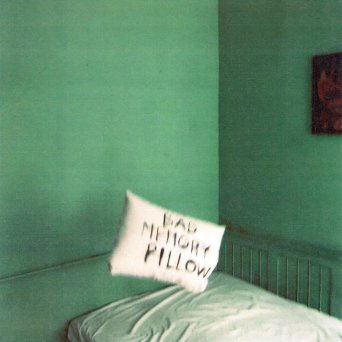
Each CDr copy of The Dust Trade has a unique cover photograph by the artist.
cd_slopper members and fals.ch founders Florian Hecker (left) and Oswald Berthold (right)
Fals.ch was a small mp3 label formed by Florian Hecker and Oswald Berthold (who released music together as cd_slopper) that focused on extreme computer music. With no concern for conventional album length or structure, the label’s output is quite diverse, from extended single pieces to releases with over a hundred minuscule tracks. Their last release came out in 2002, but recently the entire catalog has been uploaded to Bandcamp for name-your-price download. I’ve slowly been working my way through all of it, but here, in no particular order, are some favorites.
I was already into Hecker’s music when I discovered cd_slopper through their 2000 CD SaskieWoxi, but something about the pureness of the source material, how it truly sounded like they were sculpting (and slopping) bursts of unadulterated data. eating aluminium is quite short (it barely reaches four minutes) but contains some of the most mind-blowing digital creations I’ve ever heard. The duo’s other release on fals.ch, 1999’s ismurgTeNN4, is also excellent.
Though the work of Andy Guhl and Norbert Möslang often sounds like it was wrested from the depths of some complex computing device, but in fact the duo uses “cracked everyday electronics,” a large array of prepared objects and appliances that they often controlled via physical gestures. Some of the albums that Voice Crack has recorded with this approach are loud and raucous, like 1990’s Earflash, but Taken and Changed is some of their most pleasantly reserved material.
This single 25-minute piece is definitely one of the harshest fals.ch releases I’ve heard yet. Sound artist Shunichiro Okada’s nightmarish glitch tornadoes are disorienting and hyperactive, but he also relies on stretches of punishing repetition to further overwhelm the listener, drills and jackhammers of grating noise. d4ta corruption is loud, exhausting, and—despite its cold and lifeless origins—quite cathartic. Holding on for dear life while everything else is torn apart by a digital vortex.
Poire_Z was composed of percussionist Günter Müller, abstract turntable virtuoso eRikm, and both members of the previously discussed Voice Crack duo. The group explored the meditative but alien worlds their unique sound-making palette made possible, and documented some of the most amazing electronic improvisations ever on their 1999 self titled CD. c’est juste is what seems to be a single 30-min live recording, and sees the quartet at their most muffled and withdrawn.
A very short release, but no less exhausting than any of the others about which I’ve written; Ken Shoticker injects so many bizarre samples and sound effects that it’s as if you’re listening to ten albums at once. This is the sound of the friendly and familiar being stretched, twisted, mashed, and ground into oblivion. Horrifying and anxiety inducing but I at least couldn’t tear my ears away.
The title of Širom’s newest album, A Universe That Roasts Blossoms for a Horse, manages to out-weird that of their previous, 2017’s I Can Be a Clay Snapper, but the music itself adopts the opposite trajectory. The elements of chaotic jazz and freely improvised music that lurked beneath the meditative folk compositions of Clay Snapper are largely abandoned here, making room for intricate, minimalism-indebted repetitions that unfold beautifully. I don’t know anything about Slovenian folk music, but although it’s clear that the creations that comprise A Universe… are anything but traditional, that feeling of community and wordless conversation that is so inherent to folk is present here in spades. Despite the stylistic evolution from its predecessor, the two records are inexorably linked by the vocalizations that conclude …Clay Snapper on “Ten Words” and begin A Universe… on “A Washed Out Boy Taking Fossils from a Frog Sack.” Listening to the two back to back is something I haven’t yet done, but may give rise to some interesting connections, though as the unparalleled magic of “Sleight of Hand with a Melting Key” begins I’m hard pressed to turn my attention to anything else. Each of the lengthy pieces were carefully planned and recorded without overdubs, something that’s not hard to discern from how organic and immediate the album sounds, but it’s staggeringly impressive when you hear how detailed the arrangements are. “Sleight of Hand with a Melting Key” progresses through several movements throughout its 15-plus minutes, evolving from sublime, In C-esque melodic cells to stretches of unaccompanied percussion, meditative drones, and propulsive guitar strumming. The complexity escalates even further with the dense drum polyrhythms and string interplay of “A Pulse Expels Its Brothers and Sisters,” the involved vocal arrangements that slither throughout “Low Probability of a Hug,” and the almost unbearably tense bowed drones of “Same as the One She Hardly Remembered.” A Universe That Roasts Blossoms for a Horse is a truly awe-inspiring work of art, one that showcases both the amazing skill of each member and the result when they all come together.
There’s a sequence in Memoryscapes, a lovely short film, in which Širom set about fashioning music from a pile of pots, pans, saucepan lids and empty cans of supermarket lager on the kitchen table. It’s the band in microcosm: cracked, insistent beats, rhythm chasing rhythm, a deadly serious playfulness, and the intimacy of close friendship undercut by the sense of emergency of a flashing torch. Širom are all about the head and the hand, and the dark that always pushes against the light.
Even though witches are never far from mind, it seems as though Sun of Serpent, Moone ofCipher, Them Teeth’s long awaited follow-up to 2016’s Auditory Witchcraftis less about rituals or black magic and more concerned with the mysterious energies of the forest itself. The reclusive duo hailing from Sweden have a palpably deep appreciation for nature and the formidable forces it contains that are so far beyond human reach, and their music reflects that. Rich, throaty, buzzing acoustic guitar arpeggios form a rhythmic backbone along with sparse tribal percussion, otherworldly vocals and string augmentations drift above, and behind it all lurk snakelike tendrils of rumbling noise, sometimes unseating the melodic elements, other times melding with them. While the reliable constant throughout the album is the unsettling nocturnality, Sun of Serpent, Moone of Cipher explores the multitude of areas their singular style opens up, from dark but almost catchy folk on “Hægtes, Burn the Trees” to harrowing inhuman chaos on “The Serpent Did Verily Speake” to both in “Cræft, Suspiria,” but everything flows so naturally, and you never feel like you leave the shadow-soaked forest that swallowed you as soon as “Dæl, She Plucks Downe Moone and Starres From Skie” rises from the earth. Among (many) other things, Sun of Serpent, Moone of Cipher is another reminder that Them Teeth is one of my absolute favorite bands right now.
I have this old faded yellow Ege Bamyasi shirt that I still wear around a lot, and it’s always a pleasant surprise to see the amount of people who recognize it. I think Can is a very universal band, something that connects a variety of demographics of music enthusiasts, from 70’s psych heads to skillful musicianship appreciators to weirdos like myself, and personally I’d attribute that to Jaki Liebezeit’s iconic drumming. Tracks like “Halleluhwah,” “Up the Bakerloo Line With Anne,” and “Bel Air” demonstrate his uncanny ability to create an enrapturingly meditative atmosphere through repetition and jazz-indebted rhythmic looseness, a quality shared—and finally a segue out of this tangent—by Valentina Magaletti and Julian Sartorius’s new collaborative LP. Though the two musicians’ backgrounds in the contemporary avant-garde scene manifest with plenty of abstractions and eccentricities, rhythm is at the heart of Sulla Pelle, and the four pieces evolve via head-bobbing cascades of hypnotic percussion jams and airy cymbal work. I began with the Can comparison not only for Sartorius’s solo shows with Liebezeit on the bill, or that the fluid snare triplets on “Sobaka” could be yanked straight from “Pinch,” but because the almost celestial drum presence on Sulla Pelle is also one of fruitfulness and vitality. On more extended cuts like the title track and “Micro Tormento” the garden of groove gives birth to a host of other atmospheric subtleties and sonic decor, as bubbling electronics most likely supplied by Magaletti are bounced off drum skins to the surface and make the already meticulously detailed improvisations even more lush. Despite its undeniable strangeness, Sulla Pelle is just as universal.
Even at a modest ten minutes, there’s no shortage of descriptors that would accurately describe Constructing a Mental Breakdown; but the one that seems to sum it up the best is that it’s a fucking BLAST. The unnamed members of Pittsburgh quartet Not Your Friends—all we get are a collection of extremely vulgar nicknames—tear through a dizzying maelstrom of inventive extreme music over the course of their debut release, a bulbous amalgam of crushing blast beat sections sewn together by quirky no wave guitar contortions, melodic style adventures, and some of the most terrifyingly hateful vocal delivery I’ve heard all year. Constructing a Mental Breakdown has both a great sense of humor (just try not to laugh at the final pair of tracks) and a depressingly relevant social agenda, with lyrics condemning a white male-coddling culture and outlining the disturbing process of trauma-induced dissociation; it manages to remind me of some of my favorite music (Hayworth’s I Hope the Thunder and Lightning Kill You, Destroy All Operating Systems’ Change, and there’s even a brief moment on “Sweet Serenity” where I swear that Boredoms’ “Machine 3” is about to play) while remaining defiantly unique; and with all proceeds going to Pittsburgh Action Against Rape, there’s absolutely no excuse not to buy it.
Jun Konagaya’s music—both the material released under his own name as well as his long-running output as Grim—has been an important part of my life for a long time, from my initial discovery of his debut Folk Music to falling in love with 2015’s Mahato the release of Memento Moria few years ago. Throughout his eclectic, multitude work, there are recurring motifs that appear again and again, and Konagaya cements his singular style with a distinctive way of integrating melody into crushing abrasiveness; these elements are so recognizable that it’s always immediately clear it’s him (there’s even a consistent organ melody that repeatedly crops up and links different releases together). The opening moments of Lunatic Houseare so distinctly Konagaya that it brought a smile to my face. I haven’t been able to get ahold of the tape that preceded this release, Body, but Lunatic House is a fascinatingly diverse and unique progression from the artist’s recent output, melding Grim’s dual faith to beauty and aggression into a more cohesive style than ever before. Sublime, soothing guitar strumming is overcome by cycling waves of distortion assaults on “Luna,” music-box like reversed notes evolve into a seething rumble on “Tarantula,” and on “Voodoo Drive” a meditative field recording of a humanity-filled public place gives way to one of the most consuming and terrifying amalgams of sound I’ve ever heard, a restless mass of tortured, throat-tearing yells and crushing noise. Lunatic House is a new favorite from Jun Konagaya’s excellent discography, and with a classic, tear-jerking closing track that makes me recall every bittersweet lonely night I’ve spent with Travel or Love Song, definitely made my day.
For all of the hulking power and meticulous composition on display throughout Pattern Recognition, the music found on the tape has an almost aggressive plasticity to it, as if its trying to force its artificiality as uncomfortably close to the listener as possible. This makes sense when considered with the alleged conceptual background of the release, which is described as “a soundtrack to the modern dystopian reality of normalised surveillance, malicious deepfakes, involuntary data collection, the AI arms race, and so on, and so ever onwards without end.” Lund’s disorienting synth acrobatics stretch across the stereo field like cellophane around a corpse, augmented with fractured bits of decaying glitches and rumbling growls of bass, desperately concealing what ends up to be a profound emptiness. Lund also explores fragility and impermanence in his constructions, unceremoniously dissolving temporary rhythmic handholds and displaying an awe-inspiring control over the sound objects at work—the yanking motions that unseat the lumbering buildup of “Conditioning Augmentation” are enough to knock you off your feet.
Russian wall noise artist Шумоизоляция is particularly skilled at imbuing their music with both immersive, static crackling and a sense of motion, elements that are, unfortunately, often mutually exclusive. Энтропия, which came out earlier this month, presented two thirty-minute slabs of sputtering crackles, the first, and sparser, of which ambles along without much urgency, while the second takes the form of a sonic mushroom cloud of fast-moving distortion. Нет Радости Бытия, despite its single track being louder and more abrasive than either of those previously mentioned, possesses an unsettling claustrophobia; its sustained conflagration seems to be constricted within the stereo field, perpetually trying to spread beyond an inescapable cage. In a way, it’s somewhat of an auditory representation of the cover art, which shows a roiling mixture of deep blacks and reds trapped behind restrictive scratches of gray. Like all of Шумоизоляция’s releases, Нет Радости Бытия is almost incapacitatingly immersive; it’s easy to lose yourself in the densely layered textures and the ghosts of rhythm that emerge after extended listening, but it’s much more contained than many of the artist’s unconfined blasts of fiery noise.
Leading the charge amidst Snek Trio’s carefully constructed textural grooves on Battement Développé are Janna Lee’s restless, wide-ranging vocalizations, which climb from throaty gurgles to harrowing wordless wails. Her contributions provide a powerful element of motion for the more reserved, almost tribal undercurrents conjured by Reid Karris’s prepared guitars and Erik Sowa’s percussion. The loose freedom of the rhythmic improvisations, the mysterious, ritualistic atmosphere evoked by the vocals and scratching guitars; it’s hard not to be reminded of the No-Neck Blues Band, which I believe is one of the most meaningful compliments I can bestow. But on Snek Trio’s debut studio release the musicians aren’t content to remain in one place for long, and the ten short pieces demonstrate the large variety of styles that can be reached using their minimal approach. Moving past the dark, quiet reticence of tracks like “Ouvert” and “Raccourci,” “Manèges” and “Cabriole” occupy a more jazz-influenced realm, with escalating guitar chaos tempered by whimsical hi-hat flurries and erratic snare rolls—though any semblance of conventionality this might introduce is shattered by the increasing insanity of the vocals—and “Gargouillade” even entertains a head-bobbing krautrock groove. Battement Développé acts as an excellent template for this ensemble to explore new possibilities, though I’d love to see what they could do with a long form approach.