
 If I hear one more person misextrapolate their hatred for the “modern country that’s on the radio” to the entire genre, I’m going to explode. The industry, even with all of its firm roots in good ol’ traditional Americanism and Western grit, is giving a voice to many a new artist with plenty to say. Savannah Conley is a newcomer from Nashville, releasing her first three songs on the 7″ EP Twenty-Twenty, a melancholic but gorgeous iteration of the dream pop infused brand of Americana that I fell so deeply in love with last year with Kacey Musgraves’ wonderful Golden Hour. Conley is barely in her early twenties, but her commanding vocals reach far above the juvenile angst all those damn cynics would be quick to assume, crooning out the sparse narration of an existential crisis on “Same Old Eyes” and meditations on the messy battleground of young love that hover somewhere between sardonic self-awareness and naïve idealism on “All I Wanted”—the latter of which, even on this superb three-song punch of a record, is easily one of the strongest and most enthralling tracks I’ve heard this year. “Never Be Ourselves” ends things with some more energy, but the heartbreaking wistfulness doesn’t quite escape Conley’s words, as she repeats the titular phrase and her vocalizations melt into the airy ambience of shimmering cymbals and reverb-heavy strums. Twenty-Twenty is a concise and fantastic debut effort that is sure to put this new artist on the map (and is also sure to be a vehicle for my endless crusade against the rampant, misguided disdain for country music).
Author: Jack Davidson
I like to listen to, read and write about, and play music.
Review: Velo Misere – Retrospectiva de la Fatalidad (Death Kvlt, Mar 1)
 Retrospectiva de la Fatalidad (which translates to “Retrospective of the Fatality,” for us non-Spanish speakers, though you probably could have figured that out on your own) is a compilation comprised of the first two releases by Spanish raw black metal outfit Velo Misere. This is exactly the kind of stuff that hits the spot on a gloomy Saturday morning. The first four tracks, which come from the 2017 demo tape Compendio de Trágicos Presagios, pair an oppressive, nocturnal ambience with some truly superb songwriting. Breakneck blasting sections collapse under their own weight into more structured riffs, conjuring elemental images of howling winds and gathering clouds as agonized shrieks tear across the soundscape. While Velo Misere focus heavily on atmosphere, meandering riff repetition or extended ambient interludes aren’t something they bother with, instead devoting every second to the driving, even invigorating sense of momentum that reveals a glimmer of hope amidst the chaos. The tracks from Genealogía del Eterno Desasosiego, the band’s more recent release, delve even more deeply into the blanketing, droning auras that were only hinted at on Compendio, filtering even more well-composed songs through a shroud of dirt and darkness. Restrospectiva both delivers a wealth of superb black metal and documents the ruthlessly climbing trajectory of a very promising group of musicians, from whom I can’t wait to hear more.
Review: Dim Thickets – Dim Thickets (Anticausal Systems, Feb 21)
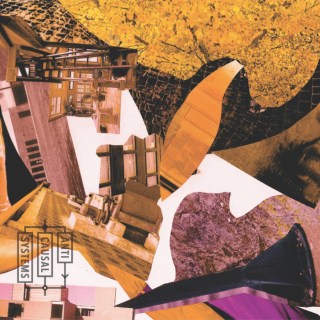 Dim Thickets is the newly formed duo of New York improvisers Jason Nazary and Carlo Costa, both of whom enter into this pairing with heaps of experience in various group settings; the former with trail-blazing bands such as Little Women and the Chris Pitsiokos Unit, and the latter with various quartet configurations and groups such as Earth Tongues. Though the four instrumental conversations on Dim Thickets pit Nazary’s electronics against Costa’s drumming, both are seasoned percussionists, and the distinct sensibility that role entails is palpable in both members contributions (even in moments as abstract as the stutter-step glitches and bowed cymbals that begin “Palpitations”). This self-titled debut tape is “a document of their first meeting,” and finds itself in a balance between the exciting wealth of possibility in a new musical encounter with the firm sense that these two artists were meant to play together. They command motion and dynamics with astonishing prowess, Nazary often forming the firmest base with his sustained delay-clock manipulations while Costa expands and contracts through his restless rattles, unique textures, and Prévost-esque metallic resonance. The result is a colorful release that marries spontaneity and patient development to sublime effect.
Review: Kuebiko – 10,000 Torii Gates (Outsider Art, Feb 22)
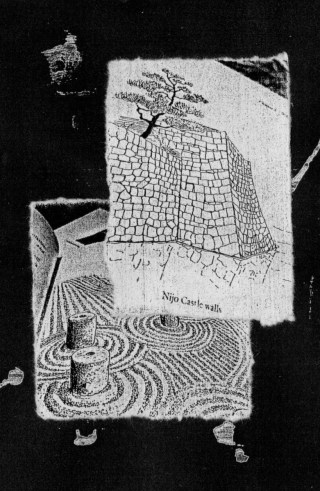 On what is apparently his debut on the cassette medium, Nottingham noise artist Kuebiko conjures hulking industrial soundscapes that growl and rumble with intimidating force. With a tape as (criminally!) short as 10,000 Torii Gates, an artist can’t afford to waste time, and Kuebiko certainly doesn’t; while the opening piece “Un Ah,” the longer of the two, expands much more slowly and organically than some of the more erratic cut-up artists we know and love, it doesn’t compromise in volume or abrasiveness, instead allowing for the thought-cleansing catharsis of harsh noise to emerge through the gradual unfurling of distorted static textures and overwhelming, bass-filled reverberations. “Jizos in the Moss” expands further into the sharp-edged chunkiness hinted at by the previous track, framing a lush sound environment of jagged drones with crackling, kinetic rings of distortion. The way this second piece expands to its conclusion is even more natural than “Un Ah,” seeming to crack and crumble under its own massive weight before dissipating into that pregnant silence that exists only in the aftermath of the loudest, most ear-bloodying noise sets. I really do wish it was longer though. A thirteen-minute run time is just unfair for something this good!
Review: The Wind in the Trees – A Gift of Bricks from the Sky (self-released, Feb 19)
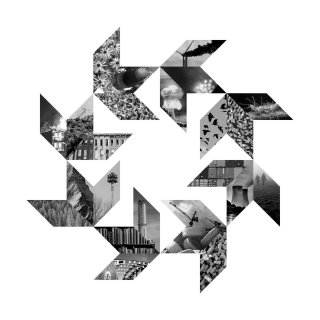 It’s always funny when the title of an album reveals more than you’d expect. In this case, the title of A Gift of Bricks from the Sky politely informs you about how listening to it will feel, and doesn’t back down on its violent (but generous) promise for even a second. Information on this new Baltimore outfit is scarce, but I do know that Dave from The Heads Are Zeros (whose self-titled LP is a modern grind masterpiece) is involved, and all of the relentless technicality and eardrum-shredding viciousness that connection would imply is present in spades. From the cover image to the dark, unsettling atmosphere conjured by the track titles and lyrics to the music itself, A Gift of Bricks… is an angular, jagged record, pairing a satisfyingly overwhelming, chaotic production style with dizzying, ruthless rhythms and a formidable low-high pair of throat-tearing vocals. The instrumentals complement the disquieting imagery of the lyrics remarkably well, with barely-held-together machine gun blasts framing the screams of pure hatred on “They Were Sympathetic” and frightening biblical evocations bolstered by the crushing double bass gallop of “A White Light in Autumn.” Silly me for thinking the latter would be the album’s most hopeful track—that actually comes with the sublime guitar interplay coda of closer “Blinding Miscalculations,” which brings the frenzy of anger and misanthropy to a hypnotic and even beautiful end (though the lyrics do NOT agree). I don’t about you, but these are the best bricks the sky has ever gifted me.
Review: Gintas K – M (GK, Feb 18)
 In the one-and-zero walled world of so-called “computer music” (undoubtedly a vague and even somewhat deprecating moniker), the turbulent chunks of synthetic hums, blips, and glitches are backed by a variety of paradigms. The most renowned artists in this field, such as Florian Hecker, who in his music “dramatizes space, time and self-perception in his sonic works by isolating specific auditory events in their singularity, thus stretching the boundaries of their materialization,” or Yasunao Tone, whose works are concerned with the sonic properties of transformed and converted media, might give the impression that this sort of music is a very academic or even notional pursuit. But ultimately the sound itself is what matters, and placing all of the credit on the theoretical back end is, in my opinion, fallacious and reductive. M, which collects two compositions by Lithuanian sound artist Gintas Kraptavičius—M (2012) and Mimicry (2017)—is a visceral opus that explores the staggering potentials of the artist’s palette of files, plugins, and effects. The album doesn’t concern itself with complex explanations—just the opposite, in fact; the only words on the packaging other than the credits and track titles is the famous Dalai Lama quote “Life is not easy.” Instead, like Network Glass, whose idiot/smiling I reviewed just the other day, Kraptavičius occupies the the much more universal dimension of isolated sound, focusing on the dizzying textural collages he crafts from the pulsing clouds of digital noise. Mimicry, which comprises the second part of the album, is very much a response to its precursor M; where the latter delves into dense, evolving clusters, the former takes on a volatility that feels much less composed, drawing power from its disarming unpredictability. “Mimicry4” presents the album’s closest flirtation with conventional beauty, rolling a loud, cathartic drone into the fray of frantic glitches, just one of the countless enrapturing sonic conversations with which Kraptavičius experiments. M is a decisive statement in raw data-driven music methodology, in itself an argument for a diversity of approaches.
Review: Mid-Air! & Elliott Sellers – Glasswerx (self-released, Feb 15)
 The “set limitations” of Glasswerx, as outlined on the cassette packaging:
- No laughing, breathing, or other human sounds audible on record
- When striking glass, striking utensils must not be audible (table or water sounds discouraged)
- Re-sampling, pitching, and other technological advancements permitted when extremely necessary, providing [sic] original glass timbre is preserved
- Effects may not be used unless they originate from mic and/or recording technique
- Absolutely no sound except glass
Considering the otherwordly textural and harmonic heights reached by these two musicians on Glasswerx, it would be hard to believe that all of those strict rules were in place without reading them first. Over 45 distinct tracks and about sixty minutes, this adventurous duo (about either of whom, for the life of me, I cannot find any information) delve deep into the sonic possibilities offered by their arsenal of glass, with each short segment establishing itself as a well-composed expansion of a particular idea. I can only assume that the amount of work put into this album is mind-boggling; the longest piece by far is “Never Be the Same,” at not even five minutes, but like many of its brethren it explores a sound-world so lush and immersive it seems like it could only be five times its actual length. There are too many tracks to talk about all of them in detail, but the fact that I can pick out practically any of them and discuss their amazing qualities—”Sword Sharpening” with its sublime rapid bowing and expansive stereo clatters, “First Break” and its beautifully dissonant major seventh melodies, the visceral bass crunches of “Infant”—is a testament to the painstakingly consistent quality of Glasswerx.
Review: Network Glass – Idiot/Smiling (dingn\dents, Feb 16)
 Pretty much everything about Idiot/Smiling is enigmatic, from the mysterious screenshot that adorns the cover to the unique mixture of digital and analog sound sources plundered to construct each track. Network Glass, one of the many aliases of artist Daniel La Porte, never even approaches the possibility of a limited or constrained palette, instead fusing together disarming, unholy amalgams of aggressive raw data textures, field recordings, and effects. The scattered, schizophrenic approach to composition works well for these short pieces, which are given a fitting introduction by the cut-up madness of “ocvbs.” La Porte explores the wide range of timbres and aesthetics of his crackling rivers of computerized noise on the album’s longest piece, “nrrrrrr,” whose growling low end and sheeny glitch wails form an overwhelming and intense soundscape. Beginning with “sm,” more organic elements begin to creep in, with the unmistakable wumping of wind against a microphone making brief appearances, and “novh1” takes it even further by basing its surreal, synthetic collages around a largely unmanipulated recording of cars racing through a tunnel. The true subliminity of Idiot/Smiling arises from its marriage of the natural and the manufactured, which, as the artifact-like textures of the wind captured in “ocsk,” are not as drastically different as we might think.
Review: Composing Listening (First Volume of the Annual SPECTRES Publication from Shelter Press and INA GRM)
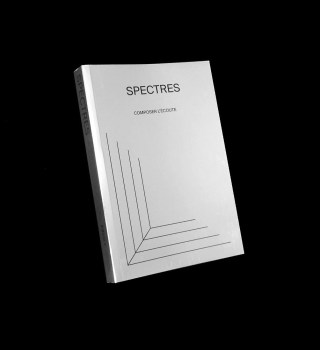 Composing Listening is all-encompassing in its universality, from each copy’s built-in bilingual translation options to the rejections of formal and conceited interpretations of music that color its pages. The introduction is perhaps the purest microcosm of this proponence of a ubiquitous approach to music through abstraction; it begins by quoting Pierre Schaeffer’s essay “Vers une musique experimentale” or “Towards an Experimental Music” (1953), an ironic denouncement of the new and unfamiliar techniques being used in the composer’s own developing musique concrète ideology whose sarcasm only becomes apparent as one reads on. The next hundred or so pages are occupied by a collection of diverse writings from many well-renowned voices in contemporary sound art, including Félicia Atkinson, François Bayle, Eliane Radigue, Jim O’Rourke, and many others. Drew Daniel’s contribution, “Towards a Heterology of Sound: On Bataille and Musique Concrète,” frames discourse arguing for a recognition and integration of concrète music’s inherent ‘messiness’ within a personal listening anecdote to which I’m sure many reading it could relate; “Recording” sees Chris Watson describing his musical coming of age in the context of the burgeoning practices of tape music and field recording; Brunhild Ferrari muses on the creative uniqueness of a single person’s recording of a sound event as compared to another individual’s observation of the same source and shares stories of capturing sounds with her late husband Luc; the list goes on. I could write about any of these pieces in great detail, for despite their being united under a unifying idea each introduces, examines, or argues for a specific and fascinating facet. My only consistent complaint is that they’re all too short!
I highly recommend this book; it’s beautifully printed and edited, and very few publications compile this large and diverse a quantity of written work and reach this wide of an audience. SPECTRES is an exciting development in the modern landscape of experimental musics, and such a comprehensive collection of the current musique concrète corpus is pretty much indispensable, in my humble opinion.
Review: Ludwig Berger – Cargo (Canti Magnetici, Feb 15)
 With the minimally (and ambiguously) titled Cargo, multidisciplinary artist Ludwig Berger captures the wondrous and formidable beauty of nature, both in sight and in sound. The nondescript cover of the tape shows a distant cargo truck emptying a load of rocks onto what appears to be a large field of identical rocks, the homogeneous gray landscape dwarfed by the deep emerald of the mountainous forest that extends up out of the frame. “After Nature” expands on this simple but evocative imagery with its swirling soundscapes of harmonious hums, the drones building to a gorgeous climax around the five minute mark that surrounds and enshrouds with its almost overwhelming presence. From that point the piece begins to retract, the meditative tones receding to reveal the immediately recognizable sonorities of chirping birds, rushing water, the soft ebb and flow of a steady breeze. Berger’s approach to composition (or improvisation, it’s unclear how exactly these pieces were produced) is as natural and organic as the ardent environment that these recordings capture, the piece breathing like a living thing as it moves through its phases. The end of “After Nature” sees an intrusion into Cargo‘s immersive sonic landscape when the lively conversation of two children enters our perception, an unexpected but pleasing human presence that continues into the subsequent “Before Dawn,” which paints a vivid scene of a crew of busy workers. Cargo is a work recorded with reverence and respect for its subjects, and every nuance of these diverse vignettes makes its way into our ears.
 Noise Not Music