
Review: Vanessa Rossetto – Fashion Tape (No Rent Records, Feb 6)

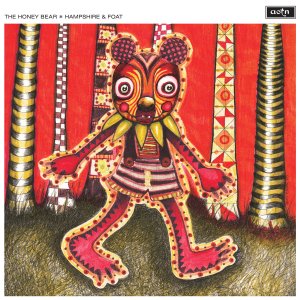
Despite the apparent transparency and directness of spoken word samples, music that makes use of them is usually anything but. It is often true that the combination of a multitude of snippets – that on their own would hardly be significant – results in creations that are cryptic, mysterious, and even disorienting. I hope I’m getting my point across, but if not, you need not look farther than Vanessa Rossetto’s Fashion Tape for an example. In contrast to last year’s Rocinante, an hour long piece completely absent of field recordings, the new tape largely consists of a wide variety of collected vocal samples; anywhere from whispered numerical calculations to the description of a certain color. The resulting diversity makes Fashion Tape‘s collages as colorful and fascinating as its bold cover art. When coupled with Rossetto’s well-tuned sense of dynamics, as well as an almost playful atmosphere, it makes the album something really unique. I feel like I will have to listen many more times to make sense of it all, so it’s a good thing that the package No Rent has put together is one of the best-looking tapes I’ve ever bought.

Review: Manja Ristić – Fairy & The River Teeth (Sonospace, Jan 31)

Fairy & The River Teeth is Madrid label Sonospace‘s sixth release this year. It joins a multitude of other projects in various areas of electroacoustics, field recording, phonography, and soundscaping. Probably the most notable example of these is the nearly four-hour, multi-artist collection Soundmaps for the Dreamer II, which I will reviewing as well (once I finish listening to it, of course). But despite the wide variety of sounds and even instruments Ristić uses, Fairy & The River Teeth is an incredibly intimate album. It quickly sucks you into an unfamiliar world, one that I’m still not really sure is comforting or frightening. Many of the recordings, i.e. a teakettle squealing, a pencil scratching on paper, or the twittering of birds, seem to magnify everyday noises to the point where you become completely immersed. In this way, the record exerts a lot of control over the listener, but not in a malignant way. For example, on the title track, I found myself so lost in the collages of sound that I was almost moved to tears when hints of conventional melody began to break through; not because of the beauty of the melodies themselves, but because it actually felt like these notes were coming from within me – a very profound experience to be sure. What I’m getting at is that Fairy & The River Teeth is amazingly unique, and ultimately you’ll have to listen for yourself to determine its true nature (which is a course of action I highly recommend).

Review: Make a Change… Kill Yourself – IV (Cursed Records, Jan 15)

It’s not exactly a revolutionary idea that longer songs are better suited to certain contexts. An 8-minute long grindcore track would, in most cases, be exhausting and overextended, while a 30-second drone piece would probably feel stunted and unfulfilling. While long songs are not out of place in atmospheric black metal, when a band releases an album consisting only of two side-long tracks it’s usually pretty hit or miss whether or not their duration will be justified. And Make a Change… Kill Yourself’s new tape, IV, is definitely a “hit.” The movement and progression of both songs feel natural and organic, yet just composed enough to not come across as aimless. As the (in my opinion, overly melodramatic) band name would suggest, the atmosphere created on IV is depressive and dark. The guitar tones are simultaneously airy and claustrophobic, and the tortured vocals, despite being mostly unintelligible, communicate anger, hatred, and sadness. Surprisingly, these long form tracks are mostly carried by the drums, whose subtle changes retain interest without drawing too much attention to themselves. As you can probably tell, I went into my first listen of IV not really expecting to like it. But the band overcomes any pigeonholing as a meandering, whiny depressive suicidal black metal act, and reaches impressive heights.

Review: Junko Hiroshige & Pandu – A Collaboration (Gerpfast Kolektif, Feb 8)

In an effort to boost the relevance of my blog and give me more writing material (only one of those reasons is true, I’ll let you guess which), I’ve decided to start reviewing recently released albums. If you have any suggestions for records I should review, please comment on posts or send me an email!


The aptly titled A Collaboration is a dual effort by vocalist Junko Hiroshige of legendary noise band Hijokaidan and Pandu of the more recent project Bergegas Mati. Having loved 2004’s Pinknoise, a collaboration between Junko and noisician/improviser Mattin, I was excited to find this album had a similar format: Junko’s shrill, yipping vocals set against waves of piercing noise. Despite consisting only of a 21-minute track, it’s easily the best harsh noise release I’ve encountered this year, and possibly one of the best I’ve ever heard. Pandu’s contributions are dense and infernal, with chunks of distortion and ear-splitting frequencies roiling and shifting like a demented sonic river. Surprisingly, the piece is anything but static; the dynamics are actually very pronounced, making the track seem even shorter than it actually is – a good thing in this case, because once I’m finished I just want to listen again. It’s always refreshing to hear really great stuff in this genre, especially when it offers the pairing of a personal favorite and a new face.

Graphic Scores & Organized Uncertainty

Legendary avant-garde composer John Cage will forever be known (regrettably) for his infamous “silent” composition 4’33”. Consisting of three movements, the piece can be performed by any amount of performers on any instruments; the only instruction Cage provides is to not actually play. It was originally performed in 1952 by pianist David Tudor, who signaled the start and end of each movement by opening and closing the lid of his piano. Audiences were confused, irritated, and even outraged by what probably seemed like an elaborate joke.

But the thing about 4’33” that is hardly ever understood is that it’s really not about the absence of playing. Instead, Cage was attempting to make sound that would normally be extraneous diegetic to the performance. Hence, the sonic content of Tudor’s original performance was not silence; it was the shuffling and whispered confusions of the audience members, the creaking of the piano stool on the stage, and other ambient noises that would normally be drowned out.

Despite how you may feel about this controversial composition, it represents a popular example of an important concept in modern classical and experimental music: indeterminacy. No two performances of 4’33” are exactly the same, because the environmental sounds heard throughout the duration of the piece will always be different. Though this was not Cage’s central goal with 4’33”, it was something he and many of his peers worked with throughout their careers. Indeterminacy, or incorporating some element of chance into a musical composition, challenged the definition of what a work truly is and offered new opportunities for unconventional composing.

Works that fall under the umbrella of indeterminacy are often completely unrelated stylistically. In general, most versions of Terry Riley’s legendary minimalist composition In C, which is comprised of 53 segments that are played in an order determined by the individual performers, differ greatly from Cornelius Cardew’s The Great Learning, a choral work based on the text of the same name by Confucius. Even more interesting is the possibility for two recordings of the same piece to sound entirely different! Take, for example, the Bang on a Can All-Stars’ recording of In C, a tension filled performance consisting mainly of strings, vs. the Africa Express version, which is much looser and happier due to the use of a greater number of performers and ethnic instruments.

Also related to this idea is the concept of graphic notation. Composers, instead of using conventional notes and staves, represent the movements within a piece with pictures, lines, shapes, or other visual elements. While this can introduce more control into a performance than purely indeterminate notation, there is still an element of uncertainty, as the sounds that are produced are based on how each performer interprets the abstract score. Examples include Cardew’s legendary 173-page work Treatise, John Wiese’s Tet compositions, and this awesome visual accompaniment to Ligeti’s “Artikulation.”

Note: Most of this information was gleaned from Michael Nyman’s book Experimental Music.

Show: The Big Noise Show @ No Place Gallery (Dec 16 at 7 pm)

Don’t miss out on this killer show, which is headlined by harsh noise/experimental legend John Wiese (also known as Sissy Spacek, the all-time favorite noise project of yours truly) and Cincinnati skronk scoundrels Wasteland Jazz Unit. It’ll be a night of diverse sounds, with the abstract improvisations of Columbus act Wet Hands, the classic harsh noise attacks of Brad Griggs, as well as some other local performers whose work I am unfamiliar with. The cherry on top is that entry is only $10, and, in the organizer’s own words, no one will be turned away. The link to the Facebook event is embedded here. Come hang out with me and hear some extreme sounds.

News: Northside Record Fair!


The event this Saturday the 11th celebrates the fifth anniversary of the Northside Record Fair, one of the largest (and best) record fairs in the Midwest. Organized biannually by Jon Lorenz, the fair brings together local brick-and-mortar stores, independent vendors, and collectors to the North Church in Cincinnati, OH. It’s a music head’s dream, with foldout tables stuffed end to end with boxes upon boxes of records, tapes, CDs, and other trinkets and oddities. There’s something for everyone here; the wide variety of sellers means that anyone can find what they’re looking for. I’ve seen countless quantities of oldies, country, pop, hip-hop, experimental, rock, alternative, folk, and pretty much anything else you can think of. If you’re in town and have the time (and the funds) definitely stop by, help support a fantastic event, and pick up some new wax. (Click the above picture to see the Facebook event page.)

Review: Arto Lindsay w/ Beauty Pill @ The Wexner Center

Thursday’s presentation of Arto Lindsay with Beauty Pill was, among other things, a monument to the marriage of experimentation and conventionality. Both acts combined the strange with the familiar, the uncomfortable with the expected, to great effect. It was a night of wonderful juxtaposition.

Beauty Pill started off the show with a bang. The Washington D. C. quartet have been active since 2001, though their discography is sadly limited to two EPs and two full lengths. 2015’s *Describes Things As They Are* provided the bulk of the songs played, its more sample-heavy and adventurous style dictating the performance. Vocalist Jean Cook and guitarist Drew Doucette both added electronic flavors to the band’s standard palette, using MIDI controlled samples and pedal effects to create surprisingly dense sound collages. As I said to Cook after the set, the effective inclusion of this sort of technology in a live performance is very difficult; the occasional recorded snippet or odd feedback manipulation for novelty’s sake is relatively simple, but actually integrating and conversing with these elements musically is much less so. But there’s no doubt that Beauty Pill did this incredibly well; it never seemed like the effects weren’t important parts of the songs. With the thudding, rhythmic grooves of bassist Basla Andolsun and drummer Chad Molter, everything seemed to be in its place.

img txt
Photo courtesy of Matt Condon

While Beauty Pill was one of the best opening acts I’ve seen in recent memory, my excitement for what was coming next was only heightened. Full disclosure: I am a massive fan of Arto Lindsay, and I hold the staunch belief that pretty much all of his work, from DNA to Ambitious Lovers to his eponymously released records, is nothing short of amazing.

It seems that any time an article is written about Lindsay these days, DNA, the influential no wave band formed by Lindsay and Ikue Mori in 1977, is brought up at one point or another. Any information about his more recent work is often prefaced by a brief overview of his work with the band, or even an introduction based on his membership. This seems odd, as DNA’s activity only spans five years, a mere blip amidst Lindsay’s lengthy career. And though the importance of their work to the experimental music climate can’t be overstated, Lindsay’s solo material is just as adventurous, arguably even more so. Having never aligned himself or DNA with the angrily nihilistic mentality often associated with the no wave movement, it seems that Lindsay is simply continuing what he started all those years ago.

But all those pseudo-academic musings leave my mind completely as Lindsay (after cheerfully complimenting my DNA sweatshirt) and his band – bassist Melvin Gibbs, keyboardist Paul Wilson, drummer Mike King, and a percussionist whose name I didn’t catch – take the stage. The unique amalgam of Brazilian samba, tropicalia, art pop, and funk soon fills the room, punctuated by Lindsay’s absolutely vicious guitar work. For those who have never seen him play, it is simultaneously breathtaking and horrifying to behold. “Play” doesn’t even seem like the right word; it’s more like he’s attacking the instrument, beating out an incredibly wide range of frequencies and harsh skronking that surprisingly complement the lush instrumentals of his band very well. My jaw just about hit the floor when Lindsay’s band members departed the stage, leaving him to perform a brief song by himself. There are really no words to describe it; the textures he created with only his guitar were simply otherworldly, layering angular loops and distorted noise blasts to back his soulful vocals. As Lindsay himself puts it, “scary Arto” and “sexy Arto” were both in full display. It was the crown jewel of an amazing night. Thanks Arto.