Reviews: Unknown Artist, Belisimo (Everyday Samething, Nov 8)

I’ve written extensively about Everyday Samething on the site, so there’s little I could say here that I haven’t already said… other than that 2024 is almost over and they’re still killing it. In love with this new batch.


Unknown Artist – James Blunt Documentary

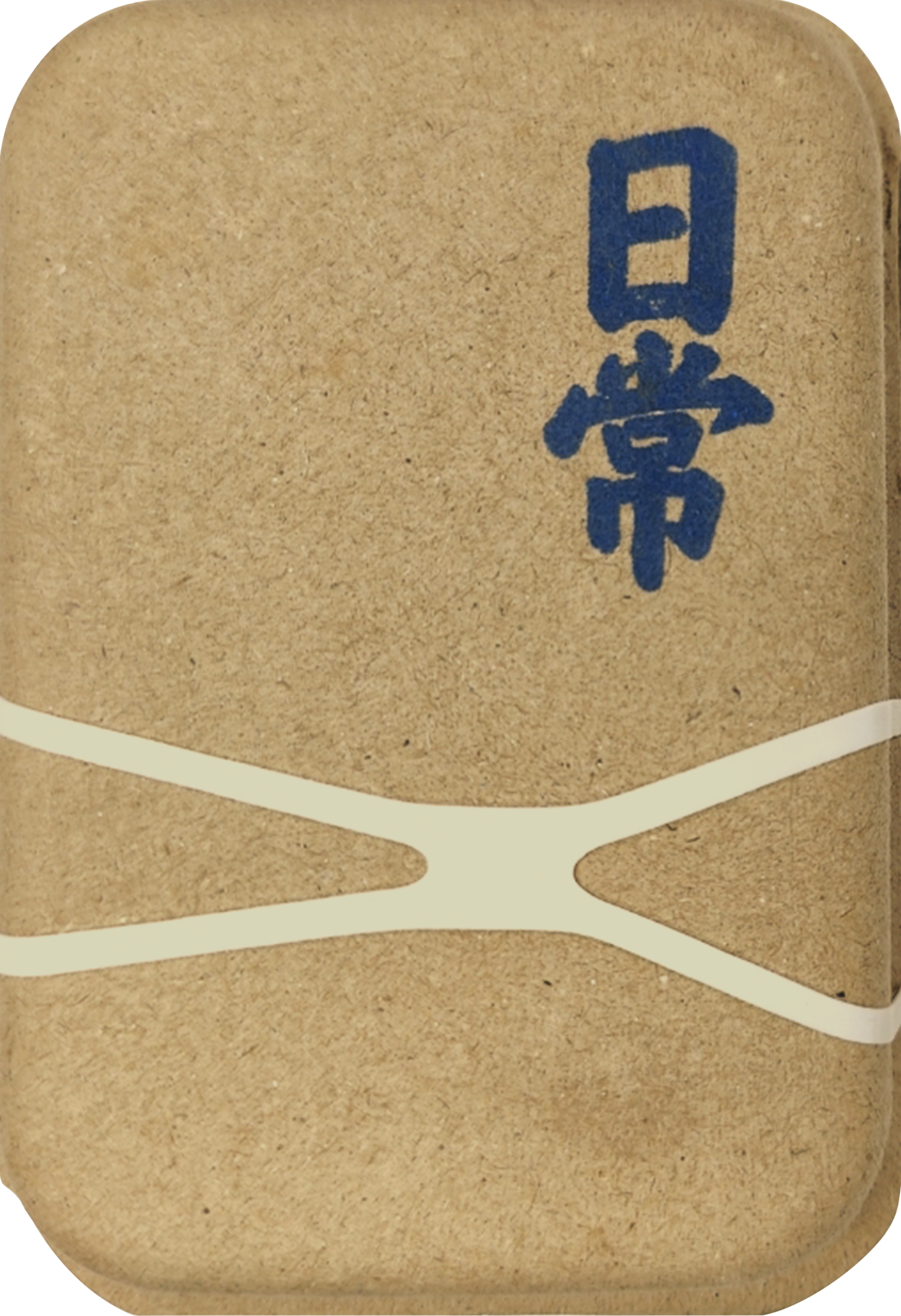
Have you seen the new James Blunt documentary? Yes, it’s a documentary about English singer-songwriter James Blunt. Yes, the guy who did “You’re Beautiful.” Yes, I could think of a few things your hour and a half might be better spent on. For example, you could play this single-sided cassette called James Blunt Documentary four times (with room for rewinds). No, it’s not just remixes of “You’re Beautiful” (as far as I know). Yes, it’s an ambiguous glitch-strewn nightmare, structured around warped digital noise that twists and shivers with all the anxiety of a 21st-century pop culture enthusiast. Yes, the man himself makes an appearance in the form of a muffled, awkward interview, likely an excerpt from the documentary itself—if you weren’t aware, Blunt is classically trained in the obscure ancient tradition known as “self-deprecating humor.” Yes, it is yet another superb anonymous entry in the Everyday Samething catalog that blends analog obscurity with internet-era despair. No, you won’t regret listening to it. Yes, you will regret being born.

Belisimo – The Release Is Printed on an Edition of One Custom Thimble

Going off precedent, the title of this new work from Belisimo could very well be an actual fact, but what’s more subversive than subverting subversion? Ironically, an unhearable anti-music object version (à la Seth Cooke’s Selected Works concrete cube, perhaps) would be less of an affront than whatever this is. Buried somewhere at the center of this loathsome web of half-formed textures is the human voice, but that knowledge alone isn’t enough to affirm it as reality. Beneath communication breakdown lies communication death. “The sensation of suddenly realising you have wet hair in a public place.” Singing is no more artful, no less useless than sighing. The synth-soaked kitsch of Tears for Fears’ “Mad World” lands somewhere between embarrassing faux pas and repulsive taboo in the context of abject nonsense. Scrabble and scrape, mutter and melt… it feels both too long and too short. The Release Is Printed on an Edition of One Custom Thimble.

Review: Winter’s Treasures – Out of Reach and Useless (Phons, Oct 29)

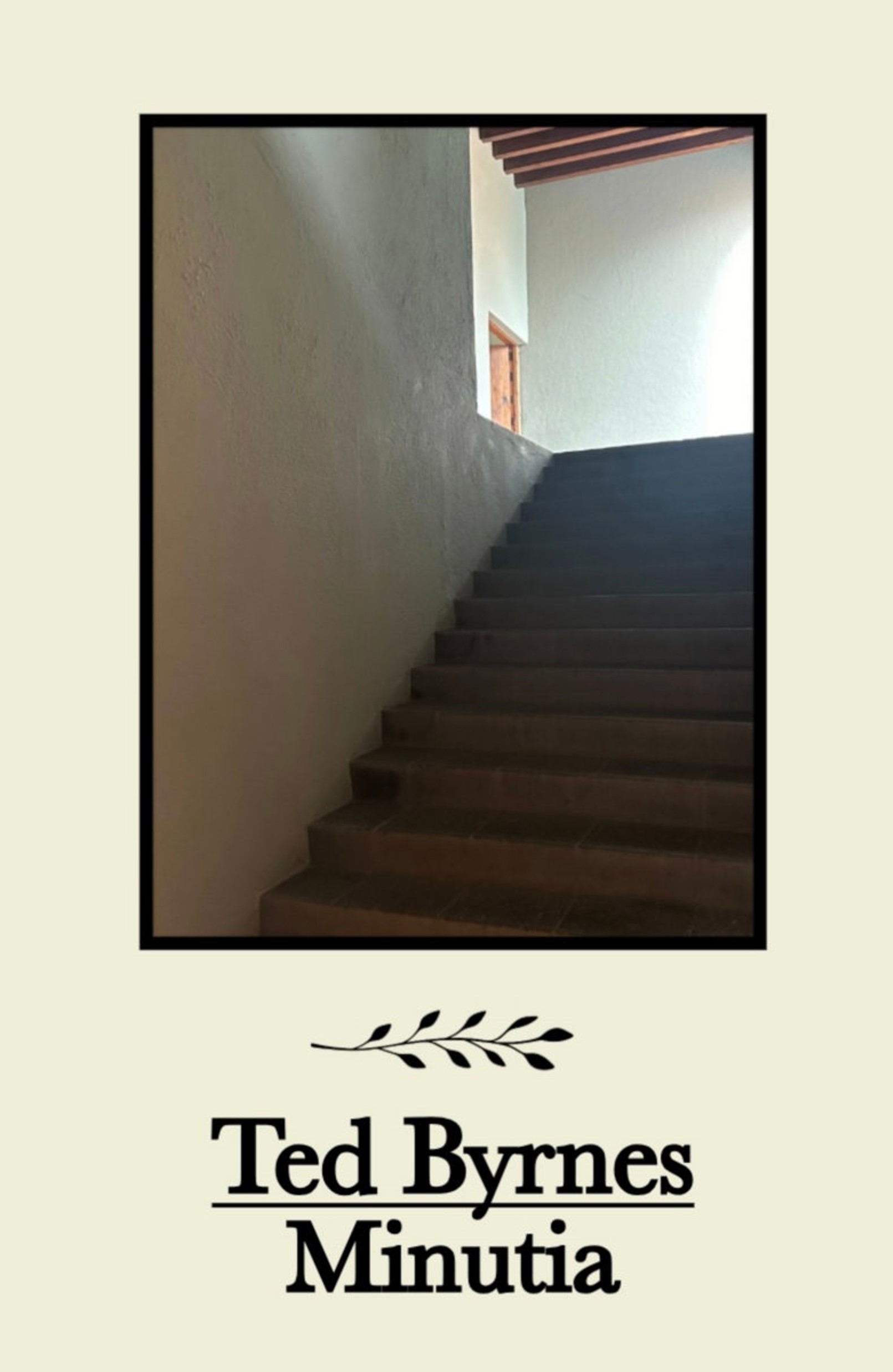
Though I’m definitely a fan of his solo work, Liam Kramer-White excels in improvised duo contexts, whether with Stella Silbert as Beige, with Arkm Foam as LMFAO, or most recently with Dean Fazzino as Winter’s Treasures. (It also shouldn’t be overlooked that there’s something about Massachusetts that continues to draw like-minded oddballs to set up their tables across from one another… for more subversive jams try on Lean, Variant State, or Foom & Foam for size.) Packaged in a gorgeous screenprinted clear case, Out of Reach and Useless feels like a breath of fresh air. Fazzino is up to his usual tricks—the scattershot circuit wrack will be immediately familiar to fans of the lovely Robert Fuchs roster or the first few Spate releases—but here they’re controlled and thoughtful. The two artists play a good-natured game of tug-of-war with the intensity of their collective conjurings: in “Born Yesterday,” feedback and sine tones temper a white-hot electrical fire, which subsequently engulfs everything to kick off the raucous “Law School.” It’s an excellent tape front to back, but the real standout is the surging closer “Loss of Member Support.” Kramer-White and Fazzino strike a perfect balance between responding to each other and simply working up a racket. I can’t stop replaying this one.

Copies are available via email: phons.sound@gmail.com or robert.c.fuchs@gmail.com.

Review: Wasauksing Sniper – Ghost in the Trenches (Western Front, Oct 11)

With two tapes under his belt as Wasauksing Sniper, a project dedicated to the legendary Ojibwe marksman Francis Pegahmagabow, Winnipeg’s Bret Parenteau had already set a precedent for gritty, glacial heavy electronics steeped in the sediment of history and the dust of recycled tape. But Ghost in the Trenches, a follow-up to Western Front (which also gave the artist’s in-house imprint its name) takes things to a new level. These new recordings are dynamic and deliberate in their structures, in a way that past releases weren’t. That’s not a dig, don’t get me wrong; I was a huge fan of the seething slow-burns well before this one made it into the deck. There’s just a lot more to sink your teeth into here, without compromising the lumbering, almost pensive pace. In “Into the Ground,” Parenteau raises a swirling twister of feedback from the ravaged earth of no-man’s land and then minces it into a brutal, crunchy wall, terraforming the blast sites and foxholes like churning tank treads. The plod pays off, too, when ripping distortion drags the rumble into higher registers—now the air is on fire. The next two shorter cuts make room for concentrated texture worship: “Plunder at Night” is some of the harshest material yet, and “A Shot from the Hole” plays with repetitive swells before collapsing into all-out howl. And then there’s the title track, which takes up the entirety of side B and reaches blood-boiling levels of intensity. I don’t want to spoil too much… you just gotta listen. I have a feeling this is a tape that will find a lot of new ears.

Copies are available via email: wasauksingsniper@outlook.com.

Review: Instituto de Psicogeografía – Psicogeografía II (Resonant Tapes, Oct 4)

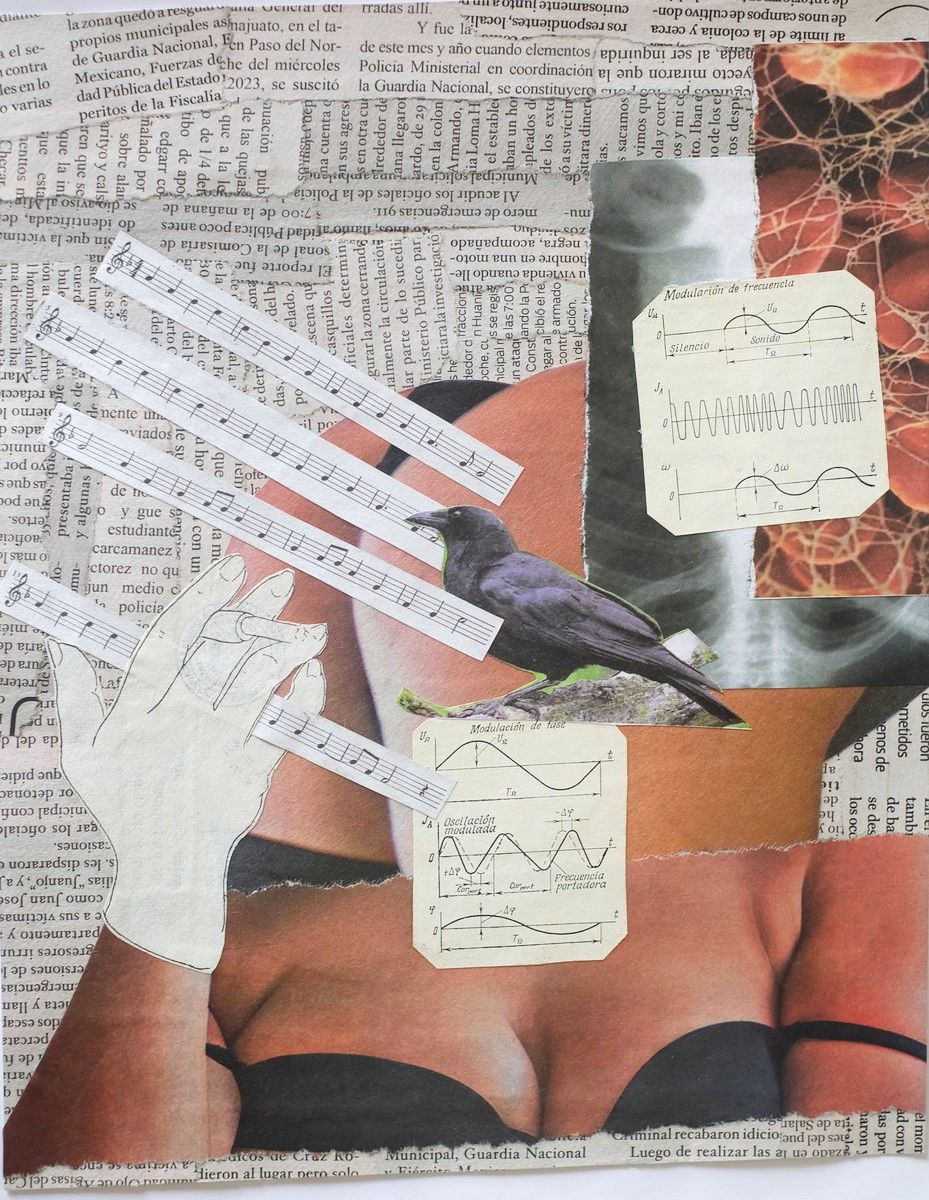
Interviewed by Max Eastman in Puke Pink, mail art and cassette culture titan Gen Ken Montgomery offers some eternal advice: “I encourage people to listen deeply. Listen alone and with others. Listen to yourself, listen to others, listen to rivers, trees, rocks, and birds. Listen to the voice in your head and the noise in the world and observe where it takes you. Sound is a form of transportation.” The Guanajuato-based Instituto de Psicogeografía takes this credo to heart—to listen to their tapes is to be submerged in another place entirely. To the ears, a location’s true essence is more than just the sounds that are heard; it’s also the sounds that aren’t, and el Instituto duly portrays the noise of the streets and the currents surging through the skies with equal reverence. The A side of II, their most recent release, is a languid mélange of earth and electricity. Abstract musical threads spool outward from a variety of sources and then melt into embraces from the natural world: radio chatter dissolves into insect swarm, emf sputter meets anxious footsteps. So much care was taken in assembling these collages, acts of respect and admiration for the world in all its imperfections. I’m reminded of Frenchbloke & Son’s legendary Bruit dans l’intéret de musique mix, a work I adore for the same reason. Things get a bit more tense on the B, with garbled commentators narrating a nighttime drama of birdsong and obtuse electronics. Already looking forward to the next adventure from this promising new initiative.

Review: Angelo Bignamini – Rebelòt (More Mars, Sep 26)

From a secluded outpost near the cities of Lodi and Piacenza, Angelo Bignamini raises entire worlds from the surface of a table. In an interview with Zoomin’ Night operator Zhu Wenbo, who released his tape Take a Seat early last year, he describes his process as harnessing small-scale interactions between “found objects ([such] as small stones, woods and plastic components), pre-recorded stuff on tapes and CDs, and small feedback devices.” A guitarist at heart—he has also put out a few solo guitar recordings and played in avant-rock duo The Great Saunites—Bignamini displays an equally musical ear for the possibilities offered by these unconventional materials, especially on Rebelò​t, a new cassette collecting what is now my favorite material he has released under his own name so far. There’s a restlessly eager sonic lens at work throughout the eight active fragments, homing in on microscopic whirs and flits before racking back to sweep over a lush life-sized scene. The field recordings are simply one of many elements on the same footing, mere tools for finding fleeting contrast and/or harmony… they flash into earshot in full crystal-clear focus before cutting out just as quickly. The most affecting moments are those brief, unstable synergies: the graceful duet between winding tape and creaking floorboards in A3, the dissonant clusters of natural and synthetic sound blown into glinting glass sculptures in B2. A real gem from an artist and label who consistently offer the best that contemporary electroacoustic music has to offer.

Review: Spore Spawn – Okoranaideto (Oxen, Sep 20)

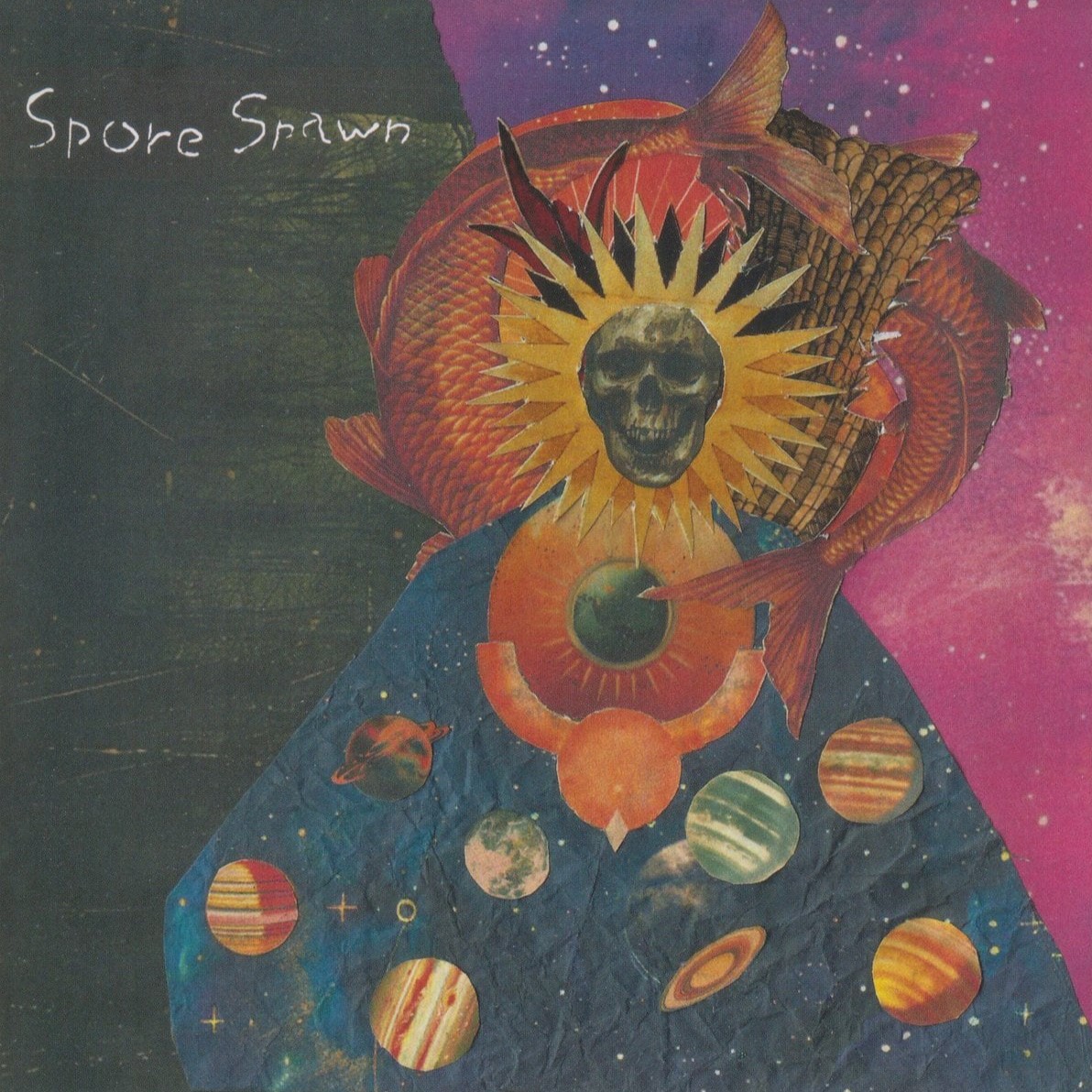
Making noise that’s truly colorful is harder to do, and even harder to do well. A synesthetic dimension that’s evoked by both relevant visual aesthetics and the psychedelic intricacies of the music itself, color is even more subjective and slippery than most other ways we might assess the essence of a work. Looking to recent examples, rainbows can blossom from the right combination of gear (e.g., the fecund modular contraptions of White Widow or Total Sweetheart), an abundance of visceral emotion (Spate’s Dogmono), or decadent textural feasts (Kakerlak’s Obdormition). Vivid cover art doesn’t hurt, either (see Form Hunter’s Overripe). At the intersection of all these potential sources of sonic vibrance stands Spore Spawn’s new CD Okoranaideto, a saturated chunk of phantasmagoric intensity that marks a new peak for the Niigata project. “Ahaha” sounds all too familiar at first, resembling countless tiresome sets I’ve seen that consist of a droning ambient undercurrent punctuated by episodic blasts, but it soon reveals itself to be an engaging and progressive crescendo. Spawn doesn’t use traditional loops, and yet he does structure these tracks around repeating motifs that always promise (and deliver) a satisfying resolution. Cyclical contortions in “Ichiichi” conjure a kind of meta-rhythm, to the point where one can almost predict the shape and trajectory of the next writhing manifold before it even occurs. None of the three peter out or end with a whimper; anticipation levels remain high through the final seconds, which are perfectly punctuated with one or more last-ditch spasms.

Review: Hingst – Absolut Hingst (Ominous, Sep 7)

There are few things in this world better than a slab of overblown, in-the-red analog harsh. Both Johan Strömvall Hammarstedt (J S H, Gamiani, etc.) and Edvin Norling (Peking Crash Team, Pollutant) already deal heavily in sonic extremity via their various projects, but there’s something cathartically simple about their work together as Hingst. First shredding eardrums with a string of excellent self-released tapes—all three of which are collected by the Ska vi älska så ska vi älska till Wall Riders compilation CD on Abhorrent A.D.—they now present their official full-length debut on Hammarstedt’s own Ominous Recordings. Absolut Hingst, its blue washout cover sporting yet another mustachioed leather daddy, offers up some of the duo’s crunchiest material yet, mastered so loud it’ll tear your speakers a new one. The main thrill of these two tracks erupts from the interplay between the densely packed mid-range smorgasbord and the high-pitched squalls of feedback that slice through it; the noise already feels like it’s always on the edge of collapse, and those desperate screeches make the chaos even more volatile. “Hingst på Böda” is by no means lacking in low end, but “Hingst blåser 2,0” spreads an even thicker bass layer beneath the pedal-driven mincemeat. The second half of the ten-minute scorcher is absolutely crushing, a brutal blender-blast of writhing distortion that smashes together every frequency plumbed thus far. This is what they call “the good shit.”

Review: Carl Lindh – listening with the tips of my fingers (zappak, Sep 1)

Unless I’m missing out on even more than I thought, listening with the tips of my fingers is Carl Lindh’s first solo full-length. The Malmö-based sound artist has released a small handful of material, mostly as splits with various Swedish noise acts (including a C30 that pairs a Pär Thörn collaboration on the A side with a Heinz Hopf ripper on the B), but this handsome CD on Tokyo small-batch label zappak feels definitive. Two lengthy live tracks feature Lindh’s tabletop potpourri of devices and circuits, which he nimbly controls with simple touches and taps. The infamous “cracked everyday electronics” of legendary Swiss duo Voice Crack are a clear influence, not just on the approach but also on the music itself, which hums and buzzes with both mechanical dispassion and natural fluidity. Neither “sound becomes word becomes sound” nor “a certain lack of consistency” mine soundscapes as obtuse or oblique as Möslang and Guhl’s uneasy improvisations, though; there’s something strangely accessible about the sound Lindh is experimenting with here, something that’s especially apparent when the vocal elements crop up. I have no idea if they’re his contributions in the moment or preloaded samples being triggered just like the rest of the electromagnetic haze—I lean toward the former because of how unstructured yet deliberate they feel. His description of another recording applies here as well: “There are no big gestures in this performance. Instead I let the sounds perform. I let them fill the room and resonate with it. I listen and I follow. Loud continuous sounds create a sensation of comfort within me. It makes my mind empty and my body calm.”

Reviews: John Collins McCormick – Your Money Your Life and For Other 1, 2, 3, 4 (Garbage Strike, Aug 20)

For the most part, “range” is overrated. An artist’s body of work is just as impressive when it’s laser-focused as when it’s eclectic. In the singular case of John Collins McCormick, however, focus and eclecticism aren’t different things at all. Each radically unique release he puts out simply documents a new approach to the same open-minded exploration of sound itself. Even then, you’d be hard pressed to find two entries in his discography more contrastive than Your Money Your Life and For Other 1, 2, 3, 4 (both of which, fittingly, dropped on the same day). The former, comprising a single half-hour piece, is McCormick’s most direct invocation of harsh noise tropes; Finally Tall Enough for My Age, I Grew Deeper from last year’s tape batch certainly made use of caustic textures, but it resided more in the area of the passive detachment of data sonification. This, on the other hand, is carefully composed, emotional and human and even warm despite its obvious digital origins. Not unlike Veidrik’s HAZARDAJ, software output is just the paint in the palette, so the actual proceedings are loose and gestural—I could see even the analog purists enjoying this. McCormick anchors his crackling distortion swarms with a sighing tension-and-release structure and tactile snippets, the maelstrom culminating in a stripped-down coda.

For Other is the calm it leaves behind, a suite of four tracks “for adding to a quiet room—they pair well with refrigerators or AC units or buzzing lamps or open windows.” The material is so subtle that it is often superseded by the listener’s environment, which of course is kind of the point. Wandelweiser comparisons are obvious, but For Other only evokes the least stuffy, most organic material: Young Person’s Guide; Weites Land, Tiefe Zeit; etc. Sukora comes to mind as well. Imperfect parallels, though, because here the spotlight is arguably more on the external soundscapes the recordings frame than it is on the recordings themselves. The temptation to crank the volume is still strong; if you do so, you’ll find the same level of immersive detail as its much louder counterpart. Is that cheating? Who cares—your money, your life.

Speaking of money, both beautifully handmade gatefold CD-Rs are available as a batch deal for $15. A steal.

Review: Spring of Life – Training Camp (self-released, Aug 3)

Spring of Life is one of the more exciting underground projects of the past few years. There’s nothing ostentatious or even particularly “new” about the (I think) Canada-based artist’s work—much of which was recorded at the mysterious Friendship Lodge and self-produced in the form of ultra-limited cassette editions—but the humility of approach and aesthetic. coupled with the elusive magnetism of the music itself, has captured the mind of many a weirdo. 2022’s external label debut Brown Bed was a step up in terms of both focus and structure, and Training Camp keeps climbing that staircase. Housed in a soft poly box and wrapped in an ink-printed plastic shroud, the tape’s contents are as fragile and obscure as its packaging. This is trve tabletop-tinker noise, built on analog burble, electromagnetic interference, the hum and haw of failing cables. It’s an esoteric connection to make, but any fans of UVC or any of the other aliases in the Born Physical Form family (RIP?) will find so much to love here. The A-side suite begins innocuously enough, oh-so-slowly raising complexity from the simplest of seeds. There are no sudden blasts of high-fidelity harsh, no flashy cut-ups or signal-switching, just the steady stumble of cracked electronics wrangled into something halfway useful. You don’t notice the crescendo until it climaxes in a cloud of shards, jagged dust at once crystalline and plasticine. “Educational Practice” kicks in at a louder register, dense and dynamic, but no matter how close they come to resembling direct-action mayhem, the contortions are always feeble, frail, one wrong move away from collapse.