
Review: Intestinal Disgorge – Everlasting Fractal Nightmare (Meat 5000, Sep 25)

Texas goregrinders Intestinal Disgorge have come a long way since the release of their debut full-length, Drowned in Rectal Sludge, in 2000. After a lot of stylistic exploration, they are honing in on a sound that bonds the unhinged noise blasts of their early work with a more refined, but still hideously brutal death grind format. Everlasting Fractal Nightmare picks up right where last year’s Sonic Shrapnel left off, and it’s pretty much the culmination of what the band seems to have been working toward. The drums keep every single track barreling at an uncompromising pace; I don’t think the bass drum ever lets up for more than five seconds at a time, it just beats you into the ground and keeps you there. The vocals are as unpredictable and disturbing as ever, climbing from down-tuned gurgles to piercing shrieks atop the putrid atmosphere whipped up by the guitars. Intestinal Disgorge have completely mastered the conjuring of a dark, horrifying sonic environment, which is brewed at the forefront on texture-focused tracks like “Shambling Cyclopean Terrors” and “Where They Breed” and presides over the rest of the album with pestilent persistence. Yes, 35 mins seems long for an unrelenting gore record; I thought the exact same thing. But Everlasting Fractal Nightmare is paced perfectly, and by the end there’s not even a hint of the exhaustion I normally get from too much of this sort of stuff. If you can’t tell, I’m super excited about this release.

Preorder the physical CD here.

Review: Klara Lewis & Simon Fisher Turner – Care (Editions Mego, Sep 28)

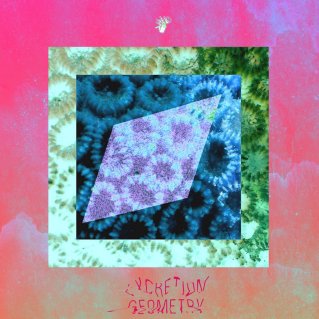
Usually, I don’t have to listen to an album very many times before I feel like I can describe and express what I enjoy about it. With Care, things happened differently. I listened to it once, and afterwards I wasn’t really sure what to make of it. I listened another time, still ambivalent. I only knew that I wanted to hear it again. Now, after five or six times through, I can confidently say that Care is one of this year’s most enigmatic and elusive releases…and one of its best. Sound artist Klara Lewis and composer Simon Fisher Turner team up to create blissful, dense soundscapes with metallic edges. Opener “8” traipses across a wide map of textures, somehow feeling gradual and sudden at the same time; the swirling, airy drones flow in and out, their distance and intangibility lulling you into a trance — and then whiplashing flashes of samples and processed noises force you back to earth. This is a sonic relationship that the rest of the album continues to explore, to amazing results. The sound these two artists have achieved resides in some inexplicable middle ground between calming ambience and industrial punch, though overall the effect is calming, not so far off from the soft pink gossamer strands on the cover. A truly impressive, unique release, one that requires a lot of time to fully decipher (at least it did for me).

Review: Sunflo’er – No Hell (Noise Salvation, Sep 28)

No Hell is a record that covers a lot of ground in a relatively short amount of time. These three musicians, whose work outside this album I unfortunately know nothing about, take the listener on an angry odyssey through ambitious style experiments, atmosphere building, and incendiary blasts of all-out aggression. No Hell could easily have fallen apart at the seams, overstuffed with the staggering amount of stuff that gets thrown at you, but it doesn’t. Not even close. Each time the final notes of beautiful closer “Good Old Way (Reprise)” arrive, it feels like the album just started a few minutes ago. “Loup Garou” is a fiery start with labyrinthine songwriting, “No Gate to Close” adds almost black metal-esque flavors with its fast-picked guitars and driving drum blasts even as the anthem “there is hope beyond these teeth!” is called out, “No Hell” delivers more scalding fury in under a minute than many artists can introduce in ten, “Days Gone” slowly crushes with its patient texture layering and false crescendos…and that’s all in the first six tracks of the LP, about twenty minutes! The sheer eclectic density and the cohesive package in which it is presented is what keeps me coming back to No Hell pretty much every day since its release.

Review: Ab Uno – Metaforma (Mahorka, Sep 23)

One word stuck out to me in the short summary of Metaforma on the Mahorka Bandcamp page. It’s a favorite word of mine, one that often sticks out no matter what the context, especially in regards to music: primordial. Ancient, primitive, primal, visceral…I would use all of these to describe Metaforma, but it embodies those words in a subtle, unusual way. Produced with field recordings, modular synthesis, and various instruments, side A of the tape plays with bright, shimmering layers that are thin but dense. The way the sounds are mixed together avoids highlighting each individual element; instead, they come together to produce these light-filled constructions, rich yet homogeneous — which probably explains their density. The pieces amble along slowly, floatingly, and it’s easy to get lost in the movements of these sounds, even when rhythm is introduced. Side B, made by combining harmonic generator tones with two tape decks, maintains the lethargic pace, but these textures are much colder than the ones before. Not mechanical, nor metallic, just icier; it’s not difficult to imagine falling snow and gnarled icicles. Despite my focusing on them, Ab Uno’s unconventional methods don’t distract from the music, but it’s interesting to know how such unique noises were created.

Review: Espen Lund – Blow. Amplifier (self-released, Sep 28)

A lone trumpet croons notes, rough noodling hovers somewhere between melody and atonality. Will this just be another solo trumpet album? Not that I’m complaining, I just expected something more effect-heavy. I wonder — WHAM. A wave of feedback-encrusted fuzz accompanies the next flurry, as trumpeter Espen Lund and his wall of amplifiers blasts you into oblivion. Blow. Amplifier thrives on its own unpredictability, drawing equally from improvisation and punishing metallic drone, exploring the possibilities of this unique conversation between clean and distorted. The eponymously titled opening track unfolds like a wordless debate, as the unaffected trumpet meanderings lull the listener into temporary solace only to crush it with another slab of vicious distortion. Without this track, it would be easy to forget how the album’s sounds are being produced; the short interlude “White Mass” and the massive conclusion “The Great Equalizer” both abandon their origins almost entirely, focusing on the manipulation of the trumpet’s sounds. The latter conjures similar feelings of submergence and volume worship as when I saw Boris last year; no small feat for music created only with an electric horn instrument. Blow. Amplifier is an experiment to be sure, but undoubtedly a successful one, and god knows what Lund can accomplish with this formula in the future.

Review: Jürg Frey – 120 Pieces of Sound (elsewhere, Oct 10)

Lots of incredible albums came out last year, but few can claim the same amount of scope and ambition as Jürg Frey’s massive L’âme est sans retenue I, released as a five disc set on Erstwhile. Anyone intimidated by that composition’s nearly six-hour run time may find a more digestible presentation of similar concepts and ideas in 120 Pieces of Sound, which comes out next month on Erstwhile’s newly formed sibling label elsewhere. The disc presents two performances of Frey’s compositions. Stylistically, “60 Pieces of Sound” and “L’âme est sans retenue II” aren’t exactly similar. The former, composed in 2009 for an indefinite amount of performers, is a string-based piece performed by Frey on clarinet with the Boston quartet Ordinary Affects, and consists of 60 chords interspersed with pauses of silence of roughly equal length. The chords range from beautiful and calming to tense and unsettling, with the silences providing pregnant anticipations as the musicians ready their instruments to play the next chord. “L’âme est sans retenue II,” similar to the first installment, is performed solely by Frey using field recordings accompanied by bass clarinet. The sounds are different but the structure is almost indiscernable from “60 Pieces of Sound,” giving the two pieces a wonderful kinship, with the murky beauty of the “L’âme…” segments complementing the heavenly, tensile drones of “60 Pieces of Sound.” This is by far one of my favorite works I’ve heard from Frey, hitting the same spots as 2010’s Weites Land, Tiefe Zeit: Räume 1-8; and while it obviously doesn’t compete with “…retenue I” in scope it’s a wonderful release for new and old appreciators of the composer’s work alike.

Review: John Collins McCormick – One Bone in the Arm (Pan y Rosas Discos, Sep 24)

Unfortunately, many areas of experimental art, and specifically music, suffer from a lack of universality. Sound art, electroacoustic improvisation, and avant-garde composition are often viewed as more formal and academic than other genres, and as such do not reach the wide audience that they should. The two times I’ve seen John Collins McCormick perform, he has completely defied those trends: the first time, he constructed and manipulated a live installation using tape segments, a modified speaker, and ping pong balls, and the second time he played duo microphone feedback improvisations as Comment. This approach to acoustic art, further exemplified on McCormick’s new album One Bone in the Arm, removes any intimidation and mysticism, reminding us that ultimately, it’s just sound. One Bone in the Arm is full of clatters, squeaks, drones, bounces, ticks, and much more, with the unprocessed recordings following natural progressions. It’s a unique skill to be able to command dynamics with only non-musical objects, but these tracks are just as, if not more, enrapturing than anything more conventional. The low fidelity and hints of audience chatter introduce an intimacy but don’t compromise the sounds. This is really great stuff, and with a price of exactly zero dollars there’s no excuse not to hear it.

Review: Kjostad – Glacial Lake (No Rent, Sep 25)

In preparation for this review, last night I revisited Kjostad’s Frost Cracking Trees tape, released by Prime Ruin earlier this year. While I like it quite a bit and it’s one of my most frequent plays, I remembered what held me back from truly loving it. The noise is harsh but doesn’t seem to have much energy behind it, something that heavily affects how much a harsh release impacts me. I’m glad, though, because it gives the masterpiece that is Glacial Lake context. Everything I associate with Stefan Aune’s unique project is at its best here, from the damaged nature loops and frigid atmosphere to the blasts of cathartic distortion. Aune slows down his approach, with each piece expanding and contracting over a whole side of the C40, an evolution that complements the music well. The ear-splitting wall of noise in part four of “The Water’s Edge” wouldn’t be nearly as significant without the previous three parts, as Aune’s careful stitching forms a breathtaking soundscape. The temperature of this music is freezing; I once jumped into a crater lake in Wyoming, and these ice-encrusted collages of sound are such an amazing portrayal of that piercing coldness. Jason Crumer describes Glacial Lake as “a refreshing Walden-esque vision of American noise,” and I couldn’t agree more; I don’t think it’s far-fetched to say that Stefan Aune loves and respects noise as much as Thoreau loved and respected nature.

Review: Panchasila – Panchasila (Discrepant, Aug 24)

Argentinian artist Panchasila’s self titled cassette is the soundtrack to a steamy, psychedelic stumble through the jungle. Rhythmic collages are constructed from tribal percussion samples, low-quality dictaphone recordings, warm tape hiss and vinyl crackles, and clips from cumbia and other ethnic songs. Most of the sound on the album remains in the mid to low frequency range, giving everything an aquatic stuffiness that seems to hang in the air like our dear old friend humidity. Panchasila’s heady, lethargic rhythms are prominent yet hold barely any governance over the swirling sounds also present, which creates an interesting contrast — and unearths possibilities for unique progressions, as the rhythmless elements slowly align to the percussion. Closing track “Salt” is a perfect example, and also happens to be the best cut from the album, bouncing vivid bird call cacophonies and head-bobbing marimba melodies off a backbone of hand drum loops. Panchasila is nocturnal, surreal, hallucinatory…but all in that mysteriously comforting way that could only be recreated by a darkness-drenched rain forest.

Review: Faxada – Paraa (Darling Recordings, Sep 21)

Violent glitches, field recordings, samples of hip-hop songs, catchy dance rhythms, processed and synthesized sounds, various instruments… I imagine the process of making Paraa involved Faxada, aka Przemysław Wojtaszek, throwing all of these things into a blender. A massive, hulking, industrial blender. And then what you hear when you play the album is  that blender assimilating every ingredient into an overwhelming stew of sound. Despite my tendency to do so, I don’t even think I’m being hyperbolic here; there’s little other way to easily describe Paraa other than “bat shit insane,” from its opening moments that physically assault your head from all angles at once throughout the various incredible combinations that Wojtaszek constructs. The record is a significant departure from his last release, Cohost, abandoning many of that album’s conventionality and sample reliance in favor of electroacoustic manipulations and synthesis. The tracks are short — there are 20 of them in less than 40 minutes — so none of them overstay their welcome. Wojtaszek presents you with this crazy, disarmingly immersive collage of sound, and just when you start to get lost in it he completely switches everything up and repeats the process with an entirely different idea. I’m starting to disagree with my own blender analogy, because while Paraa is tremendously chaotic it’s also clear it was put together with great care. The amount of creativity in this thing is just astounding; he sculpts sounds as if they are physical objects, building haphazard junk contraptions that you’d never guess would be so beautiful by just looking at the components. I could go on, but I think I’ve made it very clear how much I not only love, but am in awe of, Paraa. Buy this thing. You won’t regret it.