
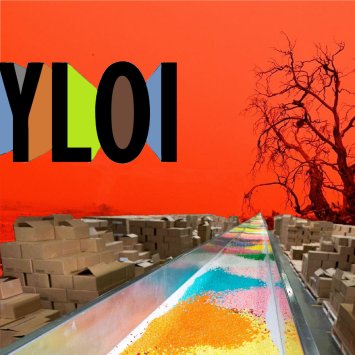
 Daktyloi ostensibly began in 2020 with its first release The & in December, but so far 2021 has been the mysterious Tallahassee project’s open season; nine albums (including this one, Succade) of approximately the same 16–17 minute runtime have been published digitally since January, each comprising two suites of “Weaponized nostalgia, ecstatic headphone daymares, hauntological sound design, [and] anxiety engines,” the suites themselves made up of shorter tracks/fragments apparently cobbled together out-of-order. Each “side” is labeled A and B, but no actual tapes seem to be available… production delays, possibly? Or perhaps Daktyloi’s music entices with but does not deliver on its implicit promise of physical presentation in mischievous contrast to the laundry list of tangible tools and objects used behind the scenes: everything from bulky analog equipment and modular synthesizers to air pumps, sleigh bells, televisions, and voice. Haunting audio is also added via 16mm projector and VHS tape manipulation, casting the other elements in a cinematic, sometimes even narrative light, easing the squeaky wheels of transitions between disparate tracks with a filmic grease. Daktyloi’s stuffy, hallucinatory worlds of melded memory are somewhat reminiscent of Martin Tétreault’s work on La nuit où j’ai dit non, but all the empty space and structural impermanence of the former makes each concise collection a different kind of beguiling.
Mix: Inimitable Indie Introductories
Looking back at the mixes I’ve posted recently, I’ve been on a weird streak—which to be fair is probably what a lot of you come here for—so I was feeling like making something more generally palatable today. These are my favorite openers by my favorite indie bands, new and old(ish), big and small; you will probably recognize some of them, but hopefully not all. Keep on shouting.
Some of the transitions are kinda rough; my computer has been acting up and it died before I could smooth them over, and it wiped most of my work. Hope it’s not too jarring.

Shearwater performing “Animal Life” live on KEXP
00:00. Spice – “First Feeling” from Spice (Dais, 2020)
02:34. Tall Ships – “T=0” from Everything Touching (Big Scary Monsters, 2012)
06:13. Wray – “Blood Moon” from Wray (Communicating Vessels, 2014)
08:48. We Are Augustines – “Chapel Song” from Rise Ye Sunken Ships (Votiv, 2011)
12:03. Spaceman Spiff – “Vorwärts ist keine Richtung” from Endless Nichts (Grand Hotel Van Cleef, 2014)
15:40. Pela – “Latitudes” from All in Time (Brassland, 2005)
19:56. Shearwater – “Animal Life” from Animal Joy (Sub Pop, 2012)
23:31. Mexican Elvis – “He Spent Three Years Trying to Enter the Eurovision Song Contest” from John frum Alaska (Kyr, 2010)
27:02. Viet Cong – “Throw It Away” from untitled cassette (Jagjaguwar, 2013)
30:13. Protokoll – “Moving Forward” from Paradoxon (Illicit Recordings, 2006)
35:04. Frightened Rabbit – “Death Dream” from Painting of a Panic Attack (Atlantic, 2016)
39:07. Beaten Awake – “Browns Town” from Let’s Get Simplified (Fat Possum, 2007)
Review: Hockey Night – Playing with Too Many Sticks reissue (Artsy, Aug 25)
 From Kemialliset Ystävät and Avarus to Destrucktions and Kansanturvamusiikkikomissio, Arnaut Pavle and Vermilia to Tsembla and Uton, Finland will always be an important country to me musically whether I ever get the chance to visit or not. After the amount of praise I’ve already heaped on several noise tapes from the screeching DIY basements of the Land of a Thousand Lakes, it should be no surprise that the hype train is continuing, this time for a digital reissue of a tape released almost exactly a decade ago. Playing with Too Many Sticks is one of just a small handful of tapes from Hockey Night—the ensemble quartet of Jonna Karanka, Arttu Partinen, Sami Pekkola, and Jaakko Tolva—and the inimitable improvisatory style it captures almost reflects and even justifies the group’s sporadic release schedule: their dexterous, exhilarating interactions are played fast and loose, fleeting and squirrely, impossible to pin down. With the consistent backbone of Tolvi’s restless, erratic free-jazz drumming, the single 35-minute set unfurls spectacularly in droves of amateurish guitar, smears of crude tape manipulation, squawks and buzzes of toy instruments, and more, all of it coalescing into a rickety but nonetheless intact amalgam of carnivalesque delirium. The title is more than fitting because the music is all frenzied scrabble and scramble, futile graspings, ersatz excess; like when you’re carrying too many groceries and drop them all, but instead of sitting on the floor in defeat you just appreciate your own little piece of chaos you created. The end of the performance is met with eager applause, but it’s not the startling conclusion that a sudden audience sometimes creates, because everything that precedes it feels like applause too, in a way: a unit of talented but unhinged musicians celebrating the beautiful process of making noise. And that will always be a formula for success—in 2011, in 2021, in whatever year we get to before Mother Earth washes herself clean of us.
Review: Lifestyle on Camera – Anti-Mass Spectrometer (7Form, Aug 24)
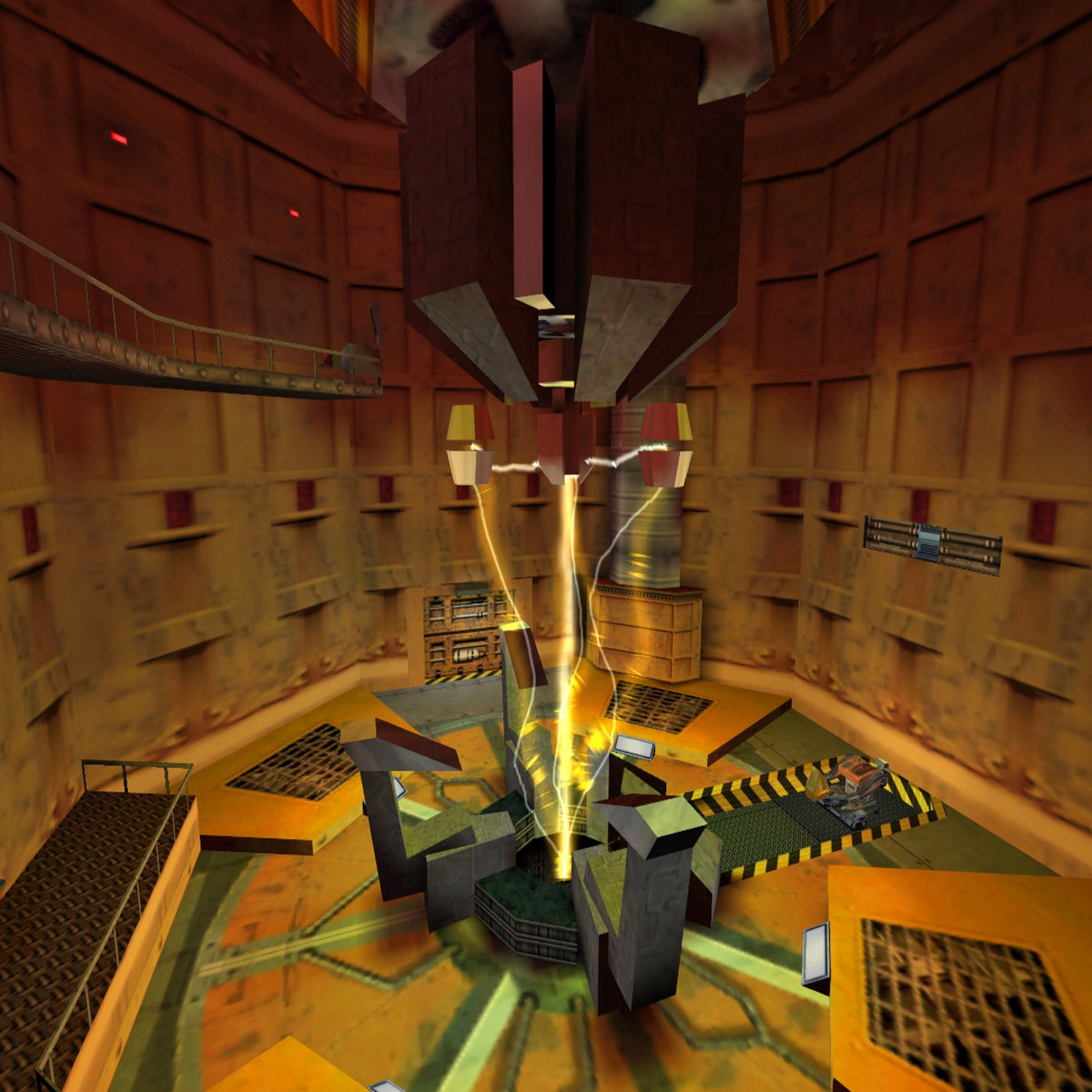 The many multifarious iterations of the 7Form netlabel and artist collective have yielded some of the strangest and most exciting music of the last half-decade, and though it can often feel next to impossible to even find the new mutations, much less keep up with them, it’s worth it to hear one-in-a-million works of art like Anti-Mass Spectrometer. As the title and cover artwork imply, samples extracted from the Half-Life games feature prominently throughout the two lengthy “iterations,” from dialogue fragments and shuffling footsteps to blaring menu sounds, explosions, and incessant gunfire. Unlike Graham Dunning’s Panopticon, however, this music is neither spatially confined nor sonically dependent on the game’s engine; in addition to the scrabbling frenzies of screams, shattering glass, slews of bullets, and other Source-sourced effects there are constant musical invasions both harmoniously atmospheric and jarringly out of place. Though these garish plunderings often seem randomly beamed in from some other dimension, the editing work done on many of them (such as the disconcerting isolation of Taylor Swift’s vocals from “Love Story”) shows their addition is more surgical than that, which mischievously implies some hidden meaning that will evade even the most desperate pursuers to the ends of the earth. Another mystery arises in the many similarities between the tracks as well as the fact that the second iteration is exactly 1.5x the duration of the first (elements also frequently recur in slowed-down form), which suggests they’re simply the same material played at different speeds… except they aren’t. I checked! Bizarre, fascinating stuff that I won’t soon forget.
Review: Gauzed Wings – Angel (self-released, Aug 22)
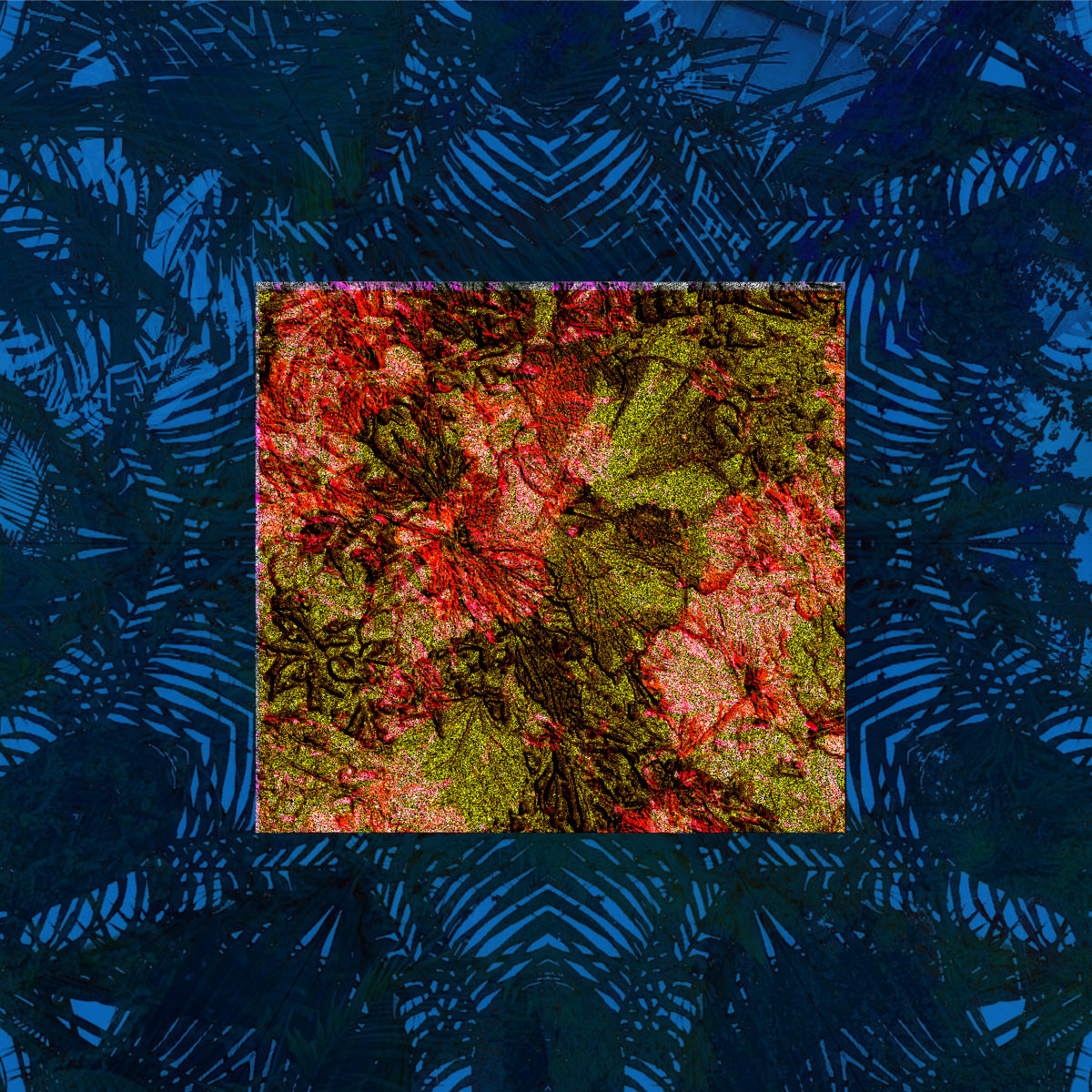 The day might come when I finally shut up about 2021’s lucrative harsh noise offerings, but it probably won’t be any time in the next three or so months, so I hope it’s not too torturous. Even I were much quieter about it, the music all speaks for itself; though newfound scene-based stylistic renaissances are occurring everywhere, one the brightest beacons shines from Finland, from which originates a host of both old and new artists who even now are collectively finetuning a structurally agile but heavily psychedelic brand of freeform “crunch” noise—Umpio’s Kulotus and APRAPAT’s Born Rare are both good recent examples of this sound. But such appealing aesthetics are hardly ever fully location-restricted, so it’s not too surprising to see a new artist whose approach shares a great deal of kinship with that of the aforementioned releases crop up in Liverpool. Angel, the debut from Gauzed Wings (another anonymous project with no information other than location and a few genre tags), will immediately win new, unwitting listeners over with its sudden maxi-dose of layered, well-mixed distortion crackle, its pleasingly tactile edges curling and morphing as organically as if the artist were harnessing fire itself. There are some relatively more delicate moments throughout the opening pair of tracks, but with “Almost You,” one of two 11+ minute behemoths on the album, things shift over into full gear and the lightweight rollicks of flame become full, forceful blasts of bone-charring incineration, and even after that the breathtaking conclusion tops it all. “Echo” ends things strong with oscillating pulses and frail white noise façades that dies in desperate writhes and hisses. My kind of angelic!
Review: CHAGO – Maseira (self-released, Aug 19)
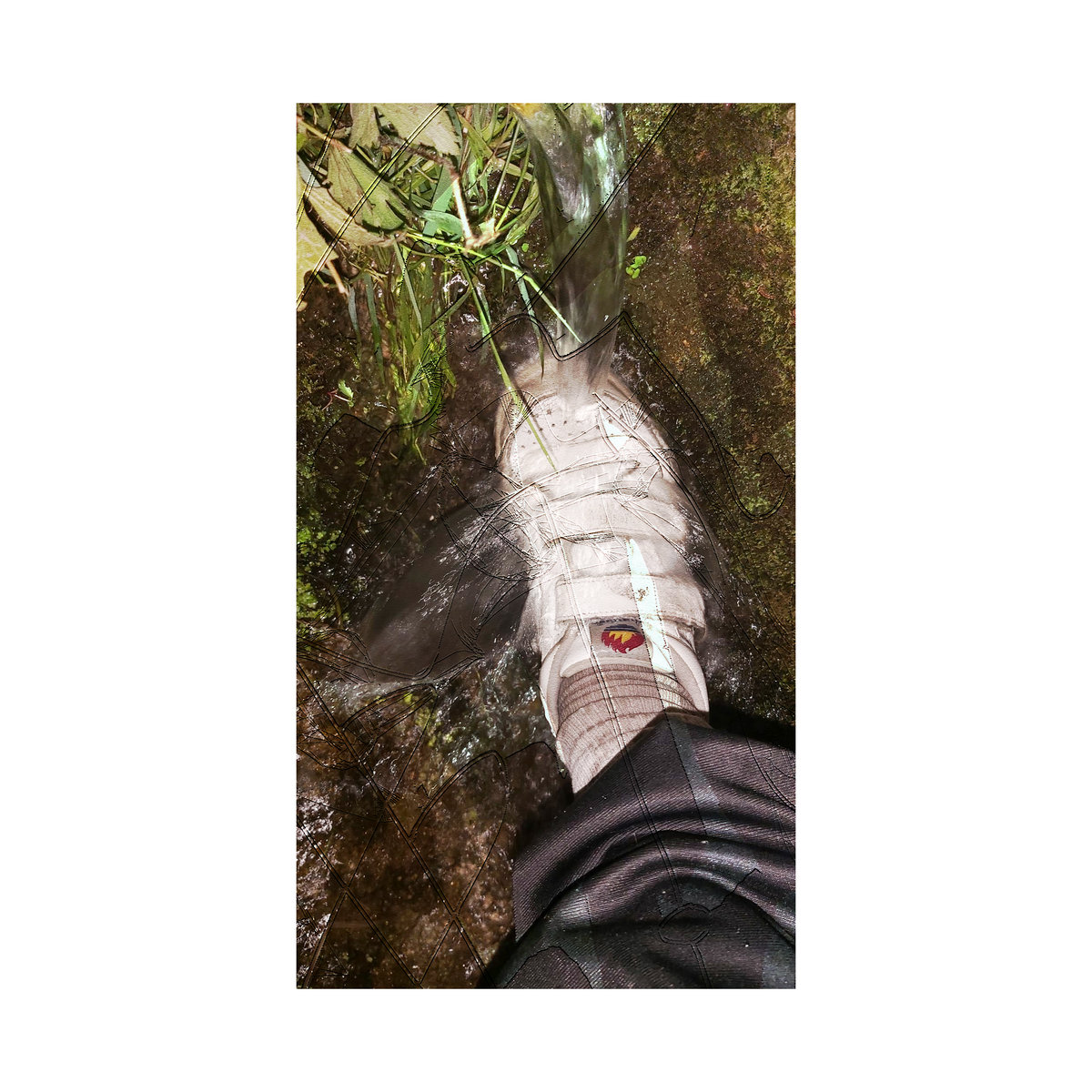 To any of the select but noisy few who claim that the musical side of the avant-garde is losing its edge or running thin on the confrontational spectacle of old, I have plenty of counterexamples to present from this year alone: Barn Sour’s Belgian Gelding, Bent Duo’s Ramble, Human Heads’ In the Afternoon, etc. Not much unites these singular works of utter subversion other than fleeting, ephemeral similarities in texture, tone, tension—but something even more abstract they all share is an enigmatic yet assured conceptual and/or emotional deliberateness in even the most profoundly alien of the outer orbital reaches of musical convention. Maseira, as of now the only release from anonymous Berlin project CHAGO, belongs in this conversation as well; though its deepest origins lie in electronic music, both industrial and dance (as the “tracky bottoms tucked in socks” on the cover might imply—although what may or may not be a classic Reebok is submerged in water, an immediate and telling invocation of discomfort), what actually occurs throughout this suite of fifteen unnamed tracks is much, much stranger. Armed with basic digital synth patches, field recordings, and recipes for electroacoustic contortions that shred those past two elements into queasy loops and sharp, twisted slices of nigh-unintelligible sound. Chattering, slobbering speed-shifts in parts 2 and 3 resemble a pen of ravenous hogs, and then later on in 8 we hear the abrasive bleats and squeals of actual livestock. Thin, sickly traces of movement and melody begin to surface in 10 and 11, mezzanine reverb hisses and haunting plasticity enclosing them in frail but fatal embrace, a slow, delicate decay culminating in the bleak tedium of 15: cold metallic tinctures, subdued incessance, lateral swathes of sputtering concrète like Joseph Hammer raking his magnetic tape dental floss across a gunked-up reel-to-reel head. This is excellent and satisfyingly bizarre stuff that will (and probably should) slip under many radars… if interested, tune to the forbidden frequency.
Review: Songs for Everyone – Song for the Creature (self-released, Aug 20)
 I would kill for a behind-the-scenes look at this spectacular album; even though that’s not something I usually care about much at all, but I hardly know anything about Songs for Everyone, and the fact that Song for the Creature has the clean caustic sound profile of a heavily computer-based approach with the textural diversity, natural dynamics, and volatility of an analog setup makes me extremely curious as to what role each plays in the final mixture. Clocking in at just over a hundred minutes of searing atmospherics, this ambitious digital-only release (it’s also available, somewhat hilariously, on all popular streaming services for your on-demand convenience) captures and captivates with ease—movements and transitions are placed at exactly the right spots between stretches of psychedelic near-stagnation, creative instantaneous injections unseat the status quo or further harmonize with it, and on a macro level everything moves together so organically that it ends up not feeling nearly as long as it is. Despite some excellent starting blasts, the lengthy tracks blur together somewhat, which is not at all a bad thing for this type of music, and yet each section has its own eminently memorable events: a dense, jagged outer shell materializing around mono-confined feedback screech in part one, supercharged harmonic shifts and subtleties in two, shattered spatiality and stilted, scuttling near-silence in five and six. For those who have been reveling 2021’s endlessly bountiful harsh harvest, this is one that cannot be missed. I think I speak for Everyone when I say that The Creature is very pleased.
Review: Multa – Multa (Discos Carnitas, Aug 19)
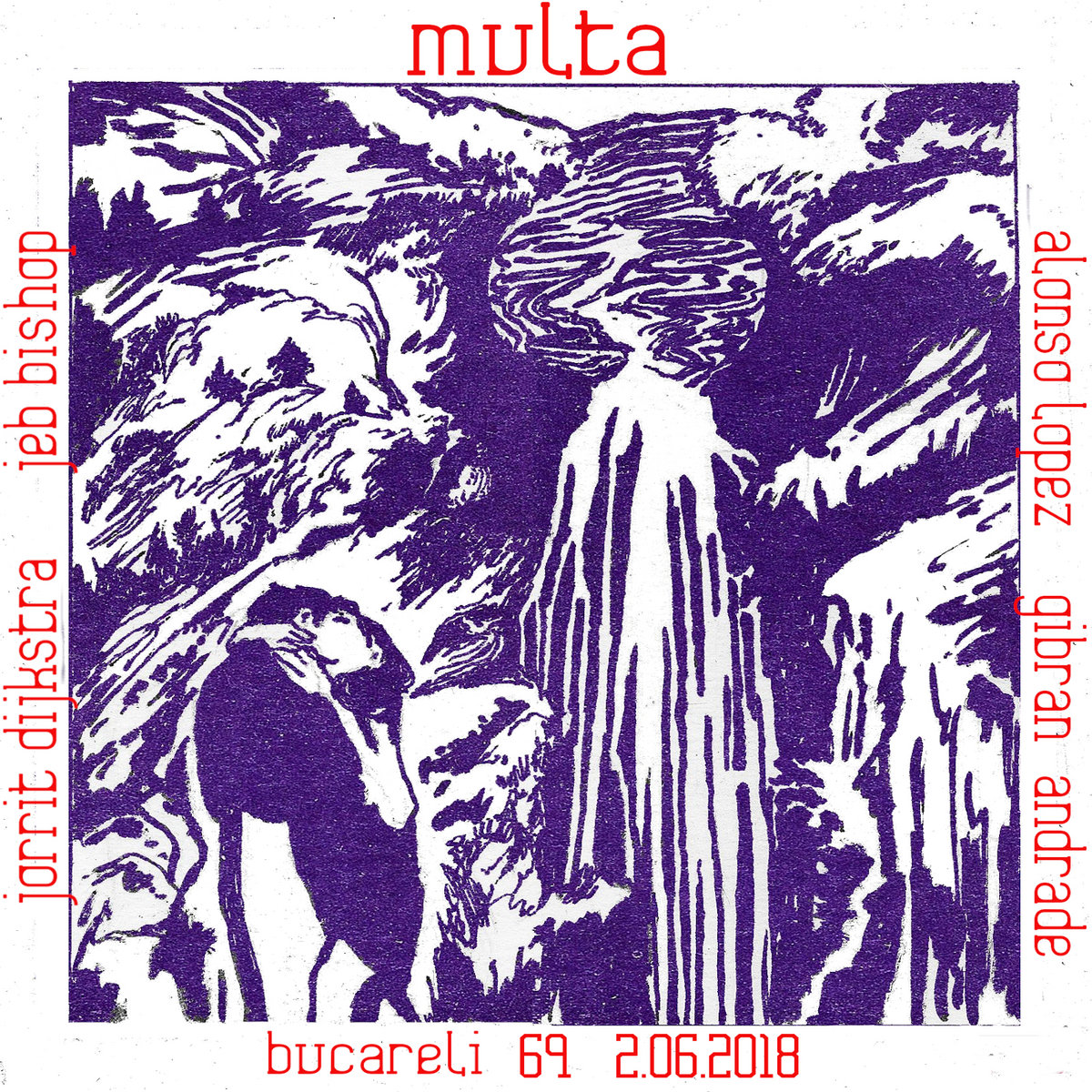 The debut declaration from transnational ensemble quartet Multa, composed of Americans Jorrit Dijkstra and Jeb Bishop and Mexicans Alonso López Valdés and Gibrán Andrade, is an intense, visceral, improvisation-heavy imagining of pieces by several jazz composers both within and external to the group. The opening suite of “Bird Call” and “Trickles”—the former by Bishop, the latter by the late Steve Lacy—is an immediate showcase of the immense talent and collective interplay at work here, and the way the band slips smoothly from carnivalesque big-band facsimiles and melodic head trades to incendiary chaos also persists through the entirety of the release. “In-house” composers Bishop (trombone) and Dijkstra (saxophone, lyricon, electronics) are the more seasoned performers here career- and age-wise, but more often than not the highlight ends up being the nimble tumbles of the rhythm section of Valdés (bass) and Andrade (drums), particularly the latter, whose expressive kit scrabbles, snare builds, and hard-swung accents make even the lively, whimsical “Papa’s Midnight Hop” a gleefully unstable, almost ersatz affair. What also helps not only Andrade’s hits but the rest of the musicians’ contributions really sing is the distinct approach used by recording engineer Emiliano Rodríguez: roomy and spacious yet still-hard hitting in a really physical way that make Valdés’s pizz plunks, the blaring unison horns, and the metallic, almost industrial clatter of Andrade’s frenzied cymbal work all land with the heaviest impact possible. And they couldn’t have picked a better conclusion than “Razorlip,” which is, in short, unforgettable.
Review: Human Malice – Derealisation (░░ HNW ░░ , Aug 16)
 It is extremely difficult to fully describe derealization to people who have never experienced it themselves. How do you convey the overwhelming revelations of falsity that seem to transcend the bounds of and boundaries between the “earthly” senses, the profound terror that is so terrifying precisely because it is fundamentally unconveyable? The answer to this, sort of, is to approach real-world representation in fleeting slices, deliberate angles: a dispassionate description of a particular mental image, a certain painting, a short sequence of sounds. The newest release from the semi-prolific London project Human Malice (6 digital albums were released in December 2020 alone, but only four this whole year so far—including Collective Trauma on the consistently excellent Gates of Hypnos) mostly fits into the auditory realm, of course, but it doesn’t delve into repetition-haunted, self-terminating loop structures or disorienting spatial collages; instead, it forms itself into a wall, of course, if you can even call it that, a makeshift monument to a final sickly semblance of reality hand-slopped from a puddle of Beckettian mud. An unintelligible soup of contact mic scuzz and distortion buffets overhead, slashing at what skin remains with jagged low fidelity like a frigid hailstorm, but with enough zoning out the seemingly atonal layers start to crumble to a solitary tone, buried yet there, the single, zero-dimensional strand of miserable existence you duped yourself into thinking was anything more. Derealisation doesn’t feel like half an hour… more like a brief minute, or a looming eternity. Which, unfortunately, tend to be the same thing.
Review: Surra – Ninho de Rato (self-released, Aug 14)
 Santos, Brazil trio Surra have been around for the better part of the last decade, but it’s been a while since they’ve released something as brutally concise as Ninho de Rato (Rat’s Nest), a new EP whose twelve tracks comprise less than ten minutes of runtime. Guitarist Leeo Mesquita’s verbose, ranting lyrics, often bolstered with unison-shouted support from bassist Guilherme Elias, are flowing at full force and fervor here, and one doesn’t need to be fluent in Portuguese to appreciate their impact (although a quick Google Translate scan, while granularly unreliable, is always a good idea); from the wake of the introductory snare roll in opener “No Lixo” (“in the trash”), a misanthropic anthem not just to Brazil but to humanity at large, the sprawling lines tumble over the frantic music with such velocity that they seem to blur into each other. Indeed, the subsequent “Motor da História” (“engine of history”) is one of the most infectious tracks from a vocal standpoint, as the boundaries of separation between successive succinct phrases start to dissolve with melded enjambments like “Replicando / O que eles querem” and “Sobre como / Os grandes Heróis.” The band’s “thrashpunk” self-description is accurate enough, but Ninho de Rato, somewhat unexpectedly, doesn’t have the hyperactive structural volatility of true thrashcore titans like Hellnation or Threatener—yet that doesn’t end up being a bad thing at all. Instead it’s traded for tight, focused songs that feel like efficient executions of single ideas; take “Brasileiro, Otário e Triste” for example, which maintains the same chromaticism, riff shapes, and transitional tension the first few seconds introduce throughout its whole length. Each half of the EP is also capped off by some well-done covers, first of Nuclear Assault’s “Hang the Pope” and then of Cruel Face’s “Convivência,” neither of which halt the unbridled, pell-mell inertia that remains reliably constant. Thanks Surra; I needed this today.
 Noise Not Music