
 Belgrade musician Igor Stangliczky fortifies his debut solo improvisation document Empty My Sin Recycle Bin, which presents two successive takes of a piece entitled “Purgatory,” with every possible preparation for musical impact and longevity: virtuosic assimilation of several tools (no-input mixer, effects pedals, synthesizers) into a unified, gestural dynamism; engrossing overall progressions packed with hyperactive micro-events; moments of abrasive intensity and delicate flourish alike. I have no idea how Stangliczky achieved such detailed sound design by recording the two takes with a portable tape recorder (which often lack stereo functionality in addition to having subpar fidelity), and I doubt I’ll ever figure it out for certain, but for now I’m happy with the choice because it gives the release a fullness of presence that many digitally captured solo electronics recordings neglect. The sharp edges and volatile blasts consistently threaten a descent into complete harsh noise chaos, and Stangliczky is as much wrangler as he is controller, seemingly spending more time pushing and nudging sonic emissions where he wants them to go rather than pulling them into an exact, forced schematic. This innate turbulence only makes the final product more exhilarating to listen to; I’m especially obsessed with moments that somehow combine natural escalation and sudden materialization, such as about seven minutes into movement one when a swelling tendril of distortion, itself born from a temporary disintegration, shatters into a multifaceted mass of crystalline deconstruction. Don’t let the trivial (and yet somehow fitting?) cover fool you; this is one of the best improvised-electronics releases I’ve heard this year.
Review: Beauson – Reveries (self-released, May 7)
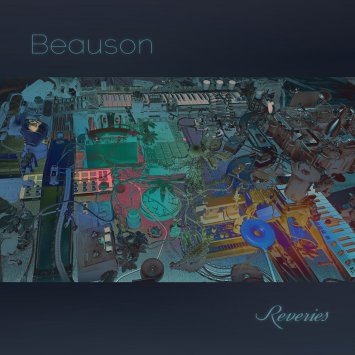 At first blush, the cover of Beauson’s debut offering of “raw, non-binairy [sic, but I kind of like the typo here], unsequenced improvisation” and “uncategorizable, envoking [sic], electronic soul” could be an oversaturated photograph of that board game Mouse Trap or a screenshot of a devoted Roller Coaster Tycoon player’s crowning achievement, but when one looks more closely specific objects begin to reveal themselves amidst the visual cacophony: a hefty supply of keyboards, a Focusrite audio interface, samplers and wires and speakers, and… a toy model of a medieval castle stuffed with circuit boards? You’ll soon find that the image is equally ambiguous in its relationship or representativeness to the music of Reveries as it is on its own; that Markus Roemer and Roland Sauer make use of all sorts of electronics to produce their “luscious adventure-telling” soundscapes is clear, yet the actual process by which that occurs is anything but. Most likely assisted by the elevated compositional and improvisational opportunities offered by modern computer software, eclectic threads of looping sound events form structural bases that are neither rhythmic nor fully formless, instead maintaining a consistent forward momentum that helps the duo fulfill their promise of providing listeners with “living music” despite the deeply synthetic character of many of their contributions. It’s that delightful paradox that makes Reveries (and, to a slightly lesser extent, Floreana, a follow-up released on the same day) so unforgettable: whimsical tracks like “Poort” and “Beauford” reach toward the organic with interwoven plastic tendrils; plucky MIDI sequences make “Sobiat” and “Au Contraire” into peculiarly ominous toy-chest frolics; and “Nachtpanda,” in addition to having an amazing title, is one of the most intricately detailed things I’ve heard in a while, evoking the lush, complex interconnectedness of a vibrant rainforest with humble artificiality.
Review: SIC! – The Snow (Akt-Produkt, May 7)
 The second in a series of place-embracing improvisational sets from the Siberian Improvisation Company!, The Snow follows up last year’s Berlin-recorded Spreequell / Die Waffe des Proletariats from the drifts of Kemerovo, the collective’s home base. It sees founder and central member Alexander Markvart joined by Egor Miroshnik (for Spreequell / Waffe SIC! consisted of Markvart and Max Evstropov) for an evolving suite of “street improvisations and field recordings” captured in various places around the city, the music finding footing in anything from completely unaccompanied passerby noise and other natural ambience to stretches of mysterious radio grabs, rattling guitar, squealing tensile drones (presumably bowed—with considerable force—on Miroshnik’s “cross with strings,” whatever the hell that is), opportunistic episodes using surroundings such as chain-link fences and gravel; the works. I see so many other beloved favorites throughout the throes of these motley yet carefully considered pieces: Ruda Vera in the languid near-inaction of “Bridge I”; R.O.T.’s Klein Eiland in the evocative, cavernous physicality of “Dome”; Three Forks and their unforgettable “Drunken Traffic” in the distant highway hum and plunking folkisms of “Bridge II.” It’s difficult to discuss The Snow without at least mentioning the form its physical release takes, which is a small jar of melted “dirty snow” from the coal-streaked expanses of the Kuznetsk Basin whose lid sports a QR-code that links to the Bandcamp page. It’s interesting and novel and certainly speaks to the music’s undeniable indebtedness to the location in which it was created, but that indebtedness is so thoroughly implanted within the music itself that you won’t need to shell out for shipping costs to fully experience it.
Review: Temple of the Moth – Temple of the Moth (robotarmpress, May 5)
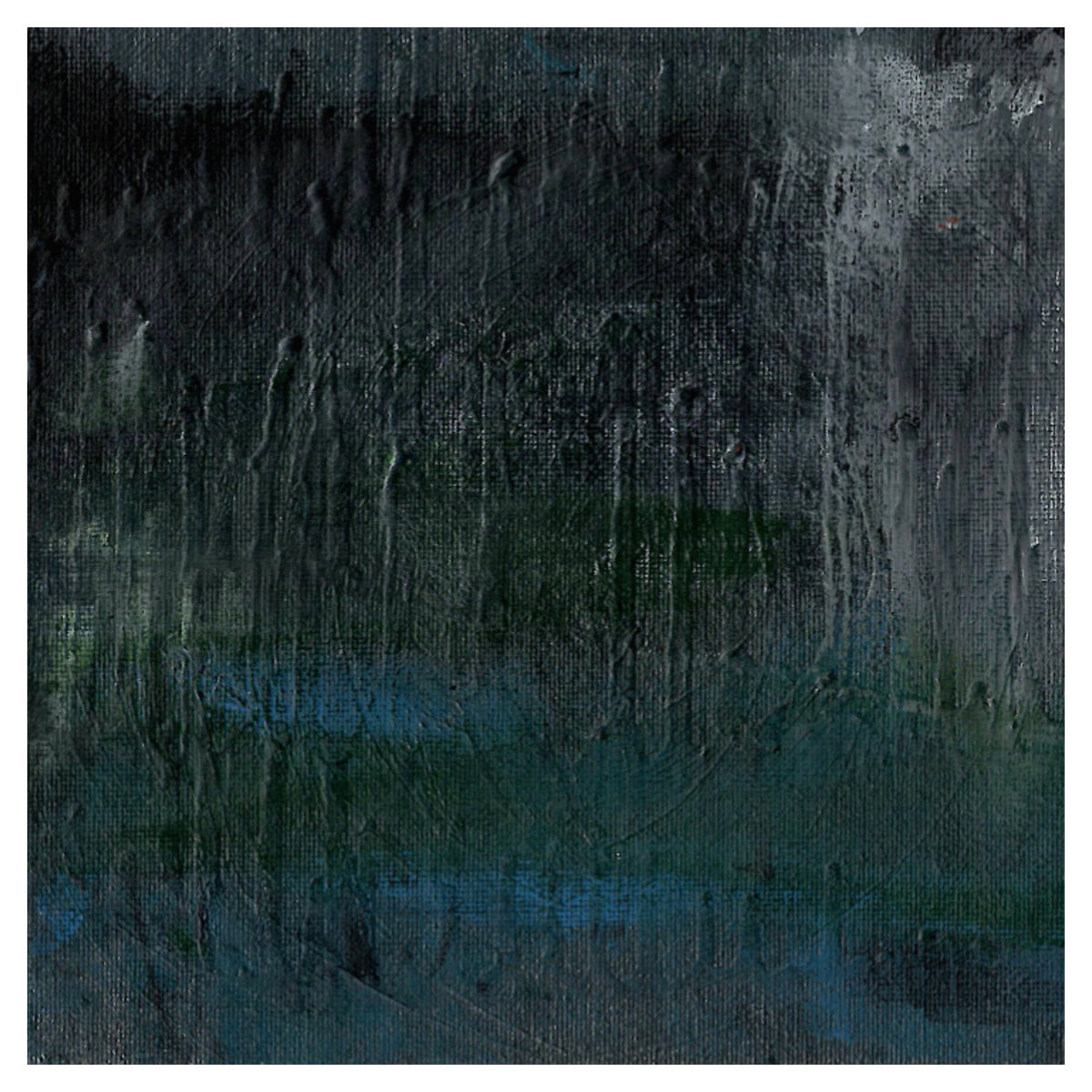 Yet another contribution to the already heaping 2021 quality harsh pile, Temple of the Moth’s debut self-titled release is a superb study in sputtering abstract psychedelia. On both of the two sub-ten-minute tracks one immediately notices a conspicuous lack of low end, a characteristic that seems a detriment—before the ensuing evolutions occur, that is. Crunchy, lo-fi, and oddly fragile, Temple of the Moth’s slipshod brand of freeform noise sculpting doesn’t exactly swoop and swirl like C.C.C.C.’s or stagnate like Mo*Te’s; instead it seems to detach from both extremes on the frequency spectrum, hovering in shuddering pseudo-stasis like a toxic sludge cloud. The panning, however, is the exact opposite, and the absence of much, if any, center channel presence further adds to the queasy liminality. As the titles imply, these haphazard masses of crackling distortion and wailing electronics progress differently over the course of each track—radially in “Ring Pattern” and more sporadically on “Spiral Pattern” (for all the bizarre synesthetic connections I make to music, I really don’t know what an auditory spiral would sound like). Temple of the Moth is presented as a nice, clean digital release ripe for the downloading, but in all honesty it sounds more like something heard on an unmarked cassette pulled from a weathered manila folder caked with dust from countless years at the bottom of your noise box (you guys have one of those too… right?).
Review: Wataru Okumura – Home Recordings (self-released, May 1)
 On Home Recordings, Wataru Okumura’s first release, the Japanese sound artist is entirely unconcerned with concealing the humble origins (improvisational sound experiments and studies) and instrumental palette (guitar, bass, and sampler) of his minimal music, and yet it nonetheless reaches heights of emotion and intimacy that even much more technically complex works fail to grasp. Whether Okumura is percussively plucking strings or tinkering with various snippets bound to trigger pads, his creations shudder and shake into existence with organic flexibility like some dazed, emaciated figure waking after years of deep sleep. Especially in the case of “Domestic Improvisation 1,” which makes use of more conventionally tonal components than the following two tracks, these brief sonic sketches somehow feel unshakably personal and handcrafted, probably because of their innate “inwardness”—that is to say, despite however many additional materials Okumura adds to his soundscapes, everything seems to sprout from a single center point, a singularity in the dense household silence out of which countless minuscule fragments of fragile anti-silence are coaxed. The final moments of “Domestic Music Concrete Study 2” are a perfect example of this ostensibly contradictory simultaneous structure: tangible scrapes and shuffles twirl in tenuous orbit around a hypnotic air-current drone that emanates from everywhere and nowhere at once… before it’s all extinguished in a sudden but surprisingly natural cessation.
Review: Chayer Lefebvre – TELLEMENT PAS ZEN (Rara Avis, May 1)
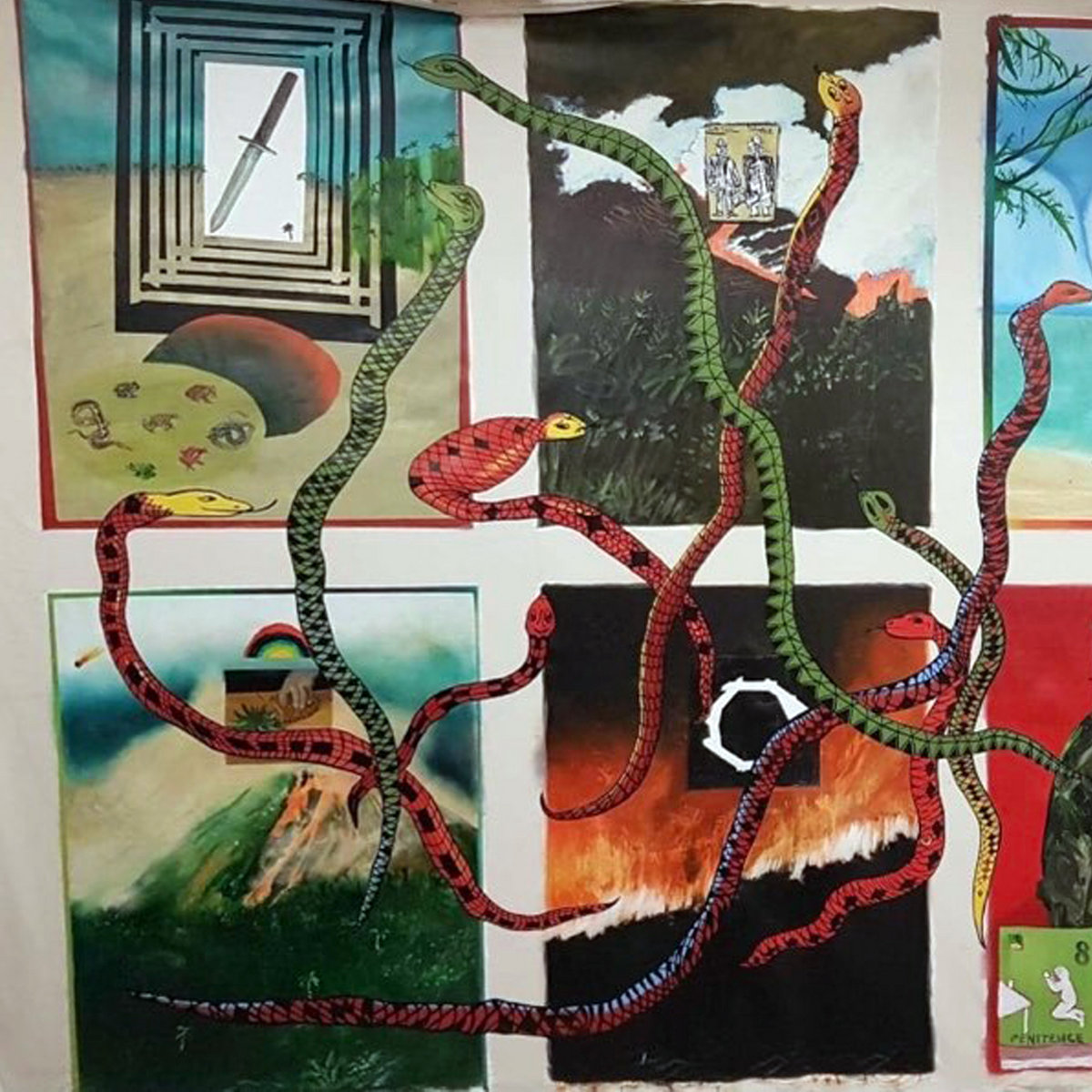 The sprawling TELLEMENT PAS ZEN is a lengthy offering of more formless electronic music scoured from dusty cable drawers, obsolete warehouse stock piled precariously on sagging shelves, and barely functioning thrift store junk. Though the well-established duo project of Yannick Chayer and Alain Lefebvre recorded their individual contributions remotely during the winter months of the pandemic, the music still has a very present, exploratory feel to it, as if the two musicians weren’t aware of each other as they obliviously experimented on opposite sides of the same room. There’s plenty of palpable seams from what at least sounds like careful post-production stitching and assemblage—the somehow pleasingly tacked-on ending of “Ami.e.So ix10, (P)(r)ickles”; the abrupt, artificial cuts and contortions of the higher frequencies in “n”; the mesmerizing stereo spread of “gHO5T5 in Y.C.” and “Clouds, Dice, Flowers”—but the fluid, layered physicality that forms the backbone of most of the album keeps the engaging and endearing element of manual, real-time improvisation palpable. In terms of duration, scope, eclecticism, weirdness, you name it, TELLEMENT PAS ZEN is a release that strives not to do it all, but at least a solid chunk—and it succeeds. You’ll find yourself often more compelled by the chaotic, psychedelic instrumental accompaniments than the bizarre accounts of paranormal interactions in the pair of “Strange Encounter” pieces, be gradually won over by the ridiculous and yet undeniably pleasing sitar antics throughout “PAAN STAIN RAG,” and get lost in the mesmerizing narrative soundscape that comprises “bIGFOOT sOUR bLUES,” none of which feel amiss on this masterwork of outlandish diversity.
Review: Serrater – A Hermetic Plot (Serrated Tapes, Apr 30)
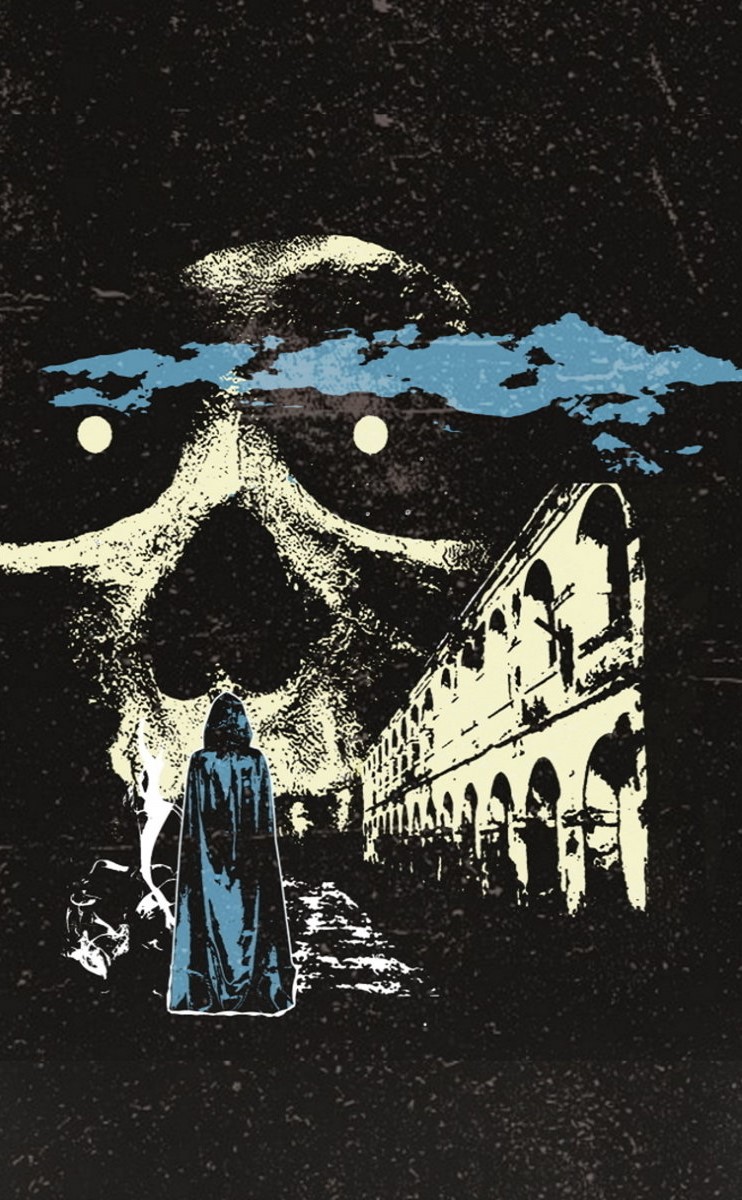 Some of you may be noticing a pattern among my 2021 reviews: I’ve been especially concerned with releases of the harsh variety. This may be because the offerings at this particular time happen to be exceptionally excellent, or because I haven’t been to a noise show in over a year and miss them so goddamn much, or both, or neither—maybe I’m just broken. Beaten, defeated, laid out across the ground, we sink into the soft loam of the cemetery and past the subterranean network of interconnected crypts, from which emanates the sounds captured on A Hermetic Plot. There must have been a delicate process for exhuming this auditory gunk and preparing it for (living) human ears because that mezzanine murk still permeates every second of the two ten-minute slabs. Each lumbers with the rotting, earthy immobility of death while being shaken and ripped through by currents of life and pain as the armies of decomposers start in on their projects. The dense bricolages of rumbling gloom-choked distortion, contact mic intrusions like massive salivating jaws swinging blood-speckled jowls to and fro, and sporadic shrieks of feedback are at once punishing and alluring; many of you are probably familiar with the “appreciative grimace” response, but this is different—more like a capitulating look of faint horror and disgust. This is truly bleak, filthy stuff, bolstered by both its bloated stasis and its volatile disintegrations. “PLAY LOUD FOR ALL TO BE REVEALED.”
Review: 𝘸𝘢𝘷𝘦𝘴𝘸𝘦𝘱𝘵.𝘸𝘢𝘷 – i’m not alive, i’m an echo (Absent Erratum, Apr 29)
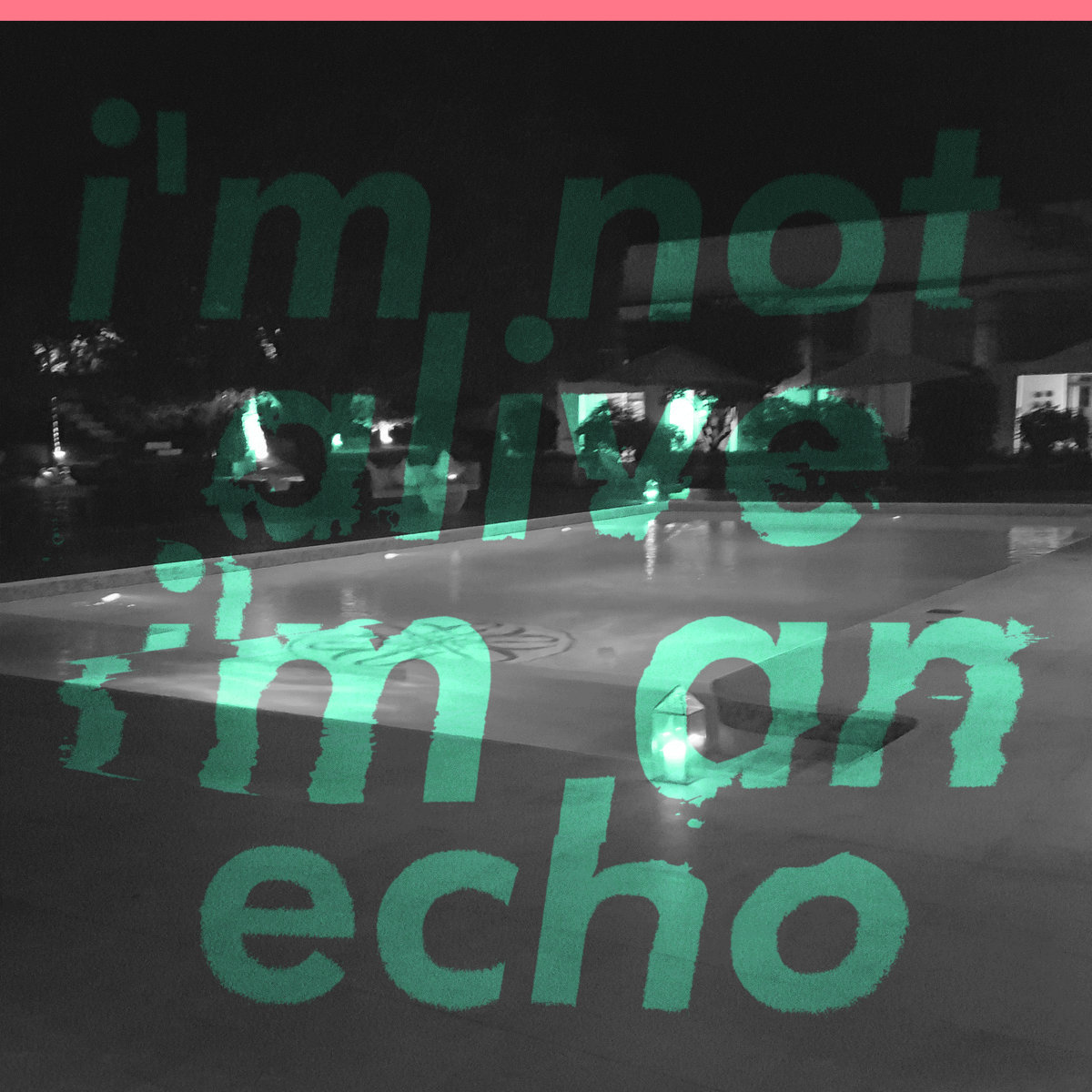 The most fascinating and consistently high-quality wall noise netlabel right now (correctly spelled A B S E N T E R R A T U M but poor WordPress can’t handle it) is back with i’m not alive, i’m an echo, which is and always will be the sole release by 𝘸𝘢𝘷𝘦𝘴𝘸𝘦𝘱𝘵.𝘸𝘢𝘷. It begins with the delicate sounds of a personal tape recorder being turned on and a muttered monologue delivered with the accompaniment of distant crickets and chattering children. I have no idea what the person is saying, nor even what language they’re speaking, but the snippet nonetheless sets the tone of the remainder of the track (poignantly titled “forever shore”) to one of somber reflection or lament—to my ignorant ears the words sound as though they could be an intimate confession, a long-held secret, a dying wish. In the wider context of the genre, these sampled introductions only really work as precursors to successful walls if the transition between the two is executed perfectly, and this one sure as hell is: upon the completion of the preamble the tape recorder shuts off again, the force of the switch being flipped allowing the noise to surge into existence with an immensely satisfying immediacy. The soft, cotton-wisp crackle is initially confined exclusively to the left channel, and for a few moments it’s as though half the light in a room has been unceremoniously clicked off. The central drama of “forever shore” is found in that missing half’s slow seep back into being, an organic but deliberate duality that forces separate processing of each current even after their volume levels equalize, forming a fluid, interactive soundscape that gradually unifies itself. It’s wonderful releases like this that demonstrate not only how beautiful static noise can be, but also how much powerful meaning it can convey.
Review: Clayhanger – Coal Press Dax Tongue (self-released, Apr 28)
 In my opinion, the best improvised music these days is the scruffy, squeaky tabletop tinkering that’s been steadily flowing in different forms out of places all over the United Kingdom: Ashcircle’s screeching “micro-concrète”, EGO DEPLETION’s artificial organics, en creux’s “faulty equipment” transmissions, to name just a few. Both the intrigue and the artistic success of these acts boil down to their do-it-yourself approach and a willingness to embrace the sonic possibilities of complete junk rather than avoiding those imperfections. Clayhanger, an alias of the artist behind the Expanding Foam project, throws their chipped plastic hat in the ring with Coal Press Dax Tongue, a release whose musical contents would probably be just as disturbing to androids or other electronic entities as the album artwork is to carbon-based ones. Despite the Bandcamp tags strongly implying these two nineish-minute tracks were created with a modular synth, Clayhanger frets and fumbles with patch changes in a magnetically slipshod manner that ends up sounding more like a clumsy, sausage-fingered circuit bending session. But the skilled artist still exercises a notable amount of control over their freeform gubbin-flinging without dulling the cut of the music’s rough edges: purposefully placed bits of buzz ‘n crackle converse with each other back and forth across your brain on “Rolling” while rising, shuddering tension coalesces into points of pressure like whirring power tools on “Pressing.” Coal Press Dax Tongue often settles into that paradox of ostensive superfluity or superficiality concealing impressive depth, and that is just one of the many reasons I love it dearly.
Review: Flower Caravan – Village by the River (Flower Ark, Apr 27)
 I’ve known for a while now that my personal dial for cozy music is completely miscalibrated (and only gets worse with time), but at least now I have hope that plenty of other squirrely needles behind busted glass may occasionally align with mine via the conduit that is this website. If you are the sort who often feels bathed or embraced in dense, enveloping distortion rather than buffeted and assaulted, then swivel yourself toward Flower Caravan’s Village by the River, a loud but ultimately languid display of dense analog abrasion. Along with the other projects whose music has been released by Flower Ark, which seems to document a more organic dimension of Melbourne’s noise scene (which I know absolutely nothing about, so it could be that this particular “dimension” actually comprises the entirety of the community), Flower Caravan pairs a classic pedal chain approach with an aesthetic that ranges from neutral to natural; Village by the River makes a firm first impression with its painted cover of what is presumably the titular location, framing its more incendiary contents with an organic softness. “Arcane Labor” lumbers with that fluid pseudo-stasis pioneered by progenitors of the wall genre like The Rita and Taskmaster, a sound that’s usually pretty hit-or-miss for me personally, but here the slightest currents of dynamic development provide just enough intrigue for the hulking slab to unfold with time-distorting ease before it sputters and chokes into silence. Malformed hints of melodic remnants lurk beneath the forceful squall of “BVLD” and “Bluefin” dips into the thick, sludgy marsh at the banks of the river, imbuing the second half of this digital release with as much perplexingly comforting warmth as the first. Neighbors too loud? AC unit rattling something awful? Cicadas already overstaying their welcome? Drown it all out and just feel the heat.
 Noise Not Music