
 Slabs of textural harsh noise come in many forms, and as listeners the quality we are most often drawn to first is what we perceive the sound’s origin to be; some artists’ noise seems to fall pitter-patter from the sky like rain, others’ gives the impression that it’s bubbling up from the ground beneath us, and sometimes there’s not really an illusion of direction at all, cases where the noise just simply, well, exists. None of the previous categories describe JSH’s track “Pieces” though, which howls into squalling existence from some indiscernable source point at the back of our heads, an undammed jet of heavy static that occasionally lashes against its mono-imprisonment and flits into stereo. That quality is also what makes the nearly half-hour piece remain engaging throughout its duration; this is no wall, so the artist is constantly constricting and contorting the mass of noise, but that vicious forward velocity is never extricated from the music, even in its most reserved moments. Towards the end of “Pieces” is where its strength truly becomes apparent, as squeals of screeching feedback and mangled vocal additions sew discord in the already collapsing cacophony. If we continue discussing motion, Körperlich’s “Afflicted” acts as a slight counterpoint to the chaotic sonic barreling on the preceding side, the paths of its more classic palette distortion pedal and radio adopting more of a lateral trajectory across the stereo field. The radio grabs are overused and even detrimental throughout the first half of the track, but it regains its footing with a well-executed progression from a stretch of fragmented clatter into the muck that acts as a conclusion.
Review: Daniel J. Gregory – Heard Under Orphan Eyelid (self-released, Jan 29)
 Daniel J. Gregory’s modest description of himself as “object botherer” couldn’t be more accurate. Whether he’s assaulting audiences with the amplified sounds of clattering detritus as half of the art-noisecore duo Gregory/McGrory (check out Gateway to Conclusion) or recording an album with the classic singer/songwriter palette of “acoustic guitar, plastic cups, biscuit tins, singing bowl, dry pasta, [and] throat” (Kebab Shop Will Sell Ice Cream), Gregory’s “music” is as skittery and unpredictable as the piles of junk and trash we kick aside every day. Such a direct approach to soundmaking is certainly within the realm of the scruffy, DIY experimentalism I love so dearly, but Gregory always seems to have a point or purpose in mind for his various releases, implicit conceptual facets that reach far beyond the music’s humble essence. Heard Under Orphan Eyelid consists entirely of recordings taken with a mobile phone (of much higher fidelity than any my own phone has ever yielded) and deals with a sense of place in flux. Each piece presents a sonic focus—radio improvisations, malfunctioning electronica, claustrophobic capture of a plastic bag’s innards—that clashes with the environment it occupies. We cling to what we perceive as the primary element of each track but are consistently betrayed as other forces make us aware of Gregory’s surroundings, which despite being dwarfed by their occupants often come across with far greater lucidity: hands make contact with the physical form of the phone, a turn signal clicks on, a sound event ends and nothing is left to do but scramble to end the recording. Heard Under Orphan Eyelid is a rough-edged affair of observation, action, and transmission that reaches for—and, inexplicably, grasps—the sublime.
Review: McClane – SALE CONTRE TOUS (self-released, Jan 26)
 One might not think that a stylistic amalgam of black/extreme metal and gabber could be in any way fruitful. There are a lot of ways disparate combinations can fall flat, but somehow McClane’s newest self-released album doesn’t resort to gimmicks or rely on novelty, and truly assimilates these two genres into something entirely singular. There’s not much time to think about any of this once SALE CONTRE TOUS actually starts, though, because after a short introduction “LESS IS MORT” arrives with crushing force. The riffs are often played by plasticky synths, stretched and layered in uncanny facsimiles of tremolo guitar picking, while a metronomic beat pounds away—half four-on-the-floor, half blast beat. On “CRACKHEADBANG,” an interlude of mangled samples and half-formed melodies gives way to a breakdown that actually does the track’s title justice. The rest of the album sees McClane exploring catchy, infectious arrangements with “URO DANCE” or a balance between uplifting trance/rave electronica and destructive metal assaults that doesn’t sacrifice the impact of either on “ZBEUL THEM ALL.” After a strange industrial-strength shuffling hip-hop interlude SALE CONTRE TOUS finds a memorable conclusion in its title track, an ambitious and grandiose anthem complete with complex instrumental arrangements and even a substantial amount of cleverly used claps. This is one of the most singular things I’ve heard in a long time that still incorporates so much of what I know and love already.
Review: TARAB – Material Studies #1 (Hemisphäreの空虚, Jan 24)
 I first encountered sound artist Eamon Sprod’s solo project TARAB when I heard 2018’s HOUSEKEEPING, a CD that evolved from a multimedia installation in a unique manner: “rather than a documentation of an installation, this iteration has been arranged from the debris collected during the process of making one.” Sprod is an artist who often seems to adopt a scientific approach in creating his music, playing the role of a curious and active observer in the midst of his surroundings, though the emotional impact of his work never seems to suffer (despite the cold impartiality one may associate with the practice of science). In the case of Material Studies #1, the identities of Sprod’s surroundings are not made nearly as clear; we are told that some of the elements are sourced from old cassettes from the project’s early days, but other than that the “materials” he utilizes are quite wide-ranging—metallic machinery that resembles recordings I myself once captured of children’s playground equipment, small vibrating objects on agitated surfaces, Velcro-like scrapes and scratches. The exhumed tape remnants add a crucial dimension to the music, unseating the clearly and closely recorded tactile events with a cloying layer of ghostly hiss and hum. There’s a particularly strong stretch near the beginning of side B where heavily processed micro-sounds flit and crackle around droning, soupy clatter, the former almost resembling the hyperactive granular textures of pure data synthesis. Material Studies #1 is essential listening for all those who love to turn their ears to immersive, textural sonic landscapes that refuse to abandon their gritty, earthly origins.
Review: Dreams – Machine Age Paradise (Bank, Jan 24)
 Machine Age Paradise might be the most artificial-sounding record I have ever heard. Each track is constructed from brazenly digital elements stripped down to their barest and unsettling roots: when beats do appear, they’re lethargic, detached, barely interacting with the rest of the track as their industrial clanks and pounds echo from a distance; the watery ambience that soaks tracks like “Light Removal Vacuum” and “Born With Scales” is sickly and uneasy; even the occasional human voice samples sound like alien transmissions. This all sounds very negative, but it’s also what makes the second full-length LP from LA producer Jesse Pimenta (a.k.a. Dreams) so remarkably engaging. Machine Age Paradise is electronica deconstructed, but not in the sense of frenetic “deconstructed club” or any other existing dance subgenre I could think of; it’s more like Pimenta has taken conventional stylistic influences like techno, hardcore, and progressive electronic and gutted them, removed their innards, viciously contorted them to a form in which he’s actually interested. The result is an uncanny palette of sounds that feel empty, humid, somber, menacing, frail, and dark (really—at any given time, any to all of those descriptors are applicable). After a subdued and yet subtly anxious finish with the title track, one is left confused, drained, maybe even scared. The only cure is to listen again.
Pictured here is the cassette cover. The LP is available from Bank’s Bandcamp and comes in a plain sleeve.
Review: Dylan Burchett – bread (self-released, Jan 18)
 Solo tabletop improvisation usually ends up being quite intimate even with the most maximalist of sonic results; there’s something distinct about the direct relationship between the performer and the actions they take that the listener can always pick up on, a lurking yet palpable personality. Intimacy arises differently from both of the two main recording approaches a solo improviser can take, a dichotomy well-represented by two Keith Rowe releases, The Room (Erstwhile, 2007) and Live at Fairchild Chapel (Idiopathic, 2015); the former evokes claustrophobic and microscopic sound-worlds through line-in capture, while the latter makes the performance space a perceptible presence in the music, shrouding Rowe’s prepared guitar clatter and ghostly radio transmissions in shadow. I provide these examples because Dylan Burchett’s bread, a single 37-minute improvisation, is somewhere in between the two, making use of both direct and overhead recording for a delicate domestic odyssey. A range of sound sources form the basis for the track (“motors, fans, contact mics, objects, hard drives, speakers, computer”); we hear sine waves and digital crackle materialize in the liminal space between action and result as Burchett’s array of devices are arranged and activated by hand. There’s a lot of perceivable movement near the beginning, but starting at around the ten-minute mark everything begins to coalesce into a sublime, crystalline drone, full of light mechanical whir and rattle. Burchett’s presence returns around halfway through, reaching around in preparation for new sonic activity as soft samples continue independently. There’s a tremendous amount of restraint at work here, and despite its undeniable abstractness bread’s subtlety make it an accessible, cozy mid-afternoon listen for anyone with an adventurous ear.
Review: Jamison Williams – Silly Symphonies, Vol. 1 (Lurker Bias, Jan 21)
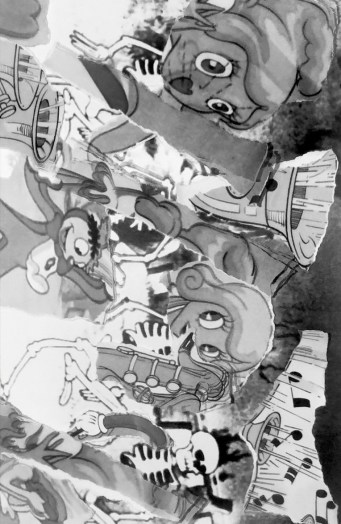 Silly Symphonies, Vol. 1 is one of those albums that can be succinctly and accurately summed up in just a few words—”solo game calls”—but that also far surpass such modest, concrete origins. The two sides of this short C12 are filled with the sparsely arranged sounds of synthetic bird chirps, smashed squeaky toys, and general piercing misuse, an freakish orchestra of real-time processed utterance. There’s no ambiguity in regards to where these sonorities originate, but that doesn’t make the experience of Silly Symphonies any less uncanny; as humans we are constantly projecting our qualities onto not just each other, but anything we happen to encounter, even things that couldn’t be more different from us. We hear the whines and cries of petulant infants in Williams’ duck calls, shrieks of anguish in whatever the hell is making the sound at the end of “Part One” (this track was featured on my Past Vocalisms mix, and, despite being produced using an external device, reminds me of the harrowing abstractions of Ami Yoshida), yet it’s all smothered by an impenetrable layer of artificiality that throws our perception well and truly out of whack. Williams’ approach works well for such a short release, but honestly I could listen to this bizarre shit all day, so it’s great to see that “Vol. 1” subheading.
Review: T. Liefhold – The Singing Work (Falt, Jan 19)
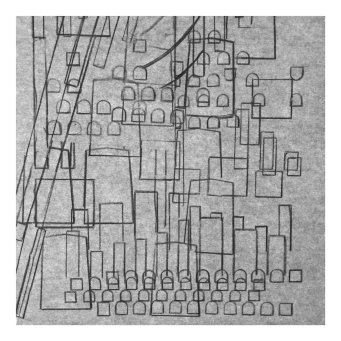 There are no actual vocals on The Singing Work; instead, sound artist T. Liefhold encourages inhuman objects to sing, coaxing tonal reverberations and complementary textures from a variety of sources, and the resulting work is just as harmonious as what actual human voices could produce. In large part, Liefhold’s newest release presents music of rattle and clatter; taut strings produce resonant oscillations, footsteps rustle leaves and other natural detritus, occasional guitar notes falter and feed back into a restless din. But the unique presence that The Singing Work asserts is not one of shaky, uncertain abstraction, nor do its uncanny soundscapes attempt to evoke environments beyond our earthly perceptions. Instead, the space it occupies seems to be the machinations beneath our everyday surroundings. Liefhold strikes, plucks, and vibrates the mysterious contraptions that maintain the organic processes we take for granted, and with the field recordings he also incorporates we see a sublime coexistence of cause and effect, imaginary apparatuses interacting with their real-world results, a detailed yet peaceful cross-section of a world that’s at once industrial and natural.
Mix: Past Vocalisms
This mix is based on a strange little digital-only album released last October by Spricht Editions, a Denmark imprint focused on “vocal oriented sound.” Here are where our unspoken words, random gargles, little tongue clicks we do when we’re irritated or bored, unintelligible howls of frustration, and hums of contentment all gather and congeal. Take care that your shoes don’t get stuck in the muck—but if they do, stay a while.
00:00. c.haxholm – “1” from Past Vocalisms (Spricht Editions, 2019)
06:38. Graham Lambkin & Áine O’Dwyer – “One and One Is Two” from Green Ways (Erstwhile, 2018)
10:47. Lily Greenham – “Improvisation” from Lingual Music (Paradigm Discs, 2007)
12:04. Ami Yoshida – 5th untitled track from Tiger Thrush (Improvised Music from Japan, 2003)
14:26. Gil J. Wolman – “Mégapneumies” from L’Anticoncept (Alga Marghen, 1999)
16:07. Yeast Culture – “Folk Songs of the Neskowin Indians” from Dueterium: Yeast Culture Improvacoustic Series Vol. 1 (Regional Bears, 2019)
20:54. Ute Wassermann, Duncan Harrison, Dylan Nyoukis & Claus Haxholm – excerpt from side A of Dissecting an Utterance (Spricht Editions, 2019)
22:49. Katalin Ladik – “Shaman Song / Sámánének” from Phonopoetics (Alga Marghen, 2019)
24:14. Michael Barthel – excerpt from side C of Heme (Geräuschmanufaktur, 2017)
26:26. Jamison Williams – “Part One” from Silly Symphonies, Vol. 1 (Lurker Bias, 2020)
29:19. Matthew Revert – “Dear Heath” from Letters to Friends of the Late Darcy O’Meara (Round Bale Recordings, 2018)
32:24. Rodrigo Ambriz – “Despojado al fin por su propio soplo” from Una silueta se precipita en arcadas (Szara Reneta, 2018)
Review: Women of the Pore – Folk Music (Orb Tapes, Jan 19)
 Folk Music was pretty much a must-listen on genre intrigue alone; the New Brunswick project Women of the Pore refers to itself (themselves?) as “bunker jazz,” which in my opinion is about as captivating as invented names can get. Plus, the title makes me think of a favorite oddity of mine, Grim’s 1986 album of the same name, for which “folk music” is an equally inaccurate label. The anthology of 2019 material really does live up to that bizarre label, but not in a way you might expect. Putting the tape on for the first time as I was lying down in my pitch-dark room last night turned about to be an optimal setting for my first encounter with this mysterious music. What “bunker jazz” actually consists of is immediately made apparent: thick synth loops and drum machine patches form heavyweight grooves through which various samples, mostly of horns and other jazz instruments, are woven. The electronics are usually as primitive and minimal as even the most detached examples of minimal wave music, but their impact varies; on “Gems,” the synth arpeggios and percussion hit with abrasive, EBM-like force, while on “Eyes Which Cry Love” the progressive electronic swells channel warm, atmospheric synthesizer music both old and new, conjuring equal reminders of both Tangerine Dream and the Stranger Things theme song. This is what bunker jazz is: fragments of communal, collectively generated music trapped within sterile metal walls of industrial-tinged beat music. Over the course of Folk Music the various possibilities of this unique approach are explored in depth, from the extended abstract hypnosis of “The Wailing” or the surreal stutters of “Sinking” to whatever the hell is going on in “Gravel Hill.” I’ve done my best to describe what’s happening on this thing, but there’s no other way to actually understand the strange, dark energy that’s evoked by this music than to experience it firsthand.

