
 This digital-only release makes available a live recording of this apparently short-lived quintet captured nearly a full decade earlier (July 27, 2011). The Rock Flint Contemporary Ensemble consisted of Todd Brunel (woodwinds), Junko Fujiwara (cello), Forbes Graham (trumpets, laptop), Luther Gray (drum set), and Andrea Pensado (voice, electronics), an eclectic assemblage of hooligans who raise a racket that is as much curious basement-floor noise jam as it is raucous, technical free jazz. Pensado’s workstation is the main source of oddness within the instrumental maelstrom, often resembling the grinding whir of electric power tools or the squirrely glitches of a seizing VCR, although it’s not always clear where her contributions end and Graham’s software-summoned intrusions begin. Whether the moment is calm or cacophonous, however, Fujiwara and Brunel maintain a magnetic interplay, the former either bowing an imperfect scale or plucking a furious pizzicato along to the latter’s snake-charmer-on-stims clarinet serenades and agile sax skronk. With only the aforementioned elements, Forgotten Potions may have ended up a more reserved affair than this, but Gray’s presence on the kit gives each and every second a breathless urgency, creating a pace like a sprint whose only finish line is slowing down and then sprinting again; even during the hissing mouthpiece interlude on “Sabinene” you’re just waiting for all of the frenzied fanfare to kick back in. And oh, does it ever.
Author: Jack Davidson
I like to listen to, read and write about, and play music.
Review: Li Weisi – 车间四重奏:警报器操作指南 (self-released, Jan 25)
 Although Beijing sound artist Li Weisi works with a variety of approaches for his releases and live performances, all of his music is united by a playful yet somewhat scientific curiosity, like it’s figuring itself out at the same time you are. Yan Jun describes him as “one of the few Chinese electroacoustic music composers who strictly keeps ‘experimental’ as a game without personal aesthetics influences. [H]e is one of the slow and quiet people who reflect reality through music, deeply”; this adherence to the barest, purest of sounds and textures is perhaps best illustrated by Li’s newest release: 车间四重奏:警报器操作指南 (Workshop Quartet: Guide of Hand Operated Siren). The intricate, closely mic’d miniature motorized object soundscapes are immediately reminiscent of the work of Rie Nakajima, but Li tends to evoke more of a cluttered tabletop workspace rather than Nakajima’s spacious floor-spanning improvisations. At any given moment it could either be the result of one complex Rube Goldberg– or Tinguely-esque contraption, or simply the collective chorus of countless tiny centrifuges and cranks and clickers, coaxed along with subtle yet purposeful gestures like the gentle urges of a patient sheep herder. On “死人” (“Siren”), there’s even more ambiguity with the presence of lawnmower-like buzzes—is Li grooming a diminutive yard with an equally diminutive weedwhacker, or did he just leave his windows open on one of those afternoons when everyone simultaneously decides to work outdoors? But before I have time to ponder such superfluous implications, I’m already chasing after the next brain-massaging timbre like a waddling toddler trying to catch a firefly.
Review: Max Hamel – Sounds of Summer: Field Recordings of Solar Electronics (Refulgent Sepulchre, Jan 23)
 There are a few easily replicable sound events with which I am hopelessly obsessed. One of the easiest to conjure is the pressurized, astringent hiss of liquid trapped between a drip coffee pot and its heating element, a simultaneously violent and meditative emission that pairs well with the mundanity of an aimless afternoon. Side A of Max Hamel’s Sounds of Summer harnesses textures of a similar character; generated with room recordings of custom-made automated solar-powered circuit machines that produce volatile, ear-wracking noise based on the subtle fluctuations of sunlight they receive, the tape embraces the blurring of preparation and passivity that has resulted in so many compelling releases in recent years. Like Yan Jun’s feedback systems or Henry Collins’s “prepared rain” percussion assemblages, Hamel’s complex setup exists inexorably within the space in which it is placed, in a way simply demonstrating another method of environmental appreciation—one with an additional and conspicuous degree of abstraction compared to straightforward microphone capture. But in another sense, Hamel is simply an observer, documenting the soundscape of the day with an ear for both “pure” as well as adapted experience, and from this perspective even the most piercing tones produced by the circuitry reside in the same dimension as distant conversations, nearby traffic, and the breeze drifting in through the open window. Whether sharp, caustic fizz-garbles or crisp, sterile sine tones and clinking metal are the central elements, these are undeniably the sounds of summer.
Review: Native Instrument – live ateliers claus 04 (les albums claus, Jan 22)
 I’d never heard of Native Instrument (the collaborative project of field recordist/composer Felicity Mangan and poet/improvisor Stine Janvin) before coming across this release, and so I unconsciously expected something along the lines of Musica Sveciae’s Fornnordiska klanger, which sought to replicate prehistorical musical traditions. This 4th installment in Brussels imprint les albums claus’s live ateliers claus series, however, reveals that the duo’s name refers to a nativity beyond that which can be possessed or identified by humans, a primality that hints toward evoking the volatile majesty of nature. Mangan has previously proved her mettle in the area of phonographic assemblage that transforms familiar sounds—birdsong, buzzing insects, rustling leaves—into an abstract, multifarious mass of textures (think Abby Lee Tee’s recent work, an earthier @c, or that sweaty pestilence that begins Murmuüre’s “Disincarnate”) and this live recording is no different. Even though the performance took place in the same year as Native Instrument’s first and only studio album Camo, the interplay between Mangan’s prickly swarms of croak, chirp, and click and Janvin’s mixtures of throbbing electronics and processed vocalizations feels much more developed here; it’s livelier, more agile and organically-paced, and therefore much more enjoyable. This music lurks at the ambiguous crossroads of observance, improvisation, and techno (if you happen to know the GPS coordinates, please let me know; I hear it’s lovely this time of year).
Review: Dan Gilmore – Pulped Memoir (Hologram, Jan 21)
 Whether he’s muttering half-nonsensical fragments of mundane conversation or crouched in a corner with an old tape recorder, Careful Catalog operator Dan Gilmore sticks to the shadows when making his “music.” Unlike Undercovers, the other album of his that I’ve heard, which consisted entirely of his voice—trivial, mumbling speech about eminently forgettable topics—Pulped Memoir widens the lens to a much wider array of sound materials, most of which are pleasantly drenched in blankets of fuzz and dust. Piecemeal opener “Dinner Theater” fluidly progresses through a variety of minuscule sonic events, the imperfect cone of sound capture directed toward radio broadcasts, screeching metal clatter, and chimes, the many spots and spaces in between filled in with the complementary frailty of body shifts, whistling, and playback manipulation. Pulped Memoir is a reasonably short release that is nonetheless unconfined by any unifying approach; whether Gilmore is stitching layers of tentative Connors-esque electric guitar phrasings and low-end squawk (“Transition Lenses”), muscularly pulling together erratic tape ephemera like that cruise ship scene in Spider-Man: Homecoming (“Autumn in New York”), or sticking to a single, unidentifiable source, as is the case with the title track, which devotes its entire runtime to a stretch of meditative, languid cacophony somewhere between the New Blockaders and an instrumental lullaby that progressively grows sharper and more crystalline. I hope I’m doing this CD justice; we’re only a month in to 2021 and I’m already prepared to declare it release of the year.
Review: Peea – Ins0lemnia (self-released, Jan 20)
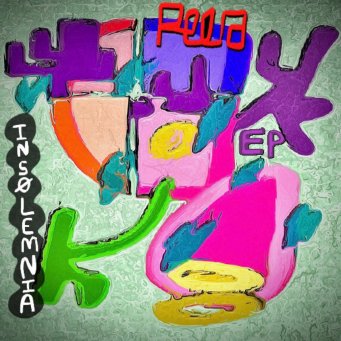 If there were some kind of mutant parasite-worm that lived in a thrift store, gorging itself on shelves full of cheap toys (musical and otherwise), moldy old records, and broken appliances, this is the steaming multicolored goo it would shit out. That’s praise, in case it wasn’t clear. Peea themselves don’t shy away from recognizing the slipshod nature of their music in frank terms either; it’s described on Bandcamp as “cathartic naive/incorrect lo-wave no-bit ni-fi posed-punk shit-art.” Amid these haphazard smorgasbords of confused outsider stumble, one thinks of messy daycare walls carelessly covered in pictures drawn with crayons clutched vertically in fists, cartoon channels chopped up into frenetic nonsense by a poor TV signal, clumsy collages of bits of sound no one wants: the samples that come built into little plastic keyboards, warbly introductory fanfare to some dated language audio course, random sermon recordings, the works. According to the artist, Ins0lemnia is their first release in three and a half years (whether that refers to the project itself or the individual/group behind it, I’m not sure), and even more cruelly it’s over in less than twenty minutes, leaving the listener to painfully sober up much too soon and find themselves knee-deep in a Walmart dumpster with a mouth full of trash—and at that point there’s not much else to do other than hit play again.
Review: Vindfængsel – You Can’t Regret What You Don’t Remember (Nazlo, Jan 17)
 Even if you haven’t been following this increasingly unwieldy wall of text for long, you’ve probably figured out—whether from the Kidz mix yesterday, or Temporary Places a couple months ago, or Outcast on the Ivories back in June, or any random reviews in between—that the fastest way to my heart is with a tape recorder, a piano, and the auditory majesty of nature itself. You Can’t Regret What You Don’t Remember (both a false statement and terrible advice, by the way) opens with such a cardiac shortcut in the form of “Swiet Niezdiesznij,” the longest and most conventionally beautiful of the five tracks that comprise this debut release by Russian project Vindfængsel. It helps that the drifting, sighing ambient suite reminds me of some specific favorites: the repetitive piano serenade, somber and elegiac, that acts as both melodic ornamentation and structural anchor evokes the Idea Fire Company’s “The Island of Taste”; the layered major-key progressions near the end when the small plastic-fan-like noises hit the same tender spot as both Mémoire vide and Michael Brook’s sublime score for The Perks of Being a Wallflower. After this sweet-but-not-saccharine introduction, things become darker, more mezzanine and psychedelic, while retaining a strong harmonic backbone; “Ghostly White Spiral” is a ghostly, almost ritualistic murk of airy white noise and light metal percussion, while “Night’s Blade Solar Wound” concludes things on a seething, ominous note with smothering industrial gloom and stereo field paranoia. The immersive soundscapes of You Can’t Regret What You Don’t Remember certainly provides the sensation of entering some place deep and forgotten. It does not, however, acknowledge the possibility of any sort of exiting.
Mix: Kidz

00:00. IT IT – “Pig Death” [ending] from IT IT (self-released, 2016)
00:39. Matinee Orchestra – “It’s a Fantasy World / Everyone Has the Right to Protest Even If No One Listens” [excerpt] from Matinee Orchestra (Arable, 2006)
05:21. Ludwig Berger – “After Nature” from Cargo (Canti Magnetici, 2019)
09:54. Áine O’Dwyer – “The Little Lord of Misrule” from Music for Church Cleaners (Fort Evil Fruit, 2012)
17:45. John Collins McCormick – “Oh Boy” from No Most Fatigue (self-released, 2018)
18:25. Horaflora – “Lunacy in the Garden of Forking Paths” from Eaves Drop (enmossed, 2020)
20:46. Raven Chacon – “MVHS” from An Anthology of Chants Operations (Ouidah, 2020)
22:39. Manja Ristić – “Spring” from The Nightfall (Naviar, 2018)
28:42. Ezio Piermattei – second untitled track from Gran trotto (Chocolate Monk, 2018)
32:19. Nina Ryser – “Whoever Listens to This Tape…” [ending] from I Hope All of Your Dreams Come True (Ramp Local, 2016)
32:33. Climax Golden Twins – first untitled track from Locations (Fire Breathing Turtle, 1998)
35:26. Mémoire vide – “B” from Mémoire vide (Affenstunde, 2020)
Review: Naturaliste – Temporary Presence (Almost Halloween Time / Gertrude Tapes / Public Eyesore / Unread, Jan 15)
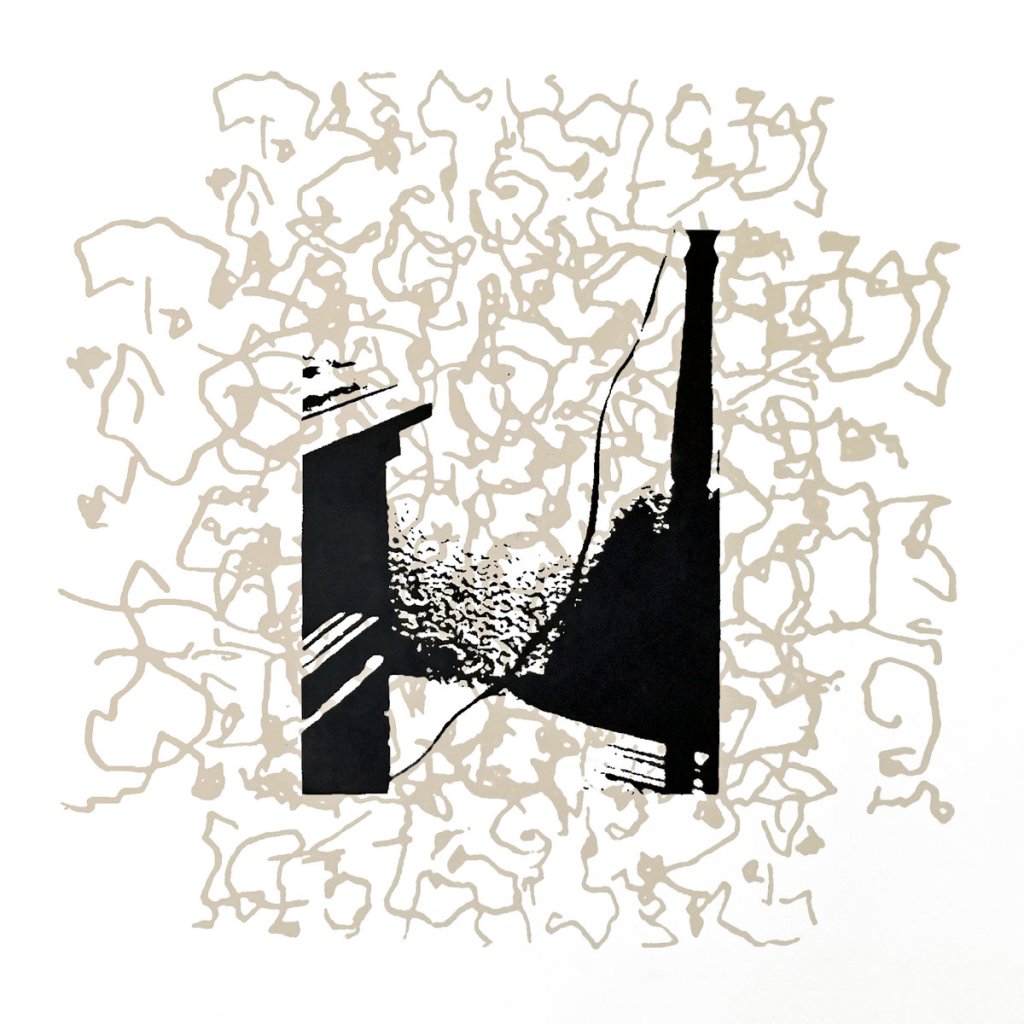 Sitting conceptually somewhere between Partial’s LL and R.O.T.’s Klein Eiland (and musically between early AMM and Melkings), Temporary Presence is a release that is claustrophobic only in regard to its origins. The recordings were captured over the course of a night in a rented-out music store, an approach that certainly implies some essential limitations, but the four inimitable members of the long-running but sporadically active Naturaliste project transform their finite supply of materials into shifting masses of abstract sound that extend well beyond any possible permutation of four-walls-and-a-roof. Plenty of the participating personnel have made names for themselves in the field of convention-defying instrumentation, especially inventor and miniature installation engineer Bryan Day, but the stuffed shelves and corners of the unidentified shop offer many a traditional flavor for the bubbling stew: considered strikes on both the inside and outside of a classical piano, jagged rakes across the strings of an off-tune zither (at some points I was fully convinced the next thing I would hear would be “ME is a meadow meal”), extended-technique violin, and more. As if the diversity of the purely “musical” elements wasn’t enough, Temporary Presence also evokes both defined and undefined space with additional auxiliary intrusions intentional and otherwise; a cavernous, spectral recitation here, the horn of passing car there; uncomfortably close clatter one moment, distant and detached din the next. Some say their spirits still haunt the building to this day— “Oh don’t worry about all the shit falling off the shelves for no apparent reason, we have a bit of a ghost infestation. No, no, they’re not poltergeists, not pranksters; they genuinely believe they’re making music.”
“Review”: Absolute Table Field – Clowncar Bleedthrough (Neutral Archive, Jan 19)
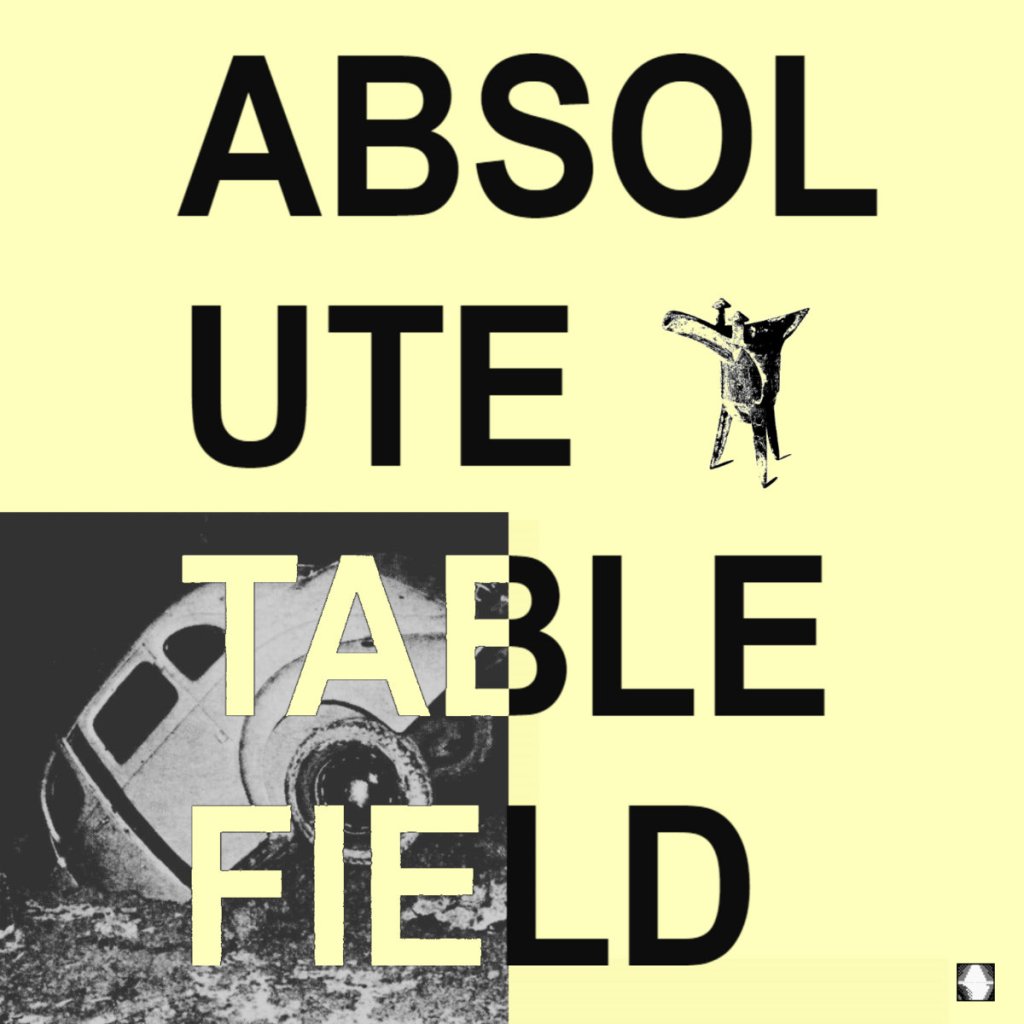 In place of a review for Clowncar Bleedthrough, the new album by Absolute Table Field (loud, restless electronics by artists credited only as Bruno, Alex, and June), I will simply quote its accompanying written material, in order to avoid committing thought crimes against the Orb. Thank you for your understanding.
Have you ever used a shredder? If so, do you have any thoughts about shredding?
 Noise Not Music