
 Rituali Selvatici is one of two inaugural releases by newborn Dutch label El Mondo Niovo, which will exclusively release recordings of experimental music that are “focused on a specific sound-space, technique, instrument or praxis.” The nearly half-hour, single-track album is (to my knowledge) the first official release by Gandum, the duo of Hague-residing sound artists Darina Žurková and Riccardo Marogna, and continues the techniques and approaches explored in 2019’s Dingen performance. True to the EMN mission statement, Rituali Selvatici is largely based on the unusual timbres of Žurková’s prepared zither, a wondrously versatile sound-making device used here to conjure crystalline drones comprised of sharp metal edges and almost sonorism-esque atonality. These enrapturing textures get the piece off to a strong start, immersing the listener so thoroughly that the gradual entry of supplementary elements like synthesizer patches and electronics goes almost unnoticed; all the parts are so seamlessly integrated that the entire track flows like the hypnotic flow of molten metal being poured into a vat. Even the most drastic alteration that occurs around the halfway point is executed flawlessly, the gossamer ambient unspoolings naturally giving way to a lush garden of delay-affected clarinet and subtle string clatter that slowly becomes more complex. Rituali Selvatici may start off sounding a bit… difficult, but stick with it and witness the careful unfurling of a beautiful, detailed soundscape.
Category: Reviews
Brief summaries intended to describe and express my enjoyment of albums. My opinions are not the focus: I purely seek to facilitate discovery.
Review: WELP. – Emergency in Six Movements (self-released, May 17)
There aren’t many musical releases (good ones, anyway) that can be accurately summed up with a single sentence. Maybe it only takes a few words to communicate a defining feature, a unique approach or lyrical preoccupation or historical context, but inevitably such a succinct description will fall short of truly representing the multitude of things that actually happen within the confines of the release. Sound artist Johnny Beaver’s newest work under the alias WELP., however, doesn’t have this problem; one phrase is enough to convey the entirety of the contents of Emergency in Six Movements, and it is very helpfully provided on the Bandcamp page: “This is a cover of the original US emergency broadcast system tone.” Yes, that is all that this nearly two-hour, six-part odyssey contains: a single, completely homogeneous, stubbornly static tone, and one that has motivated many an American to screw up their face in discomfort and plug their ears to boot. Stuff like this often makes music enthusiasts (purists might be a better word) angry—just look at reactions to some of Sachiko M’s more extreme releases like Sine Wave Solo and Bar さちこ, compared to which this might be seen as even more “difficult”—with phrases like “shouldn’t exist” or “not even music” frequently cropping up in the large volume of, erm, very respectful and thoughtful reviews. But isn’t it so much more fascinating to avoid normative, opinionated assessments and just examine something for what it is? It doesn’t matter if it “shouldn’t exist,” because it does, so what does that mean? In my opinion, Emergency in Six Movements is a piece of music that will most likely tell you more about yourself than the other way around. You’ll question the way you hear and process sound; you’ll find yourself at the mercy of your own mind as it tries to reconcile something completely stagnant, coaxing out overtones and harmonies that couldn’t have been there before (they were); you’ll evaluate your own capacity for patience, maybe even realize that your time isn’t worth nearly as much as you think it is. Check this out and come out the other side with a perfectly uniform hole drilled through your brain. You won’t even feel it.
Or, an alternative opinion, also provided by Beaver: “‘I would rather drink paint than listen to that entire emergency tone album’ – Jonathan Weinmann.”
Review: Costantino Rizzuti – Storie di Terra (self-released, May 19)
 “If you do not live those places; if you do not breathe that air; if you do not listen to that silence: so deafening and sometimes noisy; you cannot perceive the beauty of what has been, of what is no longer, of what is in a continuous transformation and becomes other while remaining unchanged.”
This ambiguous introduction to Italian sound artist Costantino Rizzuti’s newest album does a superb job of capturing the evasive difficulties of capturing the sounds, atmospheres, and other even more intangible aspects of physical places. While Rizzuti is primarily interested in less organic means of experimental sound-making such as algorithmic compositions and digital synthesis, his words display a deep appreciation for the holistic identities of locations: “Opposites exist only for fools, for superficial people. Who knows how to listen to [sic] understands that the two things are not separate, but coexist, like faces of the same coin, in places, landscapes and abandoned villages.” The cover of Storie di Terra shows a dilapidated, possibly fire-charred stone building, which casts some degree of interiority over the proceedings, but for the most part Rizzuti’s two pieces elect to subvert the spacial phonographer’s typical approach. The first “Noisy Silence” shudders and evolves like a stuttering computer printout, the barely-substantial electronic tones that begin it folding into polyrhythmic layers of metallic collisions and glitched-out speech, while the second combines heavily abstracted tribal percussion with fragile feedback that threatens to collapse at any moment, everything residing in a decidedly dark and cavernous sonic milieu. It seems that the more successful one is in capturing the true essence of a place, the less it will sound like a “place” at all.
Review: Time Bomb – Frozen Meat Conspiracy (self-released, May 15)
 Hardcore has always been a genre indebted to the sweat-drenched splendor of the physical live performance. Is a HxC band really a band until they’ve taken the stage (or cordoned-off section of basement) in front of a steaming pile of apathetic audience members who’d rather indiscriminately 2-step their way into an unnecessary and violent confrontation than actually listen to the music? But there has been plenty of material to show us that this is not always an indispensable rite of passage. Killer solo recording projects like Crisis Sigil, The Sound That Ends Creation, Arms, and others showcase the bone-crushing energy that can be achieved in the more sterile environment of solitary home studio recording. Time Bomb, Patrick D. Hogan of PlasticBag FaceMask’s side project, definitely belongs with the other great examples I listed; his new album, Frozen Meat Conspiracy, displays an impressive range of both technicality and heaviness across ten short cuts of deathcore-infused math metal madness. Hogan’s vocals jump from strained emotional screams to sinister low-pitched growls to anxiety-ridden spoken word that sounds straight out of a golden age Disembodied release. As this dizzying mass of abrasive madness lumbers over unexpected speed changes, whiplash-inducing riff switching, and eviscerating breakdowns, do your best to keep your skull intact.
Review: City Medicine – Argentine Dogs (Regional Bears, May 13)
 Christopher Donaldson, whether he’s releasing music under his own name like the wonderful Rhythm Nation or as City Medicine, is an artist I cherish because his work always seems to make use of the cast-offs and unwanted extras of others’ projects, trivial detritus and garbage made beautiful again. With Donaldson, it’s less “one’s trash is another’s treasure” as it is “everyone’s trash is my treasure,” and in this regard he’s in top form on his short new cassette release for Regional Bears. Argentine Dogs is the Miami musician’s first release in nearly half a decade, presenting two eight-minute sides of discordant discharge, tactile gunk, and other bargain bin ephemera. “Without War” finds much of its duration occupied by a whirling tendril of tape noise, stretched and looped to the point of constant near-collapse, a single fuzzed-out tone blaring from a cracked speaker cone as the deck beneath it shakes itself apart. In the latter half of the track, other sounds and textures are pasted in, short snatches of conversation and dripping water and obscure improvisation, a palette that helps unify the two tracks as “Down a Hill” continues with more in this vein. Donaldson never does much processing on his sources other than the low fidelity inherent to his chosen medium, so most of their mystery originates in the way they are layered and sequenced; bee-swarm-drone between clatter segments like a too-taut stitch, abstract percussion loops loom over crowds of people, an erroneous hip-hop radio transmission unexpectedly forces through. Oh, to be an Argentine dog.
Review: Rob Noyes & Sam Moss – Rob Noyes & Sam Moss (Scissor Tail, May 12)
 This cassette documents the first meeting between musicians Rob Noyes and Sam Moss, whose earthy serenades and shifting harmonies coalesce into some beautifully rough cuts of homegrown folk-primitivism. Though Moss is best known for his fingerstyle guitar, here he complements Noyes’ 12-string with violin; though there’s never a consistent lead/rhythm dynamic, the full-bodied octave jumps and open chords of the guitar always seem to interact with Moss’s tentative melodic scrambles and scratching fiddle double-string bows in the same way, their contributions circling in a graceful never-ending dance. Everything about this tape is gifted with a cozy, comforting looseness; I’m not sure if most of these tracks are improvisations or original compositions, but regardless many of them sound like initial takes, full of slight stutters and minor missteps that only make the proceedings more sublime. The imperfectness places us in the room with the duo, physically in the space where the notes collide, to hear the majesty of moments like the fleeting “Stairway to the Stairs” or the sparse conversation of “Double Double” as intimately as possible.
Review: Behind the Console with Comfort Link (Hologram, May 11)
 Recently, the Miami-based HologramLabel has put out a good amount of music that shares a loose but recognizable aesthetic, well exemplified by the recognizable names that have recently appeared in the catalog like Church Shuttle, TVE, and The Glass Path. The latter’s release was one of my favorites last year, and the recycled LP packaging sums up what’s going on; this is music that feels cobbled together, repurposed, salvaged from degrading tapes of synth jams or industrial clatter, garage sale ephemera, forgotten memories. Comfort Link’s newly released Behind the Console also occupies a similar vein, loops and concrete sounds and samples and nostalgia spun together into uneasy dreamworlds. At times, the album leans toward the abstractness of aforementioned releases, but at others, like the somber conclusion of “Londonderry Air,” it finds more common ground with the warbly bliss of Vision Board. There’s more diversity even beyond that as well; lengthy opener “On Time in Time” sputters and cycles in mechanical movement while organ patches are triggered like some sort of roughshod sound installation, “Ebb Tide” embodies its titular motion with an evolving tape loop that resolves in soft beauty, “Caravan” concludes things with yet more organ, this time shaped into layers of interlocking, harmonizing rhythmic throbs. A masterful piece of makeshift minimalism.
Review: Marja Ahti – The Current Inside (Hallow Ground, May 8)
 Competent sound artists are those who can organize or present sound in a compelling way. Skilled sound artists are able to imbue their work with something more: the unique perspective or relationship they have with the source material, the particular aspects of their gathered materials in which they are most interested, the slippery uncertainties at which their creations poke and prod can all be made sufficiently palpable by the hands of a true master of the craft. Marja Ahti is certainly one of those. The Current Inside, her second LP for Swiss label Hallow Ground (she’s also previously amazed me with releases like The Hole in the Landscape as Tsembla and Why Do Birds Suddenly Appear? with partner Niko-Matti Ahti), is as spare and striated as the ink drawing that adorns its cover, each of the five pieces carefully pieced together with delicate textural artifacts, resonant frequencies, and minimally processed field recordings in immersive arrays of tactile sound objects with the weightlessness and free movement of a gossamer sheet. Commissioned by INA GRM for Sonic Acts, the 20-minute “The Altitudes” occupies the entirety of the A side of the record and explores the beauty of the most abstract of earthly elemental interactions, “connecting and animating movements in the form of air, water and electricity.” In an approach perhaps truest to the origins of electroacoustic music, Ahti’s compositions dwell in resolute neutrality, her crystal-clear metallic vibrations, soft rattles, and natural extracts never tainted with conventional beauty or wanton ugliness. Instead, they drift like stark-white boats on a cold, current-less expanse of water, fleeting oases of land and foliage always in the distance, disembodied laments nestled in the breeze.
Review: Lorenzo Abattoir – A.throat.full.of.earth (Tides of Cluster, May 8)
 Fans of the music of Torino, Italy artist Lorenzo Abattoir have access to no shortage of quality material. Across releases by his solo project Nascitari, the LACH duo with fellow art-waller Clive Henry, and other collaborative ventures such as Psicopompo or his releases with Dave Kirby, Abattoir has proven himself to be a formidable source of both versatility and consistency. What we have been missing, however, is a proper solo release from the musician, a gap that’s finally filled with the recent release of A.throat.full.of.earth on newcomer sub-label Tides of Cluster. Abattoir’s trademark toolkit of staticky glitch ornamentation, stagnant rumble, and jittery cut-ups is on full display throughout the seven tracks that comprise this new CD, each composed using “objects, noise, [and] broken electronics” and acting as “methods for disclose [sic] a different psychological state” to overcome the artist’s “inability to communicate with words.” These are some of his most well-realized pieces yet, full of elusive ambiguities and paradoxes: there are always things moving but somehow each piece feels like an unyielding, claustrophobic cell of sound; the textures nip and cut but never tip over into full-on abrasive assaults; all elements are eternally fragmented, disparate, sometimes even repelling each other, yet what makes A.throat.full.of.earth so amazing is how they sound together in grudging coexistence, the lushness and detail that creates. The seam between “2 in.tangible” and “3 somber.path” also illustrates how superbly the transitions between tracks are executed; the divide between the two is unmistakable, as each segment seems to be treated as its own self-contained sound environment, but the hand-off is so smooth you might miss it if you’re not paying enough attention. To listen to this one is to stumble through a series of surreal dungeons with your eyes closed, bare feet shuffling over broken glass and electronic wreckage, the stabs and shocks piercing fantastic dreams of islands and sea monsters.
Review: Greathumour – Choose the Speculum (Cybergrunge, May 3)
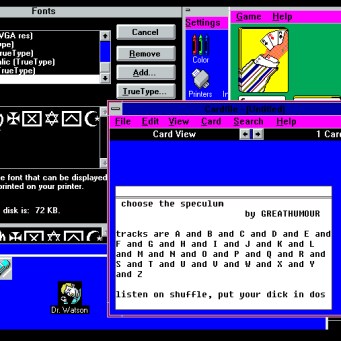 Choose the Speculum follows the titular and structural theme of a previous release by Max Eastman’s solo project Greathumour that I also greatly enjoyed: Choose the Forceps, which he released on his own imprint Tribe Tapes. Both releases are comprised of a large quantity of very short tracks and are meant to be listened to on shuffle, which due to the segmented nature of the pieces results in an indeterminate collage of sounds upon every instance of playback. Unsurprisingly, Eastman’s palette on Speculum is once again one of punishing intensity and grating sensory overload; samples are mercilessly processed via speed change, frequency dissection, and God knows what else so they can be mashed into bite-sized bits of digital destruction, which seem to be even more abrasive and adhesive-dissolving this time around. Eastman also provides footholds of sorts in the form of longer tracks like “X,” which runs nearly 20 times the length of most of the others and acts as a recognizable landmark amidst the uncertainty that a shuffle-ready release introduces. Choose the Speculum is a must-listen for any fans of the most extreme computer glitch music.

