
 I first came across Jerónimo Jiménez’s project Jero Route 66 thanks to a previous release on his own imprint, Pauf Recordings Ltd. Live from Devil’s Den is a strange, reticent performance, in which Jiménez’s fragile digital synthesis is paired with the ever-elusive clatter of the beloved trio Shots. Pauf’s next JR66 release again utilizes Shots member Daniel Dimaggio’s mastering services, but this document of a live set in Tokyo’s Suizokukan Okubo bar is a very different beast than Devil’s Den, more bombastic and boisterous in every way. This is unsurprising; the CD immortalizes the meeting of Jiménez and legendary noise duo Astro, now composed of two eardrum-blasting stalwarts both with the instantly recognizable surname Hasegawa. The quite spacious recording does appropriate justice to the awesome room-filling qualities of the Hasegawas’ roaring electronics, while piercing circuit errors and whirring glitches from Jiménez keep things grounded in an appropriately abstract way; Hiroshi’s searing transmissions are halted long before they can soar to the heights achieved on transcendent releases like Love & Noise, instead ballooning within a palpably confined space, filling it with a chaos of distortion, feedback, and other electronic mayhem. This is stuff you can get completely lost in.
Category: Reviews
Brief summaries intended to describe and express my enjoyment of albums. My opinions are not the focus: I purely seek to facilitate discovery.
Review: Hwyl Nofio – Isolate (self-released, Apr 18)
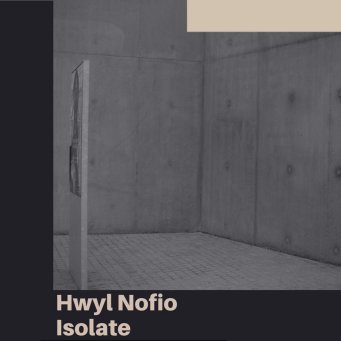 Hwyl Nofio’s first full-length studio album in three years comes with a timely aesthetic. Isolate is not really about “isolation” in general though; I think it’s more concerned with the specific form of the word that provides its title, the actual action of or a given command to “isolate.” As more and more irrational anti-lockdown protests crop up, we need more records like these, pieces of reverent and considered music that tread in the true solace that one can achieve in solitude. As with most of the band’s past albums, Isolate was entirely composed, arranged, and produced by founding member and chief creative force Steve Parry, but he’s also joined by other artists on several tracks to keep things diverse. Rothko founder Mark Beazley lends “bass and noise” contributions to opening track “The Road to Duggleby Howe,” which starts things off with dissonant yet sublime interplay between a dense, monotone drone and delicate guitar phrasings, while prolific musician Steve Sherlock ends “The Ghosts of Bognor Regis” with a languid, nocturnal saxophone serenade and sound artist Rhodri Davies rounds out the beautiful closer “Dolphins” with his harp. The moments where Parry is most in tune with his collaborators are also some of the record’s strongest, but there’s no shortage of gorgeous, affecting music on Isolate; the Salmon Run–esque choral ambience of “Breath” and the aching, somber string minimalism of “Womb Bird (for Vicky).” To everyone who’d rather die than see their precious economy slump, who’d rather put their neighbors and coworkers at risk than just stay home, listen to this album. Think about all the beauty you’re missing out on by running away from yourself. Think about all the beauty you’ll miss out on if you martyr yourself. Isolate.
Review: Fed Ash – Diurnal Traumas (Astralands, Apr 17)
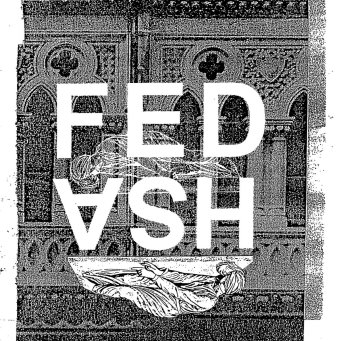 In an age where the always-connected genres of hardcore and noise are consistently being combined in new and exciting ways, truly great examples of marrying the two always stand out. Diurnal Traumas, the new full-length from Syracuse quartet Fed Ash, is one such instance. “The Eternal Footman” begins with an avalanche of brutal, dirty distortion, setting the stage for the pestilent atmosphere that pervades this short but fully fleshed-out release. After about 40 seconds the noise begins to collapse under its own weight, fracturing and fading before the full band enters without warning, vocalist Allie French’s harrowing growls ripping and tearing atop furious blasting and guitar tones from the depths of graves. As with many contemporary hardcore acts, Fed Ash’s particular style is difficult to pin down; they draw from a variety of beloved styles, from old-school powerviolence to classic black metal and grind. The eclectic influences coagulate in various forms, creating cacophonous, unstable chaos on “Nowhere,” infectious forward propulsion and cathartic sludge on “Familiar,” malignant blackened mayhem on “everythingallthetime.” French’s vocals truly sound like they’re coming from a throat that’s been force-fed ash, and both their sound and the gruesome images of ruin and decay they convey contribute to the spectacular totalism of the album’s aesthetic. Diurnal Traumas will stick with you long after its final notes fade into the darkness.
Diurnal Traumas is available on CD from newly formed label Astralands. A cassette edition from Orb Tapes is forthcoming.
Review: Nathan Corder & Tom Weeks – Diamondback (self-released, Apr 17)
 A little over two years since Noise Pelican’s release of Anaconda, the first document of the collaboration between Oakland composers and improvisers Nathan Corder and Tom Weeks, the two musicians’ trilogy concludes with Diamondback. It continues the format introduced by the previous two releases—minimally adorned cover art, significant changes in instrument usage (Corder played electronics on Anaconda, electric guitar on Black Mamba, and here joins Weeks on various winds), etc.—but Diamondback seems a different beast, a truly remarkable statement of extreme improvised music. The clarity of which contributions come from which musician is much less than before, as both artists use their remarkable respiratory systems to make noise with a wide range of wind instruments, which sound like anything from toy kazoos or pocket trumpets to baffling extended techniques on conventional instruments. The patience and endurance on display throughout Diamondback‘s nearly hour-long run time is nothing short of astounding; Corder and Weeks have reached a new height of improvisational chemistry here, and whether they’re settled into largely stagnant textural ruminations like the symphony of metallic buzz and staccato brass abuse of “Soft Pack,” exchanging ersatz call-and-response flurries on “High and Tight” (which also involves some really fascinating elements of physicality), or utilizing some absolutely terrifying resonance in “Props,” it’s all an absolute joy to witness.
Review: endling – two sides of a fallen mountain (self-released, Apr 17)
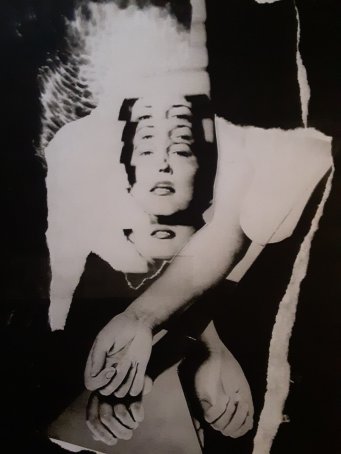 I first came across this unknown artist/group’s music with their debut release under the name “fringe limb”: endling. In a manner similar to Mount Eerie or Magnolia Electric Co. (though the fact that it happened after just one release bears more similarities to Max Nordile’s new Hair Clinic alias), the artist name is now “endling,” and the moniker’s inaugural work is a short one-track album entitled two sides of a fallen mountain. I was initially drawn to the project initially based on the remarkably intriguing and auspicious tags: “collapse,” “decomposition,” “industrial,” “machines,” “musique concrète”—if those aren’t my favorite things to listen to, I don’t know what are—which are still just as representative of this new release, even though it quickly becomes something much more abrasive and extreme than anything on the fringe limb album. The sole track on two sides of a fallen mountain, “b,” is an exemplary piece of nuanced cacophony, with a consistent basis in concrete wreckage and detritus but the staggering, volatile dynamic range of distortion-fueled harshness. The formidable slab of noise wails into existence with violence and chaos, but later in the track it becomes an enveloping mass of sound with that singular psychedelic atmosphere unique to low fidelity harsh noise. Cleaner layers beneath it all frequently make their presence known as they attempt to break through—ritual drones, voice, radio transmissions—but are eventually left to slowly asphyxiate under the unyielding smog.
Review: Software Bondage – Plàigh (self-released, Apr 16)
 Deep in the forgotten underbelly of some hulking abandoned factory, dust-covered machines and rusting contraptions inexplicably whir back to life. The windows of the factory are still dark, but they’re now imbued with the soft amber glow of aged light fixtures as the fragile foundation of the building shakes and trembles from its renewed activity. This is the scene immediately evoked by “Dallsaichean Uinneig,” the first track on Software Bondage’s newest album Plàigh, as its shadowy soundscape of layered industrial ambience and nocturnal drone begins to seep from under the cellar door. The track sets the stage well for the rest of the album, which develops an atmosphere that’s at once cozy and unsettling, sort of like Spiral Insana or Jun Konagaya’s Travel. “Snìomh” follows the auspicious opener with harrowing ritualistic headspace—the human element introduced with the down-pitched vocalizing is initially off-putting, but it resurfaces near the end of the track to produce a surprisingly sublime conclusion. There’s no such respite on “Laoidh,” which despite being the album’s shortest track also manages to be its most frightening. Here, the reverb-laden sounds of heavy machinery dragged across a concrete floor echo the cavernous, Sisyphean movements of Remnants’ unforgettable Empty Ruin before a decay-marred choir recording is left to play for the emptiness. Everything culminates with “Lùb Dùinte,” a monstrous, nearly half-hour-long closing piece that embodies the slow, majestic collapse of the massive factory where our journey started.
Review: SEC_ & Tricatiempo – La Tana (Subincision, Apr 7)
 Domenico Napolitano, frequently known as SEC_, is no stranger to dual improvisational settings. He’s worked with a variety of sound artists from his home country of Italy and beyond, but it is his two collaborations with French powerhouse Jérôme Noetinger (Testacoda and La Cave des Étendards) that I believe to be his finest work. The virtuosic use of the Revox tape recorder is always an awe-inspiring spectacle, but the ruthlessly inventive interplay between Napolitano and Noetinger is some of the most amazing I’ve heard, their simultaneous dissolution and reinvigoration of physicality in abstract music a wonder to behold. The physicality of La Tana, a new release from Napolitano that sees him paired with Stefano Costanzo (Tricatiempo), is more conventionally grounded than that of either of the Noetinger duos; Costanzo brings a diverse array of percussive textures to the table, his spastic injections sometimes echoing the arrhythmic object play of Ted Byrnes and other times adopting half-formed grooves that introduce an element of free jazz-esque bounce to the proceedings. “Riflessioni per cadaveri” is the album’s longest piece, and allows Napolitano’s stereo-spanning tape whipcracks and electromagnetic buzzing to establish a strong presence while Costanzo works in the shadows with choice clatter and hulking industrial rumble. The rest of the album delightfully trounces across a wide range of conventionality; “Tempo” settles into a cacophonous, fractured Liebezeit cascade not dissimilar to the considered rhythms of Magaletti and Sartorius’s Sulla Pelle, while “Machines Like Me” casts sparse metallic scrapes against insubstantial static. A superb (and free of charge!) slice of creative improvised music.
Review: Spacial Absence – Lifespan of a Mayfly (Nature Noise Wall, Apr 9)
 In my opinion, quality over quantity should be a guiding mantra used by almost all music-makers. It’s much better for fans to anticipate well-spaced-out new material and value a few excellent releases rather than be overwhelmed by unrelenting prolificacy, which almost always diminishes the value of each individual release. In some areas of music, this problem is unfortunately more prevalent than in others; wall noise is an illustrative example. The artists I always seem to appreciate most are those who seem to put the most time and deliberation into their work: Little Fictions, A View from Nihil, Mawile’s Fake Tears, Dirac Sea, etc. This isn’t to say that more prolific wallers just churn stuff out indiscriminately (though some of them certainly do), but the impression one gives to one’s audience is important in this regard. Spacial Absence, one of several musical projects helmed by D.C.-based musician Caden McMahan, is a great example of refined output curation: Lifespan of a Mayfly is the first release under the alias since 2017’s spectacular Primal Machinery. This new album follows a similar path as the last as it presents 12 segments of environmental abstraction. McMahan has never been concerned with obscuring source; like Primal Machinery, many of the tracks on Lifespan of a Mayfly are recognizably field recordings that have been heavily processed and manipulated, and the titles often give a hint as to what was being examined: in the more lucid moments of “Broken Water,” for example, the unmistakable sounds of rushing water currents can be heard. But here the removal from reality is also frequently ramped up even further. Elastic, percussive textures make “Plastic Rain” one of the most unique and enthralling walls I have heard in a long time, and unlike “Broken Water” neither its content nor its title make its origins easily discernible. You have to hear Lifespan of a Mayfly to believe it; somehow, across a 56-minute runtime that seems like half that, McMahan displays a mastery of a wide array of contemporary wall noise approaches, from detached glitch-scapes and digitally contorted streams to earthy contact mic bubbling and spatially isolated crackle. And if reading reviews isn’t your speed (though you’ve gotten this far), just listen to “Unwelcome Technology” and try to tell me it isn’t the craziest shit you’ve heard all year.
Review: Acchiappashpirt – Rrafsh (Turgid Animal, Apr 9)
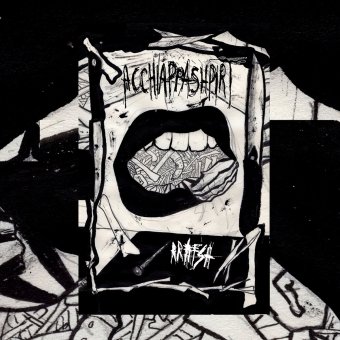 Rrafsh (which roughly translates to the concept of “tabula rasa” in Albanian) is a dark, twisted love letter to the volatility of language. The newest release from Acchiappashpirt, the transnational duo of Albanian poet Jonida Prifti and Italian sound artist Stefano Di Trapani, dives into the inky black depths to reach the true bedrock of poetic expression: not just human utterance, but simply utterance. The project’s trademark palette of screeching electronic manipulation and often wordless vocalizing reach a new level of ontological harmony on Rrafsh; it’s often difficult to even discern which is which, and even when one is able to, attention is always drawn to their inextricable similarities. You can look at it as verbal and nonverbal poetic sources, or simply two different sources of pure poetic communication, but the immediacy of their presence, the range of intensity that is spanned in the matter of seconds, the persistent sense of impending catastrophic explosion—these things are what are truly of concern when listening to this album. The sheer viscerality of Rrafsh is impossible to ignore, and despite it possessing considerably more theoretical/extramusical implications (not that that is always a superlative) fans of dynamic or cut-up harsh noise may find a fitting entry point into the fascinating area of sound poetry with this superb release.
Review: MazzaGieyn & Territorial Gobbing – Can Knock the Hustle (self-released, Apr 8)
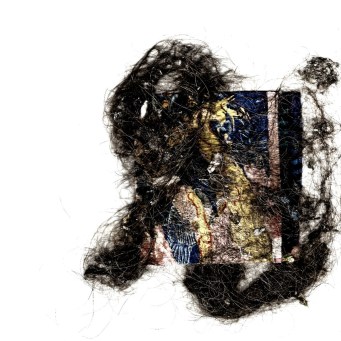
I can’t help but imagine the metallic assemblage on the cover of Can Knock the Hustle as some sort of horribly inhuman, quasi-organic entity, slipping and sliding around in the guts of old computers and activating long-forgotten sound effect patches with its many wiry tentacles. Even the purest computer music is often undeniably nature-resembling—reverb-laden microsounds like swarms of tiny underwater creatures, uncomfortably textural lashes like the wet slap of a large fish out of water—but this new release from Leeds oddballs MazzaGieyn and Territorial Gobbing is distinctively so. Following their first collaboration, 2019’s Domestic Uranium Now!, Can Knock the Hustle features TG mastermind Theo Gowans in an unusual laptop role, but he (unsurprisingly) retains his quite usual sense of irreverence and indiscriminatory sampling techniques; the sources utilized range from BBC sound archives to a video file that is presumably the 1977 Japanese cult classic ハウス (Hausu). As these bizarre interjections gel and scuffle with MazzaGieyn’s array of restless data streams and half-formed melodic flotsam, we’re subjected to some mental images that I’m sure most of us could’ve done without; now I’m just imagining that horrible alien mass burrowing into my skin to (invasively) remove my precious turnip cysts, or stealing all my poop to make its coffee. If you hear those telltale sounds of digital slither or mistakenly triggered samples, run.
All proceeds from TG’s Bandcamp sales are currently being channeled to a fundraiser for Wharf Chambers, an essential space for weirdo music in Leeds. Feel free to empty some pockets.

