
 I know I repeat this ad nauseam, but Bandcamp is a truly wondrous place. There are endless bewildering, obscure gems to be mined throughout the depths of the popular music hosting service, finding something like Actually Stupid is the equivalent of finding a mysterious old cassette at the very back of a rack or an unmarked CD amidst the stacks filled with bizarre sound. What makes this discovery even more valuable, however, is the fact that what is ostensibly New York based artist Richard Pizzaro’s first release is defiantly new and fresh, released on the fourth day of the new year and adorned with an artfully low-effort cover image made with Snapchat. Actually Stupid is also not a work that distances its aesthetic from the zeitgeist; featured on the cover is someone’s iTunes music library, “Aria” gets extensive mileage out of samples from Ariana Grande’s “God Is a Woman,” and everyone knows sex dolls are all the rage right now—but the music itself could hardly be any stranger. Opening track “Draining” evokes an arresting feeling of isolation, stripping fuzzy field recordings of a running tap and rushing air currents down into a single, spectral drone like the feeble sound of the arctic wind as you lie freezing to death in the snow. “Sex Doll I & II,” a continuous two-part piece that is itself part of a “Sex Doll” track trilogy, collapses into chaotic clusters of malfunctioning percussion patches and contorted electronic glitches; the soft synth washes of “Midwit” battle against jagged, unpredictable intrusions of silence and grating radio grabs until the whole track is commandeered and we’re left with an absurd yet strangely melancholy mass of monotone text-to-speech, a grandiose pop ballad, and what seem to be field recordings from either a cacophonous construction site or a violent firefight; and download-only bonus track “White Powder” concludes the proceedings with another delirious pop song dissection. Three cheers for democratic hosting platforms, hilarious album covers, and the people out there able and willing to make shit as weird and wonderful as this.
Category: Reviews
Brief summaries intended to describe and express my enjoyment of albums. My opinions are not the focus: I purely seek to facilitate discovery.
Review: Posset – Nine Copper Rods (self-released, Jan 1)
 Bandcamp opens up many opportunities for avant-garde artists in regards to how they make their music accessible to the masses. Artists can simply host albums on Bandcamp that they would have released anyway without impacting their release timeline, while others perhaps get carried away with the ease and freedom that the site provides, releasing so much music that fans get overwhelmed and the individual merits of single works are drowned out by prolificacy (I’m looking at you, O’Rourke and Drumm). Joe Posset is no stranger to handmade CDrs or ultra-limited cassette tape runs, media that certainly coincide with his sonic aesthetic, but he also doesn’t shy away from having an established online presence, something many of his peers in the field of text-sound, tape skronk, and lo-fi surrealism often eschew in favor of obscurity. Posset’s Bandcamp allows us access to many things we otherwise wouldn’t be able to hear, such as the short We Are Fresh Weekend collection or a collaborative live set with fellow UK gargle poet Territorial Gobbing. Nine Copper Rods rings in the new year with eight pieces from various origins, along with easily one of the most entertaining album descriptions I’ve read through in a long time. The slithering, plasticky swirl of “Exi” encourages us to “feel the whirr [sic] of polyurethane nestle the gong farmer” while the kinetic swipes and yanks of “Dicta Solo 26th Oct (take two)” contradict its being “recorded in bed, sunny afternoon. Probably should have been doing something else.” The absence of any single unifying theme on Nine Copper Rods, abandoned in favor of scatter and sketch, allows the walls of impenetrability to fall away and reveal the truly amazing technique and skill involved in Posset’s music-making process.
“Download, press play and go about your business. I hope soft grey clouds bloom in your ears and it makes you sizzle a smile like Nicholson’s bacon.”
Review: Guilt Dispenser – Guilt Dispenser (self-released, Jan 1)
 Once the new year rolls around there always seems to be a standout short ‘n’ sweet extreme hardcore release that helps me barrel through the duller moments of winter break. Last year it was Bandit’s Warsaw, an eight minute slab of brutal techgrind that still gets regular plays over a year later. Exactly one year and two days after, we’re given the gift of LA fastcore quartet Guilt Dispenser’s succinct self-titled debut. Plowing through ten tracks in less than half as many minutes, Guilt Dispenser draws elements from a vast array of hardcore subgenres into its breakneck vortex of speed and fury, devoting as much time to angular riffs in odd time signatures and mathy core breakdowns as the breathless d-beat gallops one would expect. Incendiary opener “Incite” fulfills its titular promise with a heavyweight propulsive groove that gets heads banging right off the bat, while shorter tracks like “Discern” showcase the band’s penchant for jarring arrangements, tempo changes, whiplash vocal trade-offs, and bite-sized atmospheric interludes. The minuscule outing ends on a powerful note with the formless “Cease,” a swirling whirlwind of effect-laden vocals and distortion. Inject full contents intravenously for maximum energy increase.
Review: Howard Stelzer – Fever Song (self-released, Dec 30)
 Howard Stelzer’s single track release Fever Song was assembled “in secret” during the latter months of 2019, finally completed after the Massachusetts based schoolteacher and sound artist recovered from a nasty bout of pneumonia. Stelzer says: “As soon as my fever lifted, I was so grateful to be able to do the things I usually do (like being able to concentrate on a task for more than a few minutes at a go, or walk from one side of my house to the other, or carry on a conversation with my wife) that I returned to this album right away and ironed it out rather quickly.” So many elements of this excerpt from the album’s description translate well into analysis of it; like many of Stelzer’s compositions, “Fever Song” is built around patient drones, but the sustained textures and tones he utilizes here are not somber or dull, instead always climbing with radiant vigor to further heights, brighter patches of light. Our fever breaks and we see an opening in the shroud of sickness, an escape toward which we desperately claw and climb. “Fever Song” is also a celebration of not only the everyday, but also the patience to appreciate the everyday. The piece could have been shorter, of course, but it isn’t; Stelzer carefully constructs spans of controlled noise to allow for the barest amount of progression, allowing meditative stretches to become illusions of stasis, sonic monoliths in which we lose ourselves until the subtle developments become impossible to ignore or the rug is yanked from under our feet. And finally, I love the use of the phrase “iron out” to describe the process of finishing “Fever Song”; it appeals to both the work’s recognition of the value of the mundane as well as Stelzer’s pragmatic approach to music-making. And even some of the drones feel as though they’ve been ironed; trivial materials forcefully pressed into gorgeous, unified slabs of sound.
Review: Cult of Erinyes – Æstivation (Amor Fati, Dec 26)
 The genre and culture of black metal has come quite a long way since its infamous origins in early 90’s Scandinavia, as new scenes, communities, and styles popping up all around the world at an ever-increasing rate. I don’t think it would be an overstep, however, to name the Germany-based imprint Amor Fati one of the most significant voices for contemporary black metal. Often focusing on bringing independently released music to physical media and a wider audience, the label either brought me or introduced me to many of my more modern favorites, including HWWAUOCH’s Into the Labyrinth of Consciousness, Pharmakeia’s self-titled debut, Mahr’s Antelux, and now Cult of Erinyes’ Æstivation (all of these are available for name your price digital download from the artists). Fitting right in with AF’s raw, oppressive aesthetic without sacrificing melody or succinct structure, Æstivation is a more concise effort than 2017’s Tiberivs, building to and from punishing blast beat sections with atmospheric interludes and developing riff repetitions. The array of guest vocalists of which the band makes use allows for a wide range of utterances, from distant howls and throat-shredding shrieks to guttural growls and throaty spoken word (the pained screams on “Nihil Sacrum Est” are definitely a highlight). Æstivation is a superb, well-executed celebration of both classic black metal tradition and more contemporary stylistic augmentations.
Review: Barn Sour – horses fucked over the head with bricks (Careful Catalog, Dec 23)
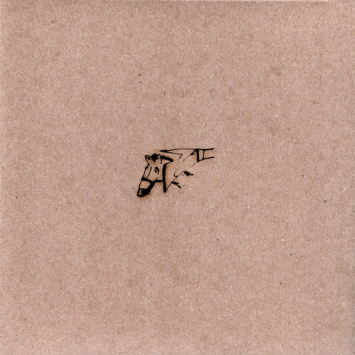 While my end of year review hiatus is always a much-needed break from an undammed influx of new music, there are usually a few remarkable or fascinating albums in December that demand immediate attention. One of many works in a large quantity of final month releases that exposes the stupidity of publishing comprehensive end of year lists in November, Barn Sour’s first 7″ horses fucked over the head with bricks concludes newcomer NYC imprint Careful Catalog’s superb 2019 with a flourish. The EP was released just a week before we rang in the new year in tandem with Mattias Gustafsson’s equally amazing Frusen Musik, and over a modest nine minutes it proceeds to fuck every conception you have about music over the head with bricks. The names of the two musicians listed on the release are most likely pseudonyms; James Druck probably refers to one of the key figures in a series of cases of insurance fraud commonly known as the “Horse Murders,” and who knows what “C.Lara” is referencing, if anything. The music itself doesn’t answer many questions, instead taking the form of a bewildering amalgam of emotions that cultivates a mysterious power through evocations both visceral and cerebral. Maniacal laughter rings throughout the entirety of side A, balancing any interpretation on an unstable tight rope between unfettered joy and complete hysteria while our understanding is further assaulted by shifting layers of dissonant drones, earthen clatter, and some brief beauty near the jarring, unceremonious end. On side B, harrowing, half-nonsensical, Boredoms-esque babbling is tempered by the cavernous reverberations of a somber piano melody, and barn sour burrows even further into a rabbit den of oddness and impenetrability that, coupled with the EP’s short length, makes it extremely addicting.
Review: Moth Cock – If Beggars Were Horses Wishes Would Ride (Hausu Mountain, Nov 29)
 Covering as much new music as I do allows me to classify groups of releases based on some pretty inconsequential similarities. Astor’s The Aubergine Dream and Moth Cock’s newest tape If Beggars Were Horses Wishes Would Ride don’t share many qualities (apart from the fact that they’re both quite strange), but nonetheless one can associate them based on the hilarious text-to-speech introductions featured on each. On the latter the computerized deadpan is provided by Dr. Quinn Medicine Woman and honestly could function as a capable review of the album were I to transcribe it in its entirety—which I actually tried to do but the accent of the vocalizer makes a lot of the words unintelligible. If Beggars Were Horses continues the duo’s evolution into a style that brings together toy percussion patches, processed wind instrument skronk, erratic electronic freakouts, and God knows what else to create a roiling stew of noise. Even the most abrasive noises that Moth Cock conjure are swaddled in a smooth, synthetic outer coat of shininess, and much like their previous album 0-100 at the Speed of the Present the compositions often tread through territory that resembles meditative ambient music. After a tumbling and tumultuous A side (the latter quality is especially present in the volatile sonic amalgam of “If Beggars Were Horses”), the tape concludes with a pair of twelve-minute tracks that prove how truly bizarre yet infectiously magnetic Moth Cock’s creations can be. From the way “Wishes Would Ride” starts it definitely doesn’t seem sustainable over that long of a duration, but the bouncing rhythm loop soon reveals itself as a base for steadily unfurling waves of squalling distortion and effervescent pulses as its propulsive hi-hat hits drive everything forward—that is, until around the halfway point, when it all breaks down into frenetic chaos. The incendiary drumming and cavernous atmosphere of “If Bayonets Were Turnips” bring this wonderful release to a fitting close.
Review: Filtro – Forma (nausea., Nov 27)
 Aside from the name itself, many examples of experimental music evoke the controlled explorations and examinations of a scientific laboratory environment, from the almost industrial whirs and crackles of Andrea Borghi’s VHS machine dissections to the dynamic sterility of Keith Rowe’s arcane setups of pocket fans, objects, tabletop guitar, and other devices. I and many others greatly enjoy the sonic results of approaches like these, because while the sounds themselves may not contain much humanity they’re always introduced and manipulated with a distinctly human level of control. Filtro, the duo project of Italian sound artists Angelo Bignamini and Luca de Biasi, presents two extended pieces that certainly embody what I’ve just described on Forma. The two musicians rely on the limitless possibilities of “concrete sounds and electrical interferences” as sound sources for their improvisations, the material “treated with extreme dynamism using a reel to reel recorder and a modular synthesizer” to produce the shifting mass of buzz, hum, flit, and clatter that spreads itself across the two tracks. The warbling tape manipulations are flung into the fray like multicolored fishing nets, harnessing the lush combinations of found sound in maneuverable physical form while darting clouds of electrical static and radio noise are carefully woven throughout. Forma finds itself somewhere between call-and-response improvisation and collective cacophony as Bignamini and de Biasi form an immersive mass of sound through their interactions.
Review: Catriel Nievas – El Lago de los Seis Lugares (Isla Visión, Nov 25)
 While I’m often told that my musical intake is above average, my equally above average amount of free time is nonetheless limited. I can’t listen to everything people send me, and regrettably I even sometimes turn off albums when they’ve barely begun because I can already tell I won’t like them. Unfair dismissiveness in the name of efficiency, a tale as old as time. This was almost what happened with Catriel Nievas’ newest solo release, which was brought to my attention via Tone Glow honcho Joshua Minsoo Kim’s top ten 2019 albums list (check it out, it’s a good one). The use of plucked guitar in ambient music is hardly ever something I enjoy, so right away I wasn’t feeling too optimistic about my opinion of El Lago de los Seis Lugares. For once in my life, however, I exercised some of that elusive virtue we sometimes call patience, and I’d recommend anyone who listens to this album do the same because it definitely pays off. The level of calm and therapeutic stillness that Nievas evokes here is astounding, and the intermittent interjections of guitar harmonics or delay-affected chords are a splendid addition that provide an important counterpoint to that wispy, peaceful atmosphere. The three untitled pieces are largely unconcerned with drastic dynamic progression; instead, they rise from silence to float languidly in midair as Nievas gradually adds delicate layers of found sound, effects, and other complementary ornamentation. El Lago de los Seis Lugares hardly reinvents the wheel when it comes to abstract ambient music, but I come to this sort of thing to be lulled, not amazed.
Review: Breeze – Toad Crossing (self-released, Nov 26)
 Oakland DIY duo Breeze truly put the “no” in “no wave.” Their irreverent brand of anything-goes improvisation isn’t entirely indebted to the archetypal no wave sound, but more often than not Jackson Blumgart and Max Nordile find themselves falling into the lumbering, not-quite-in-time grooves, nonsense vocalizations, and razor-sharp guitar skronk that we all know and love. I first encountered the band through their short digital-only release The Guilty Baby, which luckily was not that long ago so I didn’t have too much time to wait for new music. Of the two releases with which Breeze graced us on November 26th, Toad Crossing is definitely noisier and harsher, frequently delving into straight-up terrifying territory as the two friends summon unholy frenzies of punishing synth noise, piercing saxophone wails, ear-splitting feedback, and completely unintelligible ranting and raving. This 26-minute release is greatly helped by its high volume and substantial dynamic range, both of which imbue the music with a sense of dangerous instantaneity. Hulking cacophonies of rusted metal and studio detritus threaten to collapse at any moment, and any brief respite from the madness is unceremoniously pulled away on the most fleeting of whims.
 Noise Not Music