
 I love reviewing IIKKI releases because it gives me a chance to not only discuss both auditory and visual art, but also to process the similarities and differences between how I experience each medium. Each of the label’s releases document a dialogue between a visual artist and a musician or band—in this case, multimedia photographer Nieves Mingueza and a musical collaboration between Craig Tattersall and Jason Corder, who perform and record as The Humble Bee and Offthesky, respectively. Much like the last album from IIKKI I wrote about (Federico Durand, Anna P. Cabrera, and Angel Albarrán’s Pequeñas Melodías), the dual facets of All Other Voices Gone, Only Yours Remains unfold with amazing unity. Tattersall and Corder construct impossibly lush, gorgeous sculptures of drifting ambience, dusty crackles, and delicate string laments provided by an auxiliary group of musicians that includes saxophonist Cody Yantis and flautist Esther Hernandez. The aching fragility of the music perfectly complements Mingueza’s meticulous collages of aged photographs, masking tape, and old parchment, further evoking an atmosphere steeped in fading memory (a video of the art can be viewed on Mingueza’s website). This impermanence is recognized by my favorite two-page spread of the art book, where Mingueza obscures significant portions of poignant photographs with deliberate partitions of paper. Even absent of their other half, both the art and the music that comprise All Other Voices Gone… are among the most sublime media I’ve encountered this year, and together they accomplish something tremendous.
Category: Reviews
Brief summaries intended to describe and express my enjoyment of albums. My opinions are not the focus: I purely seek to facilitate discovery.
Review: Giovanni Lami – Raw (Cloudchamber Recordings, Jul 15)
 With his uniquely total approach to reel-to-reel manipulation—the sounds of the manual actions themselves are presented alongside the dark, spectral sonic manifestations of his tape abstractions—sound artist Giovanni Lami has accomplished something very special: he has created an entirely singular musical language. I first saw this on 2016’s Bias, an all-time personal favorite that I’m pretty sure I bring up every time I review Lami’s work, where decayed tape extracts form the basis for a series of indescribable sound environments shrouded in shadow. The opening track of Raw, the Italian artist’s most recent release, recalls this distinctive palette used to create Bias; “XXXXXX,” and later “180807,” outline a fragile structure of distant, cavernous yawns surrounded by muffled clatter and stifled scratching. But though this is the longest track on the album, the remaining pieces aren’t constrained by that nocturnal atmosphere. “180824” is a much more neutral fragment and brings the disorienting sounds of reel speed finagling to the forefront of the mix, introducing an invasive tactility that carries over into “160506.” With In Chiaro / In Guardia last year, Sinalefe in February, and now this (not to mention the Hysteresis series) it boggles my mind how well Lami makes use of compact album durations. Raw is an unexpectedly colorful release despite its short length, spanning the staggering range of sonorities and headspaces that Lami is able to hop in and out of with aplomb.
Review: Шумоизоляция – Побочный Эффект (Ominous Recordings, Jul 11)
 “Must be listened to at maximum volume” is such a tired request—some of us like having undamaged hearing!—I couldn’t imagine listening to Побочный Эффект (which translates to “side effect”) any other way. Over each half of the C40, Шумоизоляция crafts a mercilessly loud and abrasive wall, almost painful in their concentrated assaults, like high powered drills boring through your head. But throughout both pieces, the compact columns of abrasive, crunching noise seems to expand from its initial constraints, becoming more and more oppressive—and immersive—as they progress. The first side is relentless and infernal, and its mangled frequencies unfurl into a fiery soundscape of roiling, crackling distortion. In this first piece and the one that follows, the densely packed layers slowly reveal buried signs of instability beneath the forceful wall, restless clatters and shudders that underlie a seemingly unyielding explosion of sound. As the second track unfolds, it’s this facet that I can’t help but direct my attention to, and by the end I’m convinced that the entire thing is going to collapse under its massive weight. High volume gives the cathartic blasts of Побочный Эффект the thick, deafening, overwhelming presence they deserve.
Review: Lifes – Treading Water (Here and Now!, Jun 28)
 Fans of the aptly named subgenre “powerviolence” will be familiar with the fact that even this more specific area of hardcore can be further parsed into various styles and scenes, whether it’s the classic thrash-infused West Coast sound (faithfully documented by the wonderful Power Violence Project), the thunderous, throaty crust punk of bands like Dead in the Dirt, or the adventurous psychedelia infusions of Gasp and Stapled Shut. Ultimately, though, the unifying factor is that feeling of suffocating, crushing weight, something that Lifes absolutely nail with their debut LP Treading Water. The band whips up an astounding racket considering that it only consists of two members, and the absence of guitar allows the crunching bass to bathe the breakneck punk explosions in oppressive, all-consuming low end. I started off by identifying some of the commonly recognized sects of powerviolence because Lifes seem to draw from them all. There’s fast-paced d-beat gallops, spazzy grind blasts, sludge breakdowns, brief moments of anthemic melody, and it’s often embellished with harsh electronic inflections that add even more layers to the already dense cacophony of anger. At around 23 minutes total, Treading Water is a furious and concise statement from a promising band.
Review: VOSP – Invisible Touch (Reserve Matinee, Jul 12)
 Despite its overall disorienting atmosphere and restless, unpredictable form, Invisible Touch finds its footing in the richly organic, much like another 2019 highlight from Reserve Matinee: Hanging Lichen’s Old Northwest (Growing). But “footing” does imply a level of stability that just isn’t found in Eric Grieshaber’s abstract granular workouts and found sound manipulations. No sound in Invisible Touch is comforting or even reliably permanent; the multitude of elements in these six tracks are constantly caught in frenzies of entropy, bouncing off each other and around the confines of the sonic environment like agitated gas particles. The dense clusters of tactile ricochets that bound throughout “Starlight” and “Memory of Apex” emulate a rattling blender filled with globs that clash and meld but never truly homogenize; “Macing Dog” slowly slogs along a trail of slime, a gelatinous mass of dragging bulk and slapping tendrils; and “Neural Lace,” apparently just a synthesizer jam, outlines some truly cosmic territory with spacious kinetics. It’s a theme throughout Invisible Touch that the heavily processed sounds end up taking on the form of some much more recognizable source; listen to just a few seconds of “Piss on Money” and it appears to be just a cloud of detached rings and high end resonance, but overall I can’t help but be reminded of some sort of sterile retail environment, the noises resembling dinging cash registers and scanner beeps.
Review: Chemiefaserwerk – Rede des Jahres (self-released, Jul 8)
 Christian Schiefner’s work under the Chemiefaserwerk moniker never ceases to astonish. The third release on his personal Bandcamp page, Rede des Jahres, is also his longest continuous piece yet, nearly 40 minutes of uninterrupted ambient cascades and altered realities. According to Schiefner, much of the tape used to construct “Rede des Jahres” comes from his own collection kept for “reminders” and “memories.” It’s not only this preface that casts a foggy shroud of reminiscence over the music, but also the qualities of the sounds themselves; the track is made up of achingly delicate elements, and its overall presence is one of thinness and slight obfuscation. Besides a brief appearance of what sounds like a short jam session demo—an addition that only adds to this atmosphere of recollection and nostalgia—Schiefner’s manipulations are quite removed in their final form, stretched and clouded and muddied in a peacefully sublime way that only he can conjure. Looking back, there are several distinct movements throughout “Rede des Jahres,” but the piece doesn’t feel episodic or segmented. The builds and releases of tension amidst the initial drones fade into the guitar/drum meanderings in an inexplicably natural manner, and suspended between stretches of abstract tape concrète is a somber hum like cold wind through a tunnel. Uniting these wide-ranging explorations are the very closely recorded clicks and clatters of unidentified objects, once again placing Rede des Jahres in Schiefner’s amazing sence of balance between tactility and incorporeality.
Review: Mark Vernon – Ribbons of Rust (Flaming Pines, Jun 26)
 Glasgow-based sound artist Mark Vernon’s newest work could be described as many things: an intervention, an examination, a document, even a dissection. But there really isn’t a single label that I can confidently apply to Ribbons of Rust, which draws its inspiration and source material from a remote, abandoned vacation resort in Thailand; Vernon doesn’t base his music around a specific technique or set of restrictions, instead utilizing a variety of methods to approach a comprehensive representation of this place that so notably resonated with him. Arguably central to the album’s construction are the worn, damaged tape fragments extracted from cassettes found on location, essentially the literal “ribbons of rust” that ground everything in a manner that’s both tangible (the distortion, crackles, and stutters that mar the tape playback) and abstract (the sampled music itself). Though there are a great deal of spacial field recordings and physical elements that evoke a strong sense of there-ness, Ribbons of Rust does much more than just reconstruct this mysterious environment. It presents a singular perception of a place, resulting in a work that is deeply personal and completely unique.
Review: Sammartano – Walkman Jazz (Canti Magnetici, Jul 8)
 First off, I just want to say how much I love Canti Magnetici. The label’s been around for less than four years but has already built an amazing canon of wide-ranging experimental works, featuring releases from all sorts of burgeoning sound artists as well as by founders Andrea Penso and Gaspare Sammartano (Donato Epiro has not yet put anything out under the imprint). With dedication to both subversive, barely classifiable “non-music” as well as more developed fields such as field recording, sound poetry, and electroacoustic composition, it’s by far one of my favorite labels out there right now.
Walkman Jazz is the second release by Gaspare Sammartano on Canti Magnetici (preceded by 2017’s Rompighiaccio Destiny), once again a single piece presented on a one-sided cassette. This time, however, in tandem with the album’s dark dominion of murk and gunk, the music is dubbed onto recycled tapes, each housed in a black clamshell case. Sammartano’s vision for this work is a singular one, represented both by the track’s hallucinatory, lethargic collage structure and by the sense of uniqueness and discovery evoked by the packaging—it feels like something you’ve found. Walkman Jazz is a monument to forgotten remnants, to languid congealment, to disparate amalgams, an immersive journey through familiarity rendered almost completely unrecognizable (but I was pleasantly surprised to hear a brief appearance of Scarface’s “I Seen a Man Die,” especially because I was just listening to The Diary on the way home from work). Come witness this “funeral party on a ship that sails a radioactive sea towards a new promised land (that obviously doesn’t exist)”; you won’t regret it.
Review: Detach the Islands – The Burden to Become Fact (Dental, Jul 5)
 The Burden to Become Fact, New York art-hardcore quintet Detach the Islands’ debut studio release, is razor sharp. Seriously, there are parts of this album that are truly the sonic equivalent of jagged blades and gouging claws, many of the intricate arrangements coalescing into maelstroms of abrasive guitar stabs and throat-tearing vocals. The whiplash songwriting of “Who Holds My Head Down?”, the short instrumental that opens the album, is a fitting introduction to the band’s enrapturing musical chemistry; though almost always chaotic and disorienting, the five members move as one entity, every pound of the drums helping to drive home a particularly harsh chord or the desperate vocals seeming to pull everything upwards with their climbing insanity. Also present in Detach the Islands’ eclectic palette is a distinct emoviolence element, cropping up in the form of melodic interludes—exemplified by “Placebo”—and moments of cathartic, unfettered passion. Yes, there’s a lot going on in The Burden to Become Fact, something you could probably pick up on just reading this review, but this young band’s sense of pacing, transition, and dynamics are nothing short of incredible, and ambitious tracks like “Love Is the Miracle We Fabricate” and “Refugee Anatomy” are sure to become classics.
Review: Ivory Trade – Atlas (A R C H I V E, Jun 24)
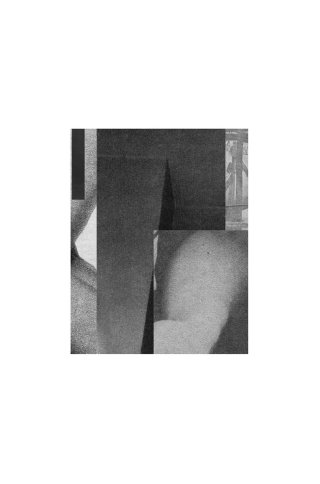 Little is known—or even can be known—about the obscure Belgian project Ivory Trade, whose modest discography is allegedly concluded by this latest release on A R C H I V E. The familiar elements are still at play on Atlas, a “grief settlement in familiar surroundings”: the muffled, fuzzy, marred bits of woozy keyboard ambience and field recordings are as sullenly detached yet beautiful as ever, trapped in languid enclosures of tape hiss and distortion. Most of Ivory Trade’s releases feature covers that frame a simple design with a pronounced white border, a visual representation of the profound claustrophobia evoked by the presence of the music. But it’s not always an unpleasant sense of compression or imprisonment; the more sublime tracks often seem to begin to drift beyond their bounds, faint beams of warm light slowly breaking through a shell of shadow. Atlas, though all in all a quite minimal affair, runs the emotional gamut, touching on murky uncertainty with the title track, bewilderment and queasiness with “Feinting Around the Furniture Like Dog Handlers,” and soothing comfort on “Crystal Dogs”… and that’s all within the first ten minutes of the tape. As it progresses, the music begins to reveal more and more pieces of humanity, and by the end Atlas presents a wonderful summary of Ivory Trade’s work.
 Noise Not Music