 Andy Ortmann and the other musicians who have performed and recorded as Panicsville are no stranger to organic material; as is proudly stated on the NIHILIST Bandcamp page, “early shows consisted of pelting the audience with items like dry ice, meat, blood and insects.” The piles of raw, fatty meat and smattering of eyeballs that adorn the cover of Eye of the Beholder are about as repulsively biotic as you can get, but Ortmann’s interest in the often unsettling mixture of the artificial and the natural doesn’t end there. In a similar vein to fellow concrète collagers Rudolf Eb.er or Dave Phillips, Ortmann’s restless, physical compositions occupy a sort of auditory uncanny valley, where mysterious and unidentifiable elements mimic the most undignified of human noises a bit too well. Sticky dragging textures evoke the uncomfortable but familiar sound of chewing; prepared guitar rattles clack like chattering teeth; saxophone skronks form wordless, despairing moans. The artwork already implies that Eye of the Beholder won’t be the most calming listen, but this dedication to such an abstract, disturbing sonic palette makes for some truly scary results, yet you’ll be unable to tear your ears away. Human life is noisy, and—as argued by “4’33” After Death”—the absence of that life is just as much so.
Category: Reviews
Brief summaries intended to describe and express my enjoyment of albums. My opinions are not the focus: I purely seek to facilitate discovery.
Review: Butoh Sonics – Flickers of Light (Lurker Bias, May 14)
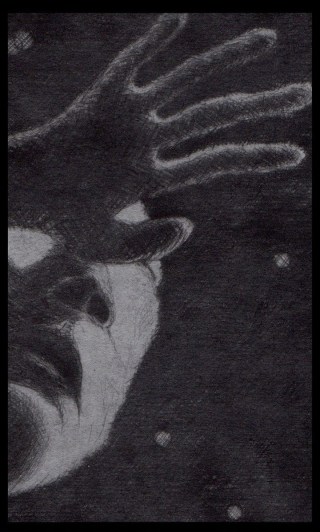 The three extended improvisations on Flickers of Light find their footing in clunks, clatters, and caterwauls, conjuring erratic soundscapes shrouded in oppressive shadow. The mysterious group known as Butoh Sonics doesn’t rely on reliable structural elements such as drones or repeated motifs to construct their music; instead, it often seems that the only persistent presence to latch onto is the darkness that encases every strained prepared guitar coax or metallic rattle. Needless to say, this makes Flickers of Light quite a disorienting experience, and listening to it ends up feeling like a stumble through some terrifying abandoned junkyard. Each piece clocks in at around fifteen minutes, and though the performers seems to have quite the arsenal of sound-making devices available at their disposal, they stick with seemingly stagnant cacophonies that progress at a nearly imperceptible pace. It’s often only the subtle introduction of a new texture that pulls the heavy, lethargic body of noise along, slowly dragging it across a jagged floor of scrap metal, broken effects pedals, and who the hell knows what else that gets picked up along the way. Flickers of Light is an intense and immersive journey through Butoh Sonics’ subversive sensibilities, a ravaged landscape of crumbling machinery and rusting remnants harnessed through the ears and bodies of creative improvisers.
Review: Andrea Borghi – VHS (Misanthropic Agenda, May 8)
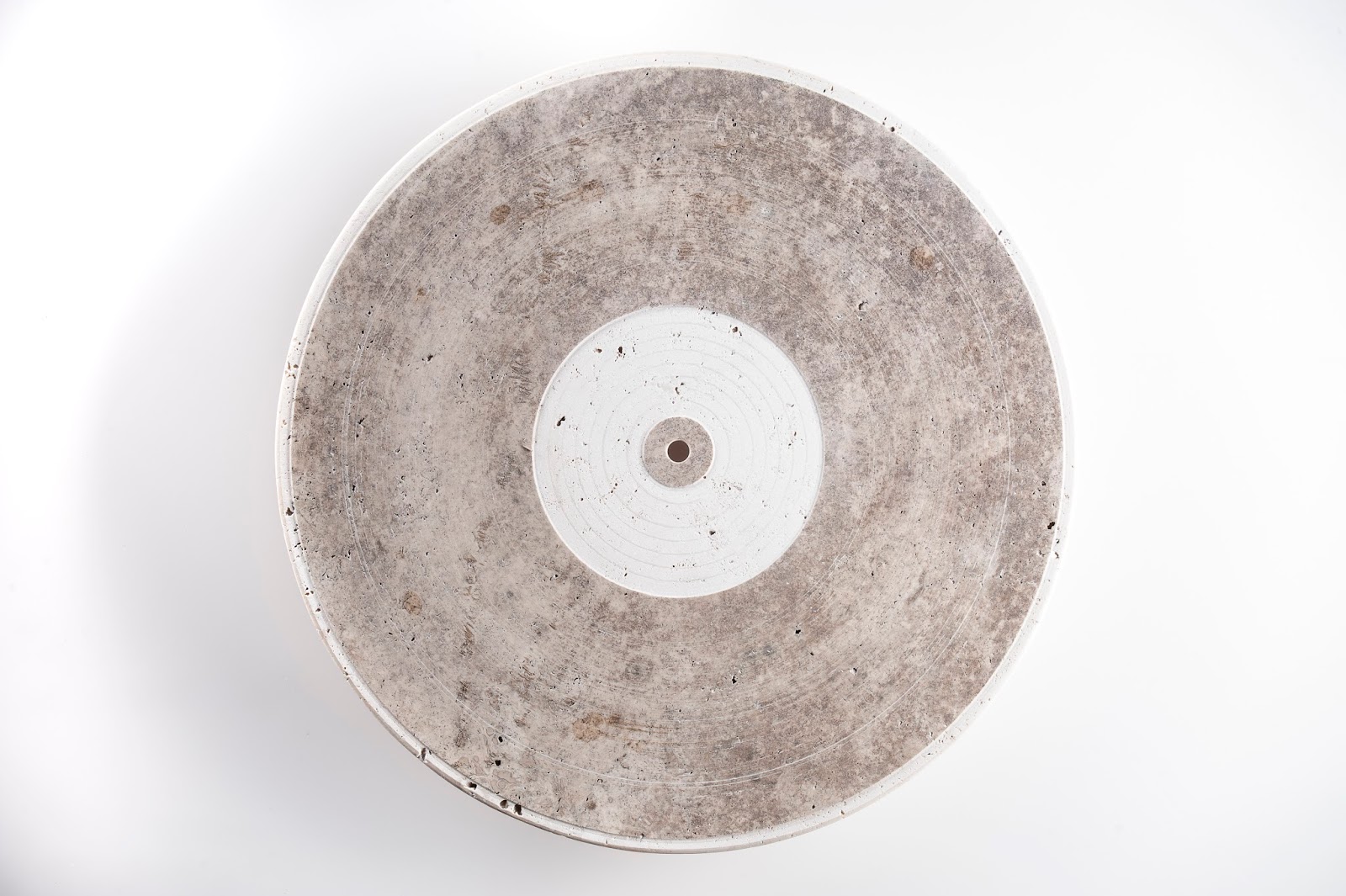
 Italian sound artist Andrea Borghi’s music has always had its basis in the physical, much more so than the tendency of most music to be the auditory manifestation of real-world actions; from magnetic tape and electroacoustic devices to prepared turntables and the unconventional platters he plays upon them (which he calls ‘discomateria’), Borghi crafts his uncanny, spectral music using the interactions between tangible entities and his ability to influence them. VHS sees the artist working with the titular medium, but, unsurprisingly, he doesn’t just glue together segments of video tapes. True to form, Borghi works with the tapes and the recorder that plays them directly, manipulating the exposed mechanisms with the care and curiosity of a dedicated scientist. From the mass of circuitry and spinning reels he pulls electrical hums, rotary drones, and cascading clatter into the midst of his choice VHS plunderings, which include anything from fuzzy conversation snippets to distant howls of wind. As a result, the LP is a restless, shifting mass of both familiar and unrecognizable sounds, a unique chiaroscuro highlighting the precise moment that recorded media becomes perceived.
Review: Shane Aspegren & Jérôme Lorichon – Path Through Infinite Body (Ouvré, May 6)
 Path Through Infinite Body is quite a departure from French musicians Shane Aspegren and Jérôme Lorichon’s last duo project The Berg Sans Nipple. On this short 7″ from Ouvré the two artists abandon the wistful melodies and cathartic electronics of that moniker and set their sights on a style that incorporates elements of drone and concrète music. Aspegren’s acrobatic, tribal drum work is still present, though, and both complements and tempers the outbursts of bubbling modular cells and other more abstract components. It’s this ongoing interaction between controlled rhythm and the more unpredictable electronics that makes the 12 short minutes of Path Through Infinite Body such a delight; in turn, the two bring each other in and out of sync with the steady pulses that often dominate each part. Part II weaves together flitting radio static and a meditative, metronomic throb with a pounding drum beat that steadily increases in complexity before breaking down into a minimalist motorik skeleton—and then all structure is abandoned with part III, whose fluid, arrhythmic improvisations have no regard for any of the careful escalations that preceded them. It’s always a good sign when a release that doesn’t even reach a quarter hour has this much going on. Path Through Infinite Body is always over too soon, but it’s perfectly paced and presents enough layers to make successive listens completely worth it.
Review: Darksmith – Poverty of Will (Chocolate Monk, Mar 22)
So, as you can probably see, this one came out quite a bit ago. Even though I prefer to review releases that are quite recent, sometimes it takes time for me to really mull something over or even find out it exists—or, as in this case, both of those. I have an ever-expanding appreciation for Darksmith’s work, a trend to which this album is no exception.
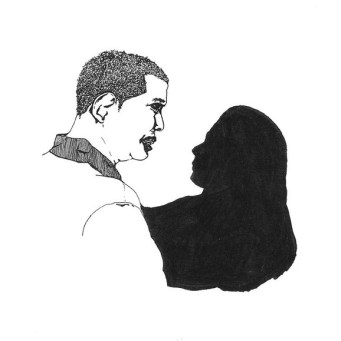 There are sections of Poverty of Will that are truly terrifying. On previous works like Total Vacuum and Gypsy the music occupies an uneasy gradient between the two sides of solitude—the sublime withdrawnness of it all, always in tandem with a feeling of oppressive loneliness—but here there’s something much more frightening. The 36-second introductory track, “Now Try a Dumb Voice,” appears not to be hiding anything behind processing or manipulation, but in true Darksmith fashion it is nigh undecipherable, save for some muffled voices (maybe from a TV?); and in less than a minute a nagging dread creeps in. The hectic found sound collages of “Visiting Hours Are Over” are even further from anything recognizable, cutting and immersive and nightmarish, almost Changez Les Blockeurs-esque in their disturbing detachment. They end up acting as a tone-setter for the uninterrupted recording that follows, which strips the preceding squall down to the hum and hiss of tape playback and echoing footsteps, cast in smoky shadow by what came before. Poverty of Will is scary, I would definitely say that, but Darksmith’s music, more often than not, resides in a distorted sound-world far removed from the world I know, and much of the fear it brings is not at all concrete. Rather, this absolute isolation renders you helpless, completely subject to Darksmith’s eerily alien yet always familiar apparitions.
Review: Kassel Jaeger – Le Lisse et le Strié (Latency, May 5)
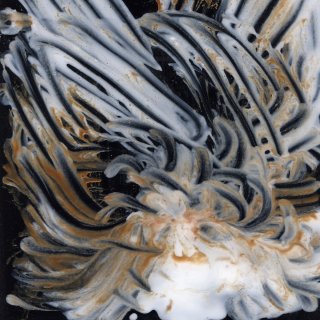 François Bonnet, who releases music as Kassel Jaeger, is an artist with an immense respect for sound. Apart from running the indispensable archival label INA-GRM, his book The Order of Sounds: A Sonorous Archipelago, published by Urbanomic earlier this year, contributed his ideas about the heterogeneity of sound and the lingually subversive way in which we process it to the global discourse. Bonnet’s reverence for the “shifting sonic territories” that surround him is communicated by the profoundly personal way in which he constructs his music; on Le Lisse et le Strié, he processes sounds with a defined idea of texture in mind, sculpting them into spacious, layered environments. It’s stated that the album was “conceived as an exploration of the two antagonist concepts of ’smooth’ and ’striated’,” a duality of focus reflected by how the multitude of hums and pulses occupy the stereo space; some restlessly flit from channel to channel, as if they are “enclosed,” while others expand and contract with the freedom of an organic entity. In the process of creating these abstract soundscapes, Bonnet finds himself in a world where sounds are not fettered by their context in the real world, and instead are allotted autonomy by the listener—an idea very much in line with Bonnet’s writings. Absent of concept, Le Lisse et le Strié ambles through sublime clouds of synthetic curves, electric crackles, and occasional hints of untreated recordings; but it’s also a study in how one person can creatively utilize their identity as an astute listener and processor of sound.
Review: Chemiefaserwerk – New Nacht Pop (self-released, May 5)
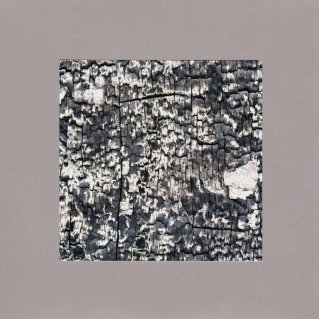
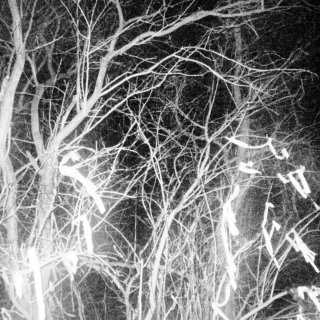 With New Nacht Pop, devoted magnetic tape artisan Christian Schiefner presents his second self-released collection of musical works, this time working with the percussive sounds of lightly struck ride cymbals and hi-hats. True to form, Schiefner’s diligent tape-to-tape layering technique transmogrifies those rattles, taps, and reverberations into stretches of beautifully spectral, sonorous drones, whose ghostly yet slightly metallic qualities are reminiscent of the mystery-steeped compositions of classic musique concrète mainstays such as François Bayle or Bernard Fort. New Nacht Pop is a more focused release as a whole than the more eclectic Listening Stations, with each track exploring the varied possibilities of this versatile sound source. “For Green Tea Tapes” captures a nocturnal, brooding atmosphere of tantalizing tension, distending the spacious forms of decaying cymbal agitations into immersive soundscapes. The following tracks delve more into tactile textures, incorporating the distinctive noises of speed manipulation and some others much harder to identify (like the unassuming but dense cascade of clatters and clicks around which the title track is based). Much like its album cover, New Nacht Pop transfers recognizable physicality to an alien sound-world of the dark and incorporeal.
Review: Tendrils – Collapse (Astral Noize, May 3)
 The kind of technicality at work on Collapse is not that the kind that draws too much attention to itself or hinders the flow of the music (neither of those things are always negative; Executive Distraction Tasks’ Finished With Grind provides tremendous evidence). This new act out of the UK is largely driven by the boundless, raucous energy of hardcore punk, with plenty of driving snare hits, speedy power chord riffs, and briefly anthemic moments—just try not to scream along to the opening lines of “Husk.” But Tendrils spends just as much time twisting this tried-and-true bag of tricks into the sort of complex, contorted shapes they want their music to take on, and thus the energy is maintained through even the most angular of breakdowns. Disarming time signature changes and high-pitched wah stabs abound, all held together by a snarling production style that makes the growling rhythm section sound menacingly oppressive. Dan Couch of Helpless is the newest addition to the band, delivering stark, disturbing, Wasteland-esque imagery in a mixture of powerful, jagged bellows and higher-pitched screams (I can’t help but be reminded of Jon Parkin). Collapse barely reaches ten minutes, but from its invigorating start to a roiling finish there are no breaks along the way.
Review: Systems. – Forced Growth (Powder Recordings, May 2)
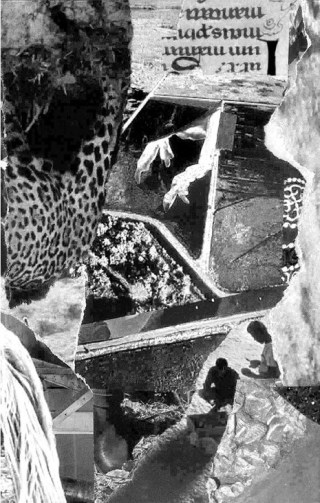 It’s not often that I review two releases from the same label this close together. But in the case of Forced Growth, the new tape from Systems. (also known as Harrison Phillis), and Sterile Garden’s Events Without Reference, not only are both albums fantastic but I also found myself drawing connections between the observations I made about each. The latter, though fragmented and schizophrenic in structure, sticks to a more reserved sonic palette and volume level, Forced Growth tears through cut-up tape collages and distorted nature recordings with blasts of chunky harsh noise. Overwhelming and disorienting in its restlessness, the album refuses to maintain any particular sound for an extended period of time, even seeming to forcefully hack them apart and wrench the mangled pieces away. “Substantial Rule” is a great example of how Phillis gives his pieces identity and atmosphere without much restraint or audible patience; the recurring appearance of the distorted voice samples establishes continuity while the more abrasive assaults roar, contort, and disintegrate atop it all. Forced Growth is an ideal combination of merciless mordancy with a palpable sense of composition and purpose.
Review: Peter Kutin – Torso (Dinzu Artefacts, May 1)
 Sound artist Peter Kutin’s TORSO installation is composed of four speakers on a biaxial rotating structure, their output captured by carefully placed static microphones that transfer the sound they pick up to a four channel PA system. With sounds specifically chosen for this work, Kutin examines the effects of acceleration and spacial feedback on audio sources in motion, a disorienting and hypnotic effect that comes across in the dizzying, rhythmic oscillations immortalized on the Dinzu cassette release. The initially insubstantial presence of heavily processed drones and spectral vocal treatments gains ferocity as their movement changes speed, accumulating strength even as hints of fragility and instability are sown by the sounds’ passage past the microphones. “Part II” presents an extended study of this evolution, with quiet wails gathering volume as they are gradually plagued by squeals of feedback. The recording of the installation also captures another crucial element: that of the human audience, whose subtle coughs and shifts ground the alien sounds that are emitted by Kutin’s elaborate sonic windmill.
 Noise Not Music