
 I expect a lot from the artists I love, so much so that I am often way too critical of their new creative efforts. And as the lead-up to the release of Ariana Grande’s fourth studio album, Sweetener, began, I went a bit overboard. Despite liking the first single, “No Tears Left to Cry,” a veritable blizzard of complaints would inevitably be uttered whenever Grande was brought up. But I was being ridiculous. Did I think that “The Light Is Coming” was a bad song with bizarre production choices and annoying repetition, and that “God Is a Woman” was overindulgent and had one of the trashiest music videos I’d ever seen? Yes. Was I annoyed that there was to be a song on the new album named after Grande’s latest beau? Yes. Was I completely lying to myself and being melodramatic when I swore to never listen to Sweetener? Absolutely, and I’m glad I was. This record is ambitious, sprawling, and imperfect, but it’s also fantastic. All of my doubts were soothed by the surprisingly well-ordered track list and flow, and I’ve even come around on both of the aforementioned singles. “R.E.M.” and “Sweetener” are new favorites, both instances of the perfect production evolution from the bombastic dance instrumentals of Dangerous Woman to this record’s increased use of electronic music and trap flavors. In my opinion, Sweetener sort of falls apart at the end, with the unneeded “Pete Davidson” and the lengthy closer “Get Well Soon,” but hey, I’ve flip-flopped on basically everything else so who knows how I’ll feel about it in a week. Sweetener is no Dangerous Woman, but I was way too hard on an artist I love and respect when I should have put more faith in her. Thank you Ariana, as always.
Review: Fousek / Hansen / Tellier-Craig – No Way of Knowing (Never Anything, Aug 15)

Sound experimenters Karl Fousek, Devon Hansen, and Robert Tellier-Craig come together in this trio to create lush electronic soundscapes. After releases on Dinzu Artefacts and Spring Break Tapes over the past two years, their new tape on Never Anything, No Way of Knowing, is a short C30 filled with spacious electroacoustic constructions, the two pieces (it’s uncertain whether the music is composed or improvised) floating and swelling through different combinations of textures. It’s difficult to tell who contributed which sounds, but it’s not difficult to discern that these musicians really understand how to play well with each other; each element enters at the perfect time to complement and be complemented by the others already present. I’ve noticed at least three unifying categories of timbres used: the synthetic and mechanical, the airy and ethereal, and the organic and tactile. This latter group of sounds is probably the most unique characteristic of No Way of Knowing, and includes things resembling anything from footsteps in puddles to the rustling of dewy leaves; an obvious (but gorgeous) contrast to the tape’s more artificial facets.
Review: Lucio Capece & Marc Baron – My Trust in You (Erstwhile, Aug 14)
 While solo improvisational albums can be, and often are, great, the true potential of freely played and electroacoustic music is realized when two or more artists work together, exploring the way each individual’s contributions interact and coexist. No label supports this argument better than Erstwhile, whose extensive roster of duo records spans a staggering range of creative combinations. My Trust in You, a new disc from reductionist composer Lucio Capece and tape improviser Marc Baron, employs an ambitious arsenal of textures and elements, making use of everything from environmental recordings to noise-encrusted tape loops to disarming passages without any sound at all. Opening track “Believe in Brutus” begins the record in a disorienting fashion; it is here that Capece’s and Baron’s interplay is at its most whimsical and kinetic, with crackling chunks of sound quickly rising, falling, and fighting against interjections of bird chirps and complete silence. In contrast, “Black soils- museums without statues” begins a movement toward more patient, droning structures. It’s a trend that continues throughout the remainder of the tracks, culminating with centerpiece “Kneel for your psychoacoustic rights,” whose cathartic beauty is an unexpected treat after a roiling start. My Trust in You initially seems to be among the more immediate of Erstwhile’s releases, but soon reveals that many more layers are in need of uncovering.
Review: Zherbin – Расстояние (Magma Tones, Jul 13)

On Расстояние, Finnish artist Dmitri Zherbin’s new CDr out on Magma Tones, otherworldly collages draw their contents from a vast pool of sound sources. Zherbin harnesses collections of field recordings, tape loops, feedback, acoustic guitar, and what sounds like some circuit bending too. The whole thing doesn’t even reach 21 minutes, but it’s paced well, evolving through varying moods and atmospheres. “Часть 1” begins with a pleasant clip of people talking over a semi-buried melody, a nice natural mix of sounds that stands well on its own. Before long, Zherbin brings rumbling, mechanical electronics into the mix, keeping them mostly in the background and subtly unseating the feeling of comfort that had crept in. Electric wails and clunks conclude the piece, descending into uneasy, tense territory, before “Часть 2” begins and the beauty is back. This is probably the best part of Расстояние, as flitting stereo-spread guitar meanders around a droning circuit tone; really gorgeous stuff. The latter part of this piece and “Часть 3” largely retread territory already explored, which is disappointing considering the release’s short length; but Zherbin also proves they know how to work with and shape these abstract sonic elements.
Review: Regional Justice Center – World of Inconvenience (Rip Roaring Shit Storm, Jun 15)
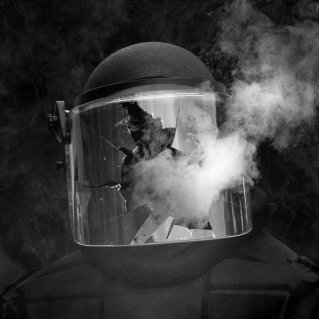 In this age of countless injustices, there are few ways to make your frustrations clearly heard without being loud and angry. Calm debate and compromise is no longer a functional solution; instead, brash and noisy hardcore punk is the way to go. Regional Justice Center’s LP World of Inconvenience is a short but fiery and confrontational slice of blistering thrash-punk, tackling the unfortunate reality of mass incarceration with both violent music and lyrics. The production is weighty and thick but retains a biting, harsh edge, the furious trebly hi-hats and serrated guitars cutting through like rusty knives. Admittedly, the songwriting is nothing particularly special, often adopting the favorite slow-fast-slow-sample-repeat that is so common in powerviolence records, but it’s done so well that I can’t really complain. The sludge breakdowns never devolve into boring indulgence, the pace always picking up just in time. Sure, World of Inconvenience doesn’t exactly reinvent the wheel when it comes to heavy punk music, but it’s exactly the type of savage, vicious music the (inconvenient) world needs right now.
Review: Weiwei Liang – When I Am Not Listening to Music (Auris, Jul 15)
 “Listening” is more than just hearing sounds that were meant to be heard. In the words of sound artist Loren Chasse, listening is “wondrous and personal,” and places the decision of what sounds “good” on the end of the listener. Weiwei Liang’s new tape When I Am Not Listening to Music presents sound situations that sounded good to her, a classification loosely defined by the artist as having notable abstract qualities such as texture, rhythm, distance, movements, and self-formed composition. This latter characteristic is one with which I especially identify; there’s an amazing subliminity when you hear a random sound or group of sounds that seems to have a natural beginning and end. The situations recorded for When I Am Not Listening to Music – anything from “crickets in the tall grass by the river” to the sound of a “1300°C Kiln” – display it exceptionally well, and the pairing of their own organic dynamics with artificial ones created by their sequencing is something really special. Liang’s is just one perspective, and while I think she has an incredible ear for picking out sounds there is nothing that can match the beauty of hearing something on your own, an isolated event with an audience of one. Thankfully, this tape allows for an audience of many more.
Review: Retribution Body – Self Destruction (Glistening Examples, Aug 8)
 Glistening Examples is one the only labels from whom, on a consistent basis, I invariably buy music, and I haven’t regretted this behavior a single time. Unsurprisingly, this is also the case for the new CD from Boston musician Matt Azevedo, also known as Retribution Body. Self Destruction is a minimal but punishing album of low frequency drones and electronics, with a bottom register so prominent that it penetrated my cheap Panasonic earbuds before I realized that I had better listen on speakers. Much like the cover art, the disc is shrouded in inky darkness, with very brief moments of color and light that emerge; it’s almost like we’re listening to much brighter music through a wall of cotton and stone. Actually, that’s an awful analogy because it implies some sort of distance. Self Destruction resides almost too close for comfort, rattling around in your skull with merciless force. The ending of “Self” is disarmingly physical, as all of the layers built up throughout the track are pulled away and the remaining bass, barely audible but vibrating every object in the room, folds in on itself, taking your brain with it. And this is all just the standard version; Azevedo independently released a low frequency edition, for which he states “on most speakers, no audible sound will be produced.” I don’t think I have the kind of woof power to do that idea justice, so the audible version will be just fine for now.
Review: snmtmns – Convolved Spaces (Soft Error, Jul 26)
 Newcastle musician D. Dixon’s new tape as snmtmns, Convolved Spaces, is beautifully insubstantial, from the music itself to the simplistic cover design and uninformative track titles. Composed using field recordings, “semi-modular synthesis,” and digital signal processing, the tracks progress through minimal variation and expansion on already sparse, spectral structures. It’s a purposefully reserved approach, and allows Dixon to draw attention to the auditory properties of these quiet, cryptic sounds, forcing the listener to maintain patience and attentiveness. Though they (presumably) use multiple tools, for the most part the constructions are presented as single entities, homogeneous amalgams of their components – with the exception of closing track “B2,” which explores a sort of call-and-response relationship between metallic drones and outbreaks of modular crackles. I love when perspective is forcibly directed toward such subtlety, and when it’s done well this magnification can make the music so much more rewarding; and when it’s not done well it’s incredibly frustrating. Thankfully, the former is true for Convolved Spaces; I find it capturing my attention even more than considerably more bombastic and lush music.
Review: HDL – Whales Have Hind Legs (Sacred Tapes, Jul 30)
 Whales Have Hind Legs, a new C20 from multi-disciplinary artist Hannah Dargavel-Leafe (HDL), collects tracks made using recordings of an old whaling station in Iceland. These recordings are largely unmanipulated aside from layering and sequencing, and because of this Whales Have Hind Legs is able to paint a vivid picture of this mysterious location. The tape has much less whale sounds than you’d expect, instead focusing on the mechanical processes and metallic creaking of the station, though the atmosphere created definitely has an aquatic tinge to it. The unaffected sounds are quiet, modest, even thin, on their own, but together they conjure images of hulking, rusted structures and murky ocean skies and waters, and somehow still retain that sparseness. HDL’s works are cryptic, immersive, slightly unsettling, and weirdly addictive; I’ve listened to this short tape about four times since discovering it yesterday. Dargavel-Leafe has a sound installation at Maskinhuset in Sweden and is releasing an LP on Calling Cards Publishing later this year.
Review: Metasplice – Mirvariates (The Trilogy Tapes, Jul 2)
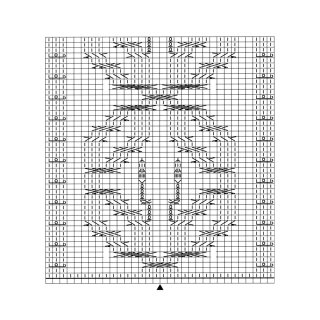 On their new album, Philadelphia electronic duo Metasplice deals in cerebral, high-frequency warbles and damaged rhythms. Mirvariates is certainly a noisy album, with its piercing glitches and distorted rumbles, but it clearly has more goals in mind than aggression and harsh textures. It has those things too, however; opening track “Cirrension” is a swirling range of metallic timbres, an abstract wall of sound whose oscillating tones and mechanical groans shift lazily along a liquid current. Even here, when Mirvariates is at its least structured, the muffled, woozy rhythms that ground everything are present; and they only become more apparent as the record progresses. After the breathtaking “Vase Weight Re-Route,” middle tracks “Aridtaq” and “Subaltic Render” present a less violent approach, with much of the distortion absent in favor of drifting synth clouds. Metasplice have achieved something really special with this balance between calm and confrontation, and it’s what makes Mirvariates that much more diverse and immersive, even with its already captivating arsenal of textures.

