
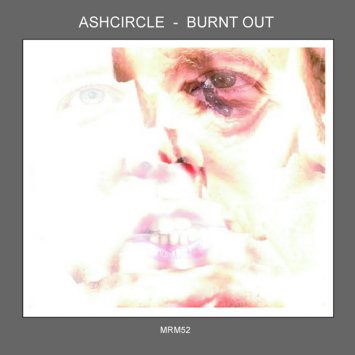
 “Bold, Confident and Ambitious,” like many of the title phrases in the band’s subtly politically charged vocabulary, is presented with a clear sardonic bent, and yet it’s still true that the duo of Tom Macarte and Ciaran Mackle are churning out some of the boldest and most ambitious improvised music today (it sounds confident too, I suppose, in a way, but the fact is palpable confidence kind of depends on a human presence, and there is not much of that here). Dealing less in the miniature metal-plate industrial and alarm blare loops of last year’s Off the Cliff Edge and more in a new, reserved style based in raw pure tones and volatile hum extracted from cracked circuits, Burnt Out initially seems lifeless, methodically stripped of energy, and it’s only on successive listens that this central quality of the music becomes something to viscerally appreciate—the closest comparison (stylistically and experientially) I can make is the trajectory between Chris Fratesi’s Sound for Blank Disc and Red Lead. The business jargon and speechwriter buzzwords that are the closest thing we get to full conceptual lucidity pair well with the much more abstractly rendered improvisations, evoking something that’s neither anger nor despair when the crowded cells of bleeps, buzzes, and bit rot briefly resemble a ringing office phone or renegade smoke detector. The sounds at work here are so innately alien that being mostly certain about their origin—I used the exact same harmonic intervals as the ones in “Short-Term Solution” when I used to mess around with circuits—doesn’t blunt the edge of the mixture of uncanniness, tedium, and ersatz sublimity with which every Ashcircle release cuts deep.
Mix: Spit-Valve Salves
A journey through the wet hisses, burbles, squawks, and squeaks produced by saxophone players who, via various extended techniques, do their very best not to play any actual notes at all.
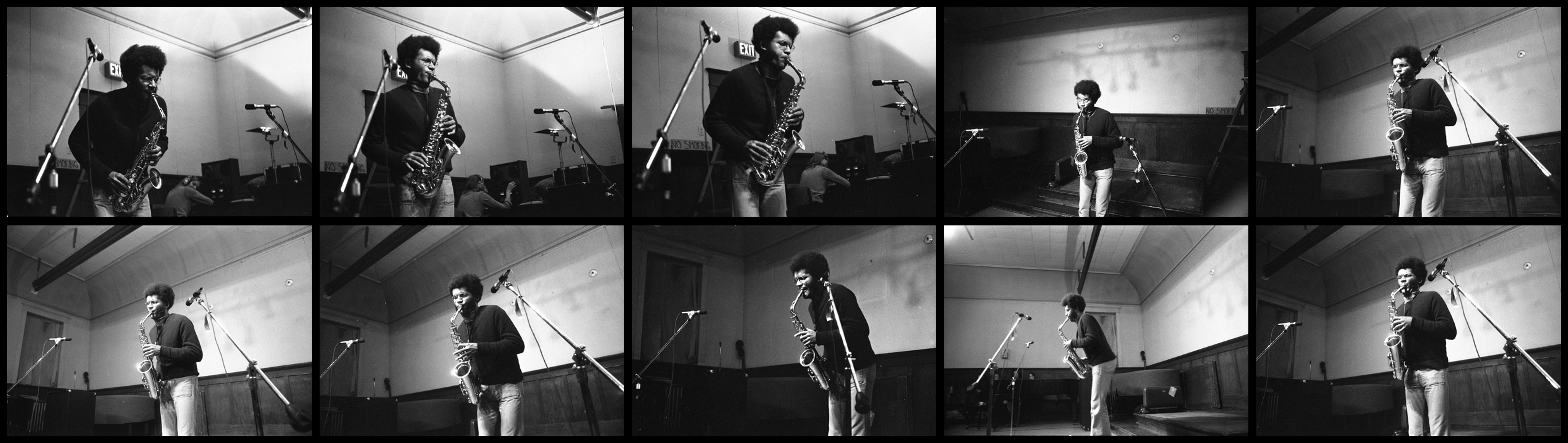
00:00. Nathan Corder & Tom Weeks – “The Pit” from Diamondback (Makeshift Encounters, 2020)
08:15. Marco Colonna – “Nodosariata” from FORAMINIFERA (Plus Timbre, 2018)
12:50. Michael Foster & Ben Bennett – “Offshore Flesh Crystals” from Contractions (Astral Spirits, 2021)
20:09. Fuck Lungs – “Loud Unit” from Fuck Lungs (Already Dead, 2016)
24:55. Fua – B side [excerpt] of Fua (fancyyyyy, 2018)
26:53. Mythic Birds – “The Name by Which the World Knows Them Is Not the One They Themselves Utter” from The Name by Which the World Knows Them (Peira, 2012)
31:17. The Elks – “Geneva #2” from Bat English (self-released, 2017)
35:44. nmperign – “Prey” from Ommatidia (Intransitive, 2009)
Review: Tatung – Conflicted by Truth (Potong Jari, Aug 9)
 Countless noise artists start out by using homemade tape loops as their primary sound sources for recordings and performances, but the structures, dynamics, and emotional nuances these small modifications make possible means many of those artists never end up needing to try anything else. What’s much more difficult is finding one’s unique stylistic niche, whether it’s traditional harsh noise or something more reserved, psychedelic, and indebted to the early days of concrete music that made these techniques so ubiquitous in the first place; if the latter, there needs to be some detour around or harnessing of the plodding languor inherent to brief sound-smears played back at standard speeds, which can end up dragging down any high-octane abrasiveness that may be attempted. Tatung’s Conflicted by Truth CDr, to my knowledge the first release by the Indonesian project, isn’t the most frenetic thing I’ve heard, but no one could listen to these tracks and say the use of loops is a hindrance. Rather than picking just one tincture to extract from the familiar element, the unnamed artist makes use of a diverse supply across the five pieces, from evoking creaking centrifuges and factory decay on the opener to hypnotizing whirlpool psychedelia in the crunchy distortion-storms of “Different Stage of Decay.” Though the ear-splitting heights reached by the more caustic tracks are certainly a thrill, the shorter episodes in between often steal the show, especially the hallucinatory babble of “Broken Spirit”: the sound of you voluntarily pressing your skull against a lathe. Thank me later.
Review: The Snail – Mgnovenie (Shift Lines, Aug 9)
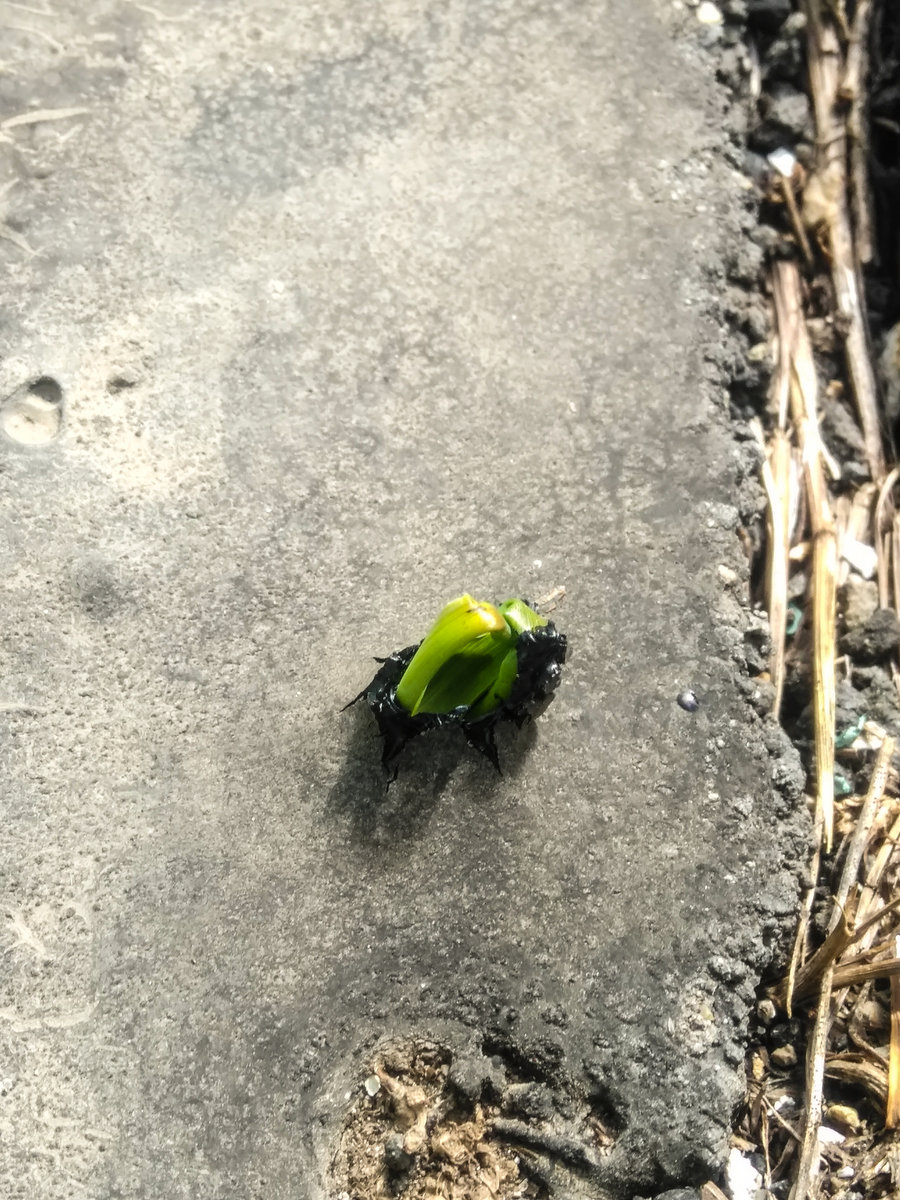 The first release from Russian CDr imprint Shift Lines since 2019, Mgnovenie is the second release by mysterious project The Snail in 2021, and perhaps in any year, since I can’t find anything before Zaimka’s Vnevremennoe in April. It was most likely produced using a similar approach as that tape, which was “designed to periodically slow down the passage of time. The ability to stop and stare at the pixels of everyday life smeared on tape. The author of the project captures unique situational soundscapes. Recording is made directly to the master tape in an accelerated high-speed mode. Then the recording is replicated on cassettes in real time. No mastering is applied.” The normal, and therefore slowing (snail-ing?), playback of the material creates a multitude of strange effects that embed themselves deeply within wider currents: lethargic churns and lo-bit warbles the dense soup from which all other elements sluggishly surface. Many stretches of Mgnovenie tend toward the familiar sonic profile of wall noise, settling into moody, muddy, stagnant sewer slithers in between unpredictable disruptions of reverb-drenched clangs and hornets-nest hums. Something to get more than lost in: more like submerged, entombed, tar-fossilized. Also, if anyone knows what the hell that thing on the cover is (because I’m pretty sure it’s not a snail), please enlighten me.
Review: Industrial Hazard – Submechanophobia (Clinquant Pudendum, Aug 5)
 Stylistically located somewhere quite near another fantastic release I wrote about this year, Springboard’s Midwest Radiator Sessions, this new tape from the fledgling Industrial Hazard project from Full of Hell member Spencer Hazard offers an array of abrasive but strangely welcoming texture collages, mining everything from rainfall rattling a metal duct to hulking, clanging machines for its ample stockpile of source material. The commonality across all the sounds used on Submechanophobia, however, is that each is a different type of “metal or machinery being submerged or exposed to water in various ways,” a crucial piece of the release’s central focus on “the fear or anxiety caused by man-made objects being submerged under water” (hence the title). Hazard’s creations have both the massive, threatening size of gigantic oil rigs belching flames into the dark ocean sky or the rusted carcasses of wrecked cargo ships half-buried in a seabed and the apathetic yet intoxicating peace of open water; concluding cut “38.7924° N, 75.1586° W” illustrates this duality well, at once capturing the awed terror of witnessing something huge slowly sink below the surface and the oddly comforting security that the scale of such an event often instills, the panicked scramble to plug gushing holes in the hull and the morbid serenity of giving yourself over to the dark depths. I’m pushing five listens of Submechanophobia now and I’m still not sure whether I should feel anxious or soothed by this music, but I think I’ll end up settling on the latter, because it’s nowhere near as terrifying as the actual ocean and the things it hides.
Review: drumcorps – For the Living (self-released, Aug 6)
 It’s been too long since I listened to an album that immediately elicited an evil grin and an admiring “what the fuck,” but my favorite reaction was back with a vengeance in response to For the Living, a barbed-wire knot of punishing metallic hardcore filtered through mechanisms borrowed from breakcore, flashcore, drum & bass, and other EDM subgenres. Instrumental opener “One Day” is by far the shortest track at only 43 seconds, but it starts things off in a big way by introducing the unhinged dynamics that will feature heavily in the impending gauntlet with a concentrated shot of sonic violence: disorientingly technical drum scrabbles, clipped screams, general cut-up chaos. The unusual stylistic fusion at work here is both virtuosic on its own and complementary to both of the realms it unifies; the heavy-hitting breakdown plods and deranged vocals aren’t rendered as abstracted textural extracts (unlike Hermeneutics of Fear of God et al.), instead landing with even more forceful impact, as if the limbs of the mathcore beast at the heart of this music are being puppeted by a massive metal exoskeleton that gives them even more tremendous speed and strength. The closing one-two punch of “Compromised” and “Death to Me” is spectacular, and the full power of this singular formula is more comprehensively displayed as the drop-heavy, stop-and-go structures of the electronic influences take over and restrict the cathartic moments of extremity to a sparser configuration, which only further boosts the intensity once they actually do hit. Another brand-new 2021 project with a ridiculous amount of promise, drumcorps has me by the ear.
Review: S. Wurm – God’s Love (self-released, Aug 6)
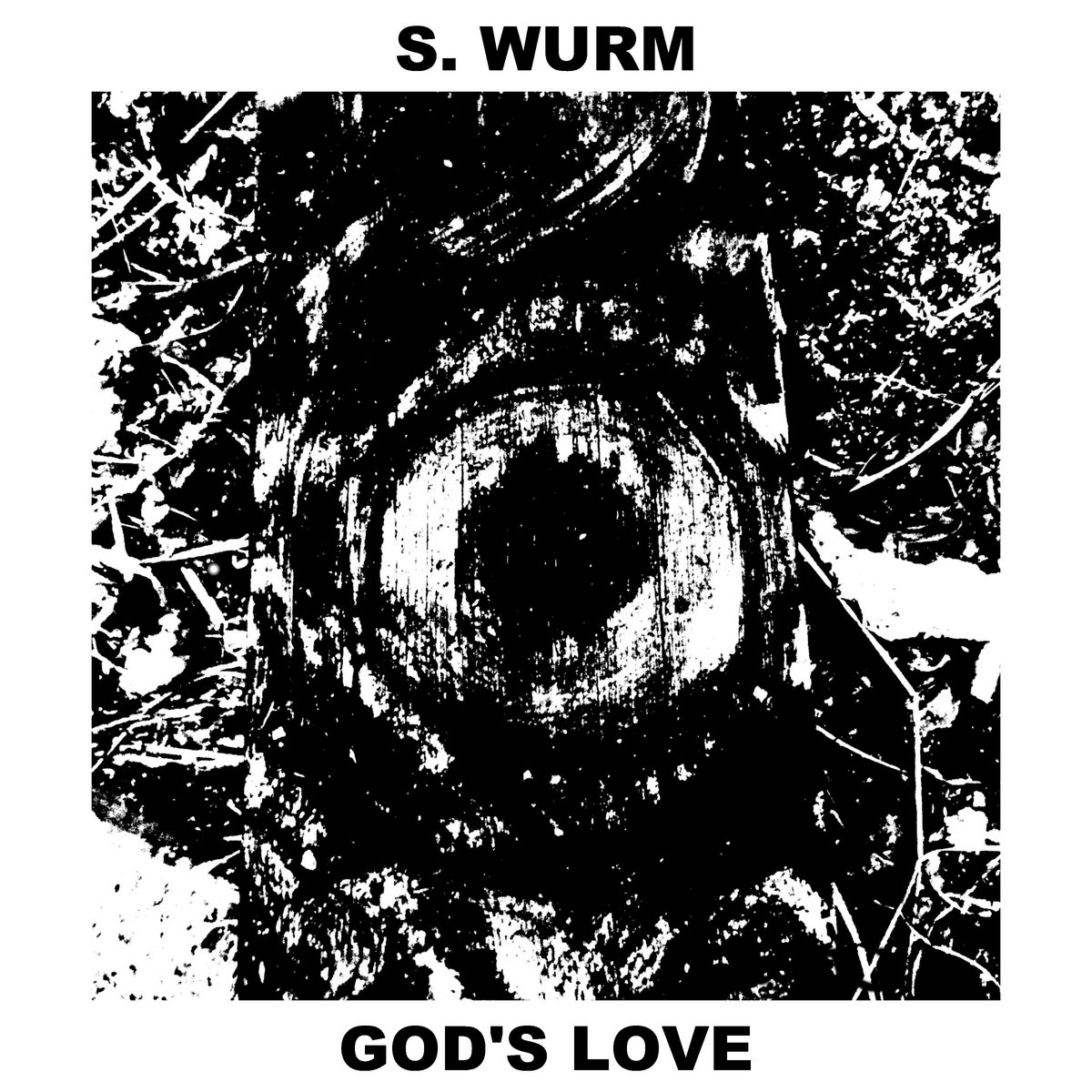 For the most part, the Bandcamp description of God’s Love has already done my job for me, eloquently introducing the new album from Alberta artist Magnus Tiesenhausen (as S. Wurm) abstractly as “a study of sequential precipices, the yearning singularity of fire, desire’s flaying and consuming spiral” and more concretely as “a composted composition: hollow stalks of solstice flower, the tallying of traincars, faltering documentation of field thaws, buoyant insect clouds, and northern-Albertan extractive industry captured by decaying third-rate tape equipment.” Thankfully, the music lives up to and beyond the expectations evoked by these words, delivered in two thirteenish-minute halves of bleak atmospherics, juxtapositions of gritty analog against digital clarity, and fleeting but dense swarms of intricate static noise. On “Ligularia (Horn of the Sun),” detailed insect-colony symphonies and low-end growl lay webbed groundwork for the track’s centerpiece element: what first sound like “Neukoln”-esque harsh saxophone laments but are actually produced with a single dandelion stalk. It’s funny that these blaring tones originate in the most organic of S. Wurm’s source materials, yet they often manifest as the most synthetic of sonic ingredients, clumsily clawing with (lo-)bit nails at the gain limits of the capture device. “(Slumped on Horseback) God’s Love” disguises itself as a relatively more stable meditation, slowly coagulating into a wet mass of graveyard-swamp electronics—think the halfway point between Yeast Culture’s IYS and Hermetic Plot, that Serrater tape I reviewed a few months ago—before tapering off to a bizarre coda, whose bizarre textural dissonance works well as a microcosm for what makes God’s Love so intriguing as a whole: its boundless eclecticism.
Review: Prygla – Prygla (Cryptorium, Aug 1)
In a year without an overwhelming quantity of standout metal releases, it’s nice to be won over immediately for once—and I’m confident Prygla’s eponymous debut will have a similar effect on most readers. The short “Praefica” introduction is humble but also dense and full of portent, in retrospect foreshadowing many of the distinctive idiosyncrasies that make the rest of the tracks so great. There isn’t much in the way of information about the project itself, so for all we know Prygla could either be a quar/quintet or a solo project; at first, I deemed the latter more likely, since the opening moments of “Serafernas Song” feature some blurred hi-hat blasts that sound quite programmed at first, but then the drums start hitting a lot harder with hard-grooving halftime breaks and propulsive gallops heavy on the ride bell, and at that point it starts to not really matter what exactly is making the sounds. The vocals are at their best when they’re higher-pitched and shriek-y, but the guttural growls work well too, especially when the riffs get extra thrashy and chromatic on “Rit” and “Vider,” or when the pace picks up into energetic melodicism for the tentatively hopeful “Ögat.” I found Prygla via the “raw black metal” tag, but the guitars are surprisingly clear and clean-cut; perhaps the rawness comes from somewhere deeper than the surface of the music itself.
Pick up CD copies via Cryptorium’s Discogs page.
Review: Kamon Kardamom – Chronic Euphoria (self-released, Aug 1)
 I’m not yet sure what to call this style of superpowered, complex, often maximalist form of electronic and electroacoustic improvisation that has been cropping up in various unlikely places this year—Beauson’s first two releases and Concrete Gazebo’s Peacock Juice Box, to name a few—but I do know I’m digging it. Kamon Kardamom is a (presumably) new trio consisting of Hungarian musicians Bálint Bolcsó, Orsolya Kaincz, and Máté Labus, and for Chronic Euphoria, their inaugural full-length they route toy turntables, sewing machines, amplified objects, and other doohickeys through a system of analog effects and digital processing that converts inconsequential clunk and clatter to flexible, high-velocity electronic tendrils. After the hyperactive density of the first two tracks (“Baby Robots’ Dance” turns out to be a more fitting title than one would think), “Just Distancing” begins with a hearty helping of fecund emptiness, an empty but well-tilled field out of which formidable stalks slowly begin to snake: long, stretching strands of sheening plastic; effervescent electrical discharge; pressurized spouts of various fumes and gases. The way this piece evolves from sparse, ephemeral atmospherics to immersive tactility is quite amazing, and it somehow happens both gradually and all at once, like poured water simultaneously filling and disintegrating a hole dug in the sand. Brief snatches of voice also play a minor role in the trio’s unique interactions, adding to the feeling of sieved and sculpted totality that permeates the entire release: there’s so much to discover within each and every moment.
Review: Geomag – below the river above the air (Jollies, Jul 29)
 In the wake of the stadium-sized disappointment that was Eli Keszler’s most recent record, I’ve been on the lookout for new skittering ambient jazz fixes, and have found them in individual fragments and semblances across various releases—e.g., the ongoing Jusell, Prymek, Sage & Shiroishi series, Jelinek & Johannson’s puls-plus-puls—but never in a full-fledged form that hits the same spot. below the river above the air, the first recording from this trio of Indianapolis musicians MOS FET, Eustress, and Solid Squares, drifts lazily in the same humid dream-city of shimmering oil-slick rainbows and prismatic vapor as the aforementioned works, but it has little to tangibly ground it other than the occasional swish of brushes dragged across drum pieces or puffs of breath hissing through brass valves. The physicality that keeps things interesting comes in sparing pinches and splashes: crackling artifacts crumbling off the edges of gelatinous synth sweeps, tinny beat loops and warbling shortwave twiddles heard from far off, crowd noise and car horns suddenly too close for comfort. The fluidly organized tape feels extremely narrative, a quality that makes the music seem like it passes faster than puddles evaporating off asphalt on a hot day, and yet this crucial current is never too conspicuous, obscured enough by countless steamed-up panes of stained glass that anyone can imagine their own story. Without the constant presence of anxious drum set trembles, Geomag’s debut is much more of a glide than a stumble, and I can’t imagine it would work as well any other way.
 Noise Not Music