
 IT IT’s masterpiece of a self-titled EP is one of the newest entries in the short list of releases I’d describe as perfect, edged out of the top spot only by Ariana Grande’s Dangerous Woman, which came out just a few months later. The pioneering Pittsburgh band has most recently manifested in the form of semi-related project sneeze awfull, whose debut cassette charts a slightly different, more pop-focused approach to the unique combination of conventional songwriting and sample collage, but they’re back to their art-rock roots with Two Squirrels Fighting Each Other at the End of the World, their first full-length since 2017’s superb Formal Odors. The mouthful of a phrase also provides the incessant refrain of the title track, which upon first listening I found too repetitive, but like all of IT IT’s material has grown on me immensely. While that piece is the most conspicuous example, Two Squirrels as a whole seems to mold itself in the image of newer experiments like the aforementioned sneeze awfull and a “live score” to the Twilight Zone episode “Living Doll”, leaning further into the playful volatility that a “plunderphonics”-esque sensibility often entails without abandoning the crucial moments of straightforward beauty that have seared the band into my brain and heart permanently. “Do Evaporate” distills that duality into a single song, beginning with choppy vocal hodgepodge like a dinky mellotron and concluding with one of IT IT’s most sublime full-band cohesions. “Whole Folder” provides some much-needed grit with angular guitar stabs over a hypnotic motorik beat; “Age of Aquarius” features mesmerizingly intricate bass and drum interplay and captivating sample choices; and “Dulce Dulce” brings things to a close with a delightfully quirky education-audio accompaniment that for me bears fond resemblance to OMD’s work on Dazzle Ships. At first modest and unassuming due to its easy fluidity, the complexity of IT IT’s music sneaks up on you, gradually rewiring your neurons until one day you finally realize there’s nothing else in the world that compares.
Review: Patrick Shiroishi & Dylan Fujioka – のの (self-released, Feb 19)
“The leaves of the trees continued to turn in the wind. The rivers continued to flow. Insects hummed in the grass as always. Crows cawed. The sky did not fall. No President changed his mind. Mitsuko’s favorite black hen clucked once and laid a warm brown egg. A green plum fell early from a tree. Our dogs ran after us with balls in their mouths, eager for one last toss, and for once, we had to turn them away. Go home. Neighbors peered out at us through their windows. Cars honked. Strangers stared. A boy on a bicycle waved. A startled cat dove under a bed in one of our houses as looters began to break down the front door. Curtains ripped. Glass shattered. Wedding dishes smashed to the floor. And we knew it would only be a matter of time until all traces of us were gone.” —Julie Otsuka, The Buddha in the Attic

Of the many entries in the astronomically long list of wrongs and oppression that the racist institution of the United States has wrought against particular ethnocultural groups, few are more starkly visible now than the mistreatment of Asian-Americans (my heart also goes out to the Native, Black, and other marginalized communities who are disproportionately suffering the effects of the pandemic). Accomplished improvisors Dylan Fujioka and Patrick Shiroishi, who previously collaborated on last year’s Neba Neba, directly engage with our country’s hideous abuse of people of Asian descent on のの (No-No) in a context both current and historical. Pictured on the cover of the release are Fujioka’s grandparents and other family members, a haunting choice given the unavoidable association of the early 40s with Executive Order 9066, known more commonly as the mass internment of Japanese-Americans in reaction to the Pearl Harbor attack. This poignant meeting of the two musicians draws attention to the clear parallel between that unspeakable systematic abuse and the hate crimes that are being perpetrated against Asian citizens today—both phenomena illustrate the reality that racism has not at all been eradicated, and that all it takes for it to rear its ugly head yet again is some tenuous connection between a certain group and a national threat, most often spurred on by chauvinistic presidential rhetoric. The skittering exchanges of elegiac saxophone runs, softly struck mallet percussion, and barely audible whispers hiss through broken air much like the constant gusts of sand through the “cracks in the walls” in the concentration camp living quarters (Fujioka’s family was held at Tule Lake), threading impossibly fragile strands of sound and memory through space and time. With such conceptually rich releases I usually make some statement about how the music could stand alone, but in my mind that wasn’t even a passing thought in this case; these disarmingly delicate improvisations are thoroughly steeped in the hardships and emotions that gave rise to them, preventing any listener from turning away from the issue at hand (which mainstream news sources seem to have no problem doing).
All proceeds from album sales will be donated to Asian Americans Advancing Justice. There’s another Bandcamp-fee-waiving day coming up on March 5; please consider supporting not only excellent art, but justice for those who deserve it.
Mix: Sublime Delirium
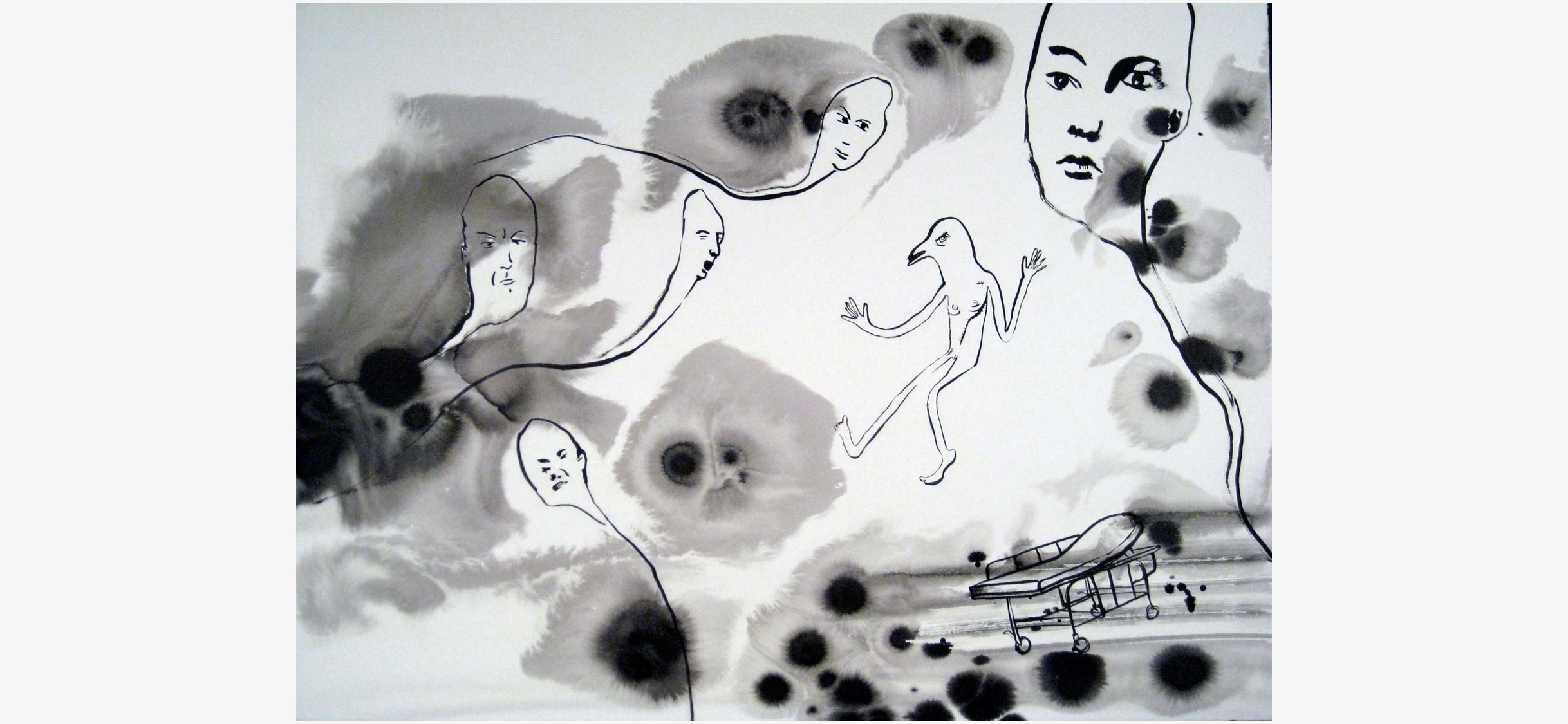
A sequel of sorts to Cooped Up, this collection of tracks traces the acceptance of profound absurdity and incoherence with regard to one’s existence, as well as the fragile and queasy yet undeniably peaceful state of mind that arises once the platitudinal farces of meaning, pleasure, and purpose are finally set aside for good—or it’s just something to relax/fall asleep to, if you’re in a particularly strange mood. Take your pick.
00:00. Black Dice – “Head Like a Door” [excerpt] from Lost Valley (Tigerbeat 6, 2002)
03:59. Michael Barthel – “Verbündete” from Ververbüntede (Coherent States, 2019)
08:26. Sister Iodine – “Les Île” from Helle (Textile, 2007)
16:40. Breeze – “Comfortably Dumb” from Car Masters (Music for People, 2020)
19:47. Pumice – “Murupara” [excerpt] from Land (Soft Abuse, 2014)
25:58. Spectral Park & Kot Kot – “Tuman” [excerpt] from Spectral Park & Kot Kot (Goaty Tapes, 2018)
27:21. Weyes Blood – “Many Voices in the Sand (Transversal Desert Contact)” from Strange Chalices of Seeing (self-released, 2007)
31:32. 1/3 Octave Band – “The System Likes You” [excerpt] from The System Likes You and Wants to Be Your Friend (PseudoArcana, 2005)
35:08. Karnites – “Search” [excerpt] from Pop After Birds (self-released, 2020)
37:05. Mosquitoes – “VS” from Vortex Veering Back to Venus (Feeding Tube, 2019)
Review: Springboard – “The Coward” (Neutral Archive, Feb 14)
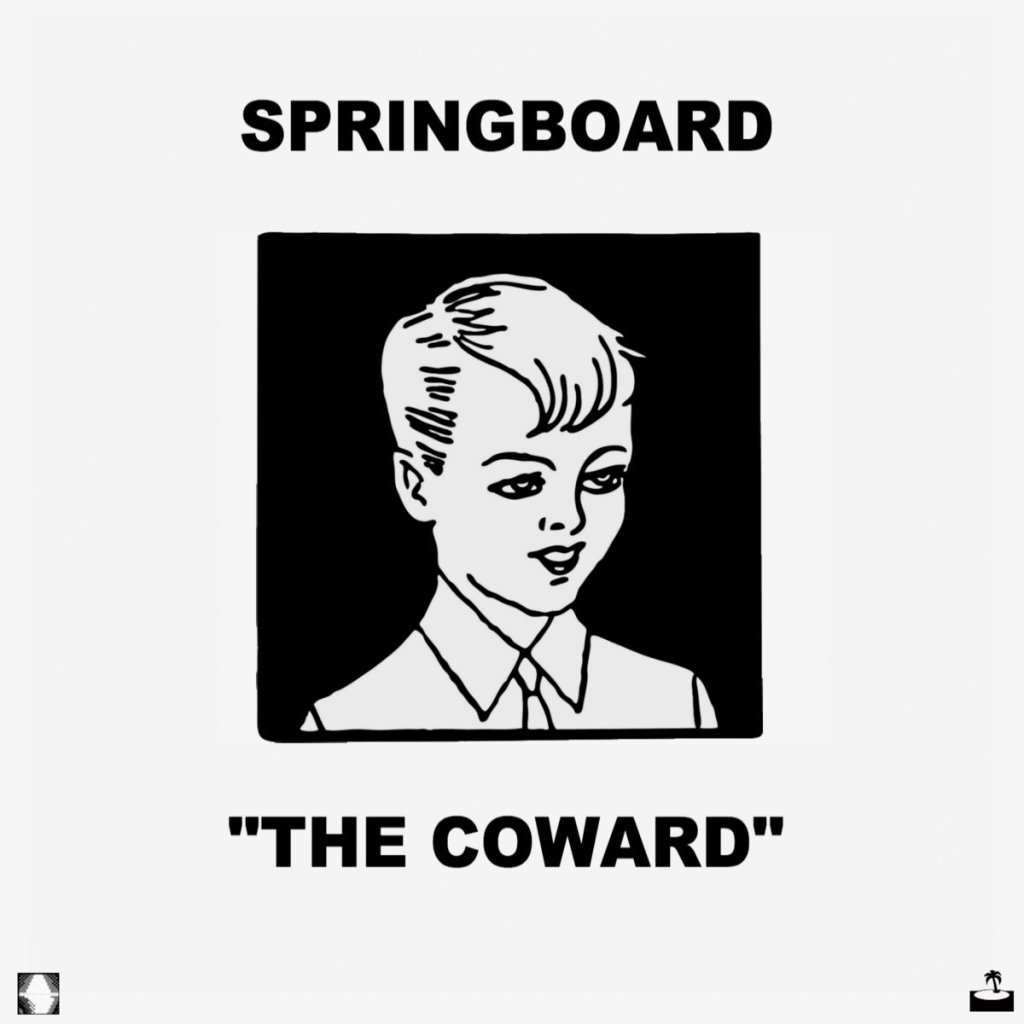 The newest installment in a recent string of excellent releases from mysterious Chicago imprint/collective Neutral Archive, “The Coward” is one of the finer and more engrossing examples of auditory bricolage I have encountered in a long time. I haven’t heard any other material from Joe Cavaliere’s Springboard project, but it’s difficult to imagine anything topping this half-hour opus of “tapes, screams, folly, kit, [and] loops” mashed into an engrossing pulpy paste. Stumbling through variegated vignettes with the grace and poise of a six-legged elephant on roller skates, Cavaliere’s imperfect assemblages proudly display their sloppily stitched seams and jagged overlaps like a child showing off a particularly gruesome injury to their wide-eyed friends, and I find myself paying as much attention to the flaccid superfluity of the sounds as I do to the sounds themselves. The A side could be described as a hazier, drugged-out heir to the vicious volatility of Chlorgeschlecht’s Unyoga, throwing everything from shrill, maniacal human delirium (shrieks, moans, chatter) to what resembles a violent mass extinction event occurring solely within the walls of a sweaty arcade into the thrift-store-bought plastic mixing bowl that is almost certainly not rated for this high of a temperature. “The Coward” intermittently evokes the oxymoronic sensations of time standing still and moving impossibly fast, especially over the course of the subsequent side, which lumbers along with fat flailing limbs of cheap electronics and junk-drum spasms, sort of like if you loaded recordings of every subpar noise set you’ve ever witnessed into a poorly programmed generative AI interface and then shamelessly plagiarized the output—and yes, that is praise; if you don’t believe me, just listen. I cannot seem to get enough of this release, whose intentional obscurities and bullheadedness make it all the more accessible and intelligent.
Review: Psychiceyeclix – SHELPULTURA (Doubledgescissor, Feb 12)
 Remember all those stories about the haunted Furbies? Even to this day, if you Google “what to do when your Furby…” the first autocomplete option is “what to do when your Furby turns evil.” Whether a complete accident or an R.L. Stine–esque case of specifically marketing frightening stuff to kids in order to scare the shit out of them, those fuckers are cursed. And what better way to make use of cursed toys than to torture, dissect, and otherwise abuse them in order to conjure equally cursed sounds? On SHELPULTURA, Psychiceyeclix uses the primitive circuitry of the 2001 McDonald’s plastic Happy Meal monstrosity “Shelby” toy—with absolutely “no FX, plugins, sweaty men or other sounds used,” instead sticking to basics like “pitch shift, EQ, [and] reverse”—to produce one of the better trash-electronic albums I’ve heard in a while. Each of the eleven short tracks is an abrasive onslaught of fast-ballooning distortion blasts, warped speech presets, and damaged melodic fragments like sickly-sweet MIDI loops filtered through an industrial shredder. Whether the artist sequenced and assembled the material using some sort of DAW or performed it all live, the fast-paced volatility of the music (a quality commonly associated with circuit bending, but here it’s even more significant) mines the same overwhelming, adrenaline-pumping exhilaration that the best examples of analog cut-up noise incite. So if you wake up in the middle of the night and see those glowing, murderous red-LED eyes burning through the darkness, play this album to remind that plastic piece of shit what’s in store for it.
Review: Leila Bordreuil – Not an Elegy (Boomkat, Feb 10)
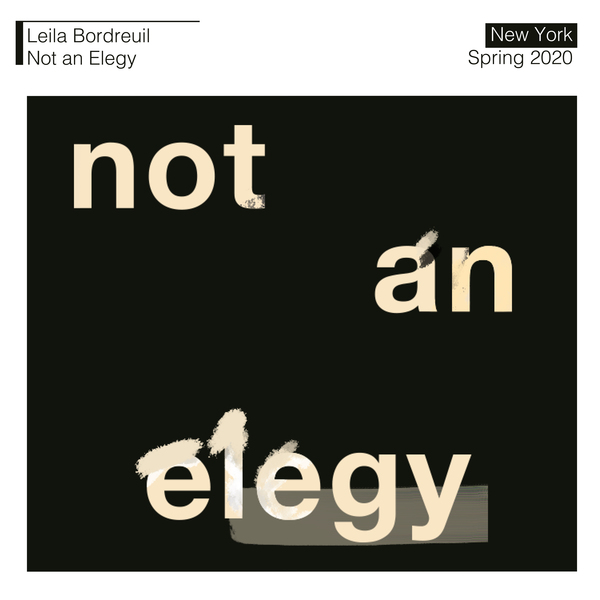 For a track that begins an album called Not an Elegy, “For Tamio” sure as hell sounds a lot like exactly that. Perhaps it’s my own personal emotional association with the cello, which I view as forming one of the more intimate symbioses between musician and instrument, especially in the case of Brooklyn-based sound artist Leila Bordreuil, who has built her formidable career and body of work out of her palpable reverence for that unique relationship. Like the other material of hers I’ve heard previously (notably Hollow, her stellar duet with bassist Zach Rowden) Bordreuil adopts a play style that is both abrasive and rhapsodic, flitting between sticky bow-drones and dissonant attacks that are as much percussive as they are brokenly tonal. But “For Tamio” is far from just a solo cello improvisation; lurking beneath and among the patient artist’s inventive interjections are the spacious sounds of the NYC underground, or the “deserted” city’s “bowels and liminal spaces,” as the release description so poetically puts it. The distinct sound environment of cavernous reverberations, ghosts of far-off conversations, and rushes of the subway trains is at once stage for, audience of, and participant in Bordreuil’s performance, and it’s the crossings-over between these normally exclusive roles that make the piece so enthralling—especially about three-fourths of the way in, when the sublime screech of brakes grinding against the metal track is echoed by the equally affecting scream of somber notes played high on the neck. “Past Continuous” is a much more reserved affair, yawning up from somewhere deep and forgotten with a fragile, hypnotic hum that seems to distort time itself, but nonetheless acts a fitting foil for the A side. Far surpassing the unengaging textures of 2019’s Headflush, Not an Elegy may be Bordreuil’s best work.
Review: Moses & Blue – Mammoth Conglomerate (self-released, Feb 6)
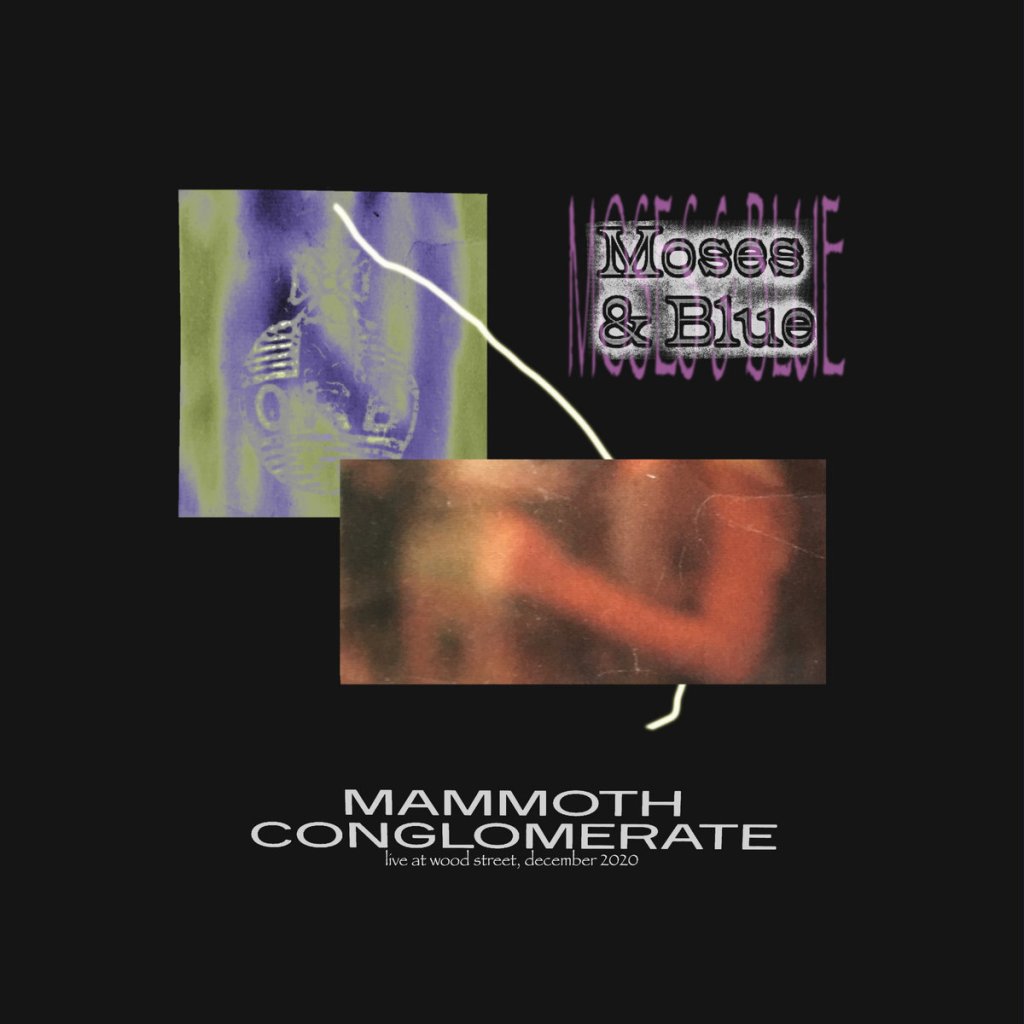 Although I’ve never actually been to Walyalup, a center for Aboriginal culture, history, and art in western Australia, the intimate space-filling sounds of Mammoth Conglomerate quickly make one feel as though they’re right there in the room. On what to my knowledge is the first collaborative meeting of sound artists Annika Moses and Lyndon Blue, atmospheric synth chords and samples meld with rough-edged fidelity and otherworldly vocals in a spellbinding haze. The “live” recording—I’m not sure whether there was an in-person audience; I certainly hope not—was clearly captured using the ambient outputs rather than DI, a choice that only furthers the pillowy, almost hallucinatory presence of the music. Opener “warm in after” spreads a delirious psychedelia further mystified by Blue’s distinctive deep voice, while “it takes something” plays the two members’ singing styles off each other, Moses’ lilting vocalizations and croons dipped in and out of soupy effect chains to create a dense drift that is somehow both haunting and comforting. Mammoth Conglomerate works well as both a continuous suite and a pleasingly sloppy sketchbook-like collection, but the duo shines most brightly on the longer, more patient tracks near the end like “do I wear one look for to a colour hey but I cannot help but here is two cannot help but think of you” (yes that’s really the title) and “Alicia,” which slowly unfurl into mesmerizing and diverse soundscapes. Sleepy, even somnabulistic music for curling up in a corner.
Review: Sarin – You Can’t Go Back (Prosthetic, Feb 5)
 Whether your instinctive response to provocative comparisons is interest or disgust (to be honest, my own tends to be more of the latter), I encourage you to read on after I make this one, which I can’t seem to get out of my head: Sarin’s You Can’t Go Back responds to post-metal in much the same way Andrew W.K.’s I Get Wet responds to metal. I’m probably a much bigger fan of that testosterone-fueled major-key masterpiece than most, but something I think everyone can appreciate is its general approach of molding heavy music into something more palatable and party-friendly (hence the “party metal” descriptor). While You Can’t Go Back is free of bizarre misogyny, excessive wall-of-sound layering, and saccharine keyboards that put even Springsteen’s silliness to shame, I can’t escape the sense that Sarin’s fusion of patient dynamic builds and atmospheric sludge grooves has the same brightness and playful spirit to it. “Cold Open” starts things off quite abrasively, but we soon see a softer side with both the loud and quiet sections of “When You Melt,” which draw as much from meaty power-chord riffs and radio cock-rock as they do bands like Isis and Rosetta. Surprisingly, one doesn’t really notice the quite sparing use of vocals, which typically add a much-needed dimension to this particular style; instead, the band keeps listeners in rapt attention with earwormy, anthemic arrangements and a near-flawless sense of pacing. The latter quality is clearly apparent in album highlight “Thick Mire,” an appropriately titled tour de force of intricate psychedelic jam and grinding heaviness, while the former is perhaps most conspicuous on majestic closer “Leave Your Body,” which blends gruff bellows with soaring guitar melodies to incredible effect. If you find yourself slipping into a dark winter slump, throw on this record.
Review: Chris Williams – Of Yours (self-released, Feb 5)
 As sound artist and composer Chris Williams himself states in the release description, his “first album without any trumpet” is certainly “a special work indeed.” Featuring heavily processed contributions from colleagues such as bassist Nick Dunston, percussionist Aaron Edgcomb, and trombonist Weston Olencki, Of Yours is a short five-part collage of evocative spoken word samples, sublime improvisatory tension, and a fragile, crystalline ambience that is both optimistic and somber. True to the cover, which was designed by Laura Sofía Pérez and primarily features a particularly suave photo of James Baldwin, most if not all of the speech used throughout the suite comes from the renowned writer and speaker (I’m quite terrible at identifying voices, however, so I could be wrong), whose simultaneously impassioned and calmly logical arguments—qualities that remain palpable even when recordings of him are chopped up or assembled—are just one of the many elements that make Of Yours a work truly “teeming with Blackness.” As far as I can tell, the samples are sourced from a 1968 documentary by Horace Ové, which featured Baldwin passionately conversing before an audience with comedian and activist Dick Gregory (listen to a recording of at least some of Baldwin’s portion here); while the film does a great deal to unite the often carelessly disconnected realities of the Black experience in individual white-supremacist states, Williams and Of Yours are deeply concerned with the American side of things, a focus encapsulated by the ironic “land of the free, home of the brave” motif that is repeated several times. Making use of the words of such a prominent figure might be a copout from actual significant creative contribution for some musicians, but not Williams; his endlessly layered sound-sculptures of ecstatic electronics and instrumental ephemera would be enough for a fully-realized work even on their own. The integration of Edgcomb’s virtuosic drum kit performance on “of” is particularly strong, as is the seething yet subdued closer “yours,” which acts as a sort of memorable coda or revisitation of all that came before. This new direction from the already eclectic and adventurous Williams is exciting, beautiful, and impossibly rich in emotion and meaning.
Note: though the cover reads “Chris Ryan Williams,” the album is officially credited to “Chris Williams.”
Review: Python vs Cobra – Bitte Nicht Füttern EP (Brain Pussyfication, Feb 5)
 The short-‘n-sweet Bitte Nicht Füttern EP is by far the most fully-realized release from Berlin duo Python vs Cobra (Thiébault Imm and Kévin Angboly) so far, but for them coherence is incoherence, and as such this tape makes use of both simultaneously. The stripped-down guitar and drums approach to noise rock is hardly anything new, and yet these winding, brutal improvisations of pseudo-punk jam fragments and formless cacophony are undeniably fresh and full of something indescribable that makes the pair’s particular brand of bedlam so much. It could be the palpable creative chemistry between the two musicians; or maybe it’s the raw, unhinged exchange style, which throws the traditional dichotomy of drums→rhythm/guitar→melody into a constant, merciless distortion (see “Castré et Véreux,” on which both instruments seem to pull each other from a dense, impenetrable muck of nebulous dissonance into a firecracker rock groove); or it’s just the fact that these brief musical spasms are so infectiously instantaneous, so unflinchingly volatile, that one becomes obsessed with the state of mind they evoke to the point where there’s nothing else that hits the spot the same way. There is a stunning amount of both violence and serendipity immortalized by these recordings, whose exaggerated edges remain stubbornly rough and cutting no matter how many times one tries to wear them down.
 Noise Not Music