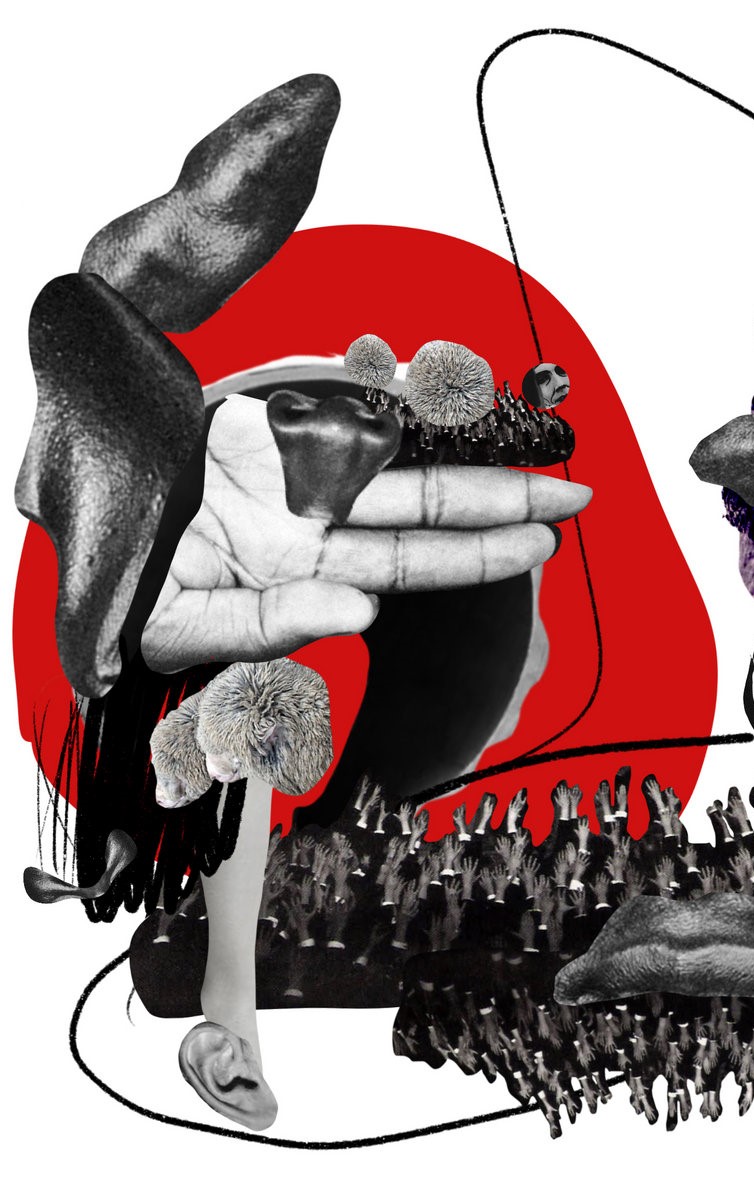
The England-based sound artist Alice Kemp is easily one of the most distinctive figures in the contemporary avant-garde when one thinks of particular styles or approaches. Her ability to sew the smallest slivers of sound into expansive, immersive tapestries is easily seen in the surreal microscopic throes of 2016 modern classic Fill My Body with Flowers and Rice. Since that album, official recorded releases from Kemp have been quite sparse, limited to a difficult-to-acquire LP on Tochnit Aleph last year, a brief single-track contribution to the Amplify 2020: quarantine “festival,” and an even briefer appearance on Regional Bears’ recent sound poetry cassette compilation New Tulips. Thankfully, Songs in the Key of NO, despite being released by the often physical edition–reliant imprint Fragment Factory, is available for paid download or streaming on Kemp’s Bandcamp page, and offers a multi-course meal of both expected and completely unanticipated sonic delicacies. Like Fill My Body…, as well as the short Doll EP from the same year, this 20-minute affair is not for the faint of heart, but in the subtlest of ways. Largely absent, however, are the extended yet minimal spacial meditations or conventional instrument deconstructions; here, Kemp unfurls her creations in a manner much more gestural and impermanent, each new texture or recording a fragile, fleeting brushstroke across canvas disintegrating before our very eyes/ears. Bizarre disparities are unabashedly layered atop one another, resulting in unsettling coagulations like the queasy, shifty “Putrefy My Love,” while the somehow unclean silence left behind when it all fades away is treated and presented with equal reverence. The second part of that track unfolds like a fatally damaged industrial composition, beaten and broken into a metal-filled pulp yet forced to play back anyway, while “Hot Fat Conduit” burbles like the desperate half-breaths of a newly-reanimated corpse. This one will have you looking over your shoulder and checking behind the shower curtain for the foreseeable future.
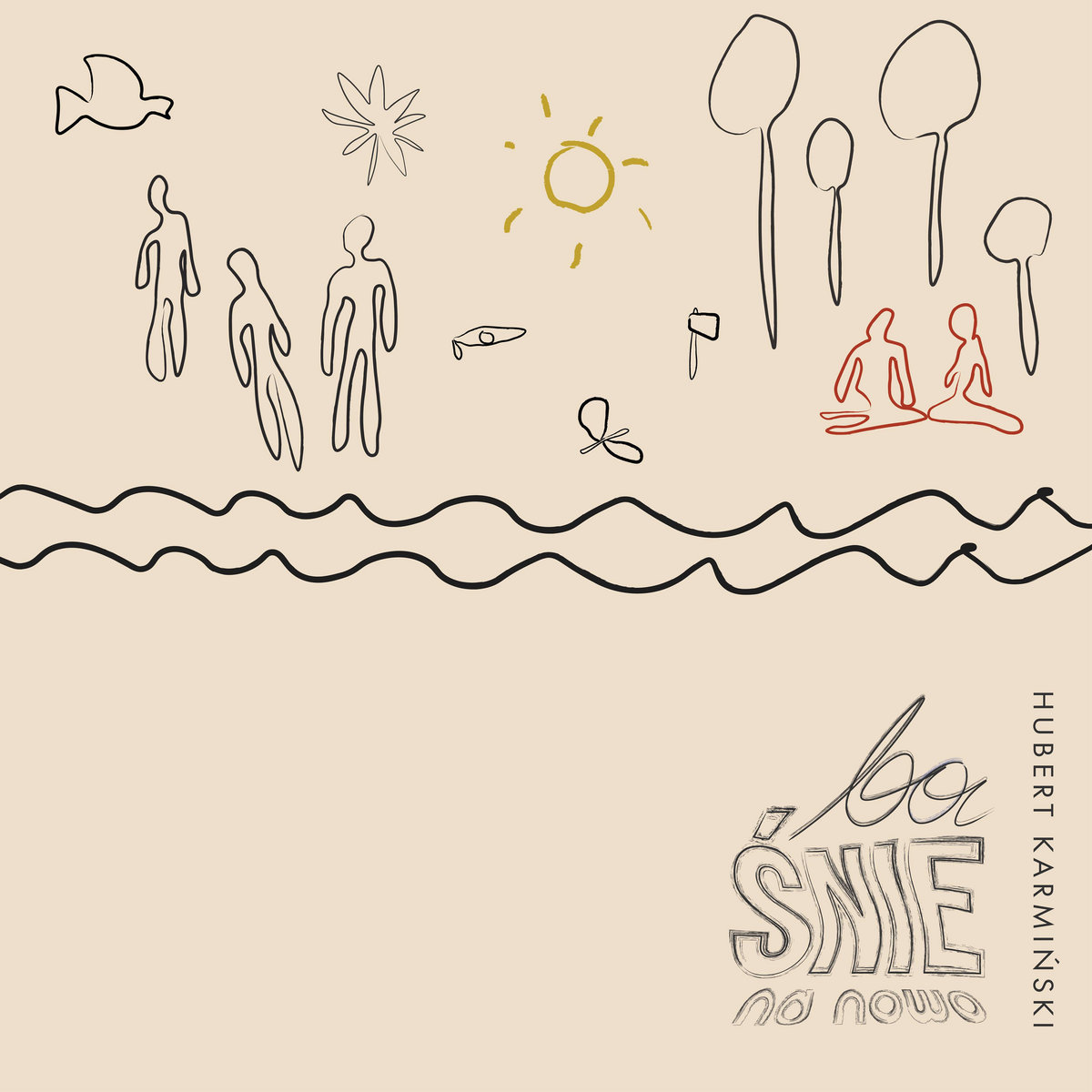
Review: Hubert Karmiński – baŚNIE na nowo (wielu, Sep 27)
Listening to baŚNIE na nowo for the first time was like the climax of those videos you’d watch as a child in which some kid would be scared to go to the dentist or some shit and imagine all of these horrible monsters lurking around corners waiting to eat them—and then the vibe totally shifts when they realize that there’s nothing to worry about because it’s just a regular old dentist’s office (and hey, the dentist herself is actually really nice! Who would’ve thought??). I suppose if one were familiar with Karmiński’s approach to abstract electronica, there wouldn’t be as much of an element of surprise, but since this seems to be the only release of his that can be found anywhere, I doubt anyone would be in such a position. Reading this review before you listen to the album isn’t spoiling anything, either, because even after the true bright, joyful essence of the album is revealed in the second track the listener still hears the brooding minor key arpeggios and unsettling throbs as portents of impending chaos—chaos that never actually arrives. Instead, our expectations of abrasion and dissonance only make the fleeting moments of saccharine beauty even more special. baŚNIE na nowo occasionally echoes the adventurous electronic music that dominated experimental CD culture in the late ’90s and early ’00s yet never leaved behind its modernity—the singular but accessible style of this album makes one wonder if Karmiński has somehow synthesized every subgenre into a deceptively fluid amalgam—or its refreshing brevity.
Review: Dylan Burchett – coast to coast (self-released, Sep 26)
Like the release of Burchett’s I last reviewed (January’s bread, since which he has published six new albums to his Bandcamp) a great deal of coast to coast consists of interplay between inner and outer realms, this time in shorter sketches and miniatures rather than a single longform meditation. But while bread was, in large part, confined to the tabletop as Burchett crafted fragile drones from feedback, synthesis, devices, objects, and other supplies at his disposal—while the sounds of his actual body moving and the silent weight of the surrounding room were somewhat secondary—this new collection of tracks embraces a much less limited and in fact gleefully mobile lens, which captures an endless variety of auditory events both everyday and consciously improvised: sublime crystalline shriek of metal on metal, someone coming home and setting all of their groceries down, Small Cruel Party–esque soundmaking knickknacks twirling on the floor, a heavy garage door closing, barely audible wind chimes clinking in the distance, assorted shuffles and scrapes, earnest electronica warbling from an old tape player. These last few elements all occur in the initial moments of closing track “whistling in the wind,” a piece largely hinged on the unceremonious but excellently executed transition from conversation snippet to euphoric drone—that chord didn’t gradually materialize or fade in, it was left behind by what came before, and slowly decays over the remaining seven-or-so minutes, struggling to sustain itself as more and more imperfections intrude upon its pure beauty. This is a new favorite from Burchett.
Review: Raised by Volts – Eye Fern Eye, Tooth Fur Tooth (Wealth and Physical Stamina, Sep 25)
The older I get, the more I wish people who have absolutely no musical knowledge or “talent” would pick up an instrument and just see what happens. “Outsider” designations are becoming increasingly dubious as the lines between chaos and convention, amateur and adept, and other previously established dichotomies progressively disappear. Why listen to well-produced work with crystal-clear technique when you can get lost in the shadowy smog of Mosquitoes, the fuzz-drenched frolic of Marsilioficino, the fluid dissections of Greymouth, the orchestrated off-kilterness of Palberta? The answer, of course, comes down to personal preference, but I still challenge everyone to question their unwavering, unquestioning allegiance to order in rock and pop music. Raised by Volts, the mysterious and possibly long-defunct duo of Tony Massarello (Who Cares How Long You Sink) and Larry Robertson, certainly abandoned any faithfulness to tradition, instead using an overstuffed toolbox of thrift-store guitars, circuit-bent toys and effects pedals, and a general creative irreverence to improvise fleeting stretches of the messiest possible rock music. Eye Fern Eye, Tooth Fur Tooth, released digitally by Wealth and Physical Stamina, seems to be their only release. The source recordings were made over a decade ago using “multiple consumer-grade tape recorders thoughtfully placed around the room” (truly “Culled from Shreds”), their age only adding to the album’s overall atmosphere of delirious haze and distance both temporal and physical, and have since been “layered,” “spliced,” and otherwise combined or stitched together to create this sketchbook-like collection of half-formed tunes. Would moments like the wonderfully sloppy major key riff in “Delect” or the sprightly, bubbling drift of “Reanimator” be as unforgettably beautiful if not for the low-fidelity, shaky structure, and much-less-than-perfect musicianship? Absolutely not.
Review: Subversive Intentions – Not the Original Motion Picture Soundtrack to the Anthropocene (Histamine Tapes, Sep 25)
Whether their intentions are to subvert, the intentions themselves are subversive, or both, the artist behind the aptly-named Subversive Intentions (Brunswick, Maine–based musician ND Dentico, an alias they also release music under, including several tapes also on Histamine and Things I Wrote at Work on Lurker Bias) conjures an entire world over the 60-minute duration of this spellbinding tape, immersive and unpredictable and thought-provoking. Many of Dentico’s albums have extensive, thoughtful introductions by the artist, and Not the Original Motion Picture Soundtrack to the Anthropocene is no exception. From it, we learn that this new work is not only a conscious return to the more amateurish, lo-fi quality of “early Subversive Intentions,” but also an “album about climate change.” The former is accomplished through the use of smartphone mics for recording, while the latter surfaces both abstractly and directly; trapped in ongoing interaction are sounds of humanity—from everyday conversations and songs and ambient chatter to excerpts from news broadcasts—and a potpourri of much less identifiable textures: contact mic scrabble, clinking utensils, appliance hum, rumbling crackle-drones, delay warble, and other assorted clatter, as well as artfully awkward additions of bass guitar and glockenspiel, while digital tears and glitches mar the later tracks. Various voices speak to the central issue amidst this dust-covered bricolage: a depressing succession of news anchors stating “Hottest Year on Record” headlines in the track of the same name, children and strangers express love for the environment, indignant but exhausted scientists speak in “Taping It Up,” loud-mouthed deniers and even a brief intrusion by the shitbag-in-chief himself, Thunberg’s legendary UN speech is channeled in “House Is on Fire.” As the ugly, inevitable end of the Anthropocene threatens to arrive far sooner than we anticipated, conversations in all forms about climate change (such as this one) become even more critical.
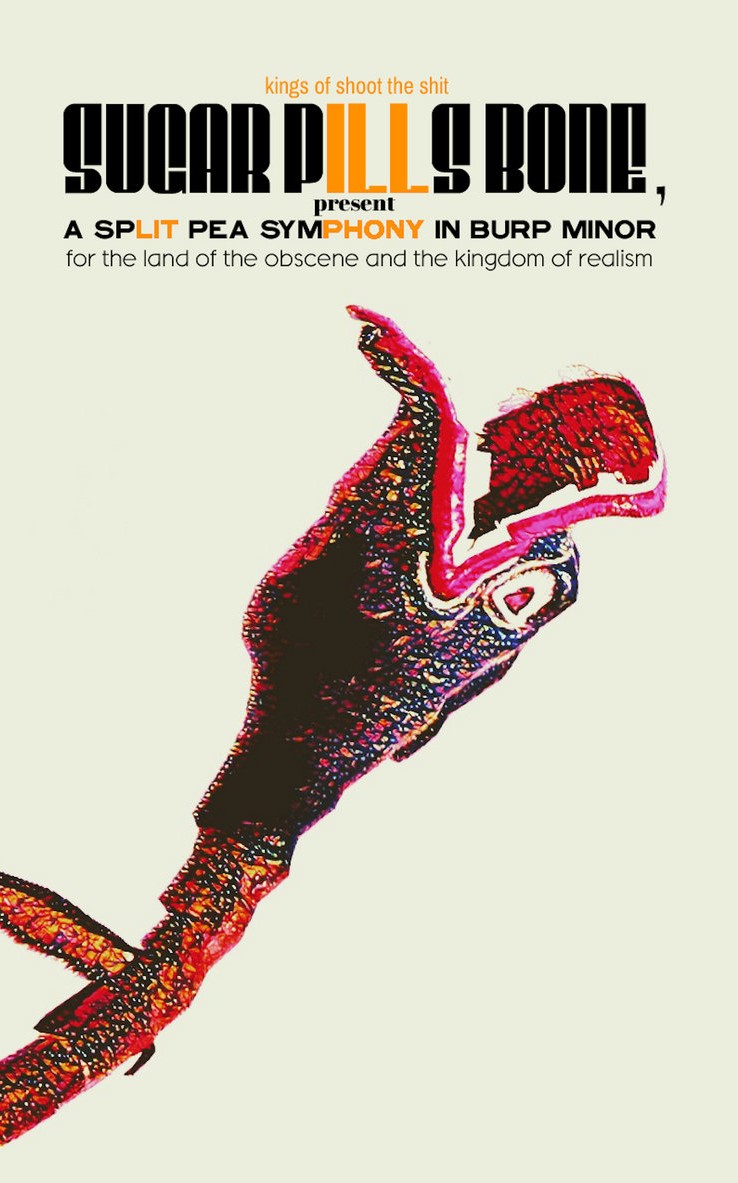
Review: Sugar Pills Bone – Is This My Husband’s Cemetery? (Bad Cake, Sep 25)
It’s always a delight to see young bands grow. Thanks to a lucrative grant from the Global League for the Optimization of Burpwave (G.L.O.B.), the scruffy ruffians of Sugar Pills Bone have added an immense arsenal of new, mostly fictional music-making tools to their arsenal for their new tape Is This My Husband’s Cemetery?: the dysphonometer, scrotumpipes, weasel teeth, ladles, air keytar, armadillotar, badgermin, and many more. The music, as always, manifests in the delightfully sloppy form of “plunderphonics” that the group has made entirely their own, this time seeming to rely on more pure sample-collages than ever before. Across sixteen bite-sized tracks, one trips, slips, and slobbers all over an unyielding current of heavily manipulated speech, plasticky stretches of fast-forwarded tape, pop songs chopped and ground into unrecognizable giblets, infrequent but always-unidentifiable field recordings, and more. The proceedings also coagulate into something more narrative than past releases Lumb and Slack Babbath Plays Peep Durple, albeit in a very distant and surreal sense. There are temporary characters who seem to advance similar topics or themes, conversations artificially spliced to create newly inhuman interactions, and the consistent presence of news bulletins and other familiar cultural or historical markers makes one feel as though they’re witnessing something actually happen, even if it’s nearly or completely impossible to decipher what that “something” is. The simultaneous conceptual absurdity and purely musical/textural appeal in this ridiculous project’s creations, especially this one, is something I truly value and enjoy. It also, I think, makes a case for my belief that the humorlessness of experimental music as a whole has been tremendously overstated and misframed. In any artistic medium, humor is not something to either vacuum out or forcibly, and therefore awkwardly acknowledge, but instead a useful—ultimately unnecessary, yes, but useful—flavor to harness within your work to the extent that you so choose. It augments, structures, changes; it does not taint or reduce or trivialize. Humor is also not an element that should be considered a gimmick or entirely context-based—I’m certain that even if Sugar Pills Bone’s releases were distributed without any sort of outlandish verbal preface, bizarre track titles, or colorful artwork, they would still be hilarious, because, as is always the case, the observer ultimately generates their own meaning (and their own laughter).
Mix: Anything Goes
You can make music too! Confine yourself to a room with some trusted lunatic loves. Bash some metal garbage cans, scream your takeout order from last night over and over again, stomp on a thrift store guitar until it begs you to stop, use your human body as the highly mobile vehicle of destruction that it is. You’d be surprised at the amount of completely unmarketable trash you can generate. But hey, if it’s quality trash, someone—probably just me, but hey, I’m someone—will listen to it and put it on a mix.
Note: Be prepared for some jarring transitions. Maybe this will teach you to always stay on your toes.

00:00. Akke Phallus Duo – “Kendal Black Drop” from An Insatiable Demand for Tea (Devastation Wreaked by) (Tanzprocesz, 2015)
06:37. Global Distance – “I’m Dancing (My Troubles Away)” from Lover’s Cove (Human Conduct, 2012)
10:22. Roman Nose – “Ty Tryst” from Roman Nose (Singing Knives, 2018)
14:46. A Band – “All Good Things” from April Twelfth Nineteen-Ninety-Two (self-released, 1992/2009)
17:39. Micro_Penis – “Chimio” from Tolvek (Doubtful Sounds, 2015)
20:25. Katz Mulk – excerpt from side B of Katzenungen (Sacred Tapes, 2017)
24:42. Bren’t Lewiis Ensemble – “Hummus” from Out Patience (Butte County Free Music Society, 2011)
28:31. Can – “Peking O” [excerpt] from Tago Mago (United Artists, 1971)
32:22. Prick Decay – “Sneaker Pimp” from Guidelines for Basement Non Fidel (Very Good, 1995/2016)
36:41. Psychic Sounds Ensemble – “Batch 2” [excerpt] from Sonic Fermentations (Psychic Sounds, 2019)
Review: Z(erpents) – Black Mold and Hot Springs, Taipei (Future Proof, Sep 21)
I’m not entirely sure what I was expecting from Black Mold and Hot Springs, Taipei, but it wasn’t this. This album is pretty damn weird, let me tell ya. Composed of musicians from Rhode Island, my own state of Ohio, the United Kingdom, Taiwan, along with Taichung-born, LA-raised guitarist Paul Lai, the new-ish Z(erpents) quintet is multinational on multiple levels. Despite the great distances between the members, all five congregated in Taipei to record the LP’s seven tracks live in studio. While all the material was spontaneously improvised, drummer Joseph Mauro contributes… some semblance of conventional rhythm to the cacophony at times, occasionally reminding me of the incendiary free-rock of jazz-originating bands like Last Exit or Arcana—but not quite, because when beats do surface here they are broken, battered, frequently knock themselves out of and back into time, stumble and scramble sloppily to a nonexistent finish line. Tempering the hyperspeed percussive tremors is the angry, confrontational saxophone playing by Xiao Liu, an eclectic and virtuosic stream of fiery solo licks, atonal screech and stab, and ear-splitting holds. It’s anyone’s guess as to what the hell is going on in “Flotation Divides,” the 24-minute opus that closes Black Mold; it’s an ambitious track that demonstrates the glorious, noise-drenching onslaught that has been threatening to break through the entire time, not a quiet moment with relentless fills and temporary odd meters, out-of-place synth melodies that end up transforming the entire structure of the piece, what I think is the vicious bowing of an upright bass along with guitar that swaps between shred and swirl at the drop of a hat. Just after the halfway point, the track suddenly falls apart at the seams, splitting into large disparate pieces and climaxing with an awe-inspiring abstract vocal performance by Swivel. Harrowing but truly life-affirming stuff.
Review: Marco Paltrinieri – The Weaver (Canti Magnetici, Sep 21)
I don’t think I’ve ever mentioned it here before, but among other mental health issues I intermittently struggle with something generally referred to as DP/DR: depersonalization/derealization disorder. In my case my symptoms largely take the form of the latter; I am bombarded with intrusive thoughts that convince me of a deep, desolate solipsism, a reality that is simply the product of my void-confined immortal consciousness keeping itself occupied. It’s hard to accurately describe to others how terrifying and utterly isolating it is, but one way I try to convey what I feel is through the channeling or sharing of creative works that capture such existential bleakness (Perec’s A Void, Hertzfeldt’s It’s Such a Beautiful Day, Beckett’s later novels, and Kaufman’s new adaptation of I’m Thinking of Ending Things are all semi-recent examples). With its introductory statement that it actualizes “the memories and thoughts of a creature living in a world in which the distinction between reality and simulation, as well as between psychic space and external environment seems to have definitely collapsed,” sound artist Marco Paltrinieri’s new release The Weaver seems to fit the bill. I also feel an unsettling connection to some of the phrases featured on the sparse cover art, notably “the result of a logic too complex to understand.” But I made it through most of this six-part odyssey with hardly any chilling splashes of anxiety or thought spirals, because much of The Weaver reminds us, both explicitly and implicitly, that a consciousness subjected to such circumstances need not lament upon self-awareness. “There is no inside or outside here,” the soothing voice reveals as reverberating tones spill into a warm emptiness; “everything seems within reach, in the eternal attempt to define a perfect present.” Unfortunately, the conclusion of the album is not exactly an uplifting one. The two-part “The Other Body” spins a harrowing threadwork of flitting glitches, gutted speech, paranoid whispers, and dread-filled rumble as the speaker descends deeper into doubt and despair. Part II especially really got to me; download the lyrics here and you’ll see what I mean. With superb, immersive sound design and a concept that hits way too close to home, The Weaver will most likely haunt me forever.
Review: Pumpkin Friend – Checking Out of the Boredom Hotel (self-released, Sep 13)
My initial impression of Checking Out of the Boredom Hotel was that, at least at first, it kind of sounds like someone Salmon Run’ed the fuck out of that Disney haunted house album with the racist lady narrating each track. Central to the concise release is the mysterious Pumpkin Friend’s own poetry, drawn from a book produced in 2004 in a run of “just one copy.” More than a decade and a half later, perhaps finally roused by the stirring of this apocalyptic autumn, the Friend has returned to these words with plenty of bizarre sonic accompaniments in mind, many of which are sourced from free Creative Commons sound archives, giving the album a pleasing and slightly unsettling amateurish feel. Our Friend describes their poems as “experimental,” an evaluation with which I’m not sure I’d concur, but they are certainly hilarious, especially “The Soda Factory: Room 08,” its outlandish narrative relayed with a level of engagement just a hair above complete apathy. Further fleshing out the strange world of the Boredom Hotel are sighs, snores, gasps, bubbles, clacking keyboards, spooky synths, ticking clocks, and countless other ornaments incorporated with varying levels of abstractness. This little 12-track suite is short, but is also a satisfyingly wild ride. Still not really sure whether it actually happened or not.