
 I think my steadily increasing fascination for auditory garbage has formed a terminal trajectory that will end with me abandoning any devotion to coherence—via both input and output—altogether, and I’m just about already there with this new obsession over Strange Mammals of Doom Are Strange 2. Divided into seven untitled tracks, the most recent, partly self-titled offering from anonymous Kraków artist Strange Mammals of Doom is a dark, grimy foray into the murky intersection that connects countless genres of corner-dwelling abstract music. Drone, ersatz electronica, moody dark ambient, humbly cinematic synth, and lurching, lazy, lo-fi wall noise are all crudely yet carefully sculpted into chunks of detritus, mottled driftwood floating on the still surface of a rotting reservoir. These sonic mud-effigies are reliably bizarre and enigmatic, but their specific contours aren’t nearly as consistent: in the first segment moss-choked cavern dross melts into something more melodic, the next embraces the swollen, stubborn stagnancy of amplified electrical currents, and the dense, almost aquatic din of the one after that seems to always be building toward something that it never reaches. And after that there are still four more to go. Are Strange 2 plays like a tinker session somewhere in the depths of a dusty, forgotten electronics depot, and, much like the weird, sleepy supernatural that always seems to lurk in such places, it has lodged its hooks quite deep within me. If only I could, you know, see or feel them. Strange.
Author: Jack Davidson
I like to listen to, read and write about, and play music.
Review: VEIDRIK – HAZARDAJ (Amateur Electronics, Apr 13)
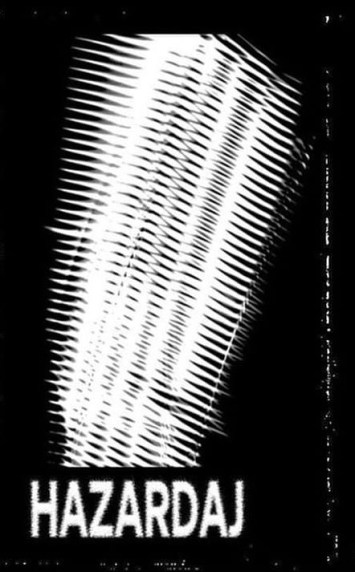 We’ve all messed around with Audacity or whatever other starter DAW we could get our hands on and loaded raw image data as a sound stem for some chaotic computer-noise action, but it’s a lot more difficult than one would think to make those unpredictable slabs into music that’s actually worth listening to, even for those with as shockingly inclusive of a definition for music as most of you most likely have. Enter VEIDRIK, a Chicago-based project whose materials are sourced entirely from photography taken previously by the artist, mercilessly converted, assimilated, reshaped, malformed—whatever you want to call it—into sharp, spiky, complex arrays of dissonant frequencies and impossible textures. Despite the passive, indeterminate nature of this most significant aspect of VEIDRIK’s artistic process, the final results are quite the opposite; the eight concise tracks that comprise HAZARDAJ are as confrontational and exhilarating as the most energetic tabletop-harsh, soaring and piercing and painful and gestural—plenty of pointers taken from Hasegawa and friends. Complementary layers are meticulously arranged to create an immersive stereo listening experience; the artist recommends headphones, but I imagine this tape would sound just as great through a nice set of appropriately placed speakers, provided no pesky neighbors or skittish pets are around to discourage maximum volume settings.
Mix: Night Tearers
Been wanting to make this one for a while. If you were to get kicked to death in the pit (if those are even still a thing after all this) and sent to hell, this is what your eternity of suffering would sound like. Could be worse.
00:00. Hayworth – “15 Seconds Alone in the Hot Tub” from I Now Pronounce You Fucked and Depressed (self-released, 2009)
01:10. IDYLLS – “Lied to” from Prayer for Terrene (self-released, 2014)
07:41. Arkan Azid – “ASTRALSUIZID” from ASTRALSUIZID (self-released, 2020)
10:54. Gaza – “I Don’t Care Where I Go When I Die” from I Don’t Care Where I Go When I Die (Black Market Activities, 2006)
12:13. Unyielding Love – “The Pregnant Hurt” from The Sweat of Augury (various, 2016)
16:44. Irhagar – “- ̢̛҉͠ ̕͟ ̵͟͠ ̵̶̀͘ ҉ ̵̨́́̀ ͏̵ ̴̡͘” from Sutra (self-released, 2020)
18:36. Mahr – “Noctaeon” from Antelux (Amor Fati, 2018)
21:31. Endon – “Etude for Lynching by Family” from Mama (Daymare, 2015)
26:22. Miscarriage – “II” from Imminent Horror (Sentient Ruin, 2019)
33:41. Shora – “To Further Confines” from split with Merzbow (Bisect Bleep, 2002)
Review: ____ Quintet – ___ Quintet (music.com, Apr 10)
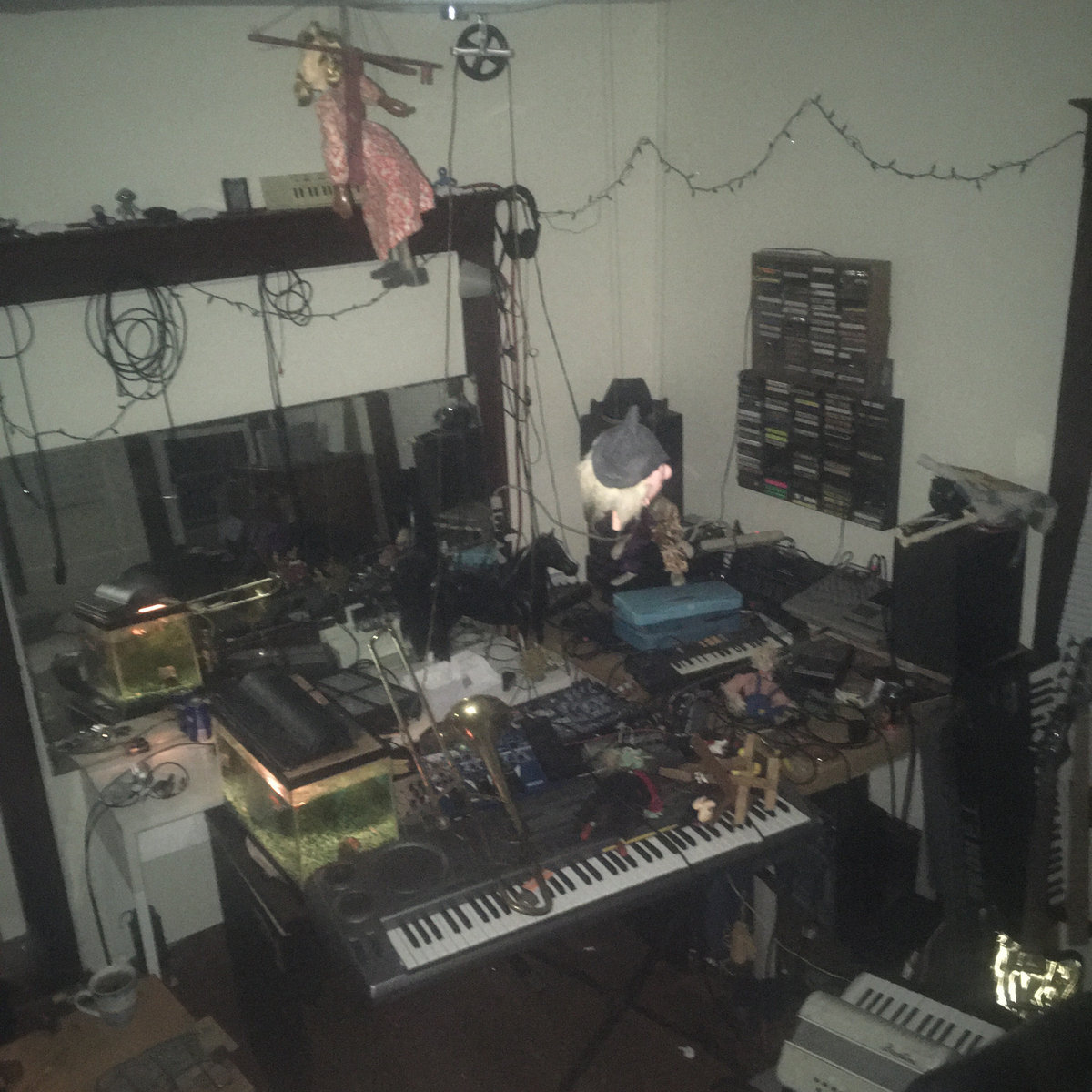 Even for someone as woefully, archetypally Gen-Z as yours truly, whatever the fuck is going on over at the music.com Bandcamp page is pretty damn indecipherable. However, a (relatively) more coherent silver lining to the almost grotesque cesspool of stale internet post-irony has been a set of two albums from a mysterious collective of musicians referred to only with blanks: January’s . featured _____ ______ and ___ ____ collaborating on a dusty mess of electroacoustic tangle and tedium, and for ___ Quintet the pair is joined (I think—either _____ ______’s last name gained a letter or they hyphenated it with someone else’s) by three more companions wielding thrift store guitars, scuffed horns, no-input mixing boards, and cracked plastic keyboards to generate an even more complex racket of basement bunkum. While much of . reminded me of the elusive, warbling beauty of Sunshine Has Blown (a comparison I unfortunately do not get to make very often) with its gestural use of tape blurring, loose string plods, and overall spellbinding lethargy, the Quintet is unsurprisingly more active and immediate. Tracks like “&#rJ$GT}%Y86*@A8” are good abbreviated representations of the bizarre sound the five participants conjure: noodling flurries both near and far; overlapping, even conflicting layers; an inexplicable forward inertia; and an atmosphere that’s not quite claustrophobic but definitely not spacious either. I suppose listening to ___ Quintet transports one, at least in part, to that cluttered room pictured on the cover (at least we don’t have to physically be there; God knows what the smell is like) to become just another piece of an endless pile of junk, simultaneously contained and catalyzed by the confines of the dreary grey walls.
Review: noemienours – Tardigrade Bouncing (self-released, Apr 10)
 Many years ago I discovered and listened to Windswept Trees & Houses, the first compilation by the Jewelled Antler Collective, and since then life has never been the same. Through the wide-eyed, wonder-filled woodland warble of bands like The Family Apostolic, Thuja, and The Knit Separates I gained a new appreciation for nature that far surpassed the simple acknowledgement I’d always held; the outdoors became not just a place to be but a place in which to do, to make and collect and listen. noemienours hails from Stockholm, many miles from the JAC’s home base of the sun-drenched west coast (although Kemialliset Ystävät were featured on Heat & Birds, the follow-up to Windswept Trees), but the sublime, artfully naïve reverence of these “all-ages bear-saving non-ideological vegan drug-free home-recorded lullabies from the forests of Sweden” gives me that same childlike burn for adventure, possibility, and harmonization. Carefully laid to tape using an 8-track reel-to-reel, the delicate meanderings that comprise Tardigrade Bouncing are speckled with the dusty brightness of tape hiss; clean, plucky electric guitar; and gentle, often barely audible percussive backing that imbues many of the tracks with motion simultaneously driving and lethargic. But while these soft serenades bolstered by noemienours’ haunting vocals and sparse, elegant piano are sunny enough to make you smile, they also hold a deeply elegiac current that only reveals itself upon repeated listens. This artist has a profound love for living things of all forms, and any such empath has plenty to lament in the twisted world we’ve built—we’re quite lucky that they chose such an unforgettably gorgeous way to do so.
Review: Joe Coghill – Conrad Snae (Czaszka, Apr 6)
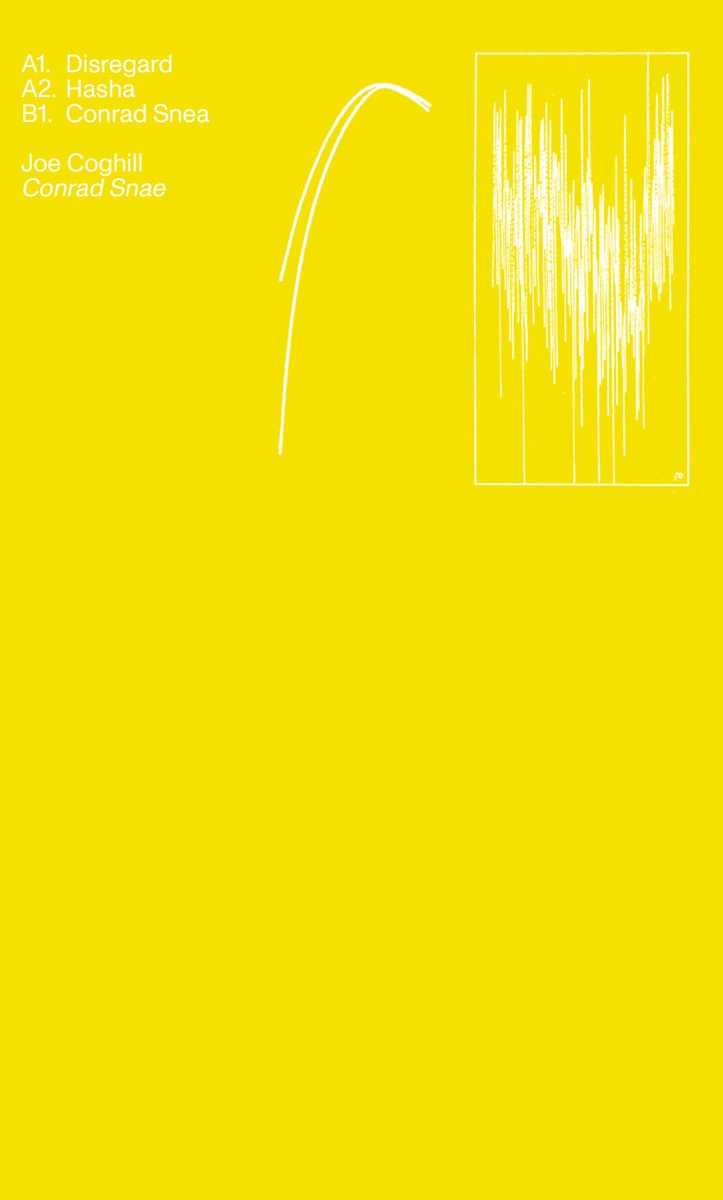 I know Joe Coghill from his enigmatic project Free Magic Show, which also includes Czaszka operator Michał Fundowicz, but Conrad Snae is a completely different beast. The dense, unclassifiable pieces that occupy this modestly sized C22 have that air about them—you know, where it seems like there’s some hidden meaning or aspect that makes them so compelling but it’s impossible to find or isolate. Bestial screams, churning digital chaos, and molten rhythm-semblances stuff the A side, both “Disregard” and “Hasha” adopting an under-the-microscope type approach that makes me think of projects with similarly “scientific” lenses, like Jazkamer. The latter track whips and writhes in a stylistic no-man’s-land between the weirder, more abstract outskirts of beat-heavy club music and the biting artificial tornadoes of pure data composition, forming a hypnotic, pulsing throb both difficult and danceable. The title track, which occupies the entirety of side B, unfolds like bargain-bin noise cobbled together from materials found in the electronics section of a secondhand shop, still as distinctly synthetic as the preceding pieces yet also confusingly organic, like the queasy burbles of an empty stomach or subterranean gases bubbling in the waters of a murky swamp. Only Coghill could make computer castoffs this smelly.
Review: Monumental Figures – Agony (The Chaos Noise, Apr 5)
 Even if I wanted to nitpick (and I don’t, for once) the only significant flaw I could find in Agony is that it’s way too damn easy to get lost in. Wall noise is almost always great music to play while reading or working—especially if you’re in a place with a lot of distracting sounds—because it’s loud enough to drown out unwanted ambience yet sufficiently minimal to avoid being a distraction itself, but this three-plus-hour monstrosity is so mysteriously magnetic that it frequently absorbs my full attention without my even knowing it, and all of a sudden half an hour has gone by since I’ve typed a single word. The only album from Moscow project Monumental Figures so far this year, and the first that isn’t a single self-released hour-long track adorned with a plain black cover, Agony is unassuming in its genius; when “Deadly Silence” first materializes it seems like a fairly conventional crunch-crush affair, but upon continued listening the wall’s spectacular density becomes progressively more apparent. Churning coils of heavyweight distortion both surround and invade the center channel; overstuffed layers boil and buck under each others’ stifling pressure; an impossibly forceful upward momentum like an eternal eruption becomes palpable. The following “Exhumation” feels very much like a contrastive response to the piece that precedes it; the noise is much rounder, more grimy and sluggish like decomp-slime oozing out of a casket, but no less enthralling. In turn, the concluding “Fresh Flesh,” aside from having one of the most addicting titles I’ve seen in a while, sputters with constrained dirt-caked crumble that brings the ambitious suite to a fitting close. To say Agony is far from the worst way to spend an eighth of a day would be an understatement.
Review: Crash at Every Speed – Departure Crash (Breaching Static, Apr 2)
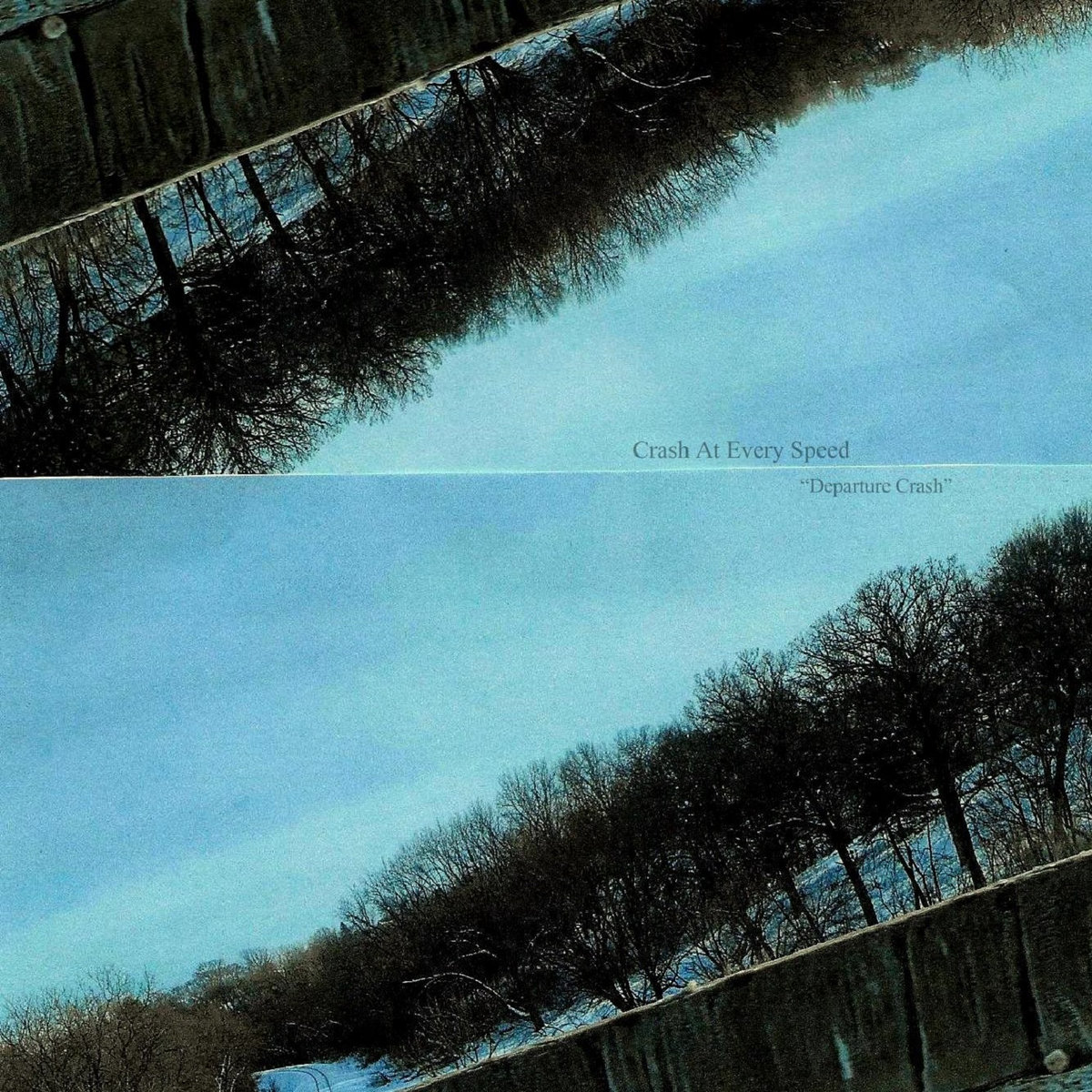 Departure Crash has its fair share of abrasive, annihilating stagnant noise, but for the most part the five pieces that comprise this new CD from one of my favorite of Richard Ramirez’s literally countless aliases have such potent staying power because of how fully and comprehensively immobilizing their presence is. The harsh static of the first untitled track is expectedly loud and punishing right out of the gate, one soon becomes aware of a subtle but palpable reticence at its base (it may be easier to pick this out if you’ve previously heard Ramirez’s other wall-based projects, many of which do not share this quality), a meditative current that transforms the listening experience from appreciative cowering and grimacing to contemplative introspection. This structure continues throughout the contents of the disc despite the ensuing tracks’ sonic diversity; the second sluggishly materializes into and dissipates out of its soot cloud–like form, while the fourth rides an overblown but somehow nonintrusive rumble of distorted crunch. Personally I could do without the news samples that crop up in the final two sections, which greatly reduce the enjoyment factor of the fourth and infuriatingly delay the actual noise part of the fifth, but the approach taken in constructing these walls is unique and successful enough that I can mostly overlook those missteps. Ever wonder what that thick, uncomfortable silence following those graphic car crash videos you had to watch in secondary school would sound like run through a pedal chain? Now you know.
Review: Symbiotique – The Maximal Effect (Mother Brain, Apr 2)
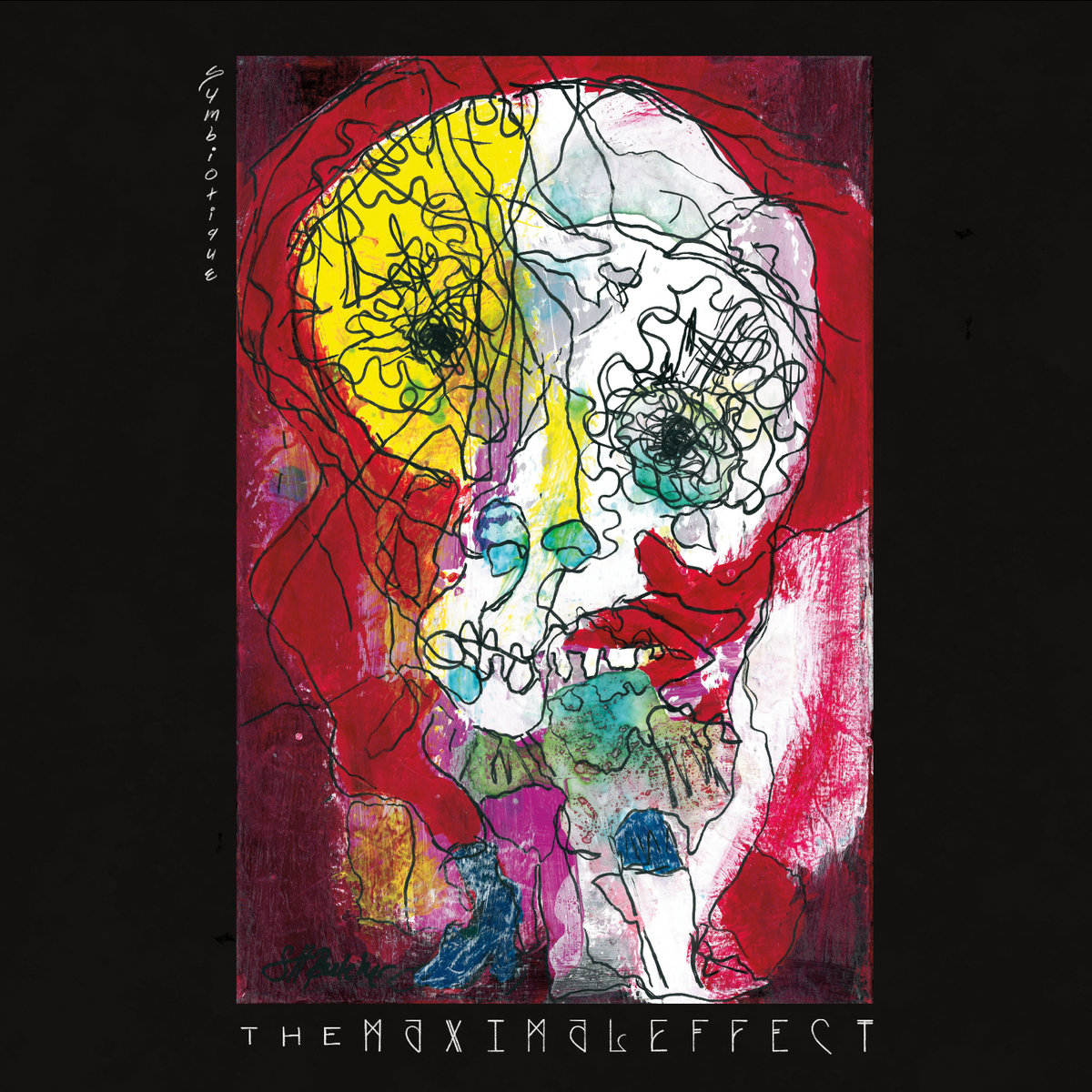 Much like an album with a similar approach I reviewed quite a while ago (Nathan Corder and Tom Weeks’s Anaconda), the pairing of instruments that characterizes Symbiotique seems like it shouldn’t work. By that I mean the idea of coupling extremely abstract, atonal electronic synthesis with largely conventional reed and brass playing doesn’t look very auspicious on paper, at least not to me, but The Maximal Effect immediately won me over regardless; not only does Seth Andrew Davis contribute lush layers of plasticky, artificial effervescence, but he also processes Michael Eaton’s saxophone and/or flute in real time, rendering even the most straightforward licks and runs in an unstable, fragmentary light. After the opening title track, each of the lengthy improvised pieces arise from some sort of conceptual inspiration—e.g., “Accumulation by Dispossession” from the ideas of David Harvey and Karl Marx, “Via Affirmativa” from Barth’s “A Few Words on Minimalism”—which may be why they never feel noodly or aimless. These are musical conversations first and foremost, and one imagines what a fascinating spectacle seeing the duo perform live would be, but in more holistic terms the swirls of sound always seem to flow from a single source, as if a mysterious pressurized gas canister has sprung a leak or someone lifted the lid of the devil’s toybox for a bit too long. The sprawling “Plastic Capitalism” is a great example of this and a clear standout on the album; the momentum of the interplay that mounts in the first half is exhilarating, and even when the pair calms things down the music quietly but stubbornly persists, seeping under the doorway with a creeping hiss.
Review: Raung Jagat Synthetic – Synthetic Vocabulary (Prakarsa, Mar 29)
 As terrifying as the prospect is, Synthetic Vocabulary may provide a glimpse into the bleak future that lurks beyond the stubborn development of increasingly sapient artificial intelligence. I’m not talking about the technological singularity itself, but rather the point a few centuries beyond that, when the dwindling human race are now used as forced labor, entertainment, and every other fucked-up way we abuse animals now while the bourgeois androids and disembodied operating systems sit atop sleek chrome thrones. Having evolved beyond the need for any sort of audible verbal communication, archaic “text-to-speech” programs are now mean-spirited novelties, used to spam unintelligible gibberish at their flesh-and-blood servants who lost all language long ago. But this auditory abuse ends up having an unintended effect. As abstract vocalist Rully Shabara is quoted as saying on the release page, language is “also capable as a medium of much more complex multi layered message such as expression and non-verbal intents [sic]”; what sounds like innocuous nonsense to the machines holds emotion and catharsis that only our brains can unlock. Alliterative semiotic deconstructions like “Max, Lisa” evoke the unutterables of lightning-fast thought processes and inner musings, almost entirely wordless pieces such as “Thena” resonate with a peculiar poignance, and the title track may just be the revolutionary anthem of the future—is there anything more powerfully human that plastic and fucking?

